OXFORD, England--(BUSINESS WIRE)--Nov 19, 2025--
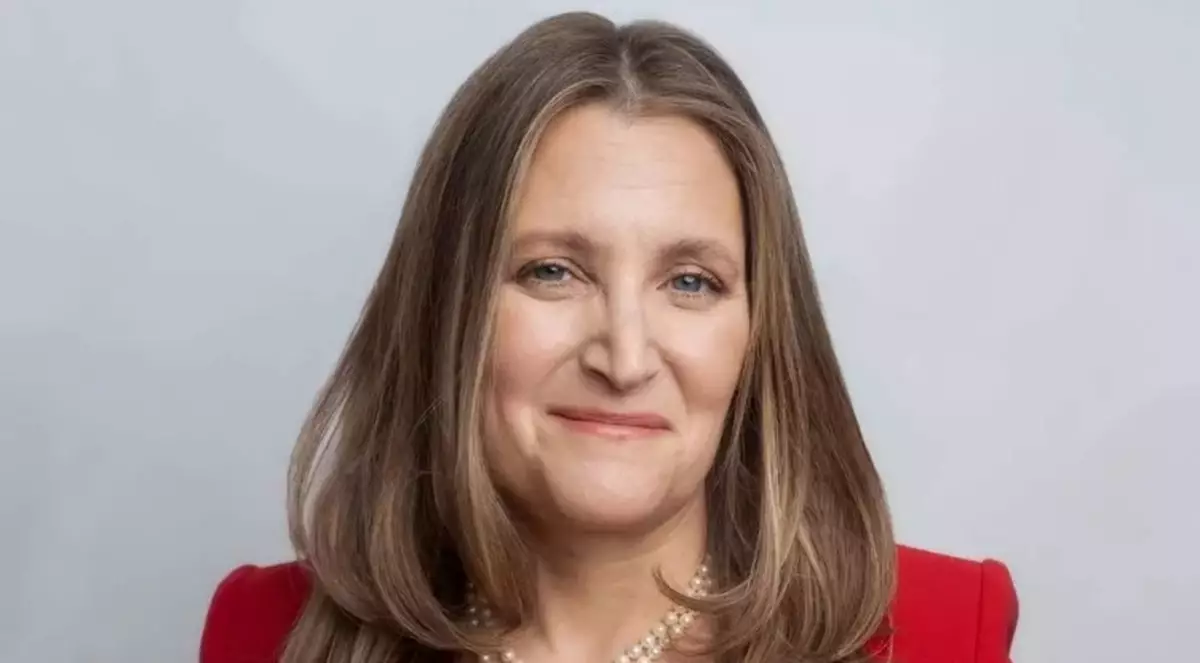
The Trustees of the Rhodes Trust have appointed Chrystia Freeland as the next Warden of Rhodes House and Chief Executive Officer of the Rhodes Trust. Chrystia will start her role on 1 July 2026, taking over from Professor Sir Rick Trainor KBE, who has served as Interim Warden and CEO since 1 January 2025.
This press release features multimedia. View the full release here: https://www.businesswire.com/news/home/20251119545923/en/
The Rhodes Trust is an educational charity best known for the Rhodes Scholarship, which offers talented people from across the globe an opportunity to study at the University of Oxford.
An Alberta-born Rhodes Scholar who came to Oxford in 1991, Chrystia Freeland brings to the Trust a remarkable record of achievement as a prominent Canadian politician, acclaimed journalist, and award-winning author. She began her career in journalism as a Ukraine-based freelance reporter for the Financial Times, The Washington Post and The Economist, going on to serve as deputy editor of The Globe and Mail and United States managing editor of the Financial Times. She worked as managing director of Thomson Reuters before returning to Canada and entering politics in 2013. Since then, Chrystia has served as Canada’s Deputy Prime Minister, Minister of Finance and Minister of Foreign Affairs, amongst other positions, and has been recognised for her significant contributions to public life. With her unique blend of international experience spanning politics, journalism, and public policy, she will be able to bring new insights to the organisation.
Sir John Bell, Chairman of the Rhodes Trustees, welcomed the appointment: "Chrystia brings a wealth of experience from her work in global affairs, public policy and journalism. She has proven herself to be an outstanding leader with a remarkable ability to unite people around a common purpose – qualities that will serve the Trust exceptionally well. We are delighted to welcome her and look forward to working together as she leads the Rhodes Trust into its next chapter. I would also like to extend our sincere thanks to Professor Sir Rick Trainor KBE, who ensured that the Trust remained in dynamic and capable hands as we conducted our search for a new Warden.”
Bob Sternfels, Chairman of the Governance Committee, added : “We are excited to welcome Chrystia as she steps into this very important role for the Trust. She has an impressive track record of engaging a wide variety of stakeholders and driving positive change. I look forward to seeing all that the Trust will accomplish under her stewardship.”
Chrystia Freeland expressed her enthusiasm for the new role: "It is an honour and privilege to return to Oxford as Warden of Rhodes House and CEO of the Rhodes Trust. Having personally benefitted from a Rhodes Scholarship, I know how deeply transformative and influential it can be on the lives and futures of our Scholars. The experience helped shape my international outlook and played a defining role in guiding my subsequent career. I look forward to working with the Trust to build on its remarkable legacy and further strengthen the impact of the Scholarships—on individual Scholars, on the global Rhodes community, and on society.
Professor Sir Rick Trainor KBE will remain in post until 30 June 2026, and Chrystia Freeland will start on 1 July after a period of handover.
About the Rhodes Trust and Rhodes Scholarships
The Rhodes Trust, based at the University of Oxford, is an educational charity that forges brighter futures for individuals and the world.
We do this through a family of global fellowship programmes. All these programmes find brilliant people from around the world, give them wonderful opportunities to learn and act together, and support them as they form lifelong communities. We began in 1903 with the Rhodes Scholarship. This is the world’s pre-eminent graduate fellowship, bringing exceptional young people of character to the University of Oxford to study. Over 8000 Rhodes Scholars, from more than 50 countries, have gone on to serve at the forefront of education, business, science, medicine, the arts, politics and beyond. All this is made possible by the wonderful generosity of our Second Century Founders, John McCall MacBain and the Atlantic Philanthropies, as well as over 3000 other benefactors from around the world.
A hundred years on, we helped create the Mandela Rhodes Foundation, which finds, funds, and empowers young Africans to study in South Africa. In 2016, we partnered with Atlantic Philanthropies to create the Atlantic Institute which empowers catalytic communities of emerging leaders to advance fairer, healthier, more inclusive societies. A year later, we helped launch Schmidt Science Fellows in partnership with Schmidt Sciences, which brings scientific disciplines together to create novel ways of thinking and develop creative solutions.
We are based at Rhodes House in Oxford, which is home to most of our staff team who offer a comprehensive programme of support and learning for our Rhodes Scholars, convene a lifelong network for our alumni, and run our partnership programmes.
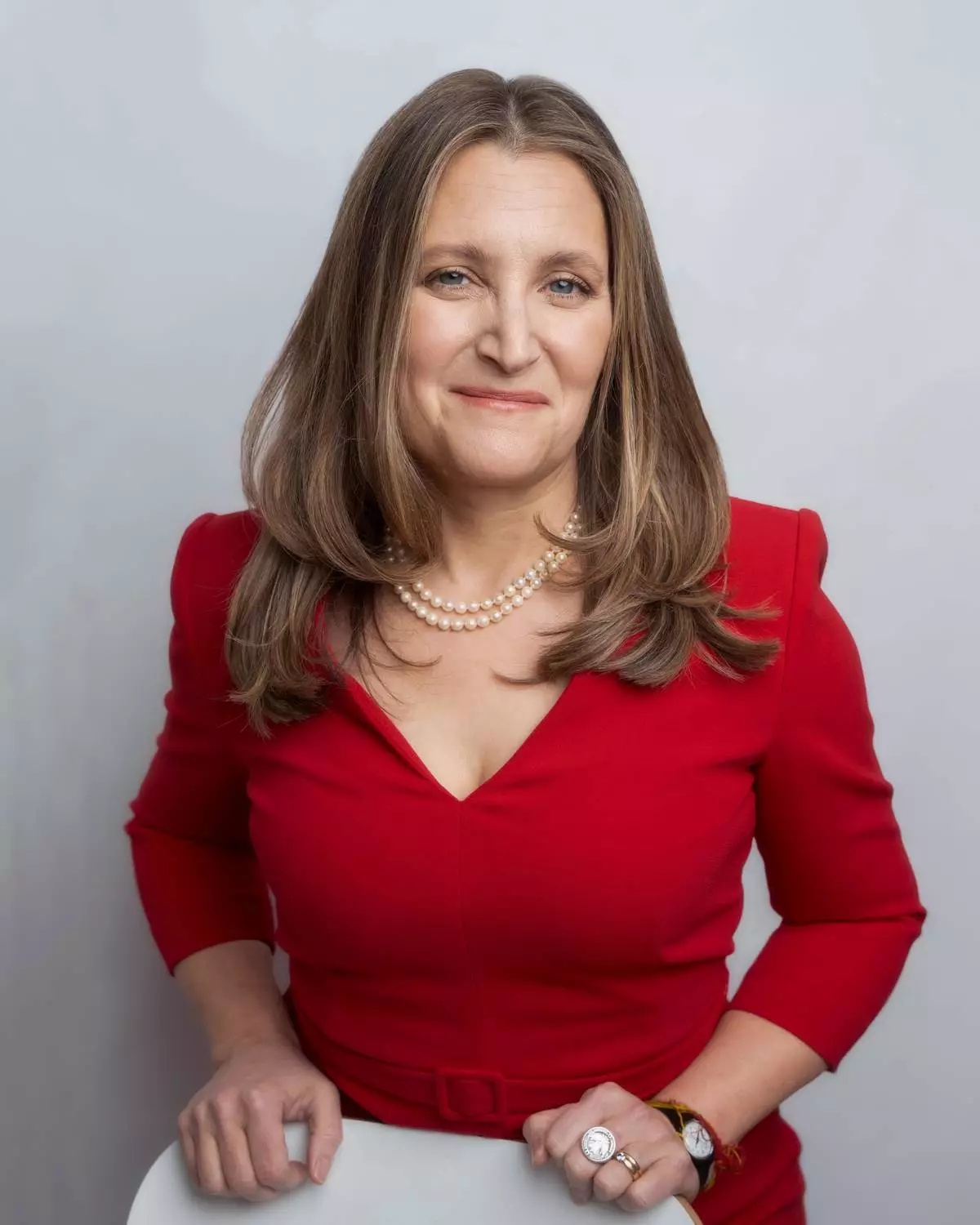
Chrystia Freeland
WASHINGTON (AP) — The Supreme Court is casting doubt on President Donald Trump’s restrictions on birthright citizenship in a consequential case that was magnified by Trump’s unparalleled presence in the courtroom.
Conservative and liberal justices on Wednesday questioned whether Trump's order declaring that children born to parents who are in the United States illegally or temporarily are not American citizens comports with either the Constitution or federal law.
Trump, the first sitting president to attend arguments at the nation’s highest court, spent just over an hour inside the courtroom for arguments made by the Republican administration's top Supreme Court lawyer, Solicitor General D. John Sauer. The president departed shortly after lawyer Cecillia Wang began her presentation in defense of broad birthright citizenship.
Trump heard Sauer face one skeptical question after another. Justices asked about the legal basis for the order and voiced more practical concerns.
“Is this happening in the delivery room?” Justice Ketanji Brown Jackson asked, drilling down into the logistics of how the government would actually figure out who’s entitled to citizenship and who’s not.
Justice Clarence Thomas sounded the most likely among the nine justices to side with Trump.
“How much of the debates around the 14th Amendment had anything to do with immigration?” Thomas asked, pointing out that the purpose of the amendment was to grant citizenship to Black people, including freed slaves.
The justices are hearing Trump’s appeal of a lower-court ruling from New Hampshire that struck down the citizenship restrictions, one of several courts that have blocked them. They have not taken effect anywhere in the country.
The case frames another test of Trump's assertions of executive power that defy long-standing precedent for a court that has largely ruled in the president's favor — but with some notable exceptions that Trump has responded to with starkly personal criticisms of the justices. A definitive ruling is expected by early summer.
The birthright citizenship order, which Trump signed the first day of his second term, is part of his Republican administration’s broad immigration crackdown.
Birthright citizenship is the first Trump immigration-related policy to reach the court for a final ruling. The justices previously struck down global tariffs Trump had imposed under an emergency powers law that had never been used that way.
Trump reacted furiously to the late February tariffs decision, saying he was ashamed of the justices who ruled against him and calling them unpatriotic.
He issued a preemptive broadside against the court on Sunday on his Truth Social platform. “Birthright Citizenship is not about rich people from China, and the rest of the World, who want their children, and hundreds of thousands more, FOR PAY, to ridiculously become citizens of the United States of America. It is about the BABIES OF SLAVES!,” the president wrote. “Dumb Judges and Justices will not a great Country make!”
Trump's order would upend the long-standing view that the Constitution’s 14th Amendment, ratified in 1868, and federal law since 1940 confer citizenship on everyone born on American soil, with narrow exceptions for the children of foreign diplomats and those born to a foreign occupying force.
The 14th Amendment was intended to ensure that Black people, including former slaves, had citizenship, though the Citizenship Clause is written more broadly. “All persons born or naturalized in the United States, and subject to the jurisdiction thereof, are citizens of the United States and of the State wherein they reside,” it reads.
In a series of decisions, lower courts have struck down the executive order as illegal, or likely so, under the Constitution and federal law. The decisions have invoked the high court's 1898 ruling in Wong Kim Ark, which held that the U.S.-born child of Chinese nationals was a citizen.
The Trump administration argues that the common view of citizenship is wrong, asserting that children of noncitizens are not “subject to the jurisdiction” of the United States and therefore are not entitled to citizenship.
The court should use the case to set straight “long-enduring misconceptions about the Constitution’s meaning,” wrote Sauer, the solicitor general.
No court has accepted that argument, and lawyers for pregnant women whose children would be affected by the order said the Supreme Court should not be the first to do so.
“We have the president of the United States trying to radically reinterpret the definition of American citizenship,” said Cecillia Wang, the American Civil Liberties Union legal director who is facing off against Sauer at the Supreme Court.
More than one-quarter of a million babies born in the U.S. each year would be affected by the executive order, according to research by the Migration Policy Institute and Pennsylvania State University’s Population Research Institute.
While Trump has largely focused on illegal immigration in his rhetoric and actions, the birthright restrictions also would apply to people who are legally in the United States, including students and applicants for green cards, or permanent resident status.
Associated Press writer Darlene Superville contributed to this report.
Follow the AP’s coverage of the U.S. Supreme Court at https://apnews.com/hub/us-supreme-court.
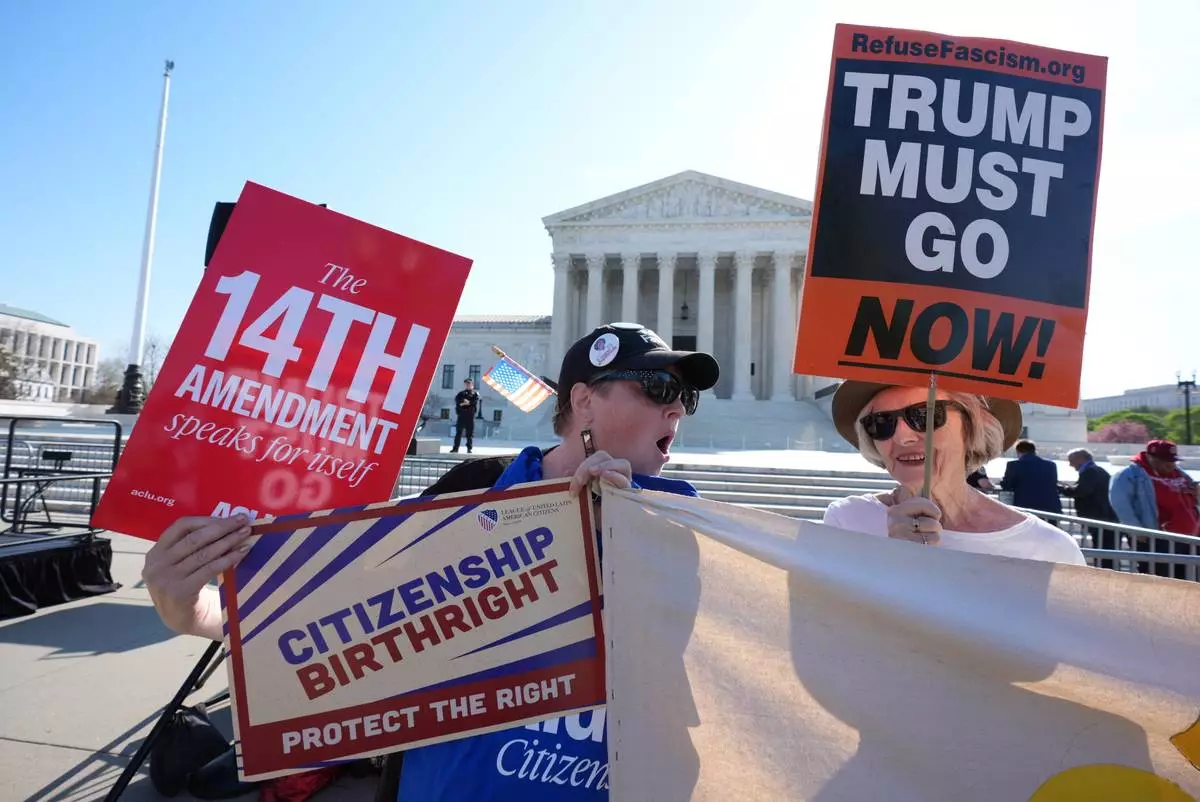
Pro and anti-Trump demonstrators rally outside the U.S. Supreme Court, before justices hear oral arguments on whether President Donald Trump can deny citizenship to children born to parents who are in the United States illegally or temporarily, on Capitol Hill, in Washington, Wednesday, April 1, 2026. (AP Photo/J. Scott Applewhite)
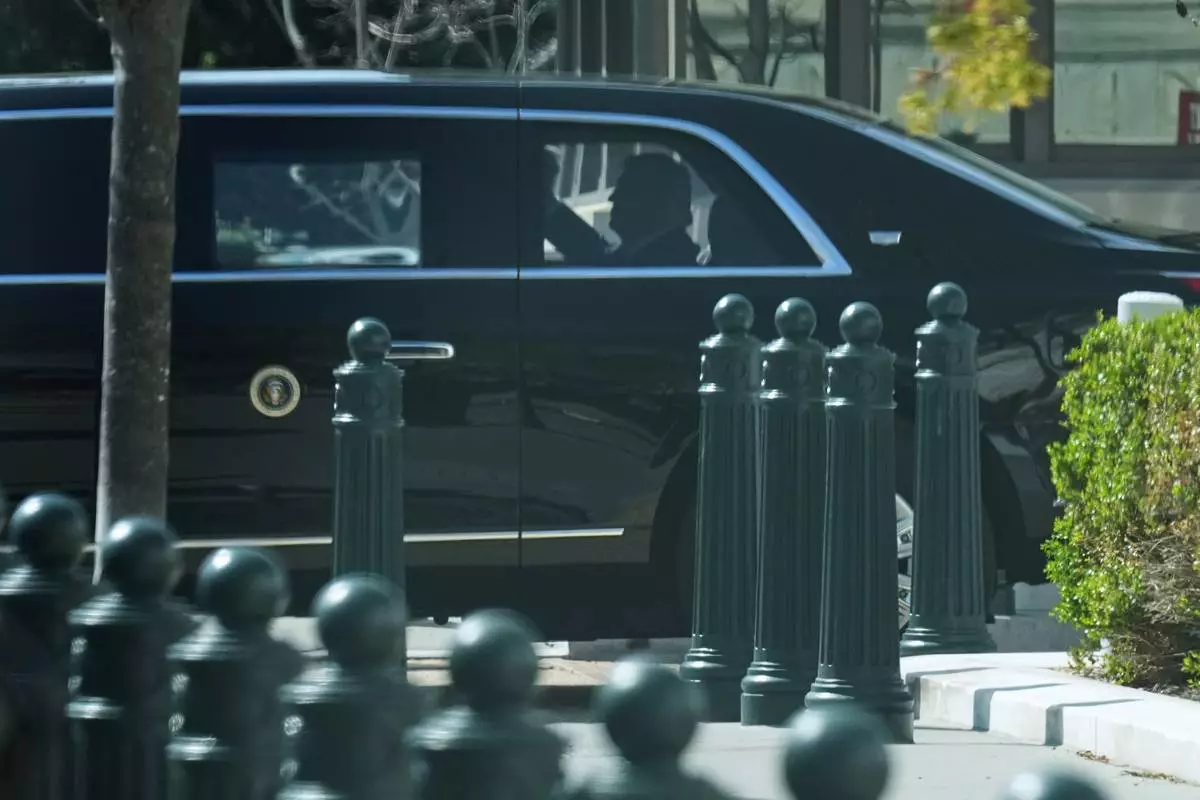
President Donald Trump leaves the U.S. Supreme Court, Wednesday, April 1, 2026, in Washington. (AP Photo/Mark Schiefelbein)
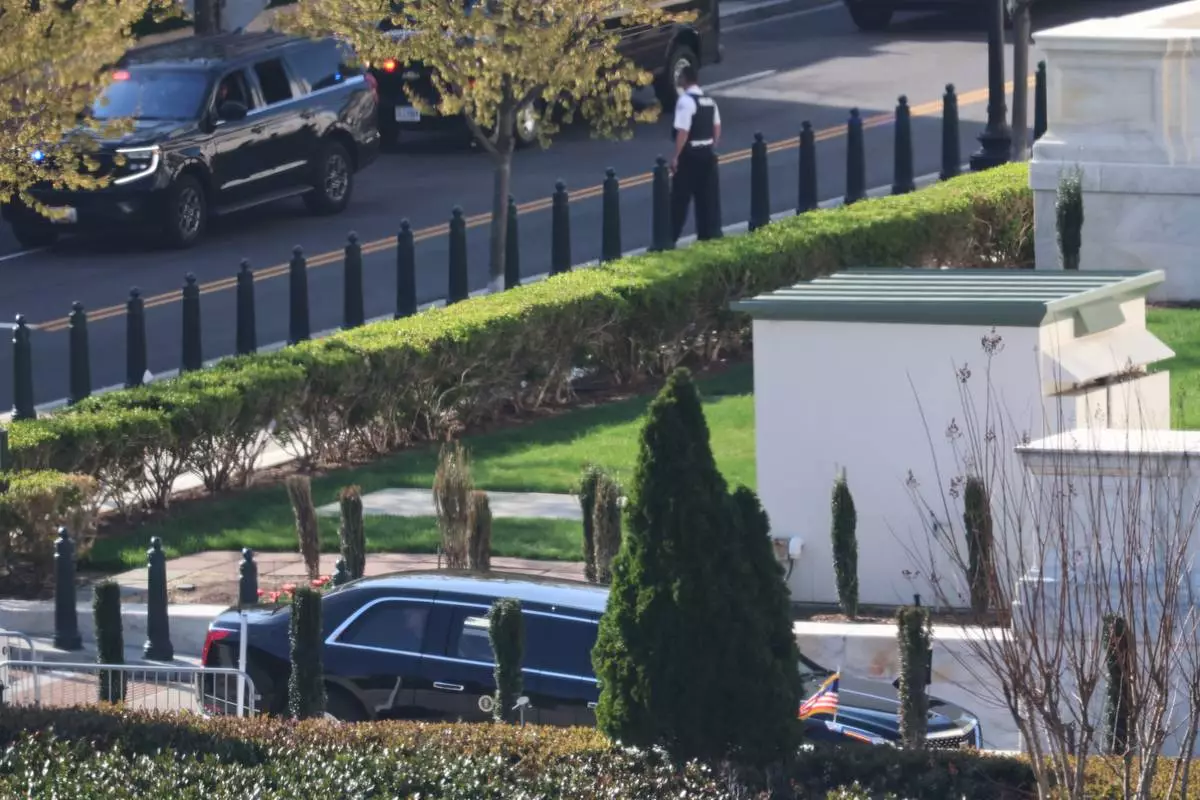
President Donald Trump's motorcade arrives at the U.S. Supreme Court, Wednesday, April 1, 2026, in Washington. (AP Photo/Tom Brenner)
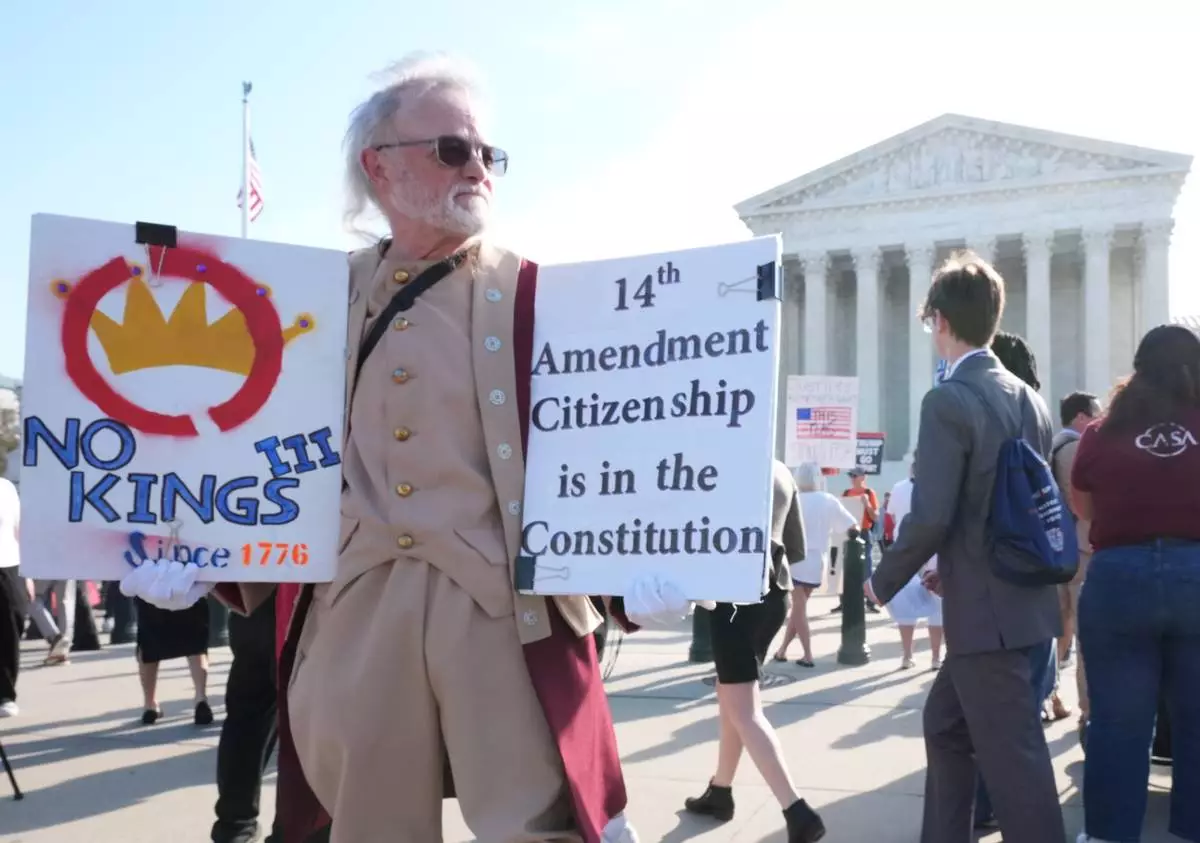
Pro and anti-Trump demonstrators rally outside the U.S. Supreme Court, before justices hear oral arguments on whether President Donald Trump can deny citizenship to children born to parents who are in the United States illegally or temporarily, on Capitol Hill, in Washington, Wednesday, April 1, 2026. (AP Photo/J. Scott Applewhite)
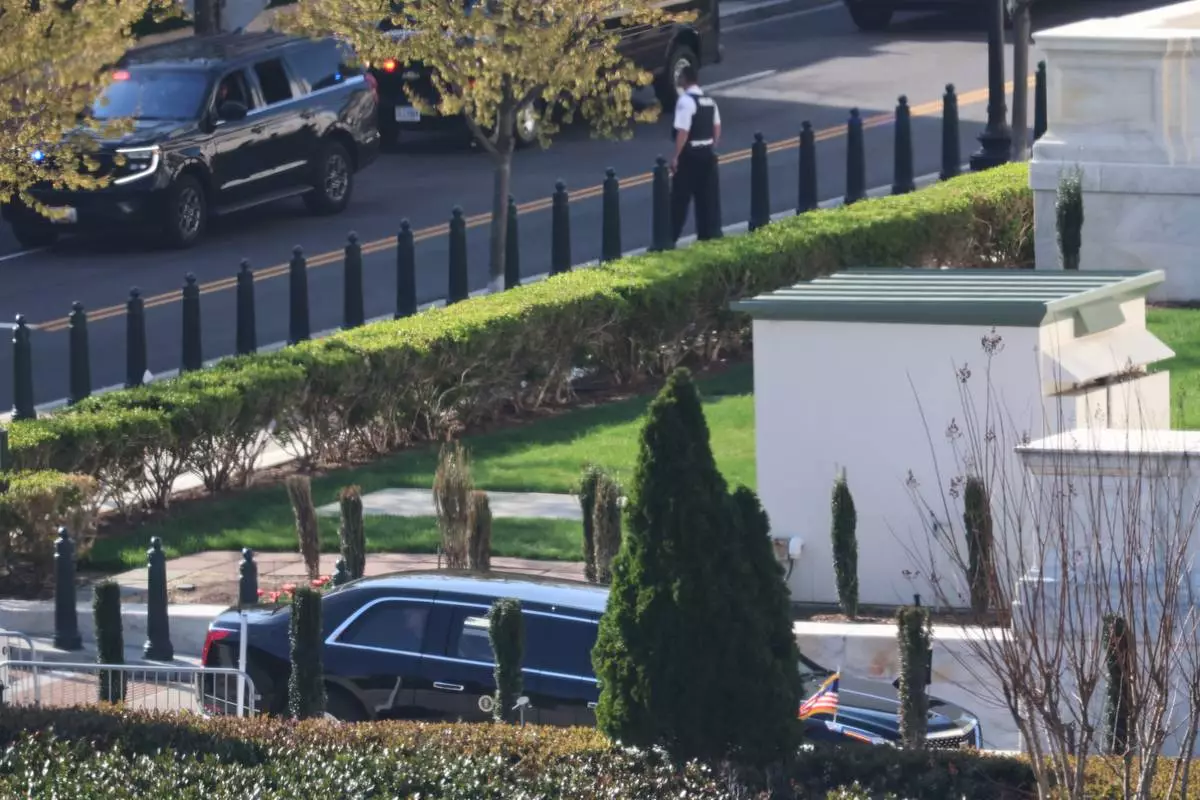
President Donald Trump's motorcade arrives at the U.S. Supreme Court, Wednesday, April 1, 2026, in Washington. (AP Photo/Tom Brenner)
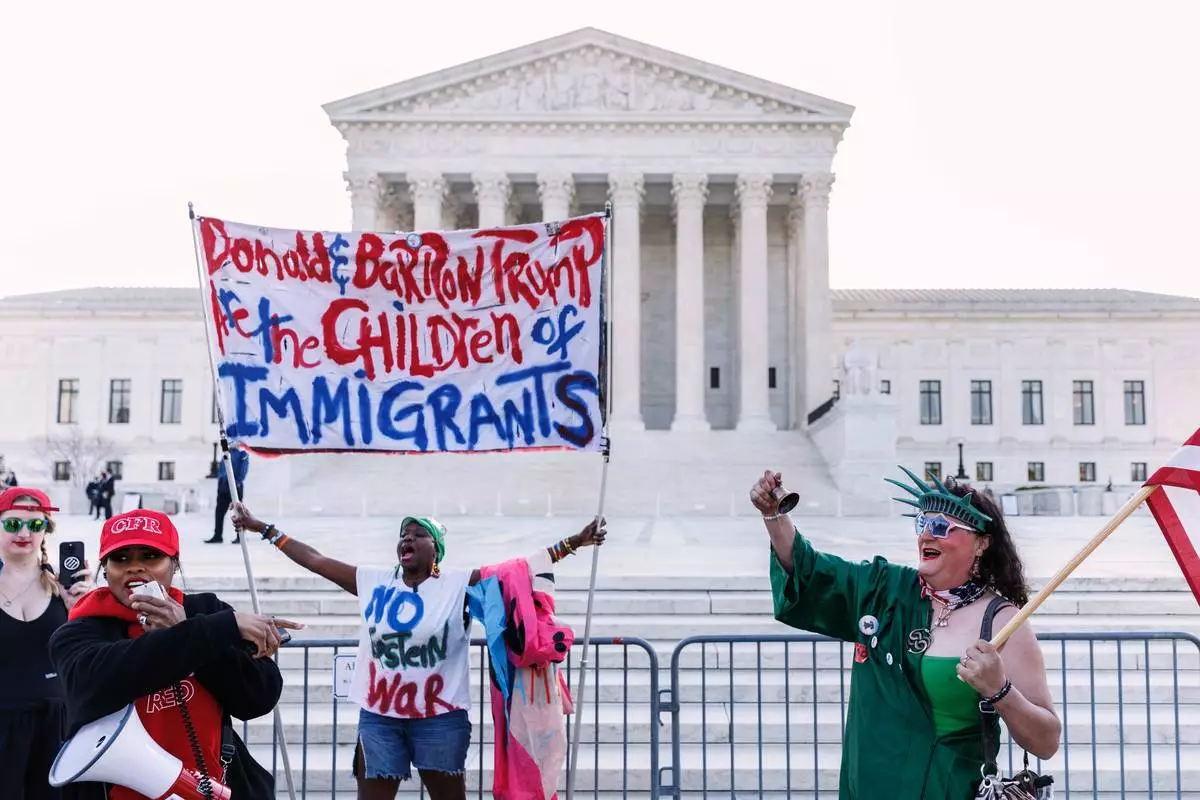
Demonstrators holding opposing views verbally engage ahead of President Donald Trump's arrival at the U.S. Supreme Court, Wednesday, April 1, 2026, in Washington. (AP Photo/Tom Brenner)
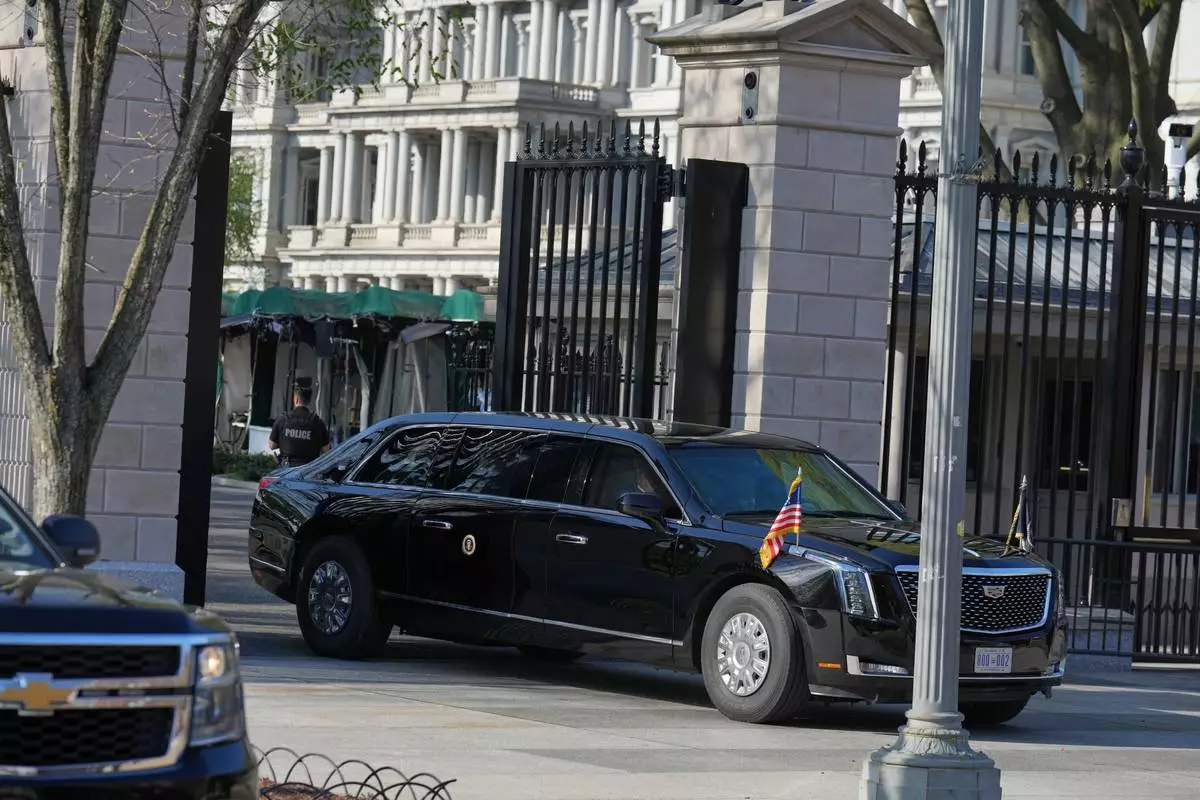
President Donald Trump's limo exits the White House en route to the Supreme Court, Wednesday, April 1, 2026, in Washington. (AP Photo/Mark Schiefelbein)
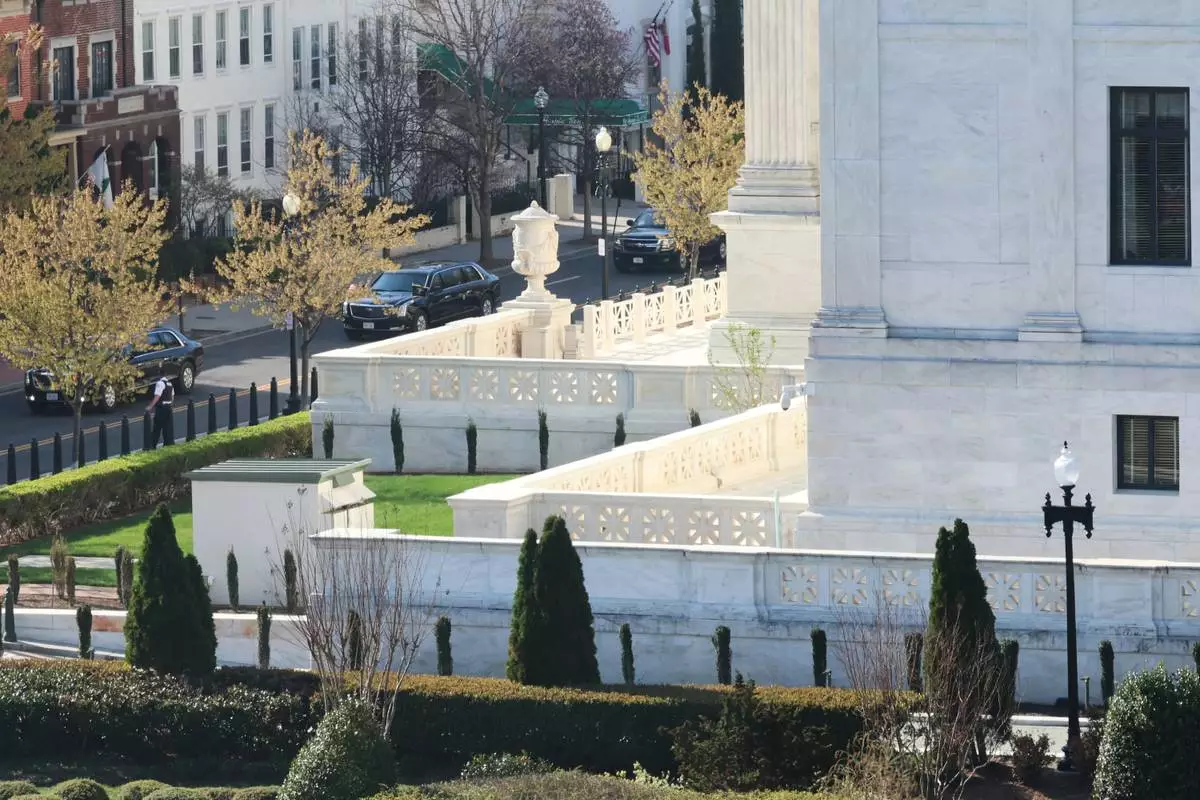
President Donald Trump's motorcade arrives at the U.S. Supreme Court, Wednesday, April 1, 2026, in Washington. (AP Photo/Tom Brenner)

Pro and anti-Trump demonstrators rally outside the U.S. Supreme Court, before justices hear oral arguments on whether President Donald Trump can deny citizenship to children born to parents who are in the United States illegally or temporarily, on Capitol Hill, in Washington, Wednesday, April 1, 2026. (AP Photo/J. Scott Applewhite)
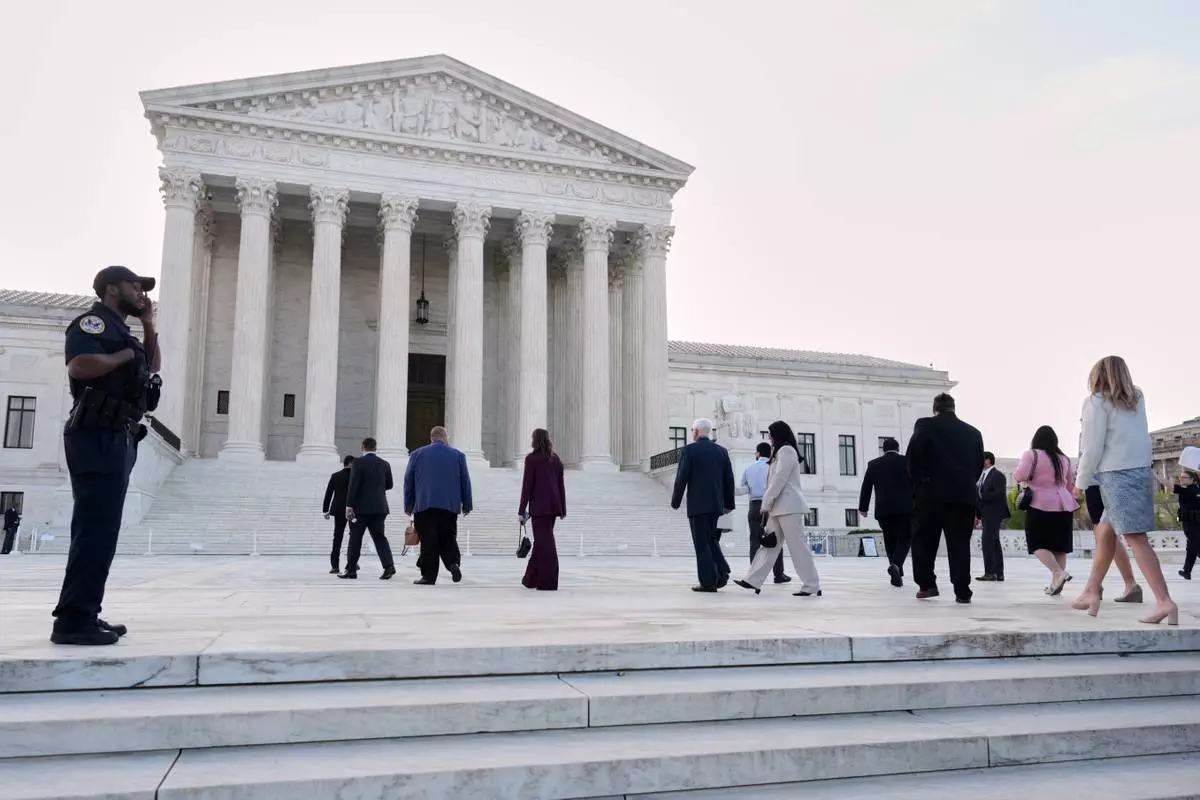
People arrive to walk inside the U.S. Supreme Court, on Capitol Hill in Washington, Wednesday, April 1, 2026. The Supreme Court justices will hear oral arguments today on whether President Donald Trump can deny citizenship to children born to parents who are in the United States illegally or temporarily. (AP Photo/J. Scott Applewhite)
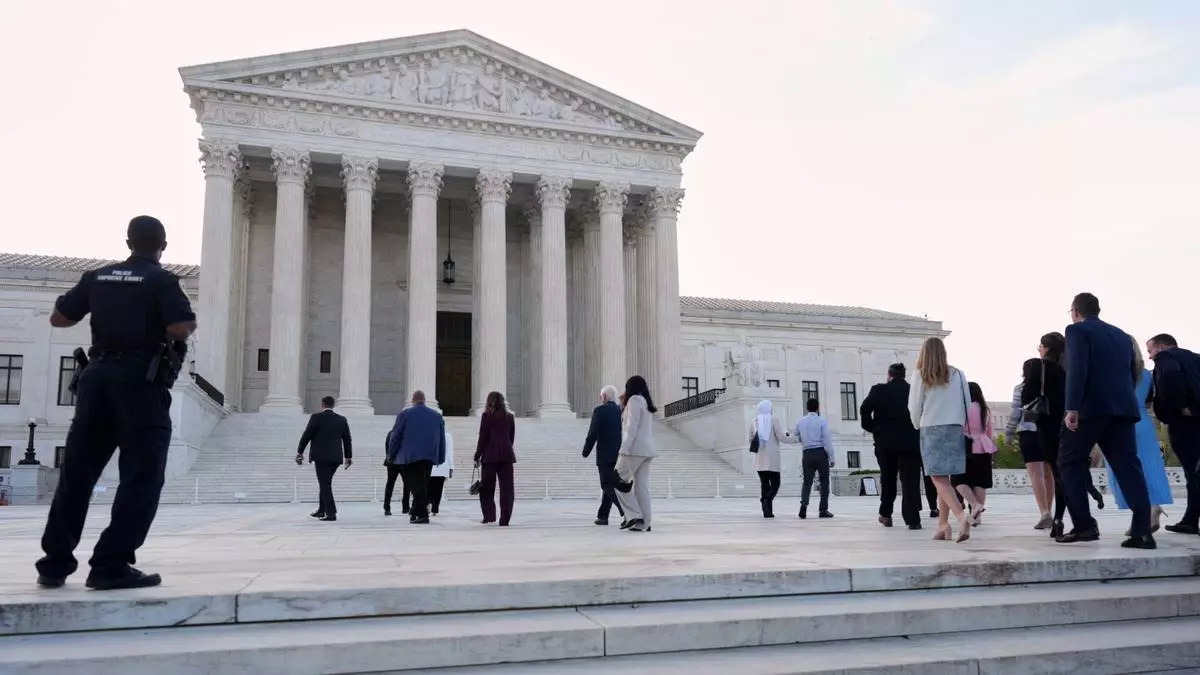
People arrive to walk inside the U.S. Supreme Court, on Capitol Hill in Washington, Wednesday, April 1, 2026. The Supreme Court justices will hear oral arguments today on whether President Donald Trump can deny citizenship to children born to parents who are in the United States illegally or temporarily. (AP Photo/J. Scott Applewhite)
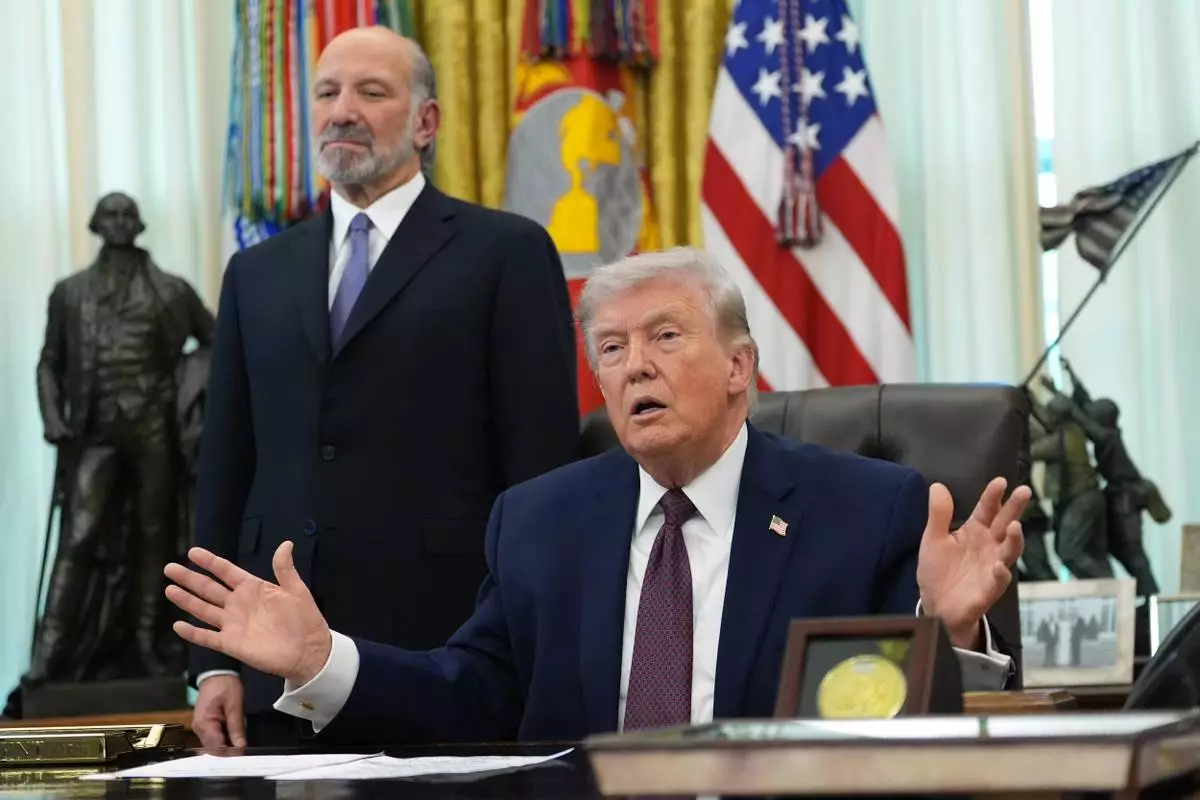
President Donald Trump answers questions from reporters after signing an executive order in the Oval Office of the White House Tuesday, March 31, 2026, in Washington, as Commerce Secretary Howard Lutnick listens. (AP Photo/Alex Brandon)
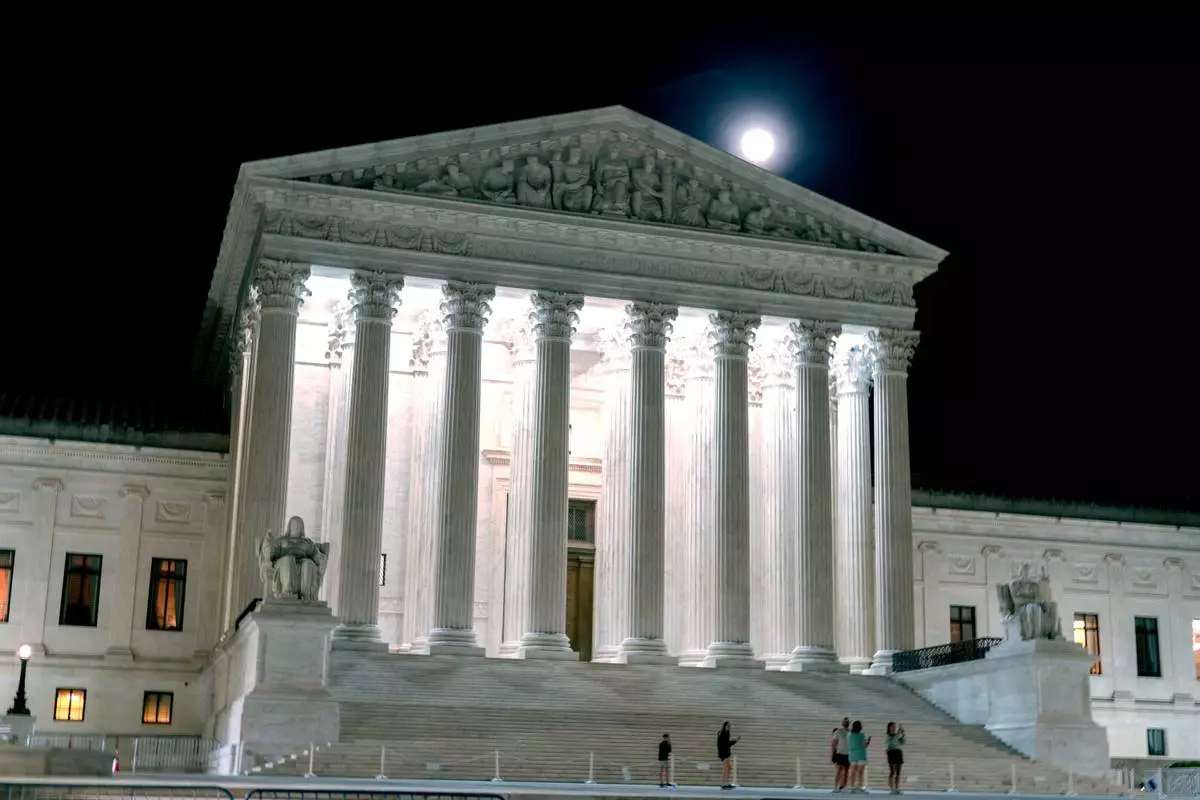
The U.S. Supreme Court is seen as the moon rises Tuesday, March 31, 2026, in Washington. (AP Photo/Jose Luis Magana)