A high-stakes dispute over whether an indictment will stand against former FBI Director James Comey is putting attention on grand juries and how they work in secret to bring charges in U.S. federal courts.
The U.S. Justice Department admitted there may have been a problem in how Comey’s case was presented to a grand jury in Alexandria, Virginia. Comey wants the case thrown out on grounds that the government was being vindictive, among other objections.
Comey is charged with making a false statement in 2020 and obstructing Congress. He’s pleaded not guilty and denied wrongdoing, saying it's a case of political retaliation by President Donald Trump.
The case marked a dramatic escalation of the president’s extraordinary use of executive power to target his political rivals and his efforts to pressure the Justice Department to pursue prosecutions of people he disdains.
Here’s a primer on how grand juries work:
The roots of America’s grand jury system go back centuries to England, where everyday people, independent of the king, were asked to decide whether someone committed a crime.
“It was grafted into our constitution: No federal case can be charged without consideration of a federal grand jury,” said Mark Chutkow, a former federal prosecutor.
Matthew Schneider, a former U.S. attorney in Detroit, said the legal threshold for returning an indictment is lower than the standard for a jury to convict someone.
“They’re not being asked to decide, beyond a reasonable doubt, whether a crime occurred,” he explained. “They’re being asked if there’s probable cause that a crime occurred."
A grand jury has 16 to 23 people who meet in private. People summoned to federal court can serve for months, though they’re not in session each day.
A prosecutor presents evidence through witnesses and other means. Chutkow said a judge doesn’t participate unless there are problems with a witness.
The grand jury doesn’t need to make a unanimous decision. Twelve votes are needed to return an indictment.
Grand jurors are sworn to secrecy, along with prosecutors and investigators. People who are called as witnesses can later speak publicly, although authorities might discourage it.
And while prosecutors arrange the proceedings, a grand jury can make its own requests to see a witness or consider additional evidence, Chutkow said.
A New York state judge is famously credited with saying a grand jury could “indict a ham sandwich,” meaning prosecutors don’t face much resistance in getting someone charged. But grand juries can reject an indictment or perhaps limit it, depending on evidence.
Grand jurors in Washington have declined to return some indictments since the Trump administration deployed National Guard troops on the streets there. Critics of the Justice Department said the government was pursuing weak cases. U.S. Attorney Jeanine Pirro said "the system here is broken on many levels,” and she blamed politics for a grand jury's failure to charge someone accused of threatening the president.
U.S. Magistrate Judge William Fitzpatrick said he reviewed a transcript and had questions about whether the full grand jury had reviewed the two-count indictment against Comey. A Justice Department lawyer conceded Wednesday that the full jury did not.
Michael Dreeben, Comey's lawyer, said that the government's failure to present the final indictment to the entire grand jury is grounds for dismissing the case. U.S. District Judge Michael Nachmanoff, who would oversee any trial, said he needed time to make a decision.
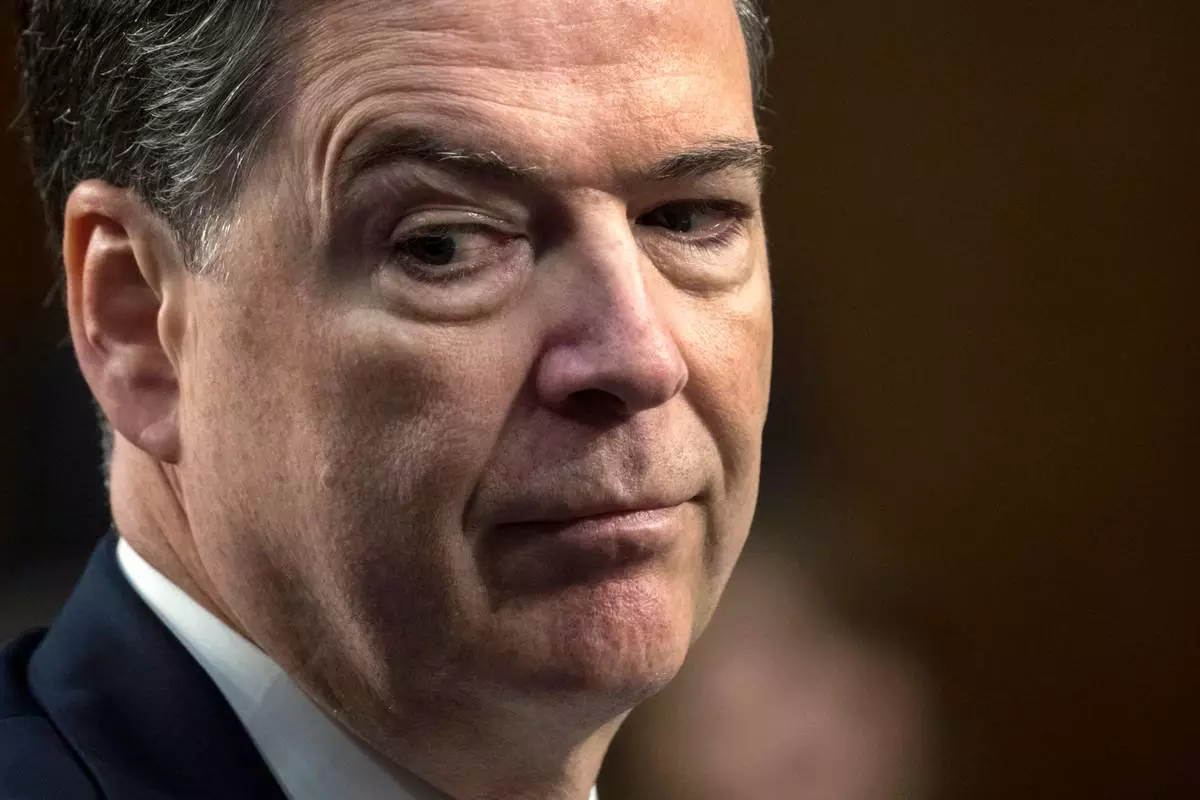
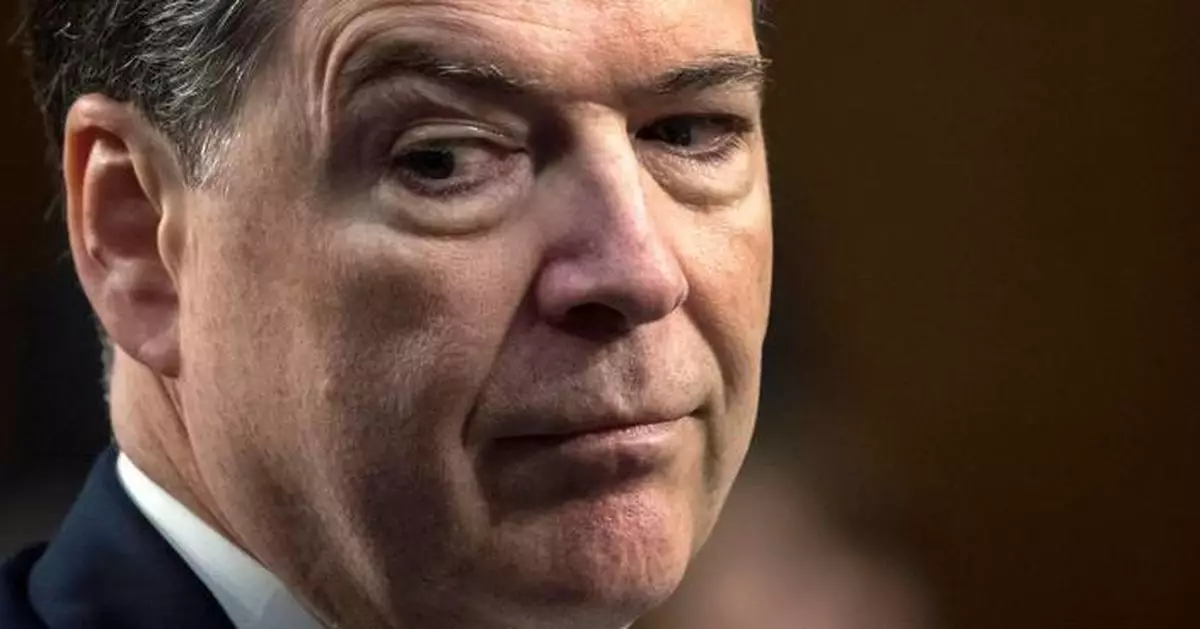
FILE - Former FBI Director James Comey testifies before the Senate Select Committee on Intelligence, on Capitol Hill in Washington, June 8, 2017. (AP Photo/J. Scott Applewhite, File)
NEW YORK (AP) — Victor Wembanyama had 32 points, eight rebounds and six assists in his first NBA Finals win, carrying the San Antonio Spurs to a 115-111 victory on Monday night that cut the New York Knicks’ lead to 2-1.
The Spurs handed the Knicks their first loss in 46 days and potentially salvaged their season in front of a Madison Square Garden crowd that included President Donald Trump.
The Knicks had their 13-game winning streak, the second-longest in NBA postseason history, snapped and missed a chance to move to the brink of their first championship since 1973.
Stephon Castle and De'Aaron Fox hit big shots late as the Spurs avoided falling into a 3-0 hole, which no NBA team has escaped. Now they can tie the series Wednesday night and are guaranteed another game at home, with Game 5 scheduled for Saturday.
Castle finished with 23 points as the Spurs got started in their quest to become the first team to win the NBA Finals after losing the first two at home.
Jalen Brunson scored 32 points and OG Anunoby had 28 for the Knicks, who lost for the first time since April 23 in Game 3 of their first-round series against Atlanta.
Fans who endured long lines to get in with the extra security measures in place — and some who paid five-figure sums for the chance to do so — were treated to a back-and-forth game in the NBA Finals’ first trip to Madison Square Garden since 1999.
Wembanyama, the 7-foot-4 Frenchman whose turnover late in Game 2 ended the Spurs’ hopes, didn’t make many mistakes Monday. He had 10 points in the final quarter, helping the Spurs build just enough of a cushion to withstand another Brunson comeback attempt.
Minutes after Trump was loudly booed while shown during the national anthem, the Spurs got off to an ideal start. Wembanyama dunked for their first two baskets and they had a double-digit lead 4 1/2 minutes into the game. San Antonio made nine of its first 11 shots, with the Knicks and their fans frustrated by the referees and the home team’s sloppy play, and led 33-22 after one.
The Garden crowd didn’t really start to rock until Anunoby’s 3-pointer capped an 11-2 surge that cut it to 40-38. The Knicks got their first lead of the night on Brunson's 26-footer as part of a big burst to finish the half. New York led 64-57 at the break.
But the Spurs went back ahead in the third quarter and led 111-104 on Castle's 3-pointer with 1:53 to play. Castle then closed the scoring with two free throws with 6.8 seconds left after Anunoby's 3-pointer cut it to two.
AP NBA: https://apnews.com/hub/NBA
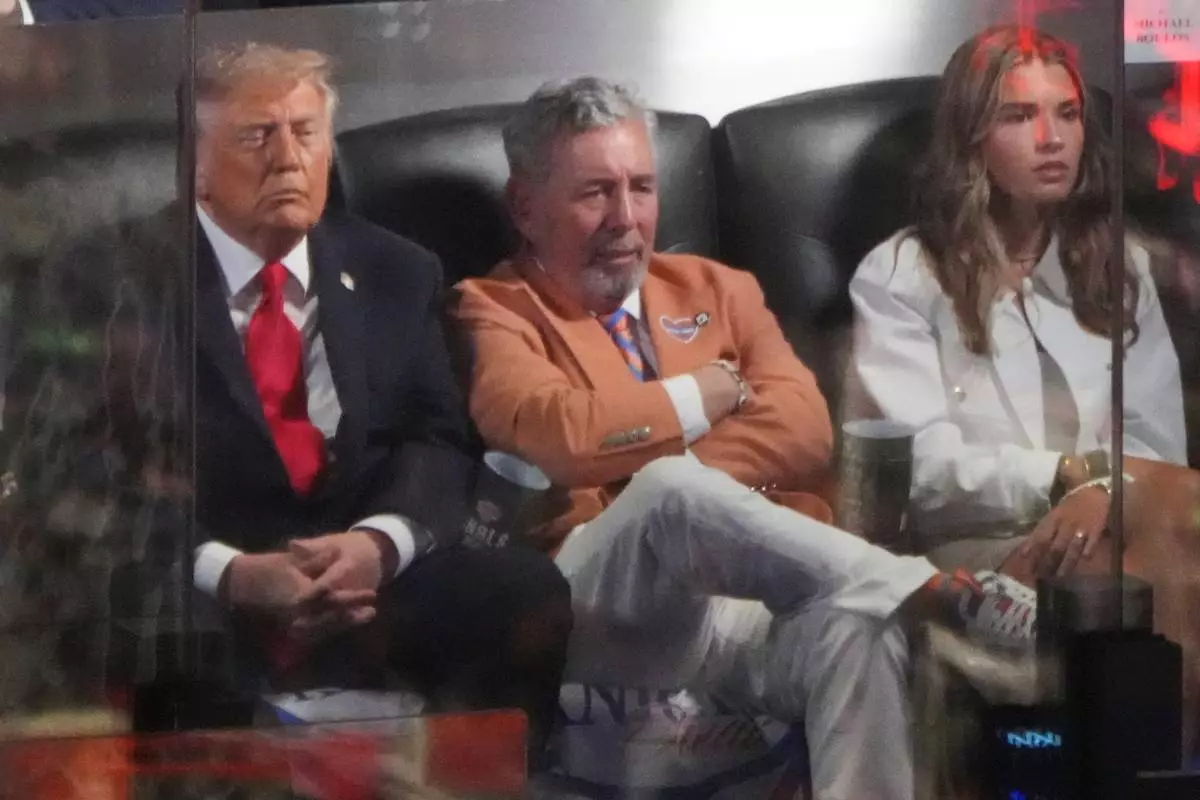
President Donald Trump watches Game 3 of the NBA Finals basketball series between the New York Knicks and the San Antonio Spurs at Madison Square Garden in New York, Monday, June 8, 2026, with Knicks owner James Dolan and Kai Trump. (AP Photo/Mark Schiefelbein)
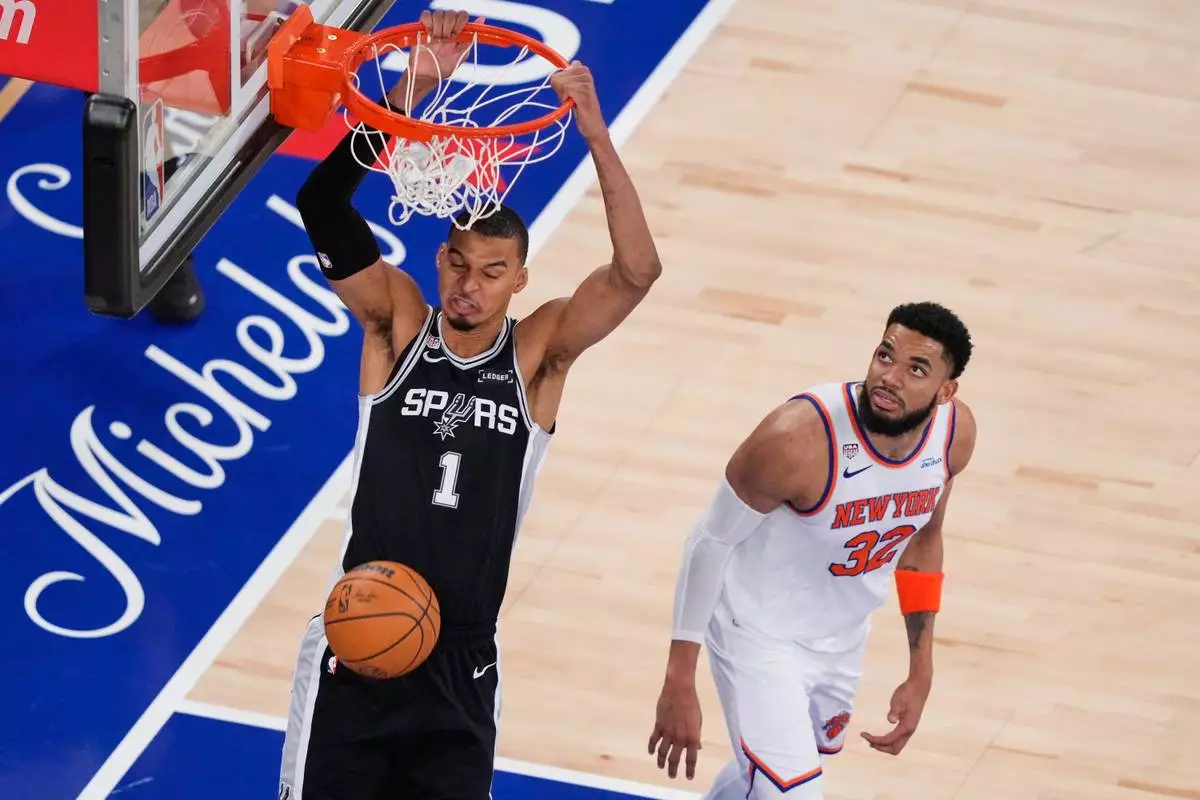
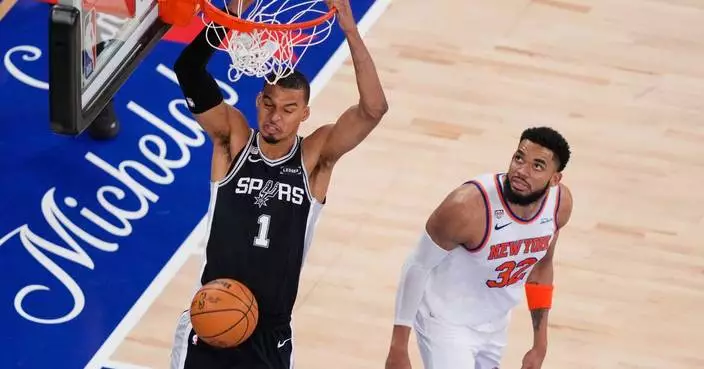
San Antonio Spurs forward Victor Wembanyama (1) dunks as New York Knicks center Karl-Anthony Towns (32) looks on during the second half of Game 3 of the NBA Finals basketball series, Monday, June 8, 2026, in New York. (AP Photo/Yuki Iwamura)
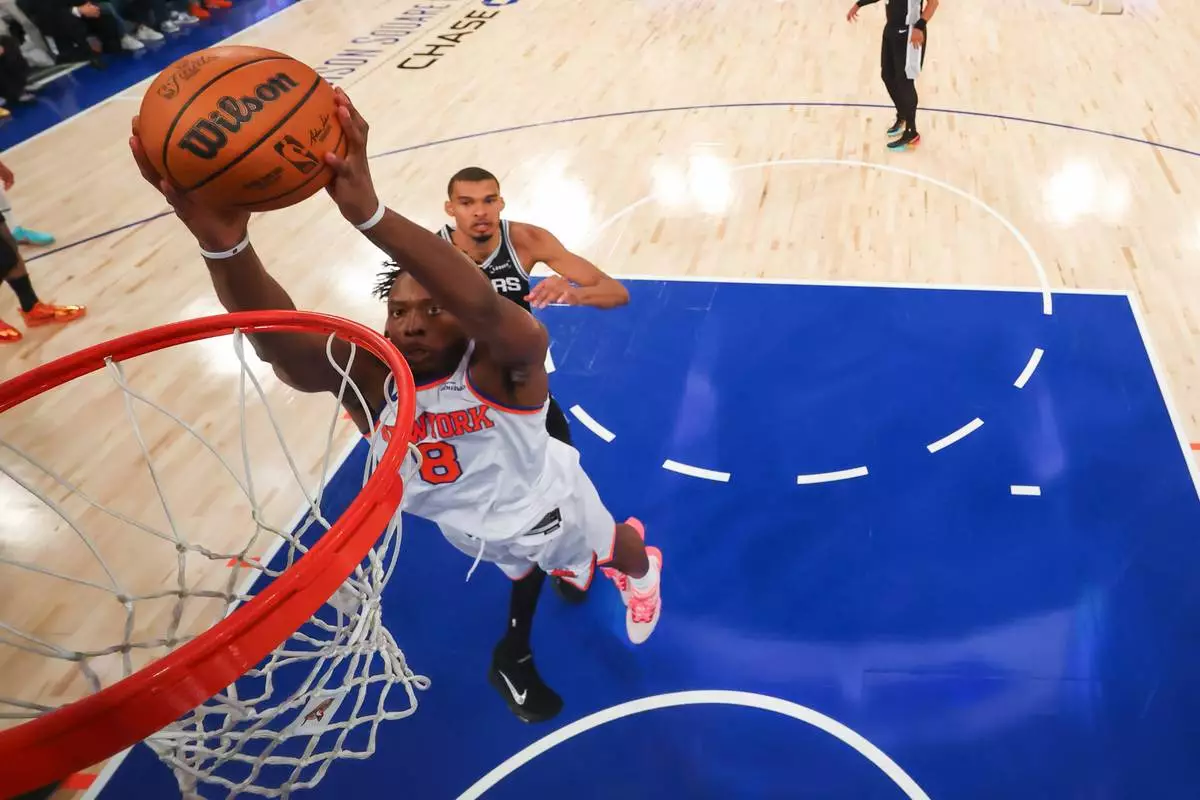
New York Knicks forward Og Anunoby shoots against the San Antonio Spurs during the first half of Game 3 of the NBA Finals basketball series, Monday, June 8, 2026, in New York. (Geoff Burke/Pool Photo via AP)
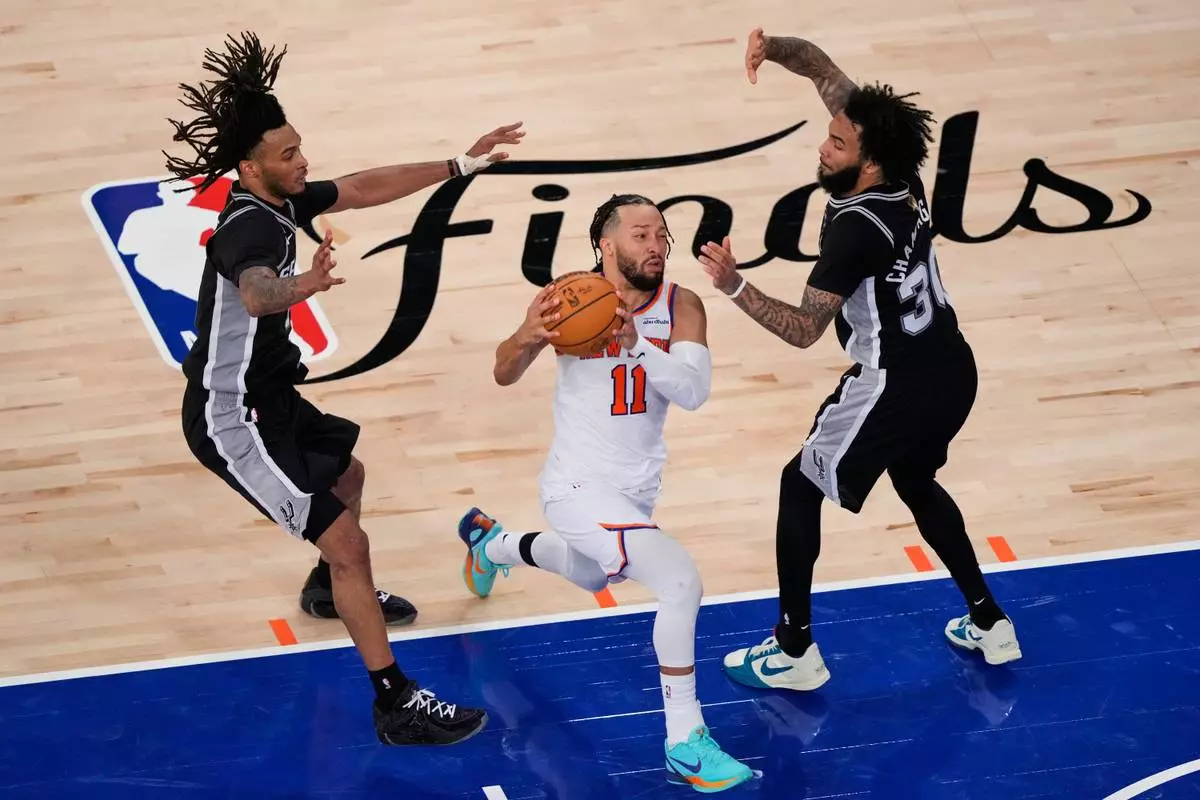
New York Knicks guard Jalen Brunson (11) drives past San Antonio Spurs defenders during the second half of Game 3 of the NBA Finals basketball series, Monday, June 8, 2026, in New York. (AP Photo/Yuki Iwamura)
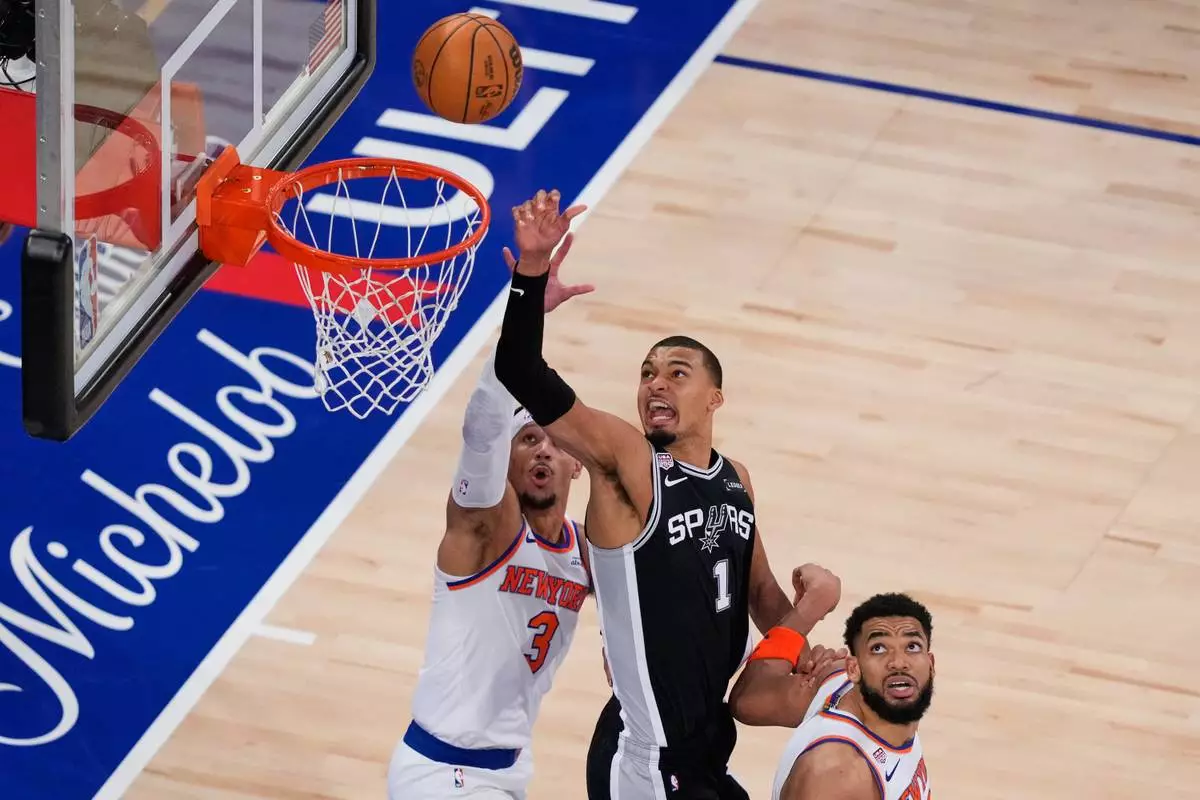
San Antonio Spurs forward Victor Wembanyama (1) shoots as New York Knicks guard Josh Hart (3) and center Karl-Anthony Towns (32) defend during the second half of Game 3 of the NBA Finals basketball series, Monday, June 8, 2026, in New York. (AP Photo/Yuki Iwamura)
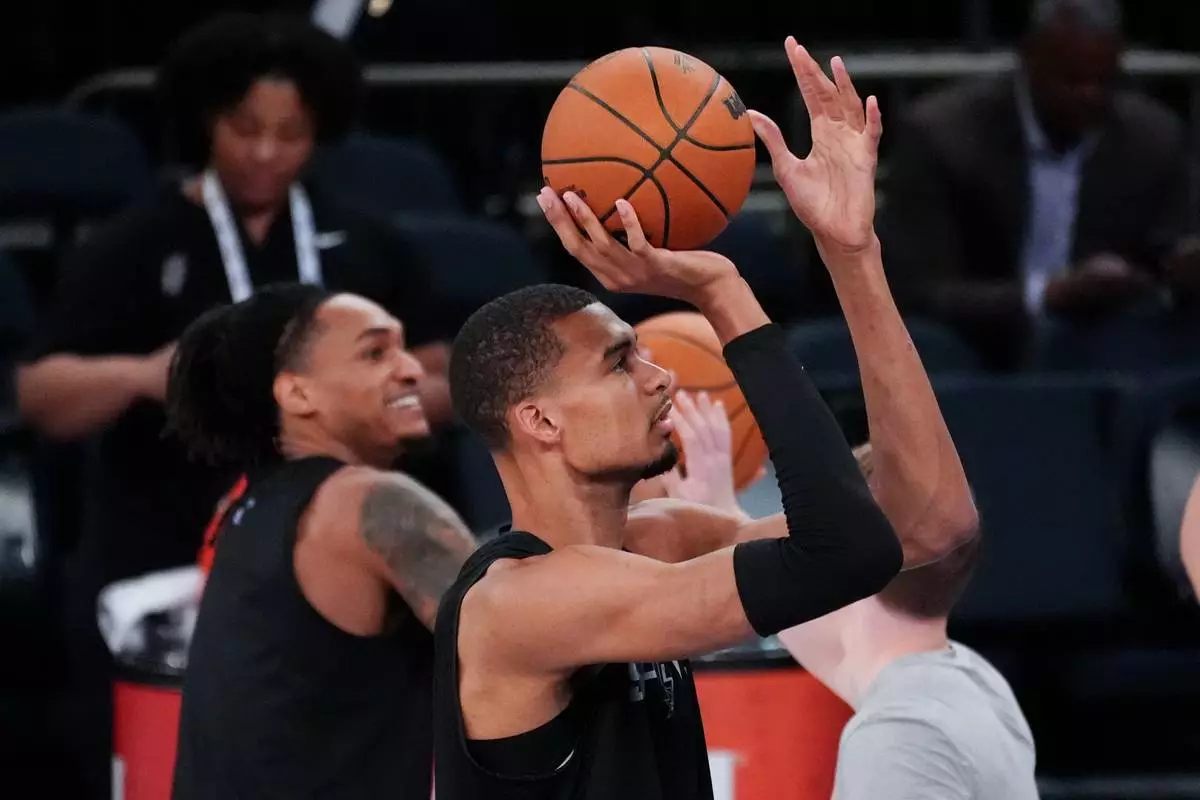
San Antonio Spurs forward Victor Wembanyama shoots during practice prior to Game 3 of the NBA Finals basketball series against the New York Knicks, Sunday, June 7, 2026, in New York. (AP Photo/Ross D. Franklin)
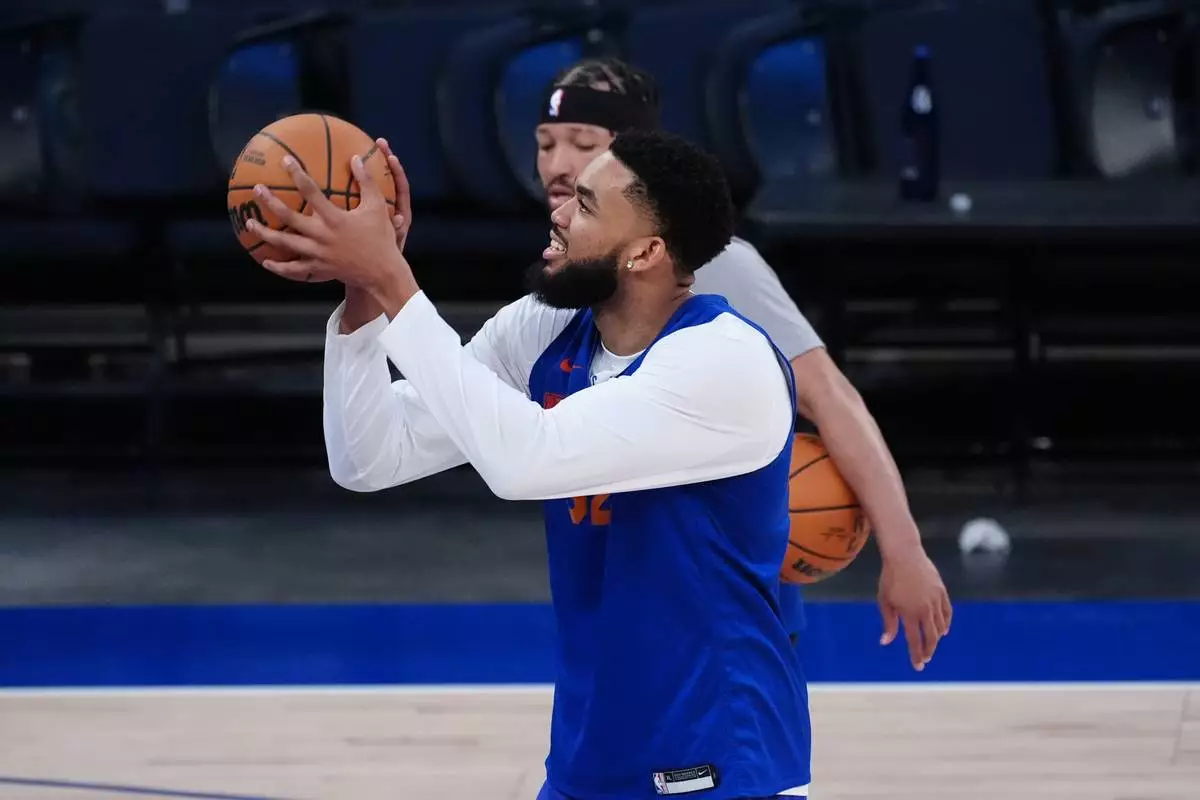
New York Knicks center Karl-Anthony Towns runs drills prior to Game 3 of the NBA Finals basketball series against the San Antonio Spurs, Sunday, June 7, 2026, in New York. (AP Photo/Ross D. Franklin)
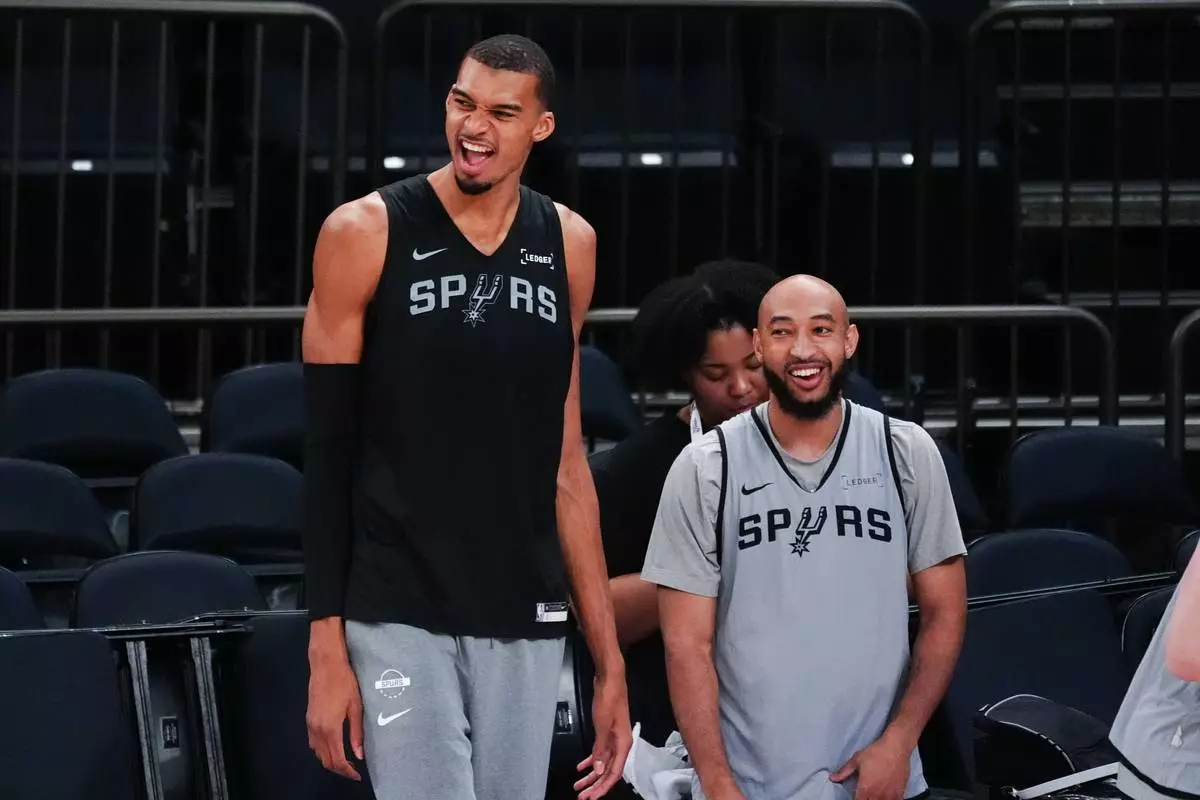
San Antonio Spurs forward Victor Wembanyama laughs during practice prior to Game 3 of the NBA Finals basketball series against the New York Knicks, Sunday, June 7, 2026, in New York. (AP Photo/Ross D. Franklin)
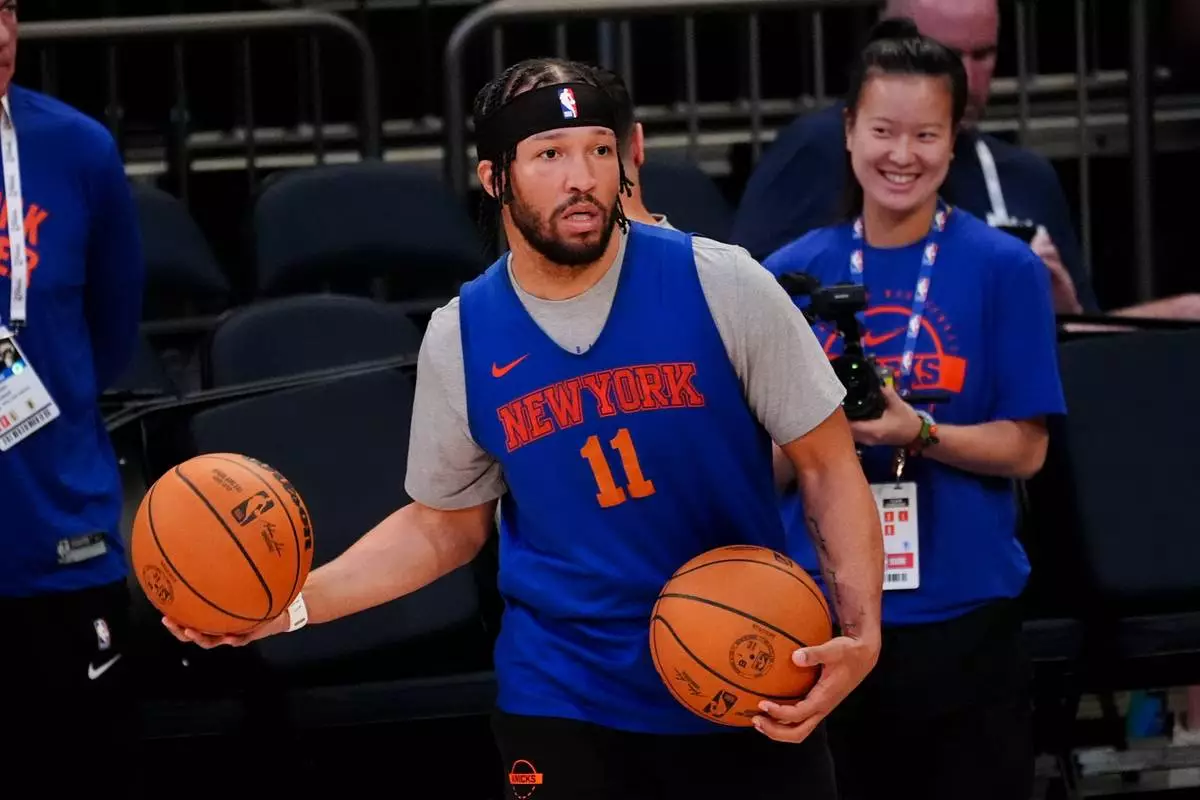
New York Knicks guard Jalen Brunson runs drills prior to Game 3 of the NBA Finals basketball series against the San Antonio Spurs, Sunday, June 7, 2026, in New York. (AP Photo/Ross D. Franklin)