The rapid rise of ChatGPT and other generative AI systems has disrupted education, transforming how students learn and study.
Students everywhere have turned to chatbots to help with their homework, but artificial intelligence's capabilities have blurred the lines about what it should — and shouldn't — be used for.
The technology's widespread adoption in many other parts of life also adds to the confusion about what constitutes academic dishonesty.
Here are some do's and don'ts on using AI for schoolwork:
Chatbots are so good at answering questions with detailed written responses that it's tempting to just take their work and pass it off as your own.
But in case it isn't already obvious, AI should not be used as a substitute for putting in the work. And it can't replace our ability to think critically.
You wouldn't copy and paste information from a textbook or someone else's essay and pass it off as your own. The same principle applies to chatbot replies.
“AI can help you understand concepts or generate ideas, but it should never replace your own thinking and effort,” the University of Chicago says in its guidance on using generative AI. “Always produce original work, and use AI tools for guidance and clarity, not for doing the work for you.”
So don't shy away from putting pen to paper — or your fingers to the keyboard — to do your own writing.
“If you use an AI chatbot to write for you — whether explanations, summaries, topic ideas, or even initial outlines — you will learn less and perform more poorly on subsequent exams and attempts to use that knowledge,” Yale University's Poorvu Center for Teaching and Learning says.
Experts say AI shines when it's used like a tutor or a study buddy. So try using a chatbot to explain difficult concepts or brainstorm ideas, such as essay topics.
California high school English teacher Casey Cuny advises his students to use ChatGPT to quiz themselves ahead of tests.
He tells them to upload class notes, study guides and any other materials used in class, such as slideshows, to the chatbot, and then tell it which textbook and chapter the test will focus on.
Then, students should prompt the chatbot to: “Quiz me one question at a time based on all the material cited, and after that create a teaching plan for everything I got wrong.”
Cuny posts AI guidance in the form of a traffic light on a classroom screen. Green-lighted uses include brainstorming, asking for feedback on a presentation or doing research. Red lighted, or prohibited AI use: Asking an AI tool to write a thesis statement, a rough draft or revise an essay. A yellow light is when a student is unsure if AI use is allowed, in which case he tells them to come and ask him.
Or try using ChatGPT’s voice dictation function, said Sohan Choudhury, CEO of Flint, an AI-powered education platform.
“I’ll just brain dump exactly what I get, what I don’t get” about a subject, he said. “I can go on a ramble for five minutes about exactly what I do and don’t understand about a topic. I can throw random analogies at it, and I know it’s going to be able to give me something back to me tailored based on that.”
As AI has shaken up the academic world, educators have been forced to set out their policies on the technology.
In the U.S., about two dozen states have state-level AI guidance for schools, but it's unevenly applied.
It's worth checking what your school, college or university says about AI. Some might have a broad institutionwide policy.
The University of Toronto's stance is that “students are not allowed to use generative AI in a course unless the instructor explicitly permits it” and students should check course descriptions for do's and don'ts.
Many others don't have a blanket rule.
The State University of New York at Buffalo “has no universal policy,” according to its online guidance for instructors. “Instructors have the academic freedom to determine what tools students can and cannot use in pursuit of meeting course learning objectives. This includes artificial intelligence tools such as ChatGPT.”
AI is not the educational bogeyman it used to be.
There’s growing understanding that AI is here to stay and the next generation of workers will have to learn how to use the technology, which has the potential to disrupt many industries and occupations.
So students shouldn't shy away from discussing its use with teachers, because transparency prevents misunderstandings, said Choudhury.
“Two years ago, many teachers were just blanket against it. Like, don’t bring AI up in this class at all, period, end of story,” he said. But three years after ChatGPT's debut, “many teachers understand that the kids are using it. So they’re much more open to having a conversation as opposed to setting a blanket policy.”
Teachers say they’re aware that students are wary of asking if AI use is allowed for fear they’ll be flagged as cheaters. But clarity is key because it’s so easy to cross a line without knowing it, says Rebekah Fitzsimmons, chair of the AI faculty advising committee at Carnegie Mellon University’s Heinz College of Information Systems and Public Policy.
“Often, students don’t realize when they’re crossing a line between a tool that is helping them fix content that they’ve created and when it is generating content for them,” says Fitzsimmons, who helped draft detailed new guidelines for students and faculty that strive to create clarity.
The University of Chicago says students should cite AI if it was used to come up with ideas, summarize texts, or help with drafting a paper.
“Acknowledge this in your work when appropriate,” the university says. “Just as you would cite a book or a website, giving credit to AI where applicable helps maintain transparency.”
Educators want students to use AI in a way that's consistent with their school's values and principles.
The University of Florida says students should familiarize themselves with the school's honor code and academic integrity policies “to ensure your use of AI aligns with ethical standards.”
Oxford University says AI tools must be used “responsibly and ethically” and in line with its academic standards.
“You should always use AI tools with integrity, honesty, and transparency, and maintain a critical approach to using any output generated by these tools,” it says.
Is there a tech topic that you think needs explaining? Write to us at onetechtip@ap.org with your suggestions for future editions of One Tech Tip.

FILE - Chat GPT app icon is seen on a smartphone screen, Aug. 4, 2025, in Chicago. (AP Photo/Kiichiro Sato, File)
WASHINGTON (AP) — The Supreme Court is casting doubt on President Donald Trump’s restrictions on birthright citizenship in a consequential case that was magnified by Trump’s unparalleled presence in the courtroom.
Conservative and liberal justices on Wednesday questioned whether Trump's order declaring that children born to parents who are in the United States illegally or temporarily are not American citizens comports with either the Constitution or federal law.
Trump, the first sitting president to attend arguments at the nation’s highest court, spent just over an hour inside the courtroom for arguments made by the Republican administration's top Supreme Court lawyer, Solicitor General D. John Sauer. The president departed shortly after lawyer Cecillia Wang began her presentation in defense of broad birthright citizenship.
Trump heard Sauer face one skeptical question after another. Justices asked about the legal basis for the order and voiced more practical concerns.
“Is this happening in the delivery room?” Justice Ketanji Brown Jackson asked, drilling down into the logistics of how the government would actually figure out who’s entitled to citizenship and who’s not.
Justice Clarence Thomas sounded the most likely among the nine justices to side with Trump.
“How much of the debates around the 14th Amendment had anything to do with immigration?” Thomas asked, pointing out that the purpose of the amendment was to grant citizenship to Black people, including freed slaves.
The justices are hearing Trump’s appeal of a lower-court ruling from New Hampshire that struck down the citizenship restrictions, one of several courts that have blocked them. They have not taken effect anywhere in the country.
The case frames another test of Trump's assertions of executive power that defy long-standing precedent for a court that has largely ruled in the president's favor — but with some notable exceptions that Trump has responded to with starkly personal criticisms of the justices. A definitive ruling is expected by early summer.
The birthright citizenship order, which Trump signed the first day of his second term, is part of his Republican administration’s broad immigration crackdown.
Birthright citizenship is the first Trump immigration-related policy to reach the court for a final ruling. The justices previously struck down global tariffs Trump had imposed under an emergency powers law that had never been used that way.
Trump reacted furiously to the late February tariffs decision, saying he was ashamed of the justices who ruled against him and calling them unpatriotic.
He issued a preemptive broadside against the court on Sunday on his Truth Social platform. “Birthright Citizenship is not about rich people from China, and the rest of the World, who want their children, and hundreds of thousands more, FOR PAY, to ridiculously become citizens of the United States of America. It is about the BABIES OF SLAVES!,” the president wrote. “Dumb Judges and Justices will not a great Country make!”
Trump's order would upend the long-standing view that the Constitution’s 14th Amendment, ratified in 1868, and federal law since 1940 confer citizenship on everyone born on American soil, with narrow exceptions for the children of foreign diplomats and those born to a foreign occupying force.
The 14th Amendment was intended to ensure that Black people, including former slaves, had citizenship, though the Citizenship Clause is written more broadly. “All persons born or naturalized in the United States, and subject to the jurisdiction thereof, are citizens of the United States and of the State wherein they reside,” it reads.
In a series of decisions, lower courts have struck down the executive order as illegal, or likely so, under the Constitution and federal law. The decisions have invoked the high court's 1898 ruling in Wong Kim Ark, which held that the U.S.-born child of Chinese nationals was a citizen.
The Trump administration argues that the common view of citizenship is wrong, asserting that children of noncitizens are not “subject to the jurisdiction” of the United States and therefore are not entitled to citizenship.
The court should use the case to set straight “long-enduring misconceptions about the Constitution’s meaning,” wrote Sauer, the solicitor general.
No court has accepted that argument, and lawyers for pregnant women whose children would be affected by the order said the Supreme Court should not be the first to do so.
“We have the president of the United States trying to radically reinterpret the definition of American citizenship,” said Cecillia Wang, the American Civil Liberties Union legal director who is facing off against Sauer at the Supreme Court.
More than one-quarter of a million babies born in the U.S. each year would be affected by the executive order, according to research by the Migration Policy Institute and Pennsylvania State University’s Population Research Institute.
While Trump has largely focused on illegal immigration in his rhetoric and actions, the birthright restrictions also would apply to people who are legally in the United States, including students and applicants for green cards, or permanent resident status.
Associated Press writer Darlene Superville contributed to this report.
Follow the AP’s coverage of the U.S. Supreme Court at https://apnews.com/hub/us-supreme-court.
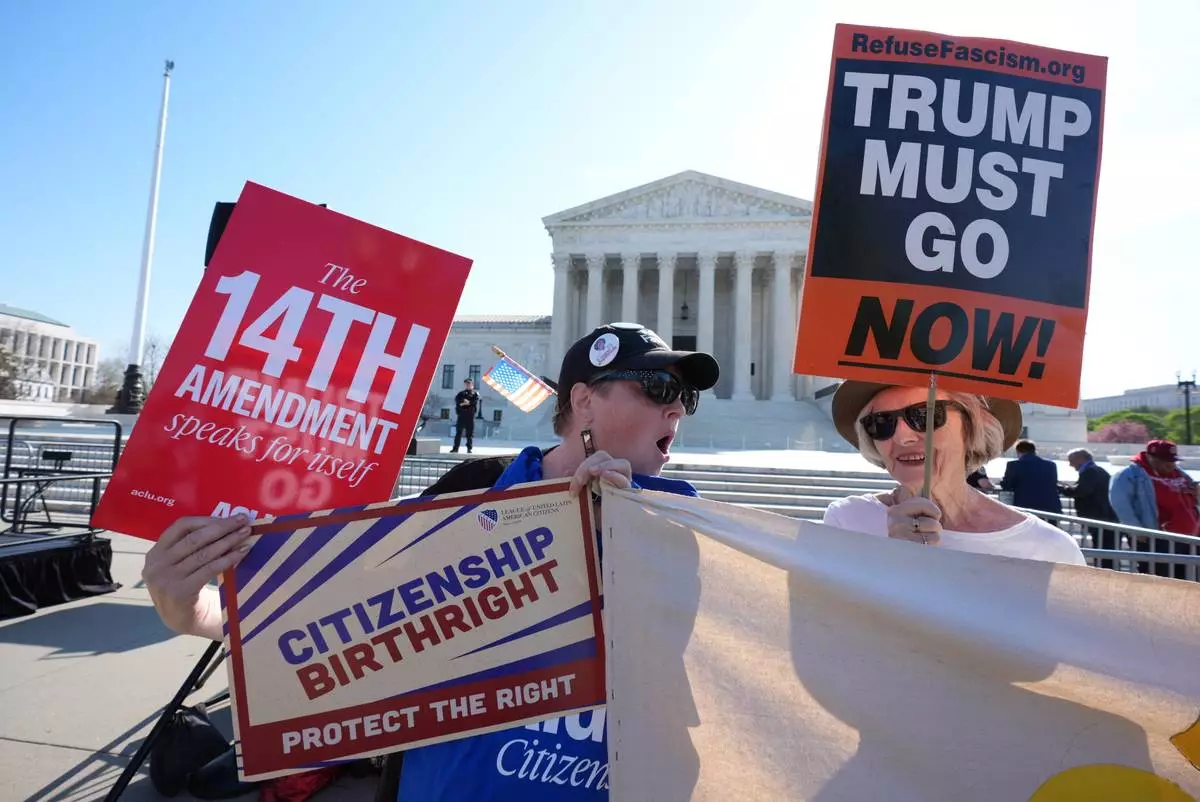
Pro and anti-Trump demonstrators rally outside the U.S. Supreme Court, before justices hear oral arguments on whether President Donald Trump can deny citizenship to children born to parents who are in the United States illegally or temporarily, on Capitol Hill, in Washington, Wednesday, April 1, 2026. (AP Photo/J. Scott Applewhite)
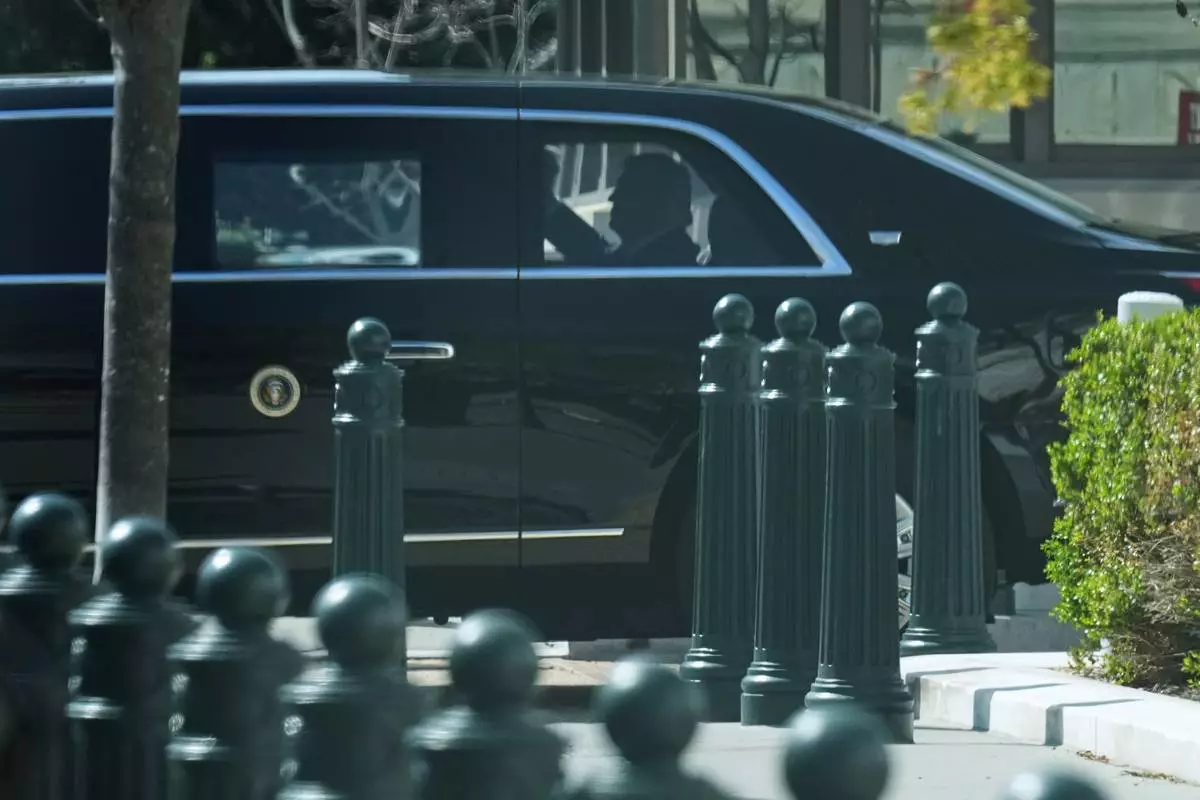
President Donald Trump leaves the U.S. Supreme Court, Wednesday, April 1, 2026, in Washington. (AP Photo/Mark Schiefelbein)

President Donald Trump's motorcade arrives at the U.S. Supreme Court, Wednesday, April 1, 2026, in Washington. (AP Photo/Tom Brenner)
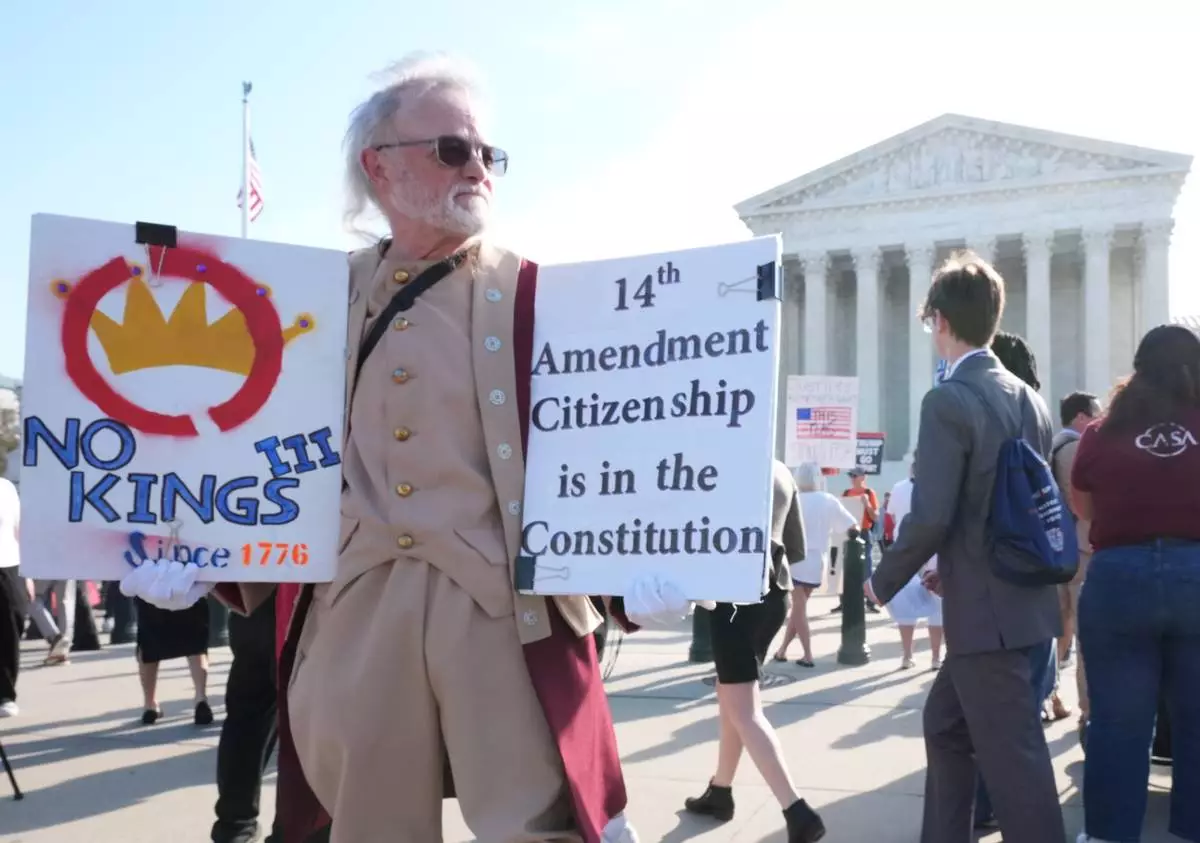
Pro and anti-Trump demonstrators rally outside the U.S. Supreme Court, before justices hear oral arguments on whether President Donald Trump can deny citizenship to children born to parents who are in the United States illegally or temporarily, on Capitol Hill, in Washington, Wednesday, April 1, 2026. (AP Photo/J. Scott Applewhite)

President Donald Trump's motorcade arrives at the U.S. Supreme Court, Wednesday, April 1, 2026, in Washington. (AP Photo/Tom Brenner)
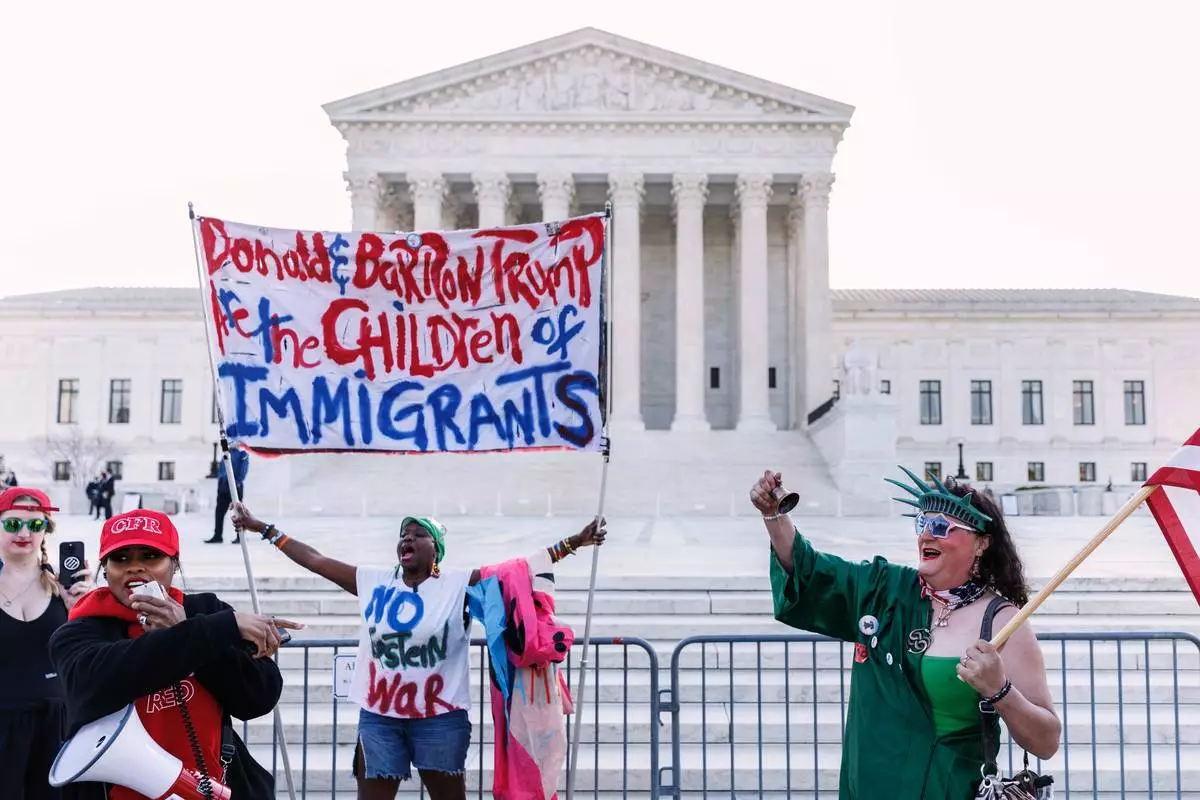
Demonstrators holding opposing views verbally engage ahead of President Donald Trump's arrival at the U.S. Supreme Court, Wednesday, April 1, 2026, in Washington. (AP Photo/Tom Brenner)
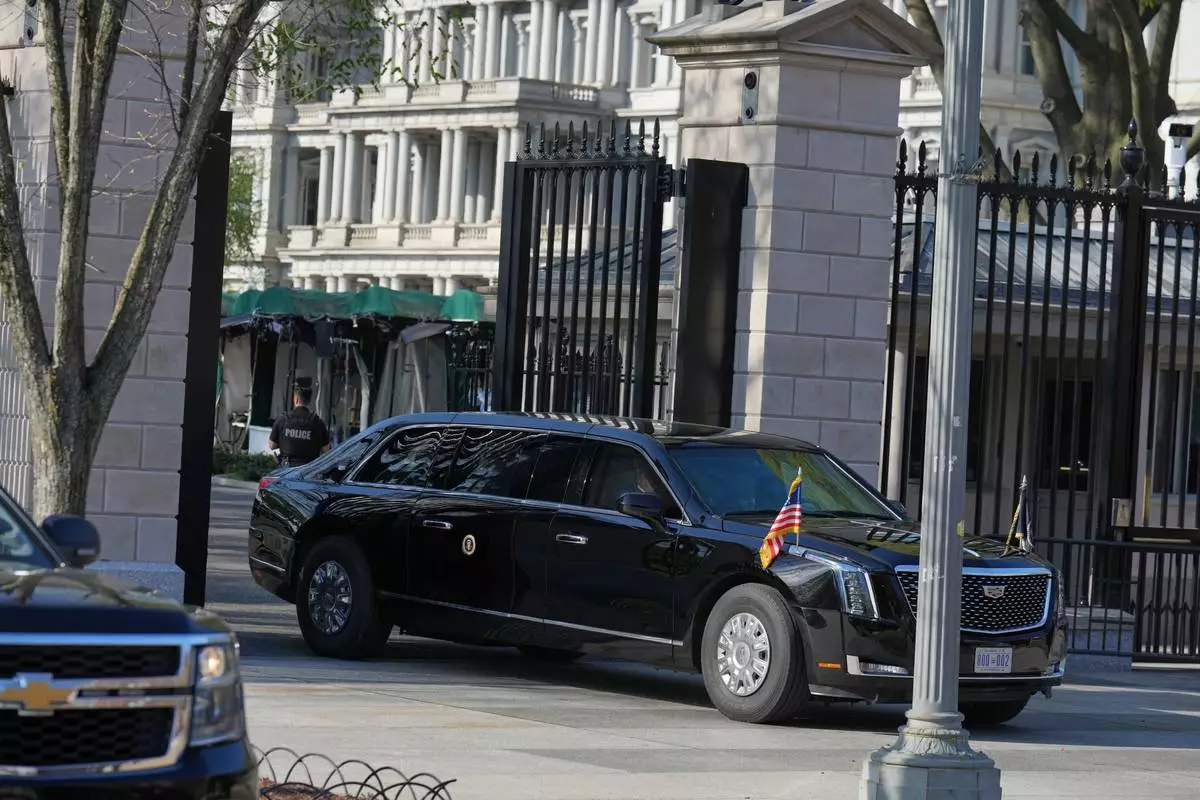
President Donald Trump's limo exits the White House en route to the Supreme Court, Wednesday, April 1, 2026, in Washington. (AP Photo/Mark Schiefelbein)
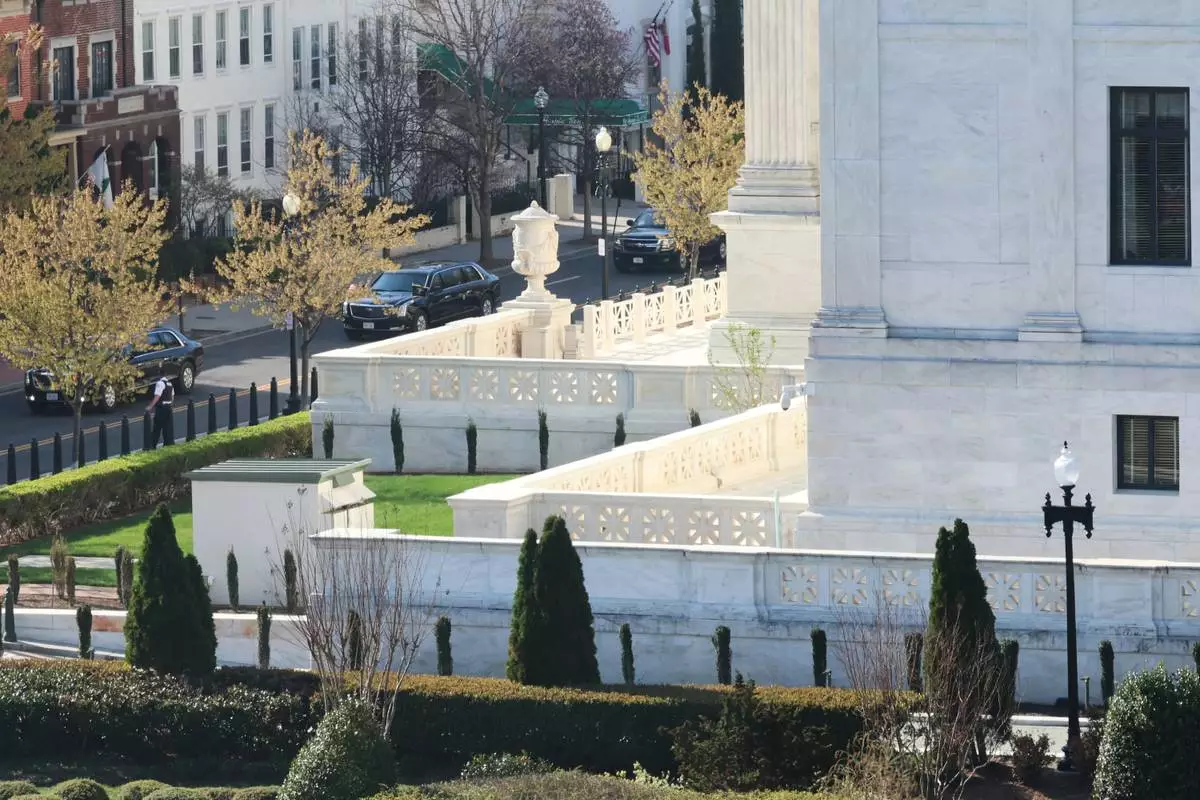
President Donald Trump's motorcade arrives at the U.S. Supreme Court, Wednesday, April 1, 2026, in Washington. (AP Photo/Tom Brenner)

Pro and anti-Trump demonstrators rally outside the U.S. Supreme Court, before justices hear oral arguments on whether President Donald Trump can deny citizenship to children born to parents who are in the United States illegally or temporarily, on Capitol Hill, in Washington, Wednesday, April 1, 2026. (AP Photo/J. Scott Applewhite)
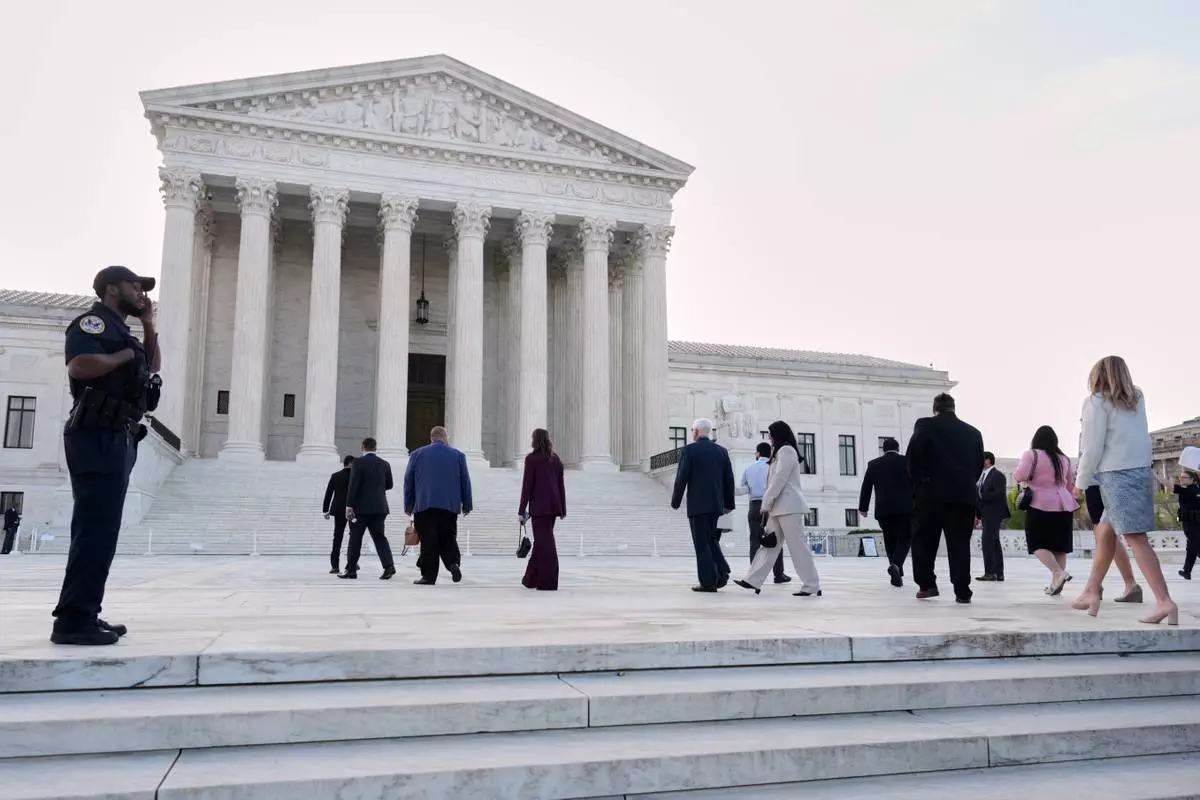
People arrive to walk inside the U.S. Supreme Court, on Capitol Hill in Washington, Wednesday, April 1, 2026. The Supreme Court justices will hear oral arguments today on whether President Donald Trump can deny citizenship to children born to parents who are in the United States illegally or temporarily. (AP Photo/J. Scott Applewhite)
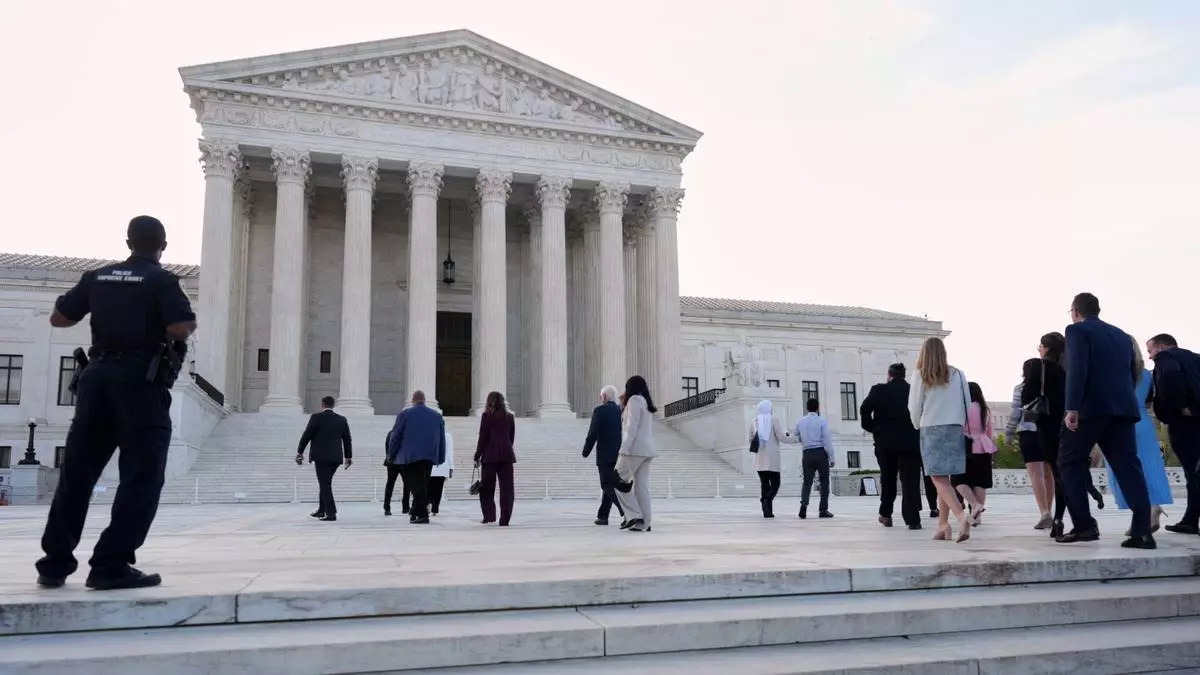
People arrive to walk inside the U.S. Supreme Court, on Capitol Hill in Washington, Wednesday, April 1, 2026. The Supreme Court justices will hear oral arguments today on whether President Donald Trump can deny citizenship to children born to parents who are in the United States illegally or temporarily. (AP Photo/J. Scott Applewhite)
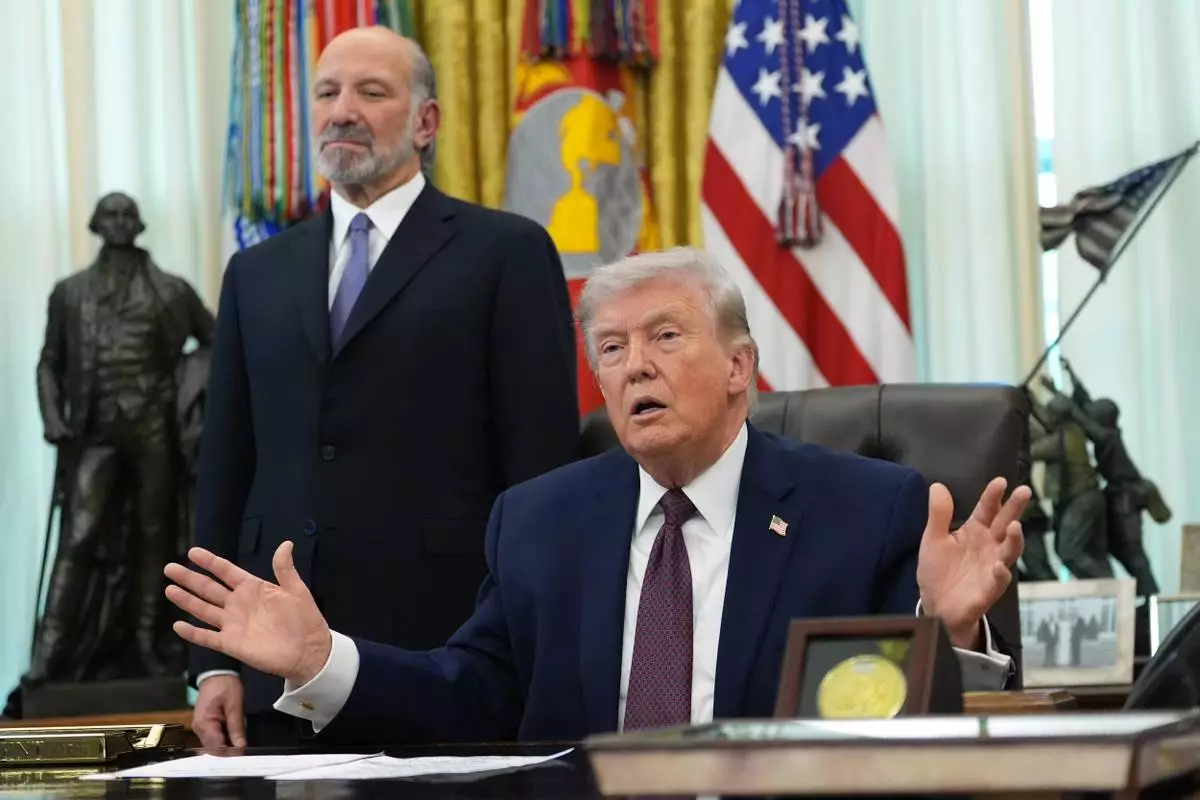
President Donald Trump answers questions from reporters after signing an executive order in the Oval Office of the White House Tuesday, March 31, 2026, in Washington, as Commerce Secretary Howard Lutnick listens. (AP Photo/Alex Brandon)
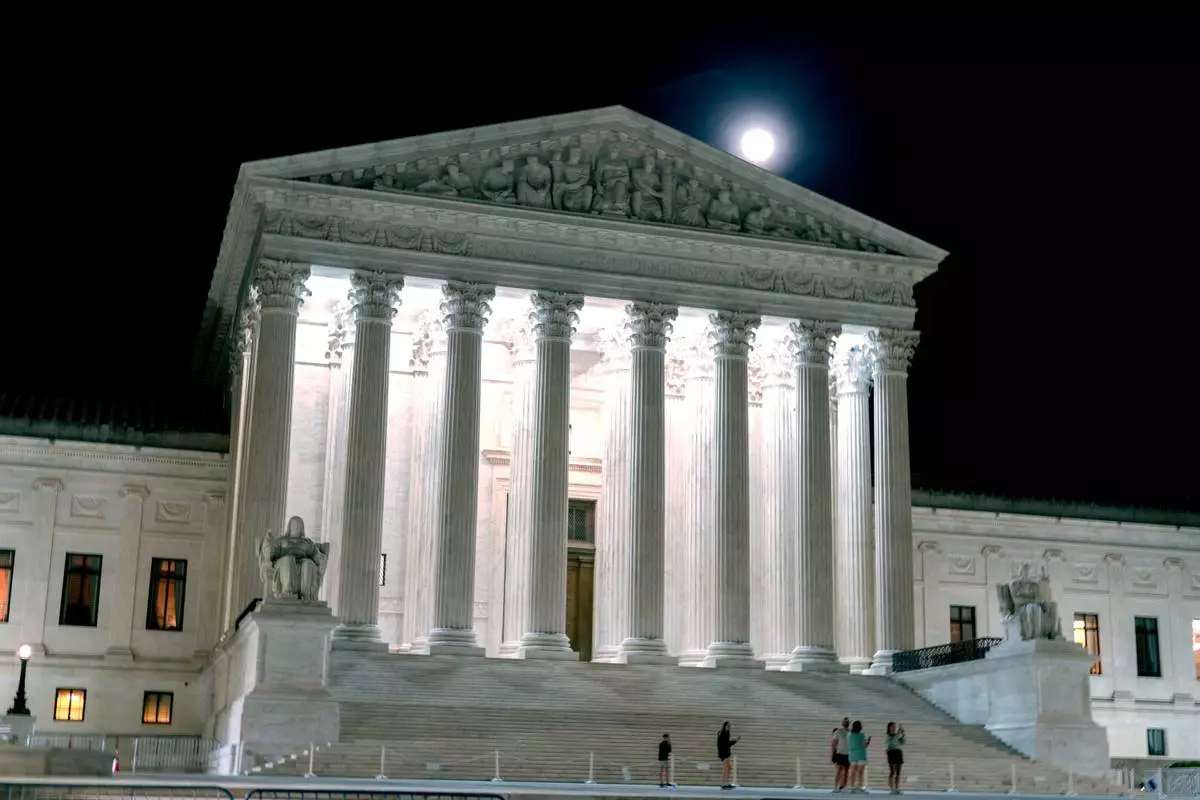
The U.S. Supreme Court is seen as the moon rises Tuesday, March 31, 2026, in Washington. (AP Photo/Jose Luis Magana)