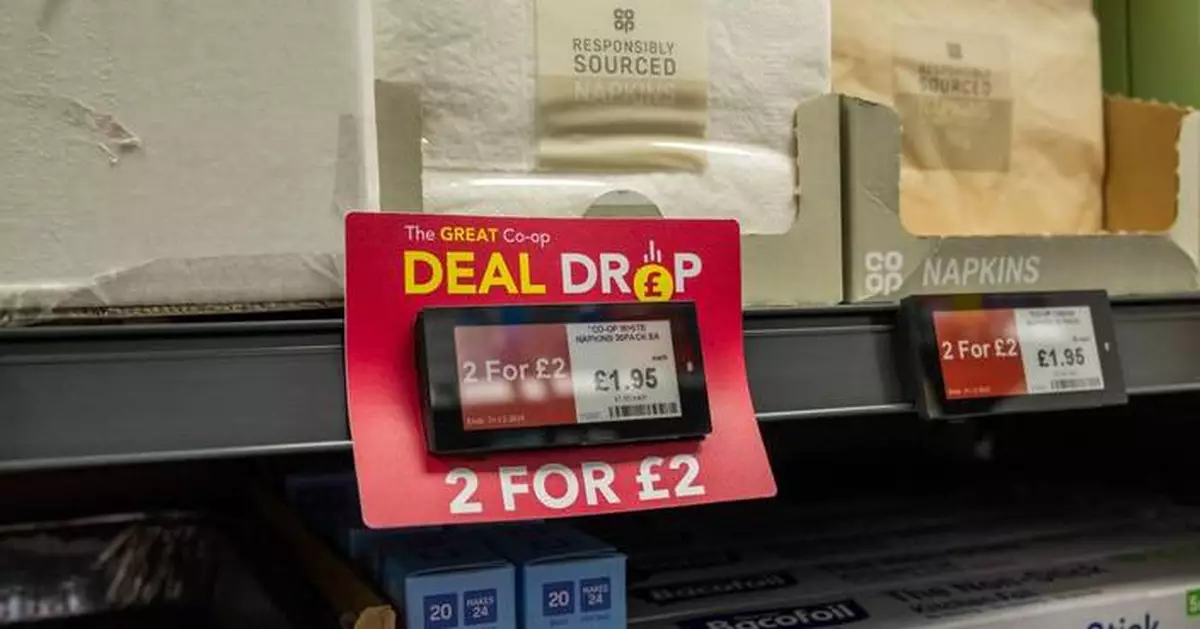
LONDON--(BUSINESS WIRE)--Nov 20, 2025--
SOLUM, a global leader in smart retail solutions and Electronic Shelf Label (ESL) technology, has announced a strategic partnership with Lincolnshire Co-op to drive digital transformation across the society's store estate. Through this partnership, SOLUM will deploy its premium Newton Pro Electronic Shelf Labels to approximately 100 Lincolnshire Co-op stores by the end of 2025, enhancing operational efficiency, sustainability, and the overall customer experience.
This press release features multimedia. View the full release here: https://www.businesswire.com/news/home/20251120950262/en/
SOLUM's Newton Pro ESL represents the pinnacle of retail technology innovation, combining exceptional reliability, durability, advanced interactive features, and industry-leading battery life. The solution enables real-time price updates, dynamic promotional displays, and seamless integration with existing retail systems, providing retailers with unprecedented operational flexibility whilst reducing costs and environmental impact.
For Lincolnshire Co-op, this investment in SOLUM's cutting-edge technology underscores the society's commitment to innovation that benefits its 300,000 members and the local community. By integrating Newton Pro across its store network, Lincolnshire Co-op will modernise operations, replace paper price labels with real-time digital pricing and promotions, and enable its 2,900 colleagues to focus more on assisting customers and delivering exceptional service.
The initiative also contributes significantly to both organisations' sustainability goals. SOLUM's Newton Pro ESL eliminates paper waste from traditional pricing labels, supports operational efficiency, and establishes a robust digital foundation for continued innovation in line with community needs and long-term environmental objectives.
Mark Duckworth, Country Manager at SOLUM UK & Ireland, commented:
"We're delighted to partner with Lincolnshire Co-op on this digital transformation journey. This partnership exemplifies SOLUM's commitment to supporting UK retailers with world-class technology and customer-tailored service. Our Newton Pro ESL solution has been specifically designed to meet the evolving needs of modern retailers, delivering measurable improvements in operational efficiency, customer engagement, and sustainability. We look forward to driving innovation and sustainable growth across the UK retail sector."
Andy Warman, Chief Transformation Officer at Lincolnshire Co-op, added:
“At Lincolnshire Co-op, our goal has always been to make life better in our communities. Embracing digital solutions such as electronic shelf labels enables us to operate more efficiently and sustainably, while allowing our colleagues to spend more time helping our customers and members alike. This partnership with SOLUM helps us build strength for the long term.”
About SOLUM
Founded in 2015 as a spin-off from Samsung Electro-Mechanics, SOLUM is a publicly traded company listed on the KOSPI stock exchange. The company has established itself as a global leader in power solutions, display technologies, and electronic shelf labels (ESL), driving innovation across the retail sector worldwide.
SOLUM's comprehensive portfolio of retail solutions includes the award-winning Newton Pro ESL, which combines cutting-edge e-paper display technology with advanced IoT capabilities. With installations in thousands of stores globally, SOLUM has demonstrated its ability to deliver measurable ROI through improved operational efficiency, enhanced customer experience, and reduced environmental impact.
SOLUM is rapidly expanding its presence in the UK and Ireland, partnering with leading retailers to transform their stores with advanced ESL technology. With a strong commitment to customer-centric innovation and sustainable retail transformation, SOLUM continues to develop high-quality solutions proven to increase operational efficiency, enhance customer engagement, and drive sales growth.
Learn more at https://www.solumesl.com/en
About Lincolnshire Co-op
Lincolnshire Co-op is an independent co-operative society. Its purpose is to bring together ideas, energy and resources to improve the lives of those in the community. It has around 300,000 members and 2,900 local colleagues in Lincolnshire and the surrounding counties and an elected board of directors who oversee the business.
The society provides valued services and supports the local economy from outlets across its trading area including food stores, filling stations, post offices, travel branches, funeral homes, a florist, a crematorium and community libraries. It also cares for people's health and wellbeing through its pharmacies and support for a network of wellbeing walks. Local good causes benefit through its Community Champions scheme, and together, colleagues and members also look after the local environment through volunteering.
As well as its trading outlets, Lincolnshire Co-op owns properties, from flats and houses to commercial premises. The society brings land and buildings back into use to create attractive environments. With Lincolnshire Co-op as landlord, rents stay local and are invested in schemes that benefit the community.
For more information, visit https://www.lincolnshire.coop/
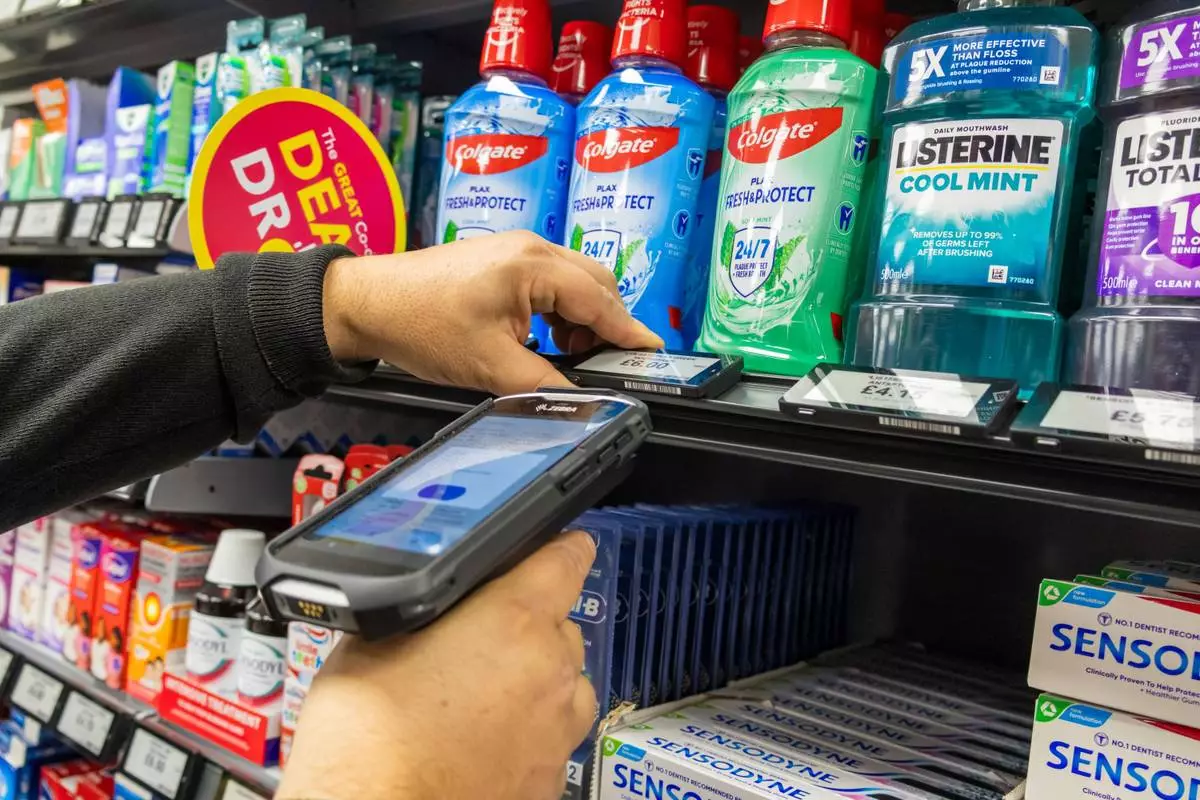
Newton Pro ESL provides retailers with unprecedented operational flexibility whilst reducing costs and environmental impact
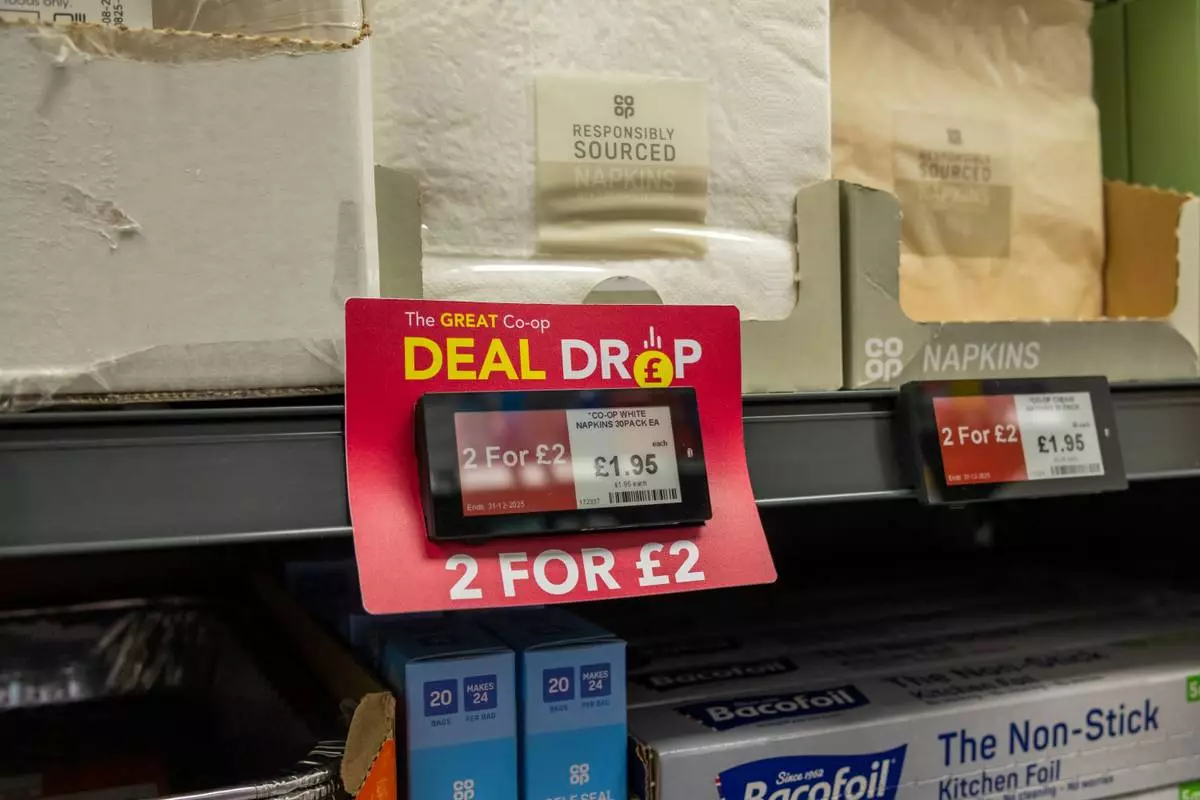
SOLUM's Newton Pro ESL enables real-time price updates, dynamic promotional displays, and seamless integration with existing retail systems
NEW YORK (AP) — Stocks are rushing higher worldwide, and oil prices are easing Wednesday as hopes build that the war with Iran could end soon. That's even though some of the signals investors saw as hopeful are already under dispute, and several prior bouts of optimism in financial markets quickly got undercut by continued, fierce fighting in the war.
The S&P 500 rallied 0.9% and added to its leap from the day before, which was its best since last spring. That followed even bigger gains for stock markets across Europe and Asia, including an 8.4% surge in South Korea, which were catching up to Wall Street’s rally from Tuesday.
The Dow Jones Industrial Average was up 294 points, or 0.6%, as of 2:08 p.m. Eastern time, and the Nasdaq composite was 1.3% higher.
Oil prices also fell back toward $100 per barrel after President Donald Trump said late Tuesday that the U.S. military could end its offensive in two to three weeks.
That added to optimism following a couple tenuous signals of hope from earlier Tuesday that Wall Street latched onto, including a news report quoting Iran’s president as saying that it has “the necessary will to end the war” as long as certain requirements are met, including “guarantees to prevent a recurrence of aggression.”
The worry on Wall Street has been that the war may last a long time and keep oil and natural gas from the Persian Gulf out of global markets, which could create a brutal blast of inflation.
But hope has been quick to reverse to doubt on Wall Street, triggering manic swings back and forth for financial markets since the war with Iran began. Trump has also made statements that lifted markets, only to see the gains quickly disappear after increasing his military threats.
Shortly before Wall Street began trading on Wednesday, Trump claimed in a post on his social media network that Iran “has just asked the United States of America for a CEASEFIRE!”
“We will consider when Hormuz Strait is open, free, and clear. Until then, we are blasting Iran into oblivion or, as they say, back to the Stone Ages!!!”
But Iran’s Foreign Ministry spokesman, Esmail Baghaei, quickly called that claim “false and baseless,” according to a report on Iranian state television.
Oil prices also remain high, even if they’ve eased recently. The price for a barrel of Brent crude oil, the international standard, was sitting at $101.51 following its declines, which is still up from roughly $70 before the war began.
U.S. gasoline prices rose again overnight to a national average of $4.06 per gallon, according to the auto club AAA.
Iran, meanwhile, hit an oil tanker off the coast of Qatar and Kuwait’s airport on Wednesday while airstrikes battered Tehran as the fighting continued. Iran also continues to hold a grip on the Strait of Hormuz, where a fifth of the world’s traded oil passes during peacetime.
“De-escalation hopes have given markets a lift, but we think the effects of the war would, in many cases, persist even if the war did end soon,” Thomas Mathews, head of markets, Asia Pacific at Capital Economics, said in a research note Wednesday.
“It’s worth thinking through how markets might fare if the war were to end ‘very soon,’” he wrote. “Do markets have further to recover if sentiment continues to improve? The answer is almost certainly yes.”
The White House said Trump will deliver a public address Wednesday evening on the Iran war.
On Wall Street, most stocks rose as Big Tech powered the move higher. Gains of 3.8% for Alphabet and 0.8% for Nvidia were two of the strongest forces lifting the S&P 500.
Eli Lilly climbed 5.1% after U.S. regulators approved its GLP-1 pill for weight loss.
Such gains have pulled the S&P 500, which sits at the heart of many 401(k) accounts, back to within 5.6% of its all-time high set early this year. Just on Monday, the index briefly neared a 10% drop from its record, a steep-enough fall that professional investors have a name for it: a “correction.”
Nike sank 14.5% even though it reported a stronger profit for the latest quarter than expected. Analysts said it gave some lackluster financial forecasts.
Hasbro fell 4.8% after the toy company found someone had gained unauthorized access to its computer network and is working to assess the full impact.
Energy companies fell broadly as oil prices eased. Exxon Mobil slumped 5% and Chevron fell 4.9%.
In stock markets abroad, indexes leaped more than 2% in France and Germany. Asian markets had even bigger gains.
Tokyo’s Nikkei 225 jumped 5.2% after a survey showed business sentiment for major Japanese manufacturers improved despite worries about the Iran war.
In the bond market, Treasury yields held relatively steady after a report said U.S. retailers made more money in February than economists expected. A separate report said U.S. manufacturing growth last month was slightly faster than economists expected.
The 10-year Treasury yield rose to 4.32% from 4.30% late Tuesday.
AP Business Writers Chan Ho-him and Matt Ott contributed.
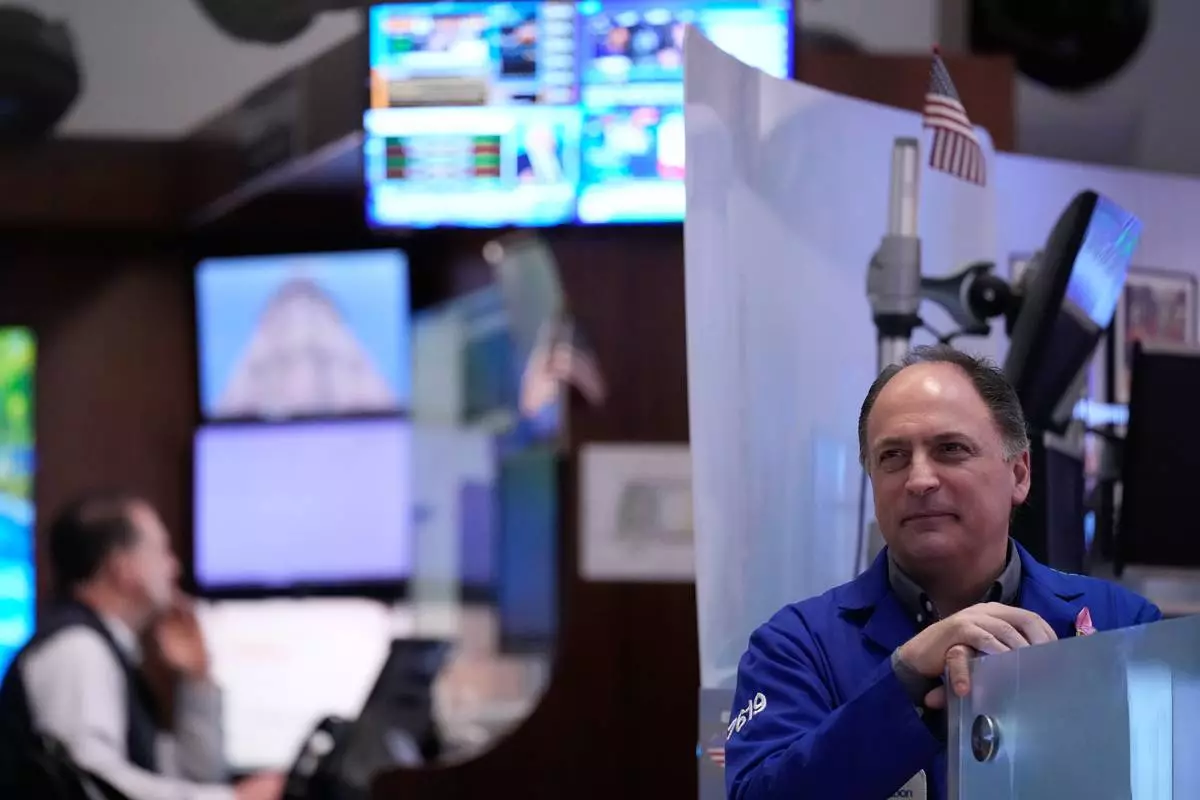
James Conti works on the floor at the New York Stock Exchange in New York, Tuesday, March 31, 2026. (AP Photo/Seth Wenig)
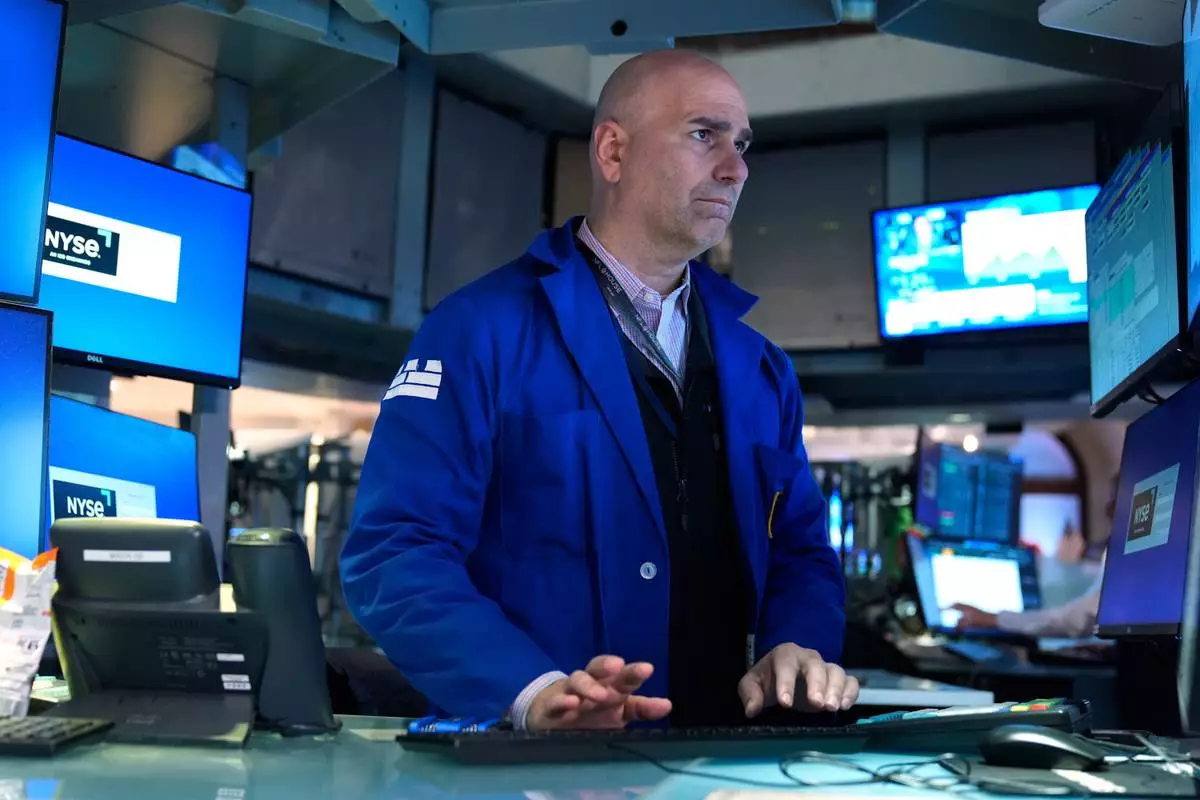
Philip Finale works on the floor at the New York Stock Exchange in New York, Tuesday, March 31, 2026. (AP Photo/Seth Wenig)
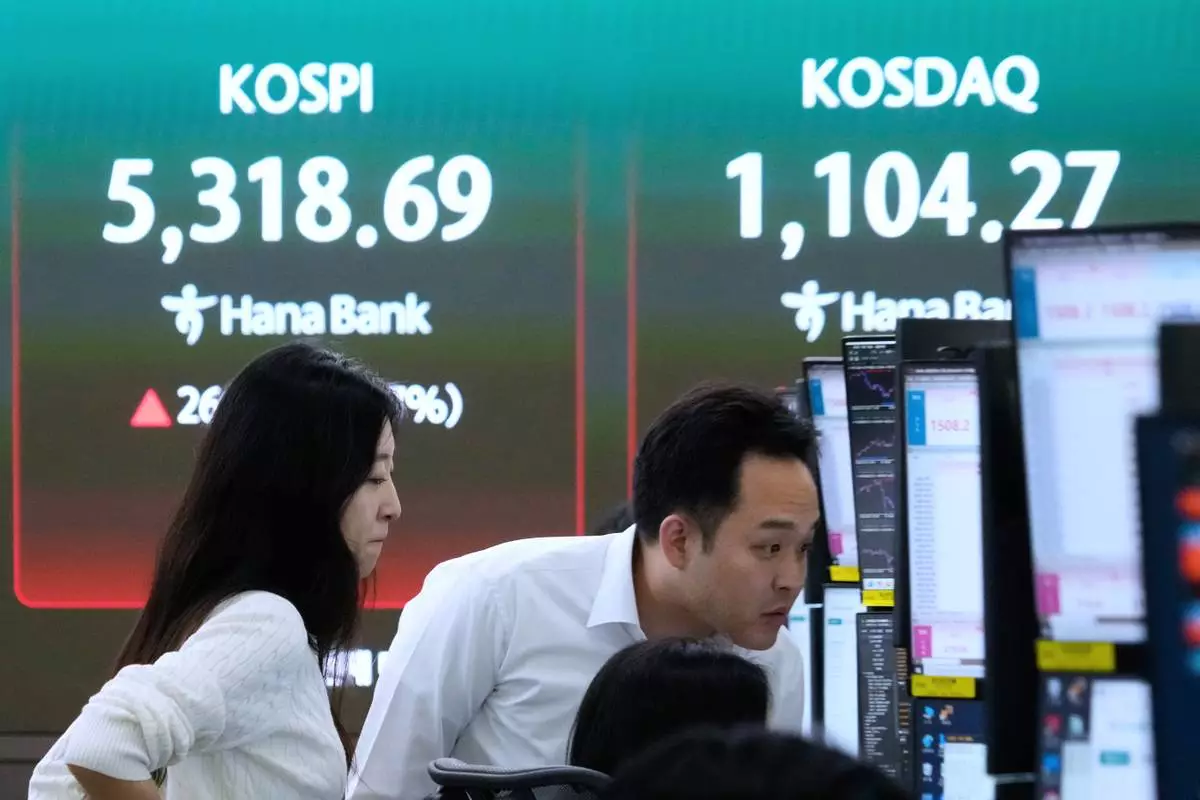
Currency traders watch monitors near a screen showing the Korea Composite Stock Price Index (KOSPI), left, at the foreign exchange dealing room of the Hana Bank headquarters in Seoul, South Korea, Wednesday, April 1, 2026. (AP Photo/Ahn Young-joon)
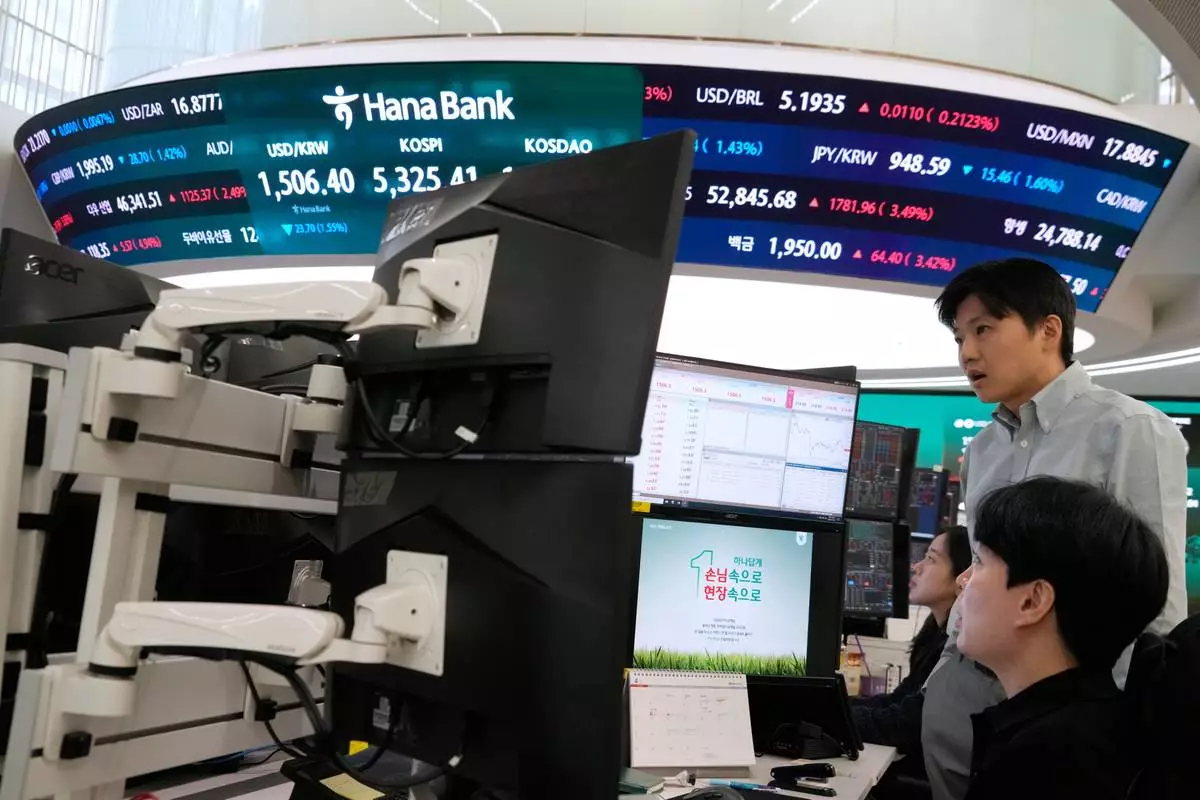
Currency traders watch monitors near a screen showing the Korea Composite Stock Price Index (KOSPI), top center, and the foreign exchange rate between U.S. dollar and South Korean won, top center left, at the foreign exchange dealing room of the Hana Bank headquarters in Seoul, South Korea, Wednesday, April 1, 2026. (AP Photo/Ahn Young-joon)

Currency traders work at the foreign exchange dealing room of the Hana Bank headquarters in Seoul, South Korea, Wednesday, April 1, 2026. (AP Photo/Ahn Young-joon)
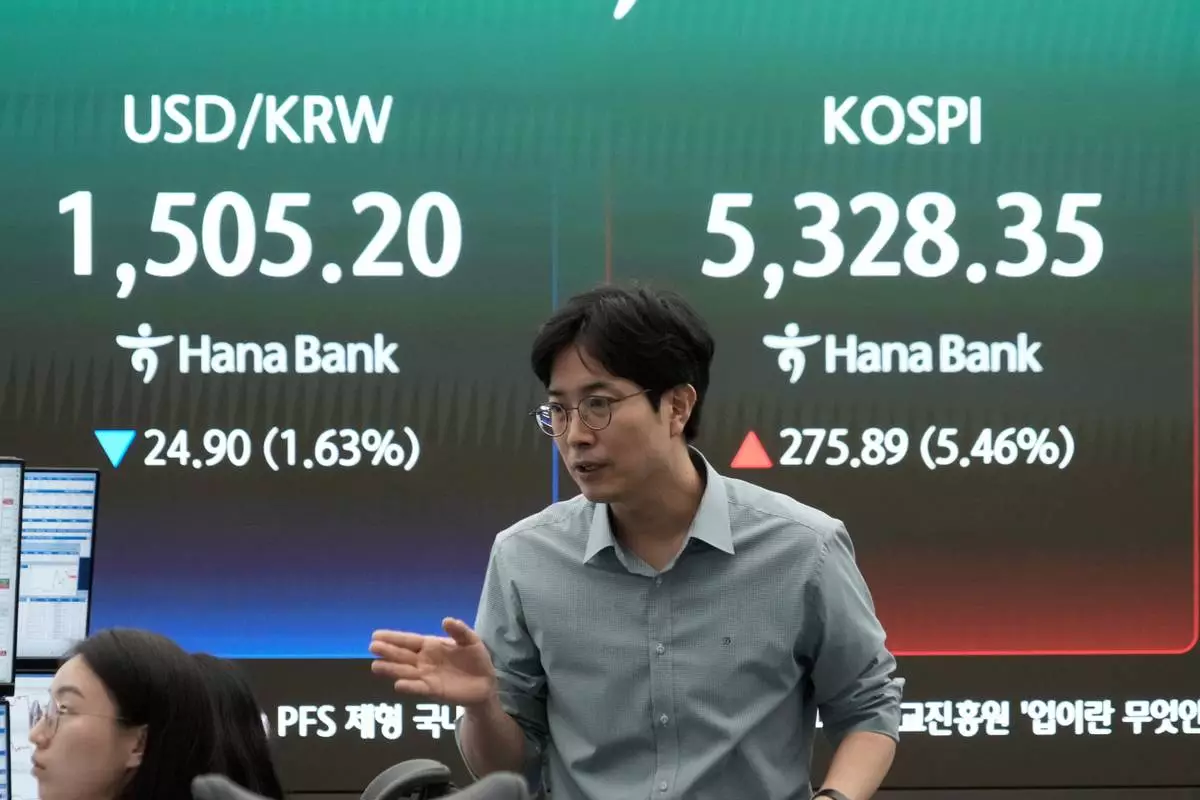
A currency trader reacts near a screen showing the Korea Composite Stock Price Index (KOSPI), right, and the foreign exchange rate between U.S. dollar and South Korean won at the foreign exchange dealing room of the Hana Bank headquarters in Seoul, South Korea, Wednesday, April 1, 2026. (AP Photo/Ahn Young-joon)
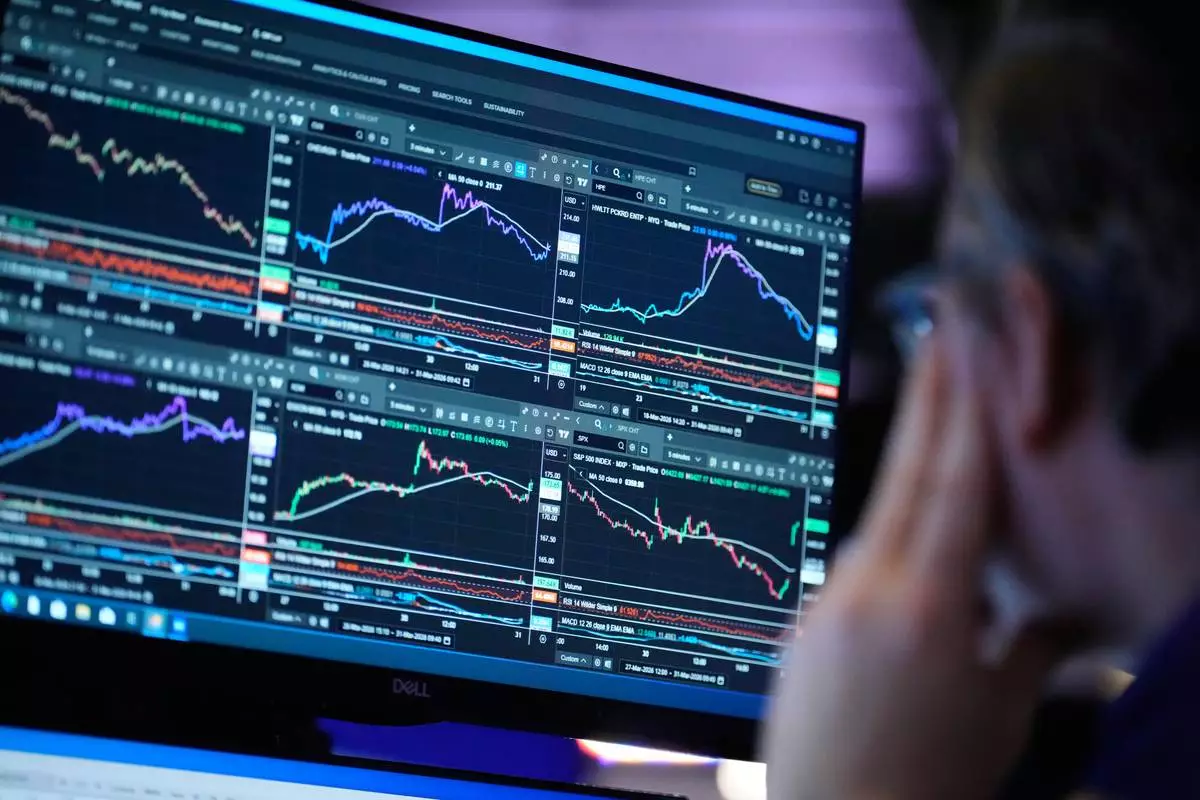
A screen displays financial information on the floor at the New York Stock Exchange in New York, Tuesday, March 31, 2026. (AP Photo/Seth Wenig)