NEW YORK (AP) — A trip through New York City’s crowded subway system usually offers a pungent mix of industrial and bodily aromas.
But inside a stretch of the Grand Central station this holiday season, the air smells of vanilla and fresh pine.
The scent is part of a novel advertising campaign for Bath & Body Works, which is pumping the fragrance into the 42nd Street shuttle train platform through November.
Many commuters don't pause to take notice of the diffusers that have been attached to a steel girder over the platform, and along the walls of a connecting tunnel. Those who look up can see them releasing visible bursts of vapor. Bath & Body Works estimates that 20 to 30 pounds (9 to 14 kilograms) of fragrance will be dispersed by the end of the month, when the campaign ends.
“It smells better than the normal New York City tunnels that we normally smell here,” commuter Jerome Murray said. “So yes, I appreciate it.”
The area is one of the busiest parts inside the transit hub, with people moving quickly as they transfer to and from the Times Square shuttle every four to five minutes.
Commuter Kelly Rodriguez, 23, described the smell as “a pine scent, very Christmassy” — a note given by many riders. Kathleen Baptiste, 60, added that it reminds her of “fabric softeners.”
The scent is subtle enough that some riders said they missed it as they traveled through the space. If you didn’t see the poster explaining that it is a Bath & Body Works ad campaign, it could be easy to mistake for another rider’s perfume.
The Metropolitan Transportation Authority, which runs the city’s subways and buses, says this is the first ad campaign of its kind inside the transit network, which is seeking to generate new revenue streams. Hoping to avoid any blowback, the agency tested a pilot of aroma-based ads last year in stations in Queens and Brooklyn to review the safety and gather feedback, according to Mary John, the agency’s director of commercial ventures.
John says the agency has not received any complaints so far.
Jamie Sohosky, Bath & Body Works’ chief marketing officer, said the retail chain chose “Fresh Balsam” for the campaign because it is one of the brand's most iconic holiday scents and a long-running seasonal favorite. Grand Central, she said, was a natural choice, since huge numbers of riders pass through while connecting to other trains.
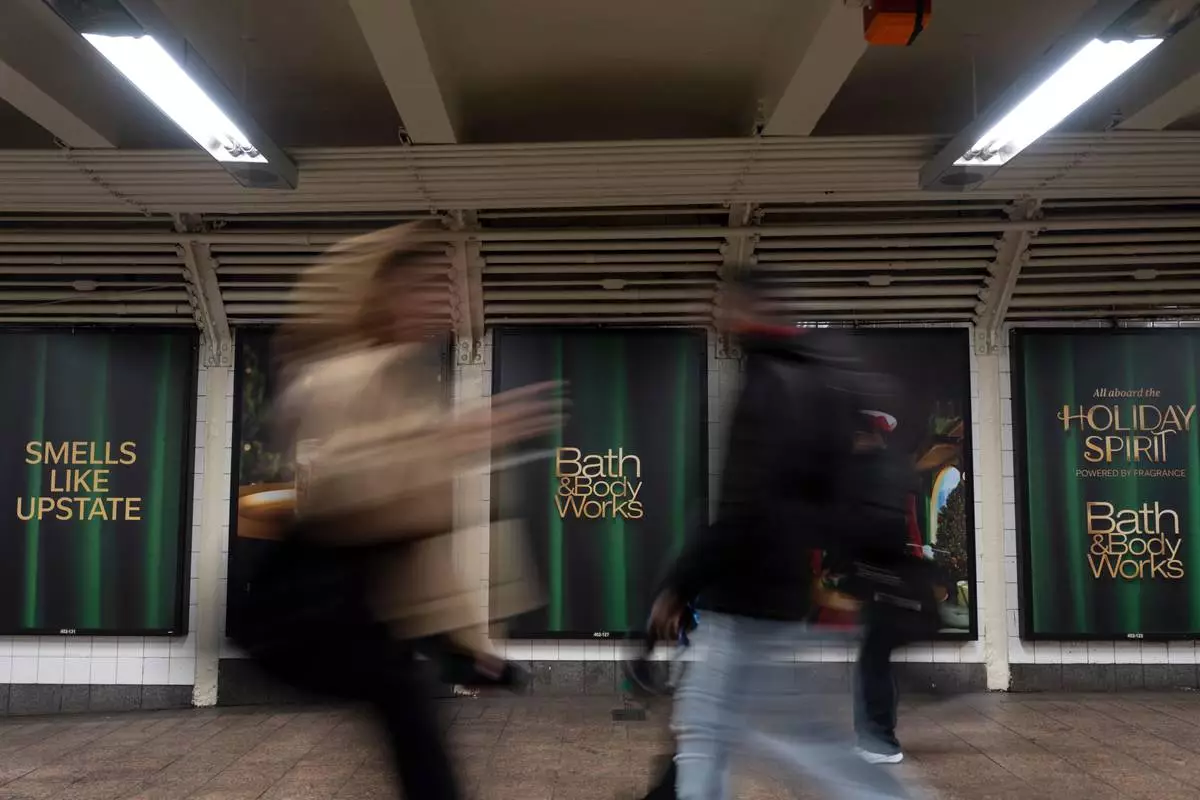
People walk past the posters promoting the campaign by Bath & Body Works at Grand Central Terminal, Wednesday, Nov. 19, 2025, in New York. (AP Photo/Yuki Iwamura)
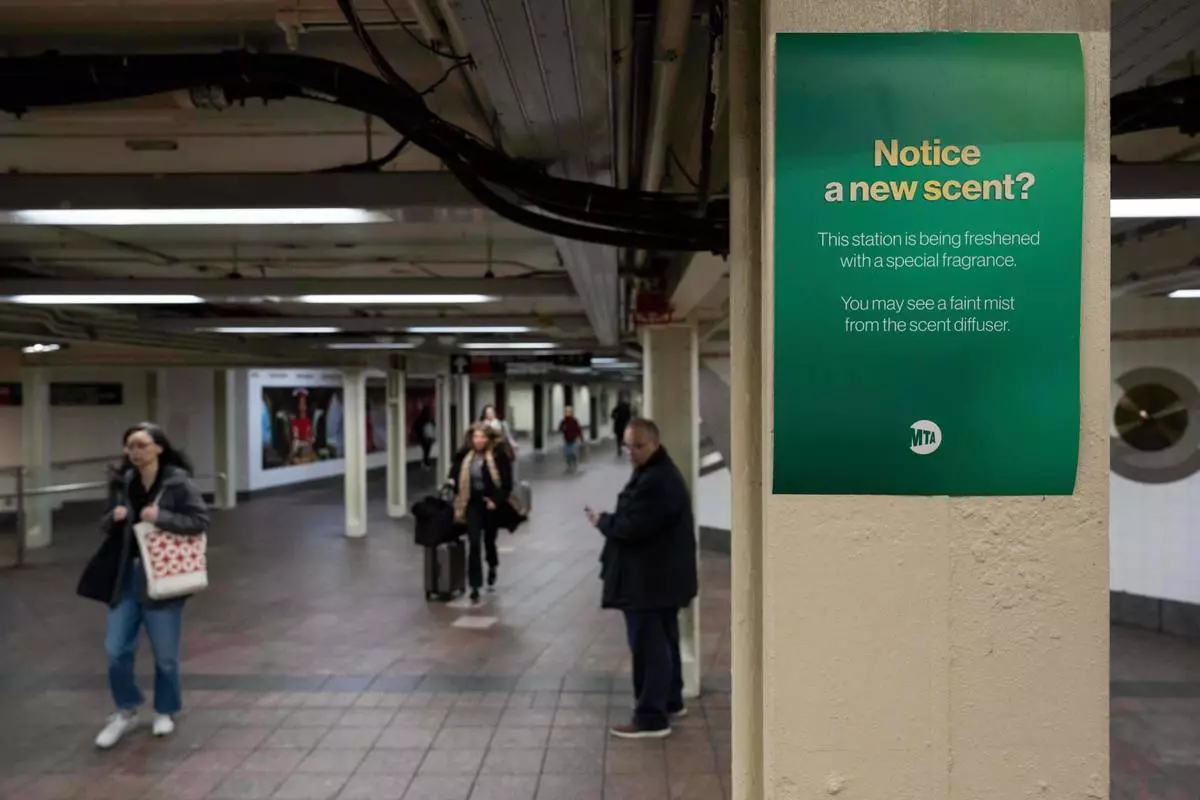
A poster reading "Notice a new scent?" Is displayed at Grand Central Terminal, Wednesday, Nov. 19, 2025, in New York. (AP Photo/Yuki Iwamura)
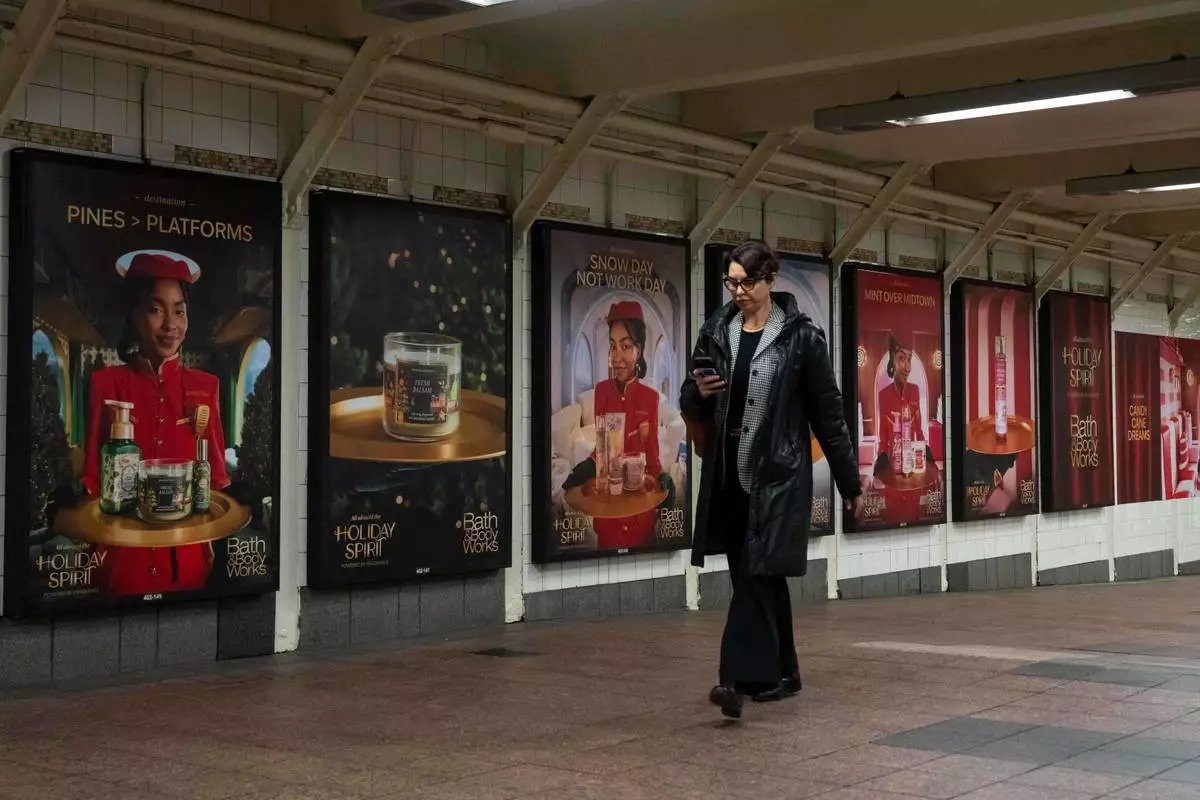
A person walks past posters promoting the campaign by Bath & Body Works at Grand Central station, Wednesday, Nov. 19, 2025, in New York. (AP Photo/Yuki Iwamura)
BERLIN (AP) — Jamie Leweling scored twice and Stuttgart routed Wolfsburg 4-0 to boost its chances of Champions League qualification while leaving the visitors in the Bundesliga’s relegation zone on Sunday.
Deniz Undav started Stuttgart’s party in the 21st and Leweling made it 2-0 nine minutes later after another well-worked team move, before grabbing his second with a deflected shot in the 42nd.
Stuttgart eased up in the second half. Substitute Nikolas Nartey completed the scoring in stoppage time with another deflected shot that squirmed in off the far post.
Stuttgart consolidated fourth place, the last for Champions League qualification, with 10 rounds remaining. Leipzig was five points behind Stuttgart before its game at Hamburger SV later Sunday. Bayer Leverkusen was six points behind Stuttgart before visiting Hamburg for their postponed 17th-round game on Wednesday.
Wolfsburg dropped to second-last after its fifth defeat from a run of seven games without a win. The Volkswagen-backed team’s coach Daniel Bauer is its second this season after he took over – initially on an interim basis – from the fired Paul Simonis in November.
Traveling Wolfsburg fans brought a giant banner saying “relegation fight,” as if they needed to inform the players of their predicament.
Fares Chaibi scored one goal and set up the other for Eintracht Frankfurt to beat Freiburg 2-0 and leapfrog the visitors into seventh place.
Both goals came in the second half with Chaibi setting up Jean-Matteo Bahoya to seal the win in the 81st.
It’s the second win from two at home without conceding a goal under new coach Albert Riera. Frankfurt’s only defeat in four games under the Spanish coach was a 3-2 loss at Bayern Munich last weekend.
Bayern is the heavy favorite to win the league again after its 3-2 win over closest rival Borussia Dortmund in Der Klassiker on Saturday.
The Bavarian powerhouse is 11 points clear and has only dropped points in four games from 24 so far this season.
AP soccer: https://apnews.com/hub/soccer

Wolfsburg's Adam Daghim, left, in action against Stuttgart's Adam Daghim during the German Bundesliga soccer match between VfB Stuttgart and VfL Wolfsburg in Stuttgart, Germany, Sunday, March 1, 2026. (Harry Langer/dpa via AP)

Stuttgart's Nikolas Nartey, center, scores during the German Bundesliga soccer match between VfB Stuttgart and VfL Wolfsburg in Stuttgart, Germany, Sunday, March 1, 2026. (Harry Langer/dpa via AP)

Wolfsburg's Konstantinos Koulierakis, left, in action against Stuttgart's Ermedin Demirovic during the German Bundesliga soccer match between VfB Stuttgart and VfL Wolfsburg in Stuttgart, Germany, Sunday, March 1, 2026. (Harry Langer/dpa via AP)

Stuttgart's Deniz Undav celebrates after scoring during the German Bundesliga soccer match between VfB Stuttgart and VfL Wolfsburg in Stuttgart, Germany, Sunday, March 1, 2026. (Harry Langer/dpa via AP)

Stuttgart's Jamie Leweling, right, celebrates after scoring during the German Bundesliga soccer match between VfB Stuttgart and VfL Wolfsburg in Stuttgart, Germany, Sunday, March 1, 2026. (Harry Langer/dpa via AP)