Skip to Content Facebook Feature Image

Fire disrupts UN climate talks just as negotiators reach critical final days

News

Fire disrupts UN climate talks just as negotiators reach critical final days
News

News

Fire disrupts UN climate talks just as negotiators reach critical final days

2025-11-21 05:05 Last Updated At:13:32

BELEM, Brazil (AP) — Fire disrupted United Nations climate talks in Brazil on Thursday, forcing evacuations of several buildings and delaying already sluggish negotiations by most of a day with no major agreements even close. Officials said 13 people were treated for smoke inhalation.

The fire erupted in an area of pavilions where sideline events are held during the annual talks, known this year as COP30. The fire was quickly brought under control, but fire officials ordered the entire site evacuated for safety checks and it wasn't clear when conference business would resume.

More Images
People walk past as a firefighter works at the COP30 U.N. Climate Summit following a fire, Thursday, Nov. 20, 2025, in Belem, Brazil. (AP Photo/Fernando Llano)
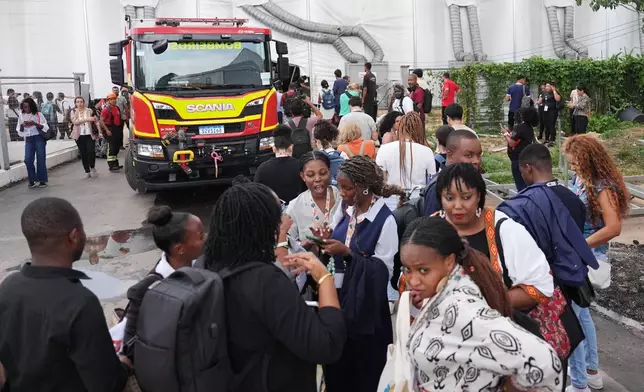
People walk past as a firefighter works at the COP30 U.N. Climate Summit following a fire, Thursday, Nov. 20, 2025, in Belem, Brazil. (AP Photo/Fernando Llano)

Attendees evacuate after a fire was reported inside the venue for the COP30 U.N. Climate Summit, Thursday, Nov. 20, 2025, in Belem, Brazil. (AP Photo/Joshua A. Bickel)
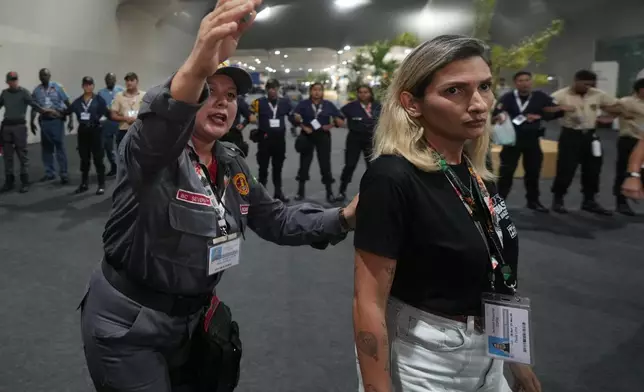
Attendees evacuate after a fire was reported inside the venue for the COP30 U.N. Climate Summit, Thursday, Nov. 20, 2025, in Belem, Brazil. (AP Photo/Joshua A. Bickel)

Security officials direct attendees to leave the venue for the COP30 U.N. Climate Summit, Thursday, Nov. 20, 2025, in Belem, Brazil. (AP Photo/Andre Penner)

Security officials direct attendees to leave the venue for the COP30 U.N. Climate Summit, Thursday, Nov. 20, 2025, in Belem, Brazil. (AP Photo/Andre Penner)

Activists participate in a demonstration to end the use of fossil fuels at the COP30 U.N. Climate Summit, Thursday, Nov. 20, 2025, in Belem, Brazil. (AP Photo/Andre Penner)

Activists participate in a demonstration to end the use of fossil fuels at the COP30 U.N. Climate Summit, Thursday, Nov. 20, 2025, in Belem, Brazil. (AP Photo/Andre Penner)

U.N. Secretary-General Antonio Guterres arrives to speak during a news conference at the COP30 U.N. Climate Summit, Thursday, Nov. 20, 2025, in Belem, Brazil. (AP Photo/Fernando Llano)

U.N. Secretary-General Antonio Guterres arrives to speak during a news conference at the COP30 U.N. Climate Summit, Thursday, Nov. 20, 2025, in Belem, Brazil. (AP Photo/Fernando Llano)

Demonstrators dance during an action for climate justice at the COP30 U.N. Climate Summit, Thursday, Nov. 20, 2025, in Belem, Brazil. (AP Photo/Joshua A. Bickel)
Demonstrators dance during an action for climate justice at the COP30 U.N. Climate Summit, Thursday, Nov. 20, 2025, in Belem, Brazil. (AP Photo/Joshua A. Bickel)

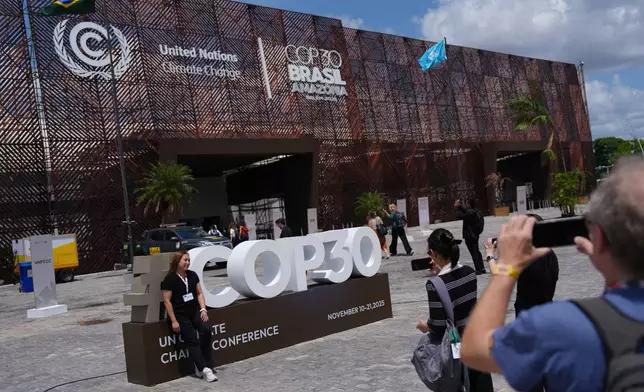
People take pictures outside the venue for the COP30 U.N. Climate Summit, Thursday, Nov. 20, 2025, in Belem, Brazil. (AP Photo/Joshua A. Bickel)

People take pictures outside the venue for the COP30 U.N. Climate Summit, Thursday, Nov. 20, 2025, in Belem, Brazil. (AP Photo/Joshua A. Bickel)

U.N. Secretary-General Antonio Guterres speaks during a news conference at the COP30 U.N. Climate Summit, Thursday, Nov. 20, 2025, in Belem, Brazil. (AP Photo/Fernando Llano)

U.N. Secretary-General Antonio Guterres speaks during a news conference at the COP30 U.N. Climate Summit, Thursday, Nov. 20, 2025, in Belem, Brazil. (AP Photo/Fernando Llano)

The fire could cost significant time if the talks don't resume until Friday's scheduled final day. The presidency of the talks had planned to have ministers and diplomats work late Thursday.

It was also possible that only top negotiators would be allowed back at night for a slimmed-down session.

The fire came at a critical time. The COP30 presidency had been working on what was hoped to be a next-to-last draft of an agreement on four contentious topics involving money, cutting fossil fuel emissions and trade. Leaders had originally wanted a deal on this tough interconnected package by Wednesday, while Brazil's president and the United Nations secretary-general were on site, but it didn't come together.

“It definitely puts a hold on negotiations for a period of time," said veteran climate negotiations observer Alden Meyer of the European think-tank E3G. He said they could still get back on track but ending Friday, as scheduled, doesn't look likely.

“It means there is a lot to do with very little time. There were already huge gulfs to bridge and this won’t help,” said Teresa Anderson, climate justice lead at ActionAid.

Mohamed Adow, another COP veteran and director of PowerShift Africa, chose to see some positive in people helping each other when the fire erupted.

“That spirit is precisely what climate action demands," Adow said. "If we can respond to the planet’s emergencies with the same unity shown in that tense moment, COP30 might yet be remembered not for an incident, but for a turning point.”

Meyer wasn't convinced.

‘’People tend to feel a little closer during an emergency like this," Meyer said. "But there are pretty deep fundamental interests at play.’’

Meyer worried that with limited time and lack of agreement so far, the Brazilian leadership might opt for the lowest common denominator and “you could get something that’s so weak that no one wants it.’’

A few hours before the fire, U.N. Secretary-General António Guterres urged countries to compromise and “show willingness and flexibility to deliver results,” even if they fall short of the strongest measures some nations want.

“We are down to the wire and the world is watching Belem,” Guterres said, asking negotiators to engage in good faith in the last two scheduled days of talks, which already missed a self-imposed deadline Wednesday for progress on a few key issues. The conference, with this year's edition known as COP30, frequently runs longer than its scheduled two weeks.

“Communities on the front lines are watching, too — counting flooded homes, failed harvests, lost livelihoods — and asking, ‘how much more must we suffer?’” Guterres said. "They’ve heard enough excuses and demand results.”

On contentious issues involving more detailed plans to phase out fossil fuels and financial aid to poorer countries, Guterres said he was “perfectly convinced” that compromise was possible and dismissed the idea that not adopting the strongest measures would be a failure.

Guterres was more forceful in what he wanted rich countries to do for poor countries, especially those in need of tens of billions of dollars to adapt to the floods, droughts, storms and heat waves triggered by worsening climate change. He continued calls to triple adaptation finance from $40 billion a year to $120 billion a year.

Officials from nations battered by natural disasters gave emotional testimony earlier this week imploring the world to stop talking and start acting.

Delivering overall financial aid — with an agreed goal of $300 billion a year — is one of four interconnected issues that were initially excluded from the official agenda. The other three are: whether countries should be told to toughen their new climate plans; dealing with trade barriers over climate and improving reporting on transparency and climate progress.

More than 80 countries have pushed for a detailed “road map” on how to transition away from fossil fuels, like coal, oil and natural gas, which are the chief cause of warming. That was a general but vague agreement two years ago at the COP in Dubai.

Guterres kept referring to it as already being agreed to in Dubai, but did not commit to a detailed plan, which Brazilian President Luiz Inácio Lula da Silva pushed for earlier in a speech.

The Associated Press’ climate and environmental coverage receives financial support from multiple private foundations. AP is solely responsible for all content. Find AP’s standards for working with philanthropies, a list of supporters and funded coverage areas at AP.org.

This story was produced as part of the 2025 Climate Change Media Partnership, a journalism fellowship organized by Internews’ Earth Journalism Network and the Stanley Center for Peace and Security.

People walk past as a firefighter works at the COP30 U.N. Climate Summit following a fire, Thursday, Nov. 20, 2025, in Belem, Brazil. (AP Photo/Fernando Llano)
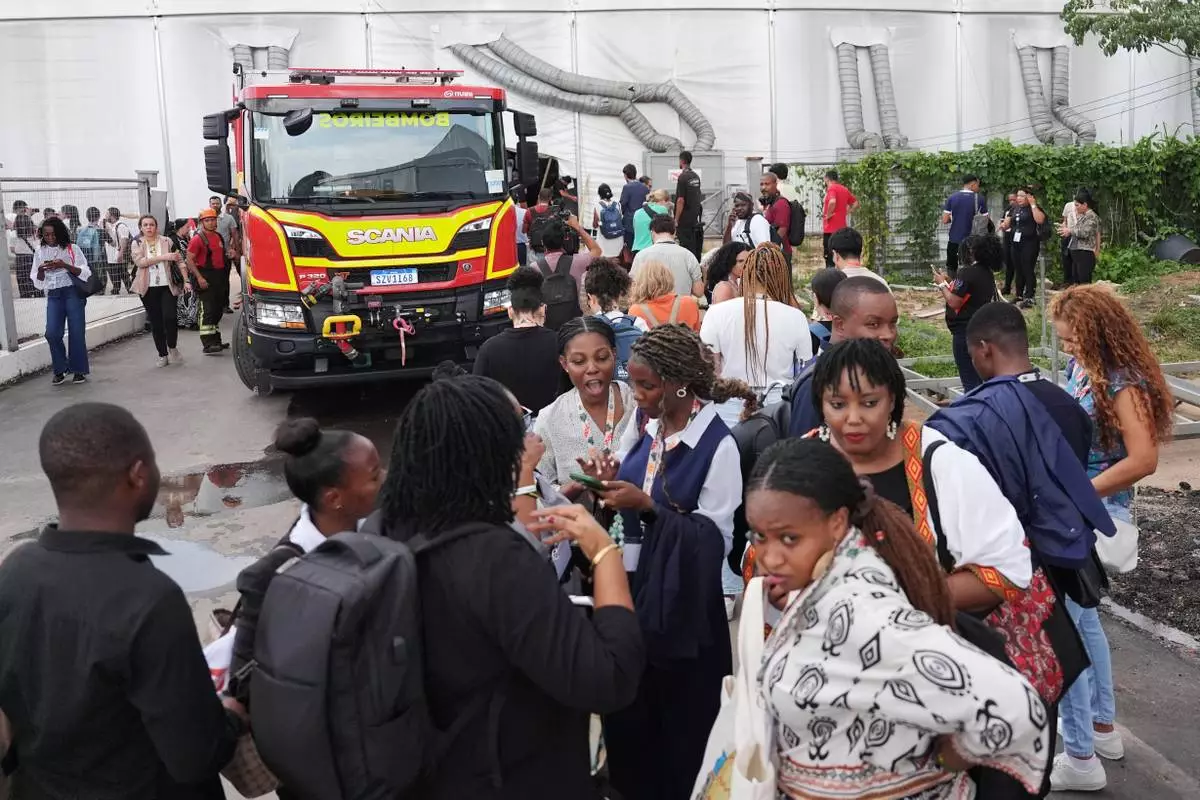
People walk past as a firefighter works at the COP30 U.N. Climate Summit following a fire, Thursday, Nov. 20, 2025, in Belem, Brazil. (AP Photo/Fernando Llano)

Attendees evacuate after a fire was reported inside the venue for the COP30 U.N. Climate Summit, Thursday, Nov. 20, 2025, in Belem, Brazil. (AP Photo/Joshua A. Bickel)

Attendees evacuate after a fire was reported inside the venue for the COP30 U.N. Climate Summit, Thursday, Nov. 20, 2025, in Belem, Brazil. (AP Photo/Joshua A. Bickel)

Security officials direct attendees to leave the venue for the COP30 U.N. Climate Summit, Thursday, Nov. 20, 2025, in Belem, Brazil. (AP Photo/Andre Penner)

Security officials direct attendees to leave the venue for the COP30 U.N. Climate Summit, Thursday, Nov. 20, 2025, in Belem, Brazil. (AP Photo/Andre Penner)

Activists participate in a demonstration to end the use of fossil fuels at the COP30 U.N. Climate Summit, Thursday, Nov. 20, 2025, in Belem, Brazil. (AP Photo/Andre Penner)

Activists participate in a demonstration to end the use of fossil fuels at the COP30 U.N. Climate Summit, Thursday, Nov. 20, 2025, in Belem, Brazil. (AP Photo/Andre Penner)

U.N. Secretary-General Antonio Guterres arrives to speak during a news conference at the COP30 U.N. Climate Summit, Thursday, Nov. 20, 2025, in Belem, Brazil. (AP Photo/Fernando Llano)

U.N. Secretary-General Antonio Guterres arrives to speak during a news conference at the COP30 U.N. Climate Summit, Thursday, Nov. 20, 2025, in Belem, Brazil. (AP Photo/Fernando Llano)

Demonstrators dance during an action for climate justice at the COP30 U.N. Climate Summit, Thursday, Nov. 20, 2025, in Belem, Brazil. (AP Photo/Joshua A. Bickel)
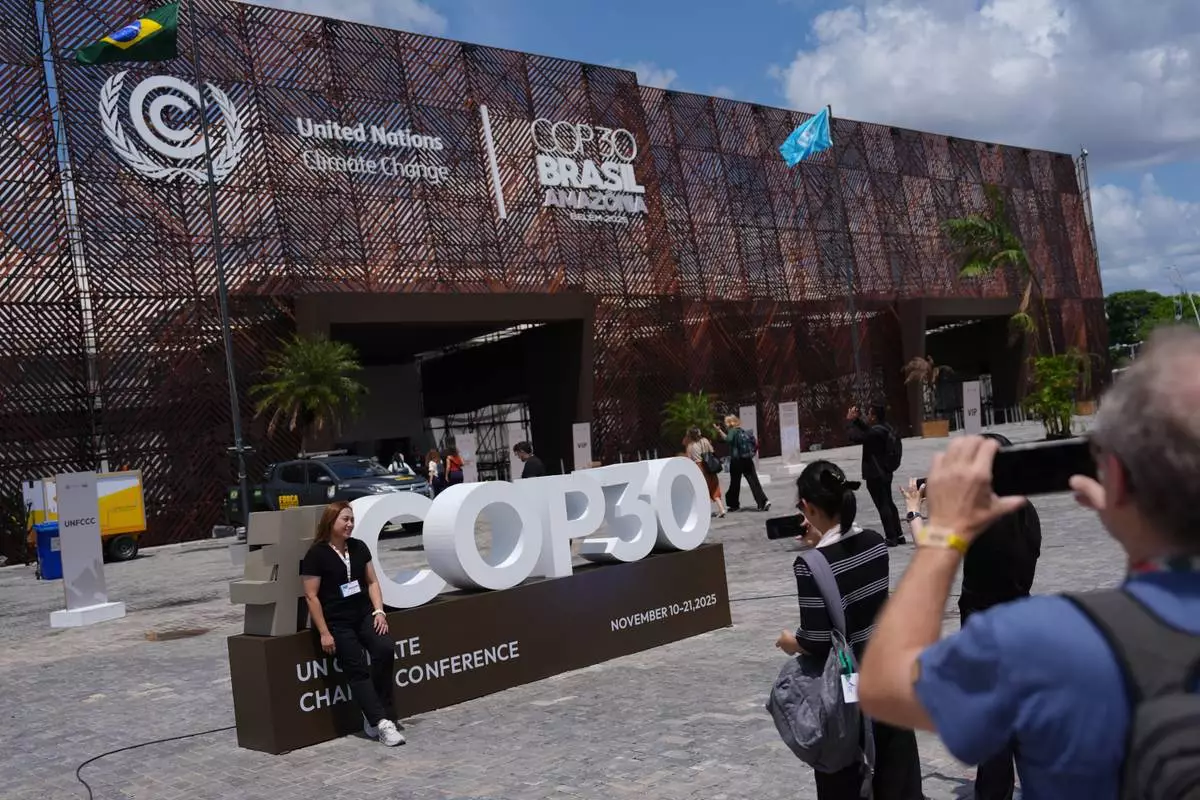
Demonstrators dance during an action for climate justice at the COP30 U.N. Climate Summit, Thursday, Nov. 20, 2025, in Belem, Brazil. (AP Photo/Joshua A. Bickel)

People take pictures outside the venue for the COP30 U.N. Climate Summit, Thursday, Nov. 20, 2025, in Belem, Brazil. (AP Photo/Joshua A. Bickel)

People take pictures outside the venue for the COP30 U.N. Climate Summit, Thursday, Nov. 20, 2025, in Belem, Brazil. (AP Photo/Joshua A. Bickel)

U.N. Secretary-General Antonio Guterres speaks during a news conference at the COP30 U.N. Climate Summit, Thursday, Nov. 20, 2025, in Belem, Brazil. (AP Photo/Fernando Llano)
U.N. Secretary-General Antonio Guterres speaks during a news conference at the COP30 U.N. Climate Summit, Thursday, Nov. 20, 2025, in Belem, Brazil. (AP Photo/Fernando Llano)
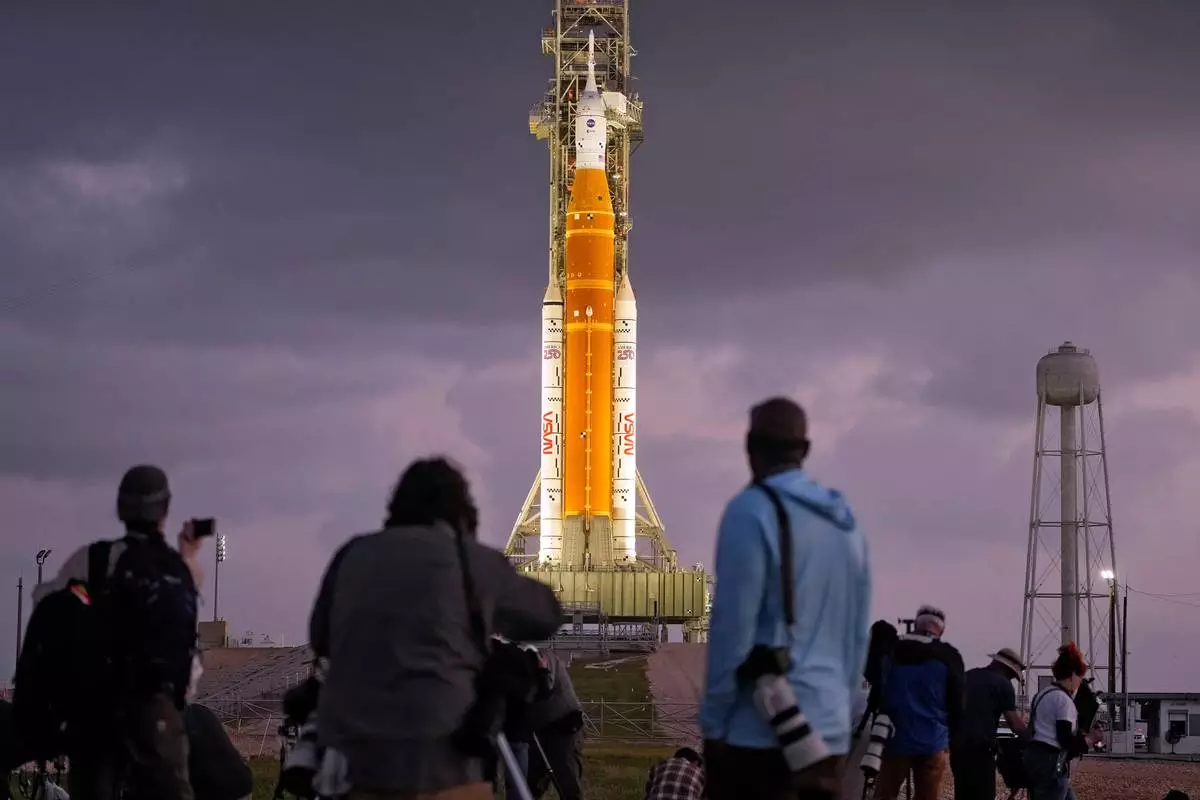
Launch preparations have begun for the Artemis II mission, NASA’s planned lunar fly-around by four astronauts that will be the first moon trip in 53 years.

Tensions were high as hydrogen fuel started flowing into the rocket hours ahead of the planned launch. Dangerous hydrogen leaks erupted during a countdown test earlier this year, forcing a lengthy flight delay.

The launch team needs to load more than 700,000 gallons of fuel (2.6 million liters) into the 32-story Space Launch System rocket on the pad before the Artemis II crew can board.

The 32-story Space Launch System rocket is poised to blast off Wednesday evening with a two-hour launch window beginning at 6:24 p.m. EDT at Kennedy Space Center in Florida.

Artemis astronauts Reid Wiseman, Victor Glover, Christina Koch and Jeremy Hansen will be on board. They’ll hurtle several thousand miles beyond the moon, hang a U-turn and then come straight back. No circling around the moon, no stopping for a moonwalk — just a quick out-and-back lasting less than 10 days. NASA promises more boot prints in the gray lunar dust, but not before a couple practice missions.

Unlike the Apollo missions that sent astronauts to the moonfrom 1968 through 1972, Artemis’ debut crew includes a woman, a person of color and a Canadian citizen.

Artemis II is the opening shot of NASA’s grand plans for a permanent moon base. The space program is aiming for a moon landing near the lunar south pole in 2028.

The Latest:

L-minus tracks the overall time to liftoff, counting down the days, hours and minutes away before the planned blastoff. It doesn’t include built-in holds, or pauses — that’s T-minus time.

The T-minus countdown in the final 10 minutes is where nerves tense up and hearts start pounding. Automated software kicks off a series of highly choreographed milestones. During this period, the clock can be stopped if a problem is spotted and restarted if it’s fixed in time.

T-0 is the moment of liftoff — zero — when the boosters ignite and the rocket begins its journey.

NASA has a narrow time frame each month to fly to the moon.

The Earth and moon must be aligned just so to achieve the proper trajectory for the mission. In any given month, there’s only about a week when Artemis II astronauts can lift off.

The Orion capsule needs to get a check of its life-support and other systems in near-Earth orbit. If that goes well, Orion will fire its main engine to hurtle toward the moon, taking advantage of the moon and Earth’s gravity to get there and back in a slingshot maneuver that requires little if any fuel.

Orion also needs sunlight for power and can’t be in darkness for more than 90 minutes at a time. Plus NASA wants to minimize heating during reentry at flight’s end.

The latest launch window runs through April 6. The next opportunity opens on April 30.

The hydrogen tank of the rocket’s core stage is 100% filled. NASA said no significant leaks have been observed so far in fueling. It was hydrogen leaks that prevented the rocket from flying in February.

The alarm clocks just went off in Kennedy Space Center’s crew quarters.

That means it’s rise and shine for the three Americans and one Canadian who are about to become the first lunar visitors in more than 53 years.

They have a long day ahead of them, whether they launch or not.

After breakfast, they’ll start suiting up. NASA’s launch window opens at 6:24 p.m. and lasts a full two hours.

Launch director Charlie Blackwell-Thompson is wearing green as are many of the controllers alongside her in the firing room.

Green represents “go” for NASA, a color symbolizing good luck.

The team is monitoring the fueling of the 322-foot moon rocket, set to blast off Wednesday evening.

A plush toy named Rise will ride with the Artemis II astronauts around the moon, carrying the names of more than 5.6 million people.

Rise is what’s known as a zero gravity indicator, which gives the astronauts a visual cue of when they reach space.

The design was inspired by the iconic “Earthrise” photo during Apollo 8, showing the planet as a shadowed blue marble from space in 1968.

Rise was selected from more than 2,600 contest submissions. It was designed by Lucas Ye of California.

Commander Reid Wiseman and his crew tucked a small memory card into Rise before the toy was loaded into the Orion capsule. The card bears the names of all those who signed up with NASA to vicariously tag along on the nearly 10-day journey.

“Zipping that little pocket on the bottom of Rise was kind of the moment that put it all together for me,” Wiseman said. “We are going for all and by all. It’s time to fly.”

NASA is fueling the new rocket that will send four astronauts to the moon.

Launch teams have begun pumping more than 700,000 gallons (2.6 million liters) of liquid hydrogen and liquid oxygen into the Space Launch System rocket at Kennedy Space Center in Florida.

It’s the latest milestone in the two-day countdown that kicked off on Monday when launch controllers reported to duty.

It will take at least four hours to fully load the rocket before astronauts climb aboard for humanity’s first flight to the moon since Apollo 17 in 1972.

The two-hour launch window opens at 6:24 p.m. EDT.

▶ Read more about Apollo vs. Artemis

The Americans who blazed the trail to the moon more than half a century ago were white men chosen for their military test pilot experience.

The Artemis II crew includes a woman, a person of color and a Canadian, products of a more diversified astronaut corps.

▶ Read more about Christina Koch, Victor Glover, Jeremy Hansen and Reid Wiseman

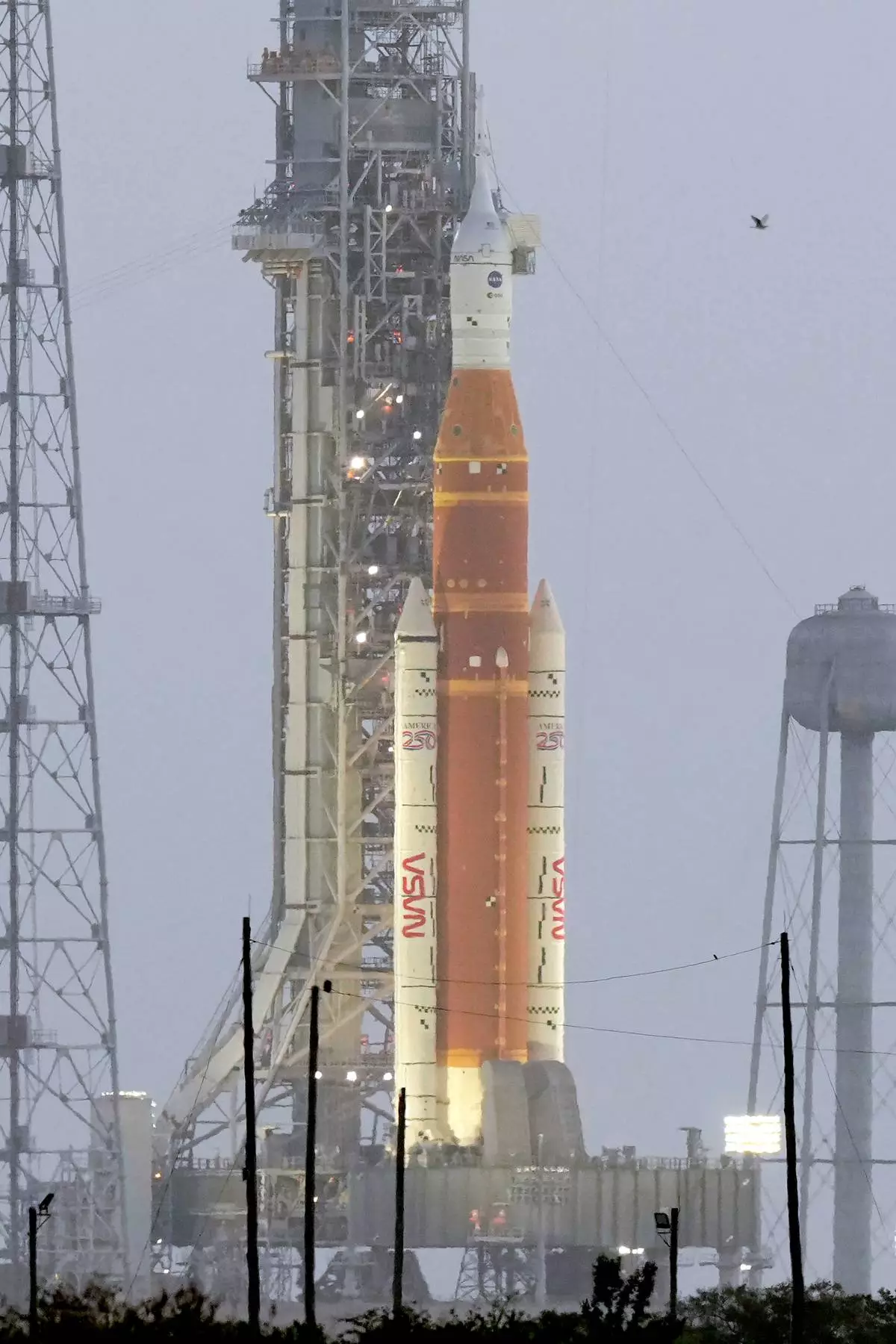
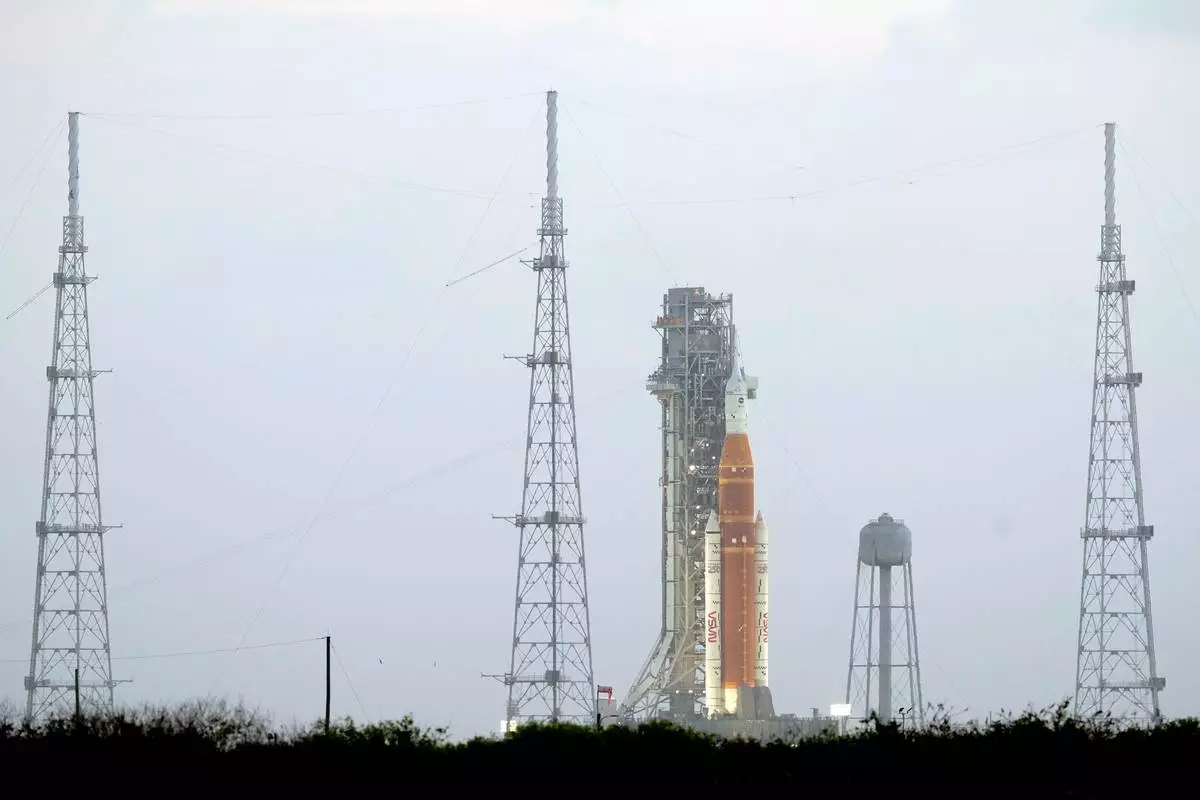
NASA's Artermis II moon rocket sits on Launch Pad 39-B at the Kennedy Space Center hours ahead of planned liftoff Wednesday, April 1, 2026, in Cape Canaveral, Fla. (AP Photo/Chris O'Meara)

NASA's Artermis II moon rocket sits on Launch Pad 39-B at the Kennedy Space Center hours ahead of planned liftoff Wednesday, April 1, 2026, in Cape Canaveral, Fla. (AP Photo/Chris O'Meara)

NASA's Artermis II moon rocket sits on Launch Pad 39-B at the Kennedy Space Center hours ahead of a planned launch attempt Wednesday, April 1, 2026, in Cape Canaveral, Fla. (AP Photo/Chris O'Meara)

NASA's Artermis II moon rocket sits on Launch Pad 39-B at the Kennedy Space Center hours ahead of a planned launch attempt Wednesday, April 1, 2026, in Cape Canaveral, Fla. (AP Photo/Chris O'Meara)

Photographers set up remote cameras near NASA's Artermis II moon rocket on Launch Pad 39-B just before sunrise at the Kennedy Space Center Tuesday, March 31, 2026, in Cape Canaveral, Fla. (AP Photo/Chris O'Meara)

Photographers set up remote cameras near NASA's Artermis II moon rocket on Launch Pad 39-B just before sunrise at the Kennedy Space Center Tuesday, March 31, 2026, in Cape Canaveral, Fla. (AP Photo/Chris O'Meara)

Recommended Articles