GLENDALE, Ariz. (AP) — Jacoby Brissett's 10-year NFL career has seen all kinds of twists and turns. The veteran quarterback has been a project, a starter, a backup, a Super Bowl champion and he has soldiered through some mediocre seasons.
In his latest chapter with the Arizona Cardinals, he might be playing the best football of his career.
Click to Gallery
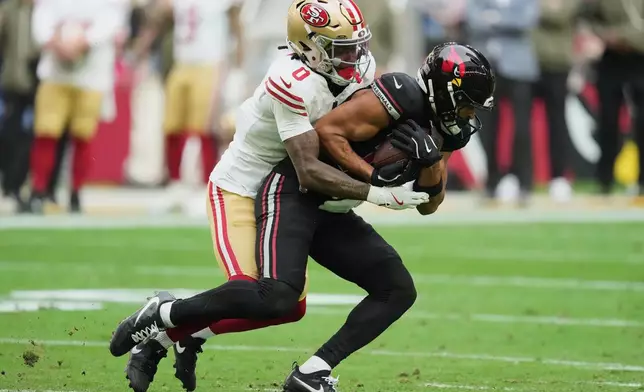
Arizona Cardinals wide receiver Michael Wilson, right, runs against San Francisco 49ers cornerback Renardo Green (0) during the first half of an NFL football game in Glendale, Ariz., Sunday, Nov. 16, 2025. (AP Photo/Ross D. Franklin)
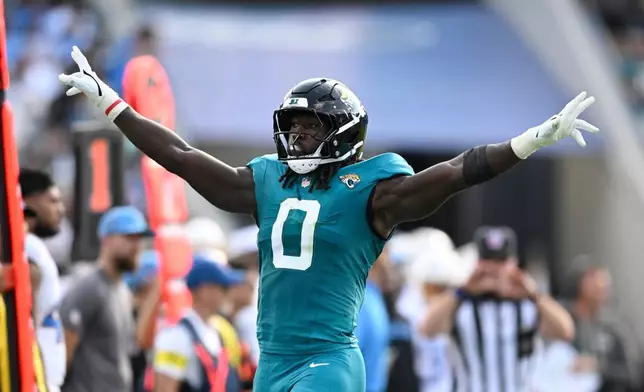
Jacksonville Jaguars' Devin Lloyd reacts during the first half of an NFL football game against the Los Angeles Chargers, Sunday, Nov. 16, 2025, in Jacksonville, Fla. (AP Photo/Phelan M. Ebenhack)
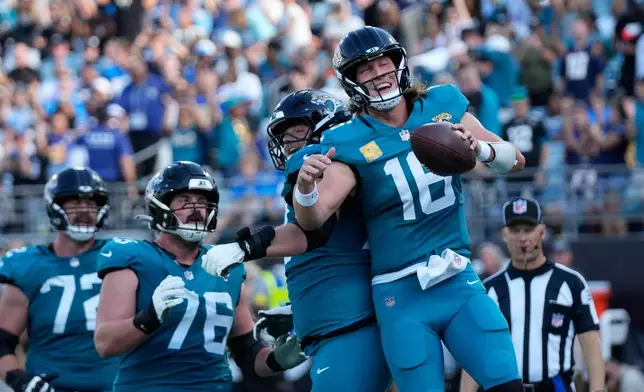
Jacksonville Jaguars quarterback Trevor Lawrence (16) celebrates a touchdown run during the second half of an NFL football game against the Jacksonville Jaguars, Sunday, Nov. 16, 2025, in Jacksonville, Fla. (AP Photo/John Raoux)
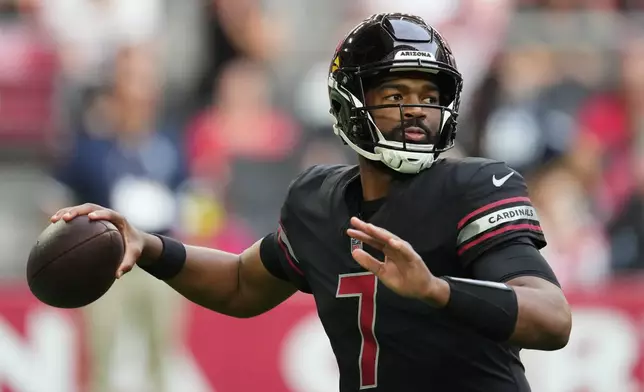
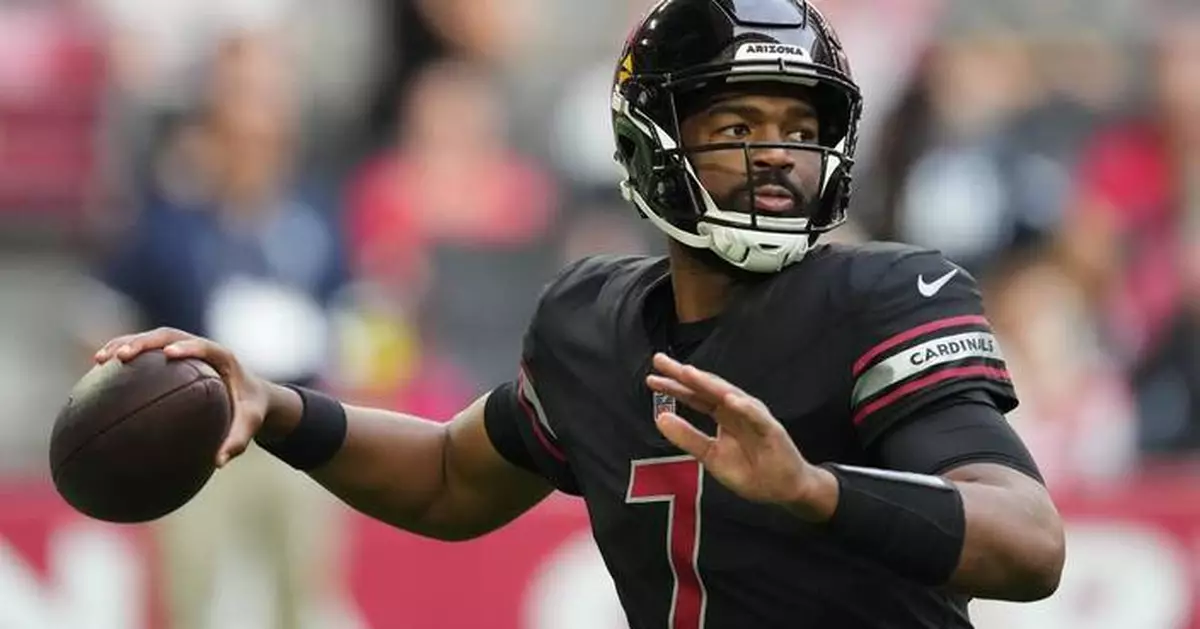
Arizona Cardinals quarterback Jacoby Brissett (7) passes against the San Francisco 49ers during the first half of an NFL football game in Glendale, Ariz., Sunday, Nov. 16, 2025. (AP Photo/Ross D. Franklin)
Brissett has thrown for 1,570 yards, 10 touchdowns and three interceptions in five starts since replacing two-time Pro Bowl selection Kyler Murray, who's on injured reserve with a nagging foot injury. The 32-year-old Brissett will start his sixth straight game when the Cardinals (3-7) host the Jacksonville Jaguars (6-4) on Sunday.
“I’ve wanted to be in this position all my life and it’s come in different waves in my career,” Brissett said. “But whenever I do get the opportunity, I make the most of it. I’m a kid inside. I’m having a lot of fun.”
Brissett has been one of the most productive quarterbacks in the NFL since taking over for Murray, trailing only New England's Drake Maye in yards passing since Week 6. The only problem with Brissett's career renaissance is that the Cardinals aren't winning — they are 1-4 in his five starts.
Arizona has lost seven of their past eight after starting the season with a 2-0 record.
Jacksonville coach Liam Coen said he's not surprised Brissett is producing at a high level. Coen said when he was with other organizations evaluating free agent QBs, it was obvious Brissett “could really throw it.”
The Jaguars have won two of their last three games, including a dominant 35-6 victory over the Los Angeles Chargers last weekend.
“Everything I’ve heard of him — I don’t know him personally — is just (he's a) pro’s pro,” Coen said. “Not really outcome driven and just kind of goes through it, knows his talent, knows that he can throw the ball, really well at a high level.”
Jacksonville quarterback Trevor Lawrence played with a wristband last week for the first time this season. He initially opted against it in Coen’s new offense because he felt like hearing the call from Coen and repeating it in the huddle would help him better visualize the play before the snap.
But a few games of clunkiness and pre-snap penalties prompted Lawrence and Coen to try the band against the Chargers. It worked as the Jaguars were flagged once in the game, so the wristband is seemingly back for good.
“You can just get calls in faster, really is all it is,” Lawrence said. “You’ve got a number on your wristband and then you read it off to the guys. Calls get pretty long in certain situations.”
Arizona's Michael Wilson is back as the team's top receiver on Sunday after a stellar performance last week.
Wilson caught a career-high 15 passes for 185 yards in last week's loss to the 49ers, stepping into Marvin Harrison Jr.'s usual role. Harrison is out of the lineup for a second straight week after having surgery for appendicitis.
Wilson — a third-year receiver out of Stanford — has been a solid option throughout his career, but thrived in a bigger role. Brissett said he wasn't suprised by the results.
“He’s one of those guys that after every series, he was coming up talking to me on the sideline and I just felt his energy,” Brissett said. "I thought that was very commendable.”
Jacksonville had reason to play angry last week against the Chargers. The team was coming off the biggest collapse in franchise history, blowing a 19-point lead in the fourth quarter at Houston. How does the team harness that moving forward?
“Ultimately, we now owe it to each other to play that way for the rest of the year as much as possible and see what the result is,” Coen said.
The Cardinals were called for an eye-popping 17 penalties in last week’s 41-22 loss to the 49ers, which set a franchise record and was the most for any NFL team this season.
Arizona has been a relatively disciplined team during most of Jonathan Gannon’s 2 1/2-year tenure, raising questions about why it was suddenly such a problem. Gannon said no matter the cause, it needs to get fixed quickly.
“I think it’s very challenging because it’s kind of deflating when you’re going backwards,” Gannon said. “Again, you have to focus on the next play and control what you can control and try to move on, but it’s a challenge, especially when you have that many.”
AP Pro Football Writer Mark Long in Jacksonville, Florida, contributed to this story.
AP NFL: https://apnews.com/hub/nfl
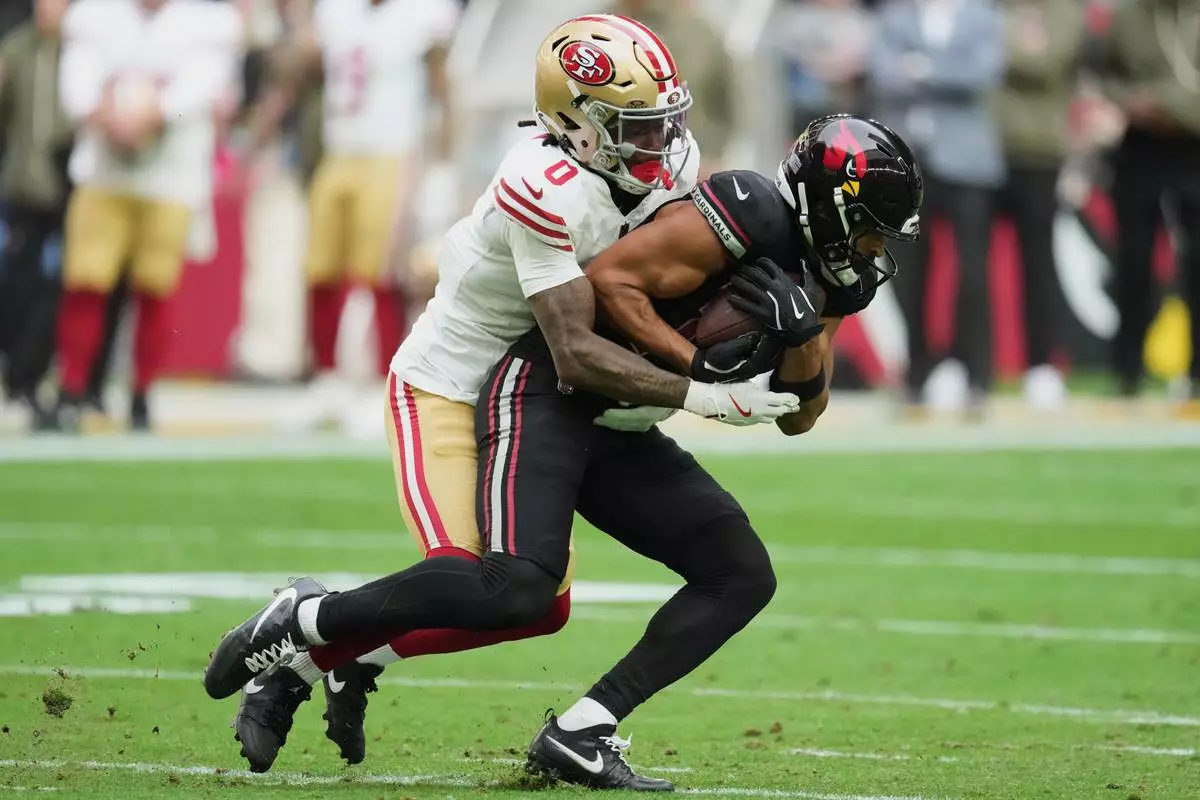
Arizona Cardinals wide receiver Michael Wilson, right, runs against San Francisco 49ers cornerback Renardo Green (0) during the first half of an NFL football game in Glendale, Ariz., Sunday, Nov. 16, 2025. (AP Photo/Ross D. Franklin)
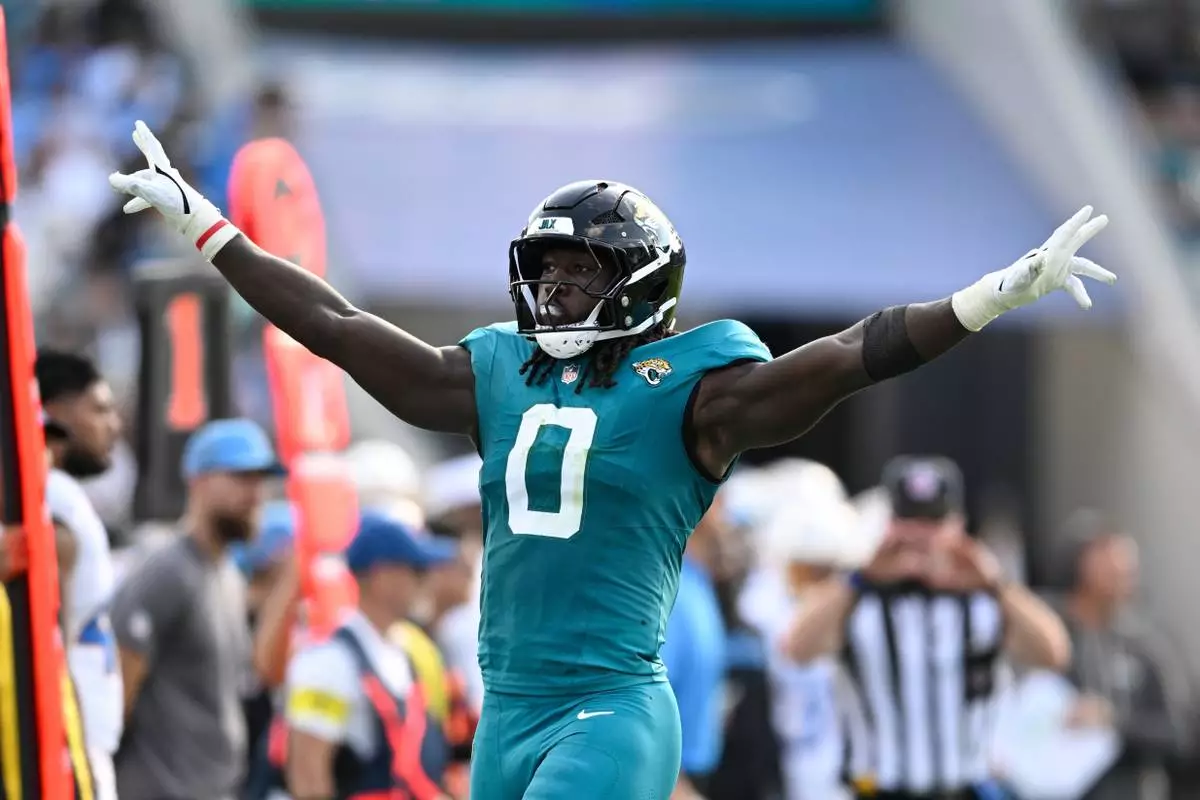
Jacksonville Jaguars' Devin Lloyd reacts during the first half of an NFL football game against the Los Angeles Chargers, Sunday, Nov. 16, 2025, in Jacksonville, Fla. (AP Photo/Phelan M. Ebenhack)
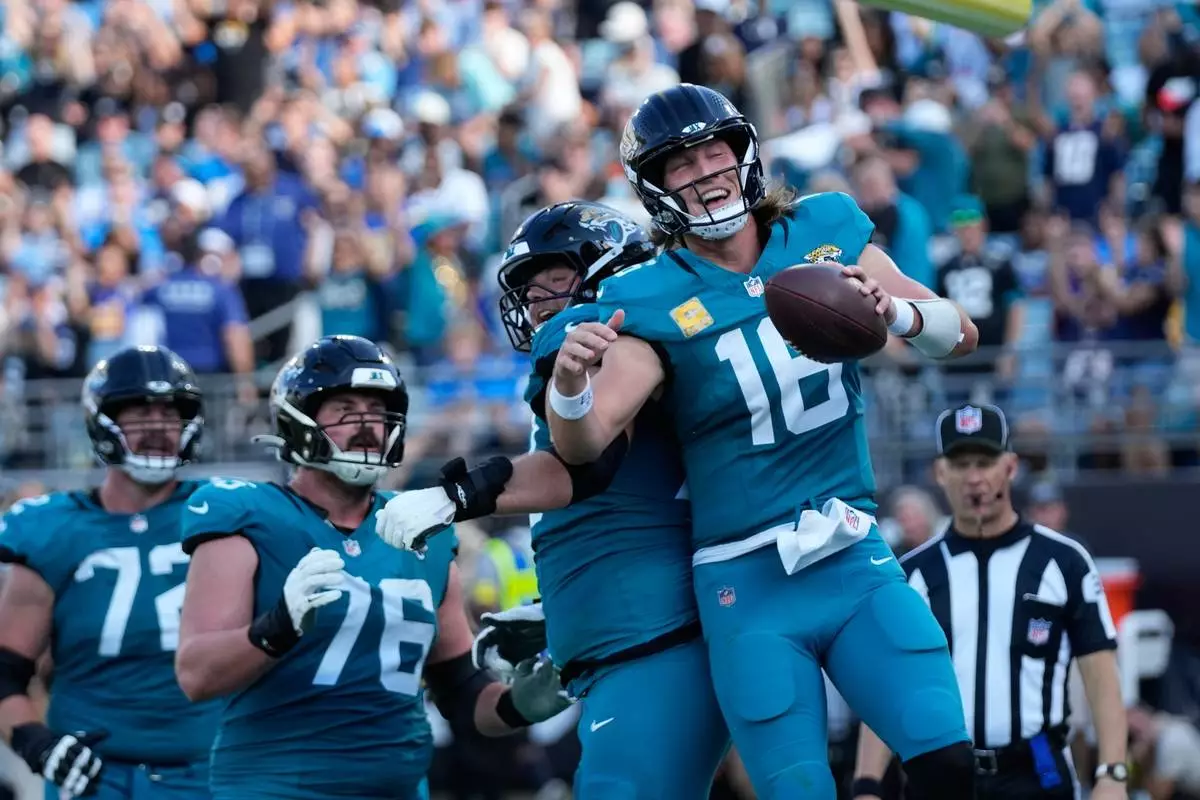
Jacksonville Jaguars quarterback Trevor Lawrence (16) celebrates a touchdown run during the second half of an NFL football game against the Jacksonville Jaguars, Sunday, Nov. 16, 2025, in Jacksonville, Fla. (AP Photo/John Raoux)
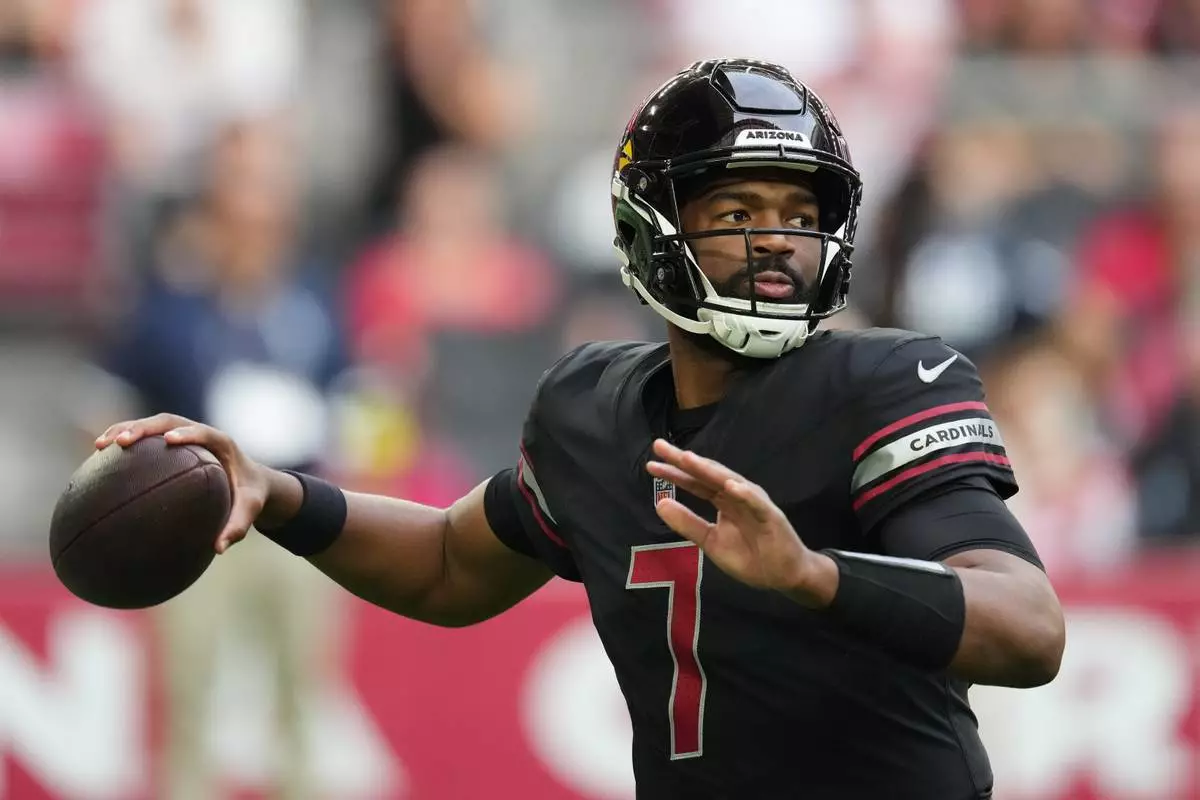
Arizona Cardinals quarterback Jacoby Brissett (7) passes against the San Francisco 49ers during the first half of an NFL football game in Glendale, Ariz., Sunday, Nov. 16, 2025. (AP Photo/Ross D. Franklin)