Skip to Content Facebook Feature Image

AI and Science Summit Highlights Hong Kong's Role in Technological Innovation and Global Collaboration

HK

AI and Science Summit Highlights Hong Kong's Role in Technological Innovation and Global Collaboration
HK

HK

AI and Science Summit Highlights Hong Kong's Role in Technological Innovation and Global Collaboration

2025-11-21 11:10 Last Updated At:12:53

Speech by SITI at International Summit of AI for Science "Empowering Breakthroughs at the Intersection of AI and Science"

Following is the speech by the Secretary for Innovation, Technology and Industry, Professor Sun Dong, at the International Summit of AI for Science "Empowering Breakthroughs at the Intersection of AI and Science" today (November 21):

Professor Liu (Director General of the Bureau of International Cooperation, Chinese Academy of Sciences, Professor Liu Weidong), Professor Boey (President and University Distinguished Professor of the City University of Hong Kong, Professor Freddy Boey), Professor Luo (Co-Chair of the International Summit of AI for Science 2025, Professor of the Hong Kong Institute of Science & Innovation, Chinese Academy of Sciences, Professor Luo Jiebo), Professor Ma (Co-Chair of the International Summit of AI for Science 2025, Director of the Hong Kong Institute of AI for Science of the City University of Hong Kong, Professor Ma Weiying), distinguished guests, ladies and gentlemen,

Good morning. It is my great pleasure to join you all today at the International Summit of AI for Science 2025, cohosted by the Hong Kong Institute of Science and Innovation of the Chinese Academy of Sciences and the City University of Hong Kong.

The theme of today - "Empowering Breakthroughs at the Intersection of AI and Science" - underscores the pivotal role of AI as a catalyst for innovation and technology (I&T) development. From life sciences to material sciences, AI is accelerating discovery. It is not merely a tool but a transformative force that reshapes the very paradigms of scientific research and technological revolution, as well as industry transformation. Today's summit is a collective exploration of how AI can define the boundaries of human knowledge.

Hong Kong is proud to stand at the forefront of this transformation. The Hong Kong SAR Government has identified AI as a key industry for future growth and has set out clear goals for the development of AI. With a focus on "strengthening infrastructure and promoting the application-oriented approach", we introduce multidimensional policies to promote the development of AI in Hong Kong, in line with the national "AI+" initiative and consistent with the global development path of AI.

Amongst others, InnoHK is a major government I&T initiative to foster global research collaboration. The InnoHK platform has successfully established collaborations with more than 30 world-renowned universities and research institutes. On the AI and robotics side, we have so far brought together a total of 16 R&D (research and development) centres and laboratories and over 1 700 leading research talents locally and globally to drive breakthroughs in robotics and enhance Hong Kong's AI capabilities. We are delighted that the Centre for Artificial Intelligence and Robotics established by the Hong Kong Institute of Science and Innovation under the Chinese Academy of Sciences also participated in this important initiative, with a focus on innovative integration of AI and life sciences. Besides, we are working on the establishment of the Hong Kong AI Research and Development Institute in 2026, which will facilitate upstream AI R&D, midstream and downstream transformation of R&D outcomes, as well as expansion of application scenarios.

According to the World Digital Competitiveness Ranking 2025 by the International Institute for Management Development, Hong Kong ranked fourth globally, rising three spots from the previous year. The new ranking is based on improvements in "technology", "knowledge", and "future readiness", with the city achieving the top global spot in "technological framework" and "adaptive attitudes". This achievement reaffirms our progress in developing Hong Kong into a global digital hub.

We are excited to learn that the International Summit of AI for Science is a platform that connects Hong Kong with top international research talent to promote global collaboration and exchange among scientists. Many brilliant minds from all over the world have come together today to share their expertise across various fields and exchange ideas on AI. In this connection, I congratulate the Hong Kong Institute of Science & Innovation, the Chinese Academy of Sciences and the City University of Hong Kong for organising this Summit.

Last but not least, may I invite all voters to cast your votes in the upcoming Legislative Council election on December 7. This is important for Hong Kong. I wish today's event every success. Thank you.
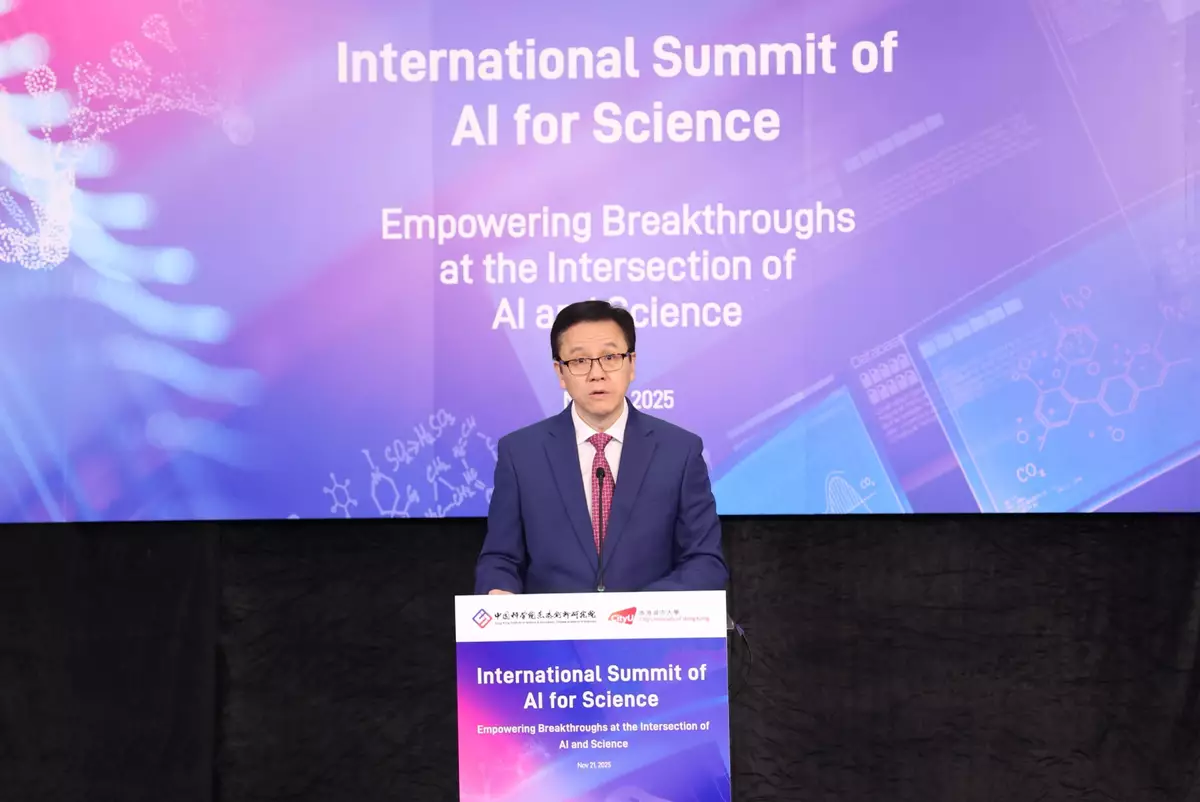
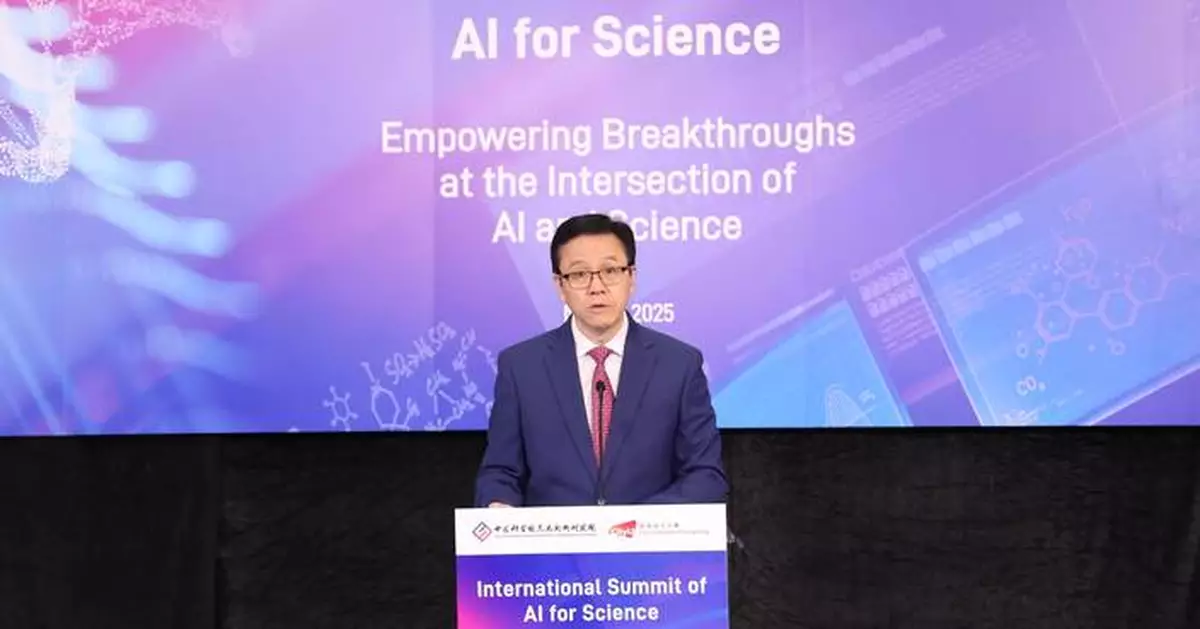
Speech by SITI at International Summit of AI for Science "Empowering Breakthroughs at the Intersection of AI and Science" Source: HKSAR Government Press Releases

Speech by SITI at International Summit of AI for Science "Empowering Breakthroughs at the Intersection of AI and Science" Source: HKSAR Government Press Releases
Re-launch of Reporting Scheme for Unauthorised Building Works in New Territories Exempted Houses

Following the direction of earlier proposals, the Buildings Department (BD) announced today (April 1) the re-launch of the Reporting Scheme for Unauthorised Building Works (UBWs) in New Territories Exempted Houses (NTEHs). The reporting period will last for one year from April 1, 2026 to March 31, 2027.

"In view of the history and unique circumstances of the NTEHs (commonly known as village houses), the Government launched a one-off administrative reporting scheme in 2012 as a special arrangement. Under the scheme, owners could report to the BD about UBWs that were erected before June 28, 2011, posed lower risks or constituted less serious contravention of the law. The reporting period ended in December 2012. The Development Bureau (DEVB) put forward proposals to amend the Buildings Ordinance in December 2024, which included rationalising the policy for handling UBWs. The DEVB also pointed out that in response to the views of villagers and Legislative Council members that the reporting period was too short, the Government prepared to re-launch the Reporting Scheme to allow owners who at that time did not report their UBWs to do so," a spokesman for the BD said.

Relevant stakeholders and Legislative Council members generally considered the above proposals practical and feasible, and they welcomed the proposals. The DEVB and the BD have also consulted Heung Yee Kuk on the relevant implementation arrangements.

The re-launched Reporting Scheme will maintain the original criteria, including:

(1) The types of UBWs that can be reported and their erection dates are the same as the original Reporting Scheme, meaning that only UBWs erected before June 28, 2011, posed lower risks or constituted less serious contravention of the law and were not the First Round Targets (Note) are eligible. Examples include signboards projecting from the external walls of village houses; enclosed rooftop structures with a coverage of not more than 50 per cent of the roofed-over area of the main building.

(2) Same as the original Reporting Scheme, owners are required to conduct safety inspections on the reported UBWs every five years.

"The BD will not require the immediate removal of the reported UBWs unless their structures become obviously dangerous. Regarding UBWs in village houses, the BD is prioritising the handling of First Round Targets. If any relevant UBWs remain not reported after the application deadline of March 31, 2027, the BD will, after dealing with the First Round Targets, take priority enforcement action against the non-reported UBWs. The BD will formulate enforcement strategy for the reported UBWs at a later stage in accordance with the risks and the actual situation," the spokesman added.

To enhance the efficiency of processing applications, reports must be submitted via the electronic platform on the BD's website by technically competent persons or registered professional engineers appointed by owners. In accordance with the user-pays principle, an administrative fee of $600 is payable for each application. Upon successful reports, owners must also pay the relevant administrative fee when conducting safety inspections of the reported UBWs every five years.

Details of the re-launched Reporting Scheme are available on the BD's website at https://www.bd.gov.hk/en/safety-inspection/ubw/UBW-in-new-territories-exempted-houses/index_relaunch_reporting_scheme.html; Villagers who wish to report can call 2626 1616 for enquiry. The BD will also use different channels such as distributing leaflets and posters to Rural Committees to enable villagers to know more about the re-launch of the Reporting Scheme.

Owners who had successfully participated in the Reporting Scheme in 2012 are not required to submit reports again. However, they must continue to comply with the requirements of the original Reporting Scheme, including conducting safety inspections of the reported UBWs every five years, submitting safety certificates and paying administrative fees to the BD.

Note: The First Round Targets refer to UBWs with higher potential risks and more serious nature, such as village houses of four storeys or more, and enclosed rooftop structures covering more than 50 per cent of the roofed-over area.

Source: AI-found images

Source: AI-found images

Recommended Articles