Skip to Content Facebook Feature Image

Poland's struggle to fix its justice system holds lessons for other countries

News

Poland's struggle to fix its justice system holds lessons for other countries
News

News

Poland's struggle to fix its justice system holds lessons for other countries

2025-11-21 14:08 Last Updated At:14:30

WARSAW, Poland (AP) — When Donald Tusk’s government came to power in Poland two years ago, it had high ambitions to roll back a political takeover of the judiciary by its nationalist, conservative predecessor.

The reality proved more complicated.

Law and Justice (PiS), which ruled Poland between 2015 and 2023, established political control over key judicial institutions by stacking higher courts with friendly judges, and punishing its critics with disciplinary action or assignments to far-away locations. It appointed enough sympathetic judges to the Constitutional Tribunal that a PiS-aligned president can delay government plans by sending them for constitutional review.

European courts have condemned the PiS changes, while regular Poles found themselves facing legal chaos. Efforts to undo them, however, have been blocked by two successive PiS-aligned presidents.

For over a decade, Poland has been deeply polarized between a bloc of urban, pro-EU voters backing Tusk and a mix of conservatives and other voters frustrated with Poland's post-socialist development, who have favored PiS. The gridlock in justice further divides the population.

Tusk, who came to power promising to fix the situation, removed his first justice minister, Adam Bodnar, in July because he wasn’t seeing enough results.

“All those dreams have faded away by now and we can forget about them,” Bodnar told The Associated Press. “We will be in a strange process for the next years.”

His successor, Waldemar Żurek, a former judge known for his opposition to PiS judicial changes, has taken a more confrontational approach.

In October, Żurek announced prosecutors were ready to press charges against former Justice Minister Zbigniew Ziobro, the architect of the PiS changes. Prosecutors allege Ziobro misused a fund for victims of violence, including for the purchase of Israeli Pegasus surveillance software.

Tusk’s party says PiS used Pegasus to spy illegally on political opponents while in power. Ziobro says he acted lawfully.

If PiS returns to power at the next parliamentary elections in two years’ time, Żurek knows he could pay a high price. He speaks with unusual ease about the possibility that he could end up in prison, saying “it would be an honor.”

“I have zero tolerance for criminals," Żurek told The Associated Press. He said he will not allow the abuse of power to go unpunished, “even if I am threatened that I will be sitting in jail for a long time.”

To fix the judicial system, the government must pass laws — but under the Polish Constitution, those laws must be approved by the president.

This is where the coalition's project ran aground.

Initially, Tusk’s ministers were forced to cohabit with President Andrzej Duda, a PiS ally, until the end of his term in August 2025. They saw this as a temporary inconvenience.

As justice minister, Bodnar did propose draft laws and negotiated with the presidential office. Duda didn't budge.

“It was natural to count on the change of president,” Bodnar said in an interview in Warsaw.

Among his priorities was to reestablish the independence of the body responsible for appointing judges, the National Council of the Judiciary, known by its Polish initials KRS.

In 2018, PiS changed the rules governing KRS, bringing it under party control. As a result, 60% of judges now sitting on Poland's Supreme Court were appointed by the reshaped council.

Bodnar wanted to put KRS back under the control of judges as well as restoring the neutrality of the Constitutional Tribunal.

Instead, what happened was that Nawrocki, an independent candidate backed by PiS, narrowly won a presidential election in June. Analysts said the failure to restore judicial independence was a factor in the defeat of Tusk's coalition.

Where presidential approval wasn't needed, Bodnar says he achieved positive change. He removed court presidents appointed by PiS and ended disciplinary cases against independent judges. Poland joined the European public prosecutor’s office, which means better accountability for how EU funds are spent.

Yet he was perceived as handling the process with kid gloves, advancing carefully and legalistically. Tusk felt he needed someone ready to throw the gloves off. Enter Waldemar Żurek.

After Nawrocki’s victory, Żurek presented detailed proposals to fix the justice system, but he says there are already signals from the president's office that they will be vetoed. In November, Nawrocki announced he would not nominate to higher courts judges who opposed PiS changes to the judicial system.

“I would much more prefer it if we could sit down at the table and talk, even in front of cameras,” Żurek said. “I want to end the Polish-Polish war.”

In the absence of legislative progress, Żurek’s office has announced efforts to prosecute allies of PiS. The cases are the result of painstaking work by prosecutors, who for months have been investigating accusations that the former government used public office for political goals.

“If we can’t introduce legislation because the president is blocking us, then we are going to go about it in a different way,” is how legal expert Jakub Jaraczewski, from NGO Democracy Reporting International, sums up Tusk’s tactics. “We will go after the ‘bad guys’ and we will make them pay.”

Even without convictions, “disclosing the truth” about the abuse of power is important for informing voters, said Bodnar.

Nawrocki's election in June indicates that a coalition of Law and Justice and the far-right would win general elections in two years if they decided to run together.

So has Tusk's coalition made enough progress in shoring up judicial independence to ensure PiS will not take revenge if it returns to power?

Żurek does not answer directly. Instead, he speaks about his readiness to face any costs, including prison time, in fighting for democracy.

If Tusk's camp does manage to hold on to power, it could wait out some of the PiS appointments until they've retired or finished their terms, says Jaraczewski.

But the problems with the Polish judiciary run deeper than the rule-of-law crisis, he cautions. The system is plagued with delays and inefficiencies, undermining trust.

Żurek has said he wants to fix this, listing it as one of his two priorities alongside restoring judicial independence. However, that would take time, money and cooperation between the new government and PiS appointees.

Jaraczewski says a “bigger conversation” is needed about how to safeguard democracy, pointing to Hungary, where the European Union has raised the alarm about the decline in the rule of law, and the United States, where President Donald Trump has tested the limits of executive power.

“Our constitutional orders should be strengthened against these kinds of takeovers, against the actions of politicians who openly ignore the rule of law," Jaraczewski said.

Even then, preserving democracy will still depend on electing people inclined to respect the rules, he says.

“Political polarization makes protecting the rule of law harder, as voters will accept anything the party they support pursues — including the takeover of courts — and will reject anything that the opposite side proposes, including attempts to undo the damage,” Jaraczewski said. It's therefore “crucial to reduce polarization and educate society."

When PiS was in power, independent Polish judges made an unprecedented effort to reach out to normal citizens, by marching in the streets, organizing a countrywide information tour about the constitution, and speaking at music festivals.

“The democrats must go beyond the sphere of those who voted for them,” Żurek argues. “We must speak also to those who do not understand the language of lawyers, but who take part in elections and can be manipulated by politicians.”
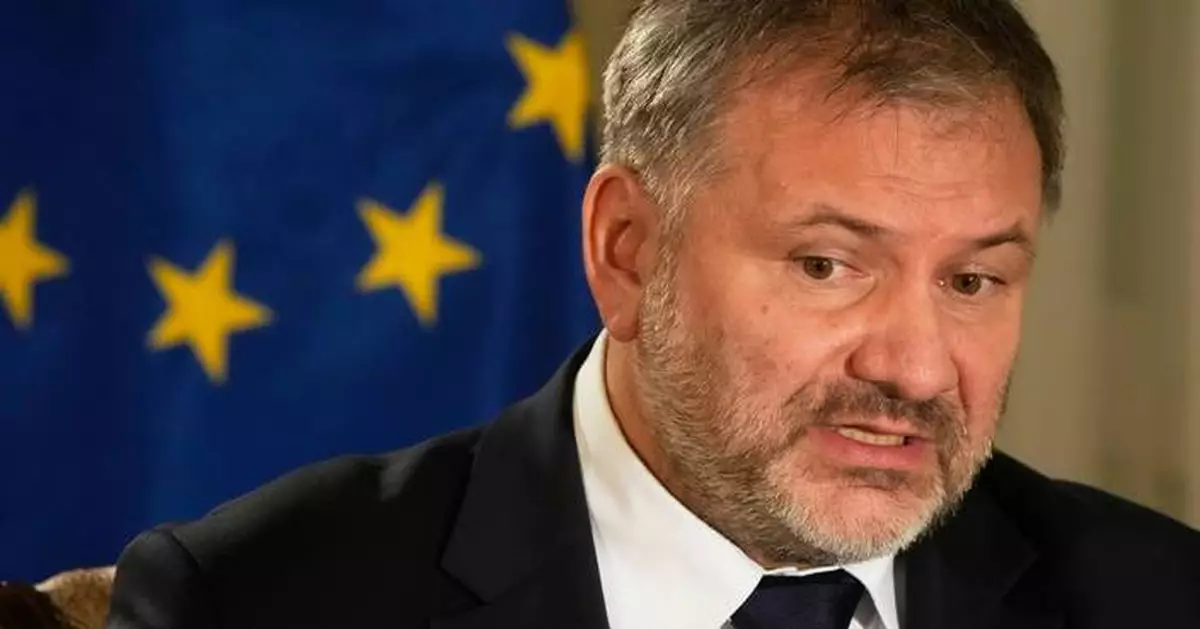
Polish Justice Minister Waldemar Żurek speaks during an interview with The Associated Press at the Warsaw headquarters of the Ministry of Justice in Warsaw,Poland, Wednesday, Nov. 5, 2025. (AP Photo/Czarek Sokolowski)

Polish Justice Minister Waldemar Żurek speaks during an interview with The Associated Press at the Warsaw headquarters of the Ministry of Justice in Warsaw,Poland, Wednesday, Nov. 5, 2025. (AP Photo/Czarek Sokolowski)

Polish Justice Minister Waldemar Żurek speaks during an interview with The Associated Press at the Warsaw headquarters of the Ministry of Justice in Warsaw,Poland, Wednesday, Nov. 5, 2025. (AP Photo/Czarek Sokolowski)

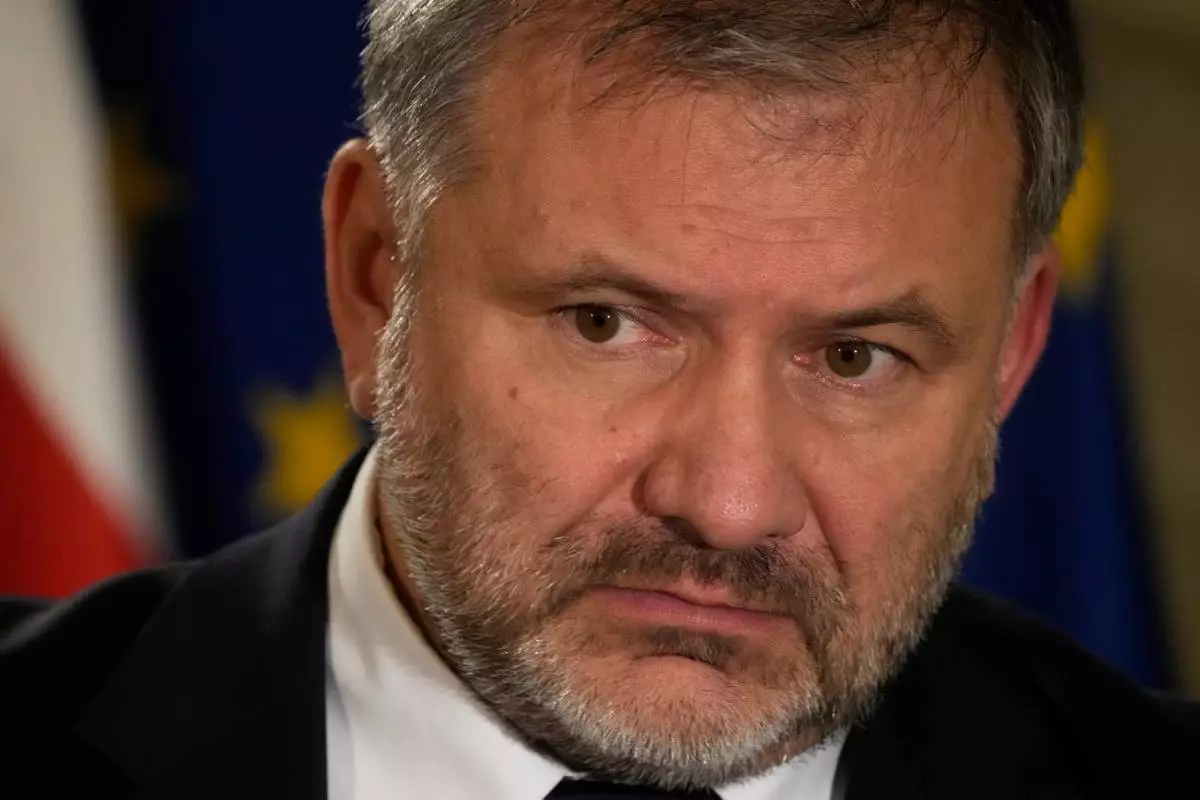
Polish Justice Minister Waldemar Żurek speaks during an interview with The Associated Press at the Warsaw headquarters of the Ministry of Justice in Warsaw,Poland, Wednesday, Nov. 5, 2025. (AP Photo/Czarek Sokolowski)
Polish Justice Minister Waldemar Żurek speaks during an interview with The Associated Press at the Warsaw headquarters of the Ministry of Justice in Warsaw,Poland, Wednesday, Nov. 5, 2025. (AP Photo/Czarek Sokolowski)
Polish Justice Minister Waldemar Żurek speaks during an interview with The Associated Press at the Warsaw headquarters of the Ministry of Justice in Warsaw,Poland, Wednesday, Nov. 5, 2025. (AP Photo/Czarek Sokolowski)
NEW YORK (AP) — Stocks are rushing higher worldwide, and oil prices are easing Wednesday as hopes build that the war with Iran could end soon. That's even though some of the signals investors saw as hopeful are already under dispute, and several prior bouts of optimism in financial markets quickly got undercut by continued, fierce fighting in the war.

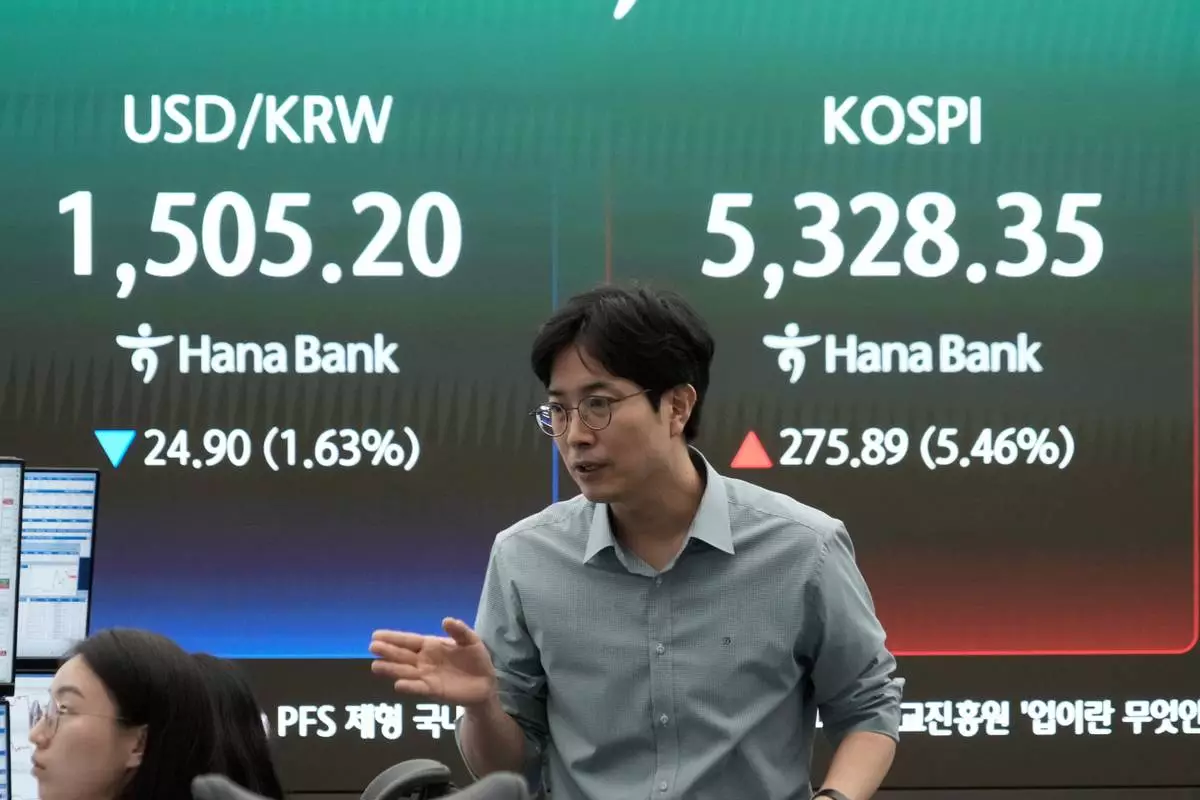
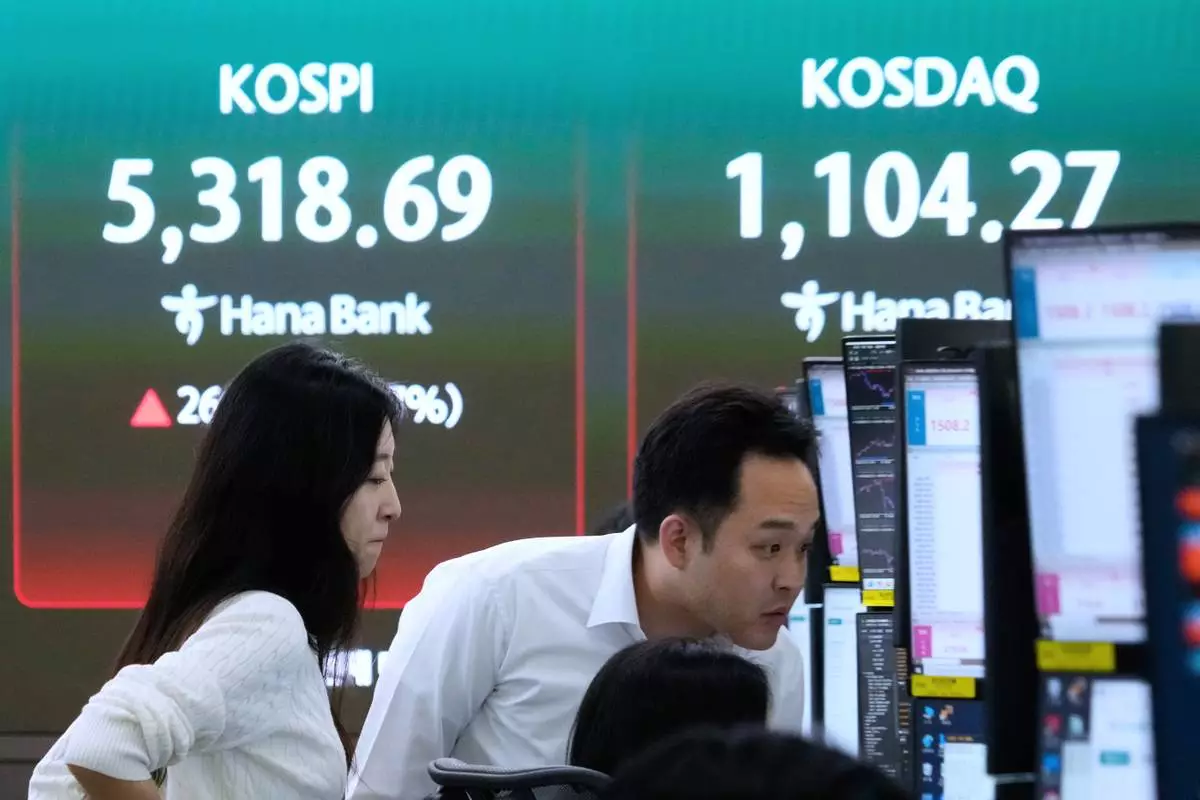
The S&P 500 rallied 0.9% and added to its leap from the day before, which was its best since last spring. That followed even bigger gains for stock markets across Europe and Asia, including an 8.4% surge in South Korea, which were catching up to Wall Street’s rally from Tuesday.

The Dow Jones Industrial Average was up 294 points, or 0.6%, as of 2:08 p.m. Eastern time, and the Nasdaq composite was 1.3% higher.

Oil prices also fell back toward $100 per barrel after President Donald Trump said late Tuesday that the U.S. military could end its offensive in two to three weeks.

That added to optimism following a couple tenuous signals of hope from earlier Tuesday that Wall Street latched onto, including a news report quoting Iran’s president as saying that it has “the necessary will to end the war” as long as certain requirements are met, including “guarantees to prevent a recurrence of aggression.”

The worry on Wall Street has been that the war may last a long time and keep oil and natural gas from the Persian Gulf out of global markets, which could create a brutal blast of inflation.

But hope has been quick to reverse to doubt on Wall Street, triggering manic swings back and forth for financial markets since the war with Iran began. Trump has also made statements that lifted markets, only to see the gains quickly disappear after increasing his military threats.

Shortly before Wall Street began trading on Wednesday, Trump claimed in a post on his social media network that Iran “has just asked the United States of America for a CEASEFIRE!”

“We will consider when Hormuz Strait is open, free, and clear. Until then, we are blasting Iran into oblivion or, as they say, back to the Stone Ages!!!”

But Iran’s Foreign Ministry spokesman, Esmail Baghaei, quickly called that claim “false and baseless,” according to a report on Iranian state television.

Oil prices also remain high, even if they’ve eased recently. The price for a barrel of Brent crude oil, the international standard, was sitting at $101.51 following its declines, which is still up from roughly $70 before the war began.

U.S. gasoline prices rose again overnight to a national average of $4.06 per gallon, according to the auto club AAA.

Iran, meanwhile, hit an oil tanker off the coast of Qatar and Kuwait’s airport on Wednesday while airstrikes battered Tehran as the fighting continued. Iran also continues to hold a grip on the Strait of Hormuz, where a fifth of the world’s traded oil passes during peacetime.

“De-escalation hopes have given markets a lift, but we think the effects of the war would, in many cases, persist even if the war did end soon,” Thomas Mathews, head of markets, Asia Pacific at Capital Economics, said in a research note Wednesday.

“It’s worth thinking through how markets might fare if the war were to end ‘very soon,’” he wrote. “Do markets have further to recover if sentiment continues to improve? The answer is almost certainly yes.”

The White House said Trump will deliver a public address Wednesday evening on the Iran war.

On Wall Street, most stocks rose as Big Tech powered the move higher. Gains of 3.8% for Alphabet and 0.8% for Nvidia were two of the strongest forces lifting the S&P 500.

Eli Lilly climbed 5.1% after U.S. regulators approved its GLP-1 pill for weight loss.

Such gains have pulled the S&P 500, which sits at the heart of many 401(k) accounts, back to within 5.6% of its all-time high set early this year. Just on Monday, the index briefly neared a 10% drop from its record, a steep-enough fall that professional investors have a name for it: a “correction.”

Nike sank 14.5% even though it reported a stronger profit for the latest quarter than expected. Analysts said it gave some lackluster financial forecasts.

Hasbro fell 4.8% after the toy company found someone had gained unauthorized access to its computer network and is working to assess the full impact.

Energy companies fell broadly as oil prices eased. Exxon Mobil slumped 5% and Chevron fell 4.9%.

In stock markets abroad, indexes leaped more than 2% in France and Germany. Asian markets had even bigger gains.

Tokyo’s Nikkei 225 jumped 5.2% after a survey showed business sentiment for major Japanese manufacturers improved despite worries about the Iran war.

In the bond market, Treasury yields held relatively steady after a report said U.S. retailers made more money in February than economists expected. A separate report said U.S. manufacturing growth last month was slightly faster than economists expected.

The 10-year Treasury yield rose to 4.32% from 4.30% late Tuesday.

AP Business Writers Chan Ho-him and Matt Ott contributed.

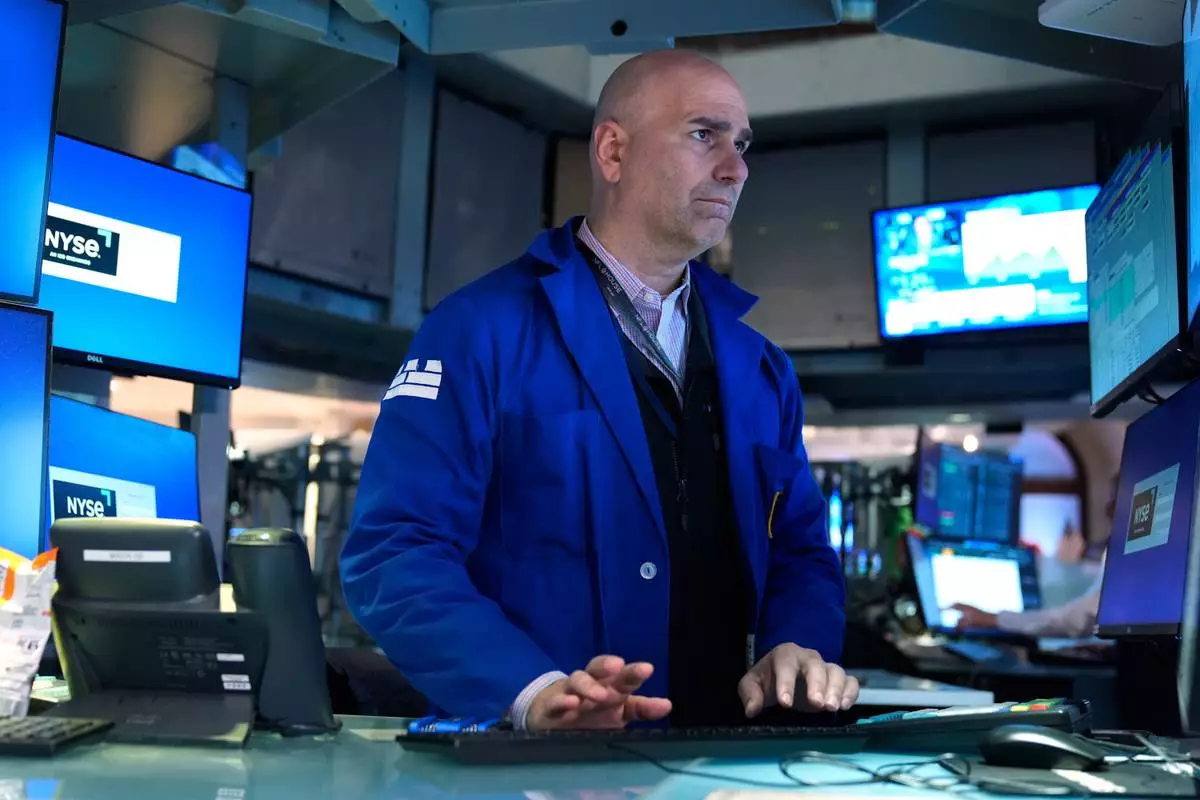
James Conti works on the floor at the New York Stock Exchange in New York, Tuesday, March 31, 2026. (AP Photo/Seth Wenig)

James Conti works on the floor at the New York Stock Exchange in New York, Tuesday, March 31, 2026. (AP Photo/Seth Wenig)

Philip Finale works on the floor at the New York Stock Exchange in New York, Tuesday, March 31, 2026. (AP Photo/Seth Wenig)

Philip Finale works on the floor at the New York Stock Exchange in New York, Tuesday, March 31, 2026. (AP Photo/Seth Wenig)

Currency traders watch monitors near a screen showing the Korea Composite Stock Price Index (KOSPI), left, at the foreign exchange dealing room of the Hana Bank headquarters in Seoul, South Korea, Wednesday, April 1, 2026. (AP Photo/Ahn Young-joon)

Currency traders watch monitors near a screen showing the Korea Composite Stock Price Index (KOSPI), left, at the foreign exchange dealing room of the Hana Bank headquarters in Seoul, South Korea, Wednesday, April 1, 2026. (AP Photo/Ahn Young-joon)

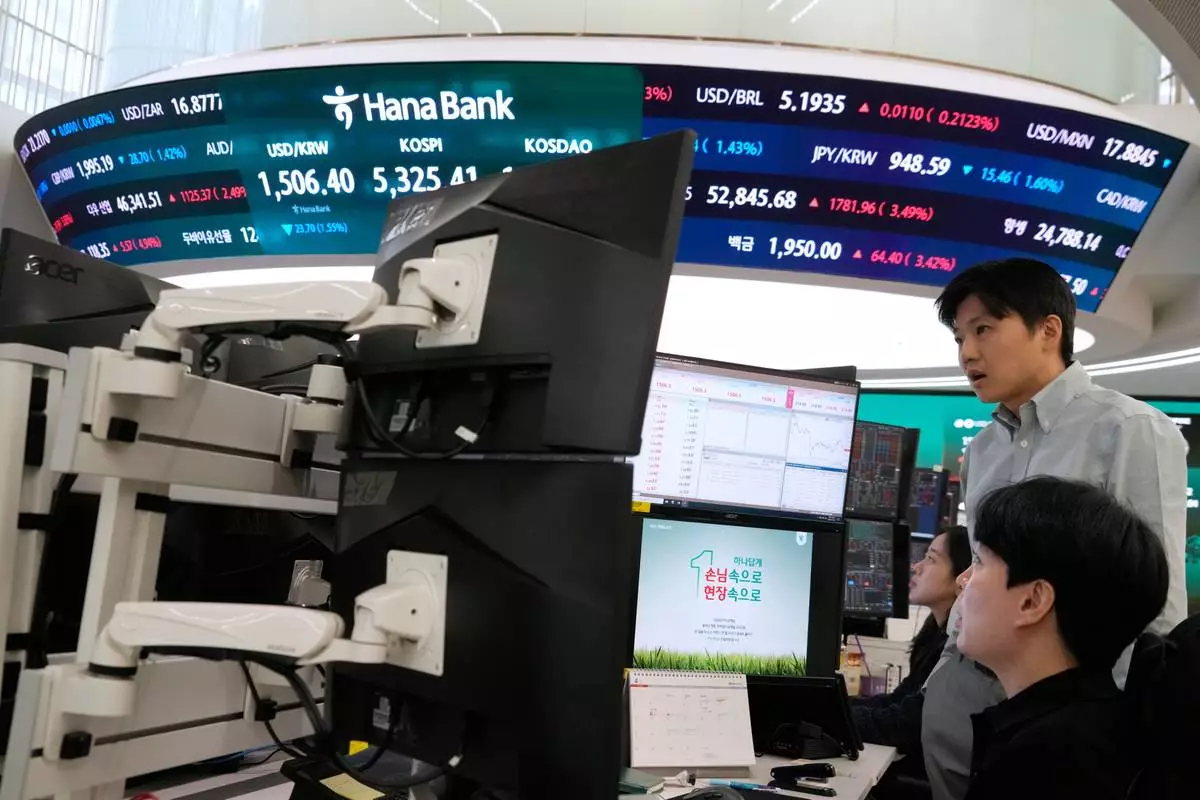
Currency traders watch monitors near a screen showing the Korea Composite Stock Price Index (KOSPI), top center, and the foreign exchange rate between U.S. dollar and South Korean won, top center left, at the foreign exchange dealing room of the Hana Bank headquarters in Seoul, South Korea, Wednesday, April 1, 2026. (AP Photo/Ahn Young-joon)

Currency traders watch monitors near a screen showing the Korea Composite Stock Price Index (KOSPI), top center, and the foreign exchange rate between U.S. dollar and South Korean won, top center left, at the foreign exchange dealing room of the Hana Bank headquarters in Seoul, South Korea, Wednesday, April 1, 2026. (AP Photo/Ahn Young-joon)

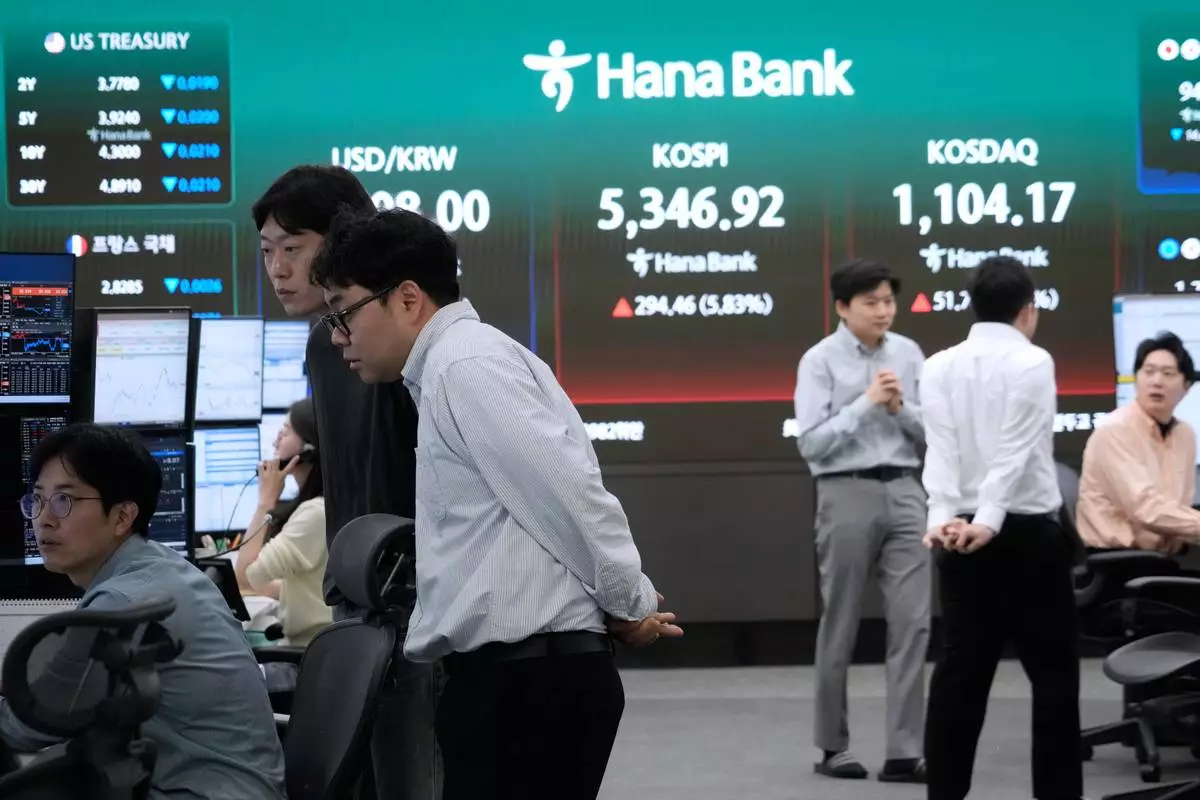
Currency traders work at the foreign exchange dealing room of the Hana Bank headquarters in Seoul, South Korea, Wednesday, April 1, 2026. (AP Photo/Ahn Young-joon)

Currency traders work at the foreign exchange dealing room of the Hana Bank headquarters in Seoul, South Korea, Wednesday, April 1, 2026. (AP Photo/Ahn Young-joon)

A currency trader reacts near a screen showing the Korea Composite Stock Price Index (KOSPI), right, and the foreign exchange rate between U.S. dollar and South Korean won at the foreign exchange dealing room of the Hana Bank headquarters in Seoul, South Korea, Wednesday, April 1, 2026. (AP Photo/Ahn Young-joon)

A currency trader reacts near a screen showing the Korea Composite Stock Price Index (KOSPI), right, and the foreign exchange rate between U.S. dollar and South Korean won at the foreign exchange dealing room of the Hana Bank headquarters in Seoul, South Korea, Wednesday, April 1, 2026. (AP Photo/Ahn Young-joon)

A screen displays financial information on the floor at the New York Stock Exchange in New York, Tuesday, March 31, 2026. (AP Photo/Seth Wenig)

A screen displays financial information on the floor at the New York Stock Exchange in New York, Tuesday, March 31, 2026. (AP Photo/Seth Wenig)

Recommended Articles