Skip to Content Facebook Feature Image

Families of Yemeni aid workers detained by Houthi rebels despair for their fate

News

Families of Yemeni aid workers detained by Houthi rebels despair for their fate
News

News

Families of Yemeni aid workers detained by Houthi rebels despair for their fate

2025-11-22 13:11 Last Updated At:13:20

CAIRO (AP) — Ahmed al-Yamani's family went from joy of celebrating his daughter's wedding to terror the next day, when masked troops stormed into their home in Sanaa, Yemen's capital held by the country's Iran-backed Houthi rebels, and arrested him.

The family didn't hear from him for months. His only crime, they suspect, was having worked for local humanitarian groups.

Al-Yamani is among dozens of Yemeni workers with aid groups, United Nations agencies and nongovernmental organizations who have been detained since last year by the Houthis in the rebel-held northern part of the country. The crackdown has seen homes and offices raided, families terrorized and smartphones, laptops and documents confiscated.

Though some U.N. staffers have been released, most aid workers have been held for months without official charges or trials. The rebels say they are spies for the West and Israel, claims their families deny.

The Houthis burst into al-Yamani’s home on June 6, 2024, as his family was sleeping and grabbed the 52-year-old. They pointed their guns at his family members, including his younger son Abdelrahman.

They thrashed the home and confiscated all their documents, as well as the deed to the house, al-Yamani's elder son said. During the search, al-Yamani's wife and mother were guarded by five female Houthi personnel in a separate room.

“They left the house with my father in an armored vehicle and took his car,” Khaled al-Yemeni, 28, the elder son, told The Associated Press over the phone from France, where he now lives. Al-Yemeni spells the name differently from the rest of his family.

The raids, which started at the end of May 2024, saw dozens of aid workers arrested, according to a report by Human Rights Watch. For months, their families were not informed of their whereabouts and they had no contact with them, amounting to enforced disappearances, the report says.

Dr. Ali Mudhwahi, 56 and a public health consultant with UNICEF, was also arrested in June 2024. The Houthis raided his office, interrogated him and his colleagues for hours, then blindfolded and took him away.

Eight months later, he called his family for the first time, his wife Safiah Mohammed said. To this day, she and the couple's 12-year-old daughter do not know where he is held.

Since that first call, Mohammed — who was not in Yemen when her husband was arrested — said there have been phone calls once every month or two, lasting only a few minutes.

“In the last three calls, his voice sounded exhausted," Mohammed said over the phone. "I can sense he’s not okay.”

A doctor from Sanaa told the AP that his brother, who worked with UNESCO, was arrested last year and a cousin, also a staffer for another U.N. agency, was arrested in September.

The Houthis had summoned the cousin for questioning several times before. One day, he did not come back, said the doctor, who also lives abroad and who spoke on condition of anonymity, fearing for his relatives' safety.

As for his brother, the doctor said the family is now allowed to call him every few months but not for more than 10 minutes.

Since al-Yamani's arrest, the family has seen him once, on Aug. 16. They received instructions from the Houthis to show up at a meeting spot and were driven by bus with blacked-out windows to an unknown location.

Once the bus stopped, al-Yamani was brought in and his wife, mother and son Abdelrahman were able to talk to him for a short while. According to the family, he appeared gaunt and had lost a lot of weight, said Khaled al-Yemeni, adding that he has spoken with his father three times since his arrest.

The pain of the families over their loved ones' detentions has left many of them feeling numb.

"We're ghosts of people," the Sanaa doctor said.

Mohammed said she tells her daughter her father is away on “work missions,” something the child remembers from earlier days.

“They took the head of my family. They took our sole provider," she said. "I’m trying to hide my pain from my daughter but ... I’m worried.”

The families became even more terrified when the United States and Israel launched an air and naval campaign against the Houthis in response to the rebels’ missile and drone attacks on Israel and on ships in the Red Sea. The Houthis said their actions were in solidarity with the Palestinians over the war in Gaza.

As Israeli strikes hit residential areas, Houthi military sites and prison facilities in Sanaa and the port of Hodeida, they worried whether their loved ones were held in any of those places.

According to Hazam al-Assad of the Houthis' political bureau, those detained, including workers with international groups and nonprofits, are involved in espionage and providing coordinates and information to Israel about possible targets.

They "were in possession of advanced spying devices and eavesdropping equipment for intercepting calls and identifying locations,” al-Assad told the AP, adding that the cases would be referred to judicial authorities in time.

U.N. deputy spokesman Farhan Haq denounced the arrests and said accusations against U.N. staffers are “baseless and extremely distressing.”

“Our staff are impartial humanitarian and development professionals," Haq said.

In October, the Houthis released a dozen U.N. international staffers after detaining them in Sanaa the previous weekend, according to the world body, which said the 12 then left Yemen.

However, 59 Yemenis working for the U.N. are still detained, as well as many other NGO and civil society personnel from various diplomatic missions.

Al-Yamani's last job was in March 2022, with the nonprofit Direct Aid Society that has offices both in the Houthi-held north and in southern Yemen, where the internationally recognized government is based.

Khaled al-Yemeni says he has reached out to all his father's past employers, as well as U.N. offices in Yemen, but was told they have to prioritize the release of their own, current employees.

Yemen has been torn by a civil war since 2014, when the Houthis captured Sanaa and most of the country's north, forcing out the government. The war, which has stalled over the past years, has killed more than 150,000 people, both fighters and civilians, and created one of the world’s worst humanitarian disasters.

The U.N. is actively engaging with the Houthis to secure the “immediate and unconditional release and safe return of all detained," Haq said.

“We fully share the families’ goal," Haq said. "We stand with them in their frustration and anxiety.”

Al-Yemeni and Mohammed say they regularly post about the detained to draw attention to their cases. But in his posts calling for action, al-Yemeni says he is careful to appeal for sympathy from the Houthis, rather than say something that could provoke them.
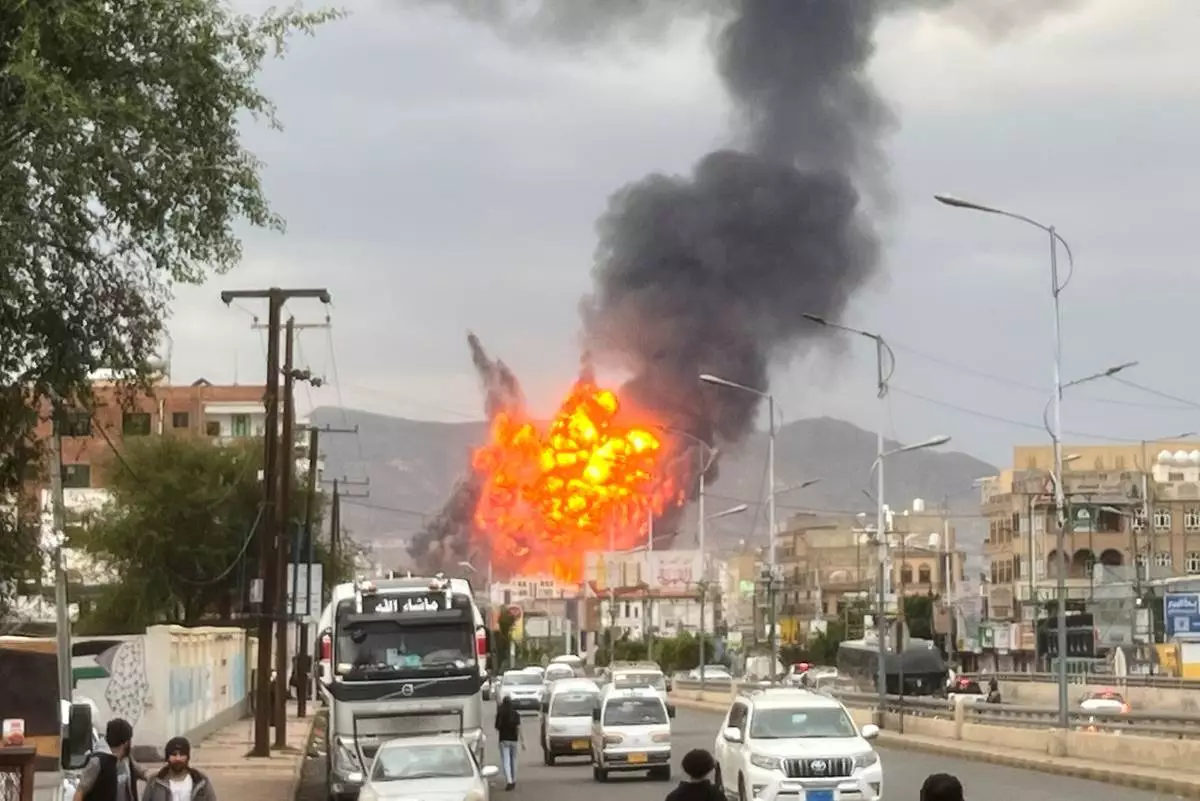
FILE - Flames and smoke rise from an Israeli airstrike in Sanaa, Yemen, on Sept. 10, 2025. (AP Photo, File)
FILE - Flames and smoke rise from an Israeli airstrike in Sanaa, Yemen, on Sept. 10, 2025. (AP Photo, File)

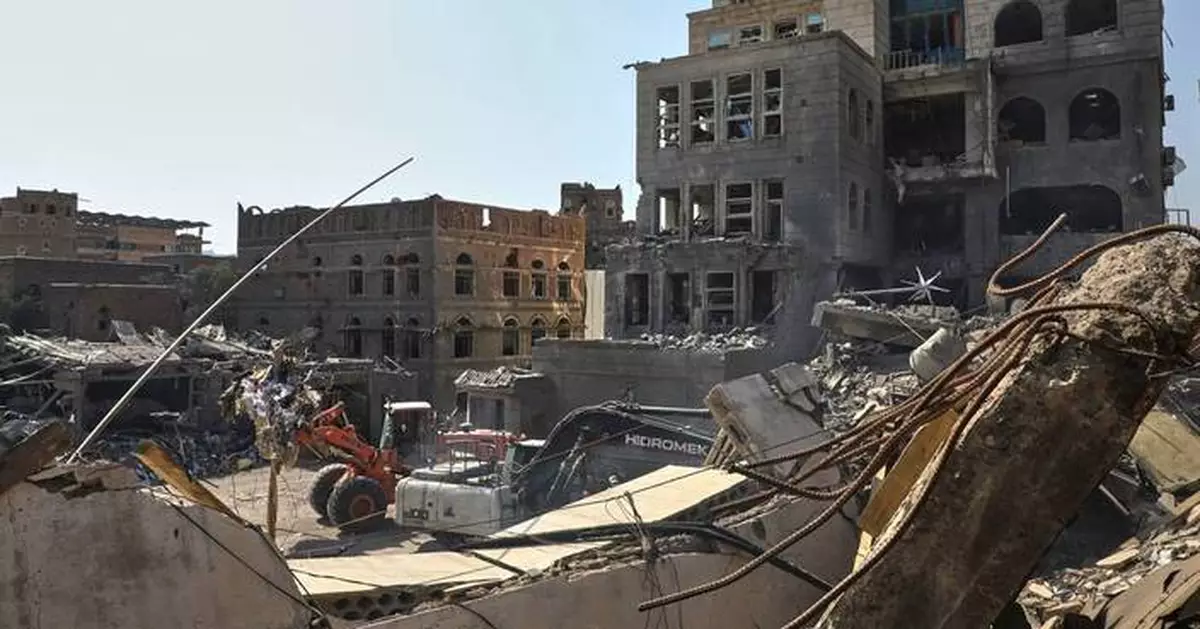
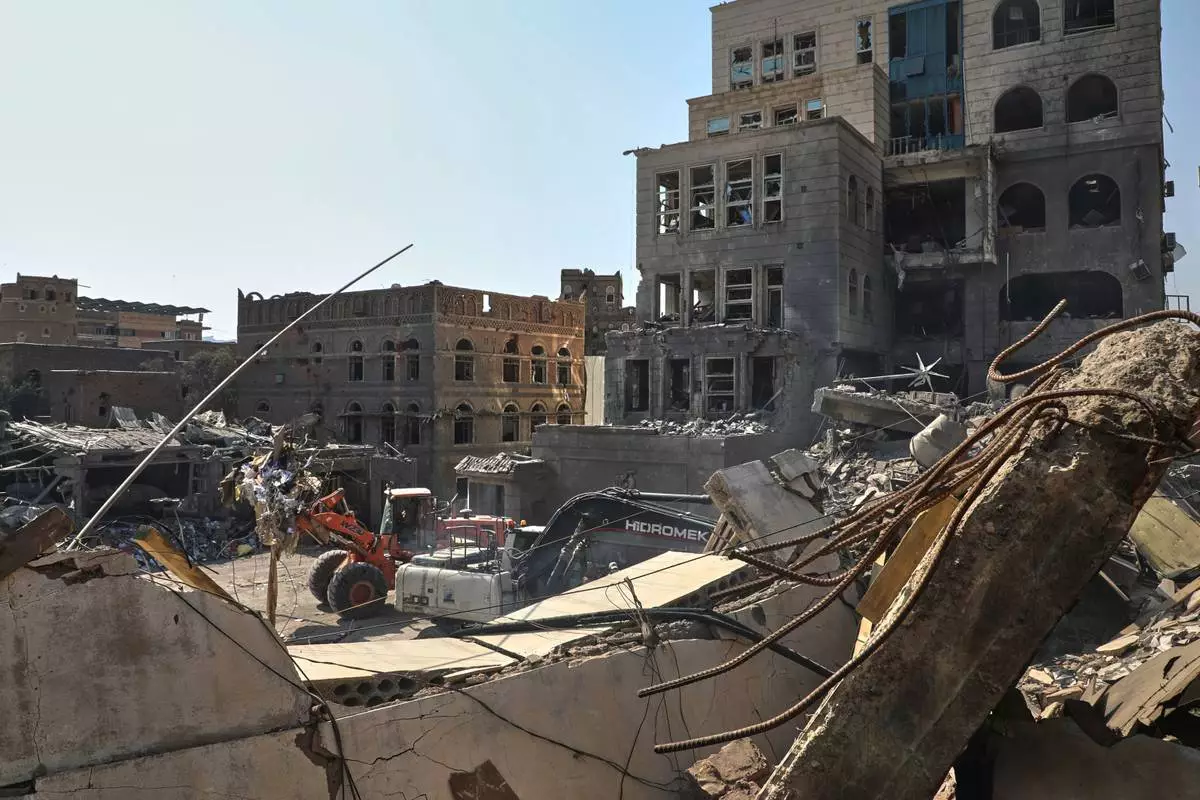
FILE - Workers use heavy machinery to clear rubble from buildings destroyed in an Israeli airstrike in Sanaa, Yemen, on Sept. 13, 2025. (AP Photo/Osamah Abdulrahman, File)
FILE - Workers use heavy machinery to clear rubble from buildings destroyed in an Israeli airstrike in Sanaa, Yemen, on Sept. 13, 2025. (AP Photo/Osamah Abdulrahman, File)
NEW YORK (AP) — Stocks are rushing higher worldwide, and oil prices are easing Wednesday as hopes build that the war with Iran could end soon. That's even though some of the signals investors saw as hopeful are already under dispute, and several prior bouts of optimism in financial markets quickly got undercut by continued, fierce fighting in the war.

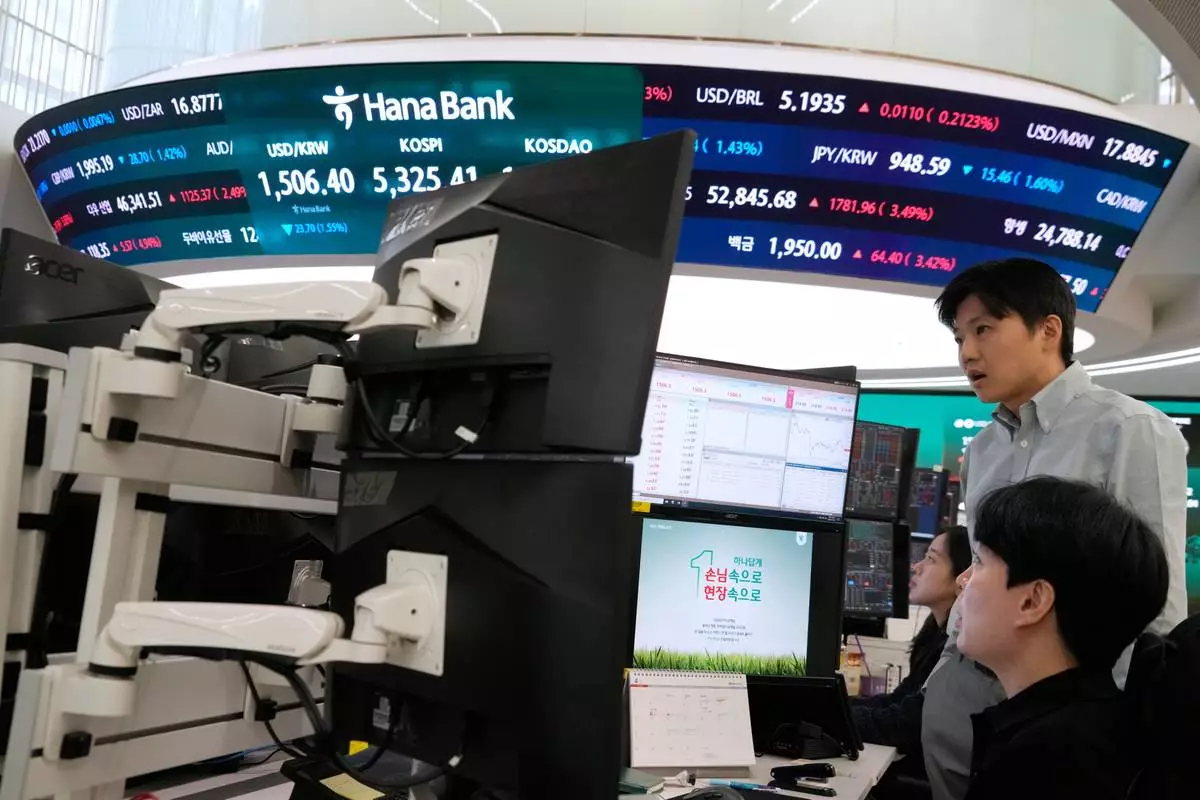
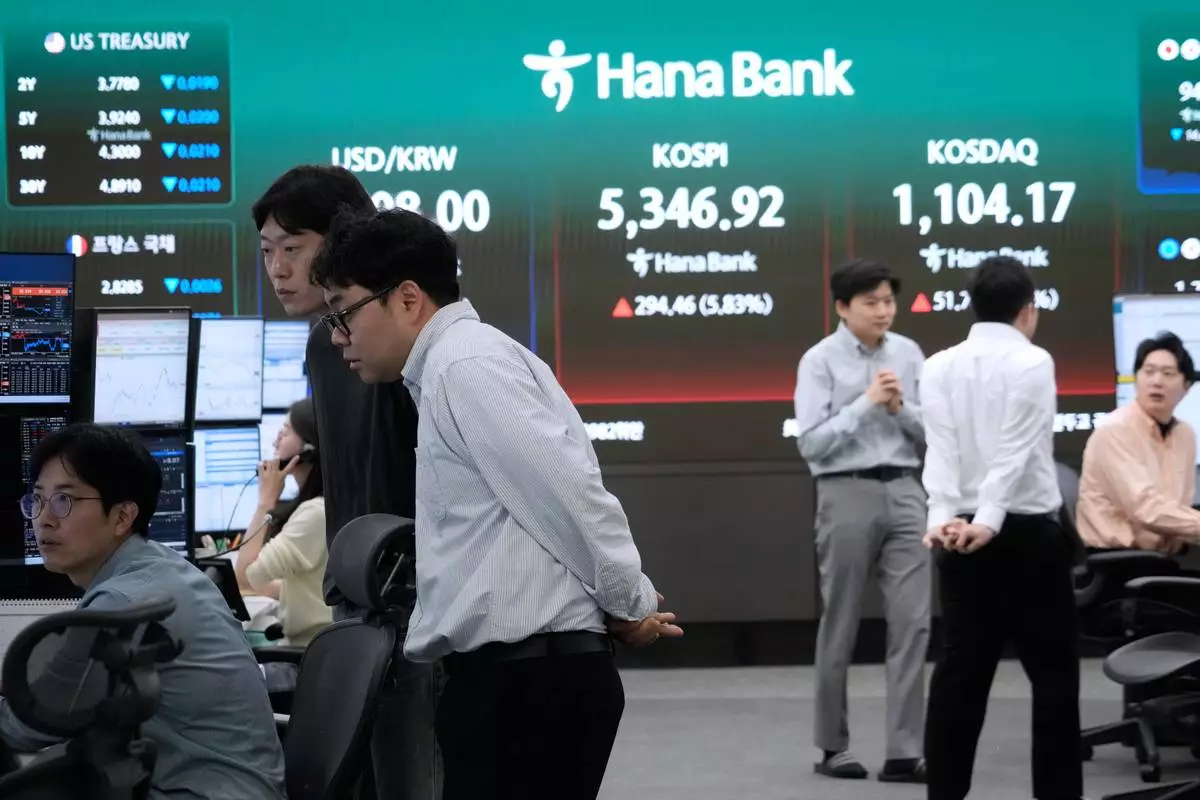
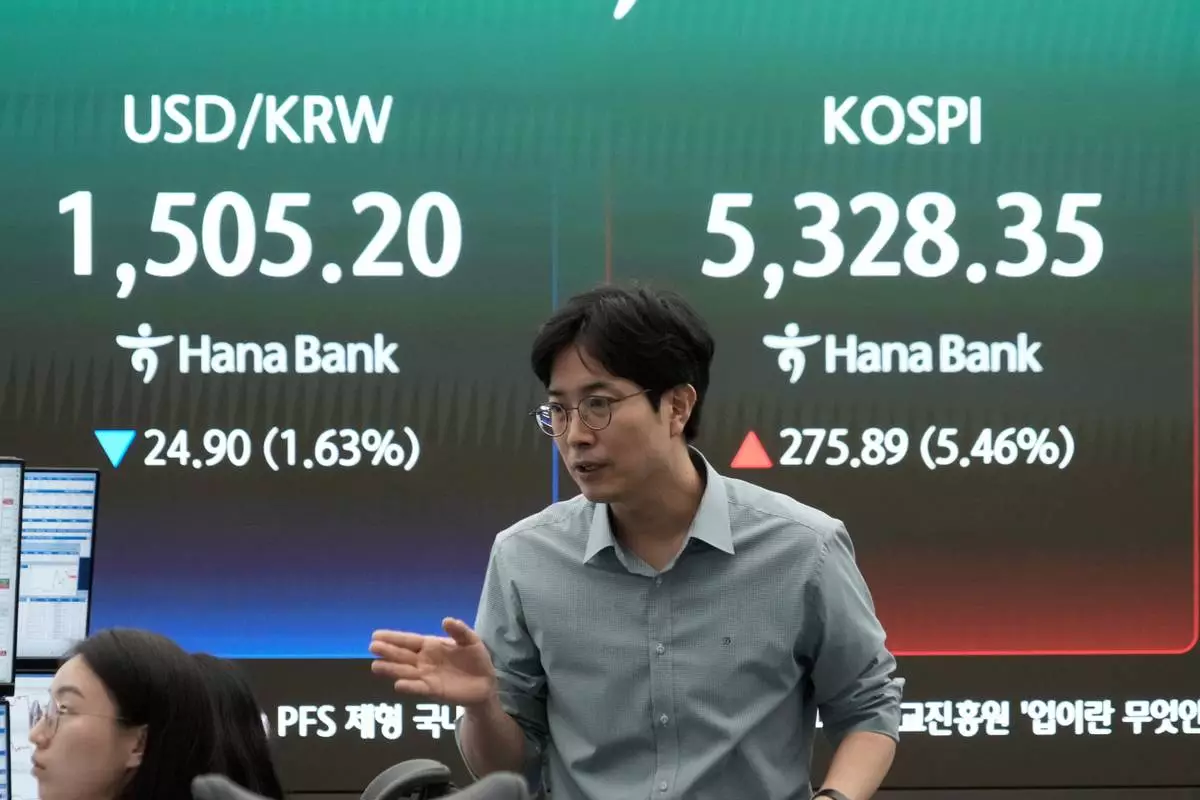
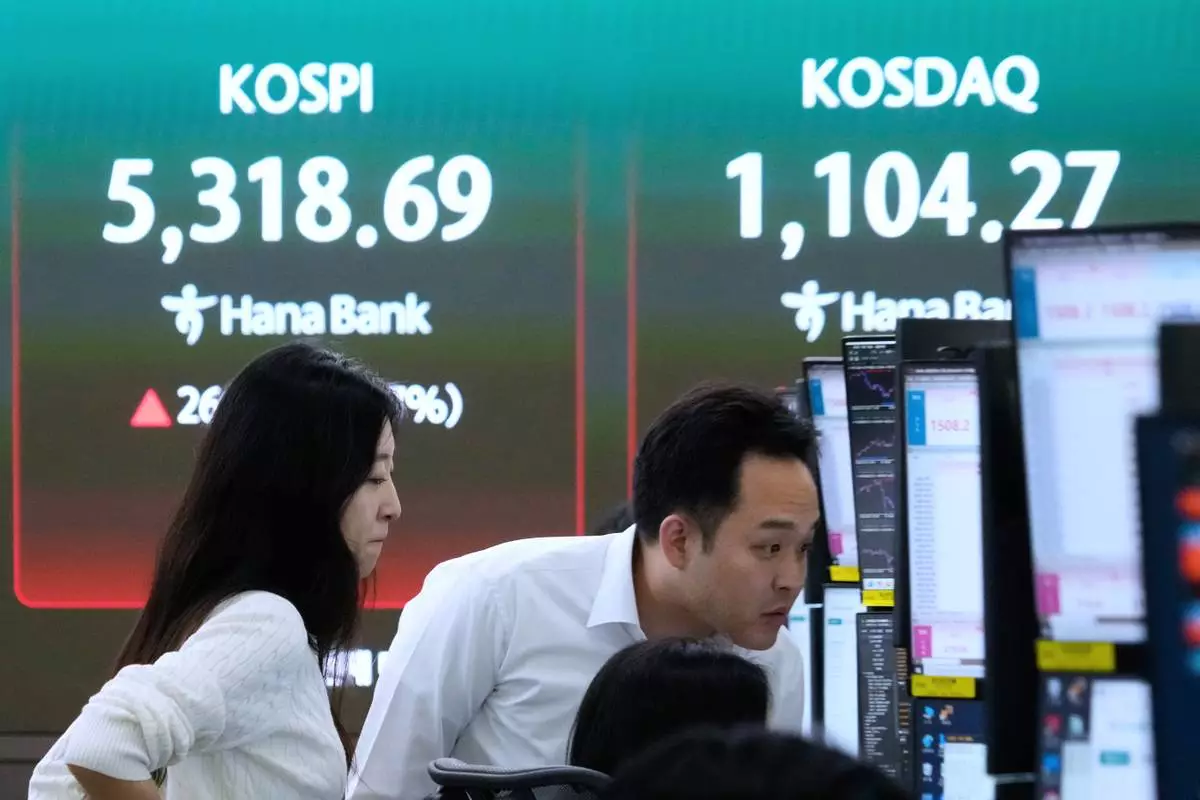
The S&P 500 rallied 0.9% and added to its leap from the day before, which was its best since last spring. That followed even bigger gains for stock markets across Europe and Asia, including an 8.4% surge in South Korea, which were catching up to Wall Street’s rally from Tuesday.

The Dow Jones Industrial Average was up 294 points, or 0.6%, as of 2:08 p.m. Eastern time, and the Nasdaq composite was 1.3% higher.

Oil prices also fell back toward $100 per barrel after President Donald Trump said late Tuesday that the U.S. military could end its offensive in two to three weeks.

That added to optimism following a couple tenuous signals of hope from earlier Tuesday that Wall Street latched onto, including a news report quoting Iran’s president as saying that it has “the necessary will to end the war” as long as certain requirements are met, including “guarantees to prevent a recurrence of aggression.”

The worry on Wall Street has been that the war may last a long time and keep oil and natural gas from the Persian Gulf out of global markets, which could create a brutal blast of inflation.

But hope has been quick to reverse to doubt on Wall Street, triggering manic swings back and forth for financial markets since the war with Iran began. Trump has also made statements that lifted markets, only to see the gains quickly disappear after increasing his military threats.

Shortly before Wall Street began trading on Wednesday, Trump claimed in a post on his social media network that Iran “has just asked the United States of America for a CEASEFIRE!”

“We will consider when Hormuz Strait is open, free, and clear. Until then, we are blasting Iran into oblivion or, as they say, back to the Stone Ages!!!”

But Iran’s Foreign Ministry spokesman, Esmail Baghaei, quickly called that claim “false and baseless,” according to a report on Iranian state television.

Oil prices also remain high, even if they’ve eased recently. The price for a barrel of Brent crude oil, the international standard, was sitting at $101.51 following its declines, which is still up from roughly $70 before the war began.

U.S. gasoline prices rose again overnight to a national average of $4.06 per gallon, according to the auto club AAA.

Iran, meanwhile, hit an oil tanker off the coast of Qatar and Kuwait’s airport on Wednesday while airstrikes battered Tehran as the fighting continued. Iran also continues to hold a grip on the Strait of Hormuz, where a fifth of the world’s traded oil passes during peacetime.

“De-escalation hopes have given markets a lift, but we think the effects of the war would, in many cases, persist even if the war did end soon,” Thomas Mathews, head of markets, Asia Pacific at Capital Economics, said in a research note Wednesday.

“It’s worth thinking through how markets might fare if the war were to end ‘very soon,’” he wrote. “Do markets have further to recover if sentiment continues to improve? The answer is almost certainly yes.”

The White House said Trump will deliver a public address Wednesday evening on the Iran war.

On Wall Street, most stocks rose as Big Tech powered the move higher. Gains of 3.8% for Alphabet and 0.8% for Nvidia were two of the strongest forces lifting the S&P 500.

Eli Lilly climbed 5.1% after U.S. regulators approved its GLP-1 pill for weight loss.

Such gains have pulled the S&P 500, which sits at the heart of many 401(k) accounts, back to within 5.6% of its all-time high set early this year. Just on Monday, the index briefly neared a 10% drop from its record, a steep-enough fall that professional investors have a name for it: a “correction.”

Nike sank 14.5% even though it reported a stronger profit for the latest quarter than expected. Analysts said it gave some lackluster financial forecasts.

Hasbro fell 4.8% after the toy company found someone had gained unauthorized access to its computer network and is working to assess the full impact.

Energy companies fell broadly as oil prices eased. Exxon Mobil slumped 5% and Chevron fell 4.9%.

In stock markets abroad, indexes leaped more than 2% in France and Germany. Asian markets had even bigger gains.

Tokyo’s Nikkei 225 jumped 5.2% after a survey showed business sentiment for major Japanese manufacturers improved despite worries about the Iran war.

In the bond market, Treasury yields held relatively steady after a report said U.S. retailers made more money in February than economists expected. A separate report said U.S. manufacturing growth last month was slightly faster than economists expected.

The 10-year Treasury yield rose to 4.32% from 4.30% late Tuesday.

AP Business Writers Chan Ho-him and Matt Ott contributed.

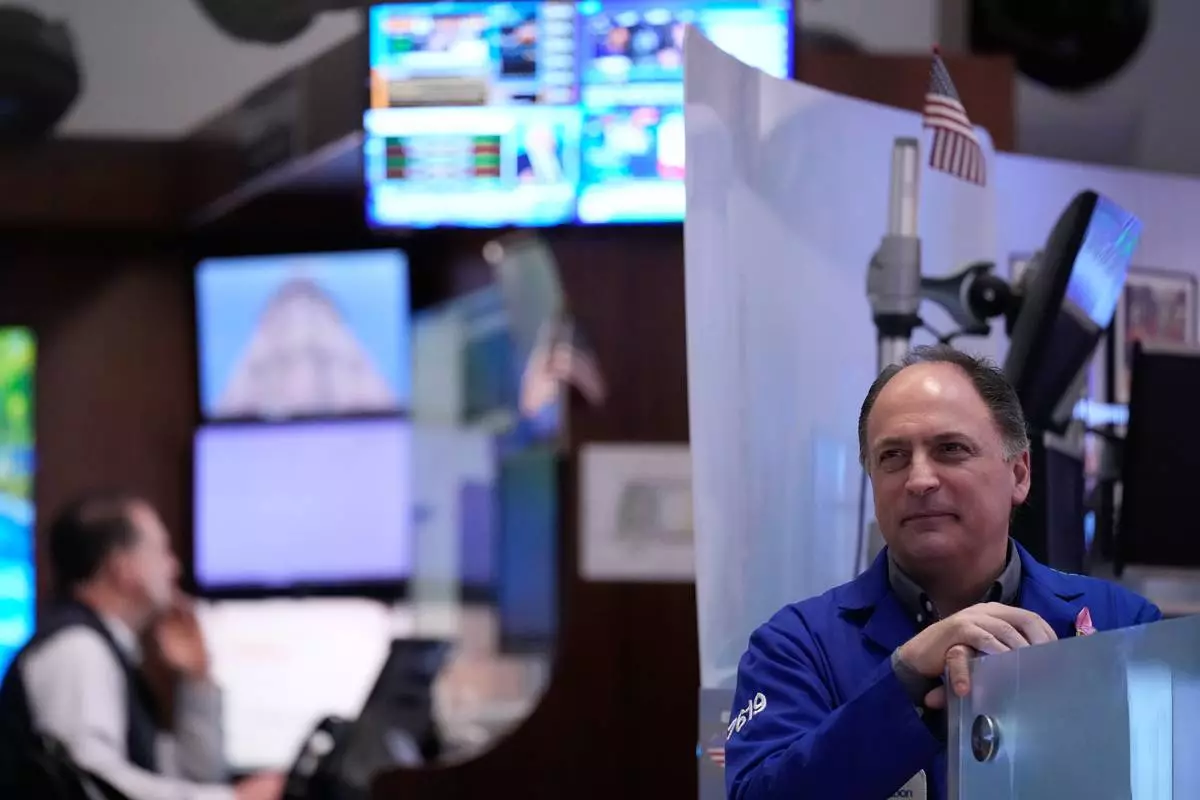
James Conti works on the floor at the New York Stock Exchange in New York, Tuesday, March 31, 2026. (AP Photo/Seth Wenig)

James Conti works on the floor at the New York Stock Exchange in New York, Tuesday, March 31, 2026. (AP Photo/Seth Wenig)

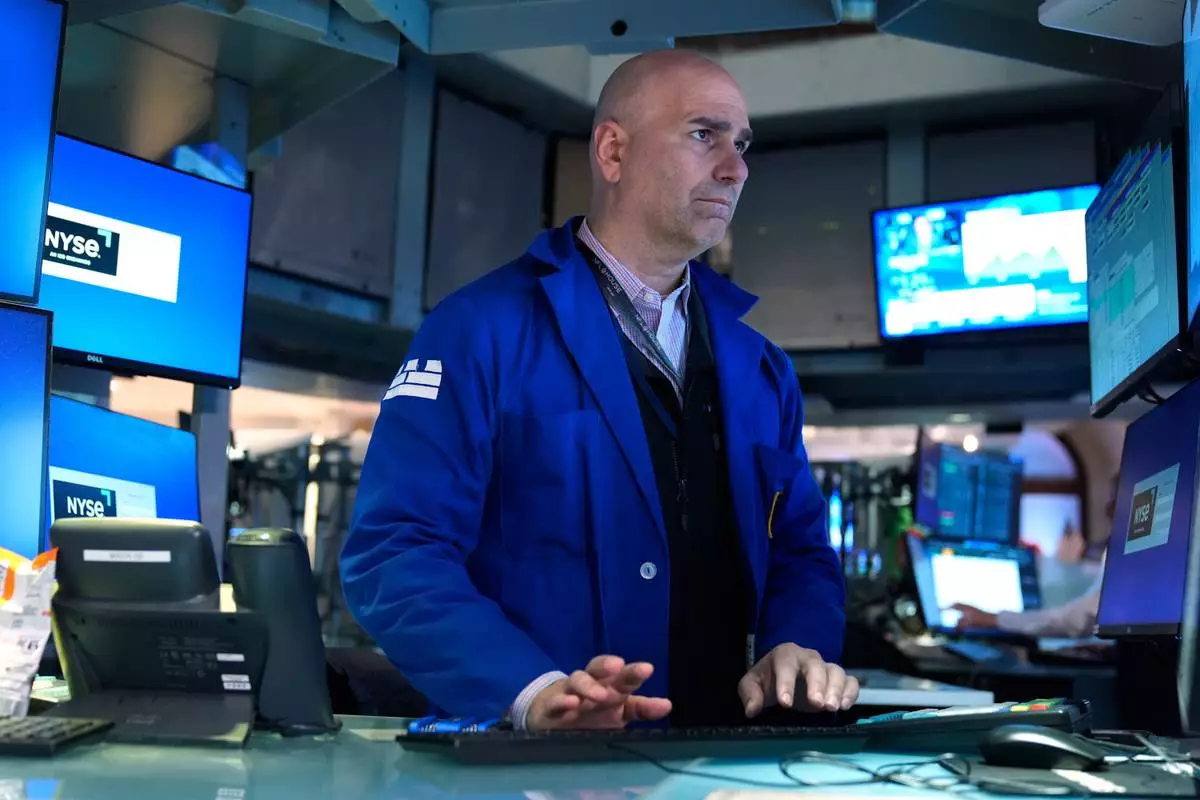
Philip Finale works on the floor at the New York Stock Exchange in New York, Tuesday, March 31, 2026. (AP Photo/Seth Wenig)

Philip Finale works on the floor at the New York Stock Exchange in New York, Tuesday, March 31, 2026. (AP Photo/Seth Wenig)

Currency traders watch monitors near a screen showing the Korea Composite Stock Price Index (KOSPI), left, at the foreign exchange dealing room of the Hana Bank headquarters in Seoul, South Korea, Wednesday, April 1, 2026. (AP Photo/Ahn Young-joon)

Currency traders watch monitors near a screen showing the Korea Composite Stock Price Index (KOSPI), left, at the foreign exchange dealing room of the Hana Bank headquarters in Seoul, South Korea, Wednesday, April 1, 2026. (AP Photo/Ahn Young-joon)

Currency traders watch monitors near a screen showing the Korea Composite Stock Price Index (KOSPI), top center, and the foreign exchange rate between U.S. dollar and South Korean won, top center left, at the foreign exchange dealing room of the Hana Bank headquarters in Seoul, South Korea, Wednesday, April 1, 2026. (AP Photo/Ahn Young-joon)

Currency traders watch monitors near a screen showing the Korea Composite Stock Price Index (KOSPI), top center, and the foreign exchange rate between U.S. dollar and South Korean won, top center left, at the foreign exchange dealing room of the Hana Bank headquarters in Seoul, South Korea, Wednesday, April 1, 2026. (AP Photo/Ahn Young-joon)

Currency traders work at the foreign exchange dealing room of the Hana Bank headquarters in Seoul, South Korea, Wednesday, April 1, 2026. (AP Photo/Ahn Young-joon)

Currency traders work at the foreign exchange dealing room of the Hana Bank headquarters in Seoul, South Korea, Wednesday, April 1, 2026. (AP Photo/Ahn Young-joon)

A currency trader reacts near a screen showing the Korea Composite Stock Price Index (KOSPI), right, and the foreign exchange rate between U.S. dollar and South Korean won at the foreign exchange dealing room of the Hana Bank headquarters in Seoul, South Korea, Wednesday, April 1, 2026. (AP Photo/Ahn Young-joon)

A currency trader reacts near a screen showing the Korea Composite Stock Price Index (KOSPI), right, and the foreign exchange rate between U.S. dollar and South Korean won at the foreign exchange dealing room of the Hana Bank headquarters in Seoul, South Korea, Wednesday, April 1, 2026. (AP Photo/Ahn Young-joon)

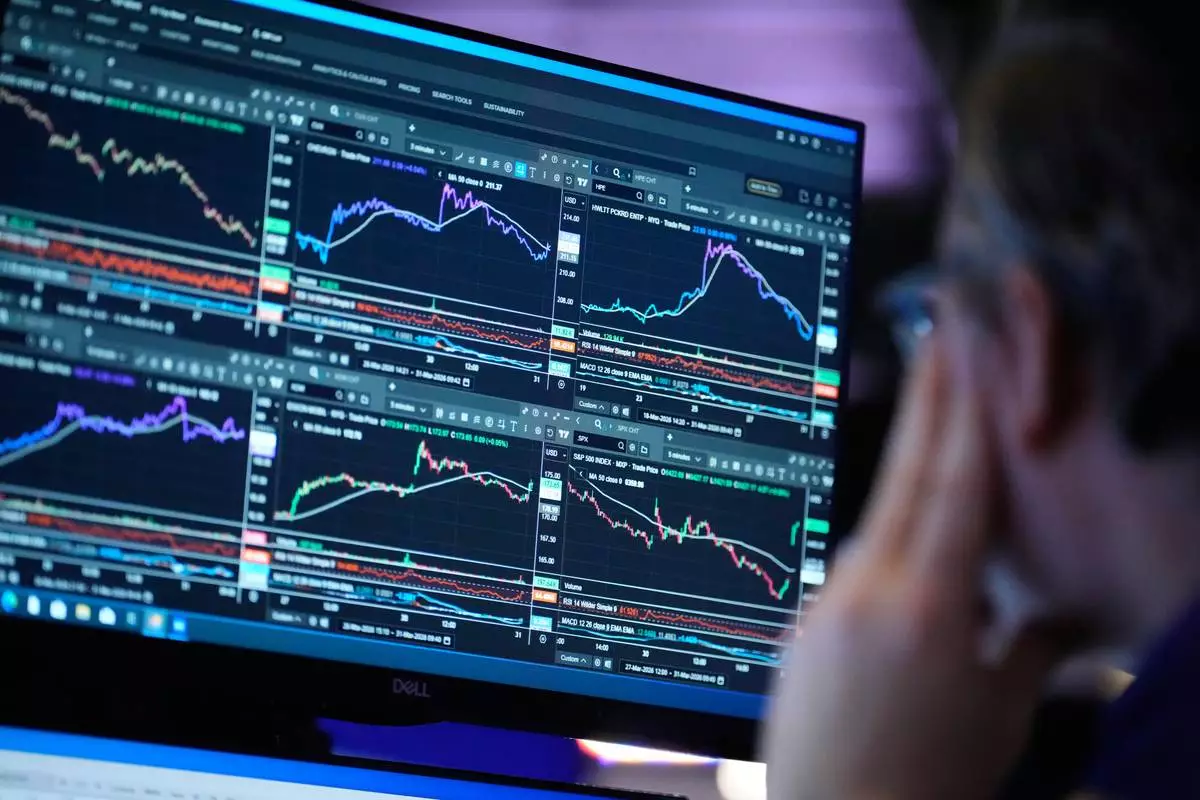
A screen displays financial information on the floor at the New York Stock Exchange in New York, Tuesday, March 31, 2026. (AP Photo/Seth Wenig)

A screen displays financial information on the floor at the New York Stock Exchange in New York, Tuesday, March 31, 2026. (AP Photo/Seth Wenig)

Recommended Articles