NEW YORK (AP) — A strong year for initial public offerings on Wall Street has fizzled out due to the government shutdown and a cautious turn by investors.
Many IPOs targeted for the end of this year will likely be pushed into next year as the Securities and Exchange Commission works to clear a backlog of hundreds of registration statements. Meanwhile, shares of companies that did make their market debuts haven't fared well lately amid concerns that stocks have gotten too expensive after another double-digit gain for the market this year.
“A backlogged SEC, the approaching holiday slowdown, and pressure on AI and other tech stocks are all weighing on hopes for a near-term rebound,” wrote Bill Smith, CEO of Renaissance Capital, in a note to investors.
Despite the backlog, Wall Street is still anticipating several IPOs in November and December that were already in the later stages of the regulatory process.
Central Bancompany was one of the bigger companies going public following the end of the government shutdown. The bank holding company for The Central Trust Bank raised $373 million from its IPO on Thursday. Still, November is on track to be among the slowest months for IPOs in 2025, according to Renaissance Capital.
Wall Street anticipates that medical supplies company Medline could go public in December, potentially raising up to $5 billion, while cryptocurrency technology company BitGo remains another potential IPO for next month.
The more cautious turn for the market has also checked the gains of some more recent IPOs, sending some falling sharply since their debuts.
Web design software company Figma has essentially lost all its gains since going public in July. It more than tripled on its first day of trading after pricing at $33 per share. It is now trading slightly above the IPO price.
Klarna, the Swedish buy now, pay later company priced its IPO at $40 per share in September and is currently trading close to $29 per share. Cloud computing company CoreWeave also priced its IPO at $40 per share, in March. It surged in the months following its IPO, but has pulled back significantly to about $72 per share.
Software company Navan went public at $25 per share in the midst of the government shutdown but failed to gain much ground and is now trading at about $15.
The benchmark S&P 500 is having a bleak November. It’s down 3.5% for the month, with much of that decline being led by the tech sector, which had been driven higher by enthusiasm over developments in artificial intelligence. Wall Street has grown more concerned about whether the gains have been justified.
The S&P 500 is still up more than 12% for the year and the tech-heavy Nasdaq is up more than 15%.
Renaissance Capital's IPO Index is down about nearly 0.8% so far this year as of Friday and has been falling against the S&P 500 since mid-October.
“What that shows is that investors very quickly monetized, they didn't want to take the long-term risk,” said Samuel Kerr, head of global equity capital markets at Mergermarket.
Still, overall demand for IPOs remains strong. Even with the recent pullback, the broader market remains expensive, especially within the influential technology sector. IPOs have traditionally been another way for investors to get into the market at a less expensive entry point.
“Increasingly, as a money manager, you have to find other places to make money and typically, IPOs are that place,” said, David Kaufman, partner and co-chair of the corporate & securities practice at Thompson Coburn LLP. “You continue to have all these large mutual funds and money managers with excess cash and no place to put this cash.”
The broader market’s direction in the new year will determine the costs and types of IPOs. Some of the more anticipated big tech names that could go public in 2026 include AI-focused software company Databricks and graphic design app Canva. Wall Street also considers financial technology Plaid as another possible 2026 IPO.
Any visible lull in IPO activity through the rest of the year is partially masking a flurry of activity beneath the surface as companies go through the regulatory process.
“It's a busy time for lawyers and bankers trying to tee things up for the first and second quarter of next year,” Kaufman said.
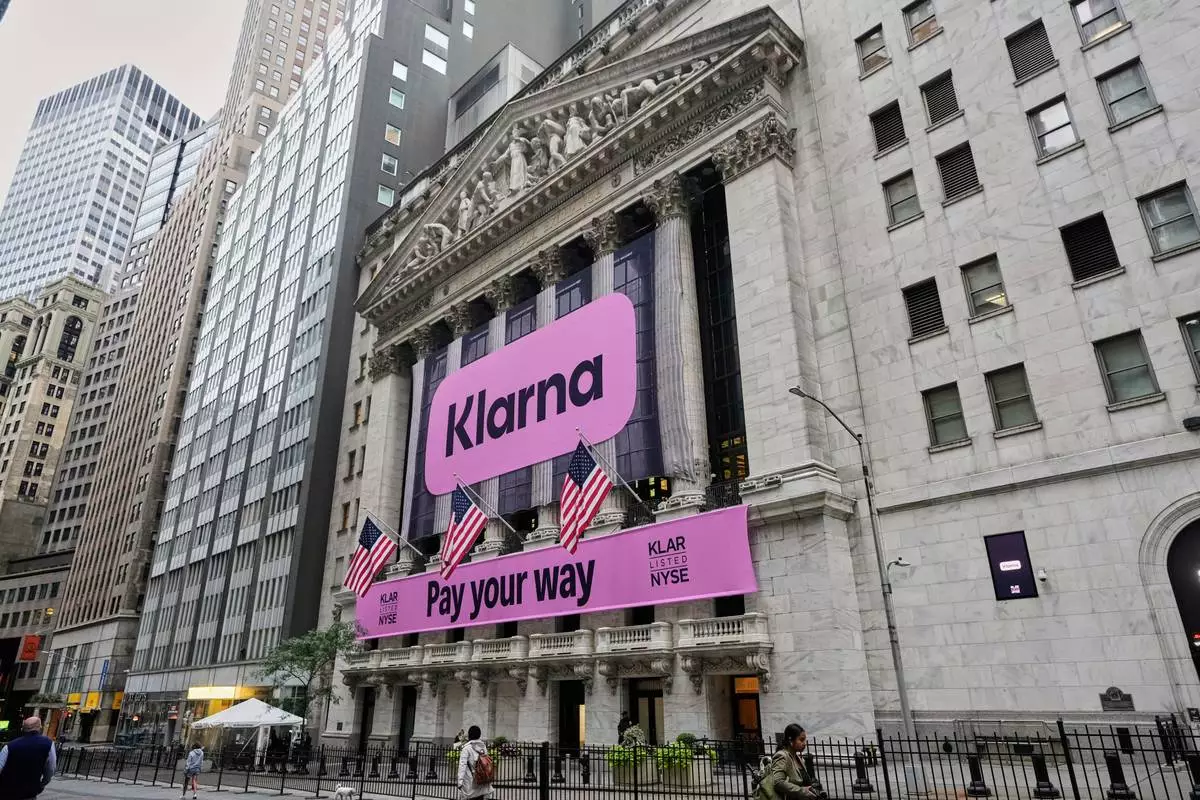
FILE - The facade of New York Stock Exchange displays signage for Sweden's Klarna, Sept. 10, 2025. (AP Photo/Richard Drew, File)
NASA's launch team has loaded more than 700,000 gallons of fuel into the 32-story Space Launch System rocket, setting the stage for the Artemis II mission crew members to board.
The mission is NASA’s planned lunar fly-around by four astronauts that will be the first moon trip in 53 years.
The Space Launch System rocket is poised to blast off Wednesday evening with a two-hour launch window beginning at 6:24 p.m. EDT at Kennedy Space Center in Florida.
Artemis astronauts Reid Wiseman, Victor Glover, Christina Koch and Jeremy Hansen will be on board. They’ll hurtle several thousand miles beyond the moon, hang a U-turn and then come straight back. No circling around the moon, no stopping for a moonwalk — just a quick out-and-back lasting less than 10 days. NASA promises more boot prints in the gray lunar dust, but not before a couple practice missions.
Unlike the Apollo missions that sent astronauts to the moonfrom 1968 through 1972, Artemis’ debut crew includes a woman, a person of color and a Canadian citizen.
Artemis II is the opening shot of NASA’s grand plans for a permanent moon base. The space program is aiming for a moon landing near the lunar south pole in 2028.
The Latest:
“We should have done Artemis 50 years ago,” said John Tribe, a propulsion engineer during the Apollo era.
The launch team has loaded more than 700,000 gallons of fuel into the 32-story Space Launch System rocket, setting the stage for the Artemis II crew to board.
The wind is picking up at Cape Canaveral, more clouds are appearing and rain is expected in about two hours. But there is no lightning threat, NASA says, and there’s still an 80% chance the weather will be good enough to launch.
L-minus tracks the overall time to liftoff, counting down the days, hours and minutes away before the planned blastoff. It doesn’t include built-in holds, or pauses — that’s T-minus time.
The T-minus countdown in the final 10 minutes is where nerves tense up and hearts start pounding. Automated software kicks off a series of highly choreographed milestones. During this period, the clock can be stopped if a problem is spotted and restarted if it’s fixed in time.
T-0 is the moment of liftoff — zero — when the boosters ignite and the rocket begins its journey.
NASA has a narrow time frame each month to fly to the moon.
The Earth and moon must be aligned just so to achieve the proper trajectory for the mission. In any given month, there’s only about a week when Artemis II astronauts can lift off.
The Orion capsule needs to get a check of its life-support and other systems in near-Earth orbit. If that goes well, Orion will fire its main engine to hurtle toward the moon, taking advantage of the moon and Earth’s gravity to get there and back in a slingshot maneuver that requires little if any fuel.
Orion also needs sunlight for power and can’t be in darkness for more than 90 minutes at a time. Plus NASA wants to minimize heating during reentry at flight’s end.
The latest launch window runs through April 6. The next opportunity opens on April 30.
The hydrogen tank of the rocket’s core stage is 100% filled. NASA said no significant leaks have been observed so far in fueling. It was hydrogen leaks that prevented the rocket from flying in February.
The alarm clocks just went off in Kennedy Space Center’s crew quarters.
That means it’s rise and shine for the three Americans and one Canadian who are about to become the first lunar visitors in more than 53 years.
They have a long day ahead of them, whether they launch or not.
After breakfast, they’ll start suiting up. NASA’s launch window opens at 6:24 p.m. and lasts a full two hours.
Launch director Charlie Blackwell-Thompson is wearing green as are many of the controllers alongside her in the firing room.
Green represents “go” for NASA, a color symbolizing good luck.
The team is monitoring the fueling of the 322-foot moon rocket, set to blast off Wednesday evening.
A plush toy named Rise will ride with the Artemis II astronauts around the moon, carrying the names of more than 5.6 million people.
Rise is what’s known as a zero gravity indicator, which gives the astronauts a visual cue of when they reach space.
The design was inspired by the iconic “Earthrise” photo during Apollo 8, showing the planet as a shadowed blue marble from space in 1968.
Rise was selected from more than 2,600 contest submissions. It was designed by Lucas Ye of California.
Commander Reid Wiseman and his crew tucked a small memory card into Rise before the toy was loaded into the Orion capsule. The card bears the names of all those who signed up with NASA to vicariously tag along on the nearly 10-day journey.
“Zipping that little pocket on the bottom of Rise was kind of the moment that put it all together for me,” Wiseman said. “We are going for all and by all. It’s time to fly.”
NASA is fueling the new rocket that will send four astronauts to the moon.
Launch teams have begun pumping more than 700,000 gallons (2.6 million liters) of liquid hydrogen and liquid oxygen into the Space Launch System rocket at Kennedy Space Center in Florida.
It’s the latest milestone in the two-day countdown that kicked off on Monday when launch controllers reported to duty.
It will take at least four hours to fully load the rocket before astronauts climb aboard for humanity’s first flight to the moon since Apollo 17 in 1972.
The two-hour launch window opens at 6:24 p.m. EDT.
▶ Read more about Apollo vs. Artemis
The Americans who blazed the trail to the moon more than half a century ago were white men chosen for their military test pilot experience.
The Artemis II crew includes a woman, a person of color and a Canadian, products of a more diversified astronaut corps.
▶ Read more about Christina Koch, Victor Glover, Jeremy Hansen and Reid Wiseman
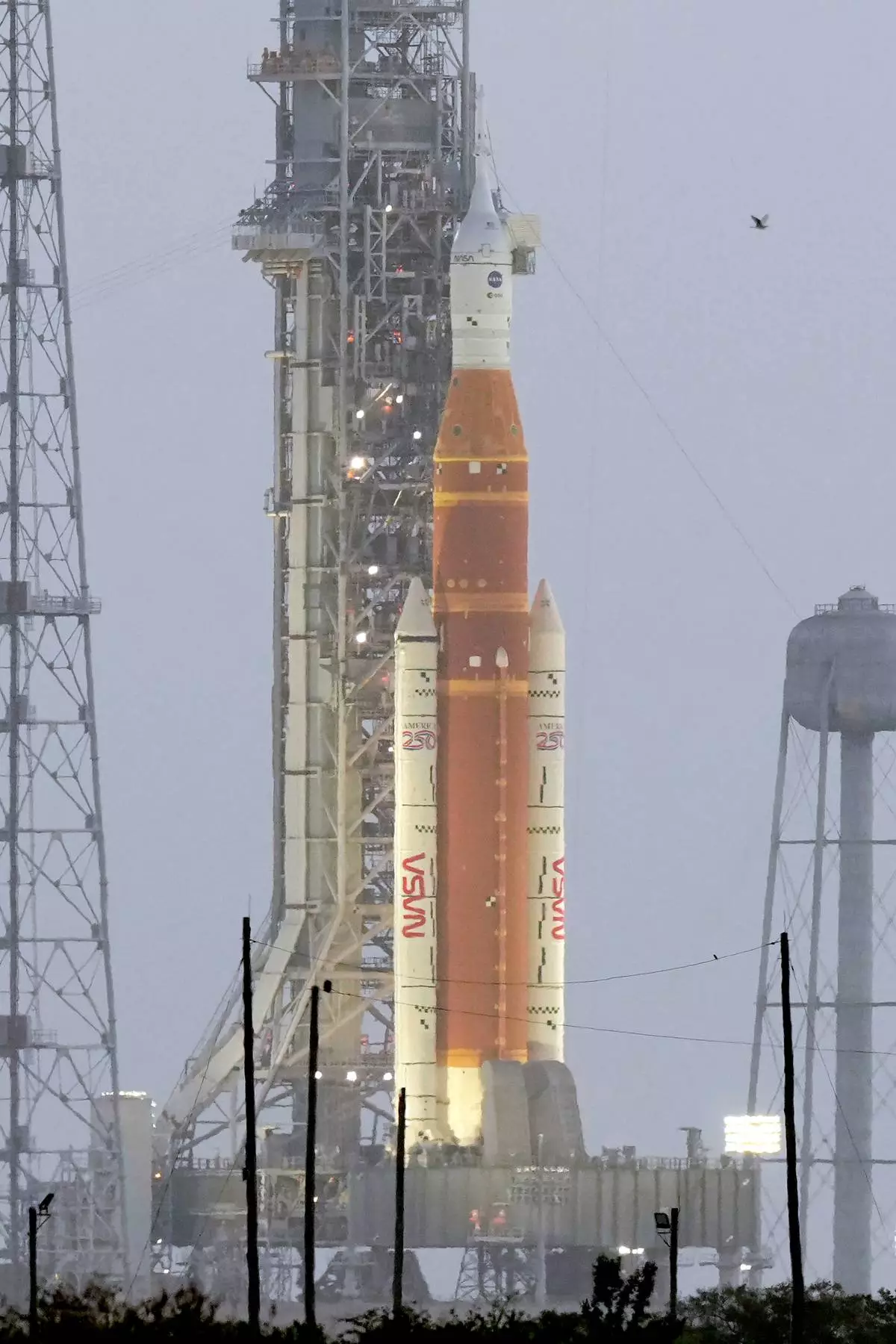
NASA's Artermis II moon rocket sits on Launch Pad 39-B at the Kennedy Space Center hours ahead of planned liftoff Wednesday, April 1, 2026, in Cape Canaveral, Fla. (AP Photo/Chris O'Meara)
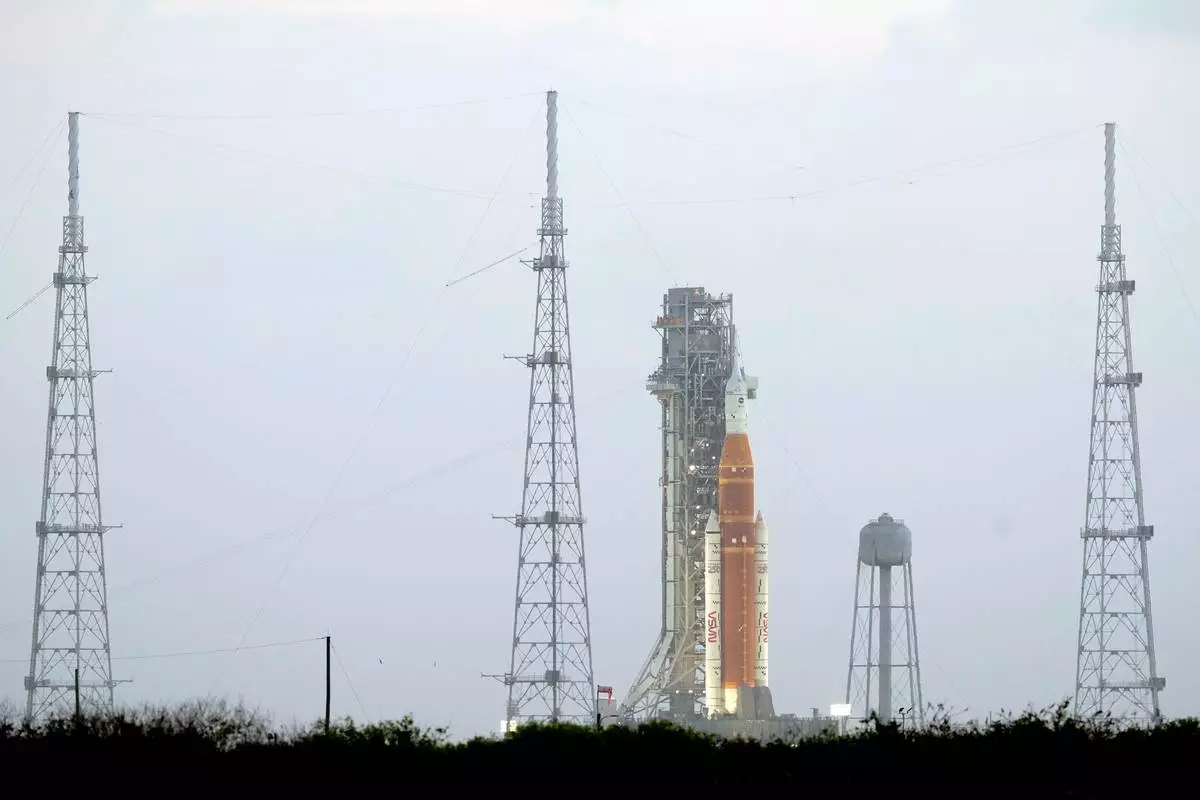
NASA's Artermis II moon rocket sits on Launch Pad 39-B at the Kennedy Space Center hours ahead of a planned launch attempt Wednesday, April 1, 2026, in Cape Canaveral, Fla. (AP Photo/Chris O'Meara)
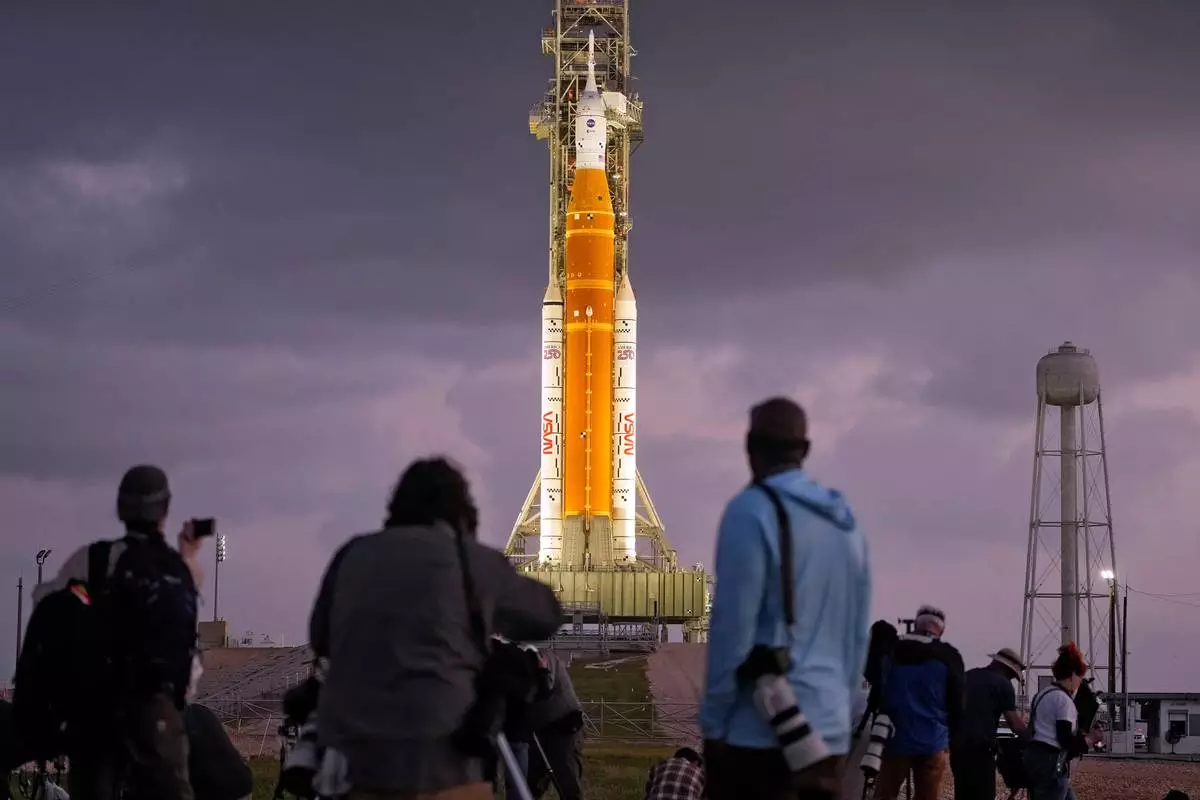
Photographers set up remote cameras near NASA's Artermis II moon rocket on Launch Pad 39-B just before sunrise at the Kennedy Space Center Tuesday, March 31, 2026, in Cape Canaveral, Fla. (AP Photo/Chris O'Meara)