Skip to Content Facebook Feature Image

UN climate deal increases money to countries hit by climate change, but no explicit fossil fuel plan

News

UN climate deal increases money to countries hit by climate change, but no explicit fossil fuel plan
News

News

UN climate deal increases money to countries hit by climate change, but no explicit fossil fuel plan

2025-11-23 07:37 Last Updated At:12:21

BELEM, Brazil (AP) — United Nations climate talks in Brazil reached a subdued agreement Saturday that pledged more funding for countries to adapt to the wrath of extreme weather. But the catch-all agreement doesn’t include explicit details to phase out fossil fuels or strengthen countries' inadequate emissions cutting plans, which dozens of nations demanded.

The Brazilian hosts of the conference said they’d eventually come up with a road map to get away from fossil fuels working with hard-line Colombia, but it won’t have the same force as something approved at the conference called COP30. Colombia responded angrily to the deal after it was approved, citing the absence of wording on fossil fuels.

More Images
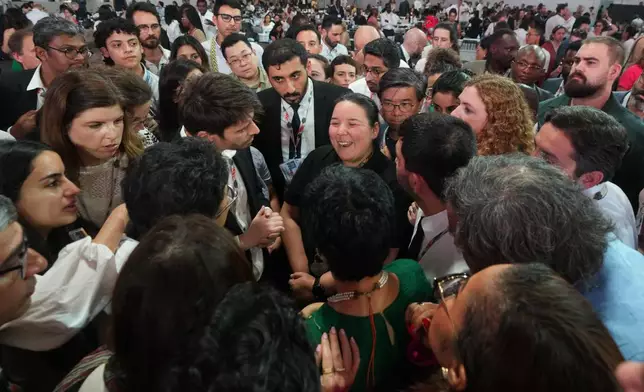
Ana Aguilar, operative director at the ministry of environment of Panama, center, speaks surrounded by delegates at a plenary session during the COP30 U.N. Climate Summit, Saturday, Nov. 22, 2025, in Belem, Brazil. (AP Photo/Andre Penner)
Ana Aguilar, operative director at the ministry of environment of Panama, center, speaks surrounded by delegates at a plenary session during the COP30 U.N. Climate Summit, Saturday, Nov. 22, 2025, in Belem, Brazil. (AP Photo/Andre Penner)

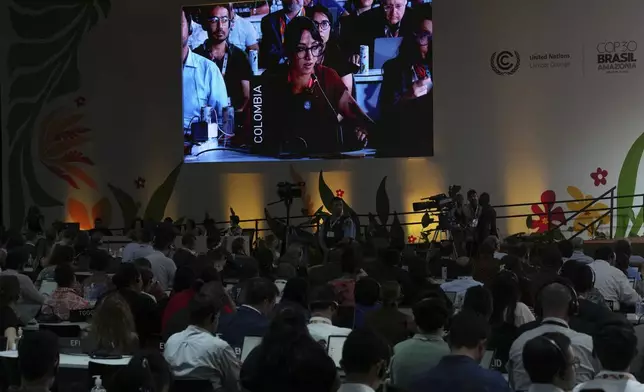
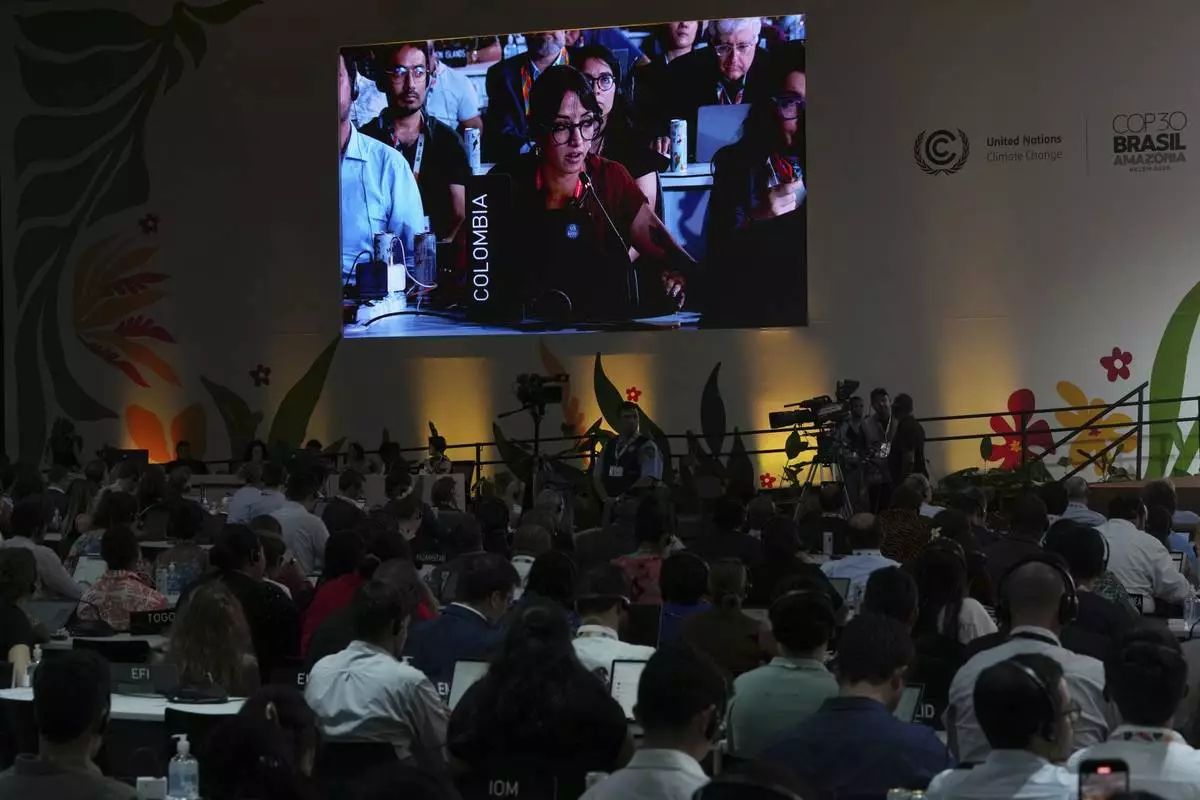
ADDS NAME - Daniela Duran Gonzalez, head of international affairs for the Colombian Ministry of Environment and Sustainable Development, speaks during a plenary session at the COP30 U.N. Climate Summit, Saturday, Nov. 22, 2025, in Belem, Brazil. (AP Photo/Andre Penner)
ADDS NAME - Daniela Duran Gonzalez, head of international affairs for the Colombian Ministry of Environment and Sustainable Development, speaks during a plenary session at the COP30 U.N. Climate Summit, Saturday, Nov. 22, 2025, in Belem, Brazil. (AP Photo/Andre Penner)

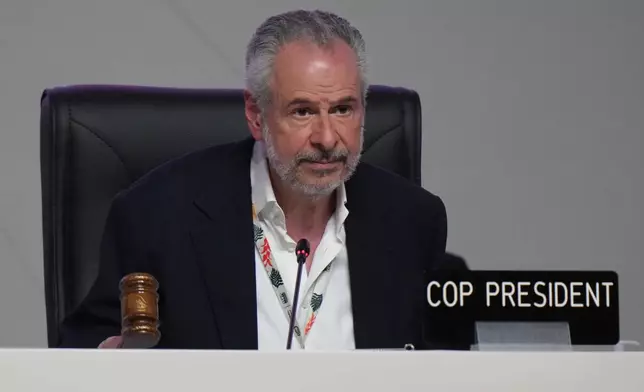
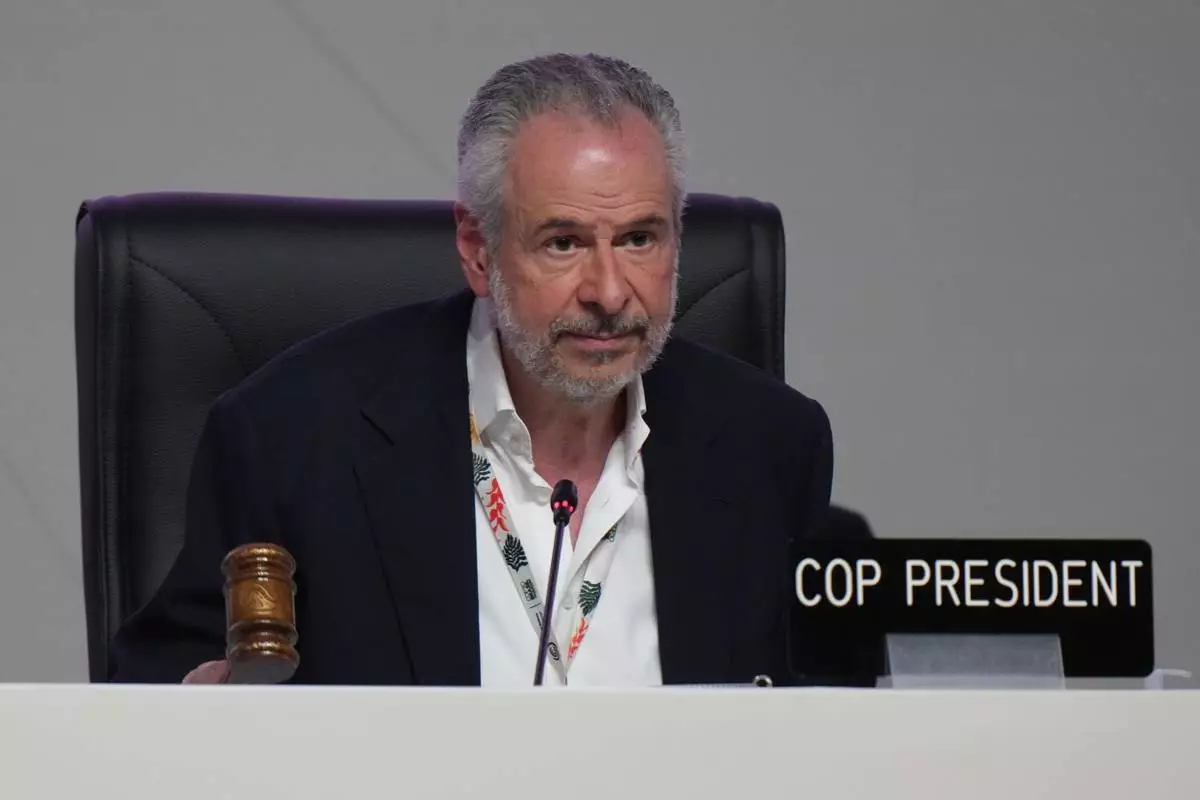
André Corrêa do Lago, COP30 president, bangs a gavel during a plenary session at the COP30 U.N. Climate Summit, Saturday, Nov. 22, 2025, in Belem, Brazil. (AP Photo/Fernando Llano)

André Corrêa do Lago, COP30 president, bangs a gavel during a plenary session at the COP30 U.N. Climate Summit, Saturday, Nov. 22, 2025, in Belem, Brazil. (AP Photo/Fernando Llano)

ADDS NAME - Delegates from Colombia, including Daniela Duran Gonzalez, head of international affairs for the Colombian Ministry of Environment and Sustainable Development, front, react during a plenary session at the COP30 U.N. Climate Summit, Saturday, Nov. 22, 2025, in Belem, Brazil. (AP Photo/Andre Penner)
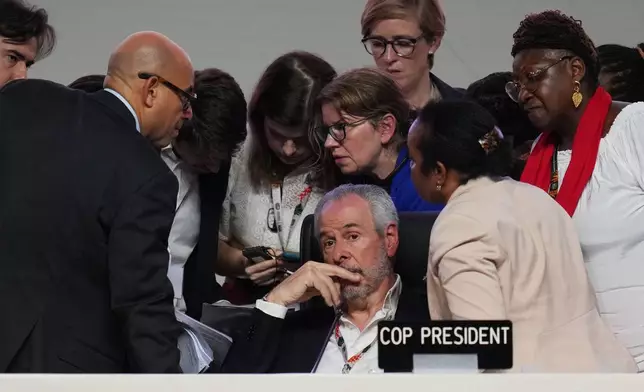
ADDS NAME - Delegates from Colombia, including Daniela Duran Gonzalez, head of international affairs for the Colombian Ministry of Environment and Sustainable Development, front, react during a plenary session at the COP30 U.N. Climate Summit, Saturday, Nov. 22, 2025, in Belem, Brazil. (AP Photo/Andre Penner)
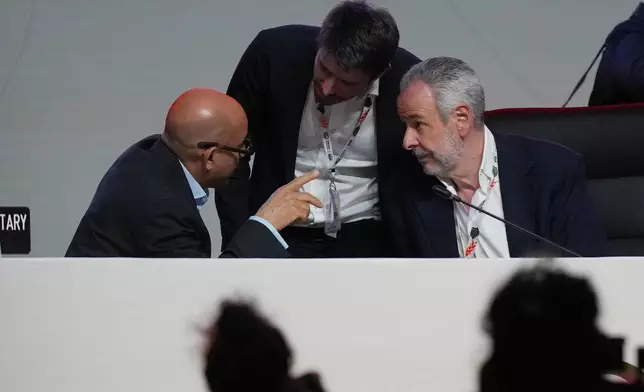
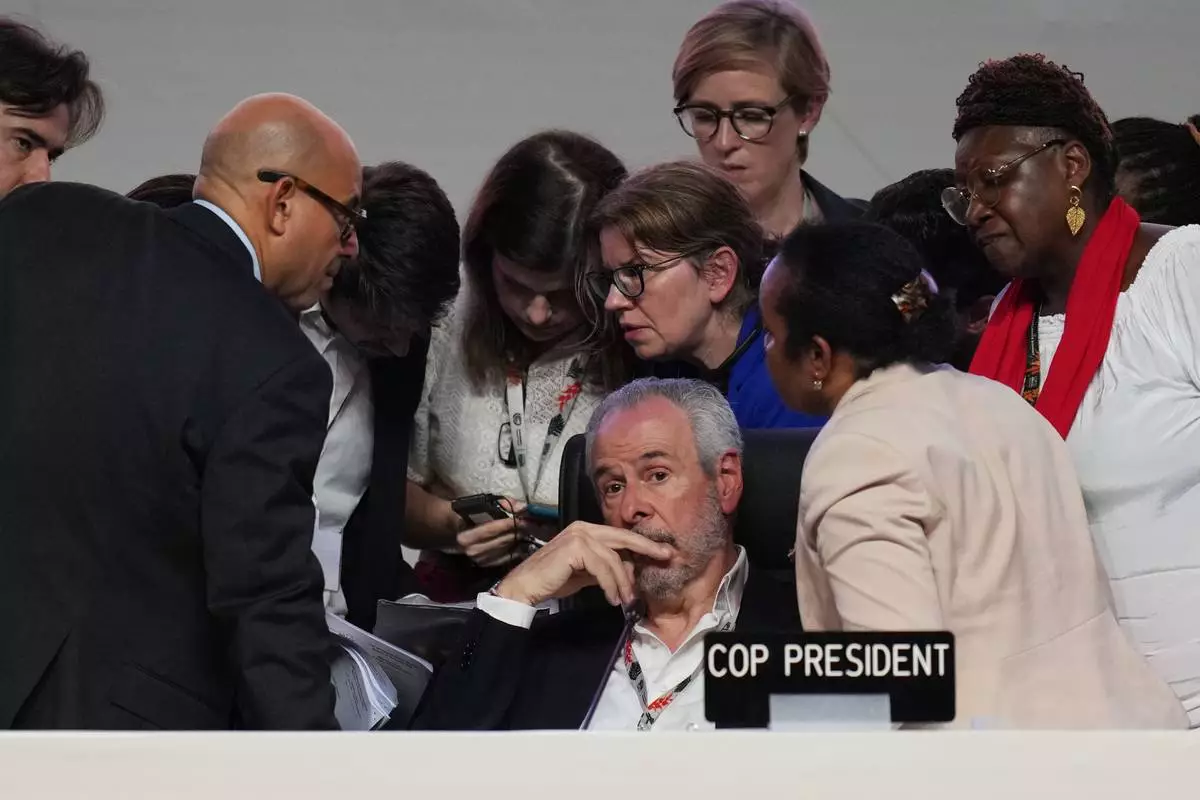
André Corrêa do Lago, COP30 president, sits as Simon Stiell, United Nations climate chief, left, speaks with other U.N. officials during a plenary session at the COP30 U.N. Climate Summit, Saturday, Nov. 22, 2025, in Belem, Brazil. (AP Photo/Andre Penner)

André Corrêa do Lago, COP30 president, sits as Simon Stiell, United Nations climate chief, left, speaks with other U.N. officials during a plenary session at the COP30 U.N. Climate Summit, Saturday, Nov. 22, 2025, in Belem, Brazil. (AP Photo/Andre Penner)

Simon Stiell, United Nations climate chief, left, speaks with André Corrêa do Lago, COP30 president, right, before a plenary session at the COP30 U.N. Climate Summit, Saturday, Nov. 22, 2025, in Belem, Brazil. (AP Photo/Fernando Llano)
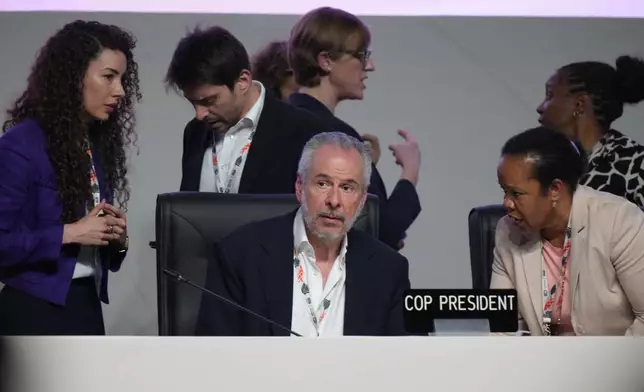
Simon Stiell, United Nations climate chief, left, speaks with André Corrêa do Lago, COP30 president, right, before a plenary session at the COP30 U.N. Climate Summit, Saturday, Nov. 22, 2025, in Belem, Brazil. (AP Photo/Fernando Llano)

André Corrêa do Lago, COP30 president, center, arrives for a plenary session at the COP30 U.N. Climate Summit, Saturday, Nov. 22, 2025, in Belem, Brazil. (AP Photo/Fernando Llano)

André Corrêa do Lago, COP30 president, center, arrives for a plenary session at the COP30 U.N. Climate Summit, Saturday, Nov. 22, 2025, in Belem, Brazil. (AP Photo/Fernando Llano)

Lars Aagaard, minister for climate, energy and utilities of Denmark, center left, speaks with delegates as he waits for the start of a plenary session at the COP30 U.N. Climate Summit, Saturday, Nov. 22, 2025, in Belem, Brazil. (AP Photo/Andre Penner)
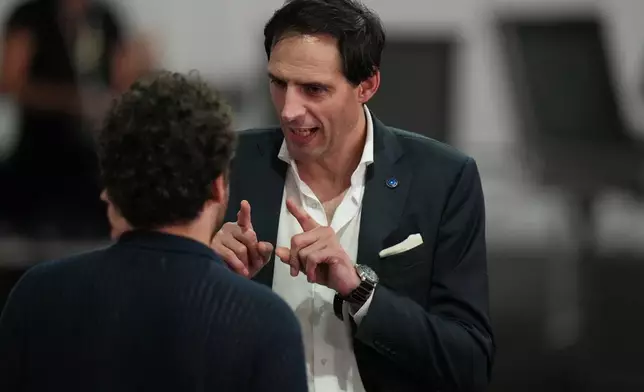
Lars Aagaard, minister for climate, energy and utilities of Denmark, center left, speaks with delegates as he waits for the start of a plenary session at the COP30 U.N. Climate Summit, Saturday, Nov. 22, 2025, in Belem, Brazil. (AP Photo/Andre Penner)

Wopke Hoekstra, EU climate commissioner, speaks with delegates as he waits for the start of a plenary session at the COP30 U.N. Climate Summit, Saturday, Nov. 22, 2025, in Belem, Brazil. (AP Photo/Fernando Llano)
Wopke Hoekstra, EU climate commissioner, speaks with delegates as he waits for the start of a plenary session at the COP30 U.N. Climate Summit, Saturday, Nov. 22, 2025, in Belem, Brazil. (AP Photo/Fernando Llano)
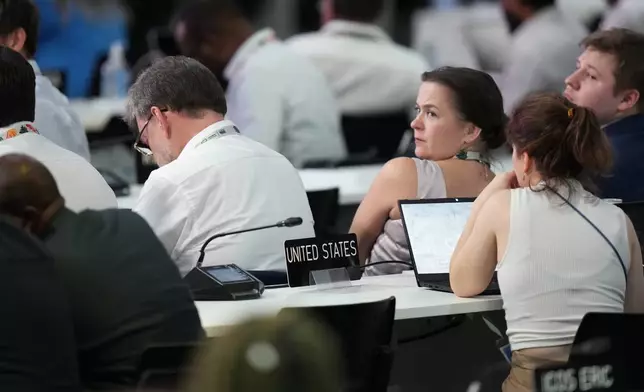
Delegates surround an empty spot where the placard for the United States sits at the COP30 U.N. Climate Summit, Saturday, Nov. 22, 2025, in Belem, Brazil. (AP Photo/Fernando Llano)

Delegates surround an empty spot where the placard for the United States sits at the COP30 U.N. Climate Summit, Saturday, Nov. 22, 2025, in Belem, Brazil. (AP Photo/Fernando Llano)

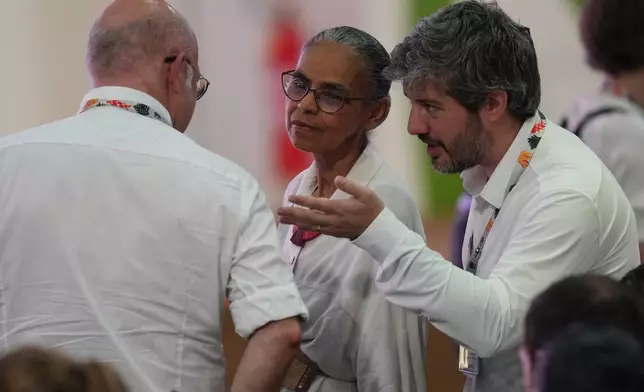
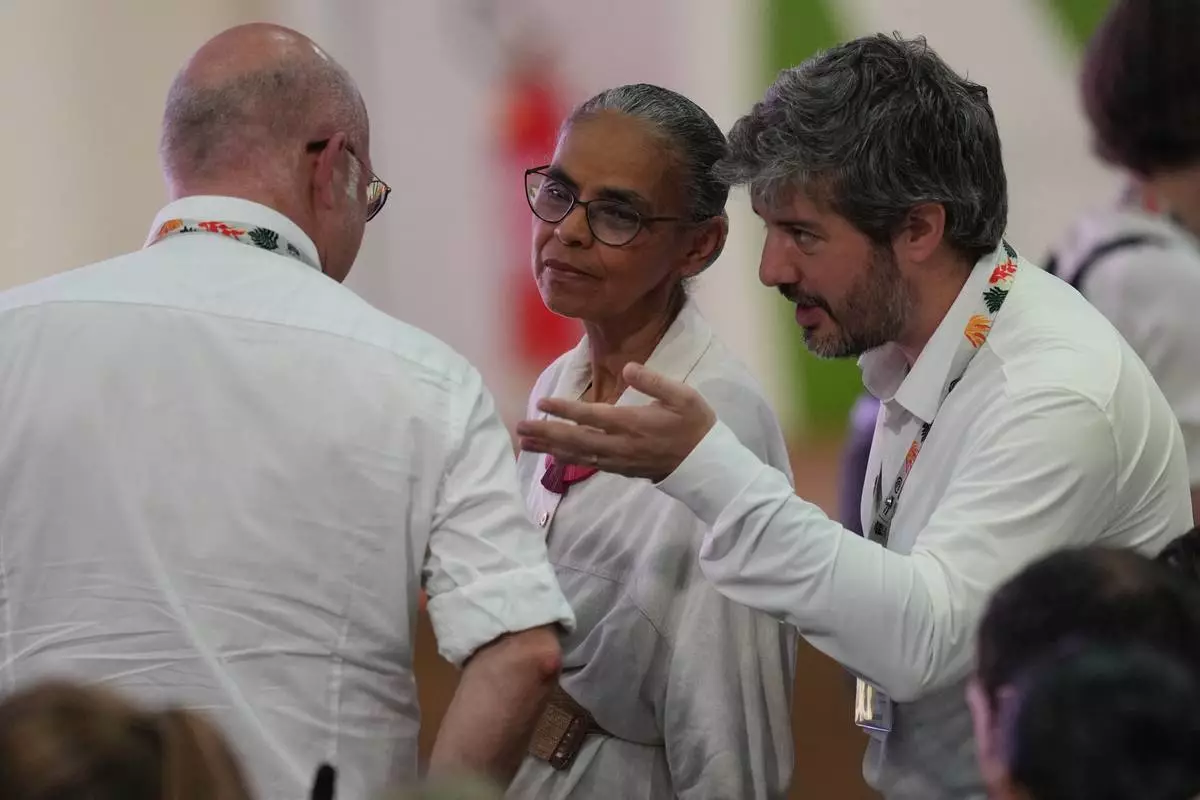
Marina Silva, Brazil environment minister, center, speaks with delegates as she waits for the start of a plenary session at the COP30 U.N. Climate Summit, Saturday, Nov. 22, 2025, in Belem, Brazil. (AP Photo/Andre Penner)

Marina Silva, Brazil environment minister, center, speaks with delegates as she waits for the start of a plenary session at the COP30 U.N. Climate Summit, Saturday, Nov. 22, 2025, in Belem, Brazil. (AP Photo/Andre Penner)

The pavilion area of the COP30 U.N. Climate Summit is packed up as negotiations continue, Saturday, Nov. 22, 2025, in Belem, Brazil. (AP Photo/Fernando Llano)
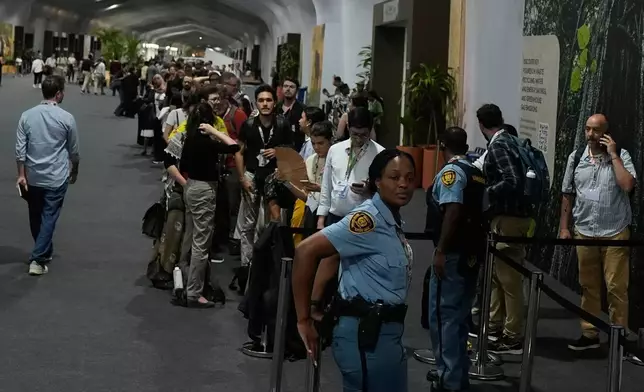
The pavilion area of the COP30 U.N. Climate Summit is packed up as negotiations continue, Saturday, Nov. 22, 2025, in Belem, Brazil. (AP Photo/Fernando Llano)

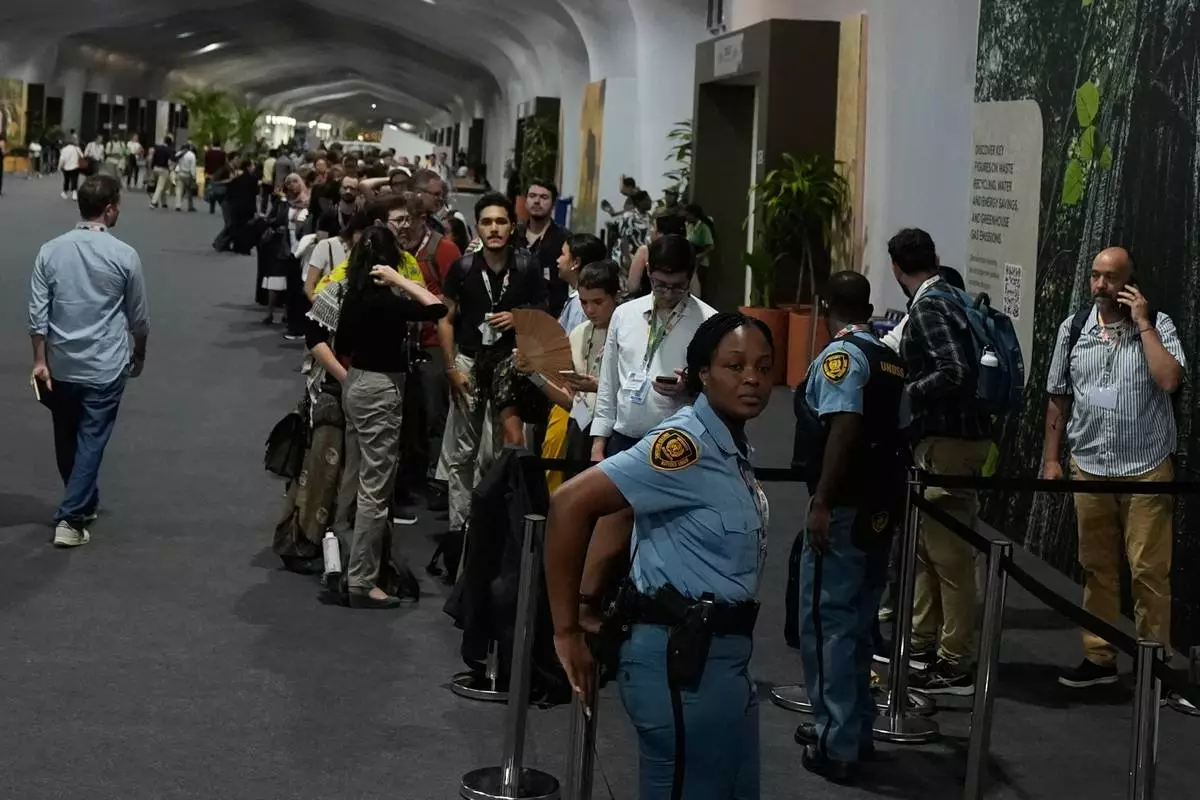
Attendees line up to enter a hall for a plenary session at the COP30 U.N. Climate Summit, Saturday, Nov. 22, 2025, in Belem, Brazil. (AP Photo/Fernando Llano)
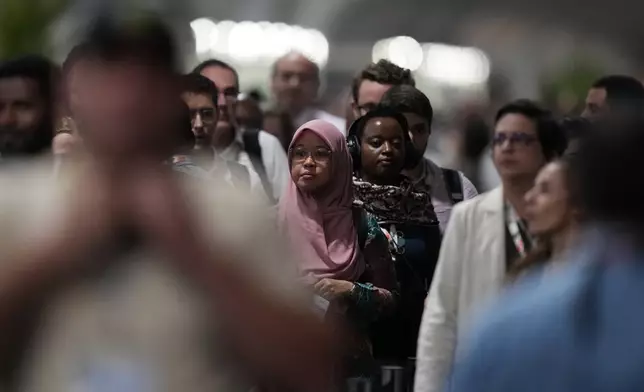
Attendees line up to enter a hall for a plenary session at the COP30 U.N. Climate Summit, Saturday, Nov. 22, 2025, in Belem, Brazil. (AP Photo/Fernando Llano)

Delegates enter a hall for a plenary session at the COP30 U.N. Climate Summit, Saturday, Nov. 22, 2025, in Belem, Brazil. (AP Photo/Fernando Llano)

Delegates enter a hall for a plenary session at the COP30 U.N. Climate Summit, Saturday, Nov. 22, 2025, in Belem, Brazil. (AP Photo/Fernando Llano)

The deal, which was approved after negotiators blew past a Friday deadline, was crafted after hours of late night and early morning meetings. After the deal was approved, COP30 President André Corrêa do Lago said the tough discussions started in Belem will continue under Brazil’s leadership until the next annual conference “even if they are not reflected in this text we just approved.”

U.N. Secretary-General Antonio Guterres said the deal shows "that nations can still come together to confront the defining challenges no country can solve alone.” But he added: “I cannot pretend that COP30 has delivered everything that is needed. The gap between where we are and what science demands remains dangerously wide.”

Many gave the deal lukewarm praise as the best that could be achieved in trying times, while others complained about the package or the process that led to its approval.

“Given the circumstances of geopolitics today, we’re actually quite pleased with the bounds of the package that came out," said Palau Ambassador Ilana Seid, who chaired the coalition of small island nations. “The alternative is that we don’t get a decision and that would have been a worse alternative.”

“This deal isn’t perfect and is far from what science requires,” said former Ireland President Mary Robinson, a fierce climate advocate for the ex-leaders group The Elders. “But at a time when multilateralism is being tested, it is significant that countries continue to move forward together.”

Absent from the talks was the administration of U.S. President Donald Trump.

“This year there has been a lot of attention on one country stepping back,” U.N. climate chief Simon Stiell said, referring to the United States’ withdrawal from the landmark 2015 Paris agreement. “But amid the gale-force political headwinds, 194 countries stood firm in solidarity — rock-solid in support of climate cooperation.”

Some countries said they got enough out of the deal.

“COP30 has not delivered everything Africa asked for, but it has moved the needle,” said Jiwoh Abdulai, Sierra Leone’s environment minister. What really matters, he said, is “how quickly these words turn into real projects that protect lives and livelihoods.”

U.K. Energy Minister Ed Miliband said the agreement was “an important step forward,” but that he would have preferred it to be “more ambitious.” He added: “These are difficult, strenuous, tiring, frustrating negotiations.”

The deal was approved minutes into a plenary meeting open Saturday to all nations that were present.

After the main package was approved — to applause by many delegates — angry nations took the floor to complain about other parts of the package and about being ignored as do Lago moved quickly toward approval. The objections were so strong that do Lago temporarily halted the session to try to calm things down.

Colombia’s Daniela Duran Gonzalez blasted the conference’s president for ignoring her, saying: “The COP of the truth cannot support an outcome that ignores science.”

An area that usually gets less attention became a big point of contention. The approved deal established 59 indicators for the world to judge how nations are adapting to climate change. Before the Belem conference, experts crafted 100 precisely worded indicators, but negotiators changed the wording and cut the total.

The European Union, several Latin American countries and Canada said they had severe problems with it, calling it unclear and unworkable. They complained that they tried to object but were ignored.

Do Lago apologized.

A handful of major issues dominated the talk. Those included coming up with a road map to wean the world from fossil fuels, telling countries that their national plans to curb emissions were inadequate, tripling financial aid for developing nations to adapt to extreme weather and reducing climate restrictions on trade.

“COP30 gave us some baby steps in the right direction, but considering the scale of the climate crisis, it has failed to rise to the occasion,” said Mohamed Adow, director of Power Shift Africa.

Critics complained there was not much to the deal.

"Strip away the outcome text and you see it plainly: The emperor has no clothes," said former Philippine negotiator Jasper Inventor, now at Greenpeace International.

Panama negotiator Juan Carlos Monterrey Gomez railed against the deal.

“A climate decision that cannot even say ‘fossil fuels’ is not neutrality, it is complicity. And what is happening here transcends incompetence,” Monterrey Gomez said. “Science has been deleted from COP30 because it offends the polluters.”

Many nations and advocates wanted something stronger because the world will not come close to limiting warming to 1.5 degrees Celsius (2.7 degrees Fahrenheit) since the mid 1800s, which was the goal the 2015 Paris agreement set.

The financial aid for adapting to climate change was tripled to a goal of $120 billion a year, but the goal was pushed back five years. It was one of several tough issues to dominate the late stage of talks. Vulnerable nations have pressed the wealthier countries most responsible for climate change to help out with money to rebuild from damaging extreme weather and to adapt to more of it in the future.

Pushing back the goal leaves “vulnerable countries without support to match the escalating needs,” Adow said.

After the main deal was approved, tempers flared as the open meeting stretched on. Russia’s ambassador at large, Sergei Kononuchenko, lectured Latin American delegates who were objecting frequently that they were “behaving like children who want to get your hands on all the sweets, and aren’t prepared to share them with everyone.”

An angry Eliana Ester Saissac of Argentina said Latin Americans “are in no way behaving like spoiled children who want to stuff our mouths full of sweets” to a roar of cheers and applause.

The Associated Press’ climate and environmental coverage receives financial support from multiple private foundations. AP is solely responsible for all content. Find AP’s standards for working with philanthropies, a list of supporters and funded coverage areas at AP.org.

This story was produced as part of the 2025 Climate Change Media Partnership, a journalism fellowship organized by Internews’ Earth Journalism Network and the Stanley Center for Peace and Security.
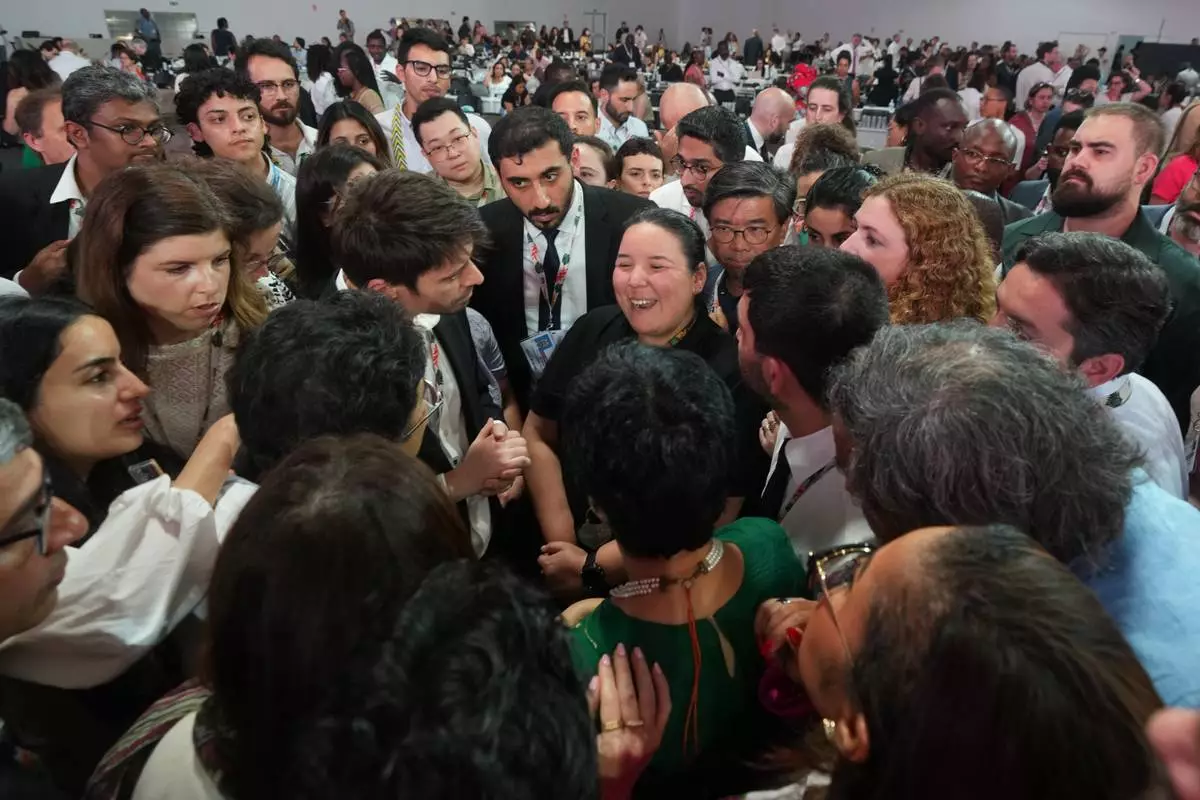
Ana Aguilar, operative director at the ministry of environment of Panama, center, speaks surrounded by delegates at a plenary session during the COP30 U.N. Climate Summit, Saturday, Nov. 22, 2025, in Belem, Brazil. (AP Photo/Andre Penner)
Ana Aguilar, operative director at the ministry of environment of Panama, center, speaks surrounded by delegates at a plenary session during the COP30 U.N. Climate Summit, Saturday, Nov. 22, 2025, in Belem, Brazil. (AP Photo/Andre Penner)

ADDS NAME - Daniela Duran Gonzalez, head of international affairs for the Colombian Ministry of Environment and Sustainable Development, speaks during a plenary session at the COP30 U.N. Climate Summit, Saturday, Nov. 22, 2025, in Belem, Brazil. (AP Photo/Andre Penner)
ADDS NAME - Daniela Duran Gonzalez, head of international affairs for the Colombian Ministry of Environment and Sustainable Development, speaks during a plenary session at the COP30 U.N. Climate Summit, Saturday, Nov. 22, 2025, in Belem, Brazil. (AP Photo/Andre Penner)

André Corrêa do Lago, COP30 president, bangs a gavel during a plenary session at the COP30 U.N. Climate Summit, Saturday, Nov. 22, 2025, in Belem, Brazil. (AP Photo/Fernando Llano)

André Corrêa do Lago, COP30 president, bangs a gavel during a plenary session at the COP30 U.N. Climate Summit, Saturday, Nov. 22, 2025, in Belem, Brazil. (AP Photo/Fernando Llano)

ADDS NAME - Delegates from Colombia, including Daniela Duran Gonzalez, head of international affairs for the Colombian Ministry of Environment and Sustainable Development, front, react during a plenary session at the COP30 U.N. Climate Summit, Saturday, Nov. 22, 2025, in Belem, Brazil. (AP Photo/Andre Penner)
ADDS NAME - Delegates from Colombia, including Daniela Duran Gonzalez, head of international affairs for the Colombian Ministry of Environment and Sustainable Development, front, react during a plenary session at the COP30 U.N. Climate Summit, Saturday, Nov. 22, 2025, in Belem, Brazil. (AP Photo/Andre Penner)
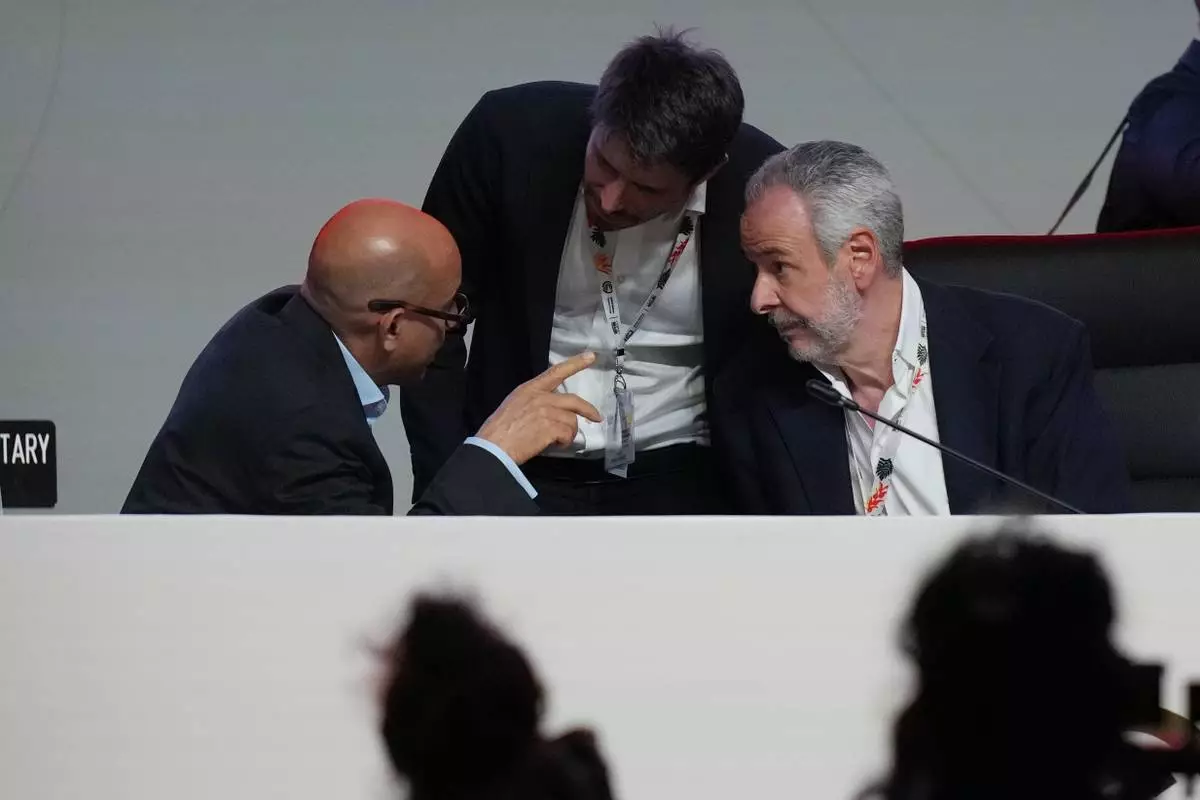
André Corrêa do Lago, COP30 president, sits as Simon Stiell, United Nations climate chief, left, speaks with other U.N. officials during a plenary session at the COP30 U.N. Climate Summit, Saturday, Nov. 22, 2025, in Belem, Brazil. (AP Photo/Andre Penner)

André Corrêa do Lago, COP30 president, sits as Simon Stiell, United Nations climate chief, left, speaks with other U.N. officials during a plenary session at the COP30 U.N. Climate Summit, Saturday, Nov. 22, 2025, in Belem, Brazil. (AP Photo/Andre Penner)

Simon Stiell, United Nations climate chief, left, speaks with André Corrêa do Lago, COP30 president, right, before a plenary session at the COP30 U.N. Climate Summit, Saturday, Nov. 22, 2025, in Belem, Brazil. (AP Photo/Fernando Llano)
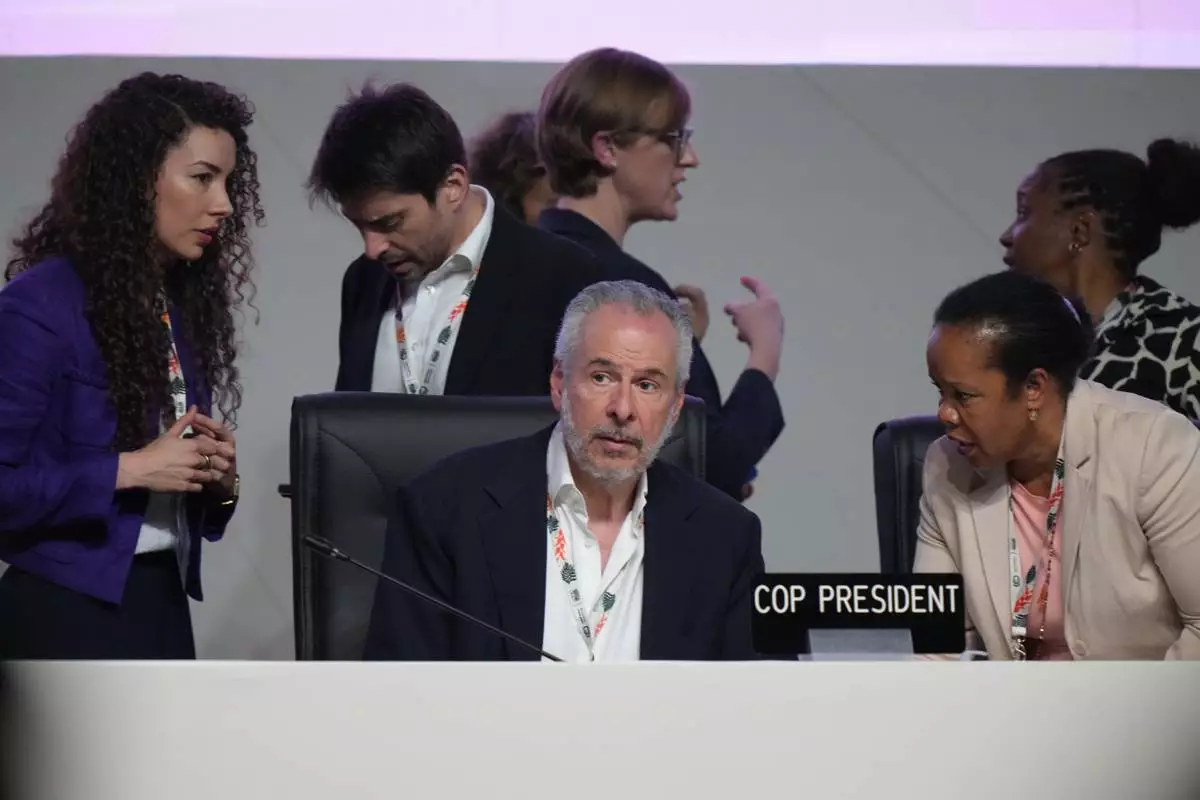
Simon Stiell, United Nations climate chief, left, speaks with André Corrêa do Lago, COP30 president, right, before a plenary session at the COP30 U.N. Climate Summit, Saturday, Nov. 22, 2025, in Belem, Brazil. (AP Photo/Fernando Llano)

André Corrêa do Lago, COP30 president, center, arrives for a plenary session at the COP30 U.N. Climate Summit, Saturday, Nov. 22, 2025, in Belem, Brazil. (AP Photo/Fernando Llano)

André Corrêa do Lago, COP30 president, center, arrives for a plenary session at the COP30 U.N. Climate Summit, Saturday, Nov. 22, 2025, in Belem, Brazil. (AP Photo/Fernando Llano)

Lars Aagaard, minister for climate, energy and utilities of Denmark, center left, speaks with delegates as he waits for the start of a plenary session at the COP30 U.N. Climate Summit, Saturday, Nov. 22, 2025, in Belem, Brazil. (AP Photo/Andre Penner)
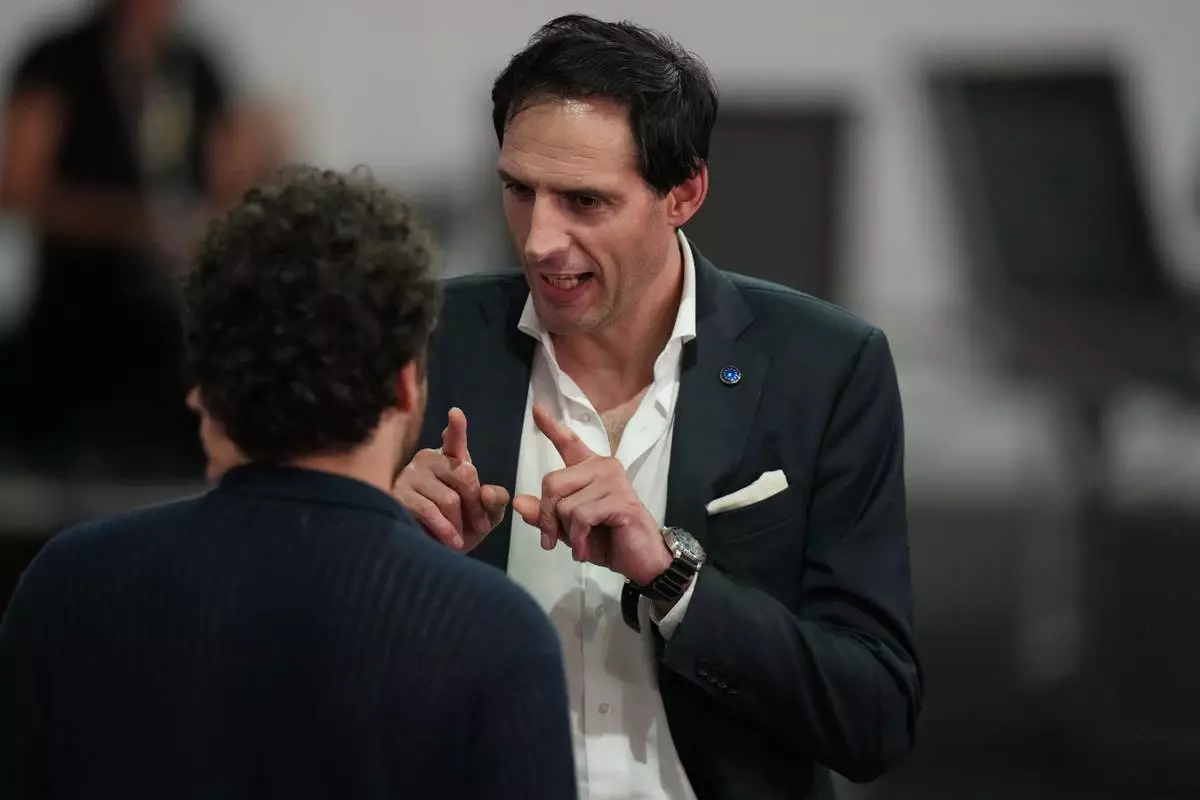
Lars Aagaard, minister for climate, energy and utilities of Denmark, center left, speaks with delegates as he waits for the start of a plenary session at the COP30 U.N. Climate Summit, Saturday, Nov. 22, 2025, in Belem, Brazil. (AP Photo/Andre Penner)

Wopke Hoekstra, EU climate commissioner, speaks with delegates as he waits for the start of a plenary session at the COP30 U.N. Climate Summit, Saturday, Nov. 22, 2025, in Belem, Brazil. (AP Photo/Fernando Llano)
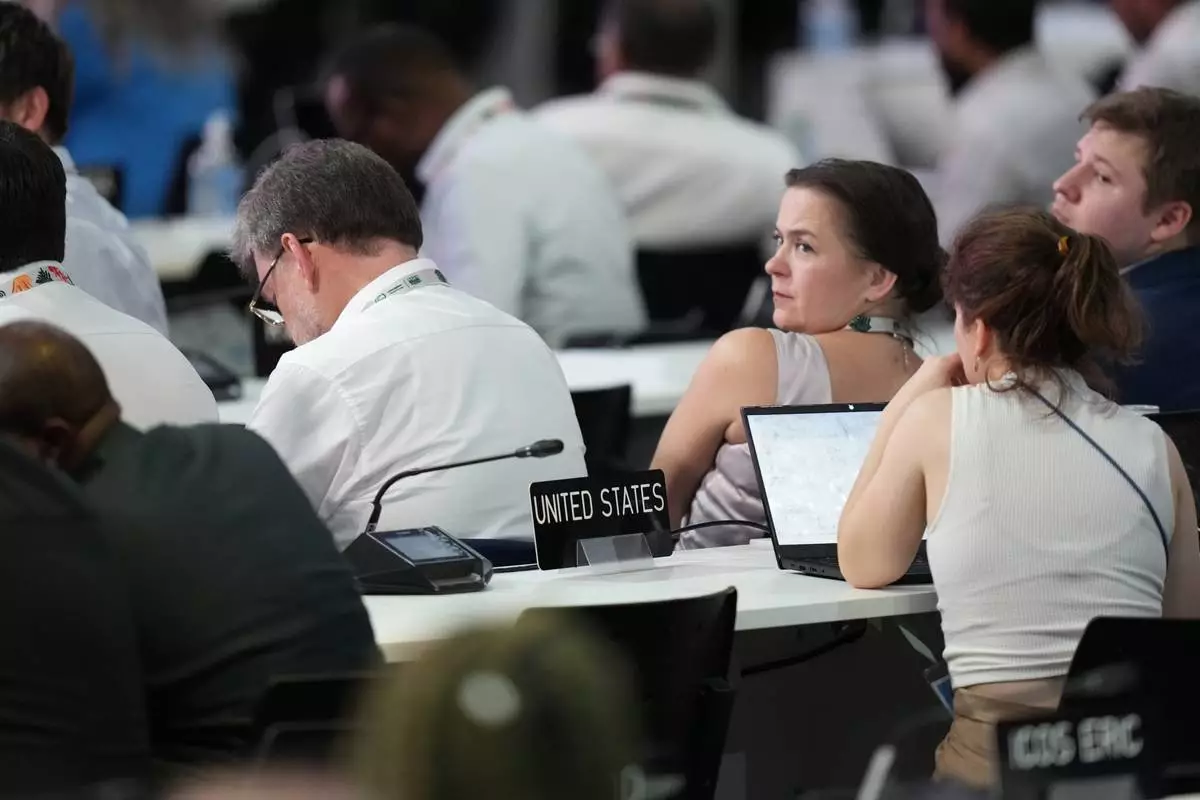
Wopke Hoekstra, EU climate commissioner, speaks with delegates as he waits for the start of a plenary session at the COP30 U.N. Climate Summit, Saturday, Nov. 22, 2025, in Belem, Brazil. (AP Photo/Fernando Llano)
Delegates surround an empty spot where the placard for the United States sits at the COP30 U.N. Climate Summit, Saturday, Nov. 22, 2025, in Belem, Brazil. (AP Photo/Fernando Llano)

Delegates surround an empty spot where the placard for the United States sits at the COP30 U.N. Climate Summit, Saturday, Nov. 22, 2025, in Belem, Brazil. (AP Photo/Fernando Llano)

Marina Silva, Brazil environment minister, center, speaks with delegates as she waits for the start of a plenary session at the COP30 U.N. Climate Summit, Saturday, Nov. 22, 2025, in Belem, Brazil. (AP Photo/Andre Penner)

Marina Silva, Brazil environment minister, center, speaks with delegates as she waits for the start of a plenary session at the COP30 U.N. Climate Summit, Saturday, Nov. 22, 2025, in Belem, Brazil. (AP Photo/Andre Penner)

The pavilion area of the COP30 U.N. Climate Summit is packed up as negotiations continue, Saturday, Nov. 22, 2025, in Belem, Brazil. (AP Photo/Fernando Llano)
The pavilion area of the COP30 U.N. Climate Summit is packed up as negotiations continue, Saturday, Nov. 22, 2025, in Belem, Brazil. (AP Photo/Fernando Llano)

Attendees line up to enter a hall for a plenary session at the COP30 U.N. Climate Summit, Saturday, Nov. 22, 2025, in Belem, Brazil. (AP Photo/Fernando Llano)

Attendees line up to enter a hall for a plenary session at the COP30 U.N. Climate Summit, Saturday, Nov. 22, 2025, in Belem, Brazil. (AP Photo/Fernando Llano)
Delegates enter a hall for a plenary session at the COP30 U.N. Climate Summit, Saturday, Nov. 22, 2025, in Belem, Brazil. (AP Photo/Fernando Llano)
Delegates enter a hall for a plenary session at the COP30 U.N. Climate Summit, Saturday, Nov. 22, 2025, in Belem, Brazil. (AP Photo/Fernando Llano)
NEW YORK (AP) — Stocks are rushing higher worldwide, and oil prices are easing Wednesday as hopes build that the war with Iran could end soon. That's even though some of the signals investors saw as hopeful are already under dispute, and several prior bouts of optimism in financial markets quickly got undercut by continued, fierce fighting in the war.

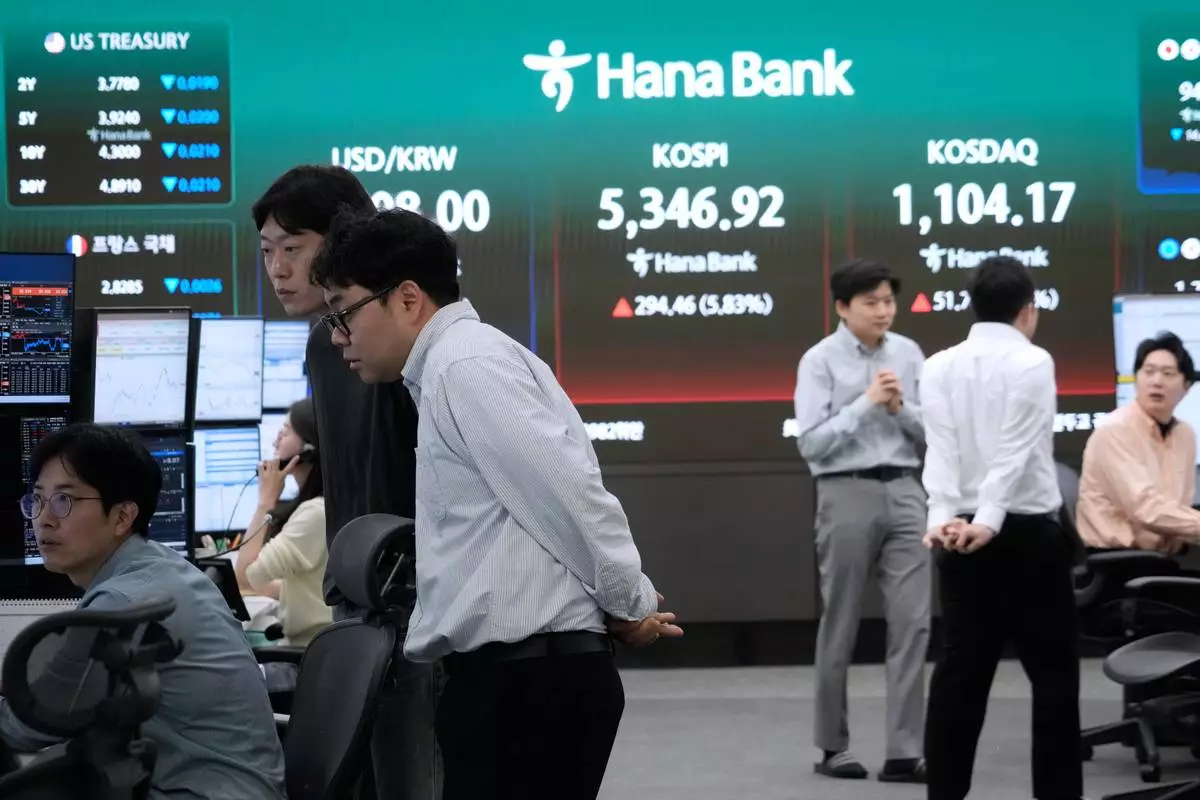
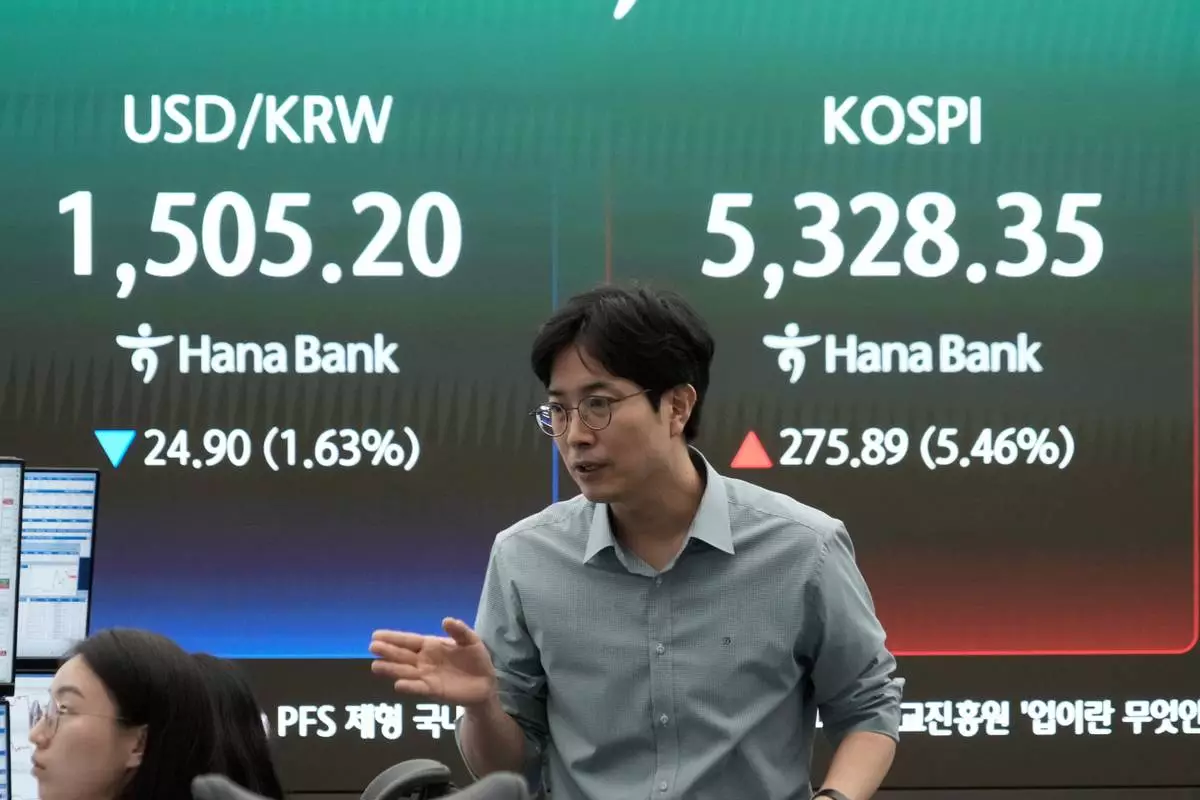
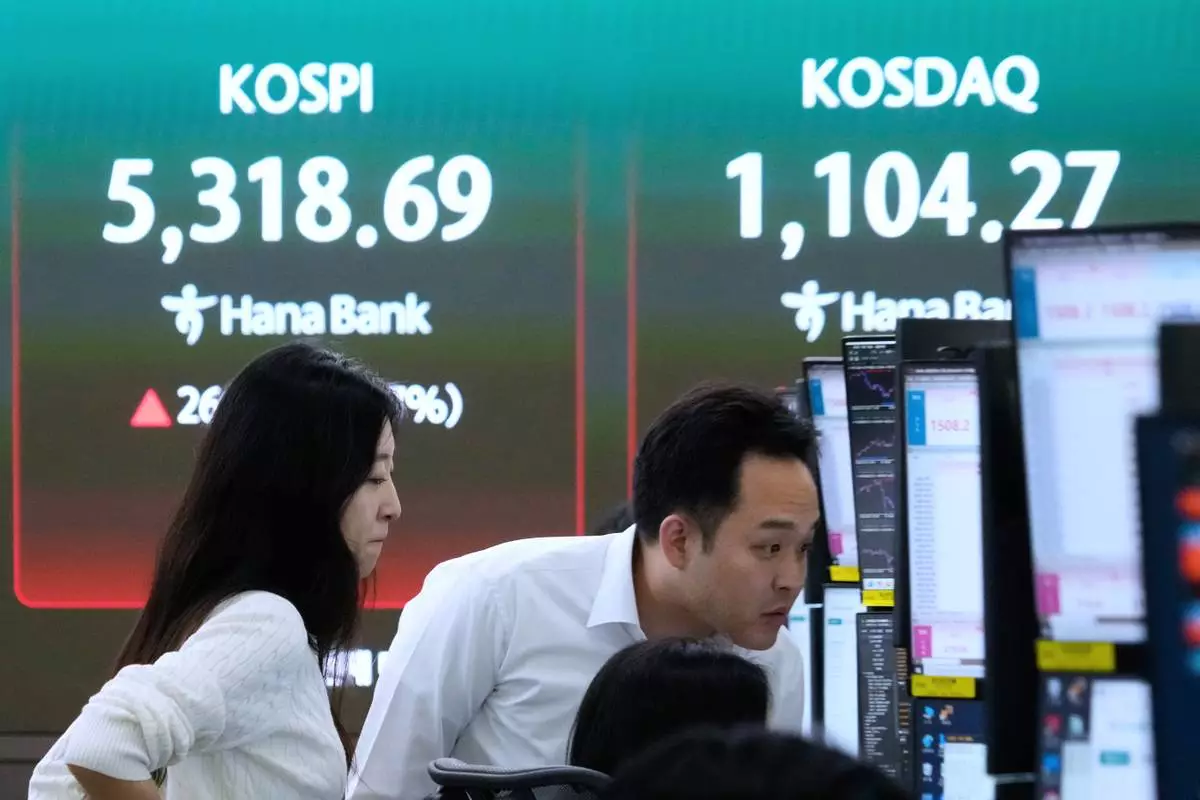
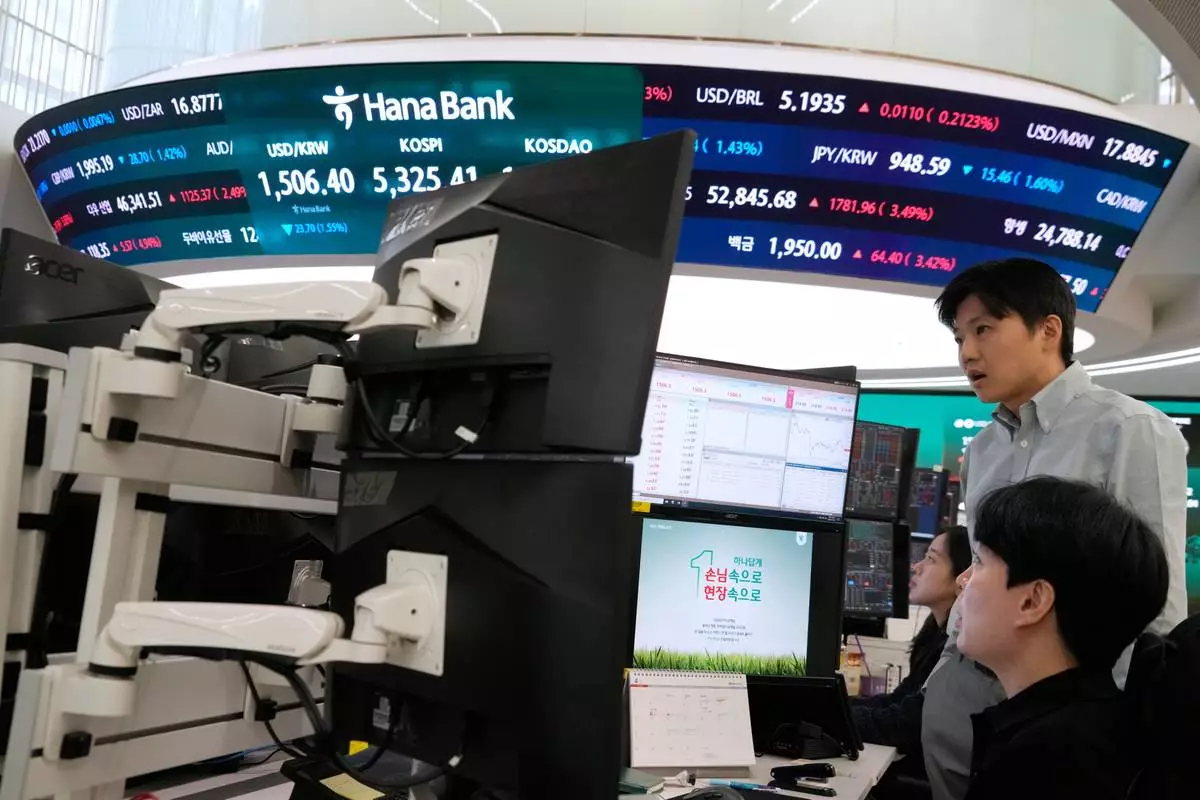
The S&P 500 rallied 0.9% and added to its leap from the day before, which was its best since last spring. That followed even bigger gains for stock markets across Europe and Asia, including an 8.4% surge in South Korea, which were catching up to Wall Street’s rally from Tuesday.

The Dow Jones Industrial Average was up 294 points, or 0.6%, as of 2:08 p.m. Eastern time, and the Nasdaq composite was 1.3% higher.

Oil prices also fell back toward $100 per barrel after President Donald Trump said late Tuesday that the U.S. military could end its offensive in two to three weeks.

That added to optimism following a couple tenuous signals of hope from earlier Tuesday that Wall Street latched onto, including a news report quoting Iran’s president as saying that it has “the necessary will to end the war” as long as certain requirements are met, including “guarantees to prevent a recurrence of aggression.”

The worry on Wall Street has been that the war may last a long time and keep oil and natural gas from the Persian Gulf out of global markets, which could create a brutal blast of inflation.

But hope has been quick to reverse to doubt on Wall Street, triggering manic swings back and forth for financial markets since the war with Iran began. Trump has also made statements that lifted markets, only to see the gains quickly disappear after increasing his military threats.

Shortly before Wall Street began trading on Wednesday, Trump claimed in a post on his social media network that Iran “has just asked the United States of America for a CEASEFIRE!”

“We will consider when Hormuz Strait is open, free, and clear. Until then, we are blasting Iran into oblivion or, as they say, back to the Stone Ages!!!”

But Iran’s Foreign Ministry spokesman, Esmail Baghaei, quickly called that claim “false and baseless,” according to a report on Iranian state television.

Oil prices also remain high, even if they’ve eased recently. The price for a barrel of Brent crude oil, the international standard, was sitting at $101.51 following its declines, which is still up from roughly $70 before the war began.

U.S. gasoline prices rose again overnight to a national average of $4.06 per gallon, according to the auto club AAA.

Iran, meanwhile, hit an oil tanker off the coast of Qatar and Kuwait’s airport on Wednesday while airstrikes battered Tehran as the fighting continued. Iran also continues to hold a grip on the Strait of Hormuz, where a fifth of the world’s traded oil passes during peacetime.

“De-escalation hopes have given markets a lift, but we think the effects of the war would, in many cases, persist even if the war did end soon,” Thomas Mathews, head of markets, Asia Pacific at Capital Economics, said in a research note Wednesday.

“It’s worth thinking through how markets might fare if the war were to end ‘very soon,’” he wrote. “Do markets have further to recover if sentiment continues to improve? The answer is almost certainly yes.”

The White House said Trump will deliver a public address Wednesday evening on the Iran war.

On Wall Street, most stocks rose as Big Tech powered the move higher. Gains of 3.8% for Alphabet and 0.8% for Nvidia were two of the strongest forces lifting the S&P 500.

Eli Lilly climbed 5.1% after U.S. regulators approved its GLP-1 pill for weight loss.

Such gains have pulled the S&P 500, which sits at the heart of many 401(k) accounts, back to within 5.6% of its all-time high set early this year. Just on Monday, the index briefly neared a 10% drop from its record, a steep-enough fall that professional investors have a name for it: a “correction.”

Nike sank 14.5% even though it reported a stronger profit for the latest quarter than expected. Analysts said it gave some lackluster financial forecasts.

Hasbro fell 4.8% after the toy company found someone had gained unauthorized access to its computer network and is working to assess the full impact.

Energy companies fell broadly as oil prices eased. Exxon Mobil slumped 5% and Chevron fell 4.9%.

In stock markets abroad, indexes leaped more than 2% in France and Germany. Asian markets had even bigger gains.

Tokyo’s Nikkei 225 jumped 5.2% after a survey showed business sentiment for major Japanese manufacturers improved despite worries about the Iran war.

In the bond market, Treasury yields held relatively steady after a report said U.S. retailers made more money in February than economists expected. A separate report said U.S. manufacturing growth last month was slightly faster than economists expected.

The 10-year Treasury yield rose to 4.32% from 4.30% late Tuesday.

AP Business Writers Chan Ho-him and Matt Ott contributed.

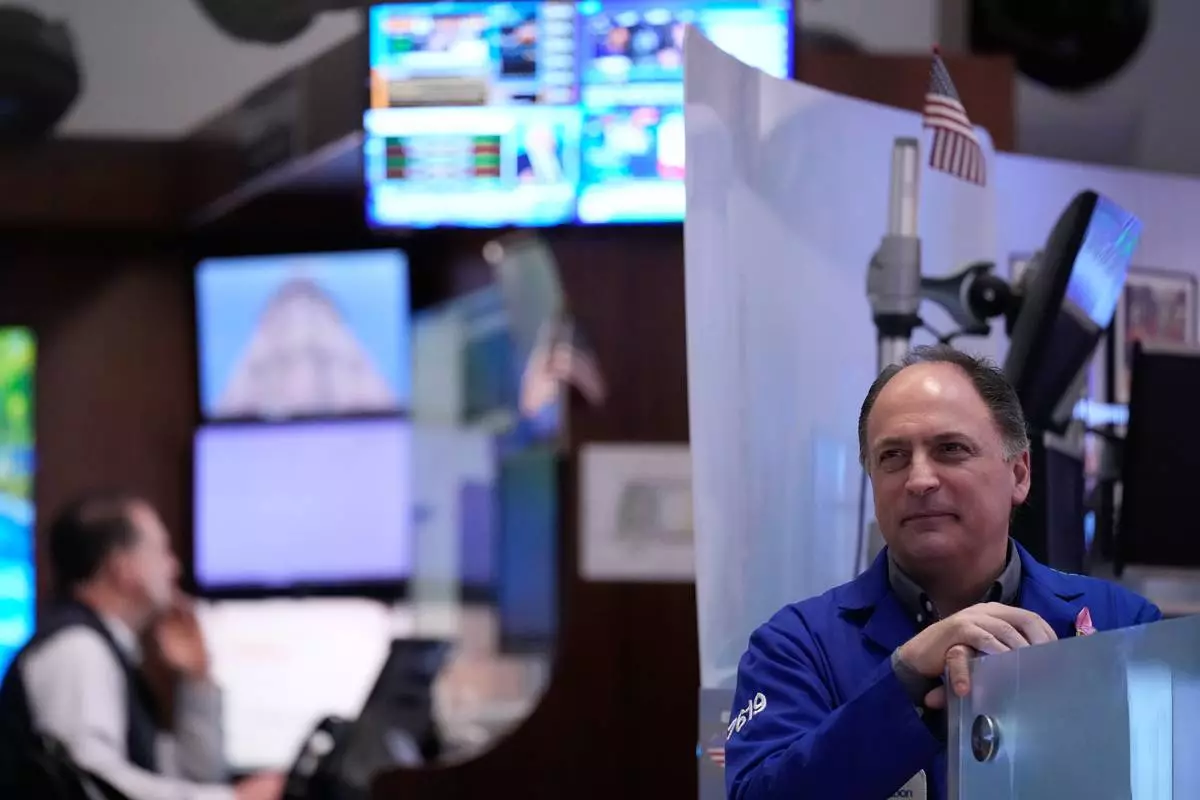
James Conti works on the floor at the New York Stock Exchange in New York, Tuesday, March 31, 2026. (AP Photo/Seth Wenig)

James Conti works on the floor at the New York Stock Exchange in New York, Tuesday, March 31, 2026. (AP Photo/Seth Wenig)

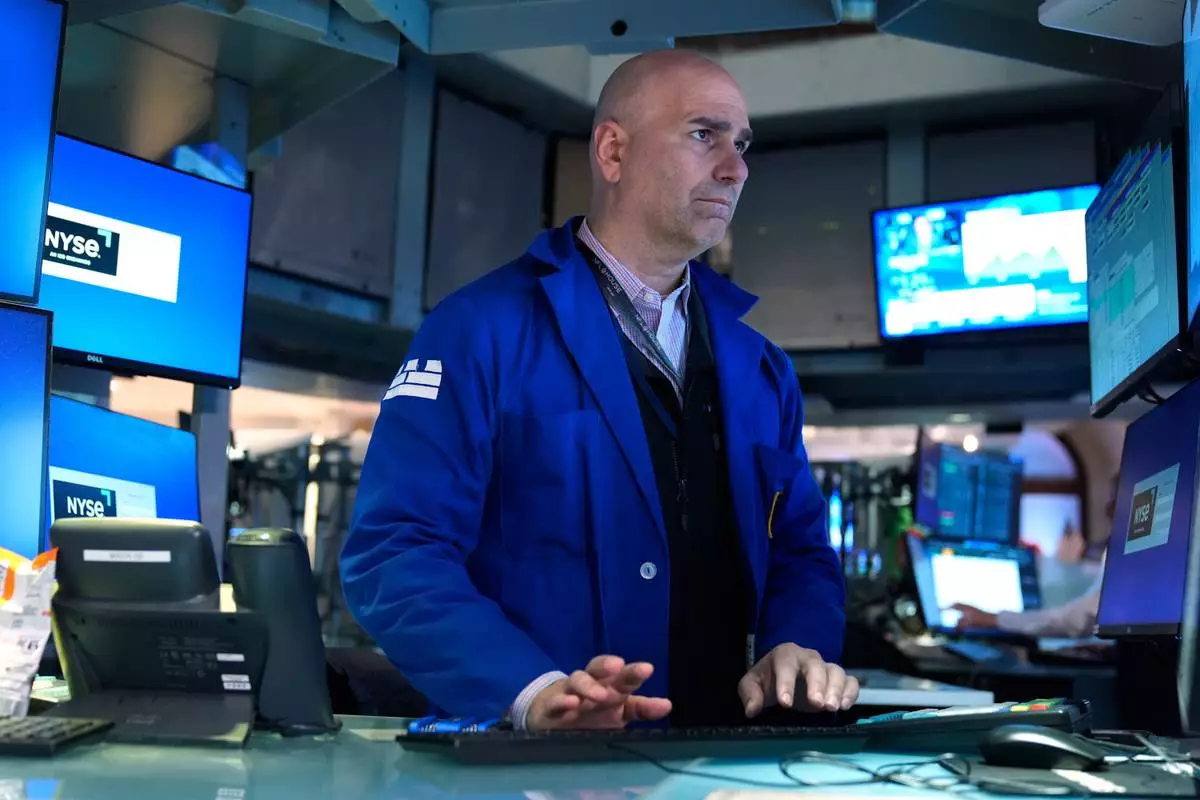
Philip Finale works on the floor at the New York Stock Exchange in New York, Tuesday, March 31, 2026. (AP Photo/Seth Wenig)

Philip Finale works on the floor at the New York Stock Exchange in New York, Tuesday, March 31, 2026. (AP Photo/Seth Wenig)

Currency traders watch monitors near a screen showing the Korea Composite Stock Price Index (KOSPI), left, at the foreign exchange dealing room of the Hana Bank headquarters in Seoul, South Korea, Wednesday, April 1, 2026. (AP Photo/Ahn Young-joon)

Currency traders watch monitors near a screen showing the Korea Composite Stock Price Index (KOSPI), left, at the foreign exchange dealing room of the Hana Bank headquarters in Seoul, South Korea, Wednesday, April 1, 2026. (AP Photo/Ahn Young-joon)

Currency traders watch monitors near a screen showing the Korea Composite Stock Price Index (KOSPI), top center, and the foreign exchange rate between U.S. dollar and South Korean won, top center left, at the foreign exchange dealing room of the Hana Bank headquarters in Seoul, South Korea, Wednesday, April 1, 2026. (AP Photo/Ahn Young-joon)

Currency traders watch monitors near a screen showing the Korea Composite Stock Price Index (KOSPI), top center, and the foreign exchange rate between U.S. dollar and South Korean won, top center left, at the foreign exchange dealing room of the Hana Bank headquarters in Seoul, South Korea, Wednesday, April 1, 2026. (AP Photo/Ahn Young-joon)

Currency traders work at the foreign exchange dealing room of the Hana Bank headquarters in Seoul, South Korea, Wednesday, April 1, 2026. (AP Photo/Ahn Young-joon)

Currency traders work at the foreign exchange dealing room of the Hana Bank headquarters in Seoul, South Korea, Wednesday, April 1, 2026. (AP Photo/Ahn Young-joon)

A currency trader reacts near a screen showing the Korea Composite Stock Price Index (KOSPI), right, and the foreign exchange rate between U.S. dollar and South Korean won at the foreign exchange dealing room of the Hana Bank headquarters in Seoul, South Korea, Wednesday, April 1, 2026. (AP Photo/Ahn Young-joon)

A currency trader reacts near a screen showing the Korea Composite Stock Price Index (KOSPI), right, and the foreign exchange rate between U.S. dollar and South Korean won at the foreign exchange dealing room of the Hana Bank headquarters in Seoul, South Korea, Wednesday, April 1, 2026. (AP Photo/Ahn Young-joon)

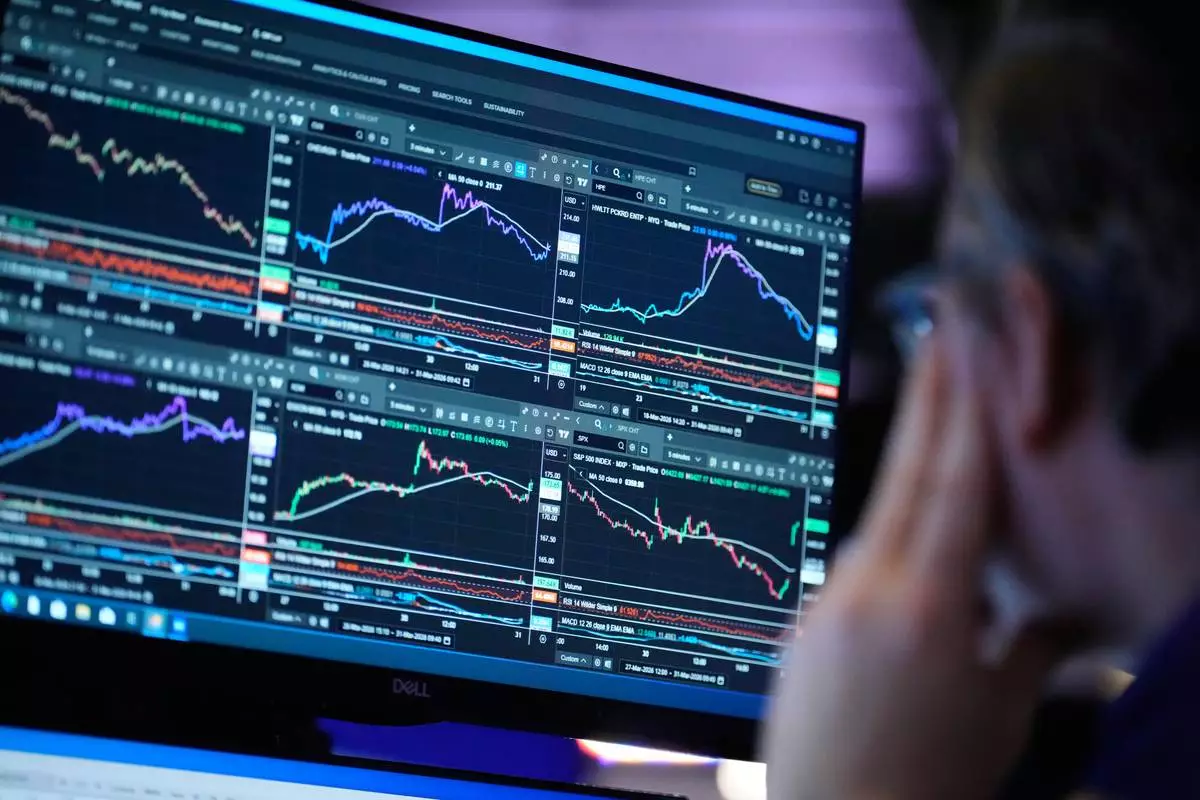
A screen displays financial information on the floor at the New York Stock Exchange in New York, Tuesday, March 31, 2026. (AP Photo/Seth Wenig)

A screen displays financial information on the floor at the New York Stock Exchange in New York, Tuesday, March 31, 2026. (AP Photo/Seth Wenig)

Recommended Articles