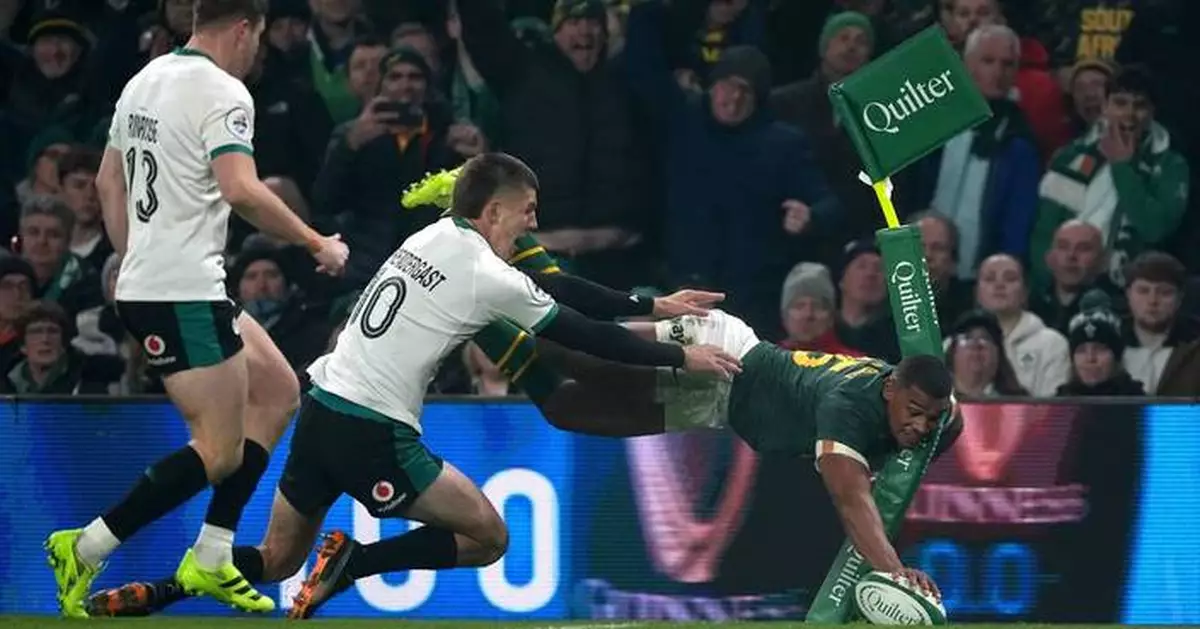
DUBLIN (AP) — South Africa beat Ireland in Dublin for the first time in 13 years, winning 24-13 after a dramatic and chaotic incident-packed match on Saturday.
The Irish struggled to handle the Springboks' physicality and a green mist descended in which they conceded a 20-minute red card, four yellow cards and an equally uncharacteristic 18 penalties. For a time Ireland was down to 12 men.
The Springboks turned the pressure into four tries, one of them a penalty try. They hadn't won in Dublin since 2012 and ended up with their biggest win there over Ireland since 1998. They have three straight wins on their European tour with only lowly Wales to visit.
“We won't get carried away with the result but the beer tastes a little better,” Springboks coach Rassie Erasmus said. “We are certainly proud after such a long season to grind through a win against a team such as them at home for the first time in 13 years.
The penalty try, awarded against Ireland's backpedalling scrum in first-half injury time, lifted the Springboks to a 19-7 lead as a train of Irish players were brandished with yellow cards by referee Matthew Carley.
Carley's halftime whistle prompted loud booing from the packed crowd in Aviva Stadium.
But short-handed Ireland was all heart after the interval, outscoring South Africa 6-5.
“To be able to win a second half 6-5 under those type of circumstances, I know it doesn't tell a full story of the second half but it’s actually amazing,” Ireland coach Andy Farrell said.
South Africa got a moment of solo brilliance by Sacha Feinberg-Mngomezulu but Jesse Kriel was held up over the line and Canan Moodie knocked-on in goal under pressure.
The Irish were unable to break the Springboks' defense in the second half, even after besieging their try-line for the last five minutes. They finally got a man advantage in the 78th when replacement Boks scrumhalf Grant Williams was yellow-carded but the visitors held out.
"It was definitely not a perfect performance but there was a monkey on our backs that we had to get off,” Erasmus said.
The buildup spotlighted red cards the Springboks have overcome to beat France and Italy in their previous two tests. Their tackle technique came into sharp focus again in the sixth minute in Dublin after Feinberg-Mngomezulu's shoulder-led hit on Tommy O'Brien. But Carley issued only a penalty, saying the tackle slid up O'Brien’s chest to his head.
By then the Springboks had already teed up a try for Damian Willemse, who shushed the crowd.
Prendergast's first goalkick hit the post then Ireland suffered a double blow: Tadhg Beirne's try was ruled out and fellow lock James Ryan was yellow-carded for an illegal clearout into the face of Malcolm Marx. The bunker upgraded it into a 20-minute red, the first of Ryan's career.
O'Brien’s following high tackle and head contact on Moodie passed inspection but Prendergast was next to be yellow-carded after Ireland was suckered by Cheslin Kolbe and allowed Cobus Reinach to score a converted try untouched.
Despite being two men down, Ireland rallied with a Dan Sheehan try.
Jack Crowley, covering for Prendergast, converted the try but made an ironic sight when he was carded, too, and joined flyhalf rival Prendergast in the sin-bin.
An attacking scrum opportunity prompted Erasmus to change out his props, and the fresh muscle was overpowering. Irish prop Andrew Porter was carded for illegal scrummaging. When the next scrum went backwards and collapsed, Carley gave South Africa a penalty try and defied convention by not carding anyone.
But the crowd's boos rained on him.
Prendergast returned to kick two penalties but South Africa moved beyond reach when Feinberg-Mngomezulu used scrum ball to stiff-arm Jamison Gibson-Park and score.
Ireland fought on but the scrum gave away six penalties, a third of their total, and instigated the yellow card — the team's fourth — for replacement prop Paddy McCarthy.
They still managed at the end to back South Africa onto its try-line, where RG Snyman, on the occasion of his 50th test, had a yellow card overturned but fellow replacement Grant Williams was not so fortunate.
AP rugby: https://apnews.com/hub/rugby
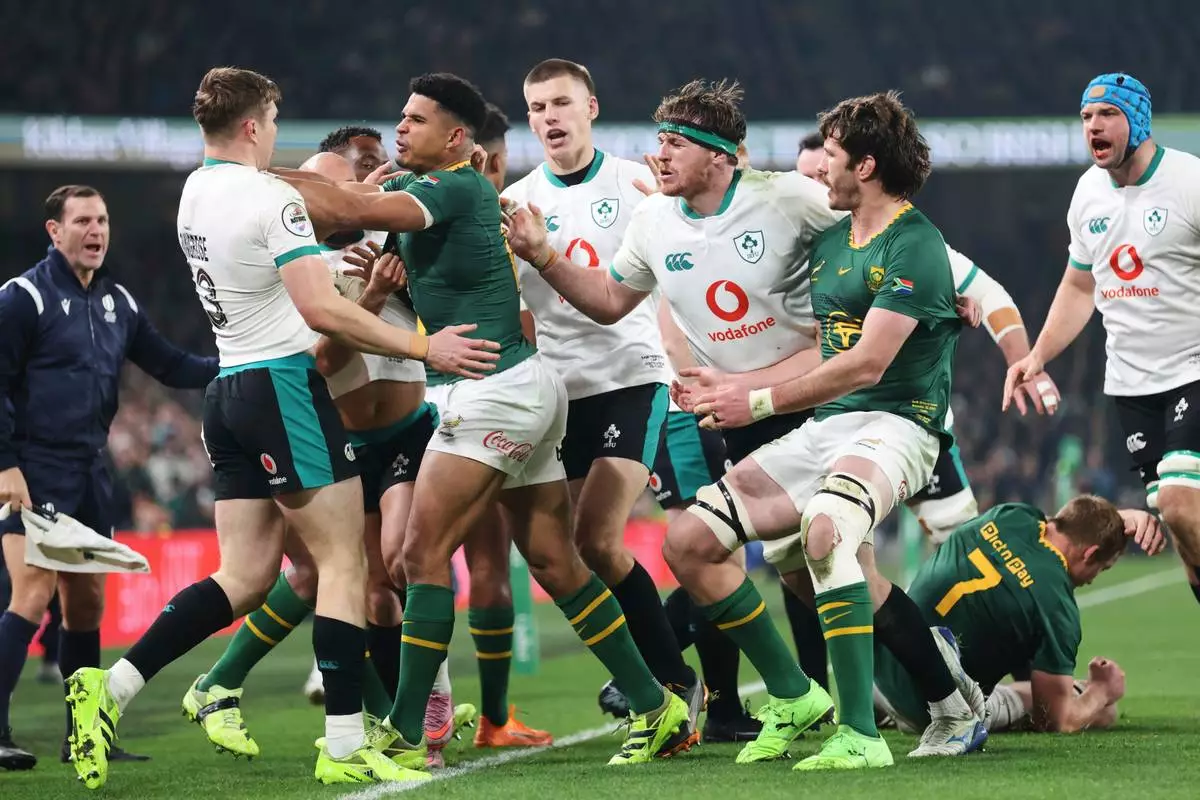
Ireland's Garry Ringrose, left, gets in a scuffle with South Africa's Sacha Feinberg-Mngomezulu during the rugby union Nations Series match between Ireland and South Africa in Dublin, Ireland, Saturday, Nov. 22, 2025. (AP Photo/Peter Morrison)
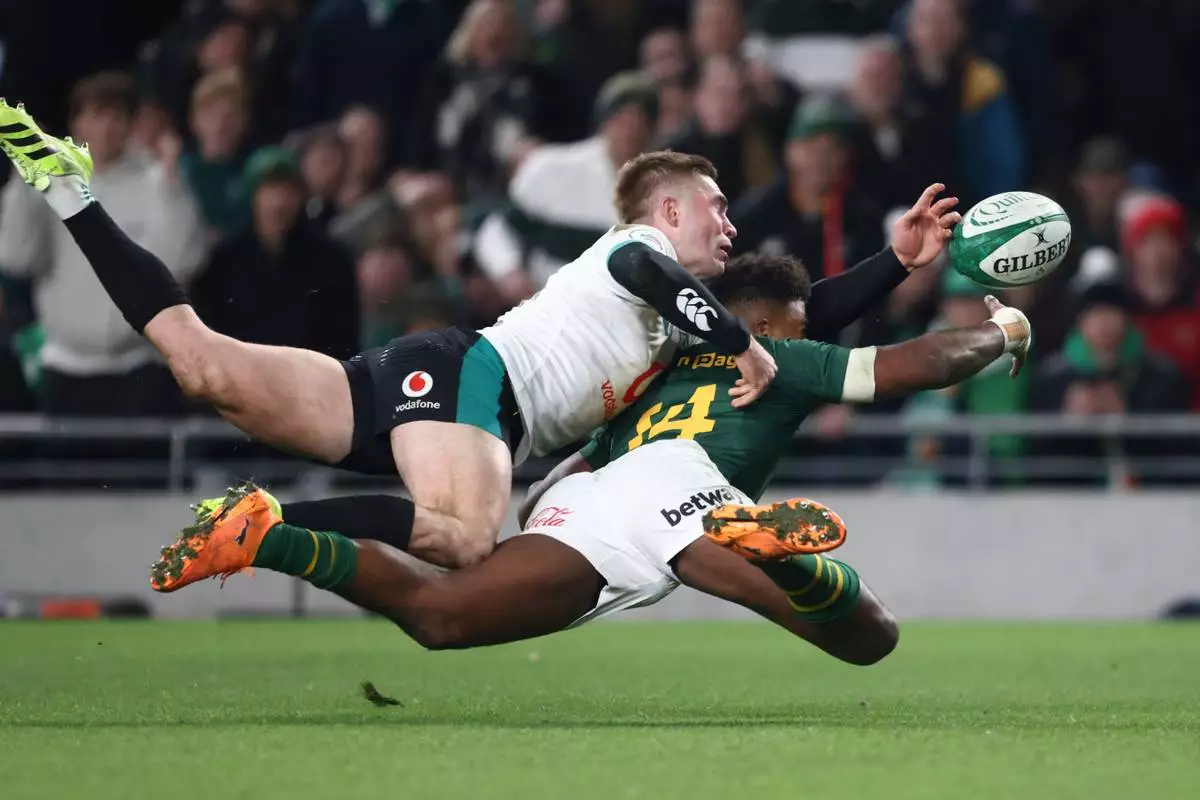
South Africa's Canan Moodie, dives for the ball with Ireland's Jack Crowley during the rugby union Nations Series match between Ireland and South Africa in Dublin, Ireland, Saturday, Nov. 22, 2025. (AP Photo/Peter Morrison)
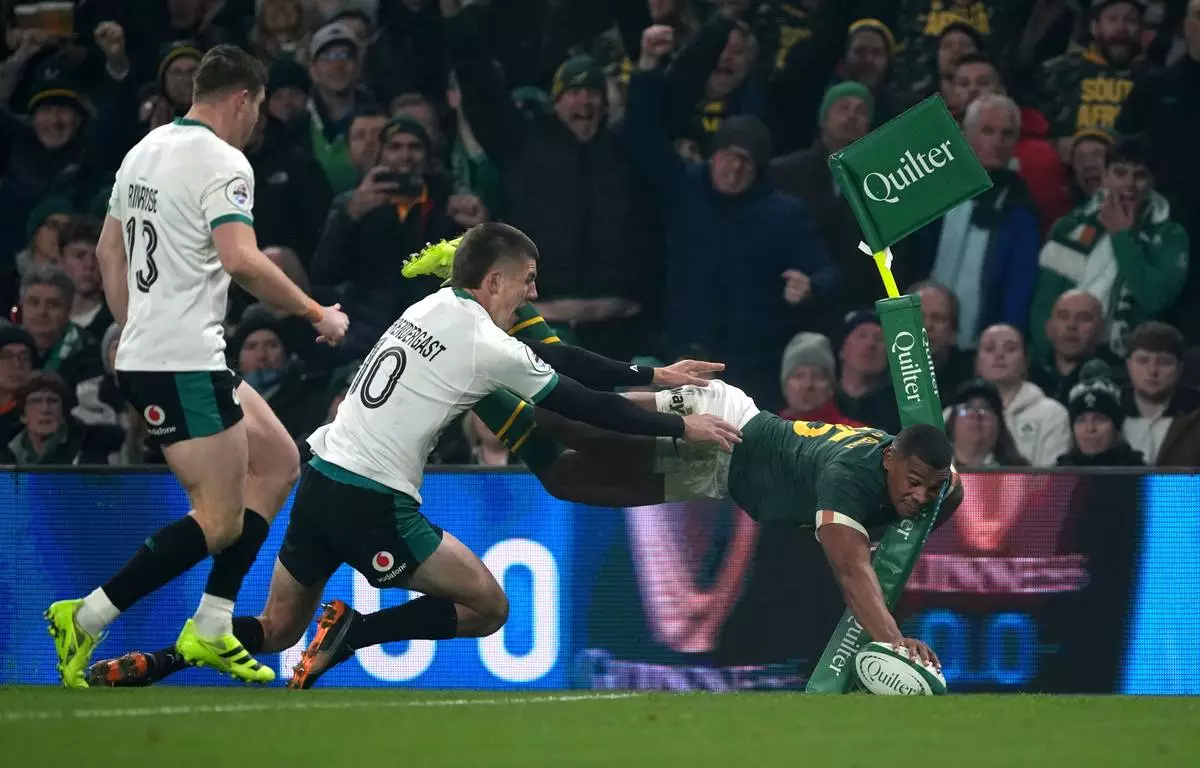
South Africa's Damian Willemse, right, scores a try during the rugby union Nations Series match between Ireland and South Africa in Dublin, Ireland, Saturday, Nov. 22, 2025. (Brian Lawless/PA via AP)
WASHINGTON (AP) — The Supreme Court is casting doubt on President Donald Trump’s restrictions on birthright citizenship in a consequential case that was magnified by Trump’s unparalleled presence in the courtroom.
Conservative and liberal justices on Wednesday questioned whether Trump's order declaring that children born to parents who are in the United States illegally or temporarily are not American citizens comports with either the Constitution or federal law.
Trump, the first sitting president to attend arguments at the nation’s highest court, spent just over an hour inside the courtroom for arguments made by the Republican administration's top Supreme Court lawyer, Solicitor General D. John Sauer. The president departed shortly after lawyer Cecillia Wang began her presentation in defense of broad birthright citizenship.
Trump heard Sauer face one skeptical question after another. Justices asked about the legal basis for the order and voiced more practical concerns.
“Is this happening in the delivery room?” Justice Ketanji Brown Jackson asked, drilling down into the logistics of how the government would actually figure out who’s entitled to citizenship and who’s not.
Justice Clarence Thomas sounded the most likely among the nine justices to side with Trump.
“How much of the debates around the 14th Amendment had anything to do with immigration?” Thomas asked, pointing out that the purpose of the amendment was to grant citizenship to Black people, including freed slaves.
The justices are hearing Trump’s appeal of a lower-court ruling from New Hampshire that struck down the citizenship restrictions, one of several courts that have blocked them. They have not taken effect anywhere in the country.
The case frames another test of Trump's assertions of executive power that defy long-standing precedent for a court that has largely ruled in the president's favor — but with some notable exceptions that Trump has responded to with starkly personal criticisms of the justices. A definitive ruling is expected by early summer.
The birthright citizenship order, which Trump signed the first day of his second term, is part of his Republican administration’s broad immigration crackdown.
Birthright citizenship is the first Trump immigration-related policy to reach the court for a final ruling. The justices previously struck down global tariffs Trump had imposed under an emergency powers law that had never been used that way.
Trump reacted furiously to the late February tariffs decision, saying he was ashamed of the justices who ruled against him and calling them unpatriotic.
He issued a preemptive broadside against the court on Sunday on his Truth Social platform. “Birthright Citizenship is not about rich people from China, and the rest of the World, who want their children, and hundreds of thousands more, FOR PAY, to ridiculously become citizens of the United States of America. It is about the BABIES OF SLAVES!,” the president wrote. “Dumb Judges and Justices will not a great Country make!”
Trump's order would upend the long-standing view that the Constitution’s 14th Amendment, ratified in 1868, and federal law since 1940 confer citizenship on everyone born on American soil, with narrow exceptions for the children of foreign diplomats and those born to a foreign occupying force.
The 14th Amendment was intended to ensure that Black people, including former slaves, had citizenship, though the Citizenship Clause is written more broadly. “All persons born or naturalized in the United States, and subject to the jurisdiction thereof, are citizens of the United States and of the State wherein they reside,” it reads.
In a series of decisions, lower courts have struck down the executive order as illegal, or likely so, under the Constitution and federal law. The decisions have invoked the high court's 1898 ruling in Wong Kim Ark, which held that the U.S.-born child of Chinese nationals was a citizen.
The Trump administration argues that the common view of citizenship is wrong, asserting that children of noncitizens are not “subject to the jurisdiction” of the United States and therefore are not entitled to citizenship.
The court should use the case to set straight “long-enduring misconceptions about the Constitution’s meaning,” wrote Sauer, the solicitor general.
No court has accepted that argument, and lawyers for pregnant women whose children would be affected by the order said the Supreme Court should not be the first to do so.
“We have the president of the United States trying to radically reinterpret the definition of American citizenship,” said Cecillia Wang, the American Civil Liberties Union legal director who is facing off against Sauer at the Supreme Court.
More than one-quarter of a million babies born in the U.S. each year would be affected by the executive order, according to research by the Migration Policy Institute and Pennsylvania State University’s Population Research Institute.
While Trump has largely focused on illegal immigration in his rhetoric and actions, the birthright restrictions also would apply to people who are legally in the United States, including students and applicants for green cards, or permanent resident status.
Associated Press writer Darlene Superville contributed to this report.
Follow the AP’s coverage of the U.S. Supreme Court at https://apnews.com/hub/us-supreme-court.
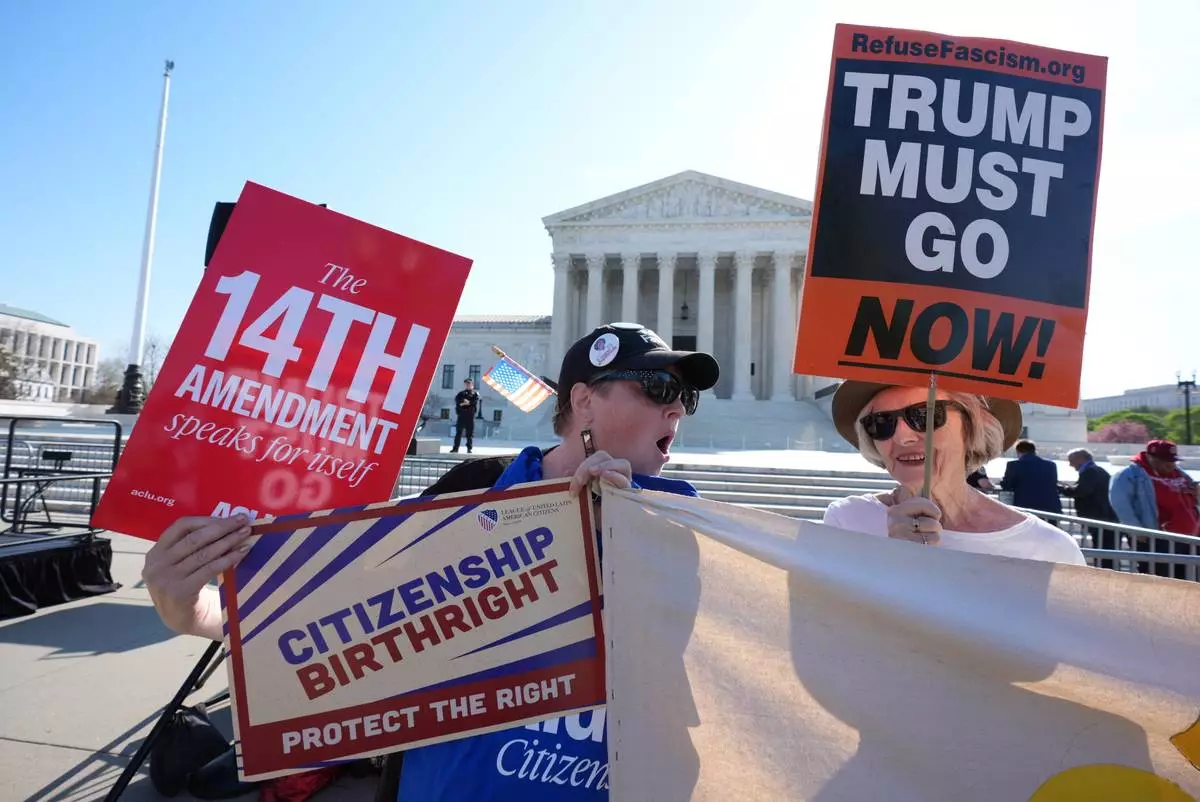
Pro and anti-Trump demonstrators rally outside the U.S. Supreme Court, before justices hear oral arguments on whether President Donald Trump can deny citizenship to children born to parents who are in the United States illegally or temporarily, on Capitol Hill, in Washington, Wednesday, April 1, 2026. (AP Photo/J. Scott Applewhite)
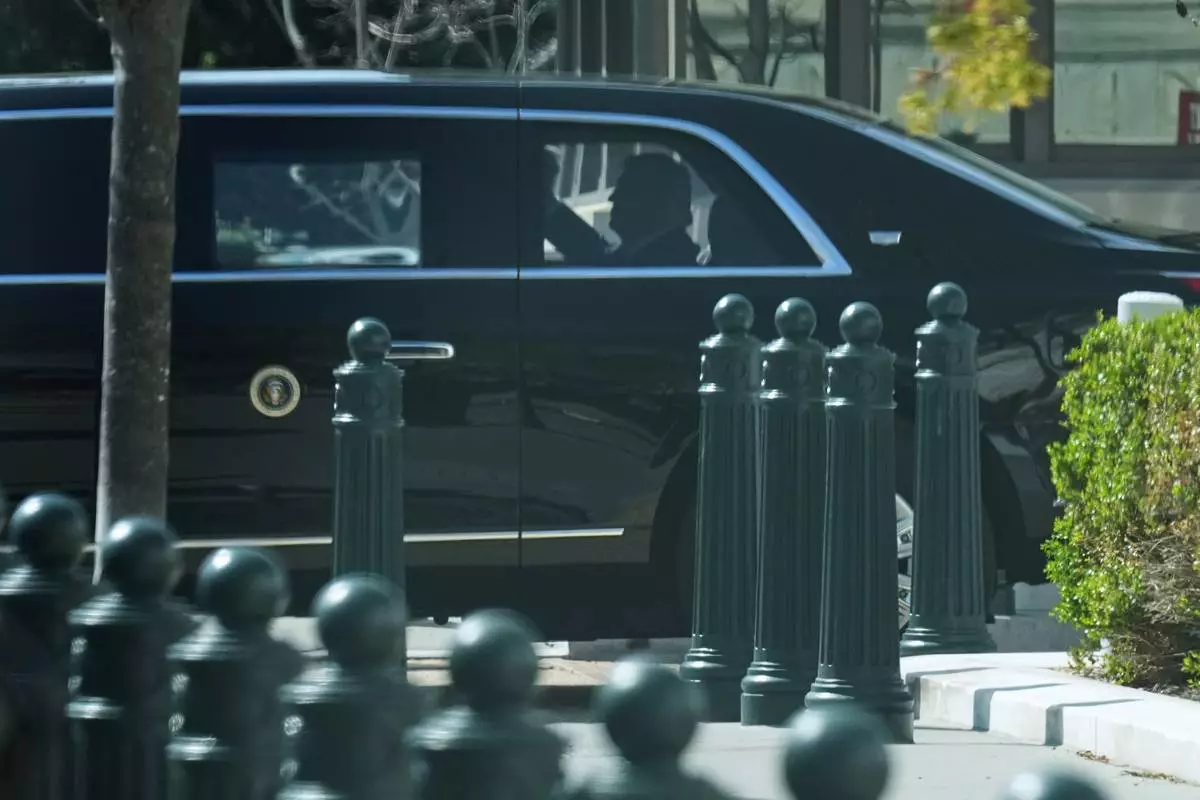
President Donald Trump leaves the U.S. Supreme Court, Wednesday, April 1, 2026, in Washington. (AP Photo/Mark Schiefelbein)
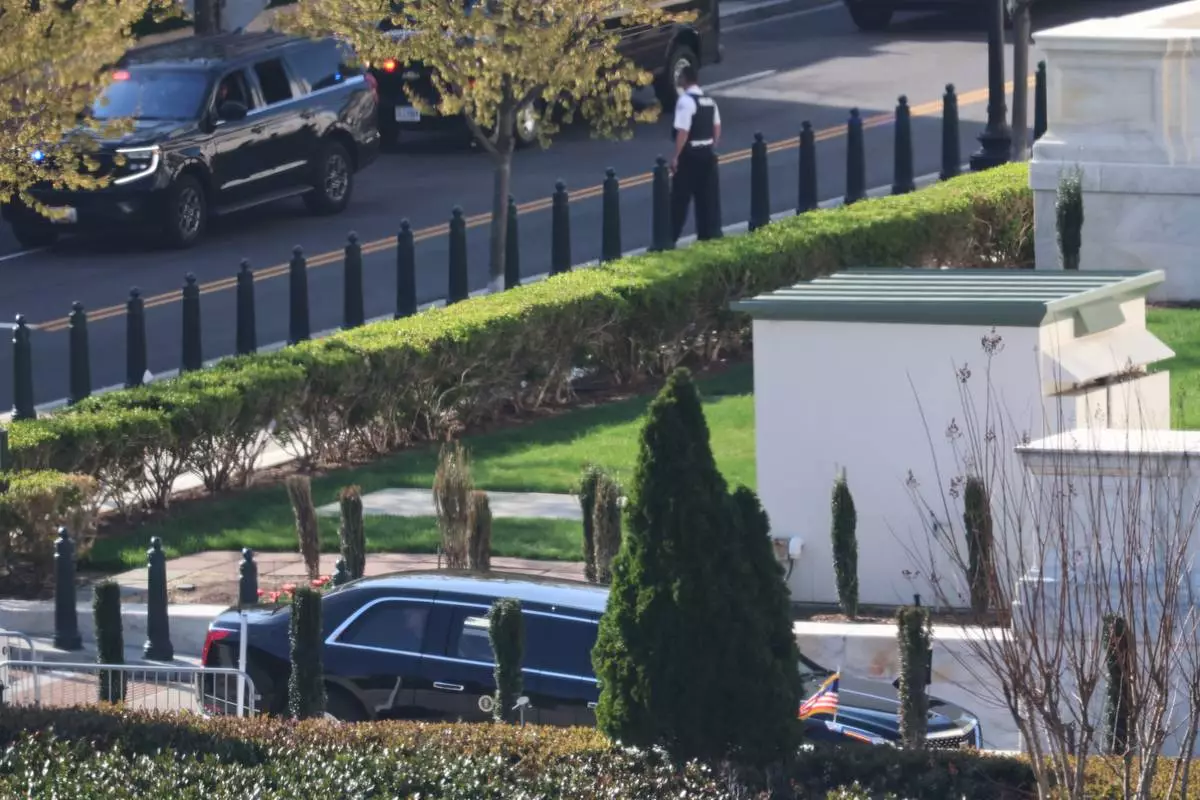
President Donald Trump's motorcade arrives at the U.S. Supreme Court, Wednesday, April 1, 2026, in Washington. (AP Photo/Tom Brenner)
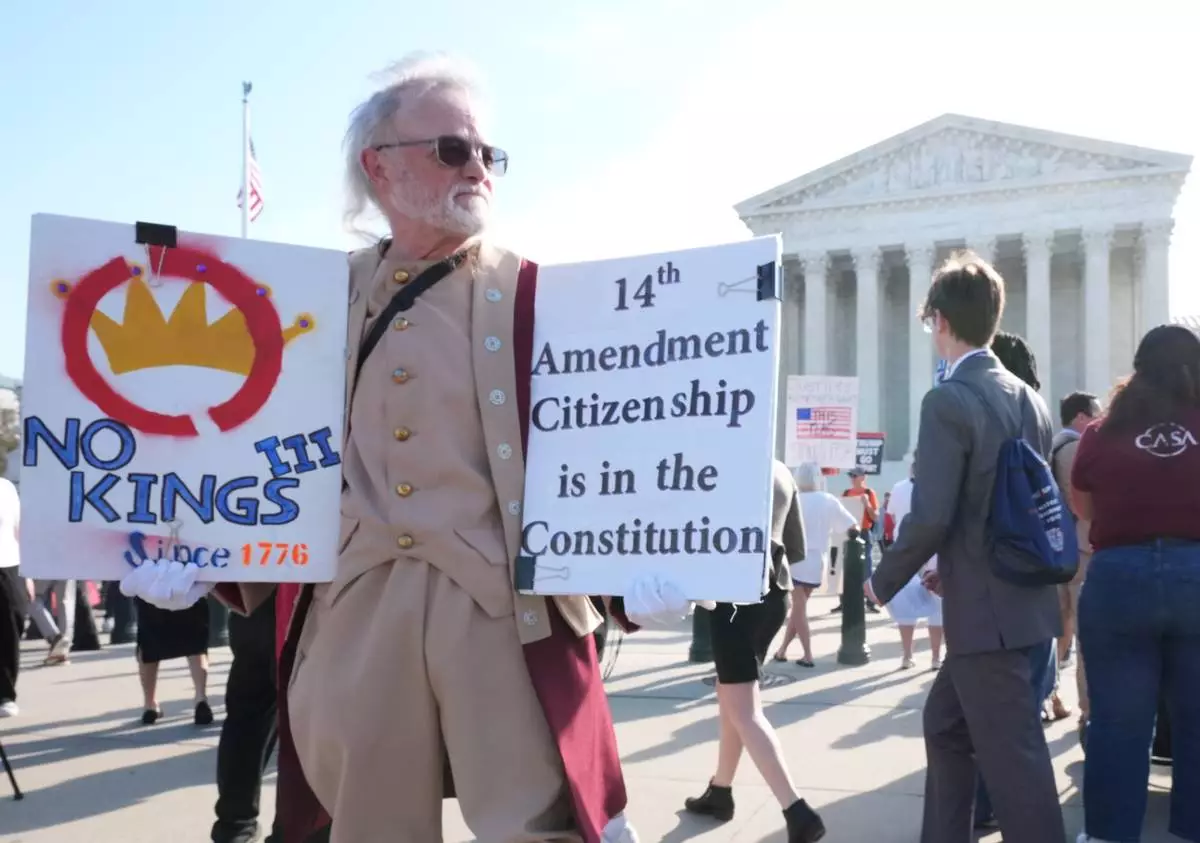
Pro and anti-Trump demonstrators rally outside the U.S. Supreme Court, before justices hear oral arguments on whether President Donald Trump can deny citizenship to children born to parents who are in the United States illegally or temporarily, on Capitol Hill, in Washington, Wednesday, April 1, 2026. (AP Photo/J. Scott Applewhite)
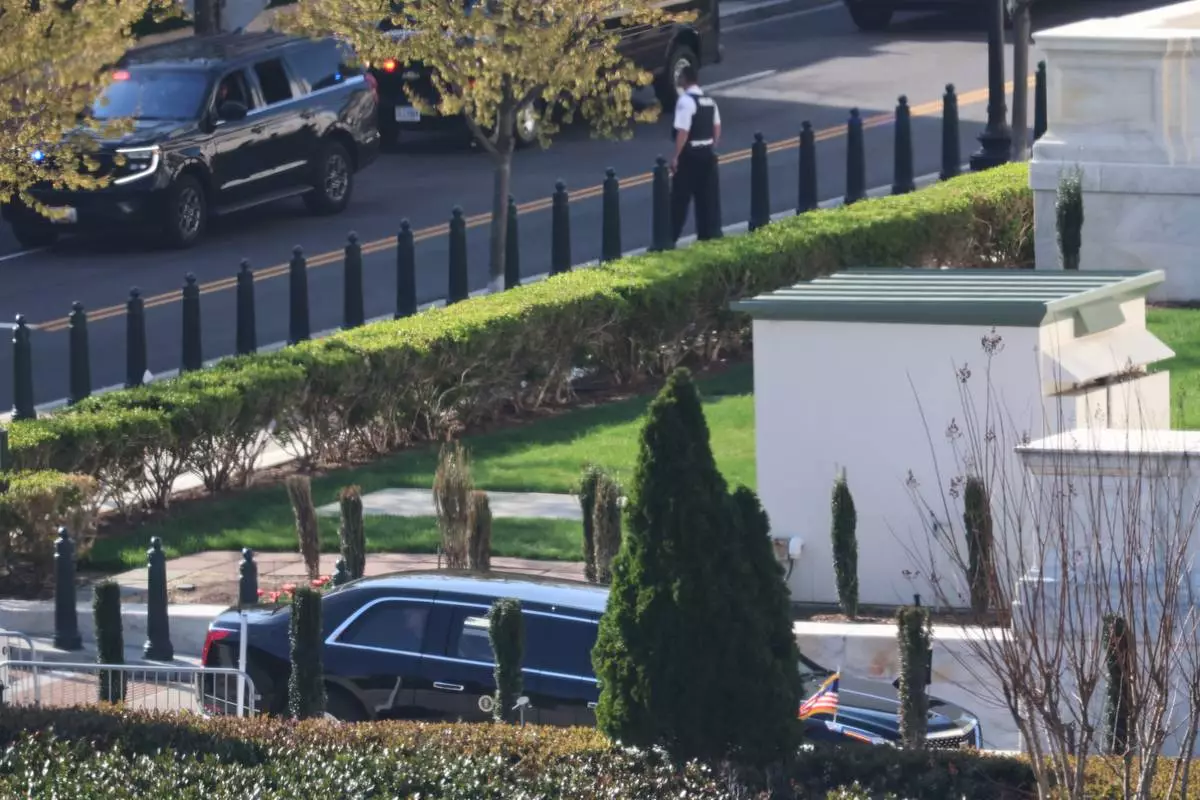
President Donald Trump's motorcade arrives at the U.S. Supreme Court, Wednesday, April 1, 2026, in Washington. (AP Photo/Tom Brenner)
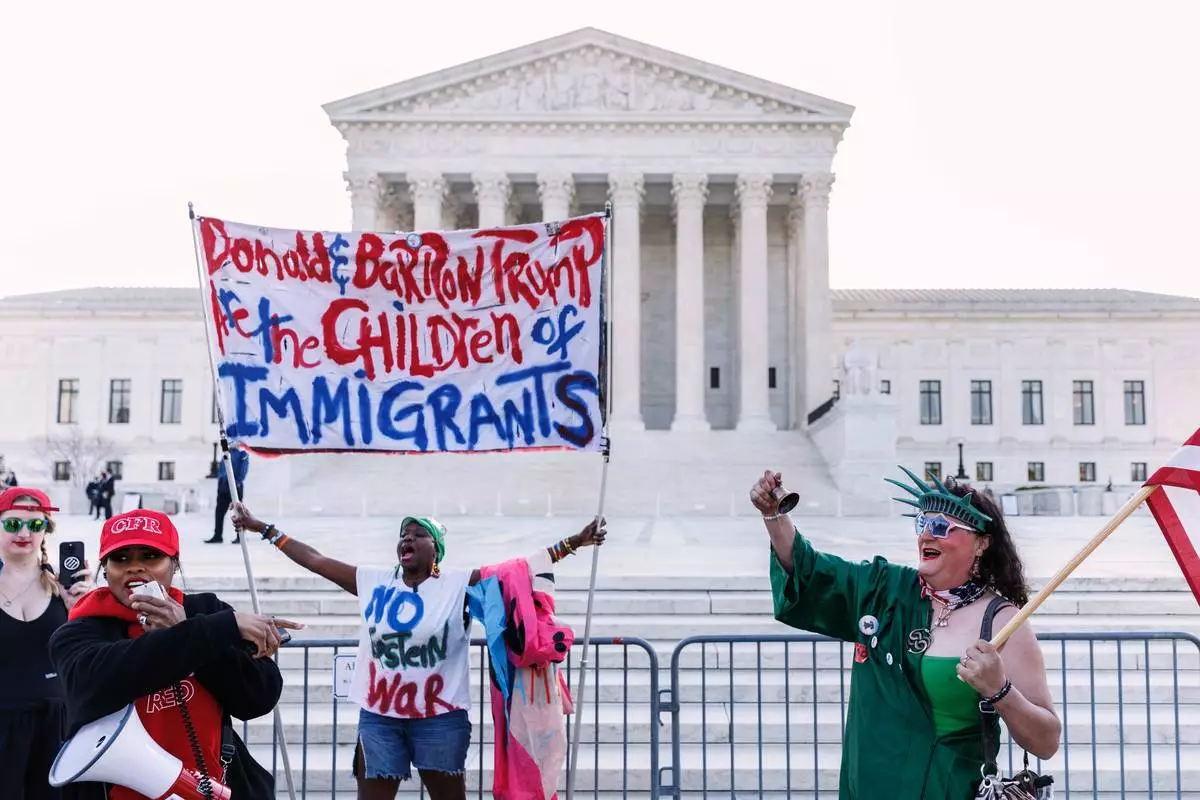
Demonstrators holding opposing views verbally engage ahead of President Donald Trump's arrival at the U.S. Supreme Court, Wednesday, April 1, 2026, in Washington. (AP Photo/Tom Brenner)
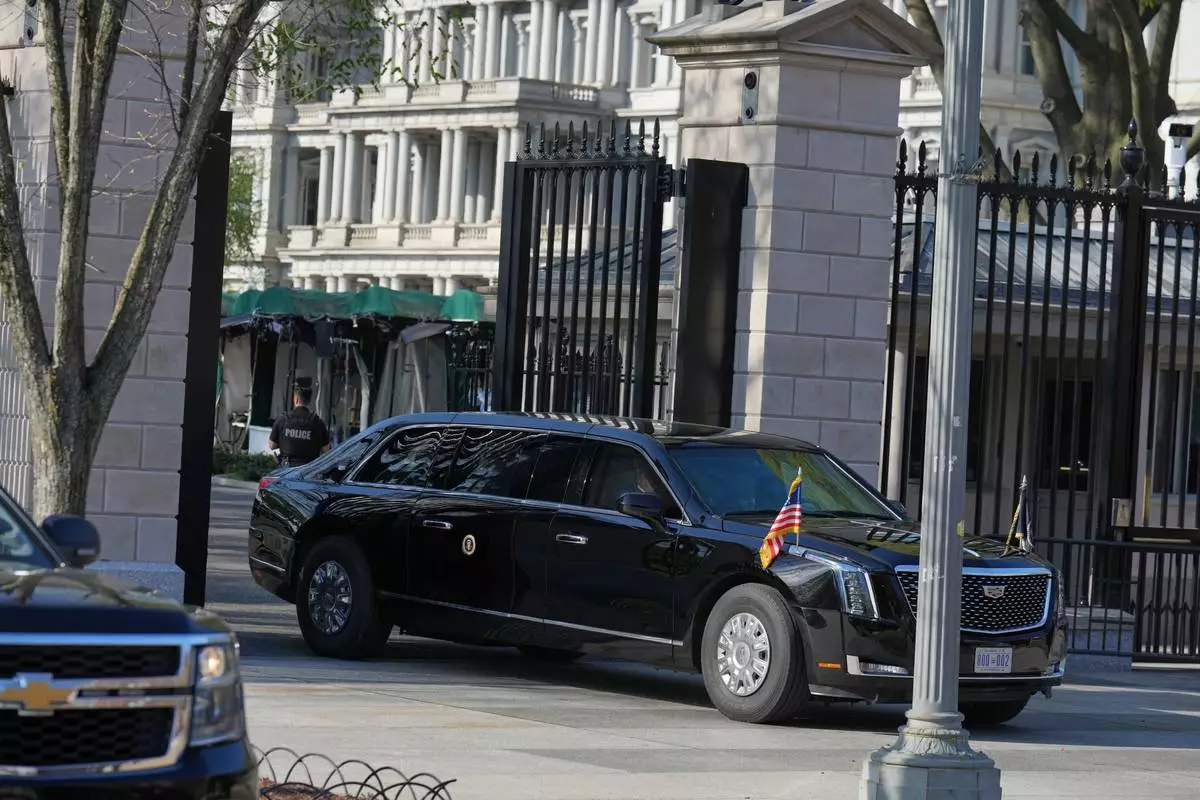
President Donald Trump's limo exits the White House en route to the Supreme Court, Wednesday, April 1, 2026, in Washington. (AP Photo/Mark Schiefelbein)
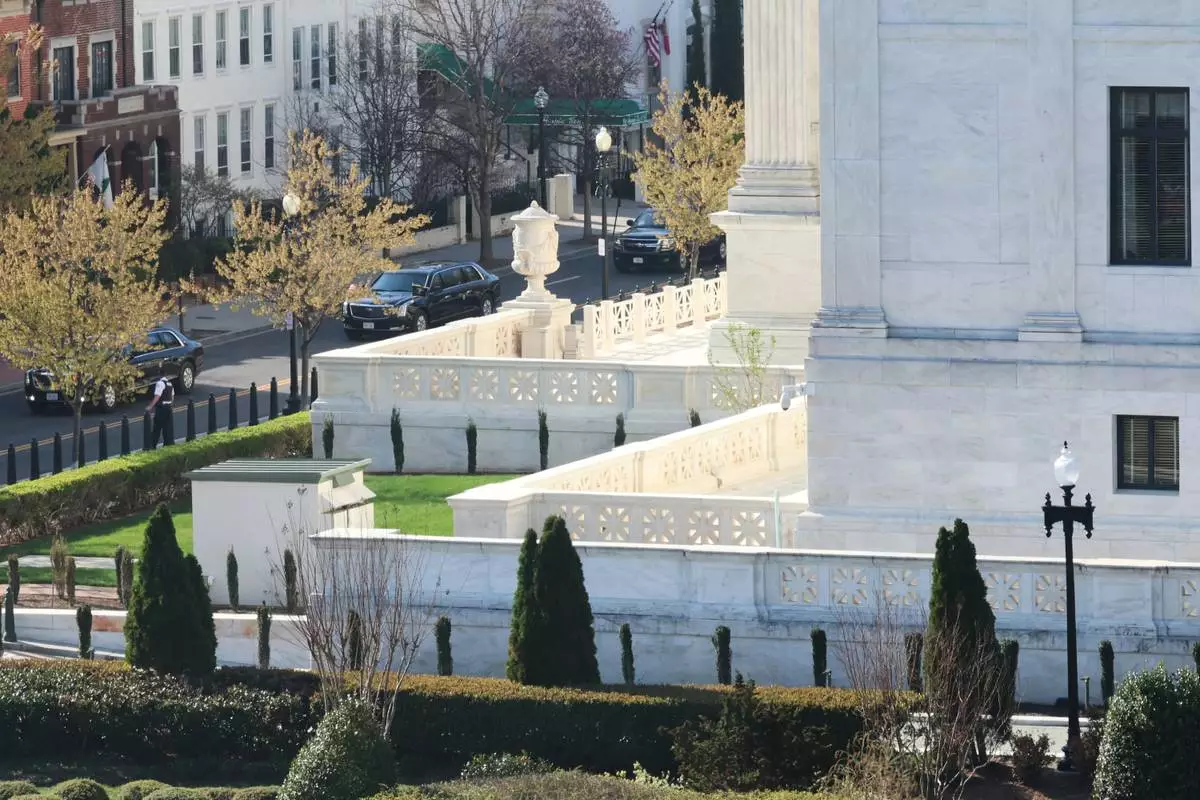
President Donald Trump's motorcade arrives at the U.S. Supreme Court, Wednesday, April 1, 2026, in Washington. (AP Photo/Tom Brenner)

Pro and anti-Trump demonstrators rally outside the U.S. Supreme Court, before justices hear oral arguments on whether President Donald Trump can deny citizenship to children born to parents who are in the United States illegally or temporarily, on Capitol Hill, in Washington, Wednesday, April 1, 2026. (AP Photo/J. Scott Applewhite)
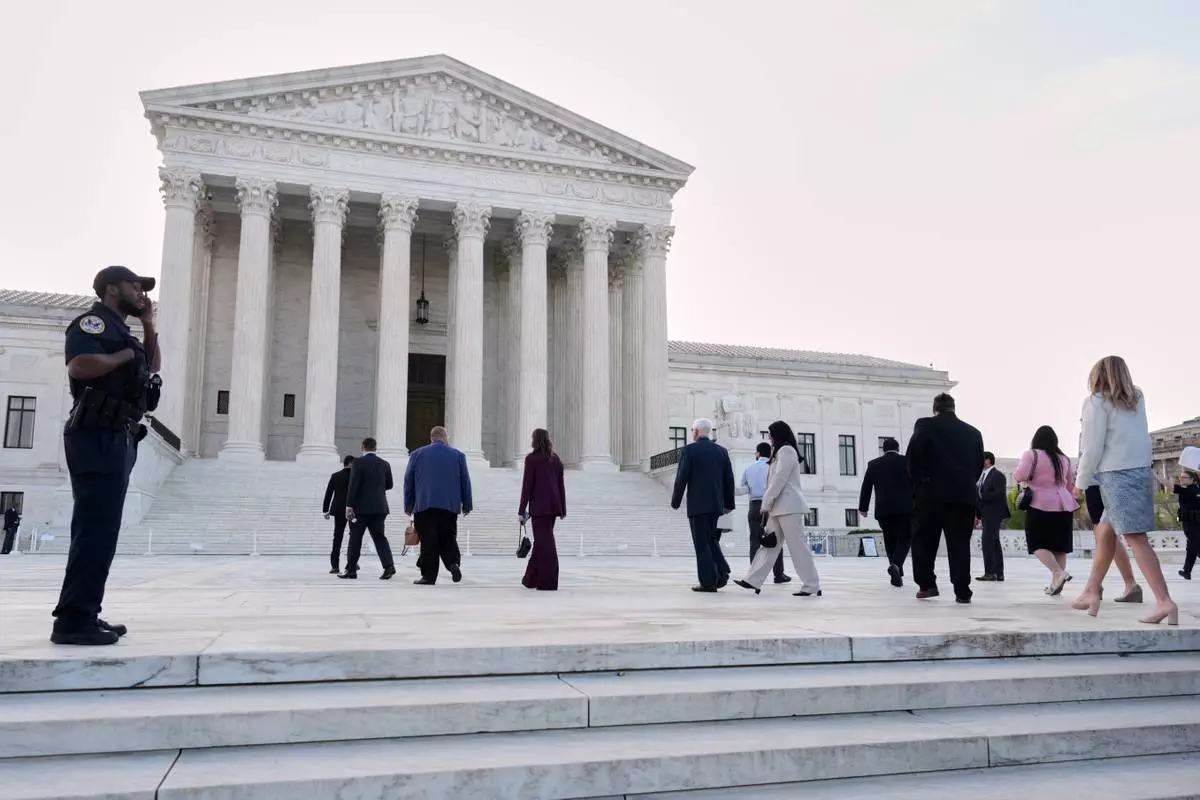
People arrive to walk inside the U.S. Supreme Court, on Capitol Hill in Washington, Wednesday, April 1, 2026. The Supreme Court justices will hear oral arguments today on whether President Donald Trump can deny citizenship to children born to parents who are in the United States illegally or temporarily. (AP Photo/J. Scott Applewhite)
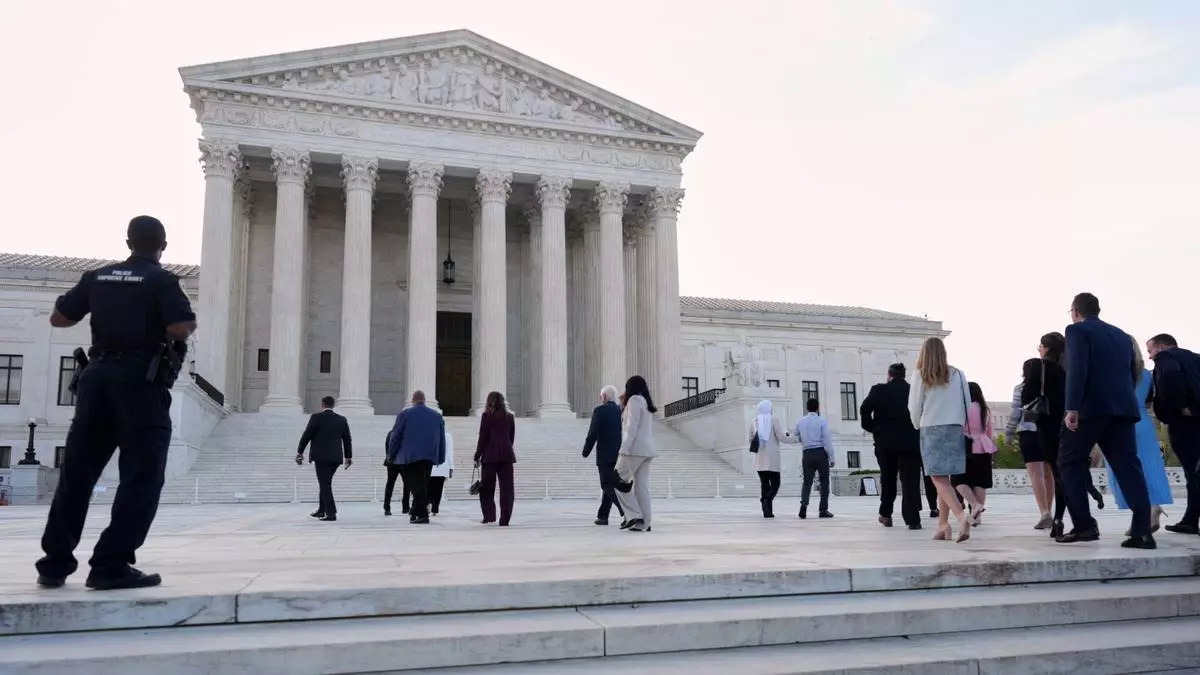
People arrive to walk inside the U.S. Supreme Court, on Capitol Hill in Washington, Wednesday, April 1, 2026. The Supreme Court justices will hear oral arguments today on whether President Donald Trump can deny citizenship to children born to parents who are in the United States illegally or temporarily. (AP Photo/J. Scott Applewhite)
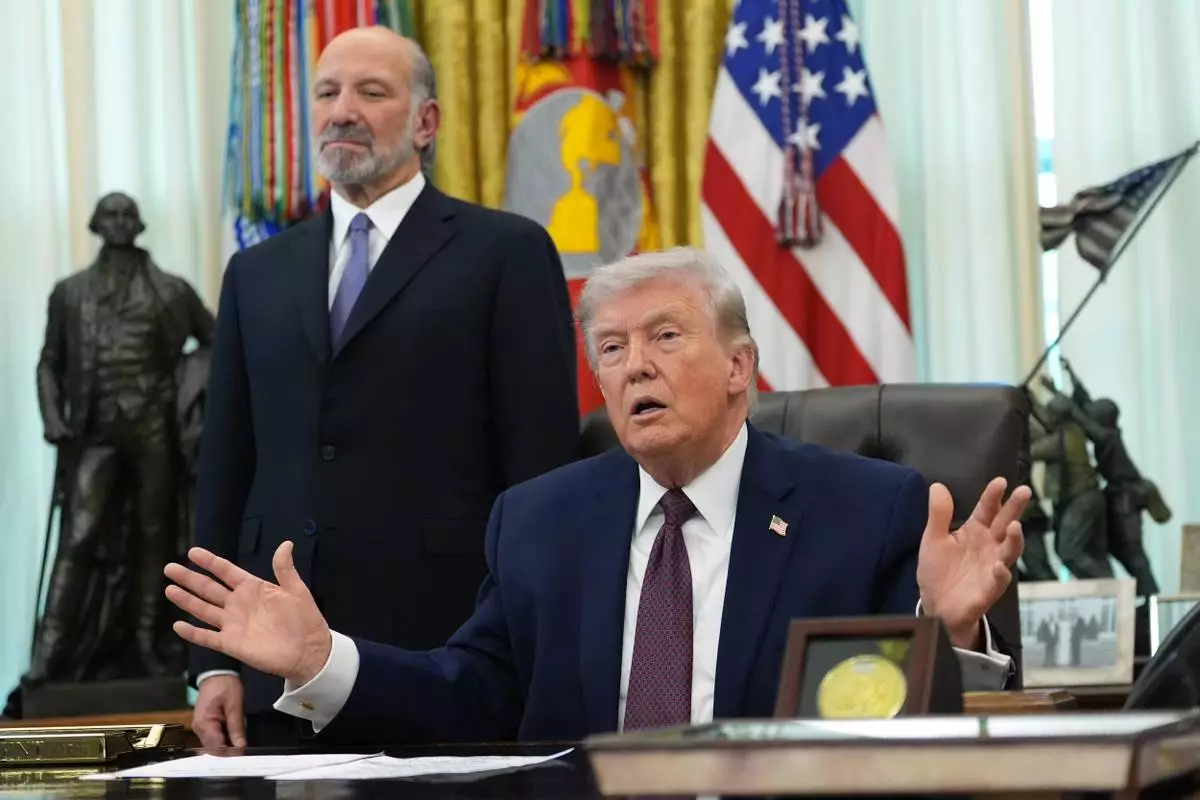
President Donald Trump answers questions from reporters after signing an executive order in the Oval Office of the White House Tuesday, March 31, 2026, in Washington, as Commerce Secretary Howard Lutnick listens. (AP Photo/Alex Brandon)
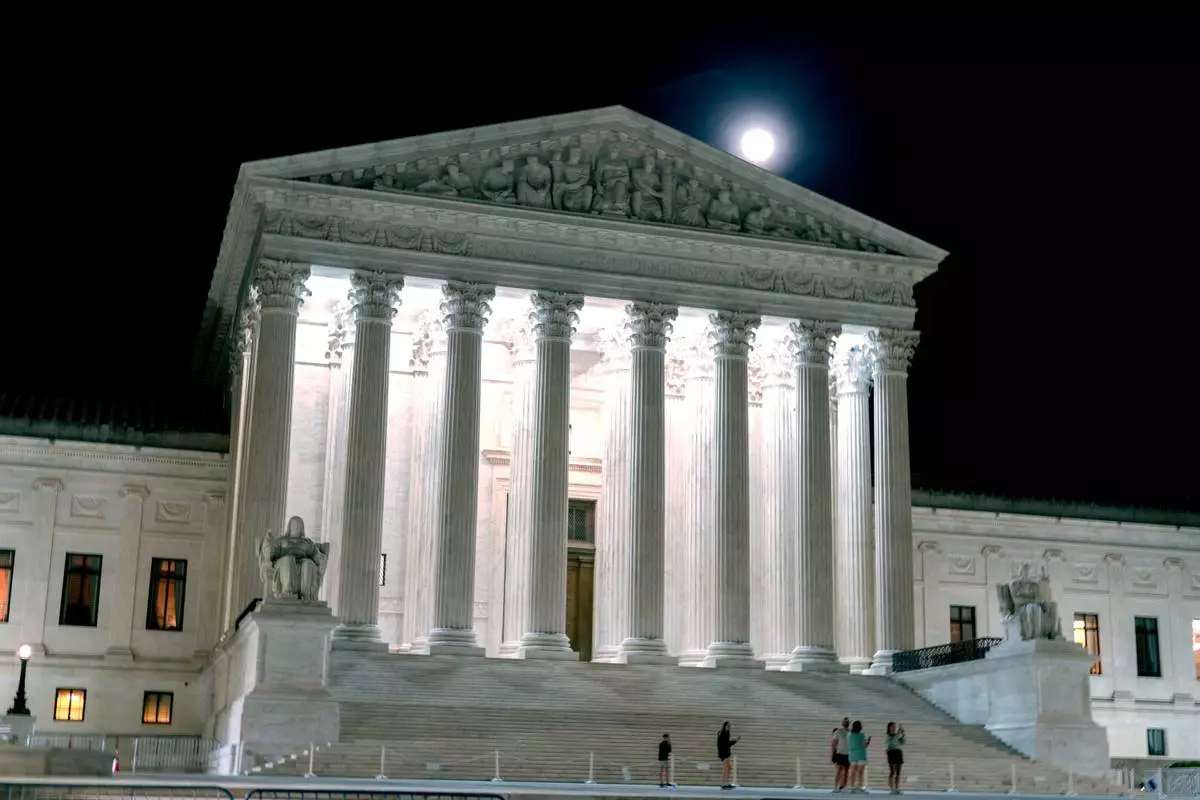
The U.S. Supreme Court is seen as the moon rises Tuesday, March 31, 2026, in Washington. (AP Photo/Jose Luis Magana)