Skip to Content Facebook Feature Image

Blizzard disrupts transport across Xinjiang

China

China

China

Blizzard disrupts transport across Xinjiang

2025-11-23 17:59 Last Updated At:22:47

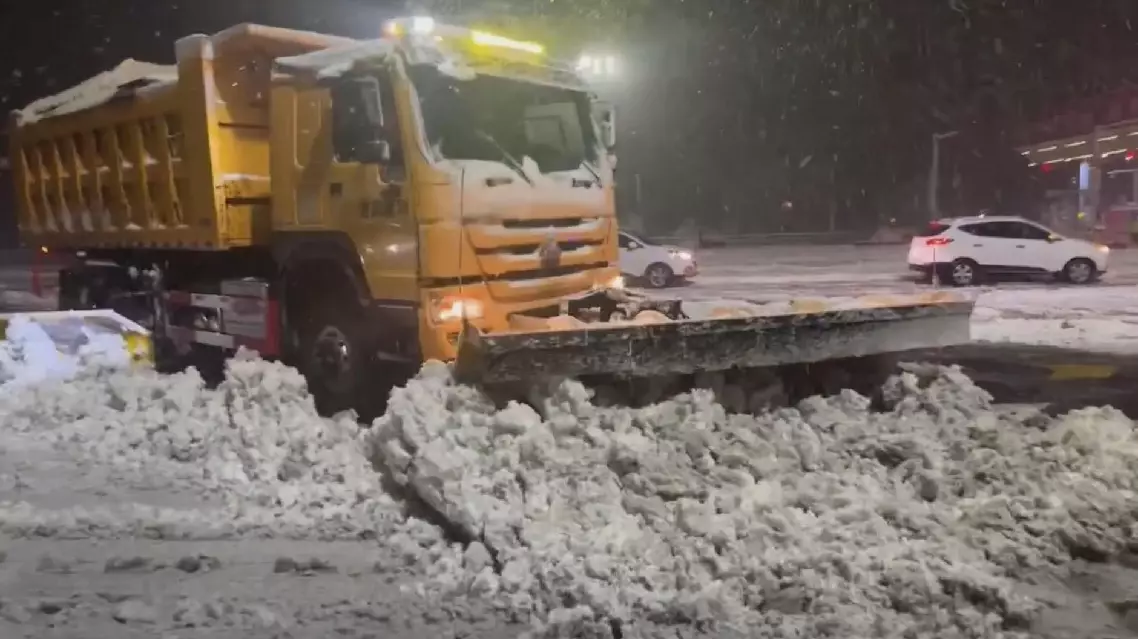
Heavy snow and strong winds swept across several parts of northwest China's Xinjiang Uygur Autonomous Region from Saturday night to Sunday, disrupting transport and prompting emergency operations across a number of cities.

In the regional capital Urumqi, the snow intensified on Saturday evening as temperatures fell below zero, leaving major roads covered with snow and ice. Local authorities deployed road crews and traffic police to clear the snow overnight, and conditions gradually improved by early Sunday.

East to Urumqi in Hami City, a blizzard in Tianshan Mountains reduced visibility early Sunday and caused icy roads, stranding vehicles on several key routes. Police carried out rescue operations and assisted stranded drivers as temperatures dropped to minus 20 degrees Celsius.

In western Xinjiang's Changji Hui Autonomous Prefecture, a sleet weather of rain and snow on Saturday night quickly froze urban roads, prompting the local authorities to arrange clearing overnight. Traffic along regional expressways was upset, where police urged drivers to slow down as visibility fell.

"We activated our severe-weather emergency plan right away, using mobile patrols, fixed-post duty performing and police-led convoys to eliminate road hazards. Where traffic was heavy, we diverted vehicles to prevent accidents and keep people safe on the road," said Julaiti, deputy leader of the Qitai County highway traffic police squadron.

In Mulei County, blowing snow on several expressways had vehicles stranded, prompting traffic police to conduct rescue operations in heavy snow and work to restore traffic flow.

"We've strengthened patrols in wind-prone and mountain sections and stepped up rescue efforts to ensure safe travel and keep the roads open," said Sheng Weiming, head of the Mulei County traffic police brigade.
Blizzard disrupts transport across Xinjiang
Blizzard disrupts transport across Xinjiang
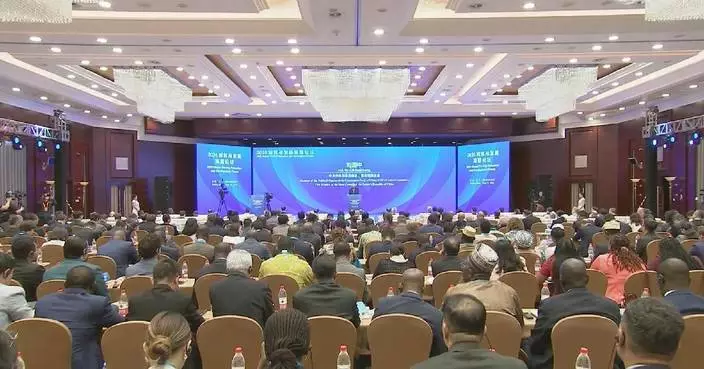
The energy price shock triggered by tensions in the Middle East is weighing on German consumers and industry, placing further downward pressure on Europe's largest economy.

Sustained high oil and natural gas prices are expected to hit both Germany's economy and the global outlook, according to analysts.

"The economic outlook for Germany, and indeed for the global economy, depends crucially on the course of the conflict. This means that we will face a shortage of energy -- oil and gas -- for the foreseeable future, leading to sustained high energy prices. Naturally, this puts a strain on the German economy and also on the global economy," said Timo Wollmershauser, a researcher at the ifo Institute for Economic Research.

Escalating tensions in the Middle East are also denting German consumer confidence, as households grow more cautious about the economic outlook as energy bills climb, according to analysts.

"Germany is facing a major energy price shock. Rising oil prices are eroding real incomes across the country. People are noticing the impact at the pump, for example, and consequently have less money available for other expenses. As a result, consumption will be affected. Overall, this will weaken economic development in Germany," said Oliver Holtemoller, vice president of the Halle Institute for Economic Research.

As growing uncertainty undermines the confidence of German firms and financial markets, further clouding the prospects for an economic recovery, several German research institutes have revised down their projections for the country's future growth.

While the U.S.-Israel-Iran conflict continues, much attention is focusing on the severe disruption to shipping through the Strait of Hormuz -- a vital passageway which typically carries around one-quarter of global seaborne oil trade.

The current crisis along the Strait of Hormuz came as part of Iran's response to U.S.-Israeli operations, which saw it restricting navigation through the strait and targeting any vessels associated with the U.S. or Israel.

German industry, consumers affected amid Mideast energy shock

German industry, consumers affected amid Mideast energy shock

Recommended Articles