ARLINGTON, Texas (AP) — Brandon Nimmo always thought he might be like David Wright and spend his entire career with the Mets, and try to chase a World Series title in New York.
All that changed after a phone call from president of baseball operations David Stearns, who told him a deal was in place to send the 10-year outfielder to the Texas Rangers for Gold Glove second baseman Marcus Semien, if the Mets' longest-tenured player was willing to waive the no-trade provision in his contract that still has five more seasons.
“Life centered around that we were going to be New York Mets until the very end,” said the 32-year-old Nimmo, who just celebrated his daughter's first birthday and completed a new home in Port St. Lucie, Florida, where the Mets hold spring training and he had planned to host teammates.
Nimmo, a fan favorite in New York for his consistent hustle and upbeat personality, did agree and the deal was announced Monday by both teams.
“These are always tough decisions. This was not easy," Stearns said. “Everyone here thinks very highly of Brandon.”
Among those Nimmo spoke to while considering the move was Jacob deGrom, a two-time Cy Young Award winner with the Mets who just finished his third season in Texas as the American League Comeback Player of the Year. Nimmo also spoke at length with Rangers president of baseball operations Chris Young, the former big league pitcher who was in spring training with the Mets when Nimmo was a minor leaguer.
“He is just as competitive, if not more competitive, than me. And so I got the feeling from him and from his support staff that this was not a rebuild. This is just a restructuring,” Nimmo said. “Both sides felt like this would be really beneficial for each side, and that both sides would still be in a very good position to win, actually an even better position to win coming out of this trade."
Nimmo is due annual salaries of $20.25 million each season through 2030. He signed a $162 million, eight-year contract to stay in New York when he was a free agent for the first time after the 2022 season. The left-handed hitter will get an additional $1 million assignment bonus from the Mets for waiving the no-trade provision. As part of the trade, the Mets will send Texas $5 million by Sept. 18.
New York drafted Nimmo 13th overall out of high school in the same 2011 amateur draft when Semien was taken in the sixth round by the Chicago White Sox out of college. That was a decade after Wright was a first-round pick by the Mets, who this summer retired his No. 5 jersey and put him in their hall of fame after playing with them from 2004-18.
Semien has three seasons and $72 million remaining — $26 million salaries each of the next two seasons and $20 million in 2028 — on the $175 million, seven-year contract he signed in December 2021. That was at the same time Texas, coming off a 102-loss season, also in free agency added World Series MVP shortstop Corey Seager on a $325 million, 10-year contract.
That half-billion dollar middle infield helped the Rangers win their only World Series title in 2023. But that is the only winning record the past nine seasons for the team that this year finished .500 (81-81) for the first time in franchise history.
With baseball’s most expensive opening-day roster this year, the Mets had a 45-24 record that was the best in the majors in mid-June. They then lost 55 of their final 93 games and missed the playoffs.
“I don’t know if it’s necessarily wanting to change the clubhouse dynamics," Stearns said. “I think it’s a recognition that what we did last year wasn’t good enough. And running back the exact same group wasn’t the right thing to do.”
Semien's trade came days after slugging right fielder Adolis García, switch-hitting catcher Jonah Heim and right-handed reliever Josh Sborz, three other players who also had significant roles in the Rangers' World Series championship, weren't offered contracts for 2026 and became free agents.
Nimmo will likely take over in right field in a Rangers outfield with young standouts Wyatt Langford and Evan Carter.
The 35-year-old Semien will become the Mets’ everyday second baseman after they used several players there last year. Jeff McNeil made the most starts there with 69. but also plays outfield.
Semien won his second Gold Glove this season, even though he missed the final 5 1/2 weeks after fouling a pitch off his foot Aug. 20. That was only the second time in his 13 big league seasons he has been on the injured list. He hit .230 with 15 homers, 62 RBIs and 62 runs in 127 games this year. The three-time All-Star has a .253 career batting average in 1,629 games with the White Sox (2013-14), the Athletics (2015-20), Toronto (2021) and Texas.
Nimmo has a .364 career on-base percentage in 1,066 career games, and has scored at least 81 runs in each of the past three seasons since a career-best 102 in 2022. This year, he hit .262 — the same as his career average — with single-season highs of 25 homers and 92 RBIs.
“Brandon Nimmo is very, very tough at-bat. ... He is a very smart, intelligent player, well-prepared, knows how to work an at-bat, work an opposing pitcher and we feel like fits the profile of player that is going to be very, very good for our lineup,” Young said. "It was a tough decision to move on from Marcus. Obviously we’re giving up something at second base but we felt like we could backfill that internally or potentially externally if the right opportunity is there.”
AP Baseball Writers Ron Blum and Mike Fitzpatrick contributed to this report.
AP MLB: https://apnews.com/hub/MLB
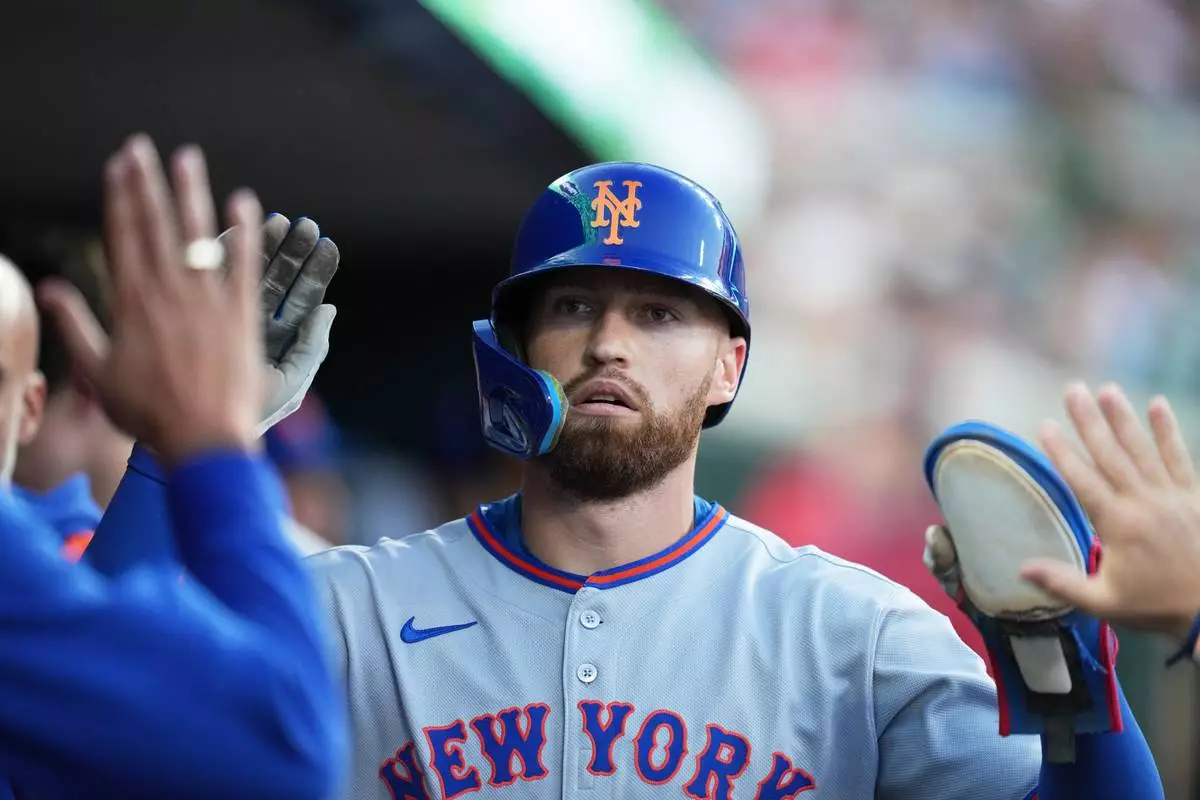
FILE - New York Mets' Brandon Nimmo celebrates in the dugout after scoring off of a sacrifice fly by Cedric Mullins during the fourth inning of a baseball game against the Detroit Tigers, Tuesday, Sept. 2, 2025, in Detroit. (AP Photo/Ryan Sun, File)
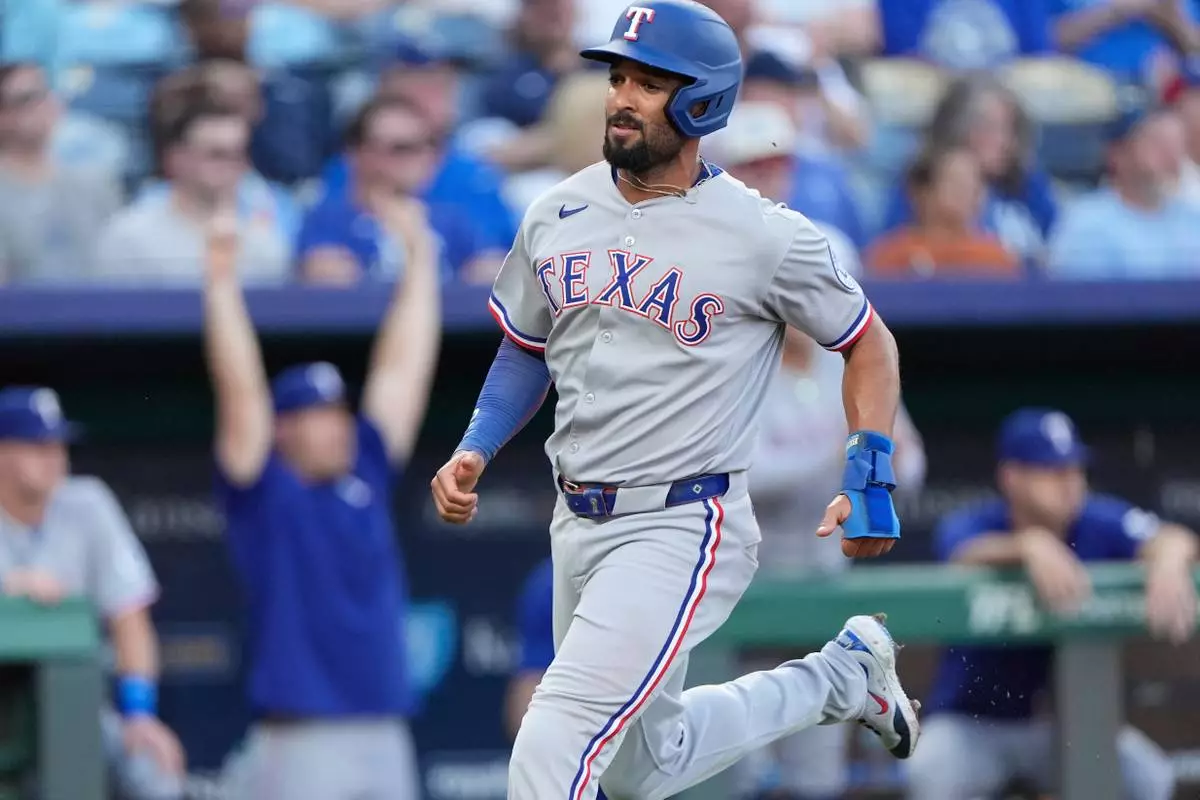
FILE - Texas Rangers' Marcus Semien runs home to score on an RBI single hit by Jonah Heim during the second inning of a baseball game against the Kansas City Royals, Monday, Aug. 18, 2025, in Kansas City, Mo. (AP Photo/Charlie Riedel, File)
NEW YORK (AP) — Stocks are rushing higher worldwide, and oil prices are easing Wednesday as hopes build that the war with Iran could end soon. That's even though some of the signals investors saw as hopeful are already under dispute, and several prior bouts of optimism in financial markets quickly got undercut by continued, fierce fighting in the war.
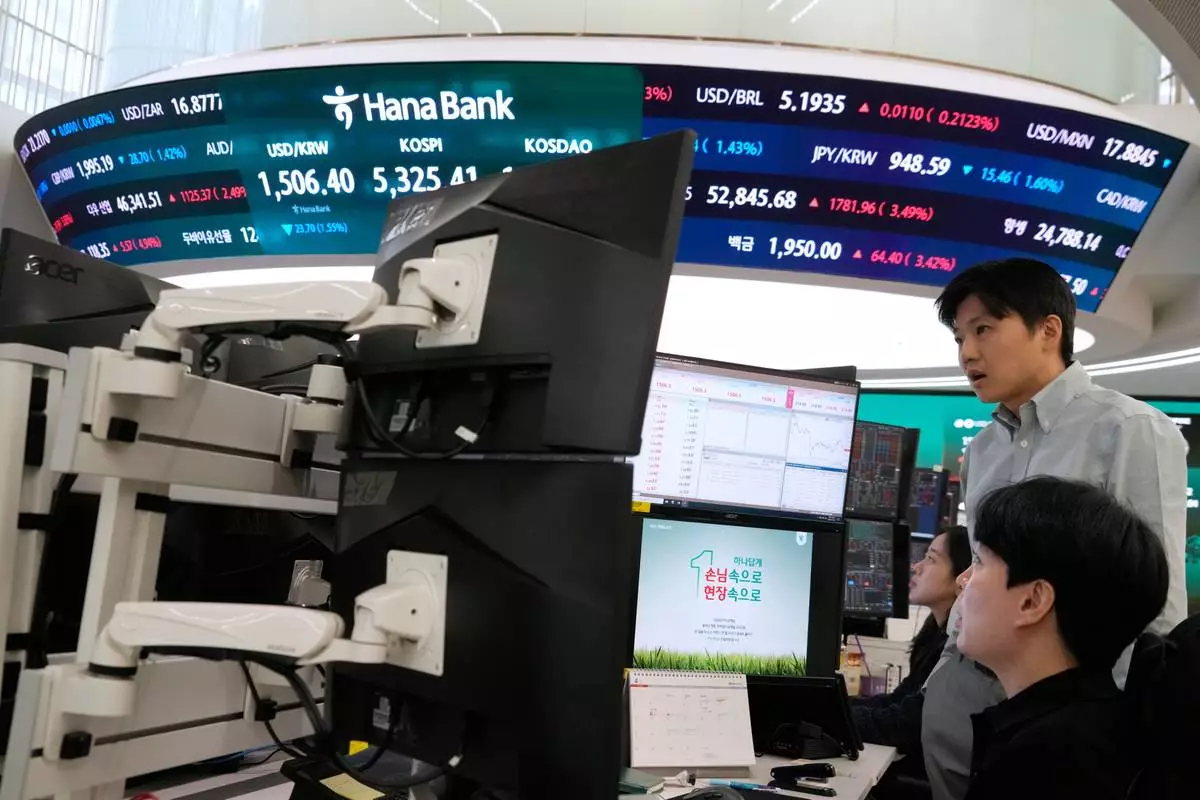
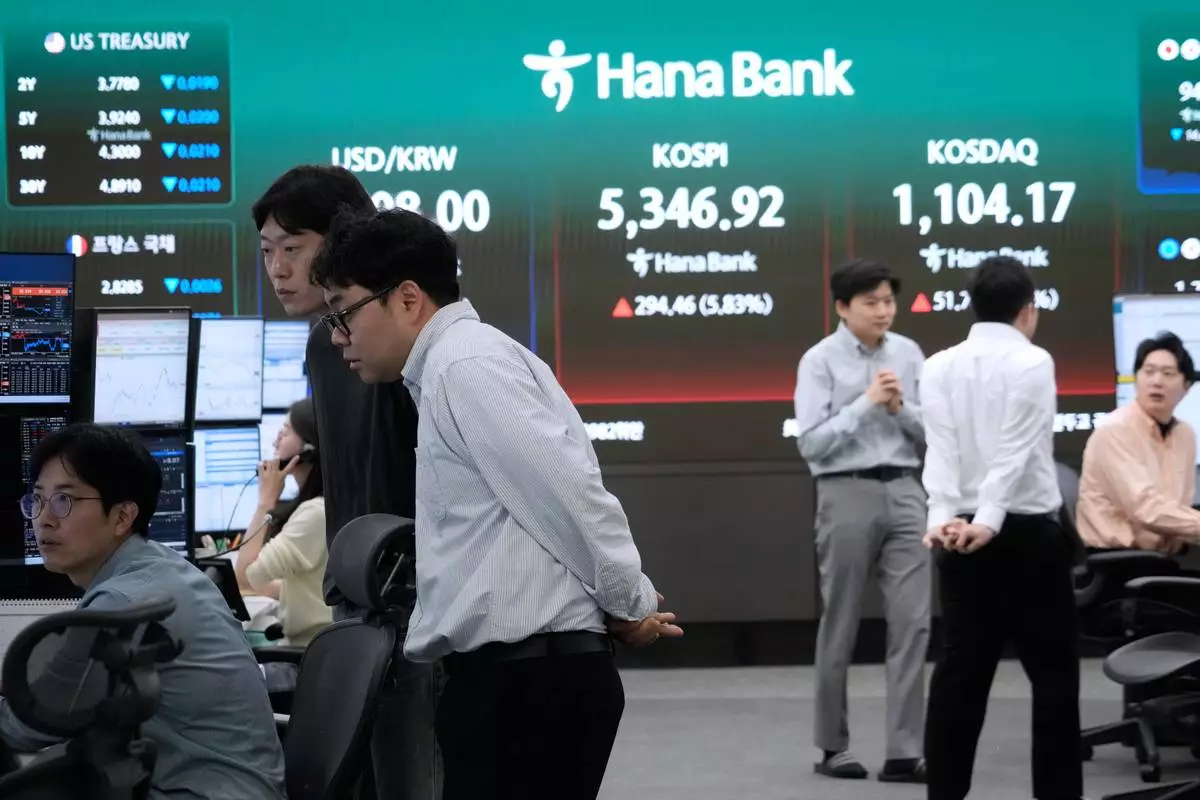
The S&P 500 rallied 0.9% and added to its leap from the day before, which was its best since last spring. That followed even bigger gains for stock markets across Europe and Asia, including an 8.4% surge in South Korea, which were catching up to Wall Street’s rally from Tuesday.
The Dow Jones Industrial Average was up 294 points, or 0.6%, as of 2:08 p.m. Eastern time, and the Nasdaq composite was 1.3% higher.
Oil prices also fell back toward $100 per barrel after President Donald Trump said late Tuesday that the U.S. military could end its offensive in two to three weeks.
That added to optimism following a couple tenuous signals of hope from earlier Tuesday that Wall Street latched onto, including a news report quoting Iran’s president as saying that it has “the necessary will to end the war” as long as certain requirements are met, including “guarantees to prevent a recurrence of aggression.”
The worry on Wall Street has been that the war may last a long time and keep oil and natural gas from the Persian Gulf out of global markets, which could create a brutal blast of inflation.
But hope has been quick to reverse to doubt on Wall Street, triggering manic swings back and forth for financial markets since the war with Iran began. Trump has also made statements that lifted markets, only to see the gains quickly disappear after increasing his military threats.
Shortly before Wall Street began trading on Wednesday, Trump claimed in a post on his social media network that Iran “has just asked the United States of America for a CEASEFIRE!”
“We will consider when Hormuz Strait is open, free, and clear. Until then, we are blasting Iran into oblivion or, as they say, back to the Stone Ages!!!”
But Iran’s Foreign Ministry spokesman, Esmail Baghaei, quickly called that claim “false and baseless,” according to a report on Iranian state television.
Oil prices also remain high, even if they’ve eased recently. The price for a barrel of Brent crude oil, the international standard, was sitting at $101.51 following its declines, which is still up from roughly $70 before the war began.
U.S. gasoline prices rose again overnight to a national average of $4.06 per gallon, according to the auto club AAA.
Iran, meanwhile, hit an oil tanker off the coast of Qatar and Kuwait’s airport on Wednesday while airstrikes battered Tehran as the fighting continued. Iran also continues to hold a grip on the Strait of Hormuz, where a fifth of the world’s traded oil passes during peacetime.
“De-escalation hopes have given markets a lift, but we think the effects of the war would, in many cases, persist even if the war did end soon,” Thomas Mathews, head of markets, Asia Pacific at Capital Economics, said in a research note Wednesday.
“It’s worth thinking through how markets might fare if the war were to end ‘very soon,’” he wrote. “Do markets have further to recover if sentiment continues to improve? The answer is almost certainly yes.”
The White House said Trump will deliver a public address Wednesday evening on the Iran war.
On Wall Street, most stocks rose as Big Tech powered the move higher. Gains of 3.8% for Alphabet and 0.8% for Nvidia were two of the strongest forces lifting the S&P 500.
Eli Lilly climbed 5.1% after U.S. regulators approved its GLP-1 pill for weight loss.
Such gains have pulled the S&P 500, which sits at the heart of many 401(k) accounts, back to within 5.6% of its all-time high set early this year. Just on Monday, the index briefly neared a 10% drop from its record, a steep-enough fall that professional investors have a name for it: a “correction.”
Nike sank 14.5% even though it reported a stronger profit for the latest quarter than expected. Analysts said it gave some lackluster financial forecasts.
Hasbro fell 4.8% after the toy company found someone had gained unauthorized access to its computer network and is working to assess the full impact.
Energy companies fell broadly as oil prices eased. Exxon Mobil slumped 5% and Chevron fell 4.9%.
In stock markets abroad, indexes leaped more than 2% in France and Germany. Asian markets had even bigger gains.
Tokyo’s Nikkei 225 jumped 5.2% after a survey showed business sentiment for major Japanese manufacturers improved despite worries about the Iran war.
In the bond market, Treasury yields held relatively steady after a report said U.S. retailers made more money in February than economists expected. A separate report said U.S. manufacturing growth last month was slightly faster than economists expected.
The 10-year Treasury yield rose to 4.32% from 4.30% late Tuesday.
AP Business Writers Chan Ho-him and Matt Ott contributed.
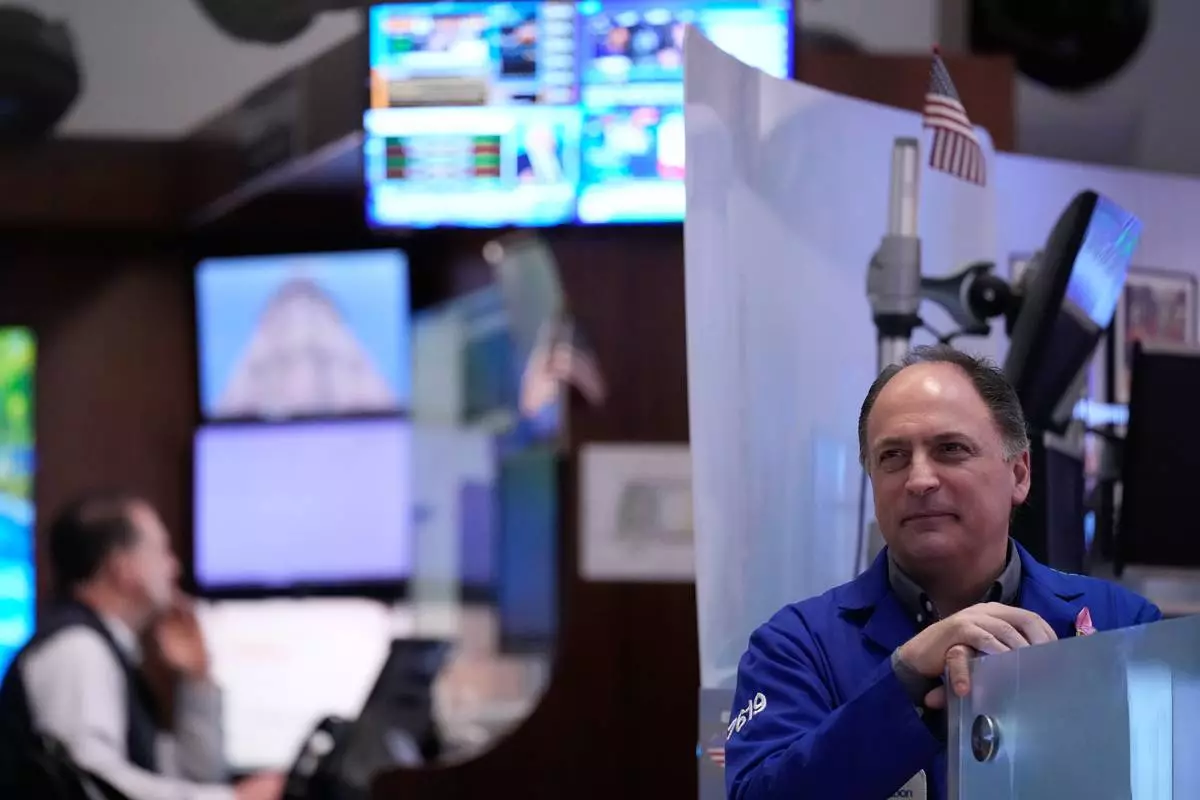
James Conti works on the floor at the New York Stock Exchange in New York, Tuesday, March 31, 2026. (AP Photo/Seth Wenig)
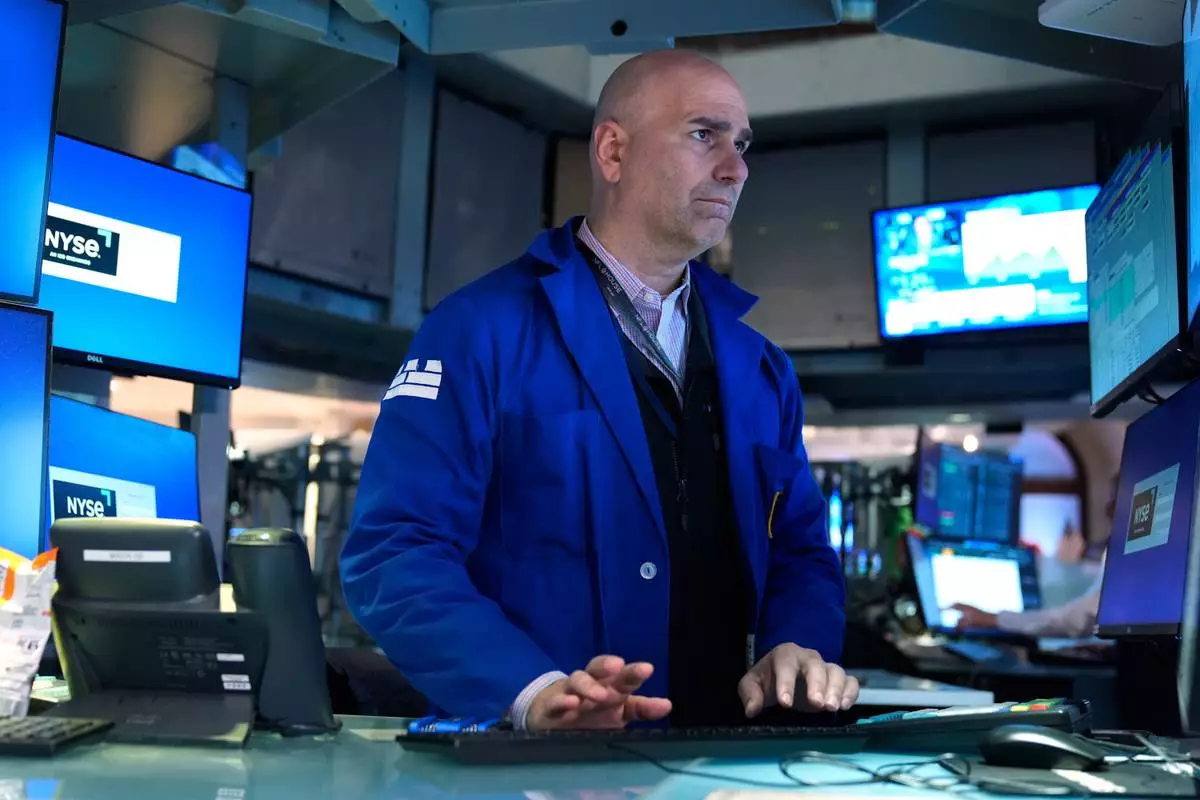
Philip Finale works on the floor at the New York Stock Exchange in New York, Tuesday, March 31, 2026. (AP Photo/Seth Wenig)
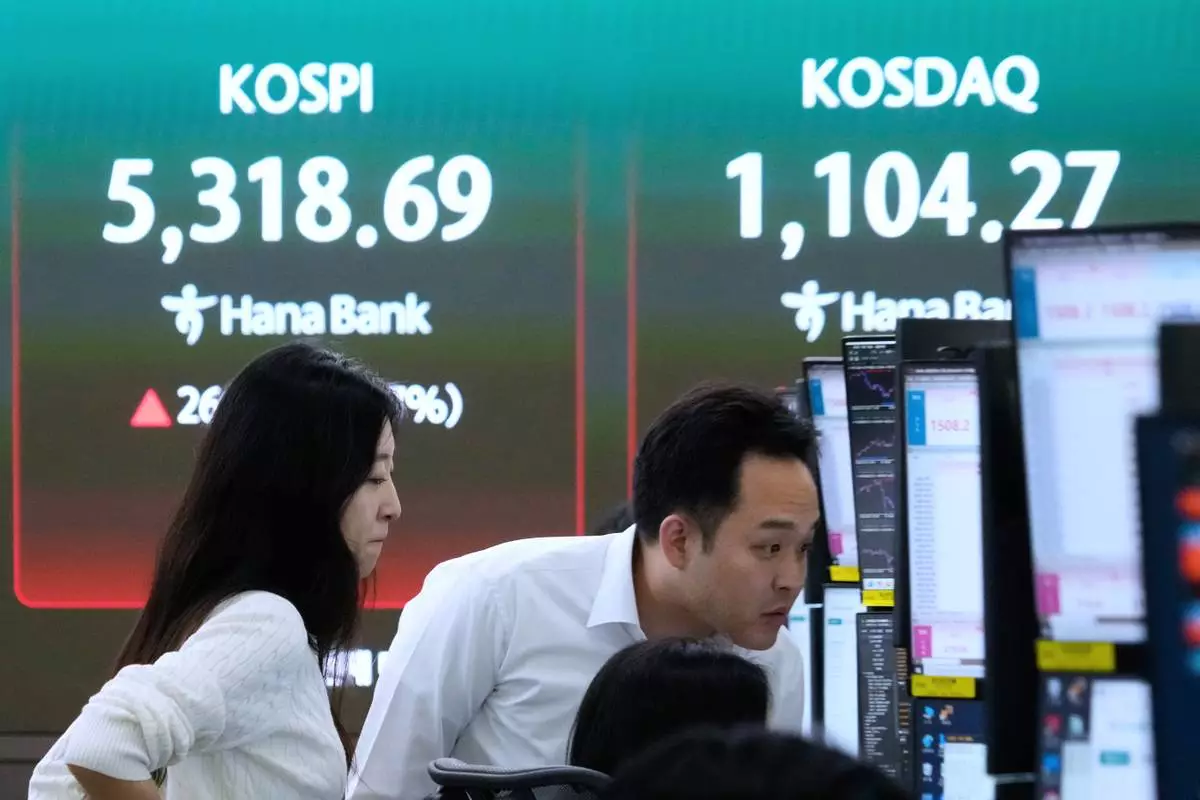
Currency traders watch monitors near a screen showing the Korea Composite Stock Price Index (KOSPI), left, at the foreign exchange dealing room of the Hana Bank headquarters in Seoul, South Korea, Wednesday, April 1, 2026. (AP Photo/Ahn Young-joon)
Currency traders watch monitors near a screen showing the Korea Composite Stock Price Index (KOSPI), top center, and the foreign exchange rate between U.S. dollar and South Korean won, top center left, at the foreign exchange dealing room of the Hana Bank headquarters in Seoul, South Korea, Wednesday, April 1, 2026. (AP Photo/Ahn Young-joon)
Currency traders work at the foreign exchange dealing room of the Hana Bank headquarters in Seoul, South Korea, Wednesday, April 1, 2026. (AP Photo/Ahn Young-joon)
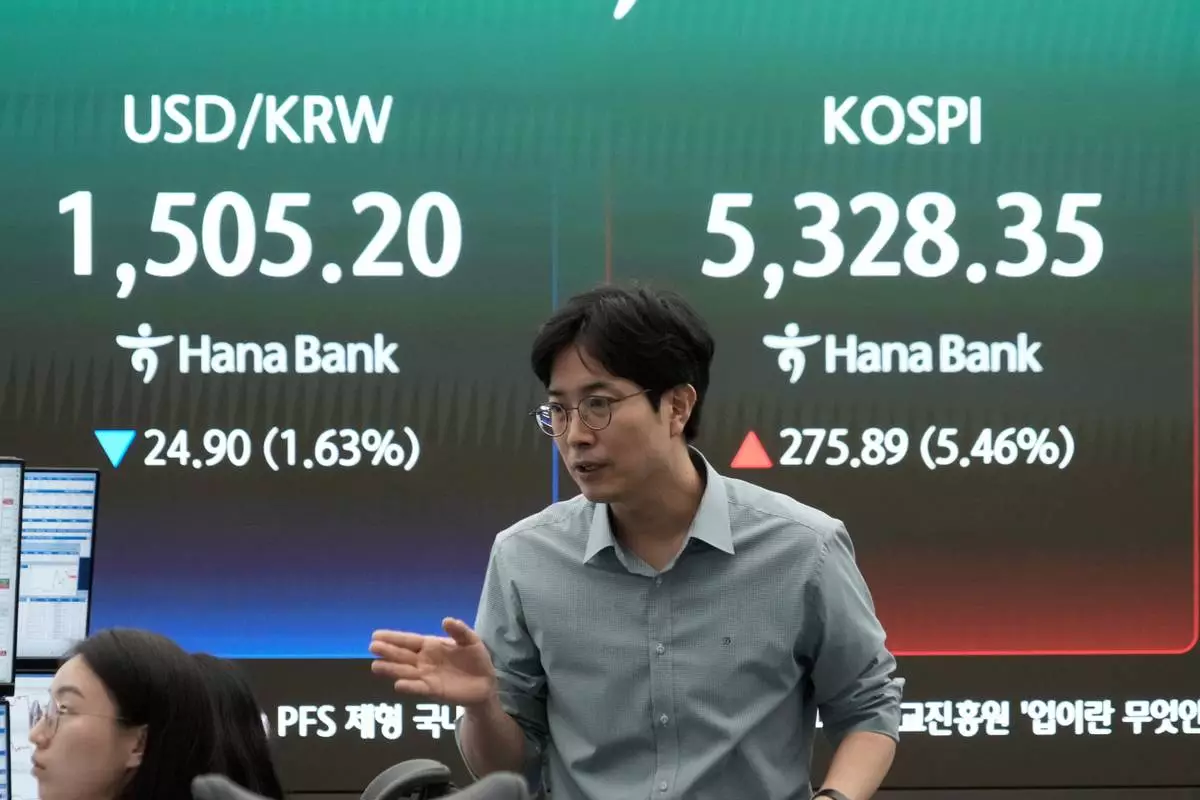
A currency trader reacts near a screen showing the Korea Composite Stock Price Index (KOSPI), right, and the foreign exchange rate between U.S. dollar and South Korean won at the foreign exchange dealing room of the Hana Bank headquarters in Seoul, South Korea, Wednesday, April 1, 2026. (AP Photo/Ahn Young-joon)
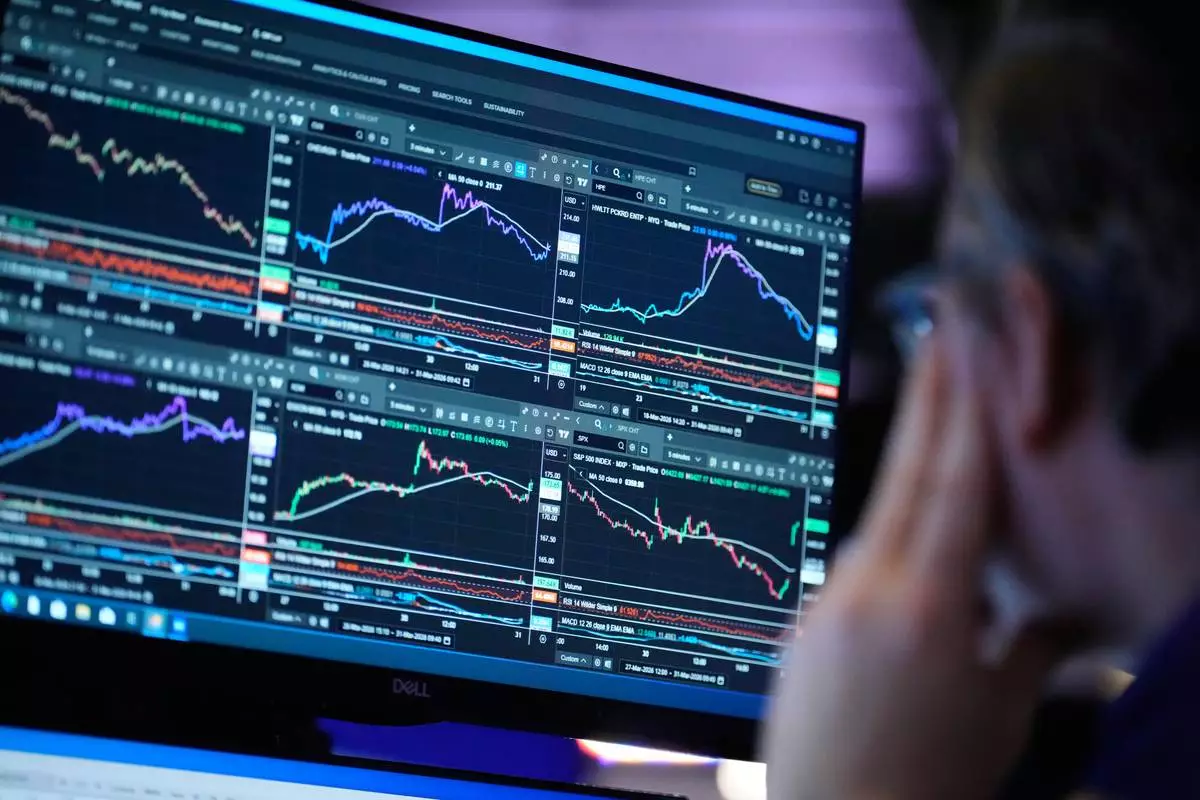
A screen displays financial information on the floor at the New York Stock Exchange in New York, Tuesday, March 31, 2026. (AP Photo/Seth Wenig)