WASHINGTON (AP) — President Donald Trump said Tuesday his plan to end the war in Ukraine has been “fine-tuned” and he’s sending envoy Steve Witkoff to meet with Russian President Vladimir Putin and Army Secretary Dan Driscoll to meet with Ukrainian officials.
Trump suggested he could eventually meet with Putin and Ukrainian President Volodymyr Zelenskyy, but not until further progress has been made in negotiations. Speaking to reporters on Tuesday evening aboard Air Force One, Trump said resolving the war was difficult, and described what had been a 28-point plan as a work in progress. “That was not a plan — it was a concept,” Trump said.
Click to Gallery
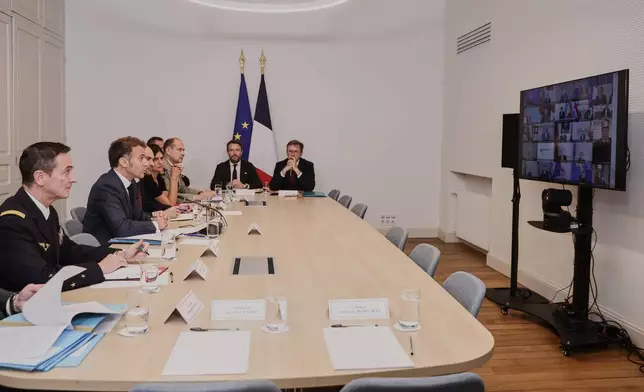
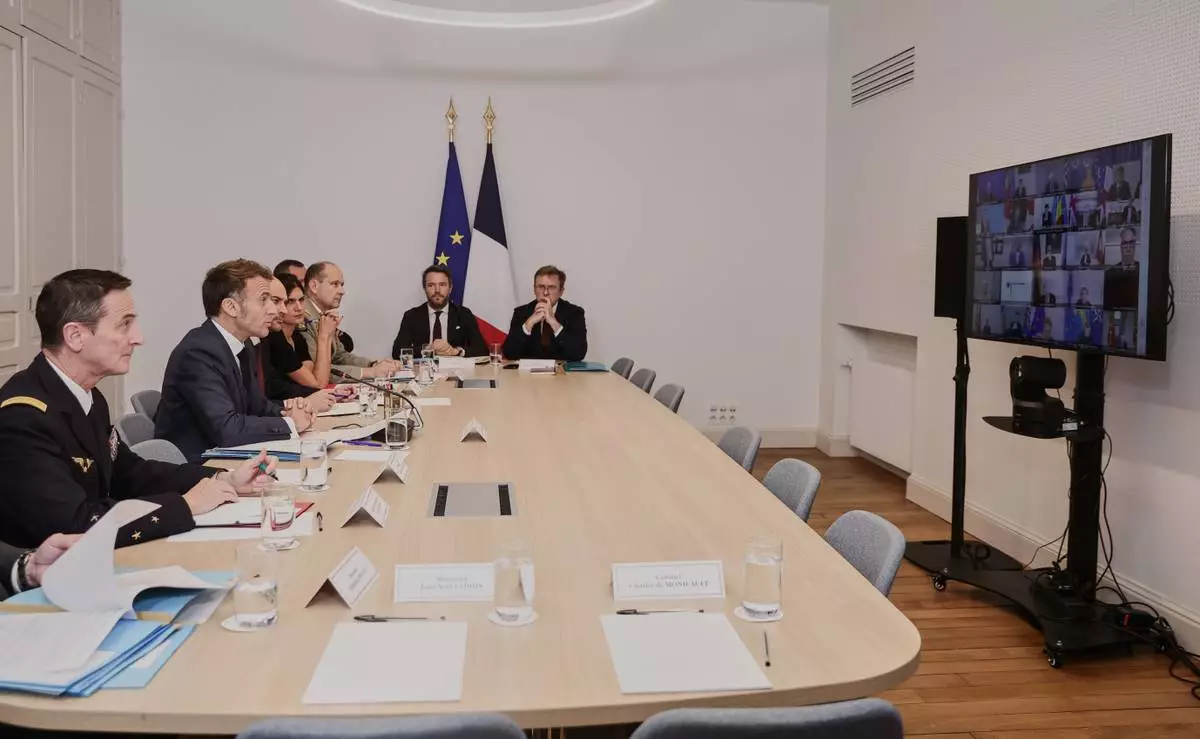
France's Chief of the Defense Staff General Fabien Mandon, left, and French President Emmanuel Macron, second left, attend a video conference of the 'Coalition of the Willing' on Ukraine at the Elysee Palace in Paris, France, Tuesday, Nov. 25, 2025. (Teresa Saurez, Pool Photo via AP)
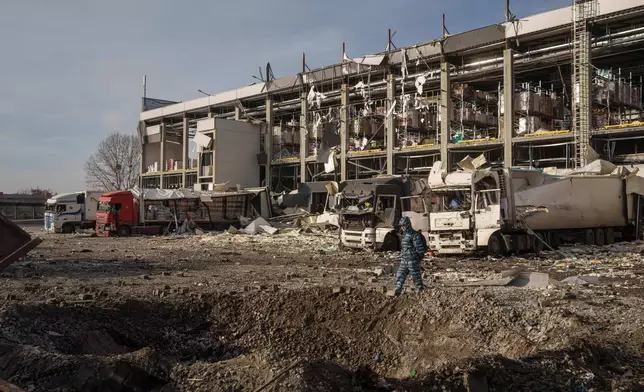
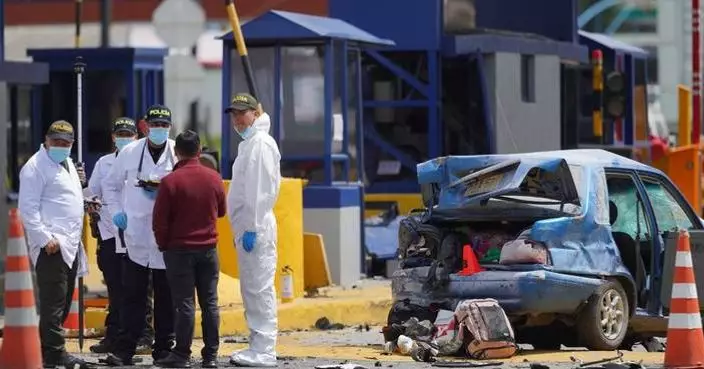
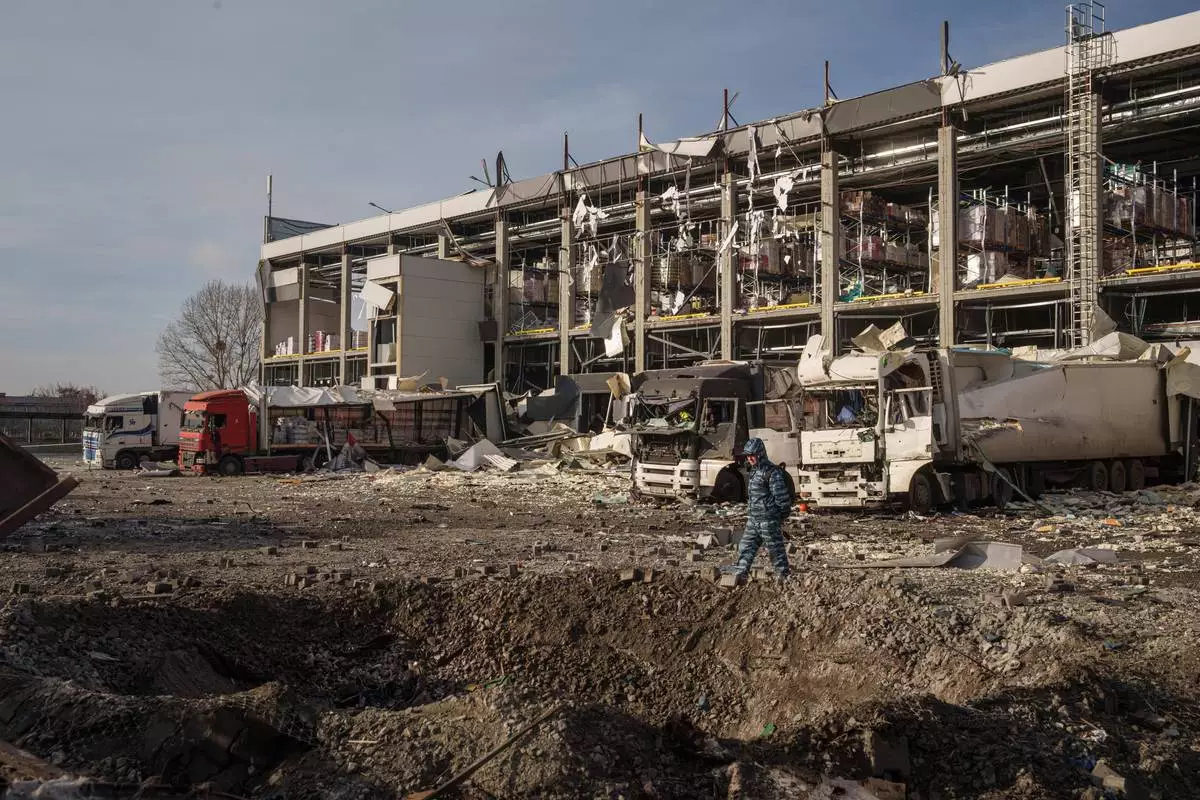
A security guard looks at a crater in front of a Novus logistics center damaged after a Russian strike on Kyiv, Ukraine, on Tuesday, Nov. 25, 2025. (AP Photo/Evgeniy Maloletka)
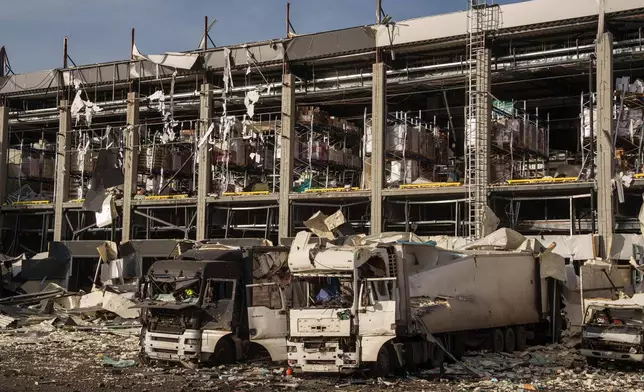
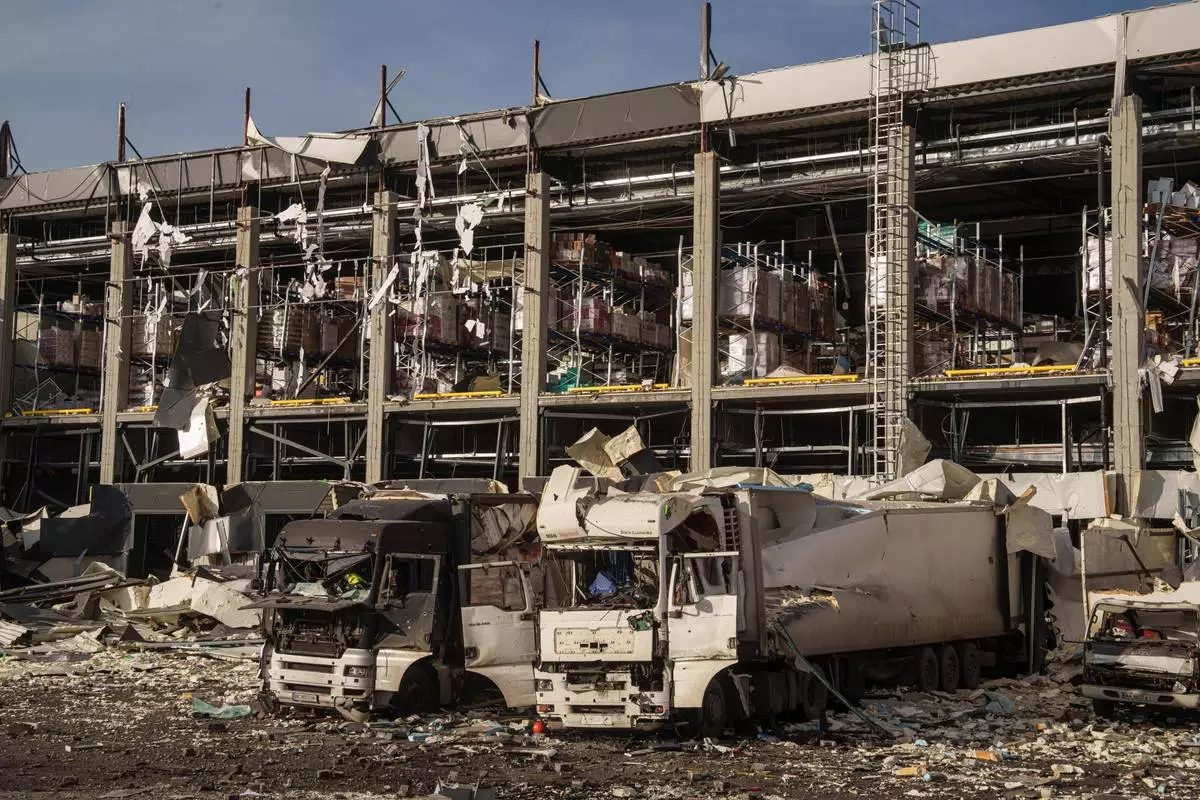
A Novus logistics center is seen damaged after a Russian strike on Kyiv, Ukraine, on Tuesday, Nov. 25, 2025. (AP Photo/Evgeniy Maloletka)
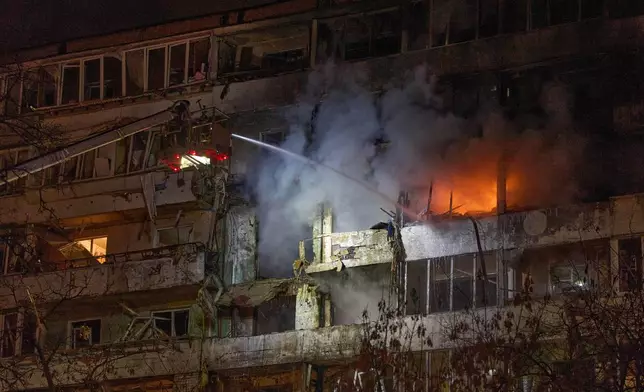
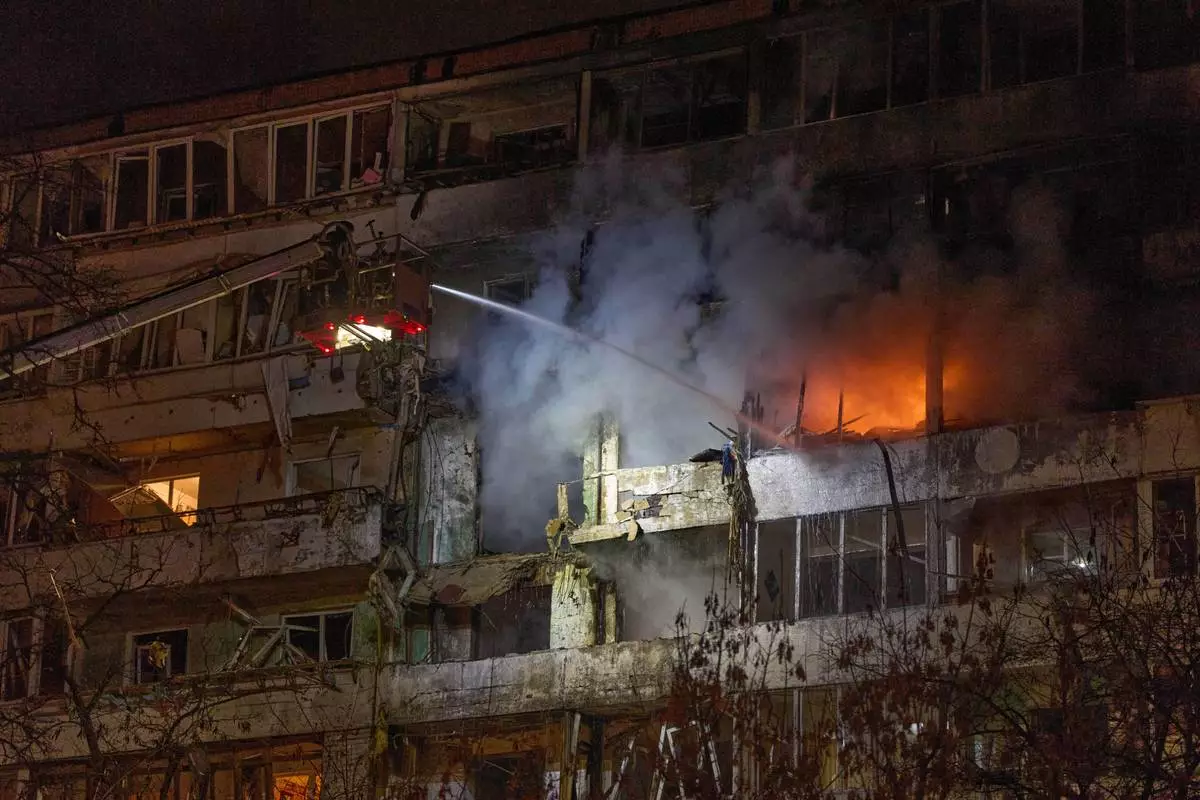
Firefighters put out the fire after a drone hit a multi-storey residential building during Russia's night drone attack in Kyiv, Ukraine, Tuesday, Nov. 25, 2025. (AP Photo/Efrem Lukatsky)
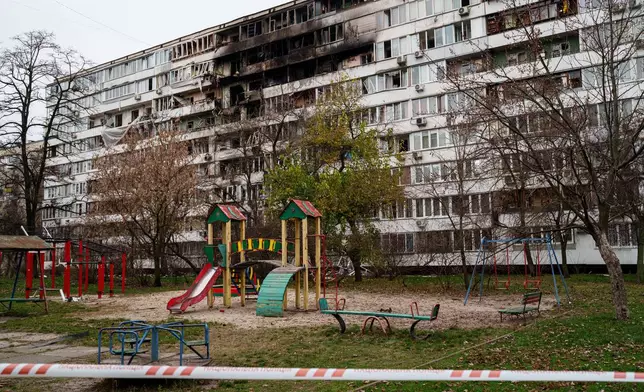
A residential building is seen heavily damaged after a Russian strike on Kyiv, Ukraine, on Tuesday, Nov. 25, 2025. (AP Photo/Evgeniy Maloletka)
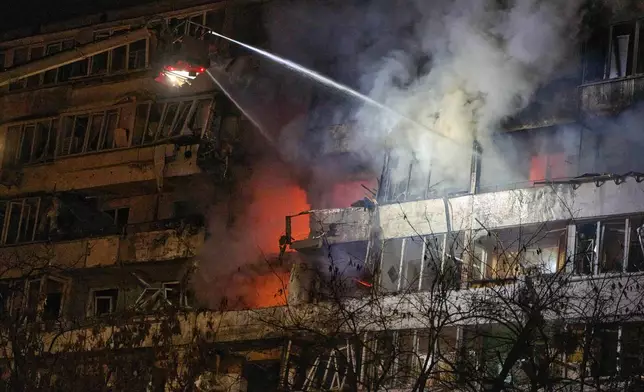
Firefighters put out the fire after a drone hit a multi-storey residential building during Russia's night drone attack in Kyiv, Ukraine, Tuesday, Nov. 25, 2025. (AP Photo/Efrem Lukatsky)
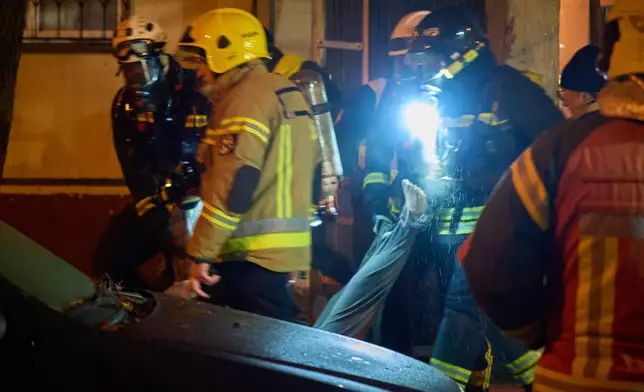
Rescuers carry the body of a civilian who was killed as a drone hit a multi-storey residential building during Russia's night drone attack in Kyiv, Ukraine, Tuesday, Nov. 25, 2025. (AP Photo/Efrem Lukatsky)
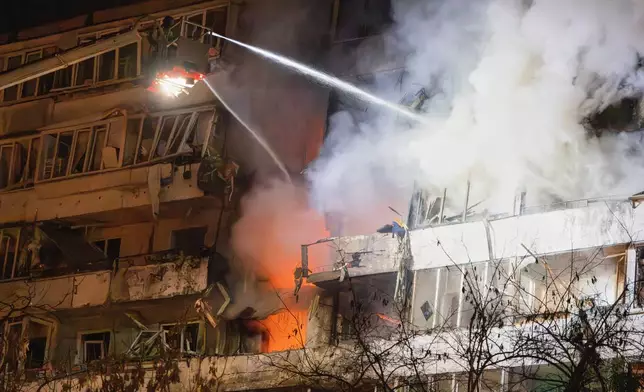
Firefighters put out the fire after a drone hit a multi-storey residential building during Russia's night drone attack in Kyiv, Ukraine, Tuesday, Nov. 25, 2025. (AP Photo/Efrem Lukatsky)
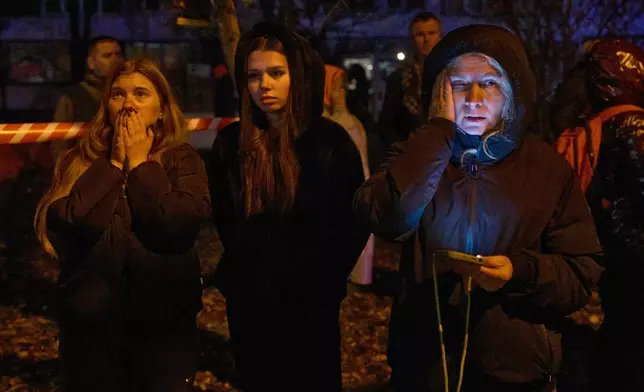
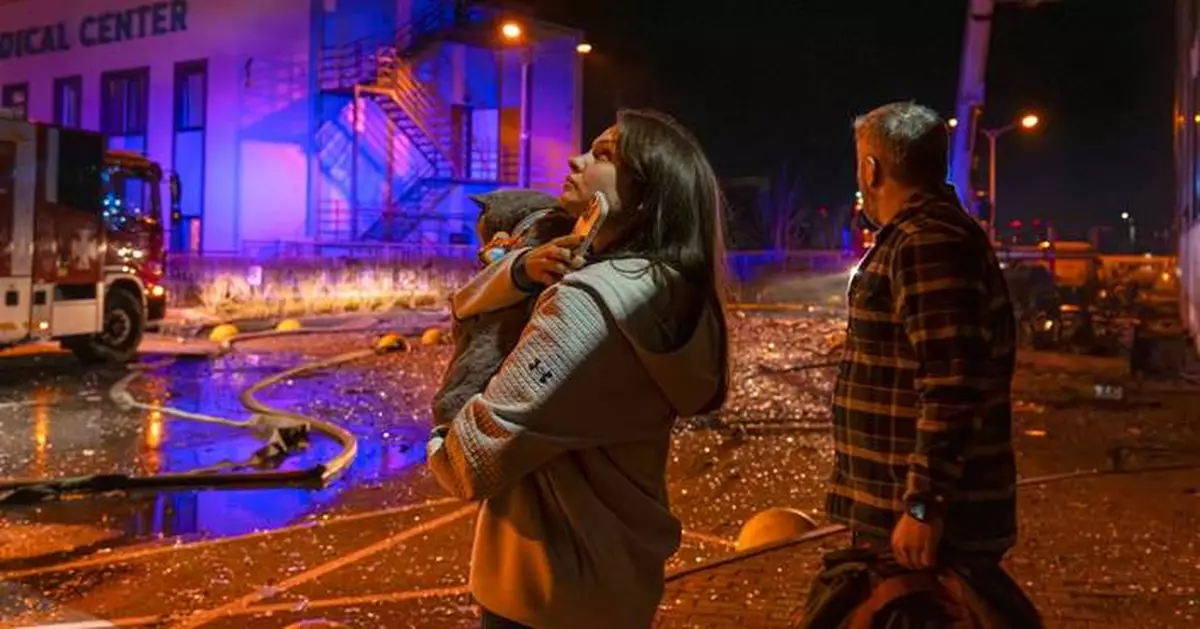
Local residents react as they watch their burning home after a drone hit a multi-storey residential building during Russia's night drone attack in Kyiv, Ukraine, Tuesday, Nov. 25, 2025. (AP Photo/Efrem Lukatsky)
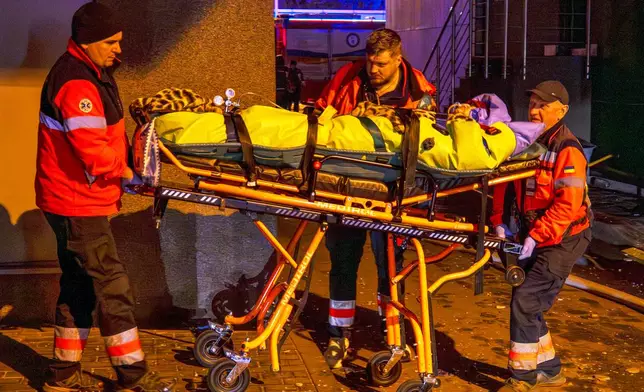
Rescue workers carry a person from a residential building following a Russian attack in Kyiv, Ukraine, Tuesday, Nov. 25, 2025. (AP Photo/Dan Bashakov)
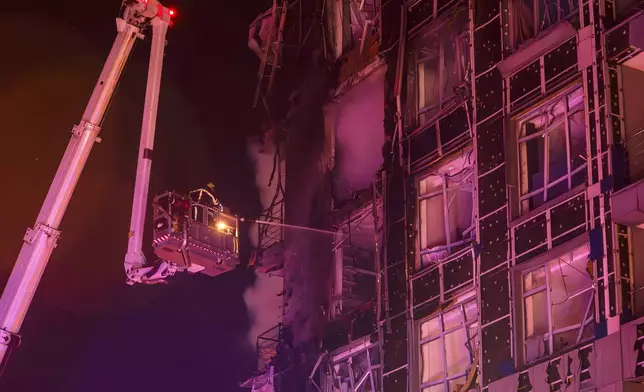
Emergency services personnel work to extinguish a fire following a Russian attack in Kyiv, Ukraine, Tuesday, Nov. 25, 2025. (AP Photo/Dan Bashakov)
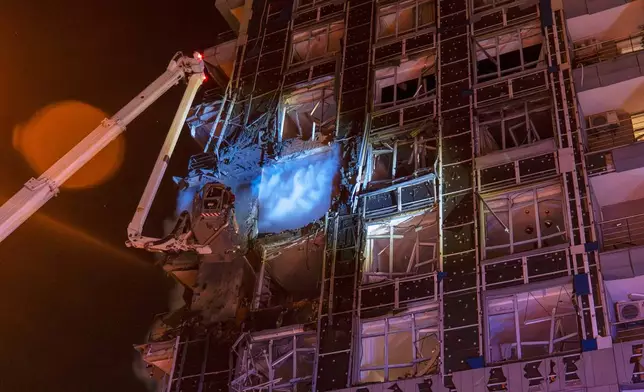
Emergency services personnel work to extinguish a fire following a Russian attack in Kyiv, Ukraine, Tuesday, Nov. 25, 2025. (AP Photo/Dan Bashakov)
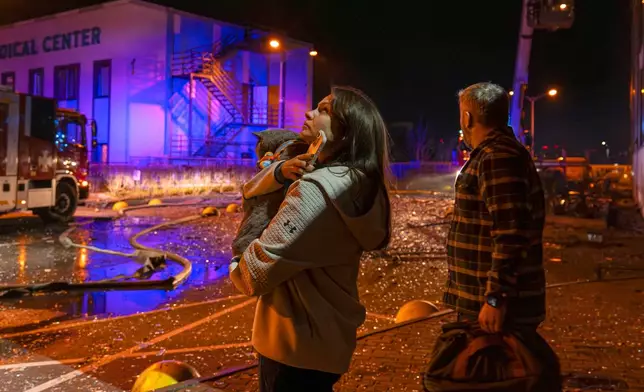
People watch as emergency services personnel work to extinguish a fire following a Russian attack in Kyiv, Ukraine, Tuesday, Nov. 25, 2025. (AP Photo/Dan Bashakov)
Trump’s plan for ending the nearly four-year war emerged last week. It heavily favored Russia, prompting Zelenskyy to quickly engage with American negotiators. European leaders, fearing for their own future facing Russian aggression but apparently sidelined by Trump in drawing up the proposal, scrambled to steer the negotiations toward accommodating their concerns.
Trump said he believed Witkoff would be meeting with Putin next week in Moscow, with his son-in-law Jared Kushner potentially joining the meeting. “People are starting to realize it’s a good deal for both parties,” Trump said.
The president played down the element of his plan that would require Ukraine to cede territory to Russia, suggesting that Russian forces were already likely to seize the land they're seeking.
“The way it’s going, if you look, it’s just moving in one direction," Trump said. "So eventually that’s land that over the next couple of months might be gotten by Russia anyway.”
At the center of Trump’s plan is the call on Ukraine to concede the entirety of its eastern Donbas region, even though a vast swath of that land remains in Ukrainian control. Analysts at the independent Institute for the Study of War have estimated it would take several years for the Russian military to completely seize the territory, based on its current rate of advances.
Trump made his comments after Driscoll held talks late Monday and throughout Tuesday with Russian officials in Abu Dhabi, United Arab Emirates, to discuss the emerging proposal.
“The talks are going well and we remain optimistic,” Lt. Col. Jeff Tolbert, spokesman for the Army secretary, said in a statement. Witkoff, a real estate developer turned diplomat, has been Trump’s chief interlocutor with Putin, while Driscoll, who is close to Vance, has stepped up his involvement in the administration’s peace push in recent days.
As the talks were taking place, Russia launched a wave of overnight attacks on Ukraine’s capital, Kyiv, with at least seven people killed in strikes that hit city buildings and energy infrastructure. A Ukrainian attack on southern Russia killed three people and damaged homes, authorities said.
Trump spoke to reporters after Bloomberg News published a transcript of an Oct. 14 call between Witkoff and Putin’s foreign policy adviser Yuri Ushakov where Witkoff coached his counterpart on how Putin should handle a call with Trump.
Trump downplayed Witkoff’s reported approach as “a very standard form of negotiation.”
But U.S. Rep. Don Bacon, a Nebraska Republican who has been critical of Trump’s approach to Ukraine, said the transcript showed Witkoff favors the Russians. “He cannot be trusted to lead these negotiations. Would a Russian paid agent do less than he? He should be fired,” Bacon said on social media.
Bloomberg said it reviewed a recording of the call, but did not say how it obtained access to the recording. The Associated Press has not independently verified the transcript.
French President Emmanuel Macron said Tuesday that peace efforts are gathering momentum and “are clearly at a crucial juncture.”
He spoke after senior U.S. and Ukrainian officials met in Geneva on Sunday and a virtual “coalition of the willing” meeting of Ukraine’s European allies took place on Tuesday. U.S. Secretary of State Marco Rubio took part in both gatherings.
“Negotiations are getting a new impetus. And we should seize this momentum,” he said during the video conference meeting of countries, led by France and the U.K., that could help police any ceasefire with Russia.
British Prime Minister Keir Starmer said of the talks: “I do think we are moving in a positive direction and indications today that in large part the majority of the text, (Zelenskyy) is indicating, can be accepted.”
Oleksandr Bevz, one of the Ukrainian delegates at the Geneva talks, however, cautioned that it was “very premature to say that something is agreed upon."
In an interview with The Associated Press in Kyiv late Tuesday, he declined to discuss the specifics of any amendments to Trump's plan, but said the U.S. was aware that the strength of security guarantees for Ukraine would “define the sustainability of the deal” and was “the part making this deal real and enforceable.”
Bevz earlier told the AP that the number of points in the proposed settlement was reduced, but he denied reports that the 28-point U.S. peace plan now consisted of 19 points.
”(The document) is going to continue to change. We can confirm that it was reduced to take out points not relating to Ukraine, to exclude duplicates and for editing purposes," Bevz said, adding that some points relating solely to relations between Russia and the U.S. were excluded.
Zelenskyy said late Monday that “the list of necessary steps to end the war can become workable." He said he planned to discuss “sensitive” outstanding issues with Trump.
Rustem Umerov, a senior adviser to Zelenskyy, posted on X on Tuesday that Zelenskyy hoped to finalize a deal with Trump “at the earliest suitable date in November.”
Russian officials have been reserved in their comments on the peace plan. Russian Foreign Minister Sergey Lavrov said Tuesday that Moscow is in touch with U.S. officials about peace efforts.
"We expect them to provide us with a version they consider an interim one in terms of completing the phase of coordinating this text with the Europeans and the Ukrainians,” Lavrov said.
European leaders have cautioned that the road to peace will be long.
Russia fired 22 missiles of various types and more than 460 drones at Ukraine overnight, Zelenskyy wrote on Telegram. The strikes knocked out water, electricity and heat in parts of Kyiv. Images showed a large fire spreading in a nine-story residential building in Kyiv’s eastern Dniprovskyi district.
Mayor Vitalii Klitschko said 20 people were wounded in Kyiv. The Russian Defense Ministry said it targeted military-industrial facilities and energy assets. The strikes were a response to Ukrainian attacks on civilian objects in Russia, the ministry said.
Liubov Petrivna, a 90-year-old resident of a damaged building in the Dniprovskyi district, told the AP that “absolutely everything” in her apartment was shattered by the strike and “glass rained down” on her.
Petrivna said that she didn't believe in the peace plan now under discussion.
“No one will ever do anything about it,” she said. Russian President Vladimir Putin "won’t stop until he finishes us off.”
The overnight Ukrainian drone attack on Russia’s southern region of Krasnodar was “one of the longest and most massive” and wounded six people, Gov. Veniamin Kondratyev said.
Russian air defenses destroyed 249 Ukrainian drones overnight above various Russian regions and the occupied Crimean Peninsula, the Russian Defense Ministry said Tuesday.
Ukraine said that its drones and missiles struck an aviation repair plant and a drone production facility, as well as an oil refinery and an oil terminal.
It was the fourth-largest Ukrainian drone attack on Russia since the start of the war on Feb. 24, 2022, according to an AP tally.
Isobel Koshiw reported from Kyiv, Ukraine. John Leicester in Paris, Stephen McGrath in Leamington Spa, England, Chris Megerian in Washington and Josh Boak in West Palm Beach, Florida, contributed to this report.
France's Chief of the Defense Staff General Fabien Mandon, left, and French President Emmanuel Macron, second left, attend a video conference of the 'Coalition of the Willing' on Ukraine at the Elysee Palace in Paris, France, Tuesday, Nov. 25, 2025. (Teresa Saurez, Pool Photo via AP)
A security guard looks at a crater in front of a Novus logistics center damaged after a Russian strike on Kyiv, Ukraine, on Tuesday, Nov. 25, 2025. (AP Photo/Evgeniy Maloletka)
A Novus logistics center is seen damaged after a Russian strike on Kyiv, Ukraine, on Tuesday, Nov. 25, 2025. (AP Photo/Evgeniy Maloletka)
Firefighters put out the fire after a drone hit a multi-storey residential building during Russia's night drone attack in Kyiv, Ukraine, Tuesday, Nov. 25, 2025. (AP Photo/Efrem Lukatsky)
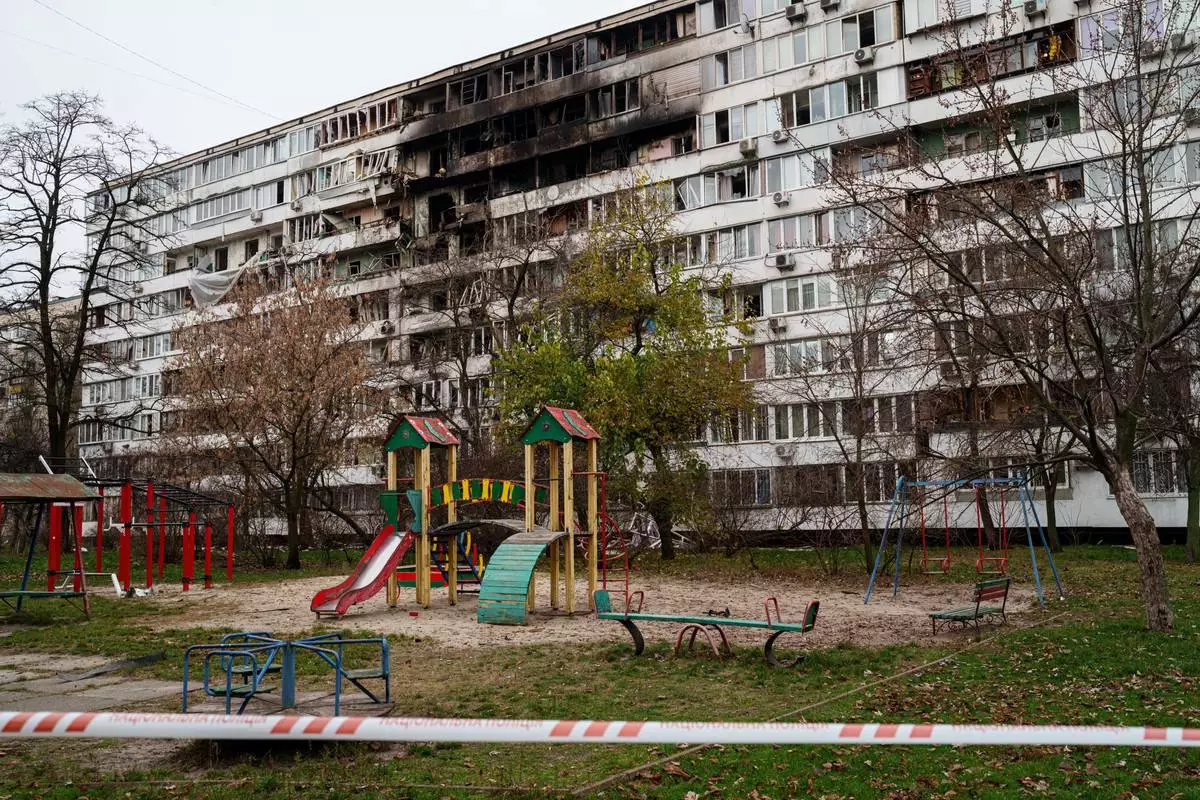
A residential building is seen heavily damaged after a Russian strike on Kyiv, Ukraine, on Tuesday, Nov. 25, 2025. (AP Photo/Evgeniy Maloletka)
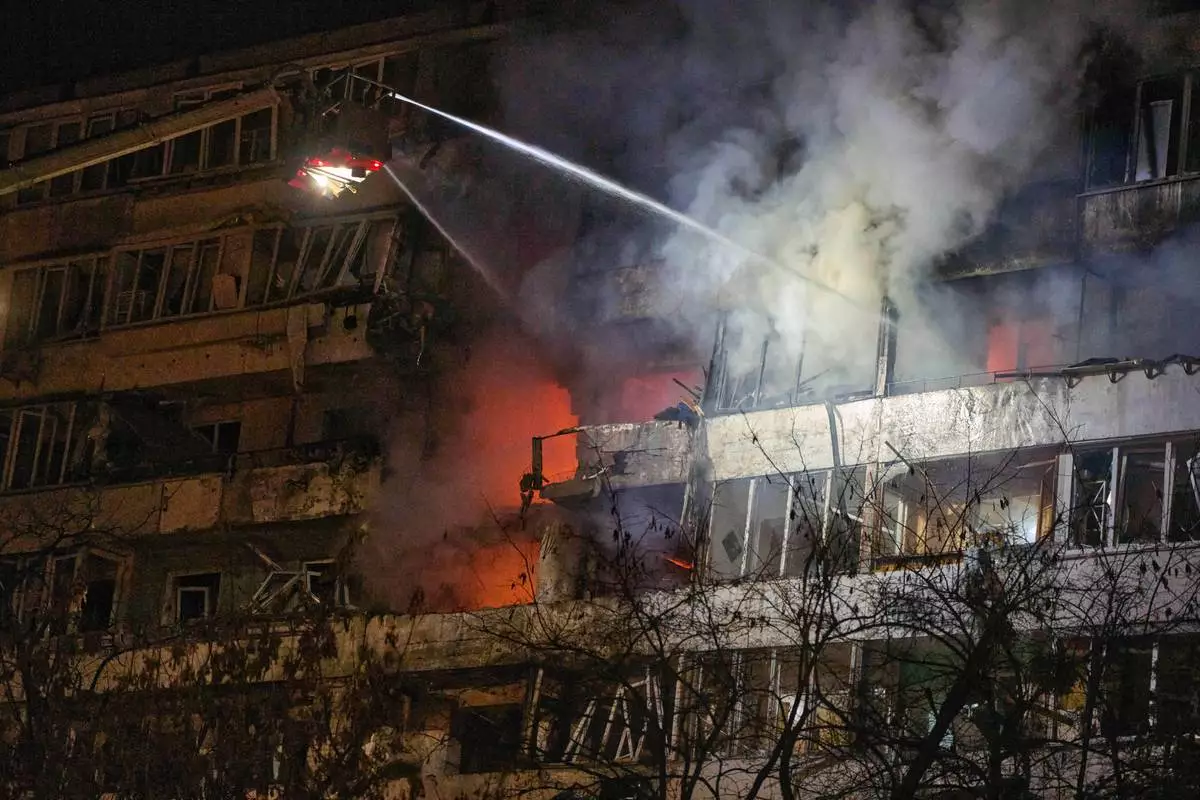
Firefighters put out the fire after a drone hit a multi-storey residential building during Russia's night drone attack in Kyiv, Ukraine, Tuesday, Nov. 25, 2025. (AP Photo/Efrem Lukatsky)
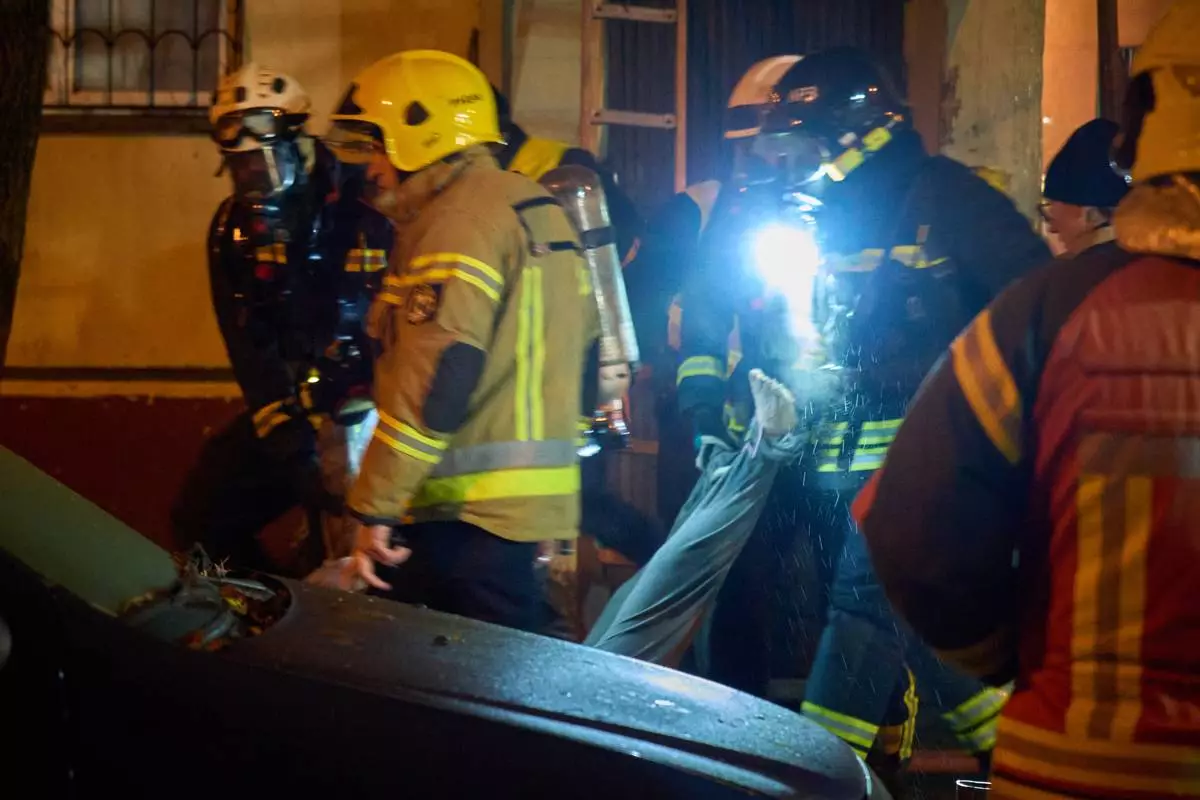
Rescuers carry the body of a civilian who was killed as a drone hit a multi-storey residential building during Russia's night drone attack in Kyiv, Ukraine, Tuesday, Nov. 25, 2025. (AP Photo/Efrem Lukatsky)
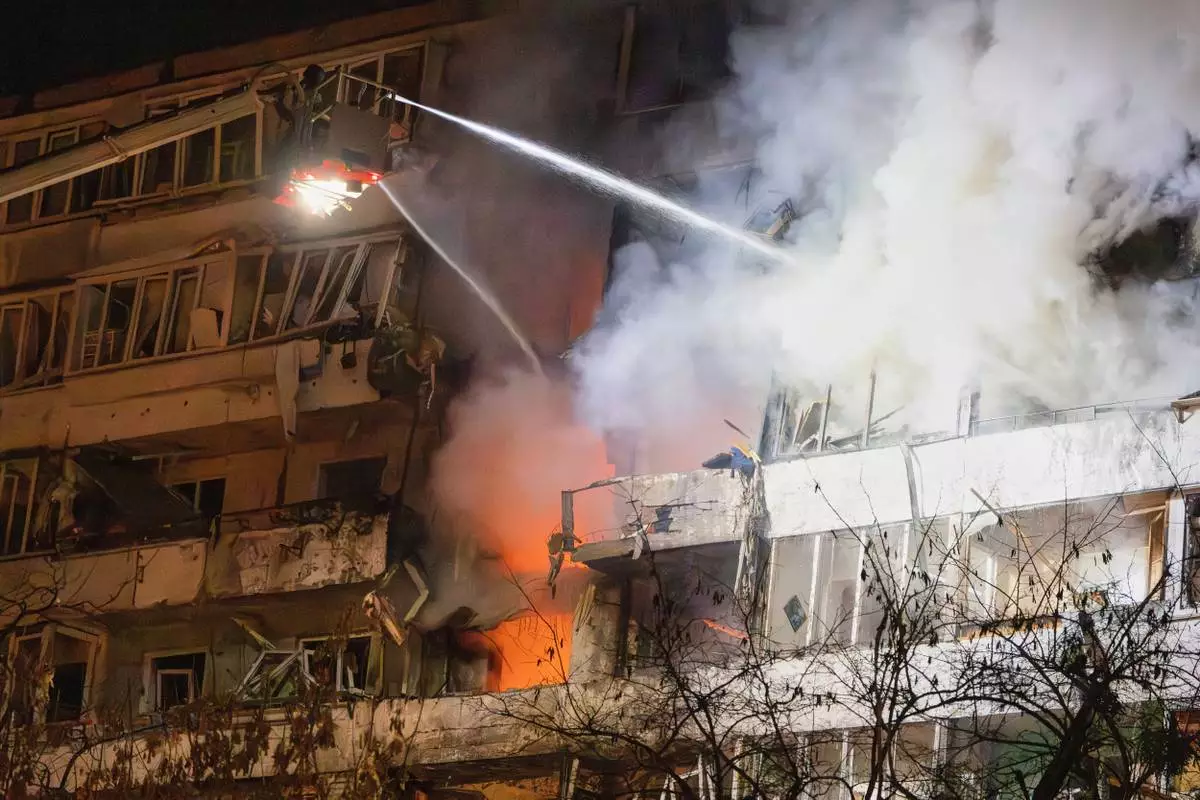
Firefighters put out the fire after a drone hit a multi-storey residential building during Russia's night drone attack in Kyiv, Ukraine, Tuesday, Nov. 25, 2025. (AP Photo/Efrem Lukatsky)
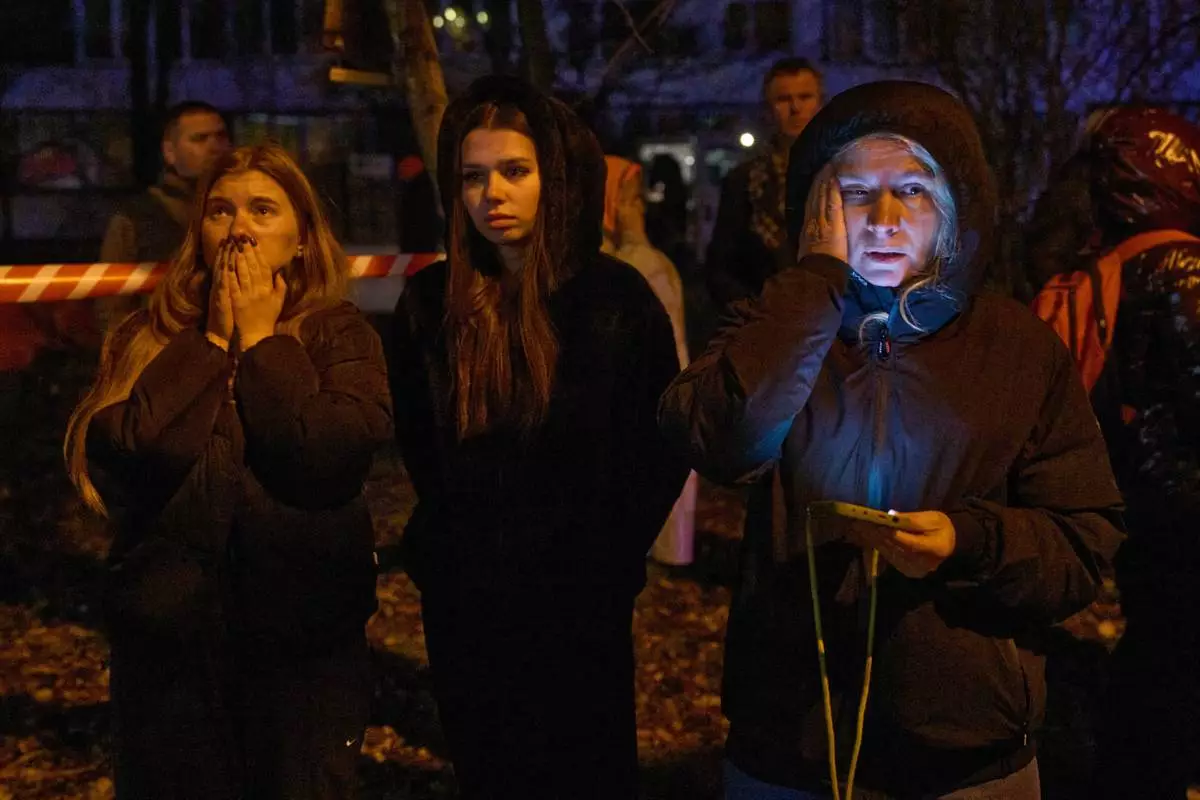
Local residents react as they watch their burning home after a drone hit a multi-storey residential building during Russia's night drone attack in Kyiv, Ukraine, Tuesday, Nov. 25, 2025. (AP Photo/Efrem Lukatsky)
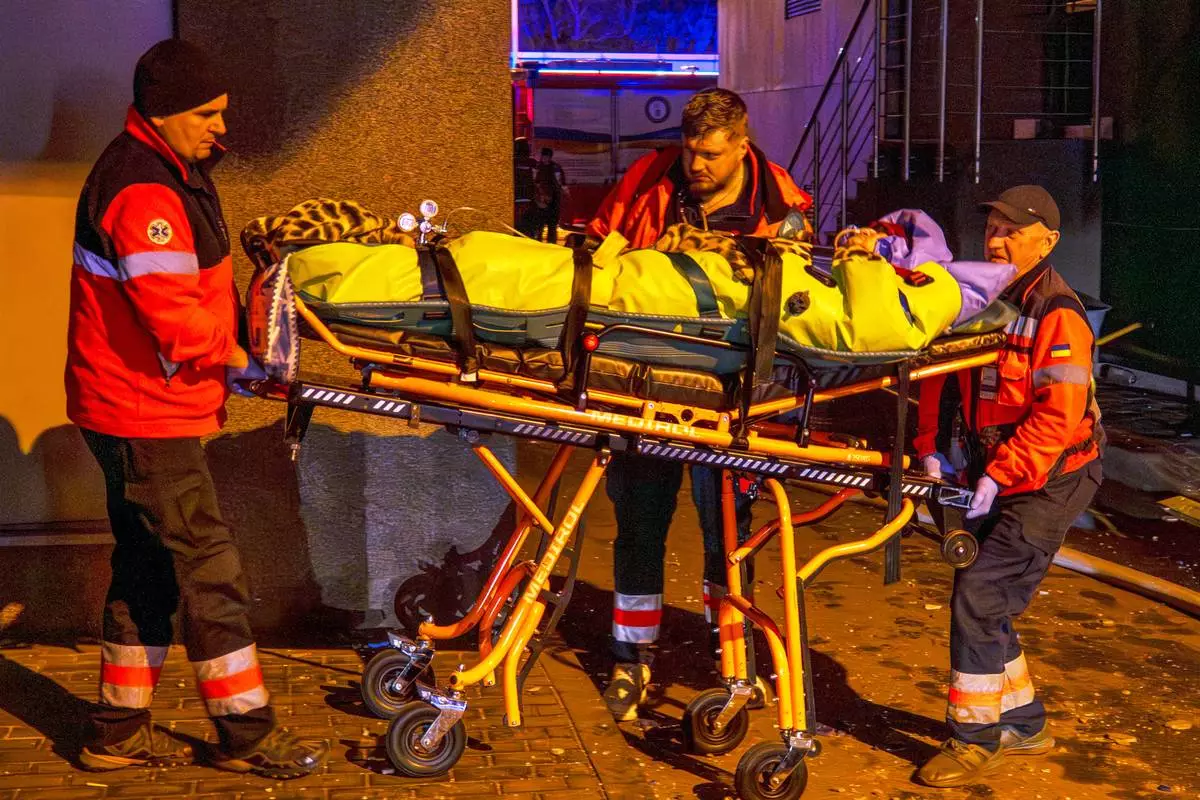
Rescue workers carry a person from a residential building following a Russian attack in Kyiv, Ukraine, Tuesday, Nov. 25, 2025. (AP Photo/Dan Bashakov)
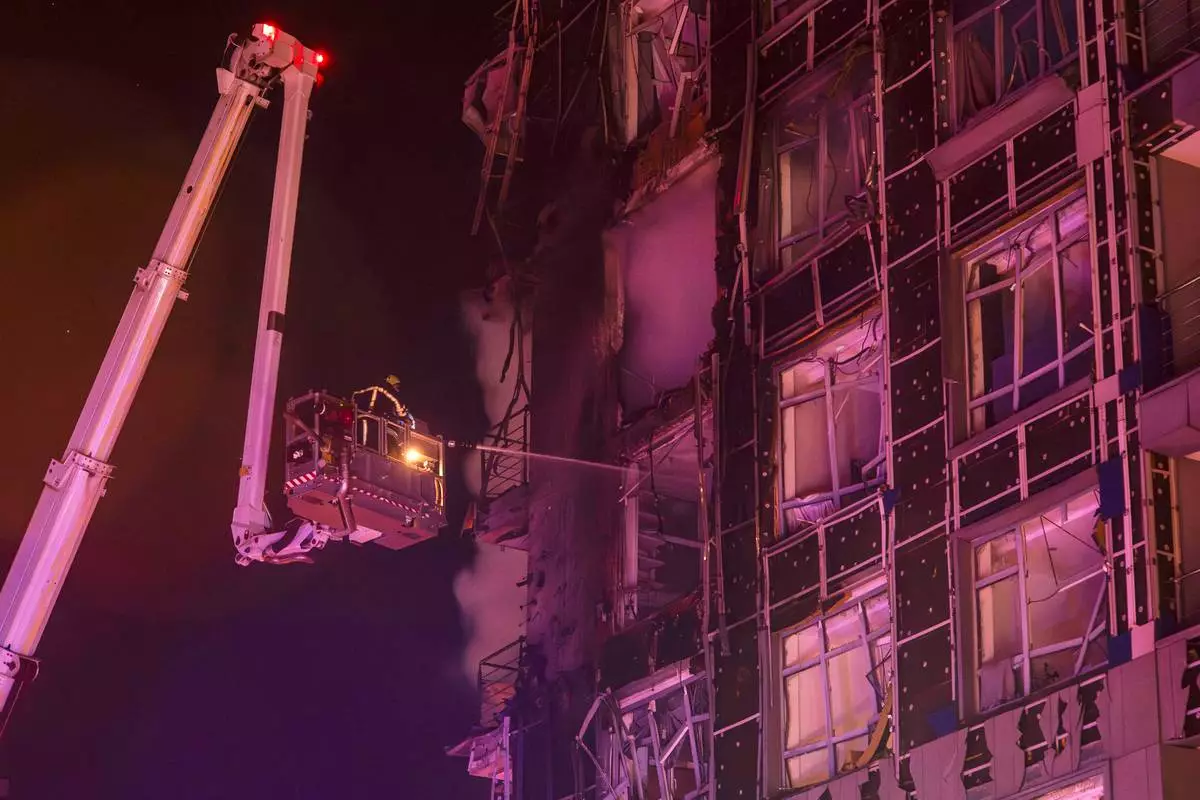
Emergency services personnel work to extinguish a fire following a Russian attack in Kyiv, Ukraine, Tuesday, Nov. 25, 2025. (AP Photo/Dan Bashakov)
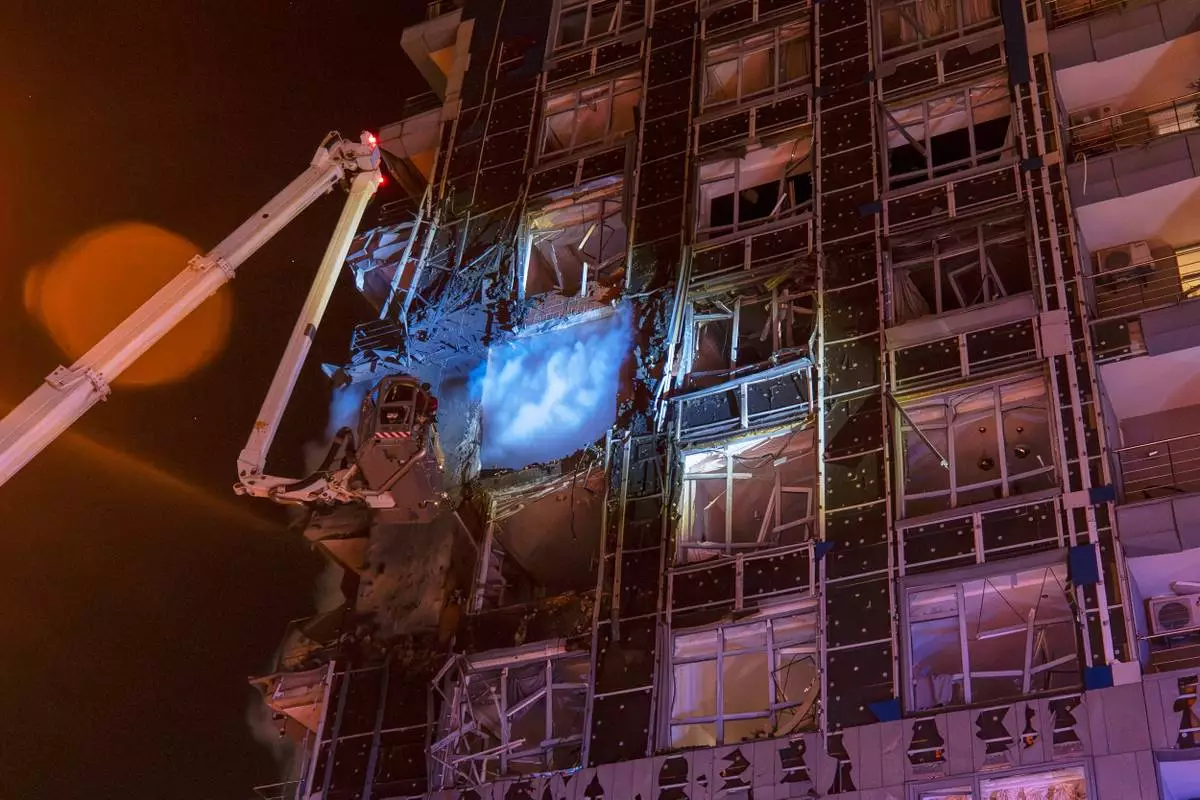
Emergency services personnel work to extinguish a fire following a Russian attack in Kyiv, Ukraine, Tuesday, Nov. 25, 2025. (AP Photo/Dan Bashakov)
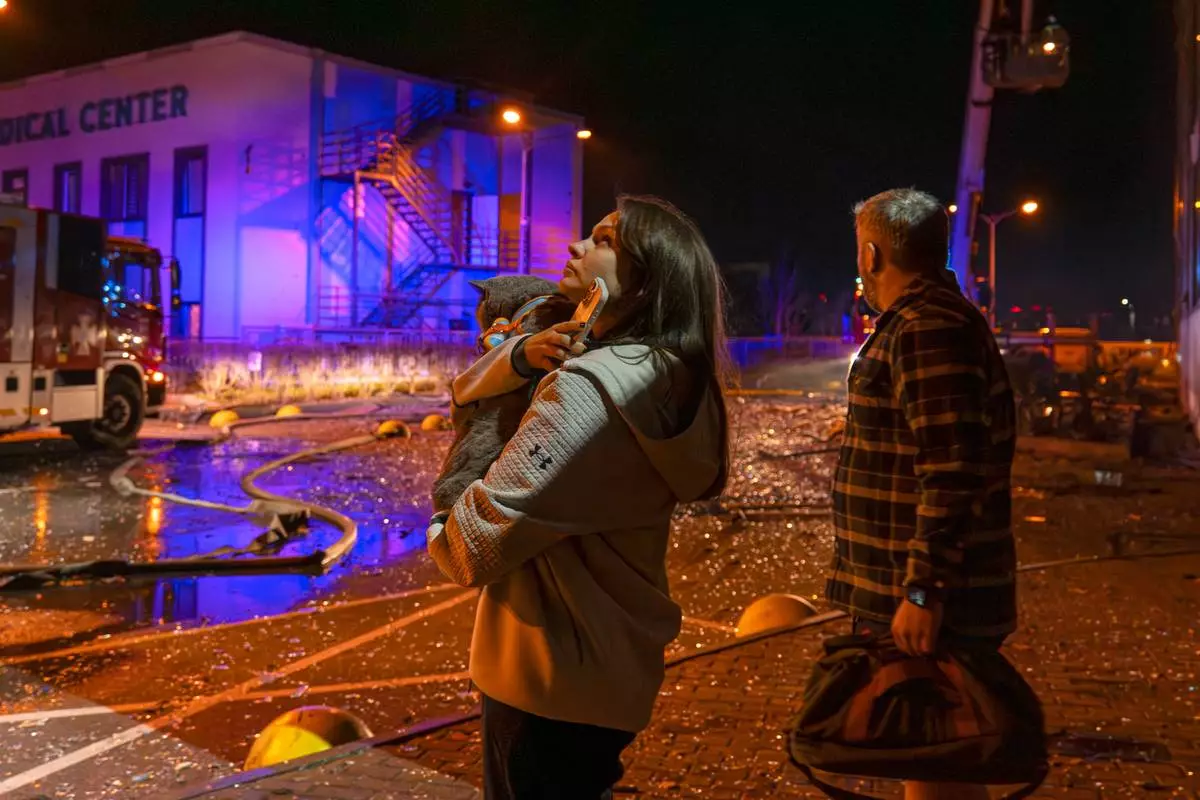
People watch as emergency services personnel work to extinguish a fire following a Russian attack in Kyiv, Ukraine, Tuesday, Nov. 25, 2025. (AP Photo/Dan Bashakov)