The freedom of religious belief is being fully guaranteed in southwest China's Xizang Autonomous Region, with lawful religious activities under effective protection.
Currently, Xizang has approximately 46,000 Buddhist monks and nuns, 12,000 native Muslims, and over 700 believers of Catholicism, according to a white paper titled "Human Rights in Xizang in the New Era" released in March this year.
In Tibetan Buddhist monasteries, traditional religious activities such as learning scriptures, debate, initiation as a monk or nun, abhisheka (empowerment ceremony), and self-cultivation are regularly practiced, and examination on scriptures and subsequent promotion in academic degrees are also held in monasteries on a regular basis.
Religious and folk activities, including the Shoton Festival, Butter Lamp Festival, Saga Dawa Festival, and religious walks around lakes and mountains, take place as customary.
"Lhasa is a sacred place in the hearts of Tibetan people. Many pilgrims prostrate all the way to Lhasa. It usually takes them one or two years. That kind of journey carries great spiritual merit," said Pema, a monk from southwest China's Sichuan Province.
Over 98 percent of monasteries and temples now have access to roads, telecommunications, electricity, water, radio and television, notes the white paper, adding that the government allocates over 26 million yuan (about 3.6 million U.S. dollars) per annum to cover medical insurance, pension schemes, subsistence allowances, accident injury insurance, and health check expenses for all registered monks and nuns.
Nine Tibetan Buddhism colleges, including the High-level Tibetan Buddhism College of China and Xizang Tibetan Buddhist Institute, have been constructed in China with an investment of 920 million yuan.
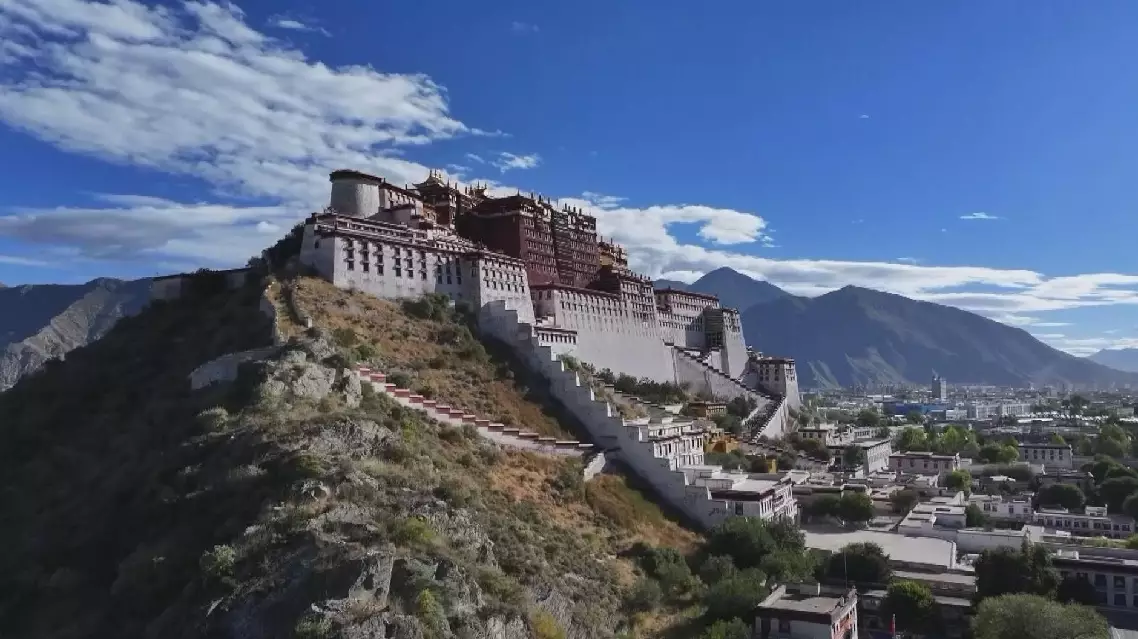
Xizang fully guarantees freedom of religious belief
Nicaragua's co-foreign minister Valdrack Jaentschke has warned that militarism must never be allowed to rise again, as Japan's recent moves to lift its arms export ban and revise the pacifist Constitution continue to draw international concern.
This year marks the 80th anniversary of the opening of the Tokyo Trials, where Japan's Class-A war criminals from World War II were brought to justice.
In an interview with China Global Television Network (CGTN), Valdrack Jaentschke voiced his concern that today's world order is being undermined by interventionism and other challenges.
"It is necessary for us to remember that after the end of World War II, countries worked hard to build a new international order based on international law. However, regrettably, more than 80 years later, we are seeing that this once explored and attempted order is being challenged by interventionism, a confrontational mindset, and tendencies like 'might makes right.' These are precisely the conditions that gave rise to fascism and militarism in the past, which ultimately led to the tragedy of World War II," he said.
He said the international community has a responsibility to pursue a new international order -- one fundamentally grounded in peace.
"Looking back at the history more than eight decades ago and comparing it with today's reality, it is our responsibility to recognize that the world should, and must, build a new international order that is more just, fairer, rooted in international law, based on a logic of mutual benefit and shared success, and fundamentally grounded in peace," said the minister.
"Today, as we revisit the Tokyo Trials, it is meant to remind the world that such a tragedy must never be repeated -- and that we must do everything in our power to prevent it from happening again. We must stop that dark world -- born from militarism, interventionism, and fascism -- from ever returning," he said.
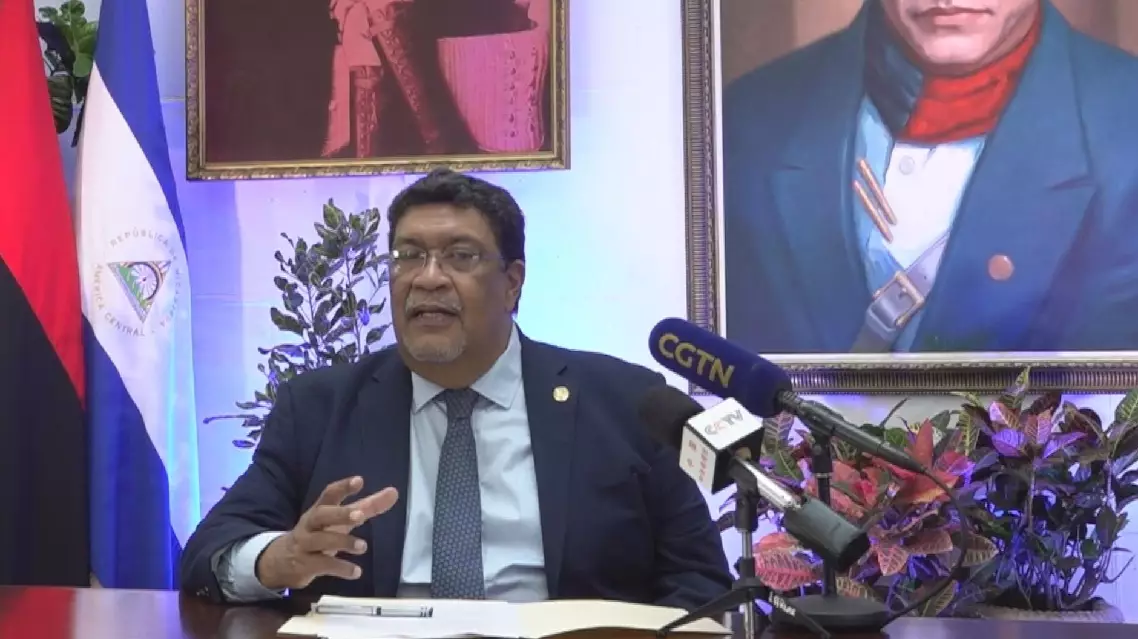
Nicaraguan FM warns of militarism revival