Skip to Content Facebook Feature Image

Track laying completed for China's northernmost high-speed railway

China

China

China

Track laying completed for China's northernmost high-speed railway

2025-11-25 17:53 Last Updated At:20:37

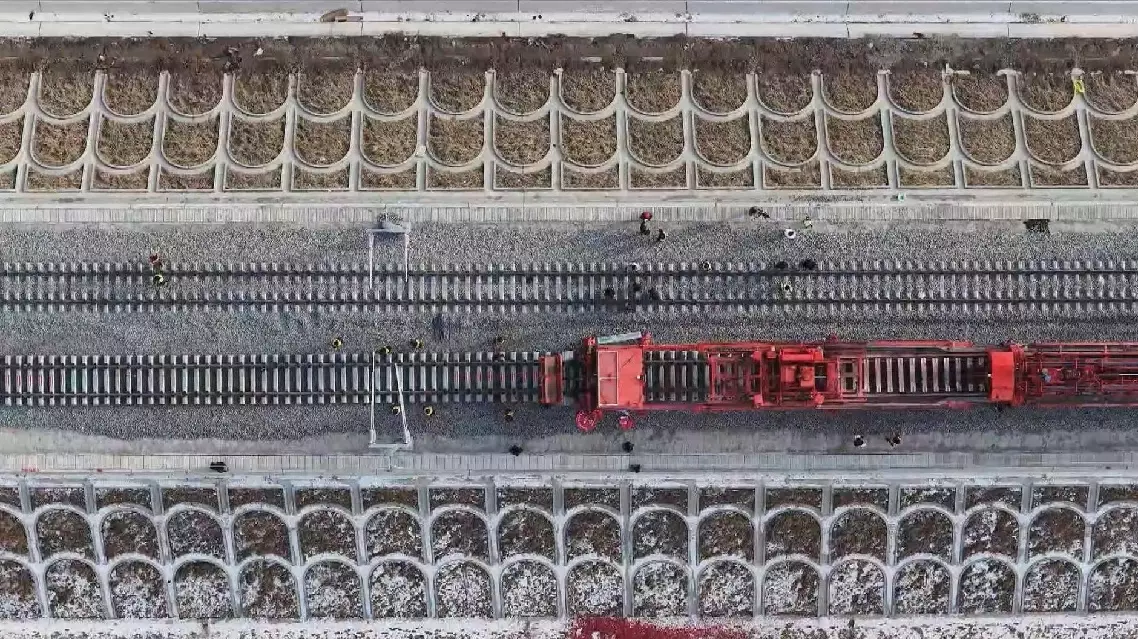
Track laying for the Harbin-Yichun High Speed Railway, China's northernmost high-speed railway under construction, was completed on Tuesday.

Stretching 318 kilometers, the railway line connects Harbin, Yichun and some other cities in northeast China's Heilongjiang Province.

Its seamless steel tracks allow a designed train speed of 250 kilometers per hour while ensuring quiet trips for passengers.

The progress was made after 17 months of hard work despite challenges posed by a local temperature range of over 50 degrees Celsius and 14 permafrost zones with an average depth of 8.9 meters along the route, which constitute multiple national records in terms of construction difficulty.

Instead of the traditional way of laying track sleepers one by one, the project adopts an advanced method of laying sleepers in groups, increasing efficiency by 50 percent to 2.5 kilometers per day.

In addition, the CPG500, China's first homegrown long rail track-laying machine, has been used to lay the seamless steel tracks to ensure the project proceeds on schedule.

"The Harbin-Yichun high-speed railway is divided into the Harbin-Tieli section and the Tieli-Yichun section. Up to now, we have finished 95 percent of the Tieli-Yichun section and 77 percent of the Harbin-Tieli section. We will not only complete track laying, but also complete the construction of the overhead contact line, the electric power, traction power supply, communications, and signaling systems, and supporting facilities by the end of the year, so as to get prepared for the acceptance testing early next year," said Guo Yingxun, head of Heilongjiang Railway Development Group Tieli Office.

Upon completion, the rail route is expected to reduce the travel time between Harbin and Yichun from the current seven hours to approximately two hours, and will play a crucial role in promoting economic and social development in the region and the full revitalization of northeast China.

To date, China has built the world's largest high-speed railway network, with a total length of around 48,000 kilometers, covering 97 percent of its cities with a population of over 500,000.

The country aims to expand its operating high-speed rail tracks to about 60,000 kilometers by 2030.
Track laying completed for China's northernmost high-speed railway

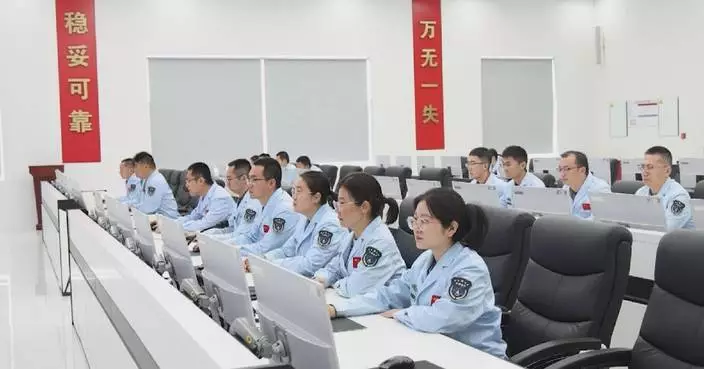
Track laying completed for China's northernmost high-speed railway

An increasing number of German consumers are considering buying electric vehicles (EVs) in the face of high fuel prices, according to a recent survey by the largest German online car trading platform, mobile.de.

As the Middle East tensions continue to drive up international oil and gas prices, the cost of automotive fuel has been rising steadily in many European countries.

According to fuel price data compiled by the German Association of the Automotive Industry, since the United States and Israel launched military strikes against Iran on February 28, gasoline prices in Germany have risen by nearly 20 percent, while diesel prices have shot up by more than 30 percent.

Results from a recent survey by mobile.de show that if gasoline prices remain at current high levels, 43 percent of respondents said they would switch to EVs, and 36 percent cited long-term cost savings as the most important reason for considering an EV purchase.

Additionally, the platform's data show that inquiries about used EVs surged by 66 percent in the first half of March.

"We are absolutely seeing much more interest on mobile.de for electric cars. What the German energy transition couldn't do, this current geopolitical situation has done in terms of transition to electric cars," said Ajay Bhatia, CEO of mobile.de.

In addition to high oil prices, government subsidies are also a key factor driving German consumers to consider purchasing EVs.

The German government announced the resumption of subsidies in January of this year, planning to invest 3 billion euros over the next few years to provide purchase subsidies for some 800,000 EVs.

Driven by the combined effects of high oil prices and subsidy policies, German consumers' interest in EVs has grown clearly. However, it remains to be seen whether this shift will evolve into a more sustained market trend.

"How long it will stay is anyone's guess, but at the moment we're absolutely seeing an increase, and sometimes these transitions need a catalyst. And this is definitely a catalyst that is seeing the transition to electric cars speed up," said Bhatia.

More Germans interested in buying EVs due to high oil prices: survey

More Germans interested in buying EVs due to high oil prices: survey

Recommended Articles