ABU DHABI, United Arab Emirates--(BUSINESS WIRE)--Nov 26, 2025--
WeRide (NASDAQ: WRD, HKEX: 0800.HK), a global leader in autonomous driving technology, and Uber Technologies, Inc. (NYSE: UBER) today announced the launch of Level 4 fully driverless Robotaxi commercial operations in Abu Dhabi. This marks the first driverless deploymentin the Middle East, as well as the first city outside the United States to host fully driverless operations on the Uber platform. The launch was supported by the world’s first city-level fully driverless Robotaxi permit outside the U.S.
This press release features multimedia. View the full release here: https://www.businesswire.com/news/home/20251125876018/en/
This milestone represents a major step toward the large-scale deployment of self-driving mobility solutions in the UAE, made possible through WeRide and Uber's continued partnership with the Integrated Transport Centre (ITC) and fleet operator Tawasul.
Public commercial operations commenced today without a vehicle specialist inside the AV, starting with Yas Island. Passengers can now be matched with a WeRide Robotaxi through Uber Comfort or UberX, and can also book a WeRide Robotaxi through the new “Autonomous” category, Uber’s first dedicated autonomous ride option globally. In October 2025, WeRide's Robotaxi secured a federal permit to conduct fully driverless Robotaxi commercial operations.
Following this, the ITC granted WeRide and Tawasul the first operational license for a fully driverless commercial Robotaxi service in Abu Dhabi. The initial phase will be operated jointly by WeRide and Tawasul on the Uber platform.
With the fully driverless commercial launch, latest permit, and ongoing improvements in vehicle utilization, the WeRide-Uber Robotaxi services in Abu Dhabi are on track to achieve breakeven unit economics.
This milestone supports WeRide and Uber's broader plan to expand their Middle East operations, scaling to thousands of Robotaxis over the coming years.
WeRide maintains a 4-year first mover advantage in autonomous vehicle deployment in Abu Dhabi, having operated Robotaxis in Abu Dhabi since 2021. In 2023, it became the first company in the UAE to receive a national license covering all types of self-driving vehicles, authorizing autonomous testing and operation on public roads across the country, subject to emirate-level approvals.
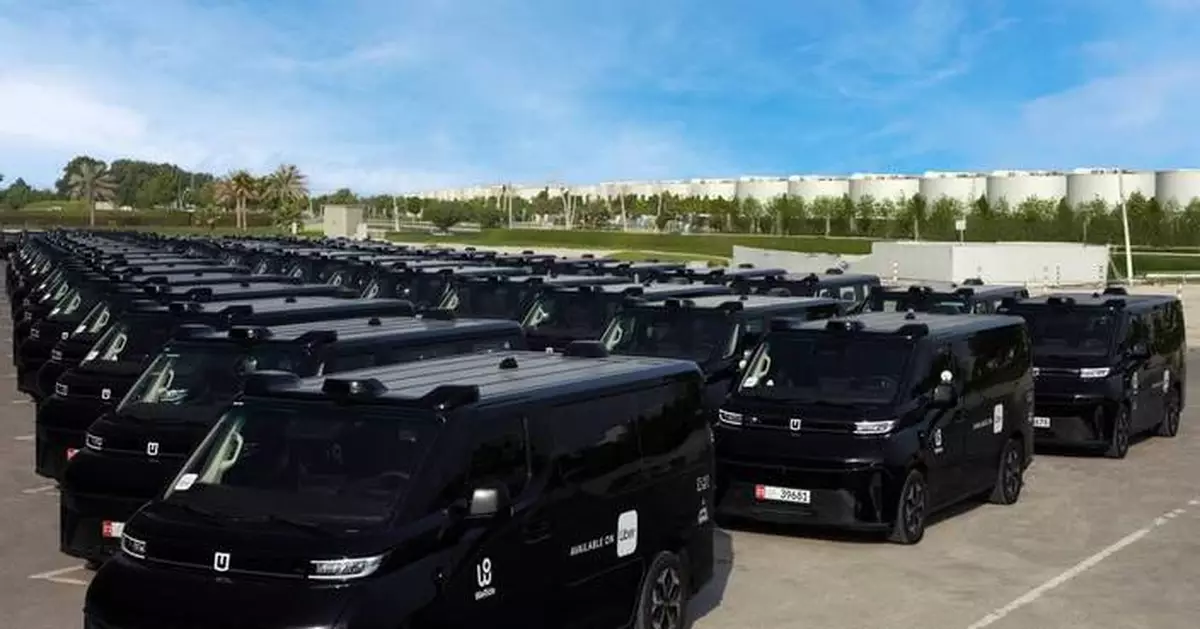
In December 2024, WeRide and Uber launched their Robotaxi ride-hailing partnership in Abu Dhabi – the largest commercial Robotaxi service outside the U.S. and China. The partnership expanded in July 2025 to cover about half of Abu Dhabi's core areas, including Al Reem and Al Maryah. By the end of 2025, WeRide and Uber plan to extend services to cover additional areas in Abu Dhabi city core. WeRide currently has over 100 Robotaxis in the Middle East.
About WeRide
WeRide is a global leader and a first mover in the autonomous driving industry, as well as the first publicly traded Robotaxi company. Our autonomous vehicles have been tested or operated in over 30 cities across 11 countries. We are also the first and only technology company whose products have received autonomous driving permits in eight markets: China, the UAE, Singapore, Switzerland, France, Saudi Arabia, Belgium, and the US. Empowered by the smart, versatile, cost-effective, and highly adaptable WeRide One platform, WeRide provides autonomous driving products and services from L2 to L4, addressing transportation needs in the mobility, logistics, and sanitation industries. WeRide was named to Fortune's 2025 Change the World and 2025 Future 50 lists.
About Uber
Uber’s mission is to create opportunity through movement. We started in 2010 to solve a simple problem: how do you get access to a ride at the touch of a button? More than 68 billion trips later, we’re building products to get people closer to where they want to be. By changing how people, food, and things move through cities, Uber is a platform that opens up the world to new possibilities.
Safe Harbor Statement
This press release contains statements that may constitute “forward-looking” statements pursuant to the “safe harbor” provisions of the U.S. Private Securities Litigation Reform Act of 1995. These forward-looking statements can be identified by terminology such as “will,” “expects,” “anticipates,” “aims,” “future,” “intends,” “plans,” “believes,” “estimates,” “likely to,” and similar statements. Statements that are not historical facts, including statements about WeRide’s beliefs, plans, and expectations, are forward-looking statements. Forward-looking statements involve inherent risks and uncertainties. Further information regarding these and other risks is included in WeRide’s filings with the U.S. Securities and Exchange Commission and announcements on the website of the Hong Kong Stock Exchange. All information provided in this press release is as of the date of this press release. WeRide does not undertake any obligation to update any forward-looking statement, except as required under applicable law.
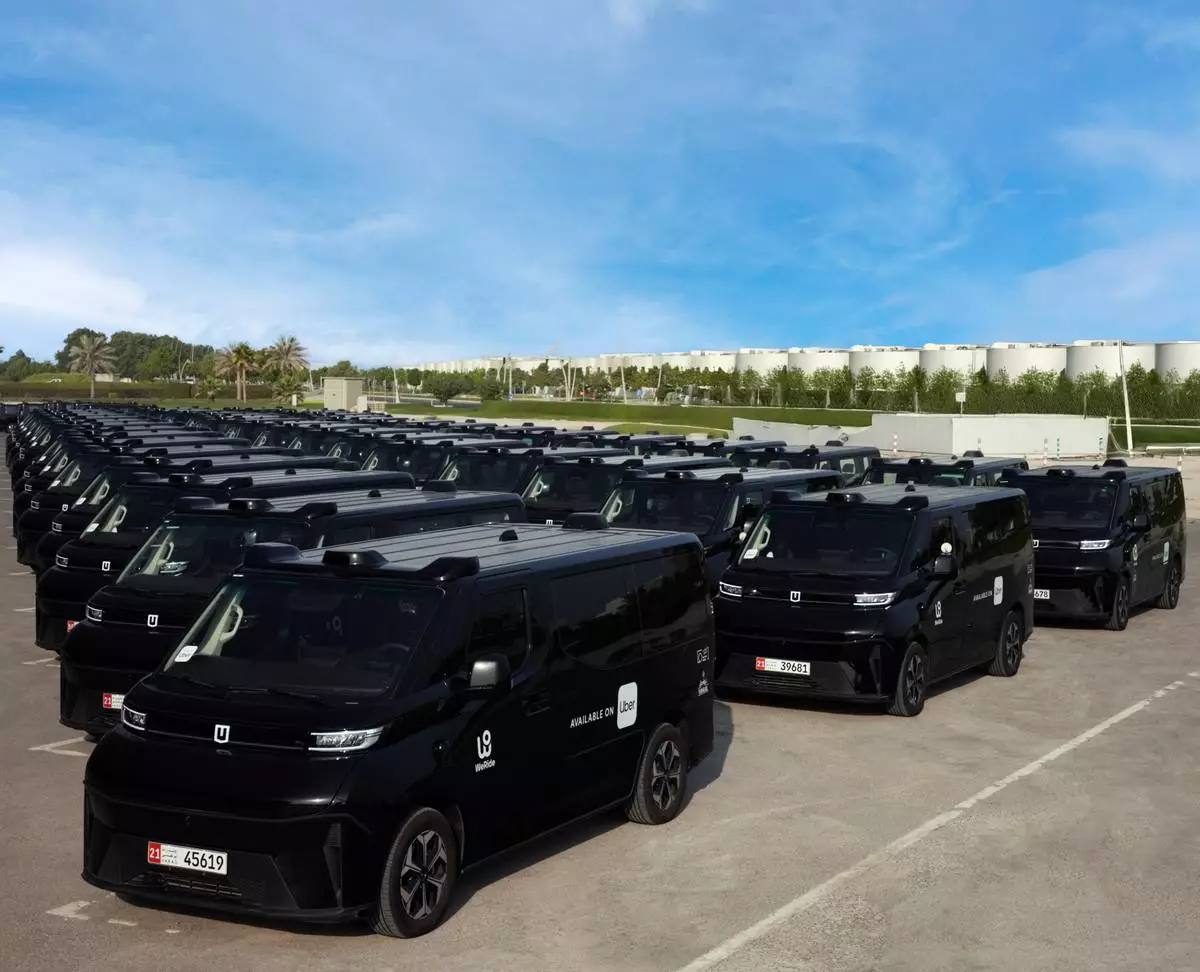
WeRide Robotaxi GXR fleet in Abu Dhabi
NEW YORK (AP) — The U.S. stock market is slipping Thursday after oil prices resumed their climb.
The S&P 500 fell 0.3% and is on track for a fourth drop in five days after setting its all-time high. The Dow Jones Industrial Average was down 83 points, or 0.2%, as of 1:01 a.m. Eastern time, and the Nasdaq composite was 0.4% lower.
A halt in the torrid run for stocks benefiting from the artificial-intelligence boom has slowed the U.S. market recently. Not even another better-than-expected profit report from Nvidia was enough to kick it back into gear.
The chip company reported stronger profit and revenue for the latest quarter than analysts expected, while also forecasting revenue for the current quarter that cleared analysts’ estimates. “The buildout of AI factories — the largest infrastructure expansion in human history — is accelerating at extraordinary speed,” CEO Jensen Huang said.
But such performances and such talk have become routine, and Nvidia's stock swiveled between losses and gains before falling 1.4%.
Some analysts said the weakness may have simply been because investors were locking in profits after Nvidia’s stock had soared nearly 70% over the prior year, more than double the S&P 500’s 27% jump. The broad AI industry is also getting criticism for becoming too expensive, as well as too circular as Nvidia has bought ownership stakes in companies that use its own chips that drive Nvidia’s revenue.
Pressure built on Wall Street, meanwhile, as the price for a barrel of Brent crude oil climbed 1.7% to $106.81 and trimmed its loss for the week. Oil prices have been swinging up and down with uncertainty about how long the war with Iran will keep the Strait of Hormuz shut, which is preventing oil tankers from exiting the Persian Gulf to deliver crude.
The higher oil prices pushed Treasury yields upward in the bond market, resuming rises following a slowdown the day before.
Climbing yields have cranked up the pressure on financial markets worldwide. They're slowing economies and weighing on prices for stocks and all kinds of other investments. Besides driving up rates for mortgages, high yields could also curtail companies’ borrowing to build the AI data centers that have been supporting the U.S. economy’s growth recently.
The yield on the 10-year Treasury rose to 4.61% from 4.57% late Wednesday.
It had gotten near 4.63% in the morning, after a report gave the latest signal that the U.S. job market remains in better shape than economists expected. The number of U.S. workers applying for unemployment benefits last week unexpectedly declined in an indication of fewer layoffs.
But yields eased a bit following a mixed preliminary report showing weaker-than-expected growth for business activity among U.S. services businesses and improved growth for U.S. manufacturers. Companies are feeling the effects of accelerating inflation and are seeing subdued growth in their order books, the preliminary data from an S&P Global survey said.
“The damaging economic impact from the war in the Middle East is becoming increasingly evident in the business surveys,” according to Chris Williamson, chief business economist at S&P Global Market Intelligence.
Inflation is worsening even beyond the high oil prices caused by the Iran war, while U.S. households are showing widespread discouragement about the economy.
Elsewhere on Wall Street, Walmart fell 7.2% following its profit report. The retailer delivered another quarter of impressive revenue but offered up weaker forecasts for upcoming profit than analysts expected.
On the winning side of Wall Street was Ralph Lauren, which jumped 12.2% after reporting stronger profit and revenue for the latest quarter than analysts expected.
In stock markets abroad, indexes were mixed in Europe following bigger moves in Asia.
South Korea’s Kospi Kospi soared 8.4% thanks to strength for technology stocks. Samsung Electronics jumped 8.5% after its labor union and management reached an agreement late Wednesday that averted a strike. SK Hynix, a chip company partnering with Nvidia, surged 11.2%.
Tokyo’s Nikkei 225 jumped 3.1%, while indexes fell 1% in Hong Kong and 2% in Shanghai.
AP Business Writers Matt Ott and Elaine Kurtenbach contributed.
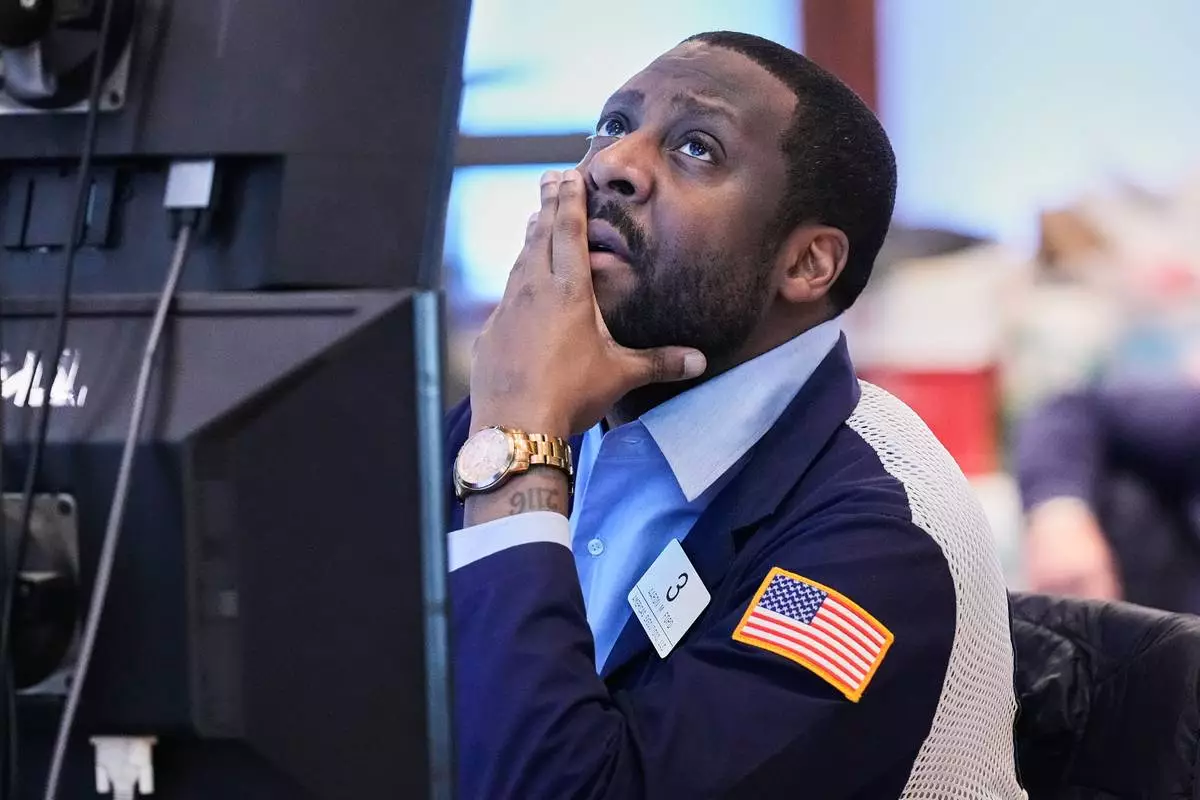
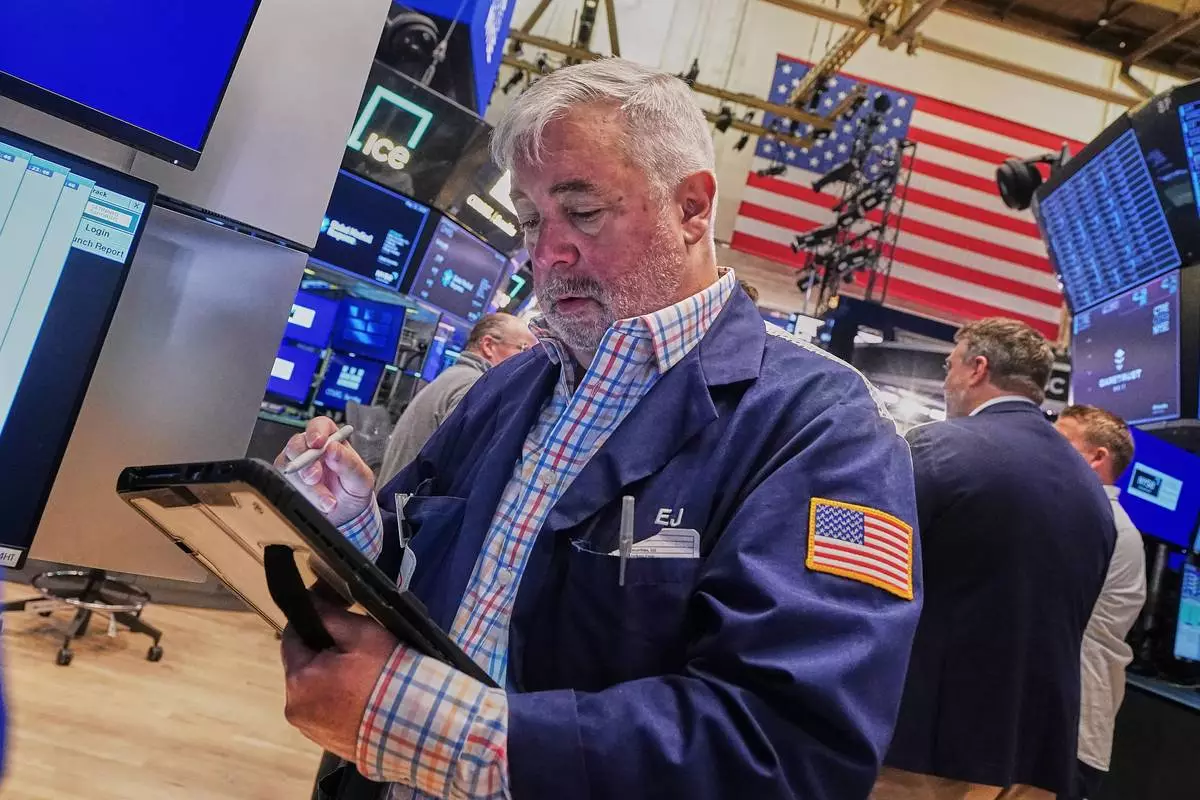
Trader Aaron Ford works on the floor of the New York Stock Exchange, Thursday, May 7, 2026. (AP Photo/Richard Drew)
Trader Edward McCarthy works on the floor of the New York Stock Exchange, Wednesday, May 13, 2026. (AP Photo/Richard Drew)
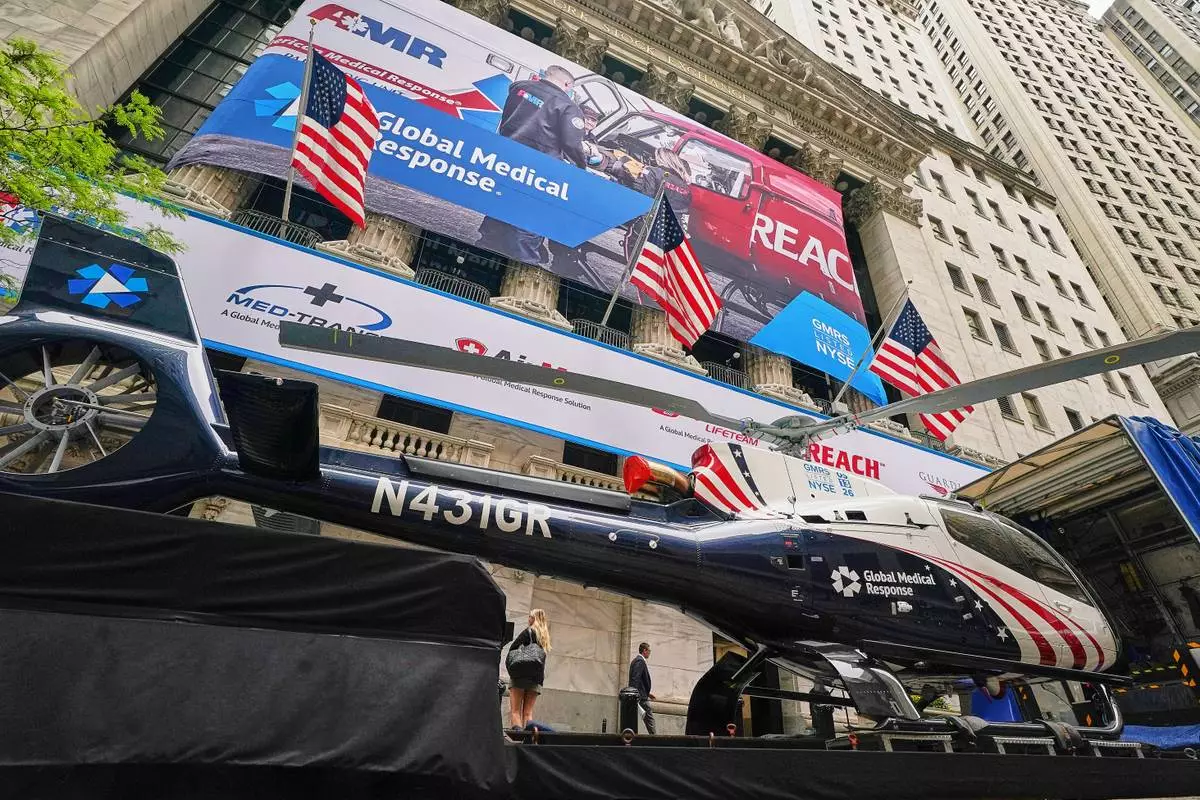
A Global Medical Response helicopter sits in front of the New York Stock Exchange before the planned IPO of GMR Solutions, Inc., Wednesday, May 13, 2026. (AP Photo/Richard Drew)
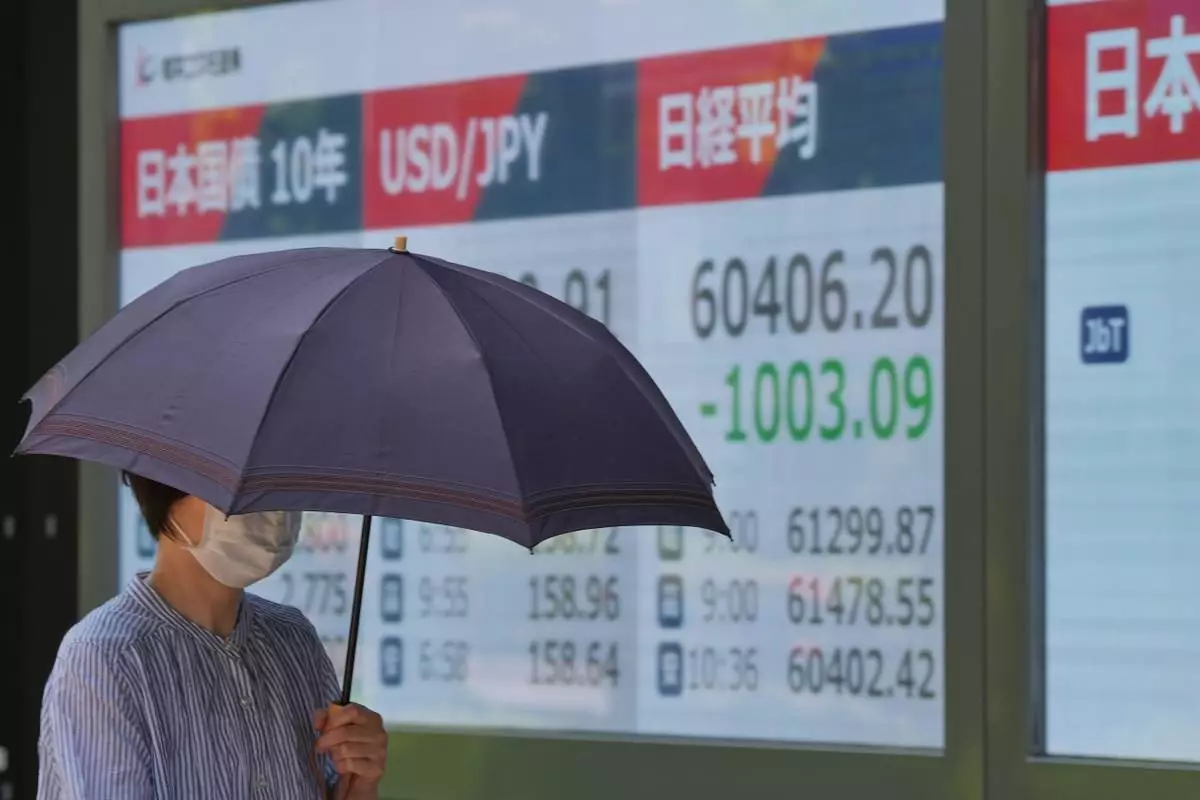
A person walks in front of an electronic stock board showing Japan's Nikkei index at a securities firm Monday, May 18, 2026, in Tokyo. (AP Photo/Eugene Hoshiko)
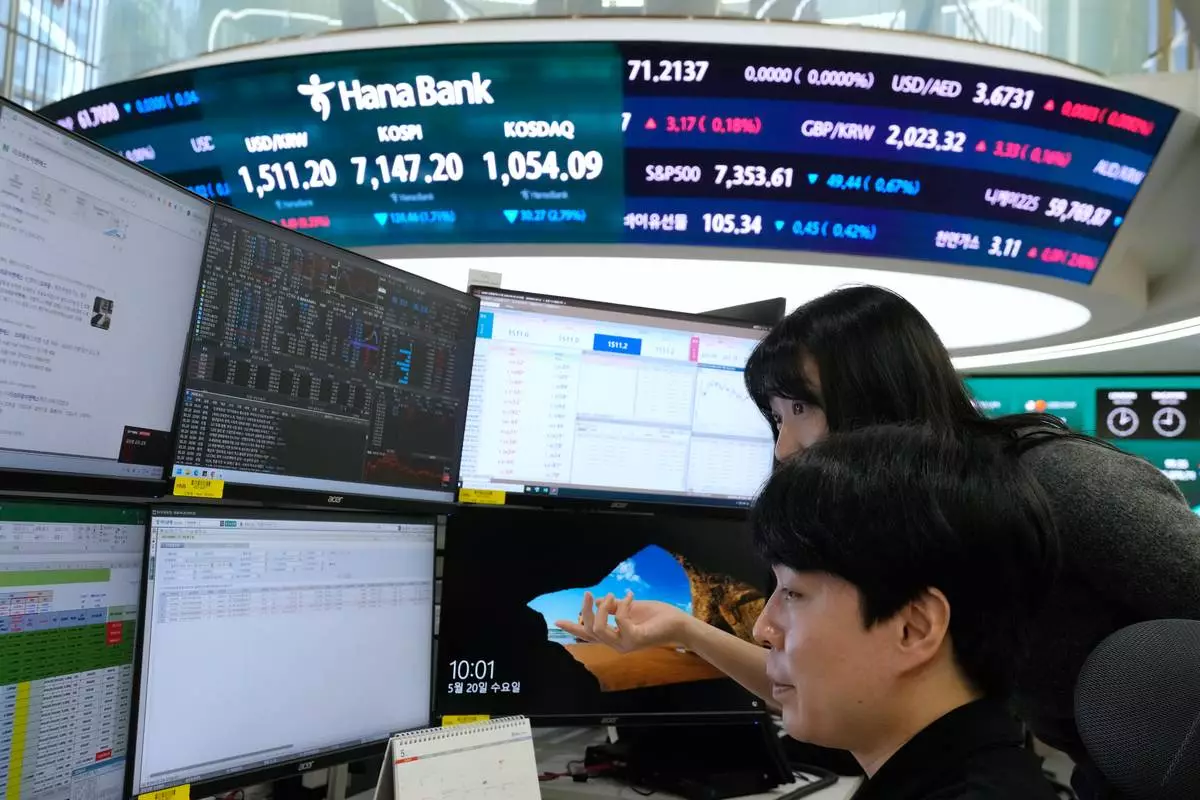
Currency traders watch monitors at the foreign exchange dealing room of the Hana Bank headquarters in Seoul, South Korea, Wednesday, May 20, 2026. (AP Photo/Ahn Young-joon)
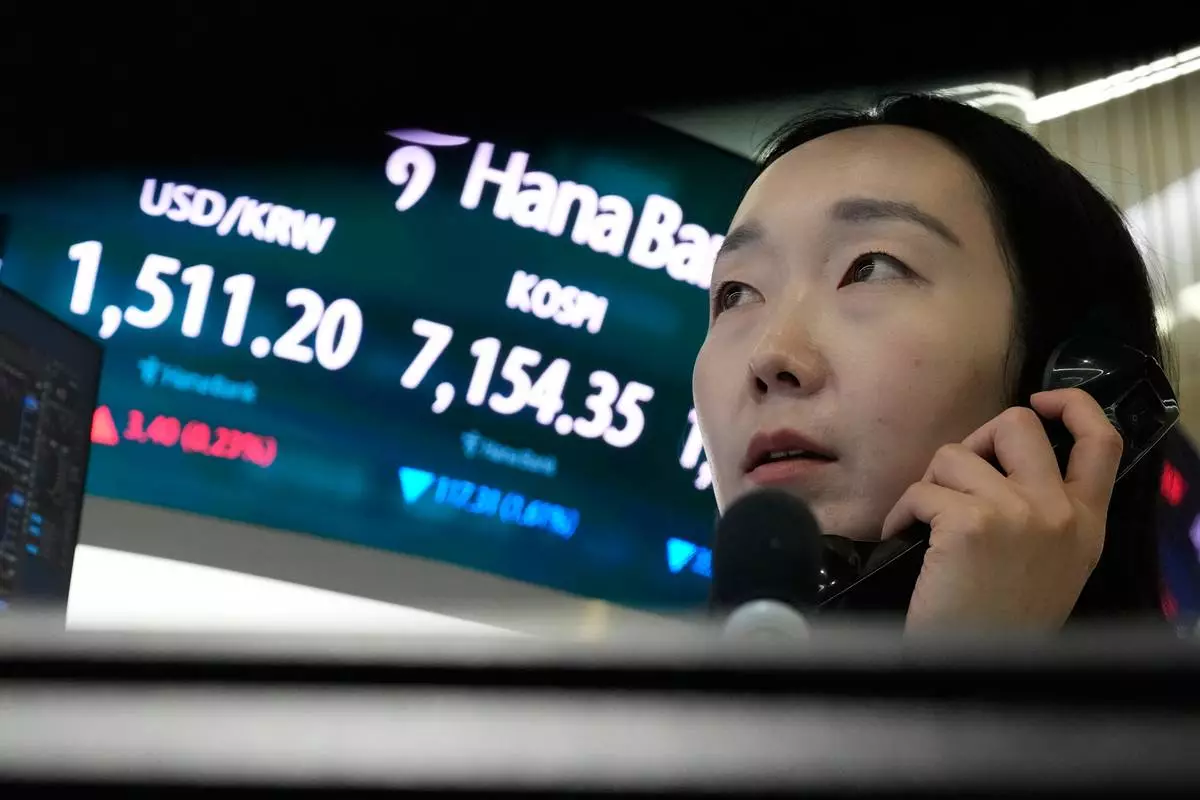
A currency trader talks on the phone near a screen showing the Korea Composite Stock Price Index (KOSPI) and the foreign exchange rate between U.S. dollar and South Korean won, left, at the foreign exchange dealing room of the Hana Bank headquarters in Seoul, South Korea, Wednesday, May 20, 2026. (AP Photo/Ahn Young-joon)