MELBOURNE, Australia (AP) — The Australian government said young children will be banned from social media next month as scheduled despite a rights advocacy group on Wednesday challenging the world-first legislation in court.
The Sydney-based Digital Freedom Project said it had filed a constitutional challenge in the High Court on Wednesday to a law due to take effect on Dec. 10 banning Australian children younger than 16 from holding accounts on specified platforms.
Communications Minister Anika Wells referred to the challenge when she later told Parliament her government remained committed to the ban taking effect on schedule.
“We will not be intimidated by legal challenges. We will not be intimidated by Big Tech. On behalf of Australian parents, we stand firm,” Wells told Parliament.
Digital Freedom Project president John Ruddick is a New South Wales state lawmaker for the minor Libertarian Party.
“Parental supervision of online activity is today the paramount parental responsibility. We do not want to outsource that responsibility to government and unelected bureaucrats,” Ruddick said in a statement.
“This ban is a direct assault on young people’s right to freedom of political communication,” he added.
The case is being brought by Sydney law firm Pryor, Tzannes and Wallis Solicitors on behalf of two 15-year-old children.
Digital Freedom Project spokesperson Sam Palmer could not say whether an application would be made for a court injunction to prevent the age restriction taking effect on Dec. 10 before the case is heard.
Technology giant Meta last week began sending thousands of Australian children suspected to be younger than 16 a warning to downland their digital histories and delete their accounts from Facebook, Instagram and Threads before the ban takes effect.
The government has said the three Meta platforms plus Snapchat, TikTok, X and YouTube must take reasonable steps to exclude Australian account holders younger than 16 or face fines of up to 50 million Australian dollars ($32 million).
Malaysia has also announced plans to ban social media accounts for children under 16 starting in 2026.
Malaysian Communications Minister Fahmi Fadzil said this week his Cabinet approved the move as part of a broader effort to shield young people from online harm like cyberbullying, scams and sexual exploitation. He said his government was studying approaches taken by Australia and other countries, and the potential use of electronic checks with identity cards or passports to verify users’ ages.
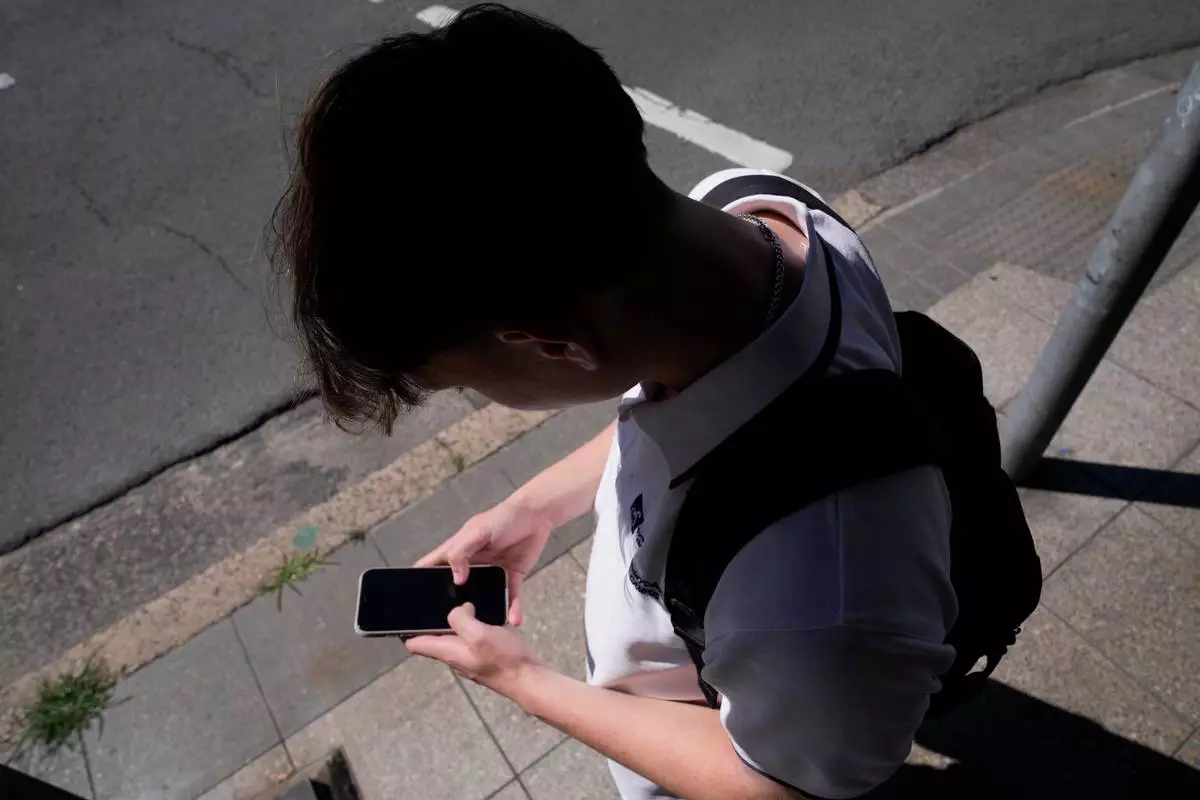
FILE - A teenage boy uses his phone in Sydney, Nov. 8, 2024. (AP Photo/Rick Rycroft, File)
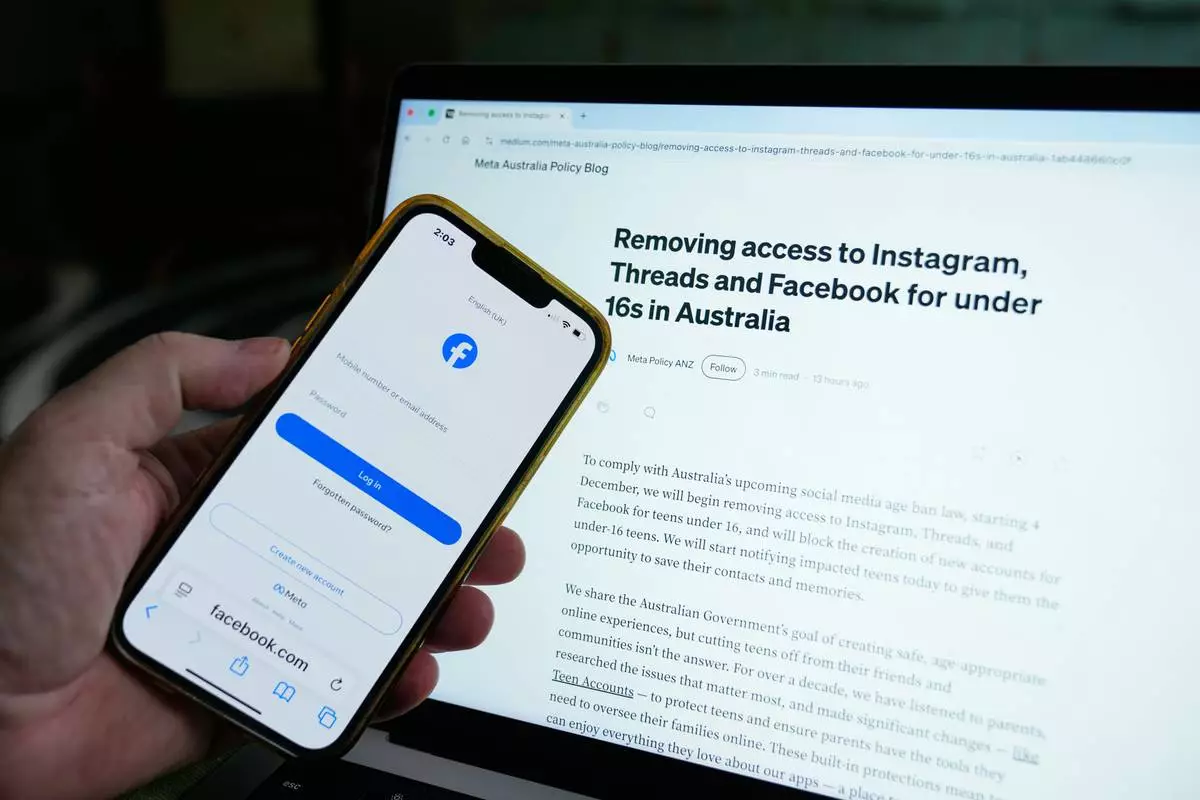
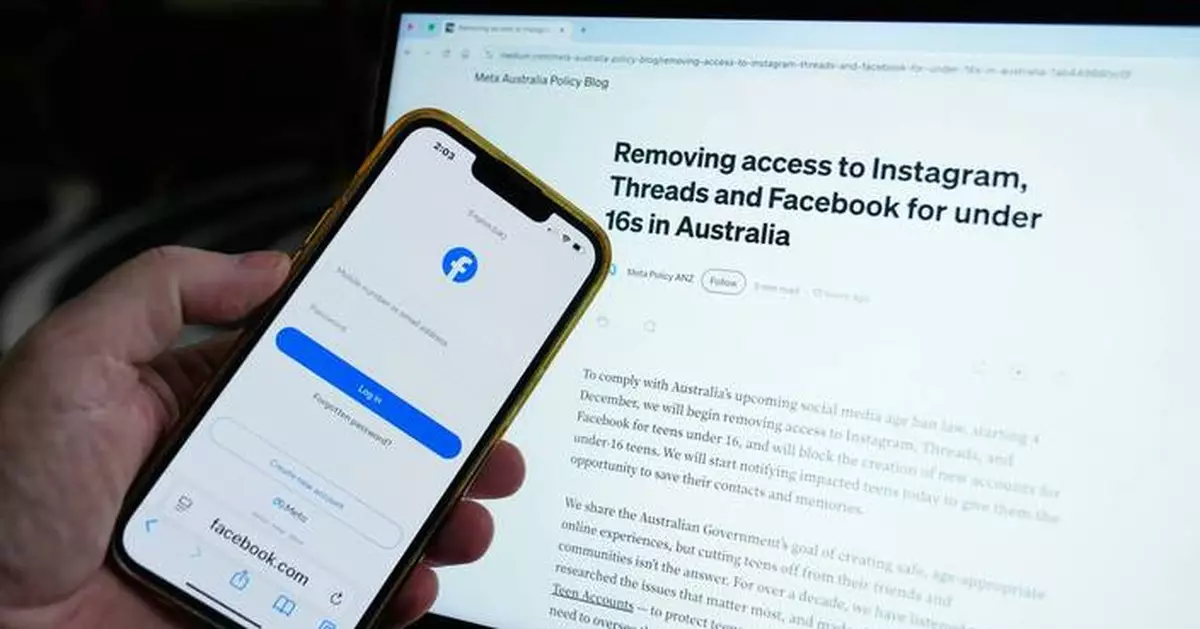
A logon screen for Facebook and the new Meta policy are photographed in Sydney, Australia, Thursday, Nov. 20, 2025. (AP Photo/Rick Rycroft)
WASHINGTON (AP) — The Kennedy Center was running out of options Friday evening to keep President Donald Trump's name on the facade of the iconic performing arts venue.
A judge earlier in the afternoon rejected a request to pause a court-ordered deadline of Friday to remove references to Trump from the building and other aspects of the Kennedy Center's operations. The institution appealed that ruling, an effort that was also rebuffed Friday evening.
Scaffolding was erected earlier in the day around a section of the building that includes Trump's name. After a round of storms passed Friday evening, multiple workers were back at the scene further building out the scaffolding in an apparent effort to prepare for removing the letters referencing the president.
Dozens of people gathered in the plaza in front of the Kennedy Center taking pictures and cheering occasionally as workers built the scaffolding.
After ignoring the Kennedy Center for much of his first term, Trump has wielded tremendous influence over the venue during his return to office. Just a month into his second term, he ousted the center’s previous leadership and replaced it with a board of trustees that named him chairman. Trump's name was quickly added to the building.
In his ruling that only Congress could make changes to the Kennedy Center's name, U.S. District Judge Christopher Cooper also blocked the administration from closing the cultural and arts venue for major renovations that had been planned to start in July and last for two years.
The Kennedy Center's leadership argued in its appeal Friday that the renovation was badly needed and accused the lower court, in terms that seemed similar to Trump's speech patterns, of interfering in the effort.
“The District Court is not allowing us to close in order to properly fix up and repair the Building, including potentially life threatening structural damage like beams and parking garage ceilings that are rusted, and in serious danger of falling onto people below,” according to the appeal. “Indeed, total collapse!”
Even as the Kennedy Center has fought efforts to remove Trump's name from the building, it has taken steps to comply with Cooper's initial ruling.
A June 4 memo to staff from the Kennedy Center’s Office of General Counsel said email signatures, letterhead and other documents must reflect the name as “The John F. Kennedy Center for the Performing Arts” or “Kennedy Center.”
The Kennedy Center’s website has dropped Trump's name. And an earlier email sent to members offering ticket packages for the June 28 Mark Twain Award for American Humor ceremony came from the Kennedy Center without including Trump’s name.
Associated Press journalists Anna Johnson, Mark Sherman and Emily Wang in Washington and Bill Barrow in Atlanta contributed to this report.
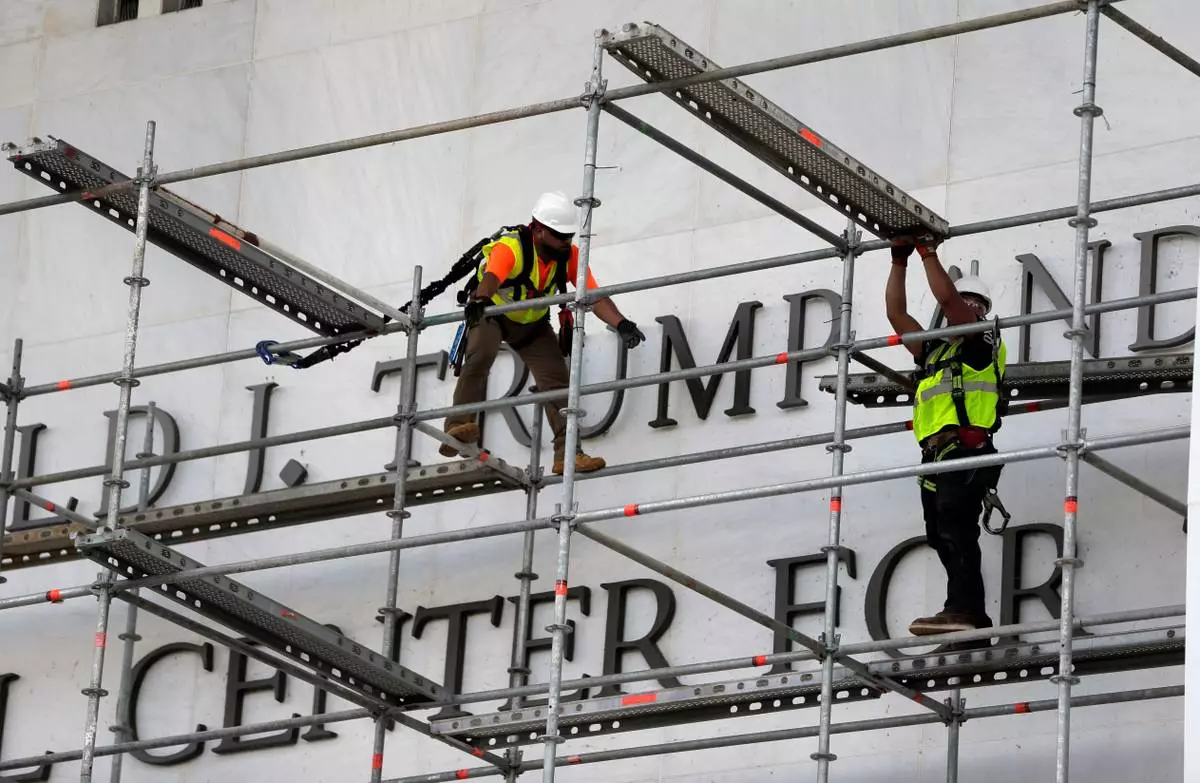
Workers construct scaffolding at the sign for the John F. Kennedy Center for the Performing Arts, Friday, June 12, 2026, in Washington. (AP Photo/Rahmat Gul)
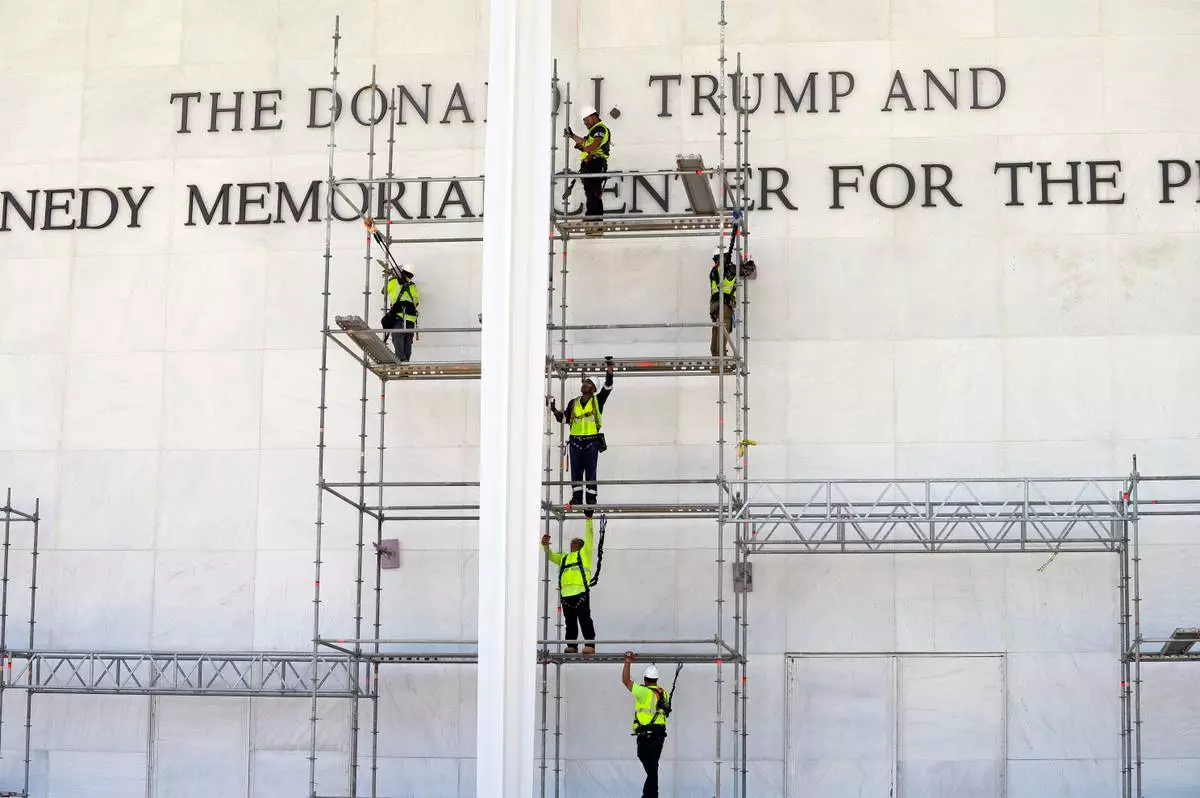
Workers erect scaffolding in front of the John F. Kennedy Center for the Performing Arts sign in Washington, Friday, June 12, 2026. (AP Photo/Cliff Owen)
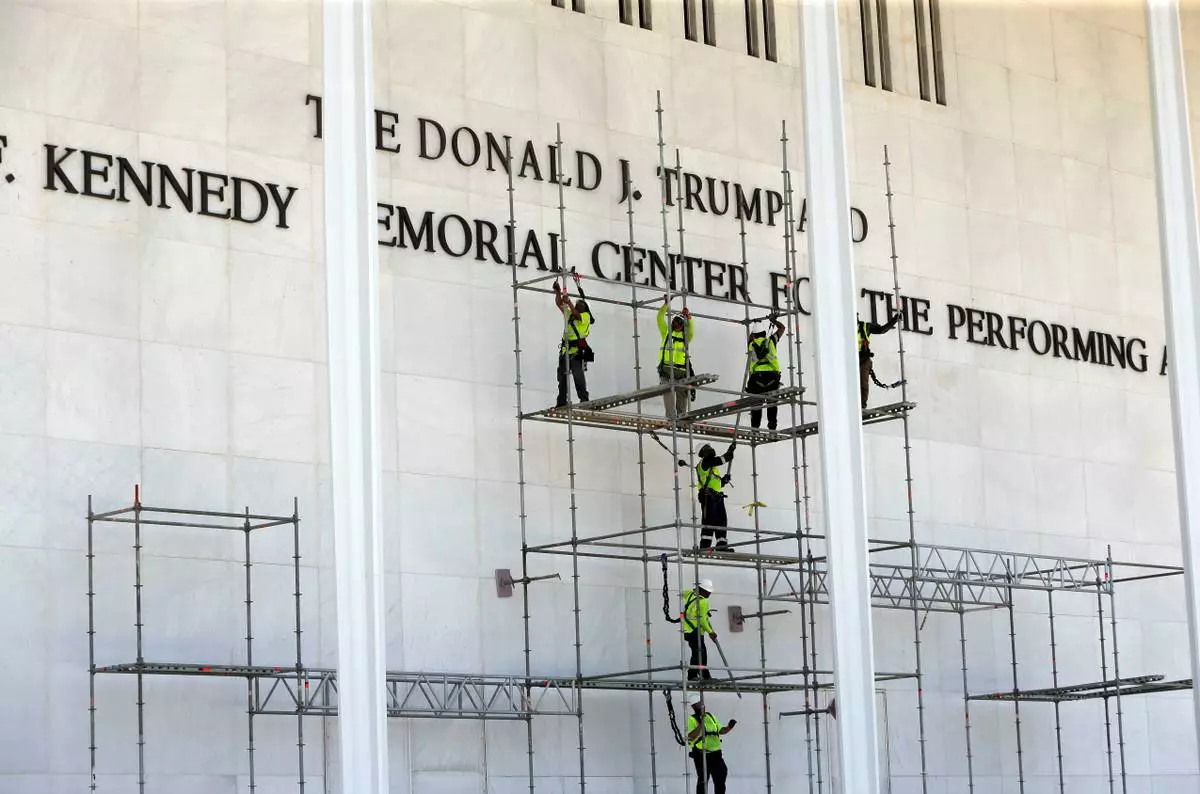
Workers construct scaffolding below the John F. Kennedy Center for the Performing Arts sign Friday, June 12, 2026, in Washington. (AP Photo/Rahmat Gul)
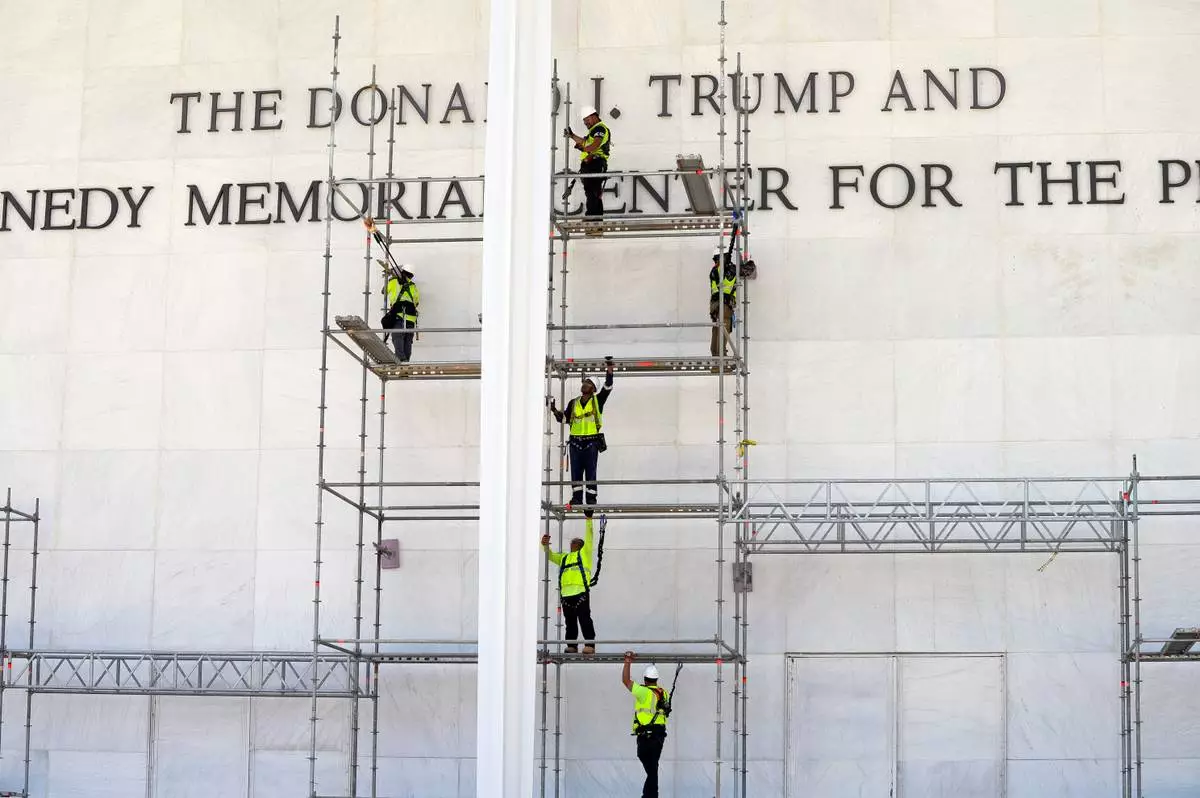
Workers erect scaffolding in front of the John F. Kennedy Center for the Performing Arts sign in Washington, Friday, June 12, 2026. (AP Photo/Cliff Owen)
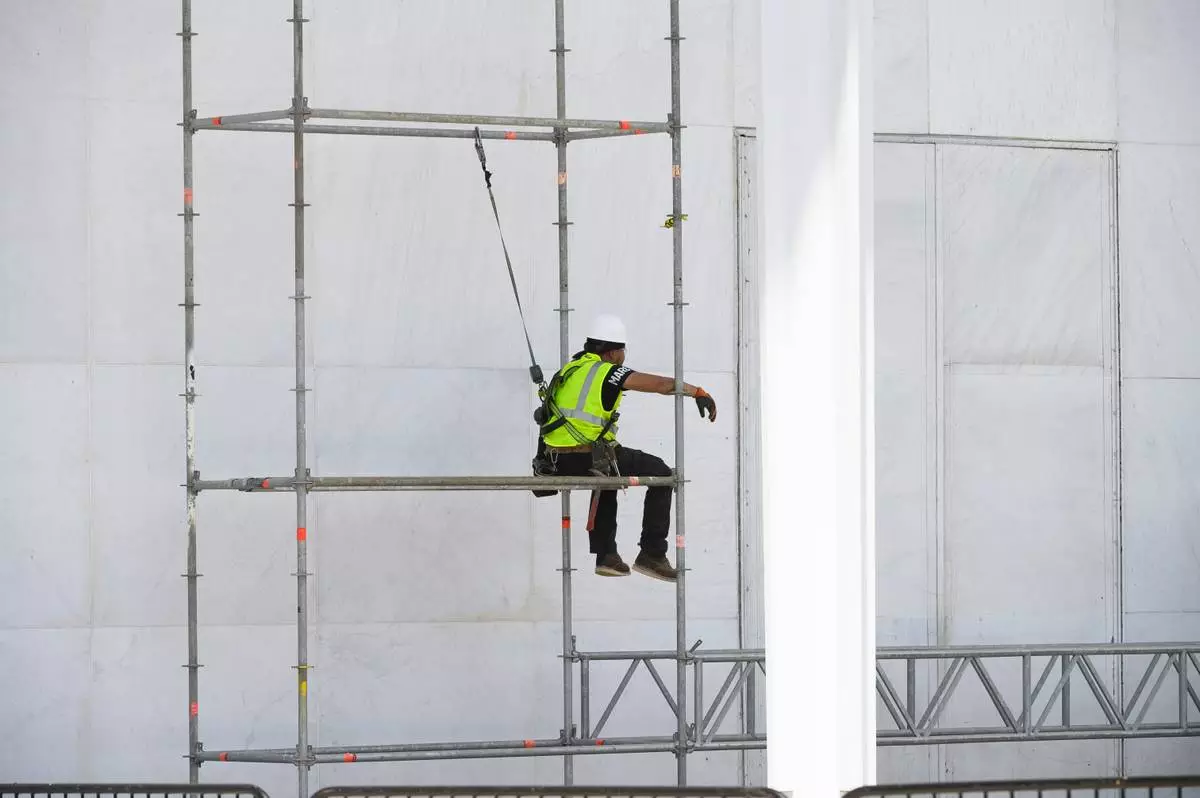
A worker sits on scaffolding at the John F. Kennedy Center for the Performing Arts in Washington, Friday, June 12, 2026. (AP Photo/Cliff Owen)