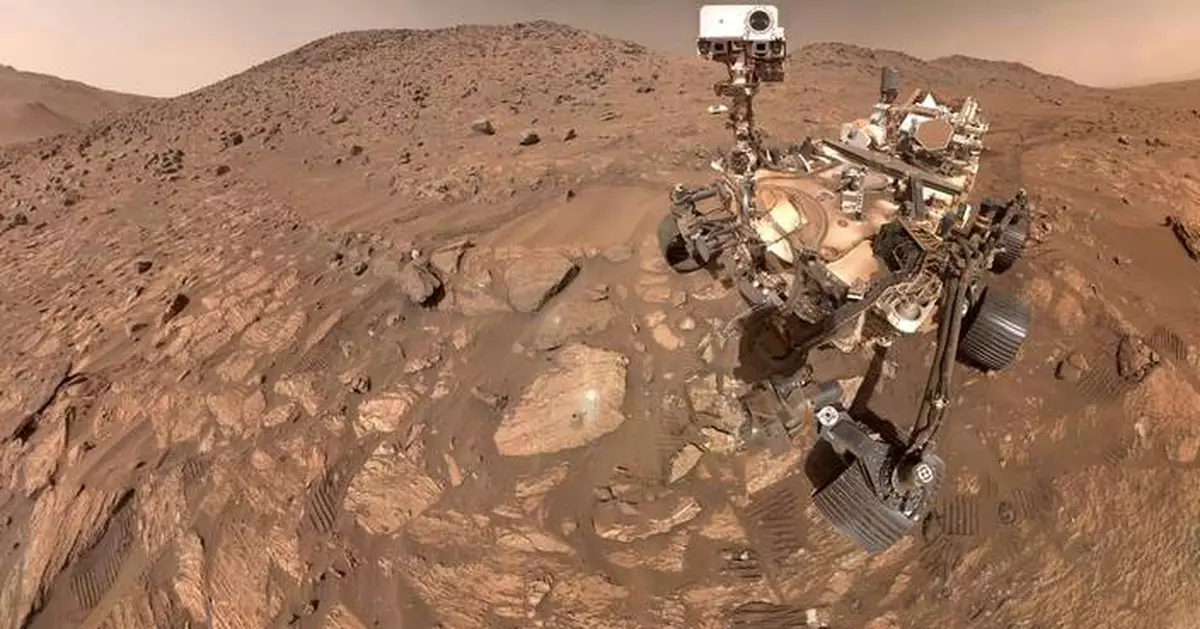
CAPE CANAVERAL, Fla. (AP) — Scientists have detected what they believe to be lightning on Mars by eavesdropping on the whirling wind recorded by NASA's Perseverance rover.
The crackling of electrical discharges was captured by a microphone on the rover, a French-led team reported Wednesday.
The researchers documented 55 instances of what they call “mini lightning” over two Martian years, primarily during dust storms and dust devils. Almost all occurred on the windiest Martian sols, or days, during dust storms and dust devils.
Just inches (centimeters) in size, the electrical arcs occurred within 6 feet (2 meters) of the microphone perched atop the rover’s tall mast, part of a system for examining Martian rocks via camera and lasers. Sparks from the electrical discharges — akin to static electricity here on Earth — are clearly audible amid the noisy wind gusts and dust particles smacking the microphone.
Scientists have been looking for electrical activity and lightning at Mars for half a century, said the study’s lead author Baptiste Chide, of the Institute for Research in Astrophysics and Planetology in Toulouse.
“It opens a completely new field of investigation for Mars science,” Chide said, citing the possible chemical effects from electrical discharges. “It’s like finding a missing piece of the puzzle.”
The evidence is strong and persuasive, but it's based on a single instrument that was meant to record the rover zapping rocks with lasers, not lightning blasts, said Cardiff University's Daniel Mitchard, who was not involved in the study. What's more, he noted in an article accompanying the study in the journal Nature, the electrical discharges were heard — not seen.
“It really is a chance discovery to hear something else going on nearby, and everything points to this being Martian lightning,” Mitchard said in an email. But until new instruments are sent to verify the findings, “I think there will still be a debate from some scientists as to whether this really was lightning.”
Lightning has already been confirmed on Jupiter and Saturn, and Mars has long been suspected of having it too.
To find it, Chide and his team analyzed 28 hours of Perseverance recordings, documenting episodes of “mini lightning” based on acoustic and electric signals.
Electrical discharges generated by the fast-moving dust devils lasted just a few seconds, while those spawned by dust storms lingered as long as 30 minutes.
“It’s like a thunderstorm on Earth, but barely visible with a naked eye and with plenty of faint zaps,” Chide said in an email. He noted that the thin, carbon dioxide-rich Martian atmosphere absorbs much of the sound, making some of the zaps barely perceptible.
Mars’ atmosphere is more prone than Earth’s to electrical discharging and sparking through contact among grains of dust and sand, according to Chide.
“The current evidence suggests it is extremely unlikely that the first person to walk on Mars could, as they plant a flag on the surface, be struck down by a bolt of lightning,” Mitchard wrote in Nature. But the “small and frequent static-like discharges could prove problematic for sensitive equipment.”
These aren’t the first Mars sounds transmitted by Perseverance. Earthlings have listened in to the rover’s wheels crunching over the Martian surface and the whirring blades of its no-longer-flying helicopter sidekick, Ingenuity.
Perseverance has been scouring a dry river delta at Mars since 2021, collecting samples of rock for possible signs of ancient microscopic life. NASA plans to return these core samples to Earth for laboratory analysis, but the delivery is on indefinite hold as the space agency pursues cheaper options.
The Associated Press Health and Science Department receives support from the Howard Hughes Medical Institute’s Department of Science Education and the Robert Wood Johnson Foundation. The AP is solely responsible for all content.
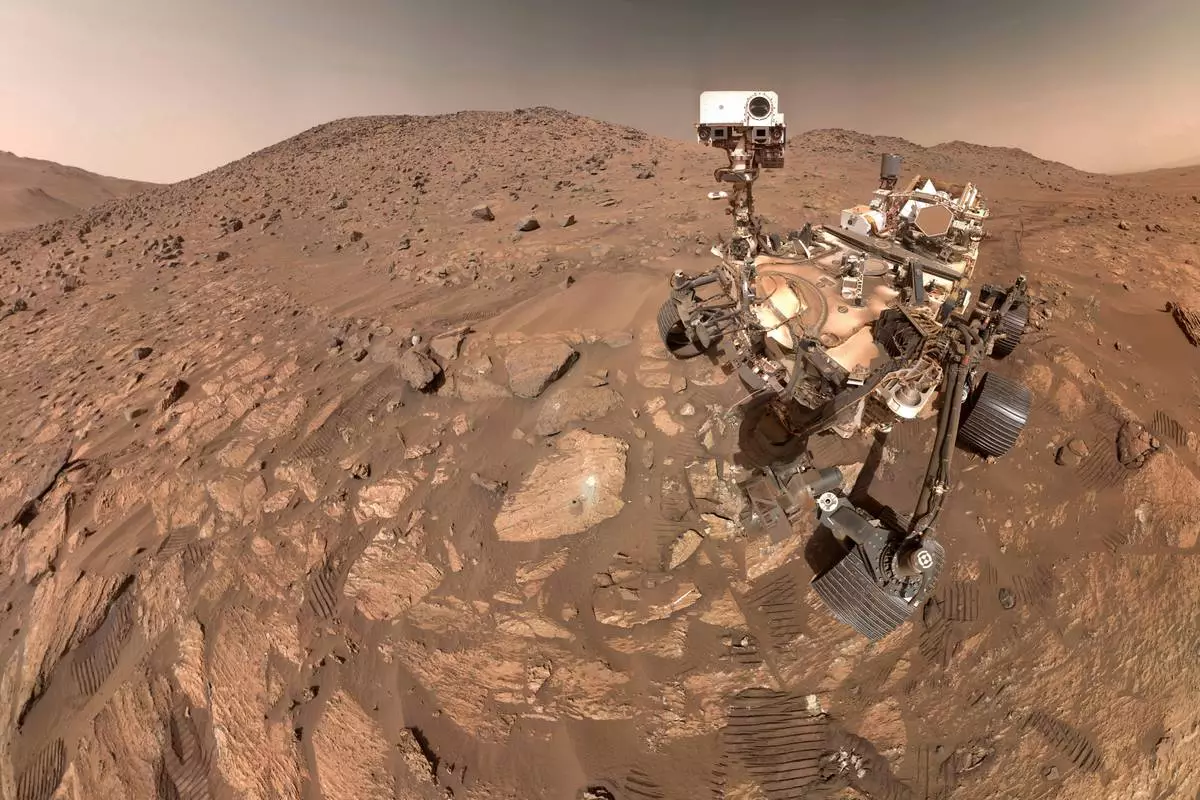
FILE - This image provided by NASA, shows a selfie of their Perseverance Mars rover, on July 23, 2024. The image is made up of 62 individual images that were stitched together. (NASA via AP, file)
DUBAI, United Arab Emirates (AP) — Iran fired more missiles at Israel and Gulf Arab states Thursday, demonstrating Tehran’s continued ability to strike its neighbors even as U.S. President Donald Trump claimed the threat from the country was nearly eliminated.
Iran’s attacks on Gulf states along with its chokehold on the Strait of Hormuz have disrupted the world’s energy supplies with effects far beyond the Middle East. That has proved to be Iran’s greatest strategic advantage in the war. Britain held a call with nearly three dozen countries about how to reopen the strait once the fighting is over.
Trump has insisted the strait can be taken by force — but said it is not up to the U.S. to do that. In an address to the American people Wednesday night, he encouraged countries that depend on oil from Hormuz to “build some delayed courage” and go “take it.”
Before the U.S. and Israel started the war on Feb. 28 with strikes on Iran, the waterway was open to traffic and 20% of all traded oil passed through it.
Iran responded defiantly to Trump’s speech, in which the American president claimed U.S. military action had been so decisive that “one of the most powerful countries” is “really no longer a threat.”
A spokesman for Iran’s military, Lt. Col. Ebrahim Zolfaghari, insisted Thursday that Tehran maintains hidden stockpiles of arms, munitions and production facilities. He said facilities targeted so far by U.S. strikes are “insignificant.”
Just before Trump began his address — in which he said U.S. “core strategic objectives are nearing completion” — explosions were heard in Dubai as air defenses worked to intercept an Iranian missile barrage.
Less than a half-hour after the president was done, Israel said its military was also working to intercept incoming missiles. Sirens sounded in Bahrain, home to the U.S. Navy’s 5th Fleet, immediately after the speech.
Attacks continued across Iran on Thursday, with strikes reported in multiple cities.
Even amid the conflict, families went to a park in Tehran to play games and grill food to mark the last day of Iranian New Year, or Nowruz.
In Lebanon — home to Iran-backed Hezbollah militants who are fighting Israel, which has launched a ground invasion — an Israeli strike killed four people in the south, the Health Ministry said.
More than 1,900 people have been killed in Iran during the war, while 19 have been reported dead in Israel. More than two dozen people have died in Gulf states and the occupied West Bank, while 13 U.S. service members have been killed.
More than 1,300 people have been killed and more than 1 million displaced in Lebanon. Ten Israeli soldiers have also died there.
Iranian attacks on about two dozen commercial ships, and the threat of more, have halted nearly all traffic in the waterway that connects the Persian Gulf to the open ocean.
Since March 1, traffic through the strait has dropped 94% over the same period last year, according to the Lloyds List Intelligence shipping data firm. Two ships are confirmed to have paid a fee, the firm said, while others were allowed through based on agreements with their home governments.
Saudi Arabia piped about 1 billion barrels of oil away from the Strait of Hormuz in March, according to maritime data firm Kpler, while Iraq said Thursday that it had started to truck oil across Syria to avoid the strait.
The 35 countries that spoke Thursday, including all G7 industrialized democracies except the U.S., as well as the United Arab Emirates and Bahrain, signed a declaration last month demanding Iran stop blocking the strait.
Thursday’s talks were focused on political and diplomatic measures, but British Foreign Secretary Yvette Cooper said military planners from an unspecified number of countries will also plot ways to ensure security once fighting ends, including potential mine-clearing work and “reassurance” for commercial shipping.
No country appears willing to try to open the strait by force while the war is raging. French President Emmanuel Macron, while on a visit to South Korea, called a military operation to secure the waterway “unrealistic.”
But there is a concern that Iran might limit traffic through the waterway even after U.S. and Israeli attacks cease.
The idea of an international effort has echoes of the “coalition of the willing,” led by the U.K. and France, that was assembled to underpin Ukraine’s security in the event of a ceasefire in that war. The coalition is, in part, an attempt to demonstrate to Washington that Europe is doing more for its own security in the face of frequent criticism from Trump.
The conflict is driving up prices for oil and natural gas, roiling stock markets, pushing up the cost of gasoline and threatening to make a range of goods, including food, more expensive.
On Thursday, Brent crude, the international standard, rose again and was around $108, up about 50% from Feb. 28.
Though the oil and gas that typically transits the strait is primarily sold to Asian nations, Japan and South Korea were the only two countries from the region joining Thursday's call about the strait. The supply of jet fuel has also been interrupted, with consequences for travel worldwide.
Weissert reported from Washington and Rising from Bangkok. Associated Press writer David McHugh in Frankfurt, Germany, contributed to this story.
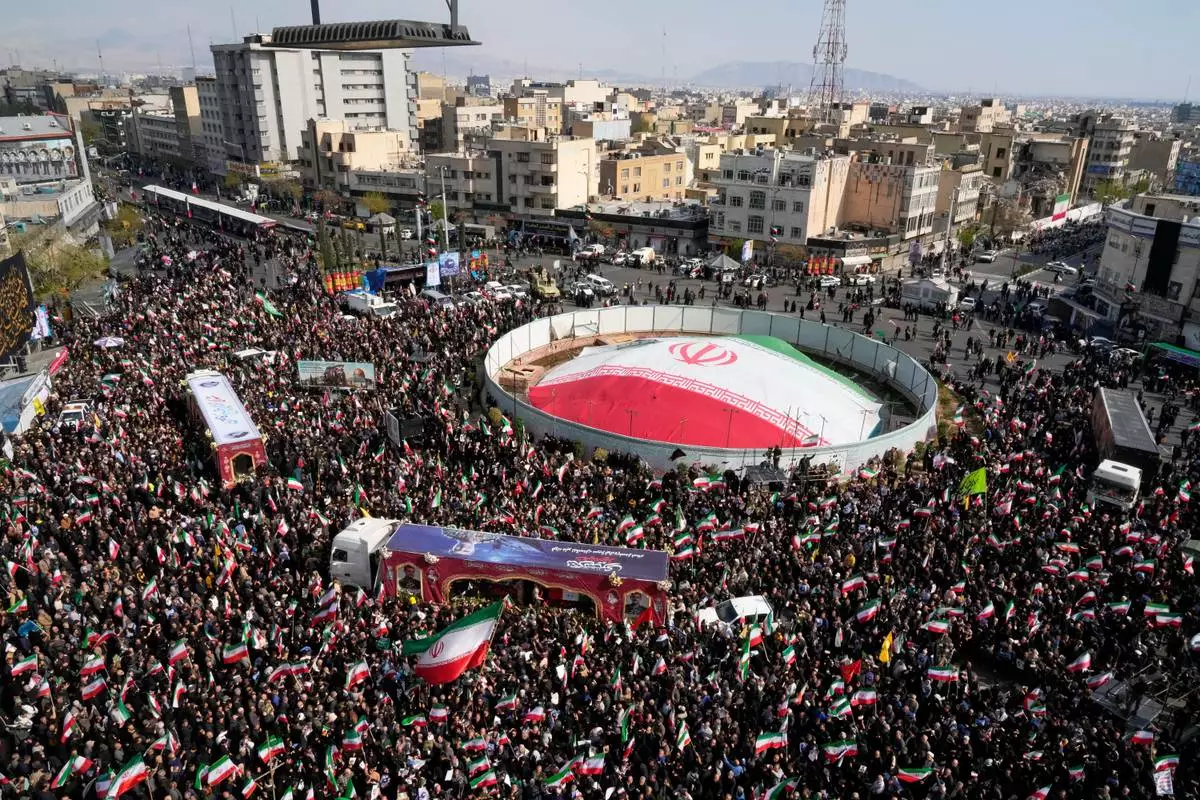
Mourners gather during a funeral procession for Alireza Tangsiri, head of Iran's Islamic Revolutionary Guard Corps Navy, and others killed in Israeli strikes in late March, in Tehran, Iran, Wednesday, April 1, 2026. (AP Photo/Vahid Salemi)
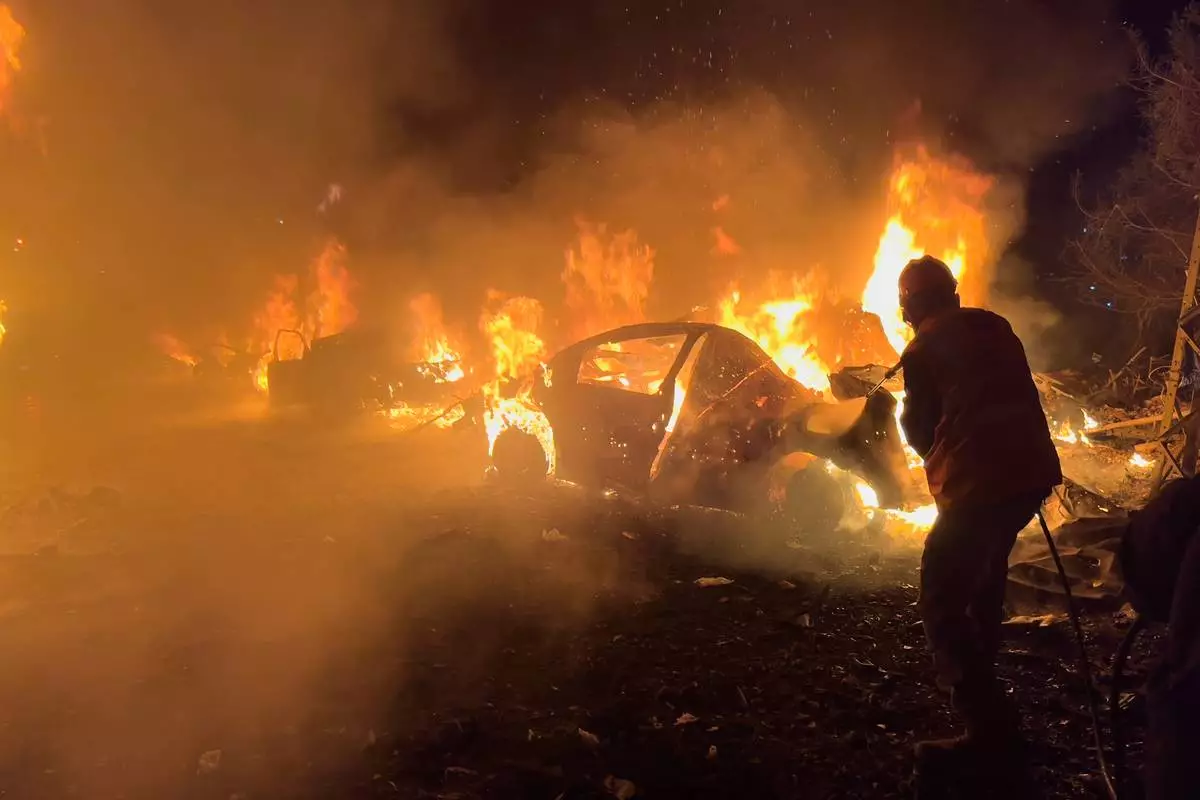
A firefighter extinguishes a car at the site of Israeli airstrikes, in Beirut, Lebanon, Wednesday, April 1, 2026. (AP Photo/Hussein Malla)

People take cover in a bomb shelter as air raid sirens warn of incoming Iranian missile strikes in Bnei Brak, Israel, Wednesday, April 1, 2026. (AP Photo/Oded Balilty)
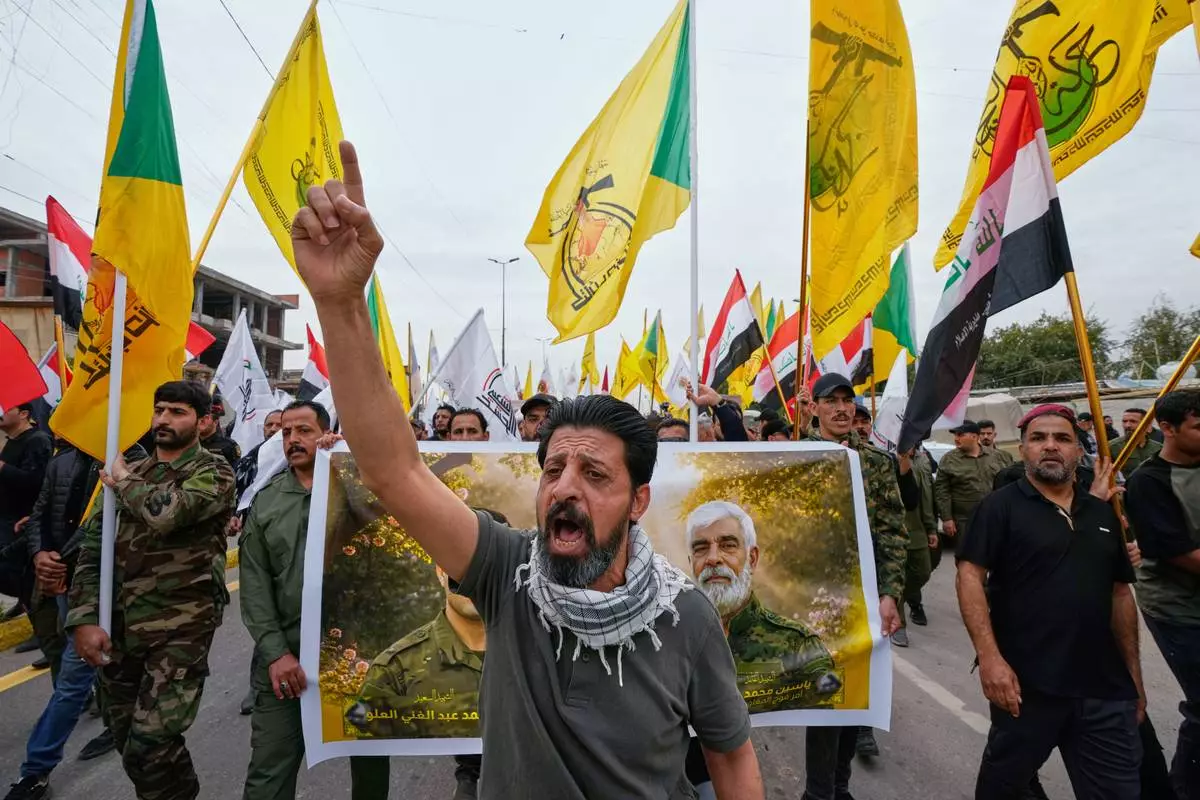
Members from the Popular Mobilization Forces attend a funeral of fighters who were killed in a U.S. airstrike, in Tal Afar, Nineveh province, north of Baghdad, Iraq, Thursday, April 2, 2026. (AP Photo/Hadi Mizban)
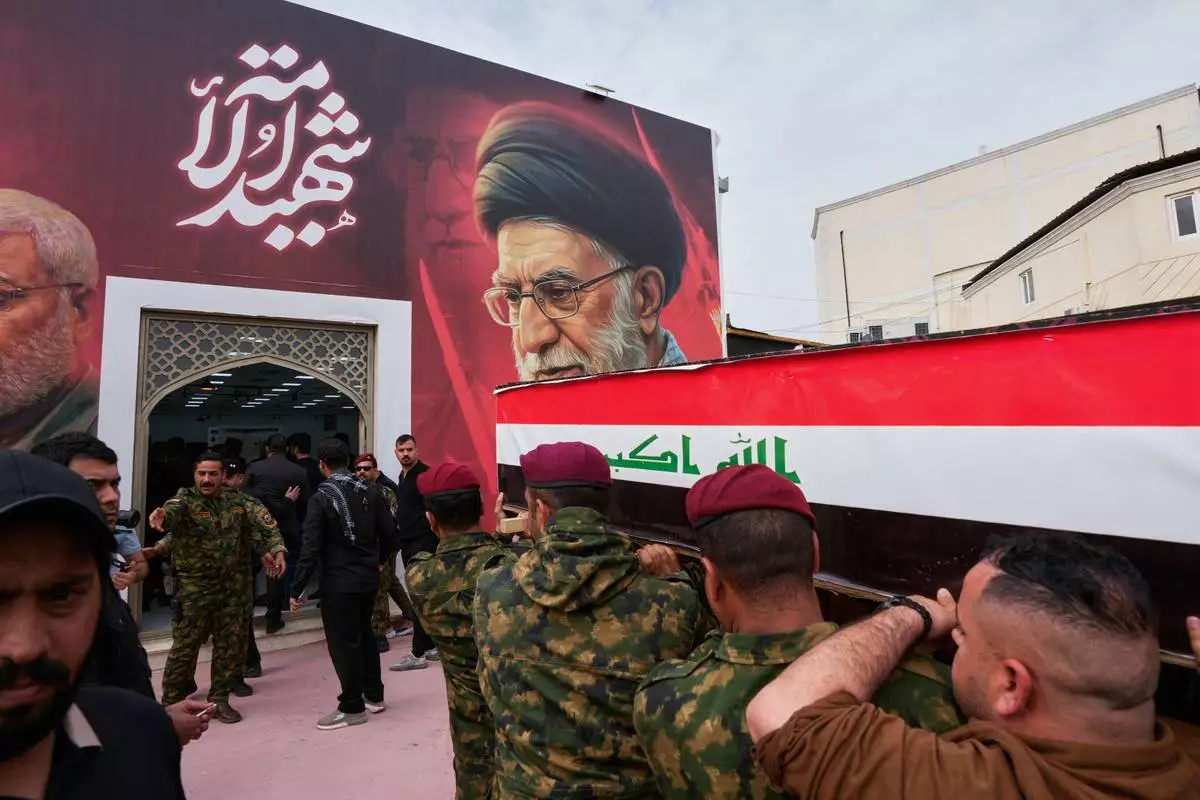
Members from the Popular Mobilization Forces attend a funeral of fighters who were killed in a U.S. airstrike, in Tal Afar, Nineveh province, north of Baghdad, Iraq, Thursday, April 2, 2026. (AP Photo/Hadi Mizban)
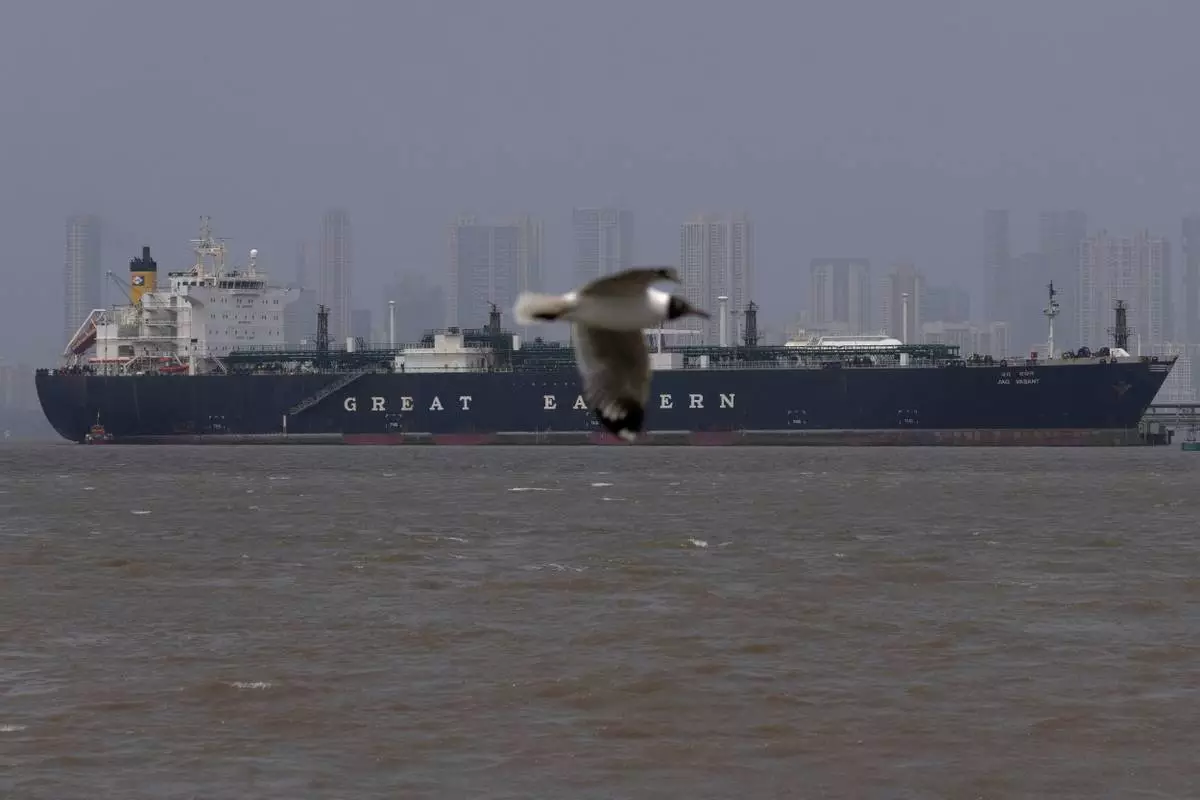
The Indian flagged LPG carrier Jag Vasant transporting liquefied petroleum gas, is seen at the Mumbai Port in Mumbai, India, after it arrived clearing the Strait of Hormuz, Wednesday, April 1, 2026. (AP Photo/Rafiq Maqbool)

President Donald Trump speaks about the Iran war from the Cross Hall of the White House on Wednesday, April 1, 2026, in Washington. (AP Photo/Alex Brandon, Pool)

President Donald Trump walks from the Blue Room to speak about the Iran war from the Cross Hall of the White House on Wednesday, April 1, 2026, in Washington. (AP Photo/Alex Brandon, Pool)
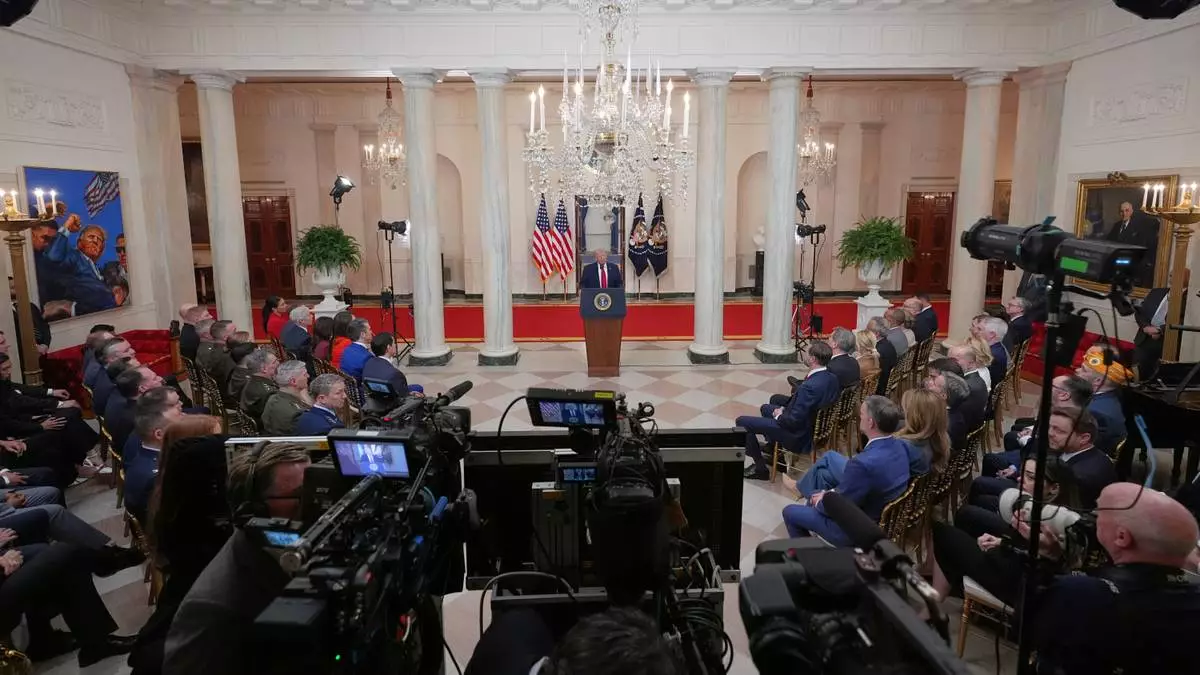
President Donald Trump speaks about the Iran war from the Cross Hall of the White House on Wednesday, April 1, 2026, in Washington. (AP Photo/Alex Brandon, Pool)

President Donald Trump speaks about the Iran war from the Cross Hall of the White House on Wednesday, April 1, 2026, in Washington. (AP Photo/Alex Brandon, Pool)