Skip to Content Facebook Feature Image

What do an axe, a bucket and a cannon have in common? Meet the rivalry trophies of college football

Sport

What do an axe, a bucket and a cannon have in common? Meet the rivalry trophies of college football
Sport

Sport

What do an axe, a bucket and a cannon have in common? Meet the rivalry trophies of college football

2025-11-27 04:16 Last Updated At:11-30 14:09

MINNEAPOLIS (AP) — The most-played series in major college football history, the bitter border-state rivalry between Minnesota and Wisconsin, is punctuated each year with a postgame ritual by the winning team that could be described as jubilant yardwork.

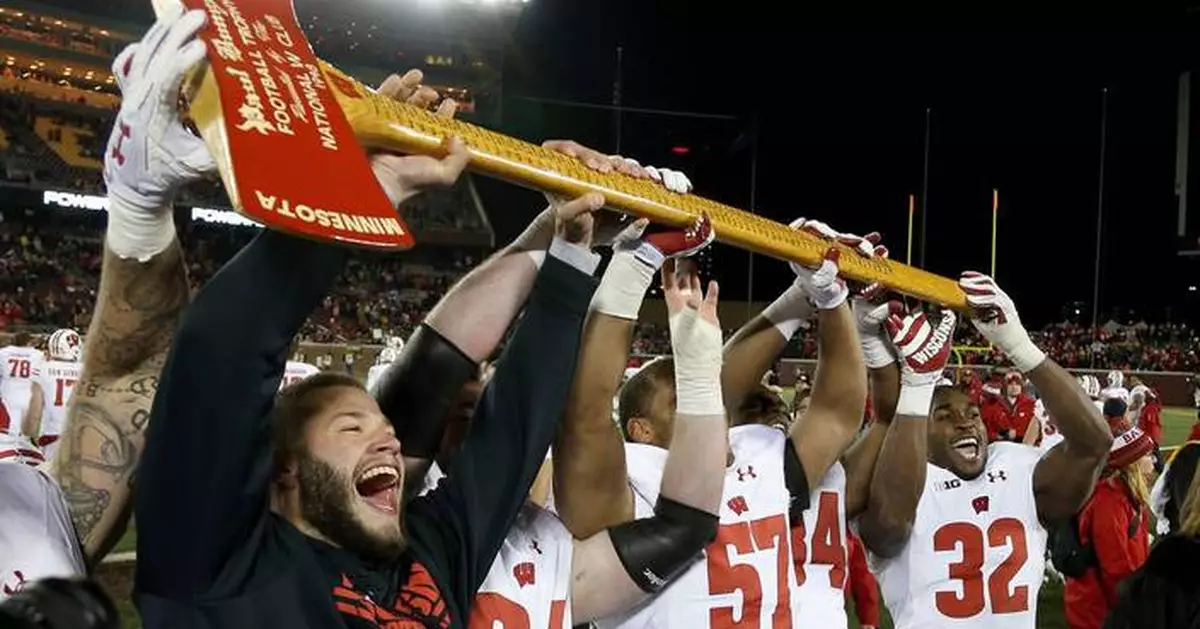
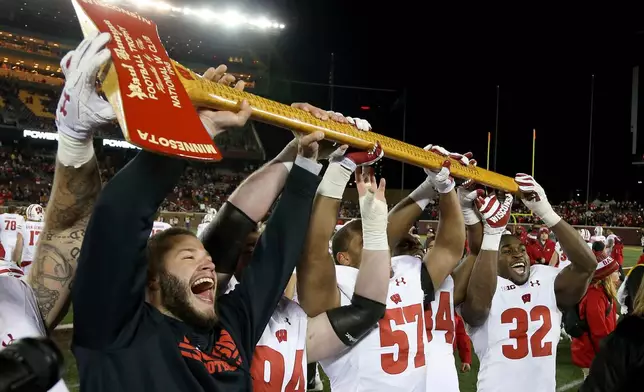
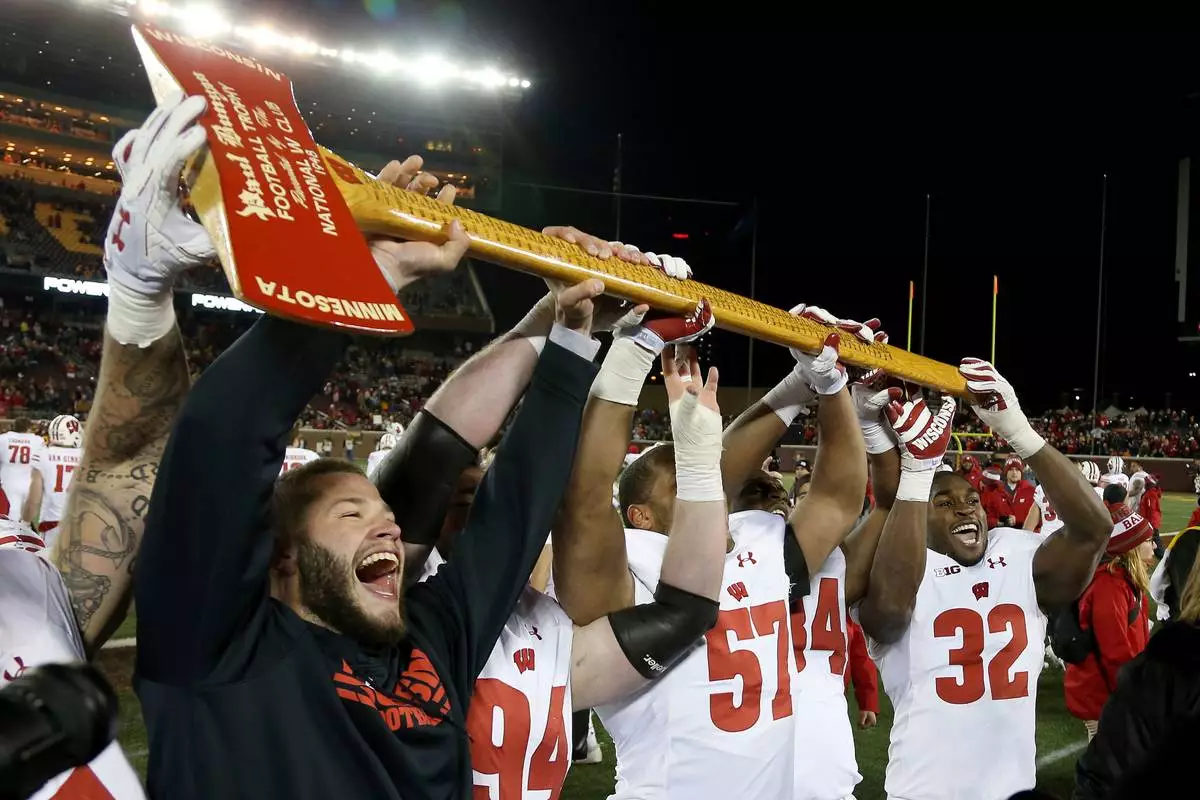
When time expires on Saturday in the 135th edition of the Gophers-Badgers grudge match, currently even at 63-63 with eight ties, the victors will sprint toward Paul Bunyan's Axe, take turns hoisting the six-foot shaft above their heads as they parade it around the stadium, and aim the head at one of the goal posts in pretending to chop it down like it's a giant tree in the north woods. The axe has been awarded annually since 1948.

More Images
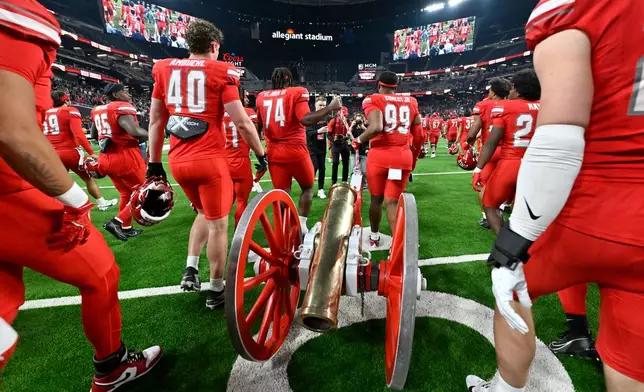
FILE - UNLV pulls the Fremont Cannon trophy, awarded to the winner of the annual Battle of Nevada game, on the field after defeating Nevada in an NCAA college football game Saturday, Nov. 30, 2024, in Las Vegas. (AP Photo/David Becker, File)
FILE - UNLV pulls the Fremont Cannon trophy, awarded to the winner of the annual Battle of Nevada game, on the field after defeating Nevada in an NCAA college football game Saturday, Nov. 30, 2024, in Las Vegas. (AP Photo/David Becker, File)

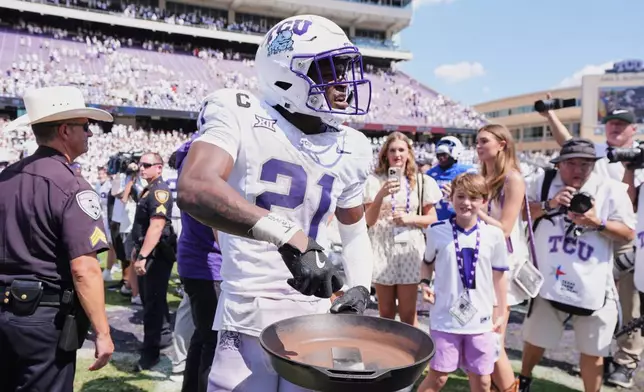
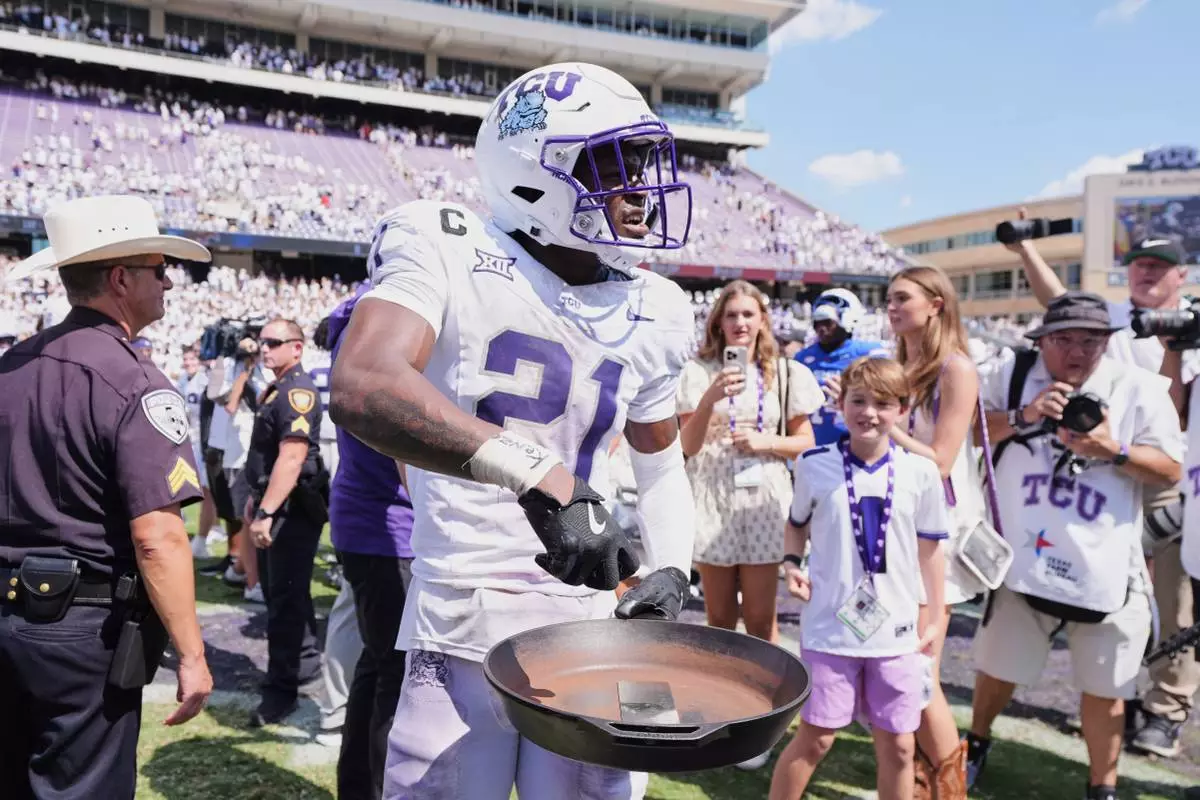
FILE - TCU safety Bud Clark (21) celebrates with the "iron skillet" after the team's win over SMU in an NCAA college football game, Saturday, Sept. 20, 2025, in Fort Worth, Texas. (AP Photo/Tony Gutierrez, File)
FILE - TCU safety Bud Clark (21) celebrates with the "iron skillet" after the team's win over SMU in an NCAA college football game, Saturday, Sept. 20, 2025, in Fort Worth, Texas. (AP Photo/Tony Gutierrez, File)

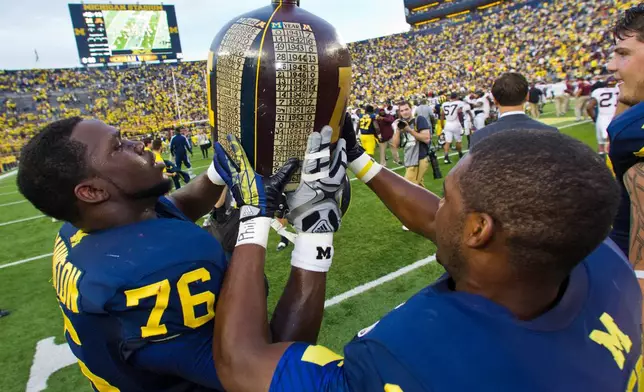
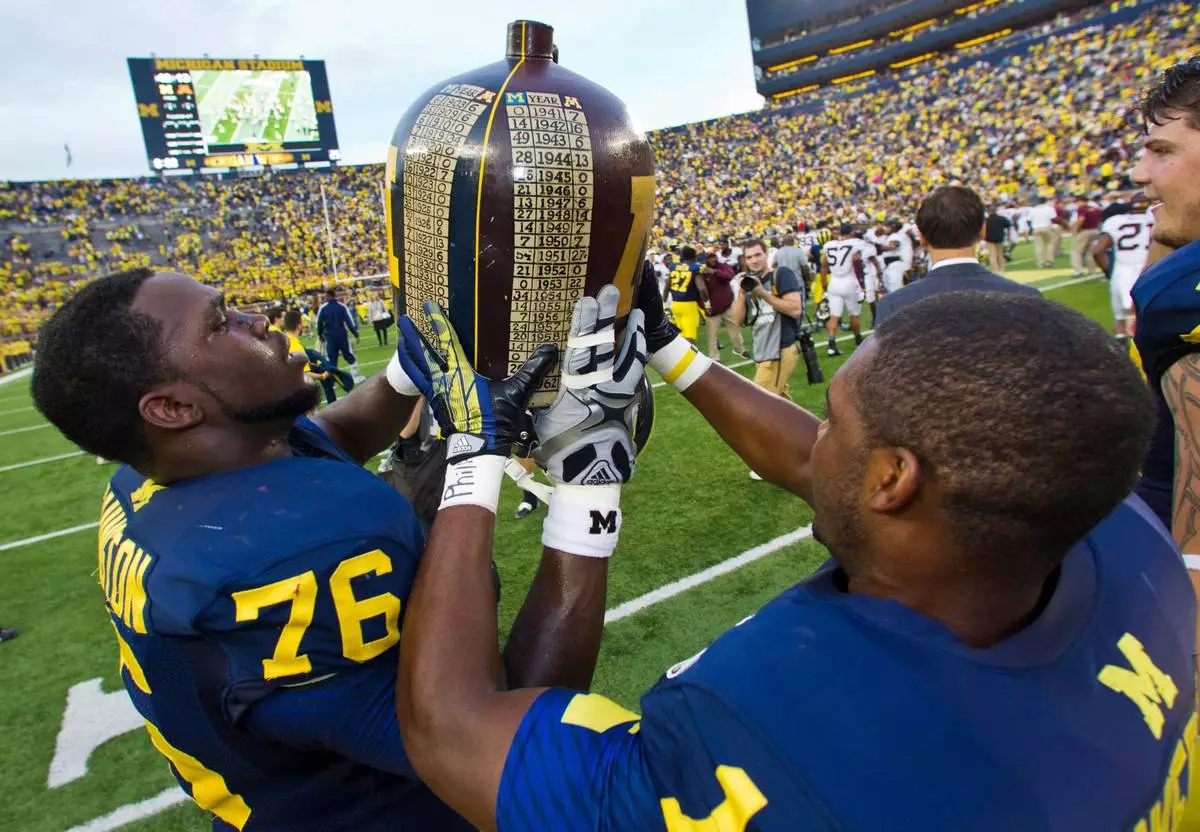
FILE - Michigan defensive tackle Quinton Washington (76) and cornerback Courtney Avery (11) celebrate with the Little Brown Jug trophy after the team's win over Minnesota in an NCAA college football game Oct. 5, 2013, in Ann Arbor, Mich. (AP Photo/Tony Ding, File)
FILE - Michigan defensive tackle Quinton Washington (76) and cornerback Courtney Avery (11) celebrate with the Little Brown Jug trophy after the team's win over Minnesota in an NCAA college football game Oct. 5, 2013, in Ann Arbor, Mich. (AP Photo/Tony Ding, File)

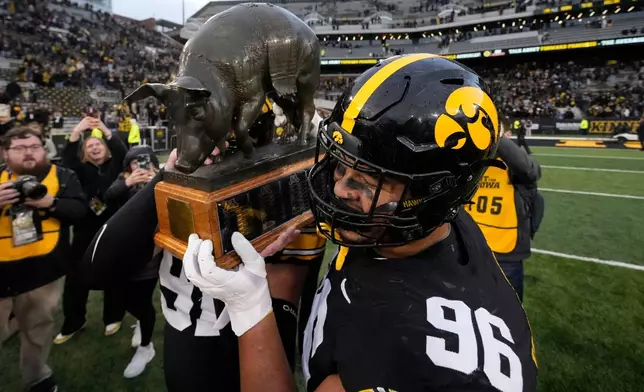
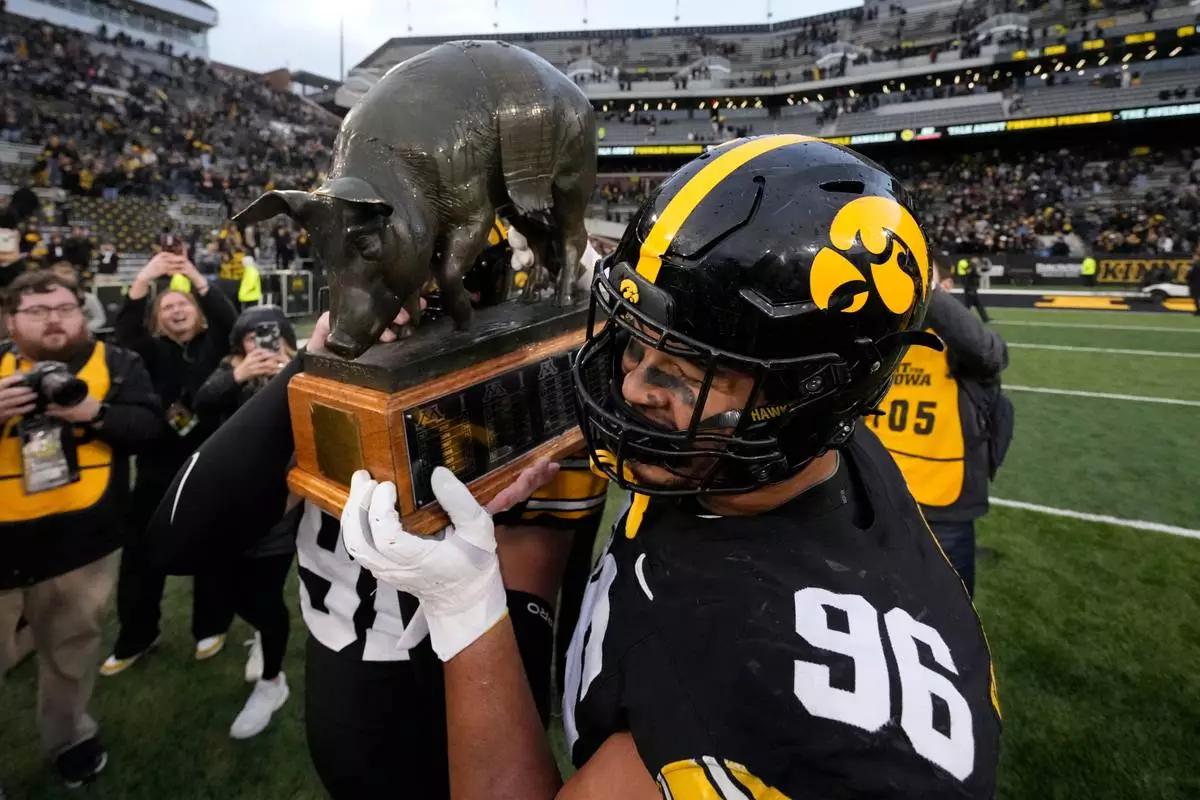
FILE - Iowa defensive lineman Bryce Hawthorne (96) celebrates with the Floyd of Rosedale trophy after an NCAA college football game against Minnesota, Saturday, Oct. 25, 2025, in Iowa City, Iowa. (AP Photo/Charlie Neibergall, File)
FILE - Iowa defensive lineman Bryce Hawthorne (96) celebrates with the Floyd of Rosedale trophy after an NCAA college football game against Minnesota, Saturday, Oct. 25, 2025, in Iowa City, Iowa. (AP Photo/Charlie Neibergall, File)

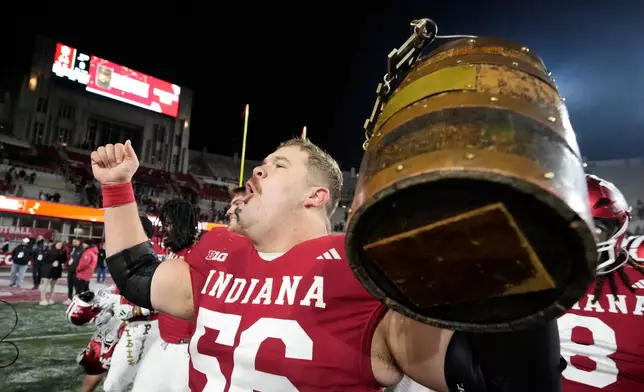
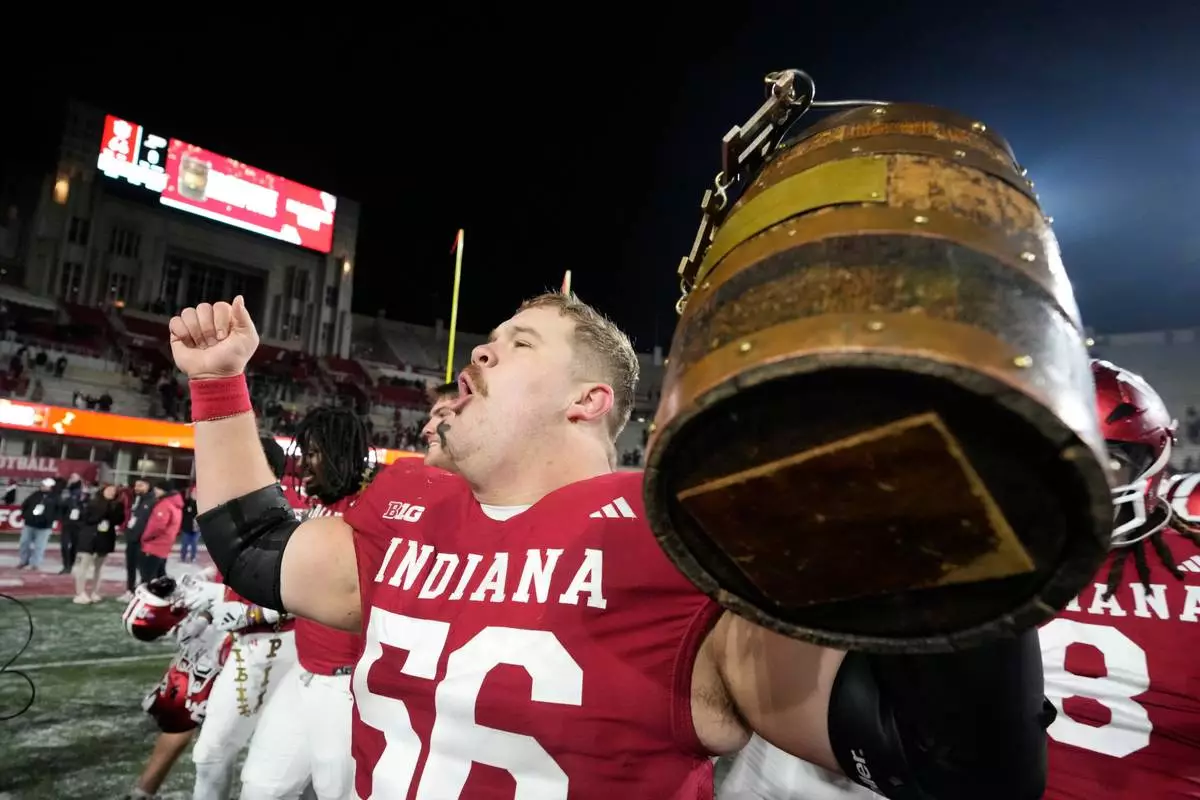
FILE - Indiana's Mike Katic celebrates with the Old Oaken Bucket after defeating Purdue in an NCAA college football game, Saturday, Nov. 30, 2024, in Bloomington, Ind. (AP Photo/Darron Cummings, File)
FILE - Indiana's Mike Katic celebrates with the Old Oaken Bucket after defeating Purdue in an NCAA college football game, Saturday, Nov. 30, 2024, in Bloomington, Ind. (AP Photo/Darron Cummings, File)

FILE - FILE - In this Nov. 25, 2017, file photo, Wisconsin players hold up Paul Bunyan's Axe up after winning 31-0 against Minnesota in an NCAA college football game in Minneapolis. (AP Photo/Stacy Bengs, File)

FILE - FILE - In this Nov. 25, 2017, file photo, Wisconsin players hold up Paul Bunyan's Axe up after winning 31-0 against Minnesota in an NCAA college football game in Minneapolis. (AP Photo/Stacy Bengs, File)

There's hardly a richer — or quirkier — tradition in college football than rivalry trophies, one of the few elements of the game that remains the same in the new era of revenue sharing and the transfer portal. From the small schools to the powerhouse programs, nothing captures a sports fan's attention quite like a traveling trophy.

“It’s a way for a community — certainly the students, alumni, fans and faculty, but even more casual fans — to get revved up for a football game,” said Christian Anderson, a University of South Carolina professor whose research focus is on the history of higher education. “There are a lot of people who may not pay attention the whole season, and then the rivalry game comes and they’re a passionate fan for one Saturday.”

Longtime members of the Big Ten boast perhaps the richest history of these one-of-a-kind prizes. The Little Brown Jug, which is neither little nor brown, dates to the Michigan-Minnesota game in 1903. Wolverines coach Fielding Yost, out of fear the Gophers might tamper with their water, had a student manager buy a jug for the team. After a brutal struggle ended in a tie as Minnesota fans stormed the field, the container was left behind. The Gophers formally returned it after the Wolverines won the next meeting in 1909.

Minnesota fared better at the beginning with Floyd of Rosedale, a 98-pound bronze pig named after the state's governor in 1935 who suggested the trophy to his Iowa counterpart as a way to deescalate tension between two fan bases with deep roots in farming.

Indiana will face Purdue on Friday for the Old Oaken Bucket, found in disrepair on a local farm in 1925 with the belief it might have been used by Confederate soldiers in the Civil War. Indiana and Michigan State have competed since 1950 for the Old Brass Spittoon, a relic from the trading post era purchased at an antique shop by an MSU student to add incentive to the game.

Illinois and Ohio State have played for a century for the Illibuck Trophy, now a wooden turtle after an ill-fated attempt to award the real thing — a 16-pound snapper — to a student society on the campus of the winning team. Michigan and Michigan State have fought since 1953 for annual ownership of the Paul Bunyan Trophy, a four-foot wooden statue of the mythical lumberjack donated by the state's governor to mark MSU's entry into the conference.

As football became the front-of-the-brochure image of a college campus, the power of visuals has helped make these trophies lasting legends.

“It’s a tangible representation that we beat our rivals,” Anderson said. “Maybe we only keep it for a year because it’s a traveling trophy, but next time we're going back to get it if we didn't win it.”

The NCAA certified the Territorial Cup played for by Arizona and Arizona State as the oldest known rivalry trophy, awarded after their first meeting in 1899. But there's a gap in the history of the small, silver-plated pitcher. It was missing for decades until its rediscovery in a storage area of a church near the ASU campus in 1983. Traveling-trophy formality was finally reinstated in 2001.

If there's one recurring theme among rivalry trophies, it is relics from the pre-industrial age. Nevada and UNLV play for the Fremont Cannon, a 545-pound replica of the cannon the explorer of the same name abandoned in a snowstorm during his trek through the state in 1844.

Notre Dame and USC have the Jewelled Shillelagh, a wooden symbol of a traditional Gaelic war club that was first presented in 1952. Oh, and there are all kinds of bells waiting to be rung by a winning team out there. Lots of bells.

California and Stanford play for an axe, too, except theirs is just the head mounted on a plaque, an oft-stolen trophy annually awarded since 1933. Kentucky and Tennessee battle for a beer barrel.

When Mississippi fans stormed Mississippi State's field after a Rebels win in 1926, MSU supporters balked and brawls broke out. To help restore dignity to the rivalry the following year, the student bodies from both schools introduced the Golden Egg, a gold-plated football mounted on a pedestal.

Fortunately, the egg never gets too close to the Dallas-Fort Worth Metroplex in Texas, where SMU and TCU have played for the Iron Skillet since 1946. The rivals from the defunct Southwest Conference have met 104 times in 110 years, but no future games have been scheduled.

The Slab of Bacon is safely away from the skillet, too.

That was the first version of the Minnesota-Wisconsin hardware, a wooden slab that went missing in 1943 after the planned exchange following a Gophers victory never took place, for reasons that depend on which school is telling the story.

A summer storage cleanout project in Madison in 1994 turned up the trophy, which Wisconsin has since kept on display. Somehow, all the game scores through 1970 are inscribed on it even though it was supposedly unable to be found for all those years.

Get poll alerts and updates on the AP Top 25 throughout the season. Sign up here and here (AP News mobile app). AP college football: https://apnews.com/hub/ap-top-25-college-football-poll and https://apnews.com/hub/college-football.
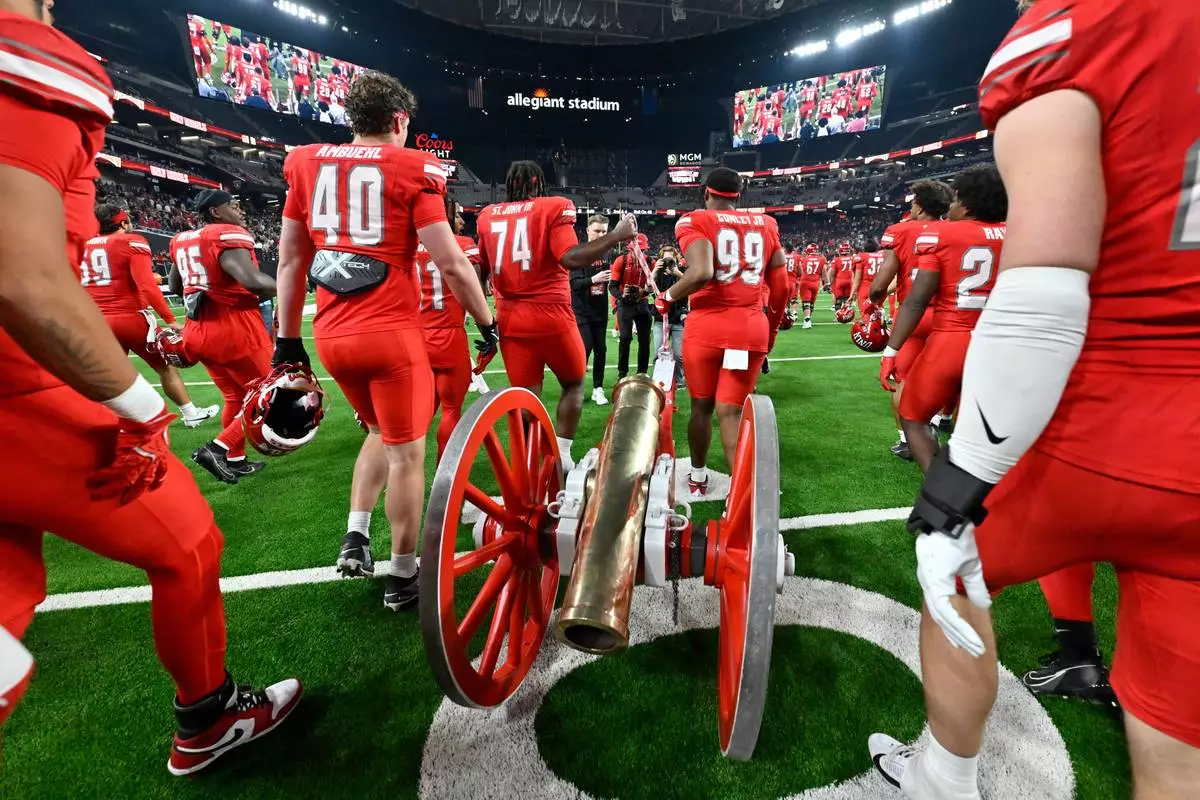
FILE - UNLV pulls the Fremont Cannon trophy, awarded to the winner of the annual Battle of Nevada game, on the field after defeating Nevada in an NCAA college football game Saturday, Nov. 30, 2024, in Las Vegas. (AP Photo/David Becker, File)
FILE - UNLV pulls the Fremont Cannon trophy, awarded to the winner of the annual Battle of Nevada game, on the field after defeating Nevada in an NCAA college football game Saturday, Nov. 30, 2024, in Las Vegas. (AP Photo/David Becker, File)

FILE - TCU safety Bud Clark (21) celebrates with the "iron skillet" after the team's win over SMU in an NCAA college football game, Saturday, Sept. 20, 2025, in Fort Worth, Texas. (AP Photo/Tony Gutierrez, File)
FILE - TCU safety Bud Clark (21) celebrates with the "iron skillet" after the team's win over SMU in an NCAA college football game, Saturday, Sept. 20, 2025, in Fort Worth, Texas. (AP Photo/Tony Gutierrez, File)

FILE - Michigan defensive tackle Quinton Washington (76) and cornerback Courtney Avery (11) celebrate with the Little Brown Jug trophy after the team's win over Minnesota in an NCAA college football game Oct. 5, 2013, in Ann Arbor, Mich. (AP Photo/Tony Ding, File)
FILE - Michigan defensive tackle Quinton Washington (76) and cornerback Courtney Avery (11) celebrate with the Little Brown Jug trophy after the team's win over Minnesota in an NCAA college football game Oct. 5, 2013, in Ann Arbor, Mich. (AP Photo/Tony Ding, File)

FILE - Iowa defensive lineman Bryce Hawthorne (96) celebrates with the Floyd of Rosedale trophy after an NCAA college football game against Minnesota, Saturday, Oct. 25, 2025, in Iowa City, Iowa. (AP Photo/Charlie Neibergall, File)
FILE - Iowa defensive lineman Bryce Hawthorne (96) celebrates with the Floyd of Rosedale trophy after an NCAA college football game against Minnesota, Saturday, Oct. 25, 2025, in Iowa City, Iowa. (AP Photo/Charlie Neibergall, File)

FILE - Indiana's Mike Katic celebrates with the Old Oaken Bucket after defeating Purdue in an NCAA college football game, Saturday, Nov. 30, 2024, in Bloomington, Ind. (AP Photo/Darron Cummings, File)
FILE - Indiana's Mike Katic celebrates with the Old Oaken Bucket after defeating Purdue in an NCAA college football game, Saturday, Nov. 30, 2024, in Bloomington, Ind. (AP Photo/Darron Cummings, File)

FILE - FILE - In this Nov. 25, 2017, file photo, Wisconsin players hold up Paul Bunyan's Axe up after winning 31-0 against Minnesota in an NCAA college football game in Minneapolis. (AP Photo/Stacy Bengs, File)

FILE - FILE - In this Nov. 25, 2017, file photo, Wisconsin players hold up Paul Bunyan's Axe up after winning 31-0 against Minnesota in an NCAA college football game in Minneapolis. (AP Photo/Stacy Bengs, File)
The U.S. government admitted Wednesday that the actions of an air traffic controller and Army helicopter pilot played a role in causing the collision last January between an airliner and a Black Hawk near the nation's capital, killing 67 people.

It was the deadliest crash on American soil in more than two decades.

The official response to the first lawsuit filed by one of the victims’ families said that the government is liable in the crash partly because the air traffic controller violated procedures about when to rely on pilots to maintain visual separation that night. Plus, the filing said, the Army helicopter pilots' “failure to maintain vigilance so as to see and avoid” the airline jet makes the government liable.

But the filing suggested that others, including the pilots of the jet and the airlines, may also have played a role. The lawsuit also blamed American Airlines and its regional partner, PSA Airlines, for roles in the crash, but those airlines have filed motions to dismiss.

And the government denied that any air traffic controllers or officials at the Federal Aviation Administration or Army were negligent.

At least 28 bodies were pulled from the icy waters of the Potomac River after the helicopter collided with the American Airlines regional jet while it was landing at Ronald Reagan National Airport in northern Virginia, just across the river from Washington, D.C., officials said. The plane carried 60 passengers and four crew members, and three soldiers were aboard the helicopter.

Robert Clifford, one of the attorneys for the family of victim Casey Crafton, said the government admitted “the Army’s responsibility for the needless loss of life” and the FAA’s failure to follow air traffic control procedures while “rightfully” acknowledging others –- American Airlines and PSA Airlines -– also contributed to the deaths.

The families of the victims “remain deeply saddened and anchored in the grief caused by this tragic loss of life,” he said.

The government's lawyers said in the filing that “the United States admits that it owed a duty of care to plaintiffs, which it breached, thereby proximately causing the tragic accident.”

An American spokesman declined to comment on the filing, but in the airline's motion to dismiss, American said "plaintiffs’ proper legal recourse is not against American. It is against the United States government ... The Court should therefore dismiss American from this lawsuit.” The airline said that since the crash it has focused on supporting the families of the victims.

The National Transportation Safety Board will release its report on the cause of the crash early next year, but investigators have already highlighted a number of factors that contributed, including the helicopter flying 78 feet higher (24 meters) than the 200-foot (61-meter) limit on a route that allowed only scant separation between planes landing on Reagan's secondary runway and helicopters passing below. Plus, the NTSB said, the FAA failed to recognize the dangers around the busy airport even after 85 near misses in the three years before the crash.

The government admitted in its filing that the United States “was on notice of certain near-miss events between its Army-operated Black Hawk helicopters and aircraft traffic transiting in and around helicopter routes 1 and 4” around Washington.

Before the collision, the controller twice asked the helicopter pilots whether they had the jet in sight, and the pilots said they did and asked for visual separation approval so they could use their own eyes to maintain distance. FAA officials acknowledged at the NTSB’s investigative hearings that the controllers at Reagan had become overly reliant on the use of visual separation. That’s a practice the agency has since ended.

Witnesses told the NTSB that they have serious questions about how well the helicopter crew could spot the plane while wearing night vision goggles and whether the pilots were even looking in the right spot.

Investigators have said the helicopter pilots might not have realized how high they were because the barometric altimeter they were relying on was reading 80 to 100 feet (24 to 30 meters) lower than the altitude registered by the flight data recorder.

The crash victims included a group of elite young figure skaters, their parents and coaches who had just attended a competition in Wichita, Kansas, and four union steamfitters from the Washington area.

.

FILE - Attorney Bob Clifford speaks during a news conference regarding the Jan. 29, 2025, mid-air collision between American Eagle flight 5342 and a U.S. Army Black Hawk Helicopter, at the National Press Club, Sept. 24, 2025, in Washington. (AP Photo/Rod Lamkey, Jr., File)

FILE - Attorney Bob Clifford speaks during a news conference regarding the Jan. 29, 2025, mid-air collision between American Eagle flight 5342 and a U.S. Army Black Hawk Helicopter, at the National Press Club, Sept. 24, 2025, in Washington. (AP Photo/Rod Lamkey, Jr., File)

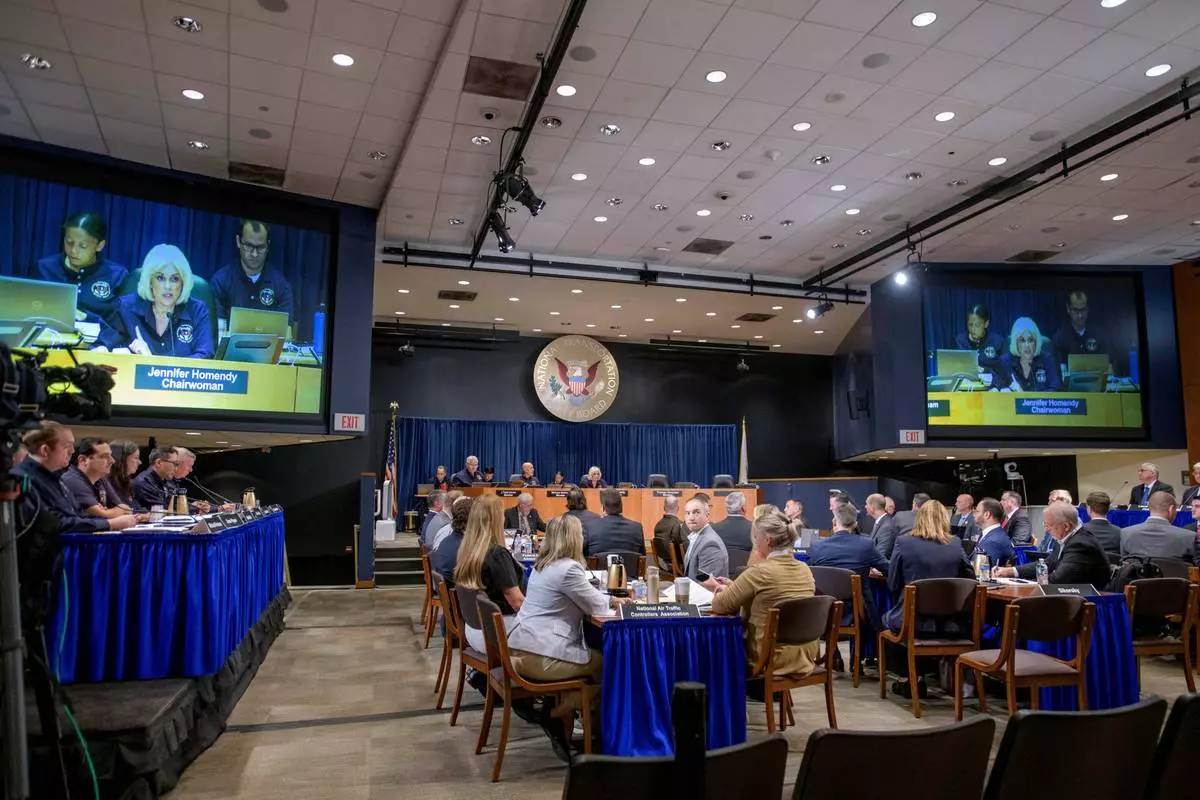
FILE - National Transportation Safety Board Chairwoman Jennifer Homendy speaks during the NTSB fact-finding hearing on the DCA midair collision accident, at the National Transportation and Safety Board boardroom, July 30, 2025, in Washington. (AP Photo/Rod Lamkey, Jr., File)

FILE - National Transportation Safety Board Chairwoman Jennifer Homendy speaks during the NTSB fact-finding hearing on the DCA midair collision accident, at the National Transportation and Safety Board boardroom, July 30, 2025, in Washington. (AP Photo/Rod Lamkey, Jr., File)

Recommended Articles