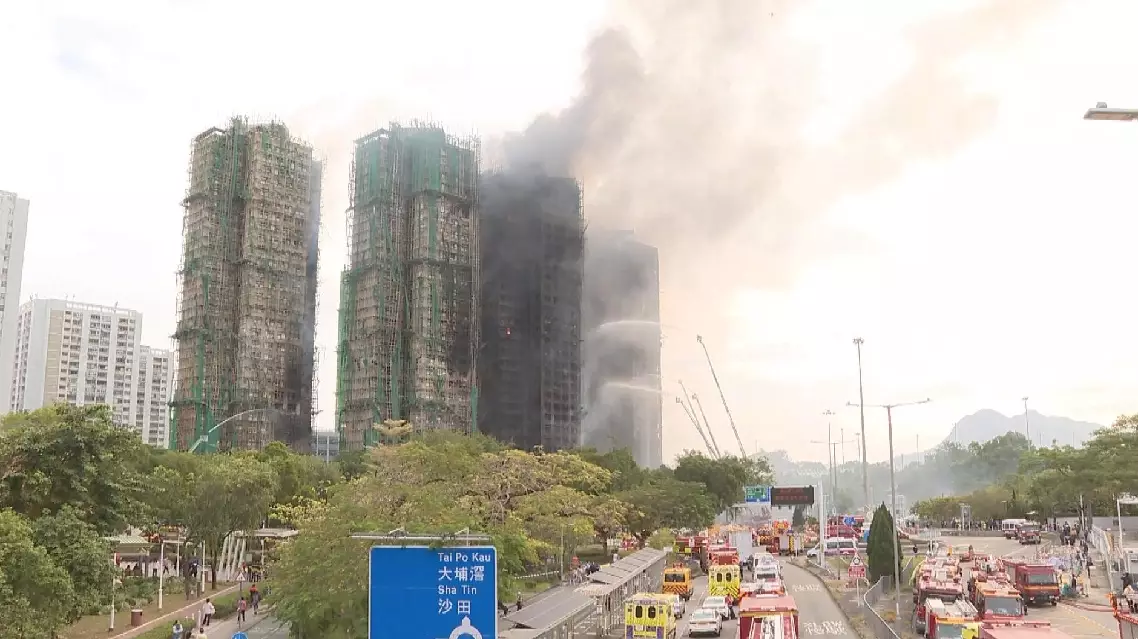
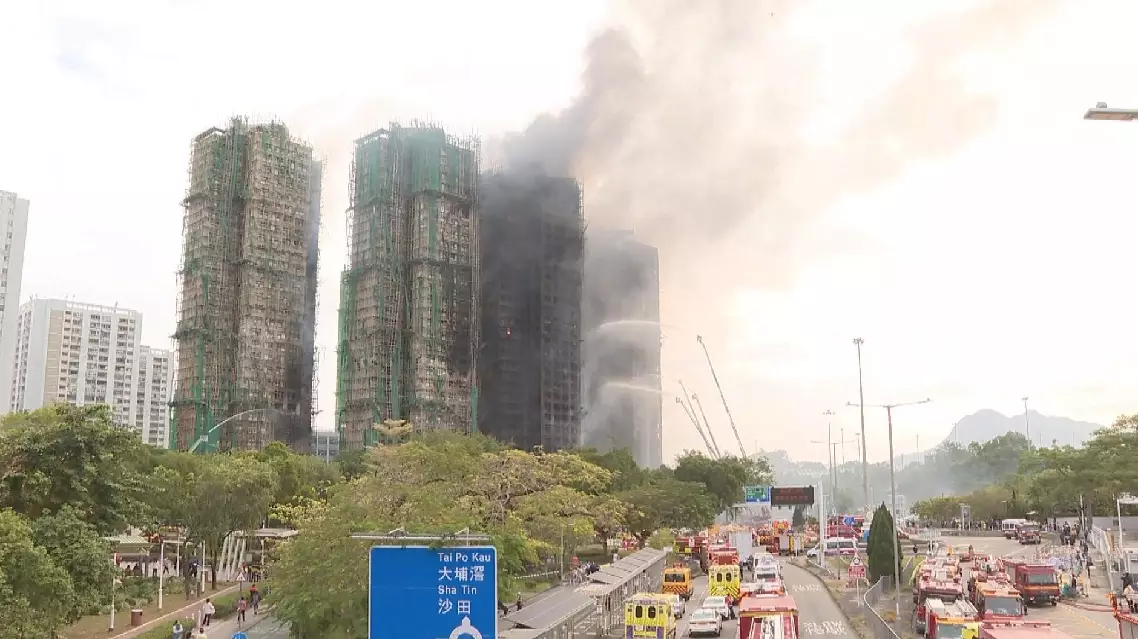
The blaze at Wang Fuk Court, a residential area in Tai Po of Hong Kong, had been largely brought under control by Thursday morning, with large-scale open flames extinguished but firefighting operation still ongoing.
Smoke continued to billow from the burnt buildings, where flames could still be seen in some rooms.
The fire, which broke out Wednesday afternoon, had left 44 people dead and 45 others injured by early Thursday morning. Three men have been arrested for suspected manslaughter, according to the Hong Kong Police Force.
According to the Fire Services Department of the Hong Kong Special Administrative Region (HKSAR) government, the fire-extinguishing work is expected to last until Thursday evening.
HKSAR Chief Executive John Lee said the government has coordinated the forces of various departments including firefighting, medical care, and civil aid service to comprehensively carry out fire control and rescue, treatment of the injured and relief work.
So far, eight temporary shelters have been established in Tai Po. Nearly 200 people have been mobilized to provide all necessary support for fire-affected residents.
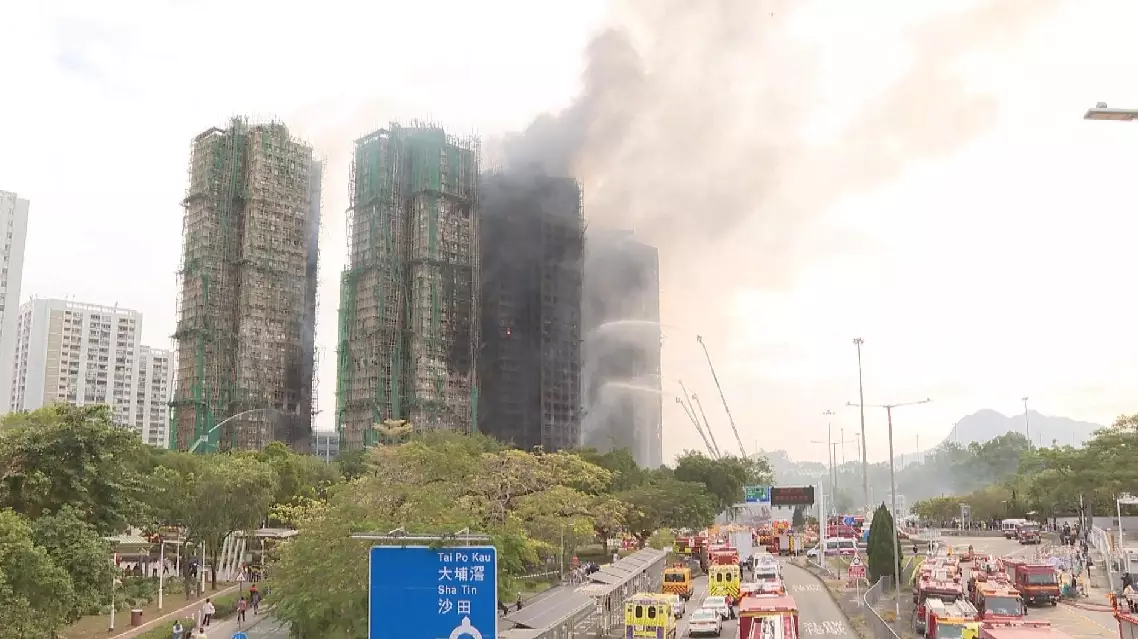
HK residential area blaze largely under control

The Polish government has recently rolled out a series of emergency measures to cushion the impact of energy costs on households in light of rising oil prices and increasing inflation risks.
Amid escalating tensions in the Middle East, international crude oil prices have jumped, pushing fuel prices in Poland up by more than 30 percent over the past month. Starting Tuesday, the Polish government began implementing a package of measures aimed at reducing fuel costs. These include lowering the value-added tax on fuel, cutting excise duties to the minimum level permitted under the European Union (EU) regulations, and cracking down on price gouging to maintain market stability.
Notably, gas stations in Poland have seen an increase in customers following the price cuts. Still, many residents believed the reduction is only temporary and that prices will likely rise again in the future.
"Even though the government has lowered prices, they are still high. I think the price cut might last for a while, but it's hard to say how long. I think this is just the beginning and the prices will rise in the future," said Arkadiusz, a local resident.
Polish economist Tomasz Bieliński said that it remains unclear how long the government can sustain these policies, and that rising energy prices are now transmitting pressure to core areas of the macroeconomy. In his view, if oil prices continue to climb, the European Central Bank and other central banks across the EU may be forced to adjust their monetary policies.
"Interest rates were actually reduced in most of the central banks in Europe. But, this reduction will probably stop, because we have rising prices of pretty much everything on the horizon," he said.
Poland unveils measures to ease pain of soaring oil prices