PARIS (AP) — Paris' Louvre museum has approved a ticket hike from 22 to 32 euros ($25 to $37) for non-European visitors from January to help finance an overhaul of the building whose degradation has been exposed by the Oct. 19 crown jewels heist.
The measure comes as other major cultural sites across the country, including the Palace of Versailles, are considering similar moves to bring extra money needed for costly maintenance and renovation.
The Louvre ticketing changes come as part of a decade-long plan to modernize the museum. Security breaches that allowed the 88 million-euro ($102 million) theft highlighted the urgency of the situation.
On Friday, a suspect in the Louvre robbery was handed preliminary charges of theft by an organized gang and criminal conspiracy, the Paris prosecutor said Friday, meaning all four alleged members of the team caught on camera stealing the jewels are in custody.
From Jan. 14, nationals from outside the European Union will have to pay 10 euros ($12) more. The measure was approved Thursday by the Louvre governing board. Nationals from Iceland, Liechtenstein and Norway, countries that signed up to the European Economic Area agreement, will be exempted from the hike.
In 2024, the Louvre welcomed 8.7 millions visitors, 77% of them foreigners. Top nationalities include people from the U.S. (13%), China (6%) and Britain (5%), who will be affected by the price hikes.
Earlier this month, Louvre director Laurence des Cars announced more than 20 emergency measures have started being implemented following the robbery. She said the Louvre’s latest overhaul in the 1980s is now technically obsolete.
The cost for the so-called “Louvre New Renaissance” plan is estimated at up to 800 million euros ($933 million) to modernize infrastructure, ease crowding and give the famed Mona Lisa a dedicated gallery by 2031.
Some have argued that such a policy could be counterproductive if it leads to a fall in the number of visitors. But other institutions see it as a potential solution.
The director of the Chateau de Chambord, one of the most striking chateaus in the Loire Valley, said more money is needed to finance heavy renovation work at his institution.
The Chateau de Chambord decided to apply in January a 10-euro ($12) increase, bringing the ticket to 30 euros ($35) for non-EU residents, who represent about 10% of visitors, director Pierre Dubreuil told local radio Ici Orléans. Money will help finance urgent work to save the crumbling 16th century royal wing of François I from collapsing, with an estimated cost of 37 million euros ($43 million).
“Australians, people from New Zealand, Americans, when they come to see Chambord, sometimes that's once in a lifetime,” Dubreuil said. “Paying 20 or 30 euros doesn't change anything.”
The new policy, championed by conservative Culture Minister Rachida Dati, could be extended to other major cultural sites across France. The Palace of Versailles is considering a 3-euro ($3.5) hike for non-EU visitors.
Extra fees for international visitors are not unusual in many countries across the world, often driven by the need to increase revenue to match the costs of maintaining heritage sites.
In the United States, the National Park Service announced this week it is going to start charging the millions of international tourists who visit U.S. parks each year an extra $100 to enter some of the most popular sites, like Yellowstone and Grand Canyon.
The announcement declaring “America-first entry fee policies” comes as national parks deal with the strain of a major staff reduction and severe budget cuts, along with recovering from damage during the recent government shutdown and significant lost revenue due to fees not being collected during that time.
The idea of higher prices for tourists has been debated but not implemented in Britain, where admission to the permanent collections of major museums and galleries is free.
In its budget this week, the U.K. government announced that British cities would be able to levy a “tourist tax” on overnight visitors, similar to fees in cities including Paris and New York. The money would help fund services and infrastructure in the cities.
Charging foreign visitors to major attractions in Africa more than local or regional visitors is common practice across the continent.
Whether it’s a hike to see gorillas or a “Big 5” safari, international visitors to game parks and museums can expect to pay at least four or five times more than residents.
The revenue collected is credited with helping both the local economies and the protection of wildlife. Kruger National park in South Africa charges foreigners $35 a day, but South African residents $8. Masai Mara, Kenya, charges foreigners $200 day, but Kenya residents $24.
AP journalists Andrew Drake and Jill Lawless in London contributed to the story.
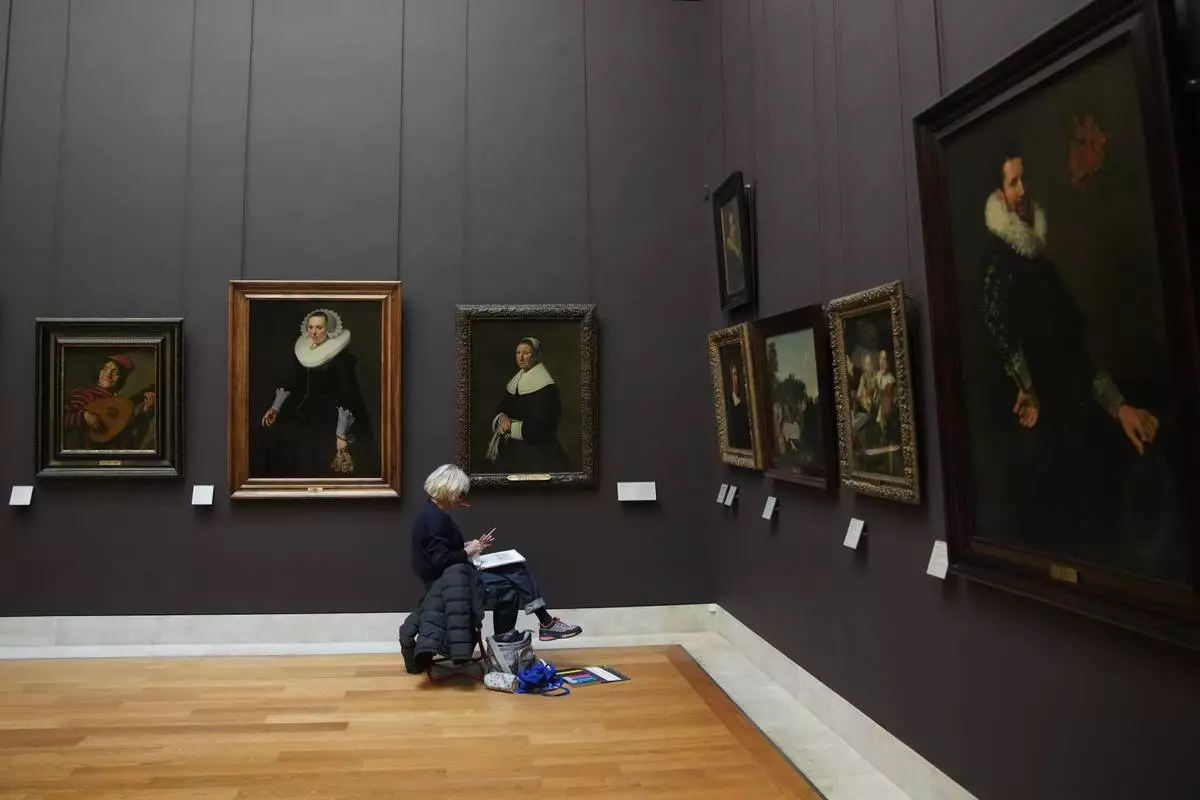
A woman draws in the Richelieu gallery of Le Louvre museum are seen Wednesday, Nov. 19, 2025 in Paris. (AP Photo/Christophe Ena)
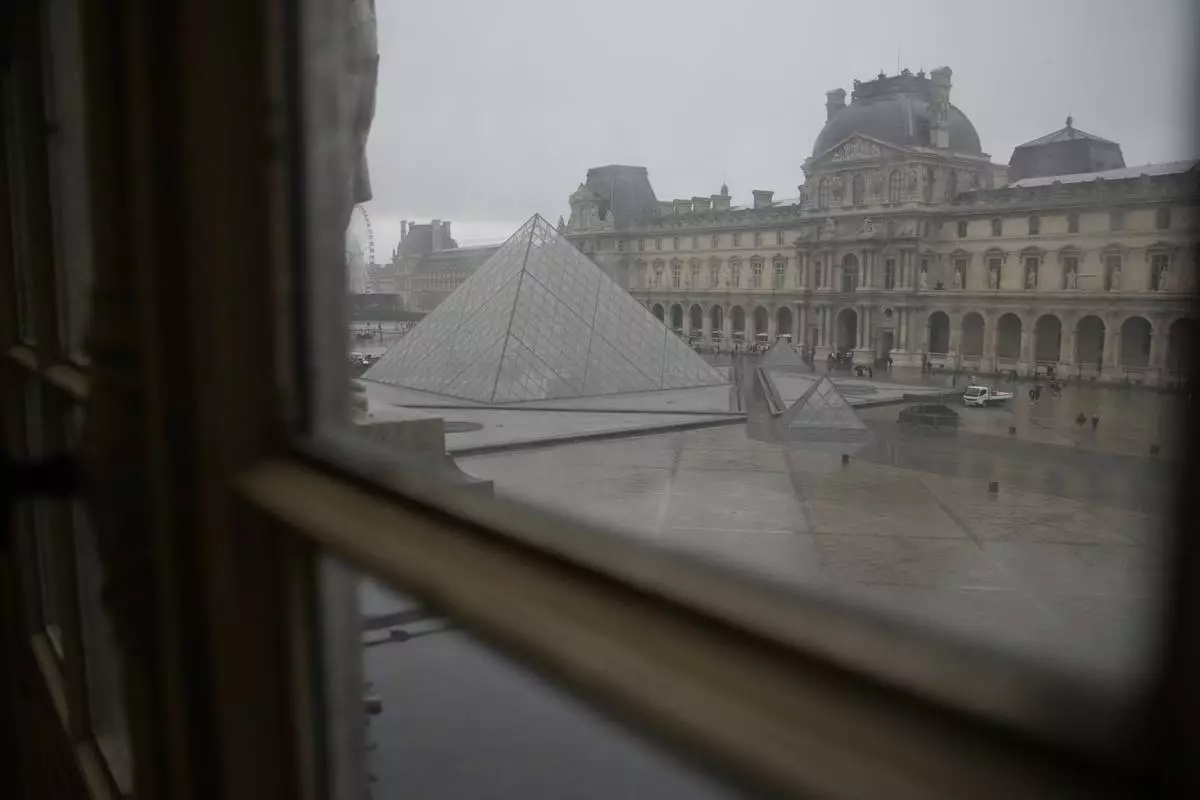
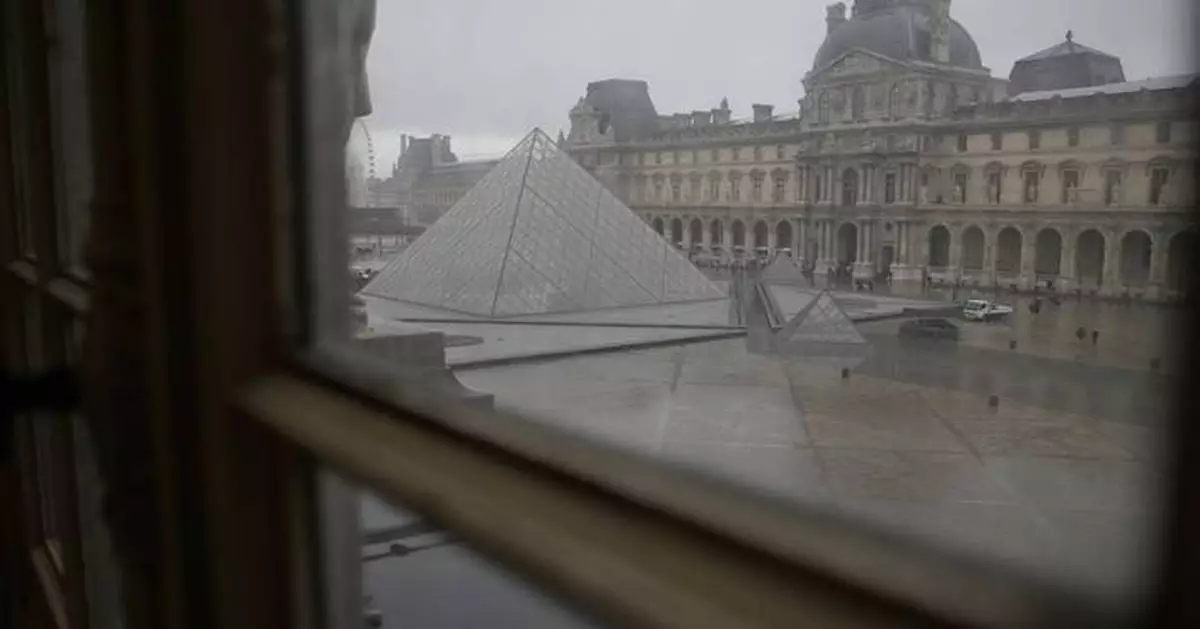
The courtyard and the pyramid of Le Louvre museum are seen Wednesday, Nov. 19, 2025 in Paris. (AP Photo/Christophe Ena)
DALLAS (AP) — Longtime Sen. John Cornyn and MAGA favorite Ken Paxton are heading to a May runoff in Texas’ Republican Senate primary, setting up what's expected to be a nasty and expensive second round and a renewed push to win the endorsement of President Donald Trump.
On the Democratic side, Congresswoman Jasmine Crockett and state Rep. James Talarico were competing for their party's nomination and the right to face the winner of the Cornyn-Paxton runoff in November.
Texas, along with North Carolina and Arkansas, kicked off midterm elections with control of Congress at stake and against the backdrop of the U.S.-Israeli war with Iran.
Cornyn is seeking a fifth term but facing a tough challenge from Paxton, the state attorney general. He hopes to avoid becoming the first Republican senator in Texas history to seek reelection and not be renominated.
The GOP contest also featured U.S. Rep. Wesley Hunt, who finished a distant third and conceded. But him making it a three-way race made it tougher for any candidate to reach the 50% vote threshold needed to win the nomination outright and avoid the May 26 runoff.
All three campaigned on their ties to Trump, who did not make an endorsement in the race. Now both Cornyn and Paxton will again fiercely compete to curry the president's favor.
Cornyn was facing a tough enough battle that he didn't hold an election night party. Instead, in comments to reporters in Austin, he sought to make the case that a runoff win by Paxton would leave “a dead weight at the top of the ticket for Republicans.”
“I’ve worked for decades to build the Republican Party, both here in Texas and nationally,” Cornyn said. “I refuse to allow a flawed, self-centered and shameless candidate like Ken Paxton to risk everything we’ve worked so hard to build over these many years.”
Addressing supporters in Dallas, Paxton made a point of saying he felt like he had during a recent trip to Mar-a-Lago, Trump’s Florida estate. He also proclaimed: “We proved something they’ll never understand in Washington.”
“Texas is not for sale,” he said.
Cornyn’s cool relationship with Trump is part of what made him vulnerable. He and allied groups spent at least $64 million in television advertising alone since July to try stabilize his support.
Paxton, who began campaigning in earnest only last month, has made national headlines for filing lawsuits against Democratic initiatives. He remained popular in Texas despite a 2023 impeachment trial on corruption charges, of which he was acquitted, and accusations of marital infidelity by his wife.
Senate GOP leaders, who are backing Cornyn, worry that Paxton’s liabilities would make it harder to defend the seat if he is the nominee — and require significant spending that could be better used elsewhere.
In the Democratic campaign, Crockett and Talarico each argued that they would be the stronger general election candidate in a state that backed Trump by almost 14 percentage points in 2024 and where no Democrat has won a statewide race in over 30 years.
Voting was extended in Dallas County and Williamson County, outside Austin, after voters reported being turned away and directed to different voting precincts because of new primary rules. Paxton’s office later challenged a decision keeping the polls open longer, and the state Supreme Court ruled that ballots cast by people not in line by 7 p.m. should be separated from others.
It was not immediately clear how the court’s action would be carried out or how many eligible ballots remained to be counted in Dallas County, Crockett’s home base. Crockett, meanwhile, planned to file a lawsuit after voting was concluded.
Crockett and Talarico waged a spirited race as Democrats look for their first Senate win in Texas since 1988.
Talarico, a seminarian who often references the Bible, held rallies across the state including in heavily Republican areas. Crockett has built a national profile for zinger attacks on Republicans and focused on turning out Black voters in the Dallas and Houston areas.
Dallas voter Tanu Sani said she cast her ballot for Talarico because he “really spoke to me in the way he tries to unify.”
Tomas Sanchez, a voter in Dallas County, said he supported Crockett because “she cares about immigrants, she cares about the American people in a way that a lot of the Republicans have proven they haven’t.”
Talarico outspent Crockett on television advertising by more than four to one as of late February. He got a burst of attention — and campaign contributions — last month from CBS' decision not to air his interview with late-night host Stephen Colbert, who said the network pulled the interview for fear of angering Trump's FCC.
Texas’ races also featured new congressional district boundaries that GOP lawmakers — urged on by Trump — redrew to help elect more Republicans. The result matched several Democratic incumbents in primary fights and set up new general election battlegrounds.
In the 34th District, former Rep. Mayra Flores was attempting a comeback but was defeated by Eric Flores, a lawyer endorsed by Trump, for the nomination to run against Democratic Rep. Vicente Gonzalez. Mayra Flores made history in a 2022 special election as the first Republican to win in the Rio Grande Valley in 150 years but lost her bid for a full term later that year.
In the 23rd District, Rep. Tony Gonzales is considered vulnerable after an alleged affair with a staffer who killed herself. He faced a challenge from gun manufacturer and YouTube influencer Brandon Herrera, who calls himself “the AK guy.” The district includes Uvalde, site of a deadly 2022 shooting at Robb Elementary School.
Republican Rep. Dan Crenshaw was challenged in the 2nd District by state Rep. Steve Toth, who was endorsed by Sen. Ted Cruz.
Former Major League Baseball star Mark Teixeira clinched the Republican primary to succeed GOP Chip Roy in southwest Texas’ 21st District.
Democrat Bobby Pulido, a Latin Grammy winner, won his party's primary in South Texas' 15th District against physician Ada Cuellar. Pulido will face two-term Republican Rep. Monica De La Cruz.
In the 33rd District, Democratic Rep. Julie Johnson faced former Rep. Colin Allred, a former NFL linebacker and 2024 Senate nominee.
Democratic Rep. Al Green was fighting to stay in office after his Houston-based 9th District was drawn to be lean Republican. Green, 78, ran in a newly drawn 18th District against Democratic Rep. Christian Menefee, 37, who won a January special election for the current 18th District.
Republican Gov. Greg Abbott easily won his primary and will face Democratic state Rep. Gina Hinojosa. Roy advanced to a primary runoff with Mayes Middleton for attorney general.
Weissert reported from Washington. Associated Press writers Sara Cline and Jamie Stengle in Dallas and Bill Barrow in Atlanta contributed.
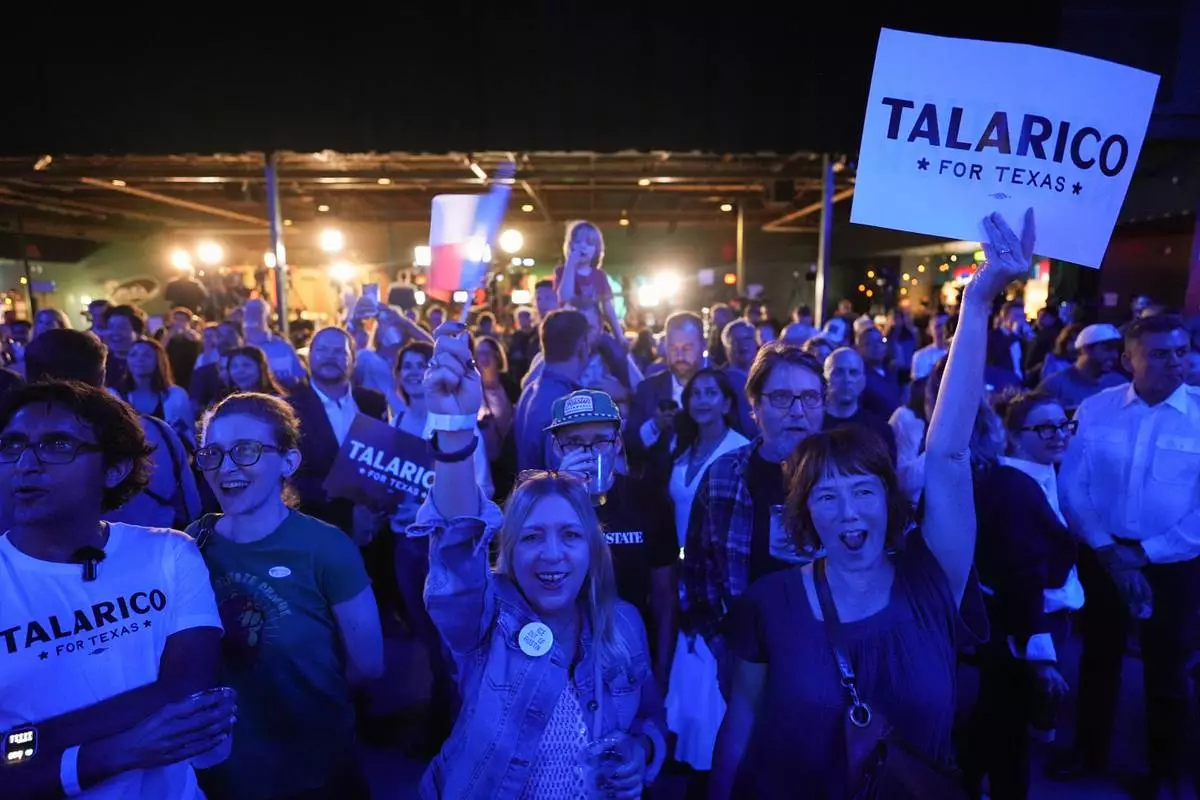
Supporters of Texas state Rep. James Talarico, D-Austin, a Democratic candidate for the U.S. Senate, react as results come in during a primary election watch party Tuesday, March 3, 2026, in Austin, Texas. (AP Photo/Eric Gay)
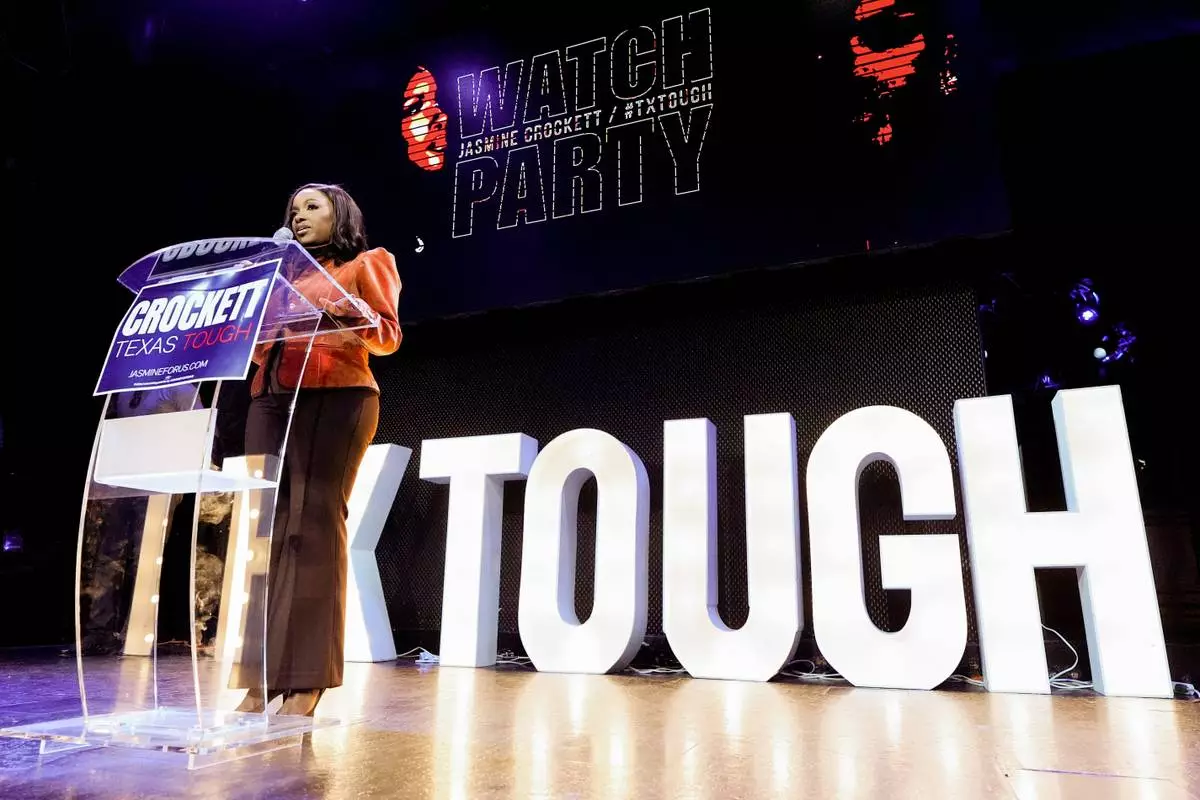
Rep. Jasmine Crockett, D-Texas, a Democratic candidate for U.S. Senate, speaks during a primary election watch party Tuesday, March 3, 2026, in Dallas. (AP Photo/Tony Gutierrez)
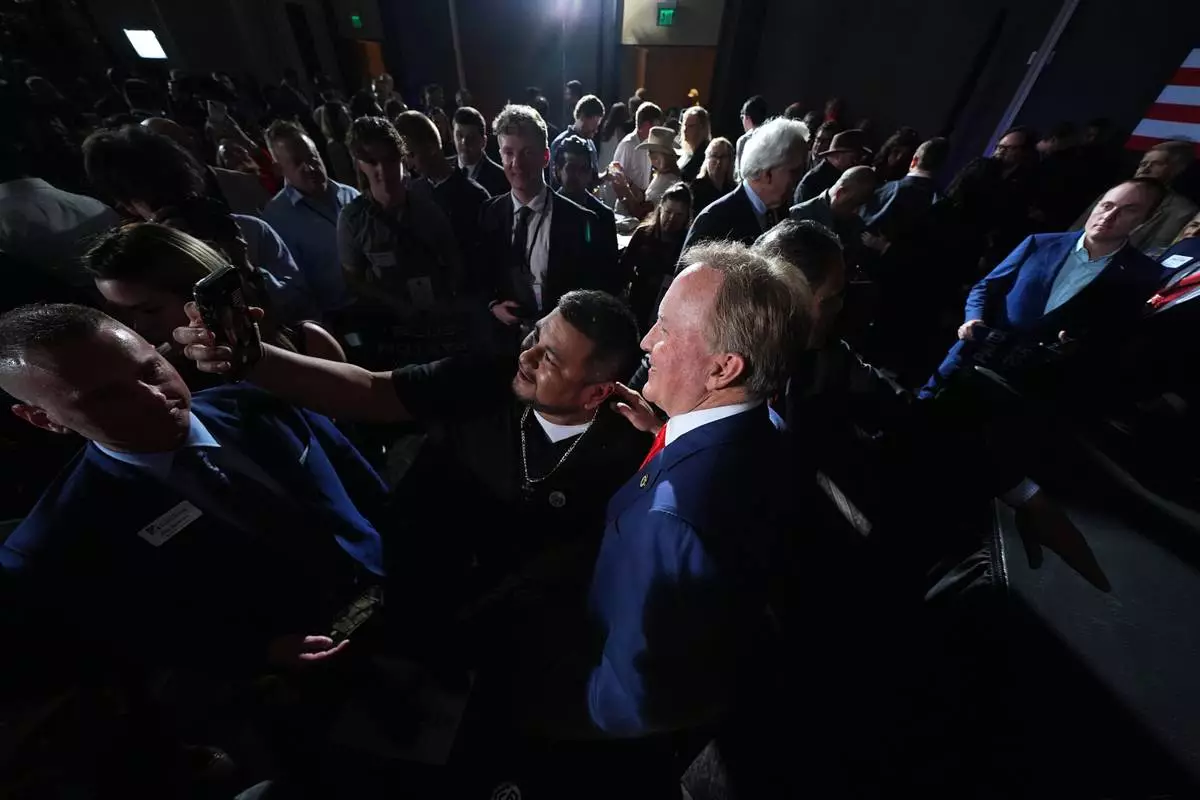
Texas Attorney General Ken Paxton, a Republican candidate for the U.S. Senate, poses for a selfie with a supporter during a primary election night watch party Tuesday, March 3, 2026, in Dallas. (AP Photo/Julio Cortez)
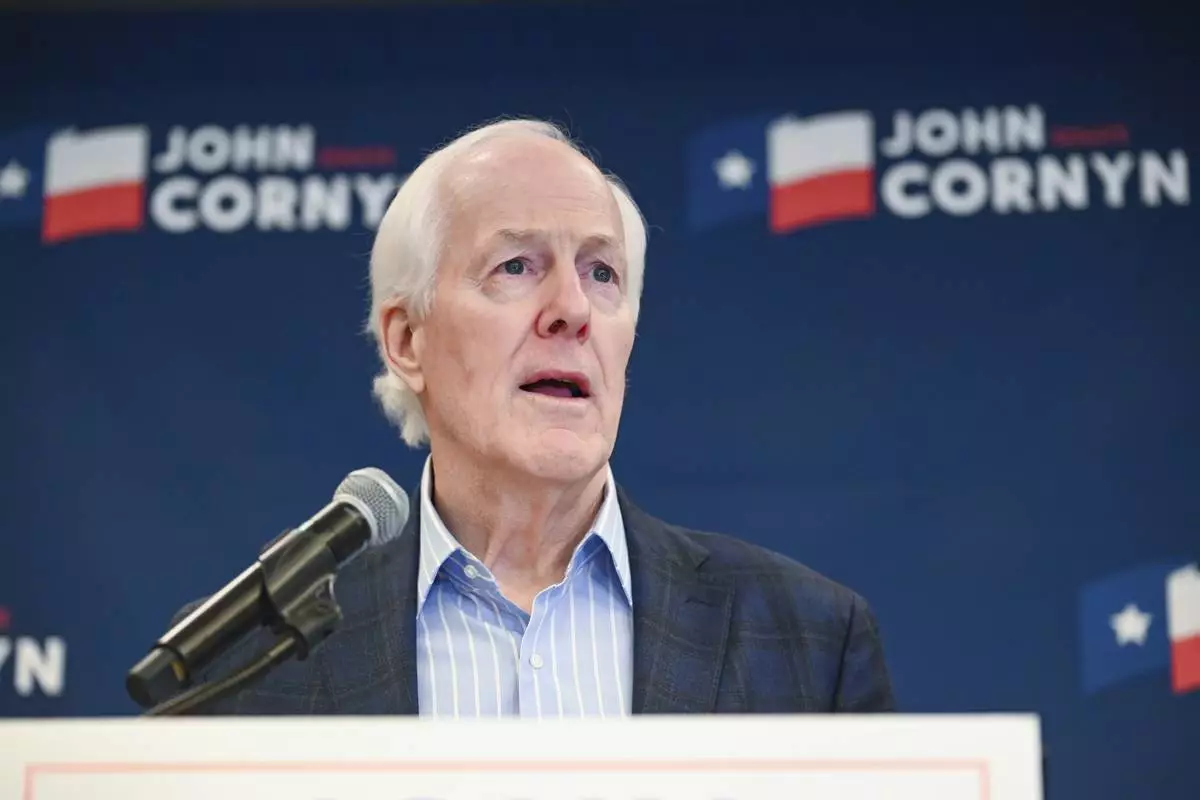
Sen. John Cornyn, R-Texas, speaks to the media Tuesday, March 3, 2026, in Austin, Texas. (AP Photo/Jack Myer)
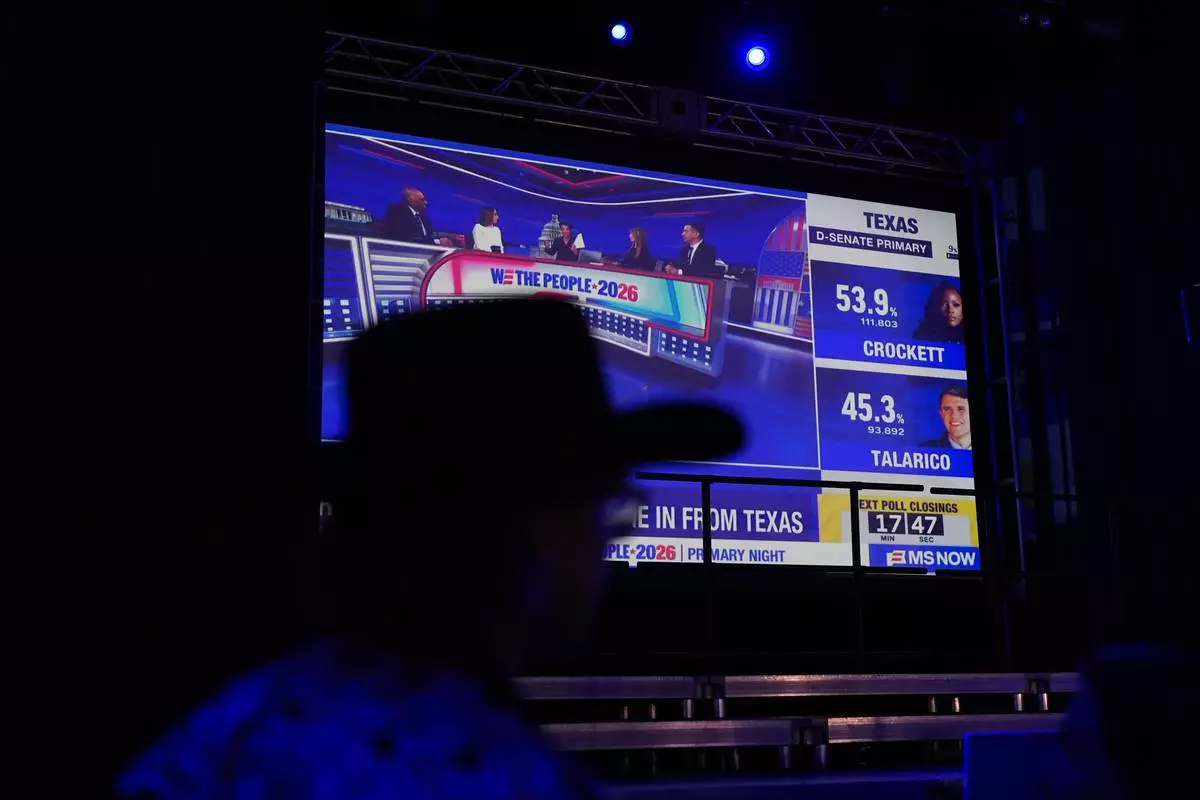
A supporter of Texas state Rep. James Talarico, D-Austin, a Democratic candidate for the U.S. Senate, watches as results come in during a primary election night watch party Tuesday, March 3, 2026, in Austin, Texas. (AP Photo/Eric Gay)
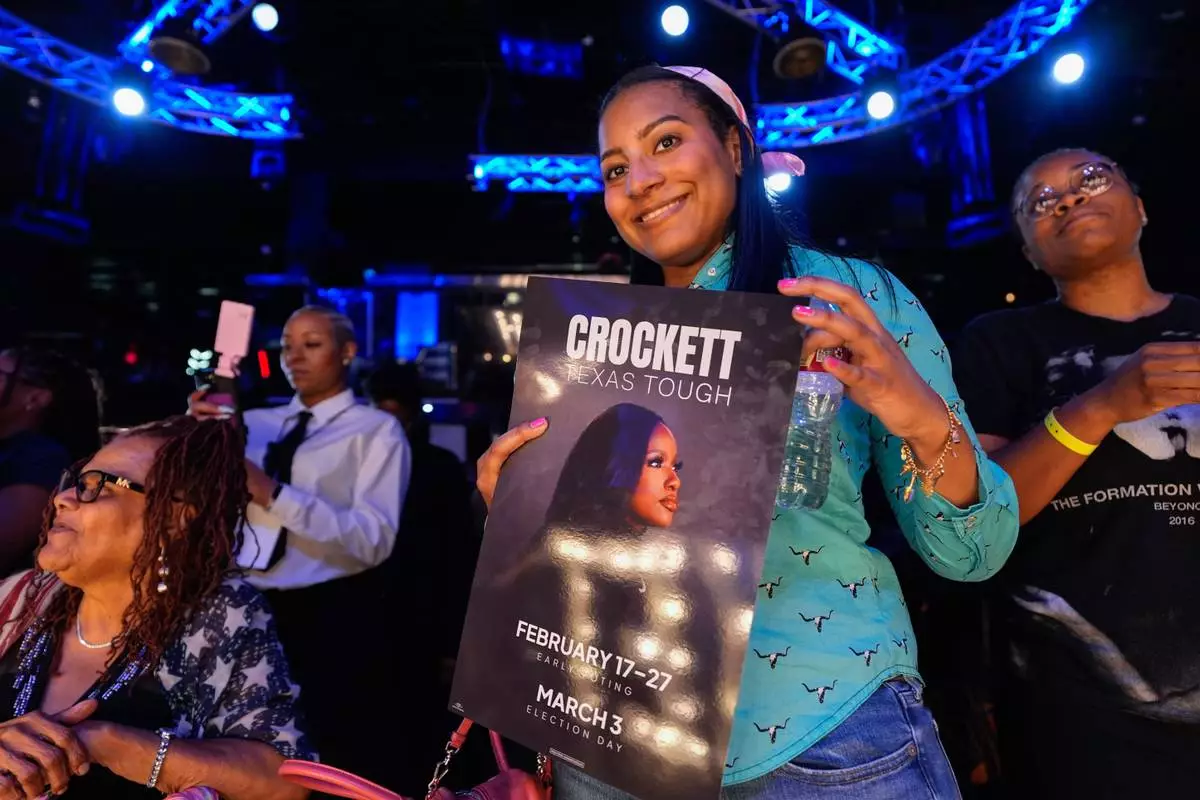
Supporters of Rep. Jasmine Crockett, D-Texas, a Democratic candidate for U.S. Senate, arrive for a primary election night watch party Tuesday, March 3, 2026, in Dallas. (AP Photo/Tony Gutierrez)
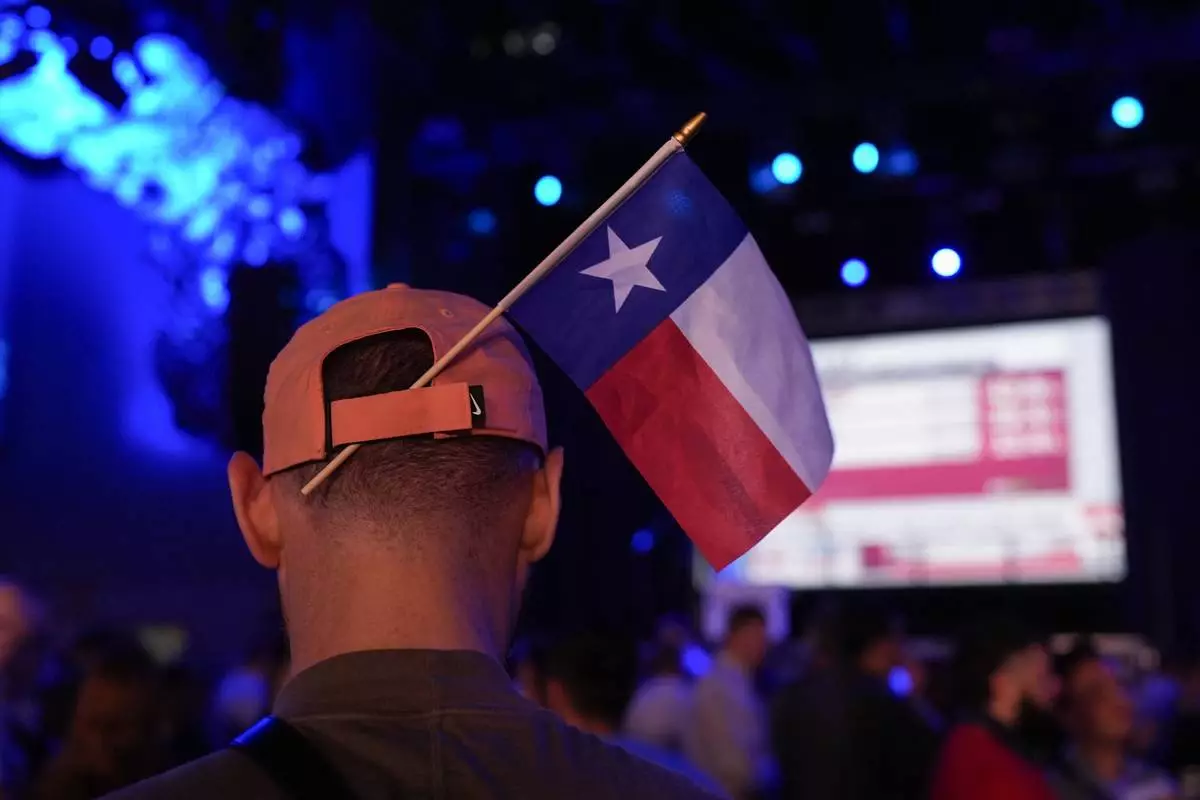
A supporter of Texas state Rep. James Talarico, D-Austin, a Democratic candidate for the U.S. Senate, wears a Texas state flag in their hat during a primary election watch party Tuesday, March 3, 2026, in Austin, Texas. (AP Photo/Eric Gay)
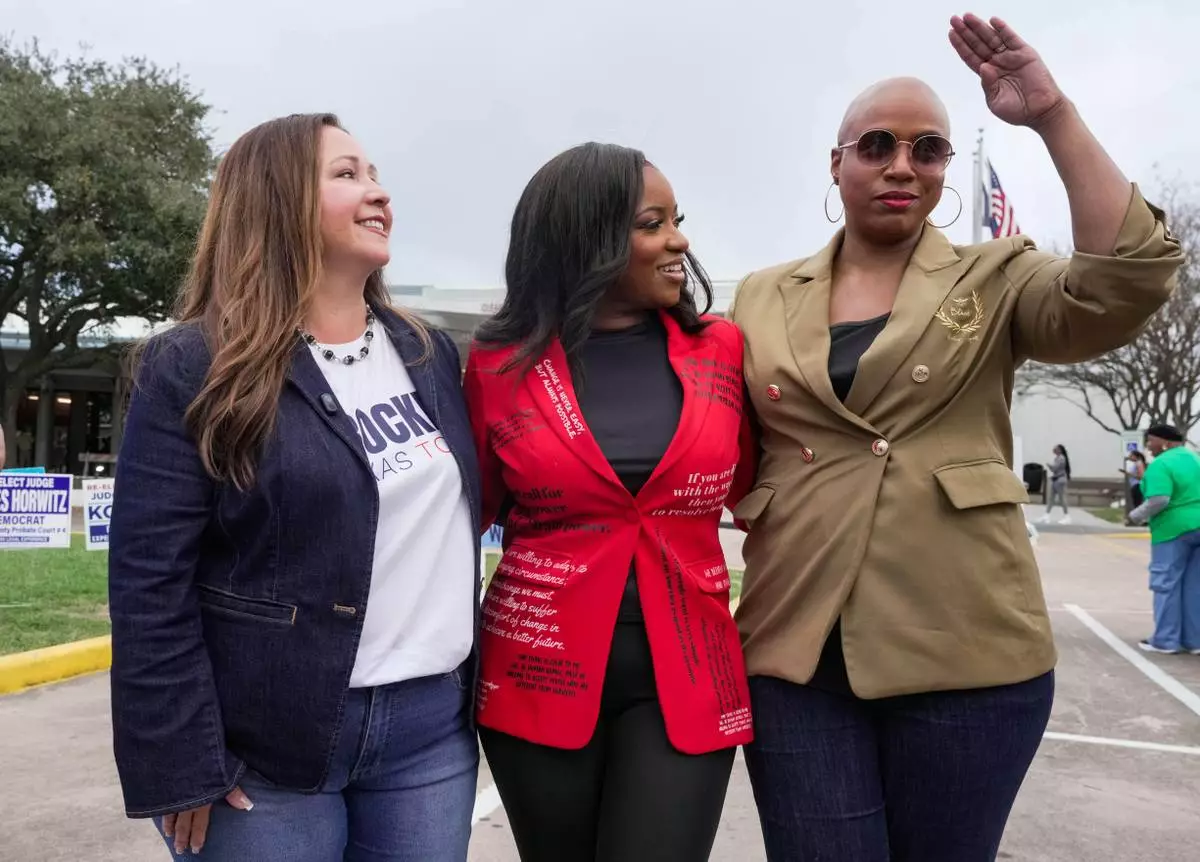
U.S. Reps. Adelita Grijalva of Arizona, Jasmine Crockett of Texas and Ayanna Pressley of Massachusetts, speak with voters during primary election day at the West Gray Metropolitan Multi-Service Center in Houston on Tuesday, March 3, 2026. (Raquel Natalicchio /Houston Chronicle via AP)
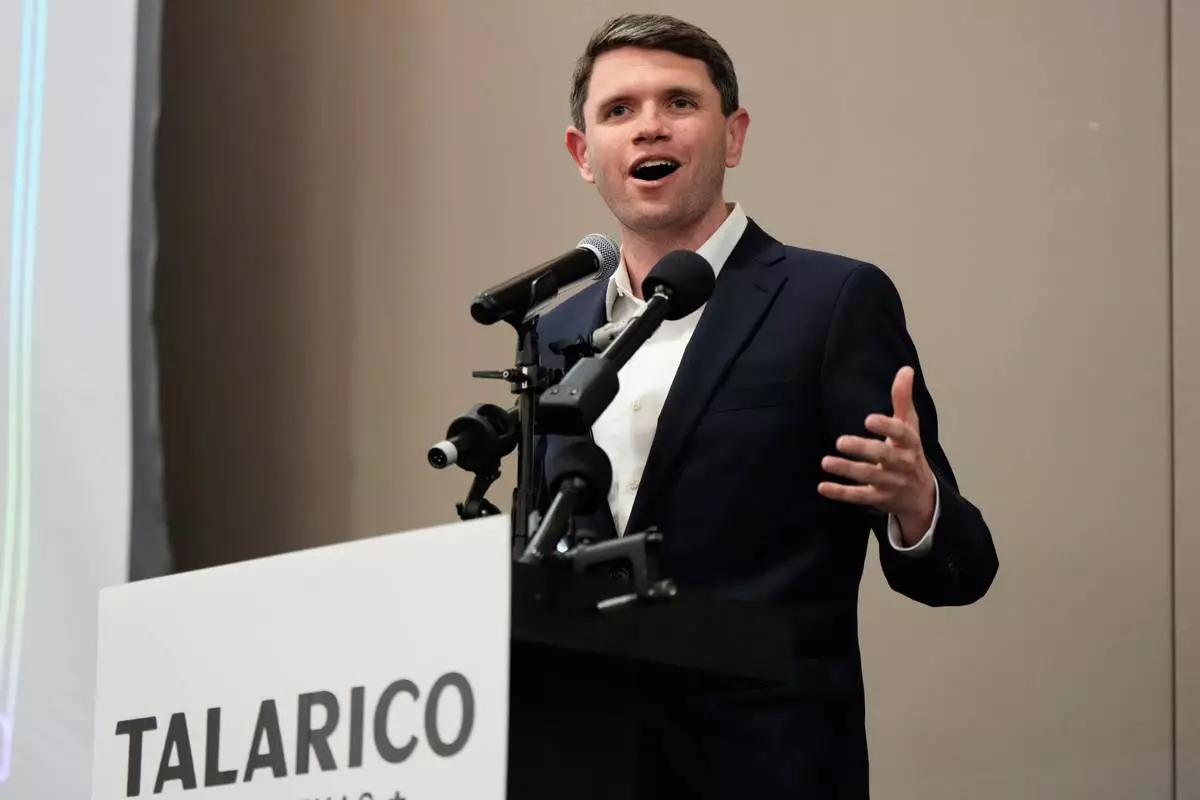
James Talarico, a Texas Democratic primary candidate for U.S. Senate, speaks during an event at the University of Houston Monday, March 2, 2026, in Houston. (AP Photo/Ashley Landis)
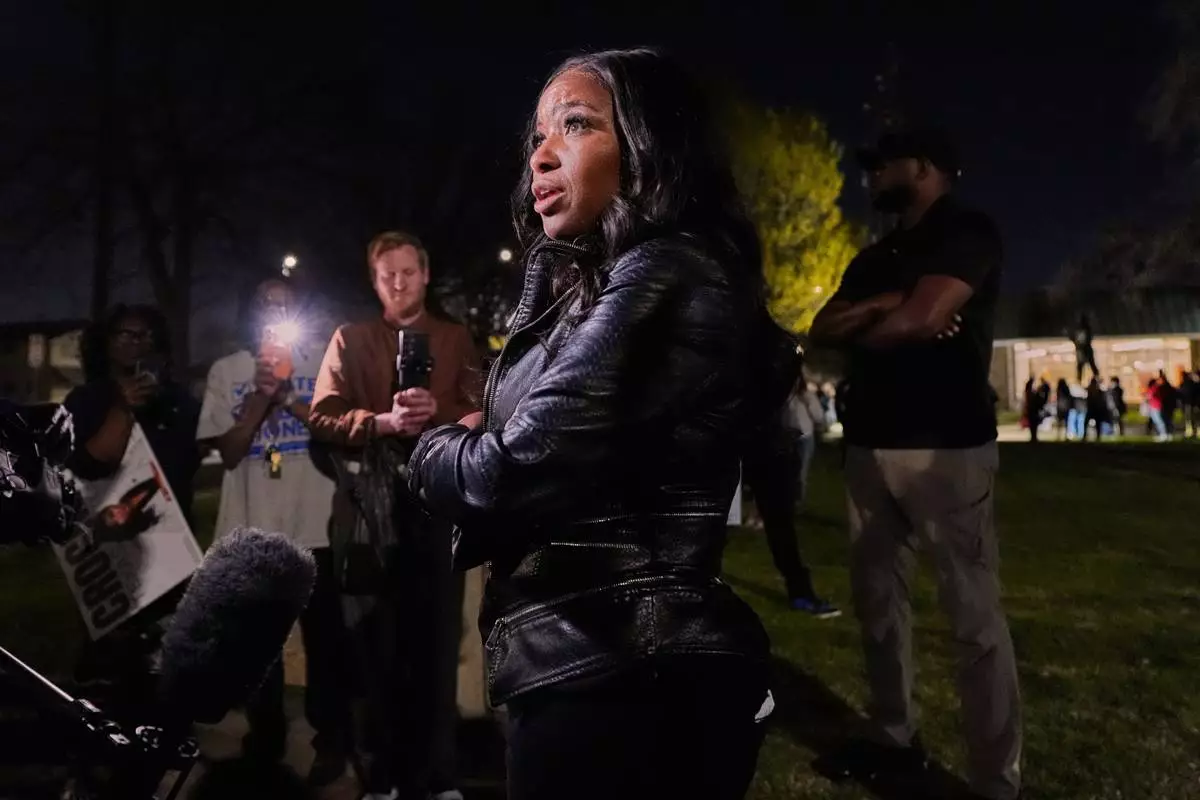
Primary candidate for U.S. Senate Rep. Jasmine Crockett, D-Texas, responds to a question during a broadcast interview at a campaign stop in Dallas, Friday, Feb. 27, 2026. (AP Photo/Tony Gutierrez)
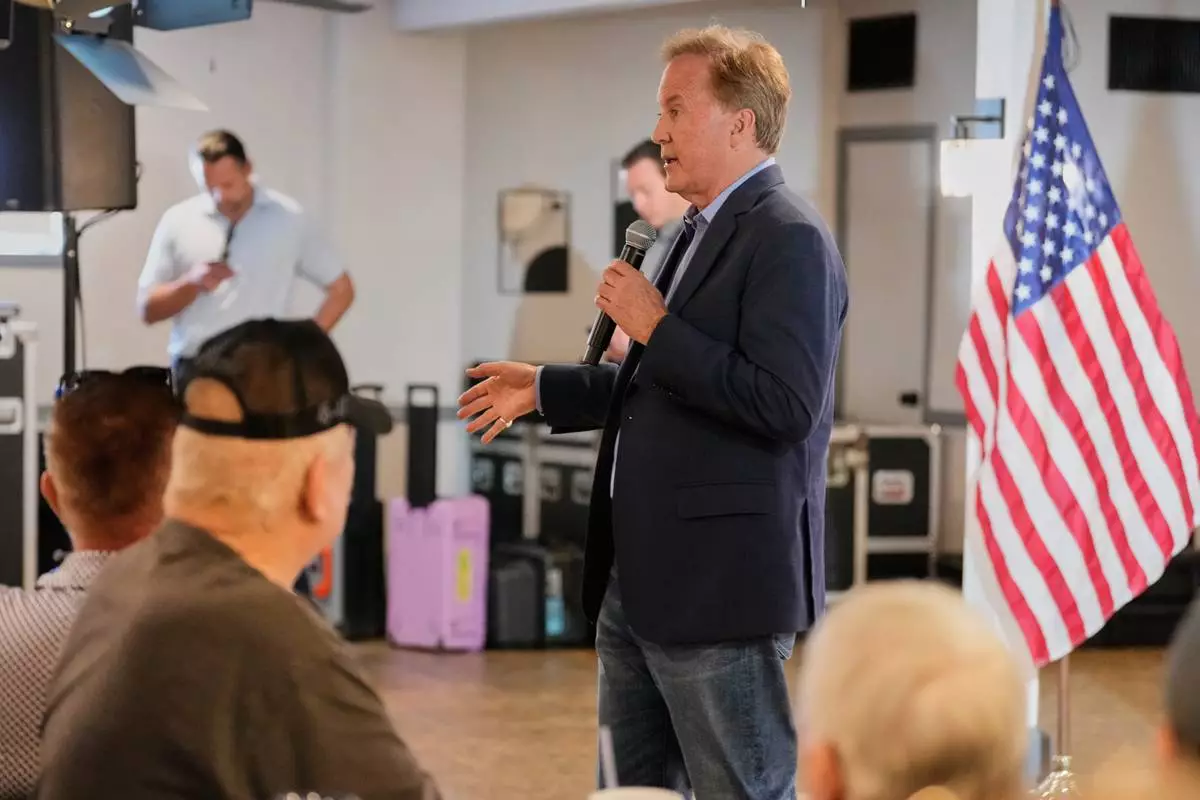
Texas Attorney General Ken Paxton, a Republican candidate for the U.S. Senate, addresses supporters during a campaign stop, Monday, March 2, 2026, in Waco, Texas. (AP Photo/Tony Gutierrez)
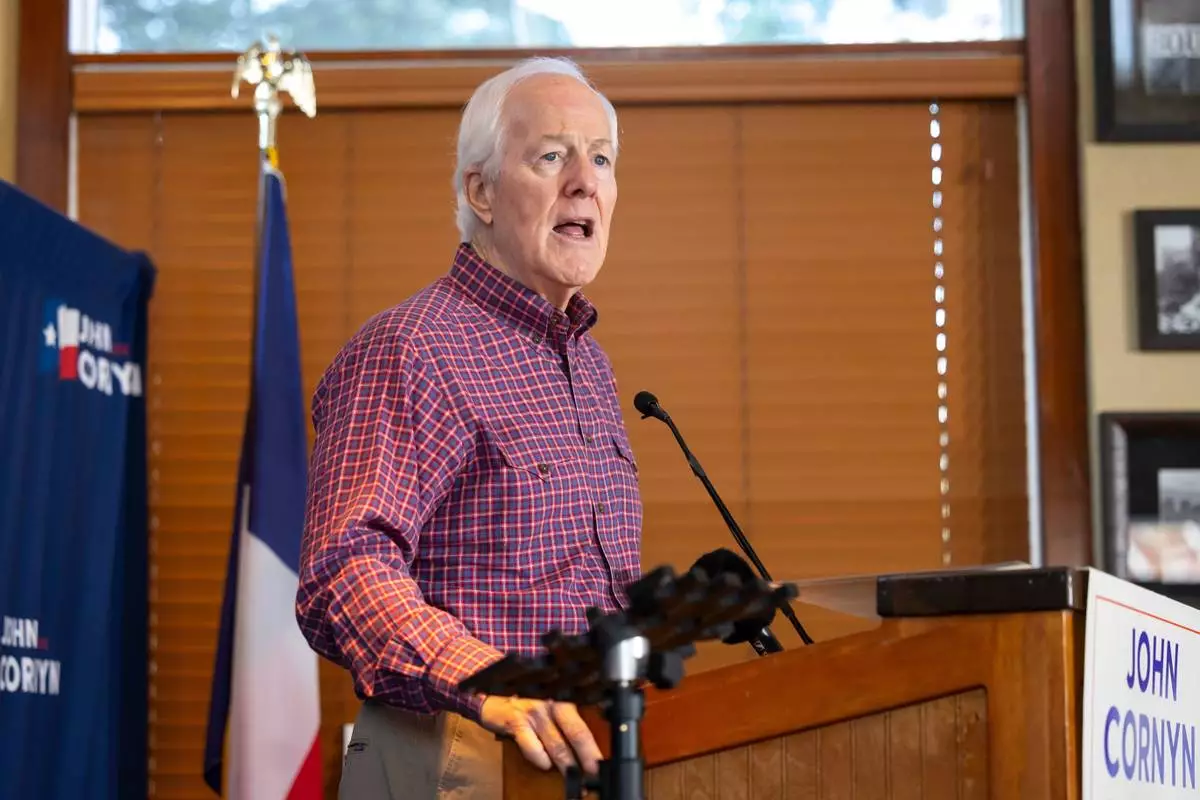
Sen. John Cornyn, R-Texas, speaks during a campaign stop in The Woodlands, Texas, Saturday, Feb. 28, 2026. (AP Photo/Annie Mulligan)