The second phase of the Meizhou Pumped Storage Power Station in south China's Guangdong Province went operational on Friday, further bolstering the clean energy supply while expediting the green transition of the Guangdong-Hong Kong-Macao Greater Bay Area.
Located in Wuhua County, Meizhou City of south China's Guangdong Province, the Meizhou Pumped Storage Power Station has a total investment of approximately 12 billion yuan (about 1.7 billion U.S. dollars), making it the largest pumped storage power station investment in the GBA so far.
The station's first phase boasts a total storage capacity of 92 million cubic meters, equivalent to the water volume of 6.5 West Lakes in east China's Zhejiang Province. The second-phase project is equipped with four 300-megawatt units, adding a regulation capacity of 1.2 gigawatts.
"After the project becomes operational, the Meizhou Pumped Storage Power Station can absorb up to 7.2 billion kilowatt-hours of clean energy annually, equivalent to the yearly electricity consumption of 3.28 million residential customers. Its clean energy integration capacity leads domestically among pumped storage power stations of similar scale," said Zhu Jinhua, project manager of Meizhou Pumped Storage Power Station Phase II, China Southern Power Grid Energy Storage Co., Ltd.
The power station is also one of the most "localized" of its kind in China, using domestically developed equipment for its main unit and control systems, making a critical step in advancing the upgrade of domestic pumped storage equipment towards higher-end manufacturing.
"The power station utilizes domestic equipment on a large scale, including 115 types of key technical components and over 500 domestic control chips. Important domestic equipment like complete switchgear and air compressors are also being applied in a domestic project for the first time," said Chen Hongyu, lead technical expert of China Southern Power Grid Energy Storage Co., Ltd.
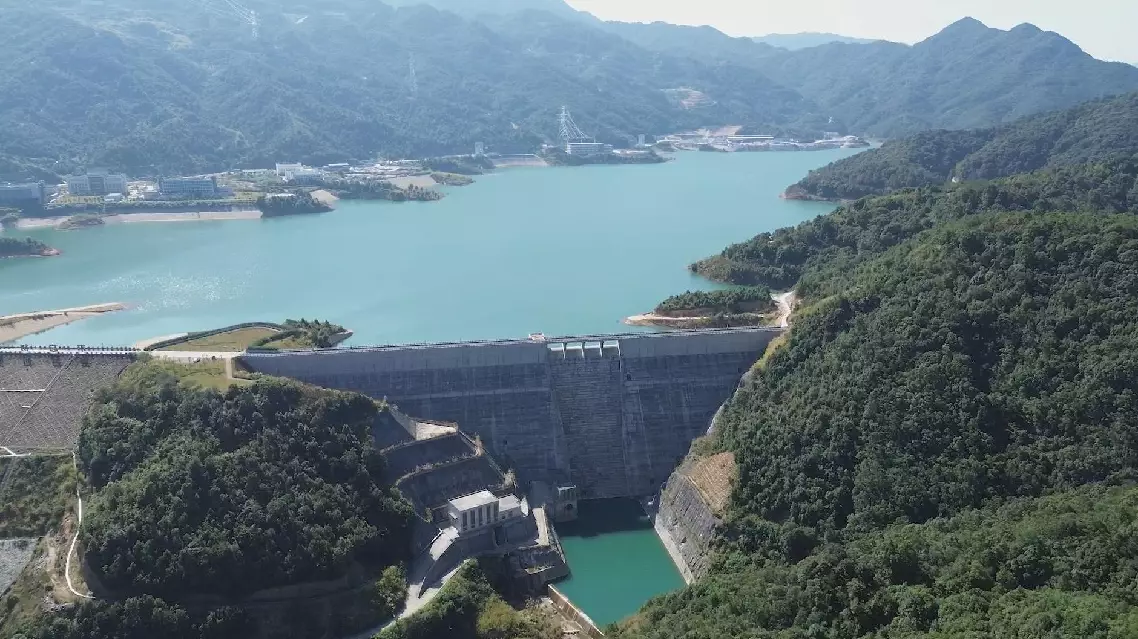
2nd phase of Meizhou power station goes operational to bolster clean energy supply to Greater Bay Area
The prolonged closure of the Rafah crossing has left thousands of Palestinians in Gaza unable to travel abroad for medical treatment, education or family reunions, according to residents and health officials.
For many in Gaza, the crossing is more than a border point. After months of near-total isolation, it has become a crucial route for patients seeking care abroad, students hoping to continue their studies and families separated by the conflict.
Health officials say the extended closure has taken a heavy toll. More than 1,000 patients are reported to have died while waiting for permission to travel overseas for medical treatment.
"Our lives are tied to the crossing. If it opens, it gives us life. If it stays closed, we remain in a state of clinical death. I’ve been in the hospital for one hundred days," said Haitham Al-Qanoua, an injured Palestinian.
Hospitals say tens of thousands of patients remain on waiting lists, including children and cancer patients in urgent need of specialized care that is unavailable inside Gaza.
"More than 20,000 citizens have completed referral procedures for treatment abroad and are waiting to travel. Among them are 4,000 children and 4,000 cancer patients. There are also extremely critical cases that require immediate medical evacuation," said Zaher Al-Wahidi, director of the Health Information Center in Gaza.
The closure has also disrupted education plans, leaving many young Palestinians unable to pursue studies overseas.
"I've applied for Ministry of Education scholarships to study abroad in Turkey and Hungary, but I wasn't lucky to get them. Going abroad would help my parents save the money they spent on me in this awful condition. Opening the crossing is extremely important so people can travel, go on with their lives, and for me to complete my education," said Saeed Masoud, a Palestinian student.
For many families, the closure has meant prolonged separation, with relatives stranded on opposite sides of the border.
"I'm waiting for the crossing to open to see my children and my wife. She, with my children, left Gaza to accompany her father who needed medical treatment after he was injured in an Israeli airstrike on Deir al-Balah. I haven't seen my family for nearly two years, and I miss them deeply," said Ayman Abu Shanab, a displaced Palestinian.
With the Rafah crossing still closed, patients in need of treatment abroad, students seeking to continue their studies and families separated by the conflict remain unable to travel.
Rafah crossing closure strands patients, students, families in Gaza