The U.S.-Israeli war on Iran is exacerbating tensions in the surrounding region and could bring disastrous consequences for Israel, said a former senior advisor to the Israeli Prime Minister's Office.
The joint U.S.-Israeli strikes on Tehran and several other Iranian cities began on Feb. 28. The attacks killed Iran's former Supreme Leader Ali Khamenei along with senior military commanders and hundreds of civilians. The conflict has continued since then as Iran launched counterattacks on multiple targets.
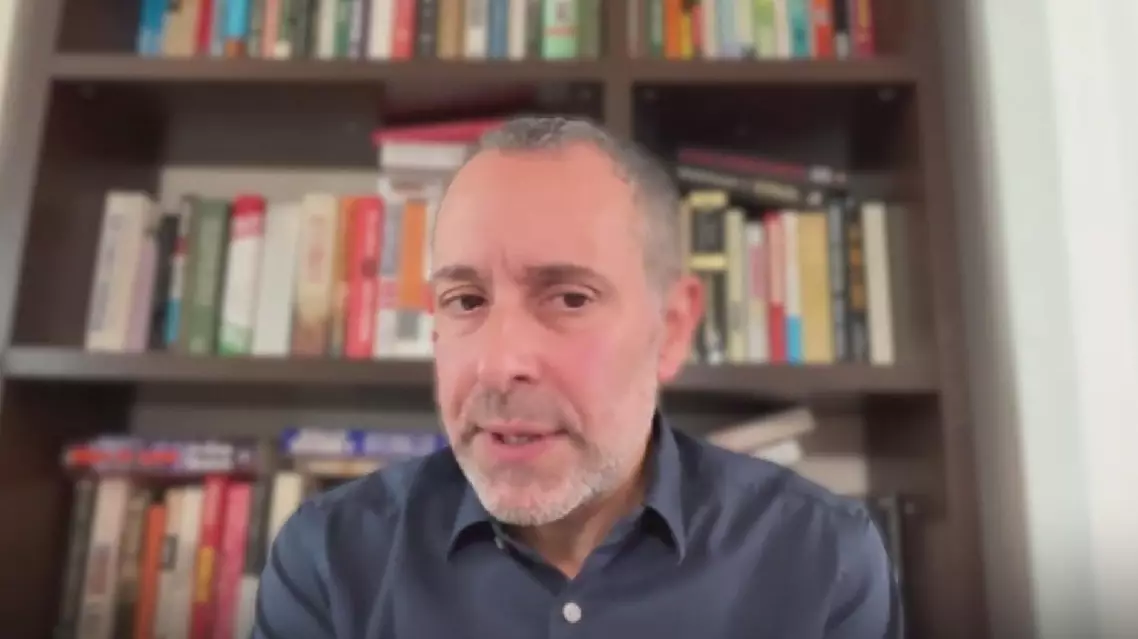
Daniel Levy, former senior advisor to the Israeli Prime Minister's Office, said in an interview with China Central Television (CCTV) that with the war lasting for over a month, voices of opposition have emerged within Israel.
"I think many in Israel are questioning: can we actually achieve all of this? There is a lot of capital flight money leaving the country, there is a brain drain, people leaving the country. There is this internal division because at the end of the day, it's a small country with a small amount of people living in a region which it is turning into an implacable enemy. I mean, the amount of anger Israel is generating in its surrounding. So I think many consider this to be a highly risky strategy that could have dramatic blowback for Israel," he said.
In his view, Israel had long been trying to drag the United States into a war with Iran, and finally succeeded in February.
"America, with Israel beginning it, launches a war against Iran -- absolute partisan polarization. And many believe that, for good reasons, that this is an Israel-first war, not an America-first war. And Secretary Rubio even said: 'we actually had to go to war because Israel was going to go to war, so Iran would have responded, so we had to go to war.' In other words, Israel decide this war," he said.
Fears emerge in Israel of dramatic blowback from war on Iran: former Israeli advisor