An art exhibition featuring 80 pieces of paintings by teenagers was held simultaneously on Wednesday aboard China's orbiting Tiangong space station, which is orbiting about 400 kilometers above Earth, and at the Capital Museum in Beijing.
The artworks, themed "Role Models in My Heart," were displayed and introduced by the Shenzhou-21 crew, comprised of mission commander Zhang Lu and astronauts Wu Fei and Zhang Hongzhang, during their mission aboard the space station.
The event launched its call for entries in July 2025, selecting 80 paintings from a pool of over 15,000 submissions from teens across the country. On October 31, the selected works were sent to the Chinese space station aboard the Shenzhou-21 crewed spacecraft.
It is the fifth painting exhibition held aboard the Tiangong space station.
Additionally, the offline exhibition at the Capital Museum brings together works displayed during the first five editions of the exhibition, making it the first comprehensive showcase of all five collections. The exhibition will run until May 24.

Art exhibition held aboard China's Tiangong space station, in Beijing museum
Saudi Arabia and Pakistan have reaffirmed that they will not seek normalization of ties with Israel, rejecting U.S. President Donald Trump's call for the two countries to join the Abraham Accords.
Saudi Arabia's position on the Palestinian issue remains unchanged, a Saudi source told Al Arabiya TV on Monday.
The source affirmed the need for "an irreversible pathway to a Palestinian state".
The remarks came after U.S. President Donald Trump urged Muslim-majority and regional countries to normalize relations with Israel and join the Abraham Accords before the U.S. reaches a peace agreement with Iran.
Saudi Arabia has repeatedly said it would not normalize relations with Israel without the establishment of a Palestinian state.
Pakistani Defense Minister Khawaja Asif said on Tuesday that Pakistan will not join any agreement to normalize ties with Israel, adding that the country will not accept any deal that "conflicts with its fundamental ideologies".
Trump on Monday urged Saudi Arabia, Qatar, Egypt, Jordan, Turkey and Pakistan -- countries involved in mediating U.S.-Iran talks -- to immediately join the Abraham Accords, warning that otherwise they should not participate in the mediation.
He added that if a U.S.-Iran deal is reached, Iran should also join the agreement.
The Abraham Accords, brokered by the United States in 2020 during Trump's first term, were established between the Israeli government and Arab countries including the United Arab Emirates, Bahrain, Sudan and Morocco, aimed at rapidly advancing the normalization of relations between Israel and Arab countries.
Before the outbreak of the latest round of Israeli-Palestinian conflict in October 2023, the United States had been pushing for normalization between Saudi Arabia and Israel.
After the conflict erupted, Saudi Arabia suspended normalization talks with Israel.
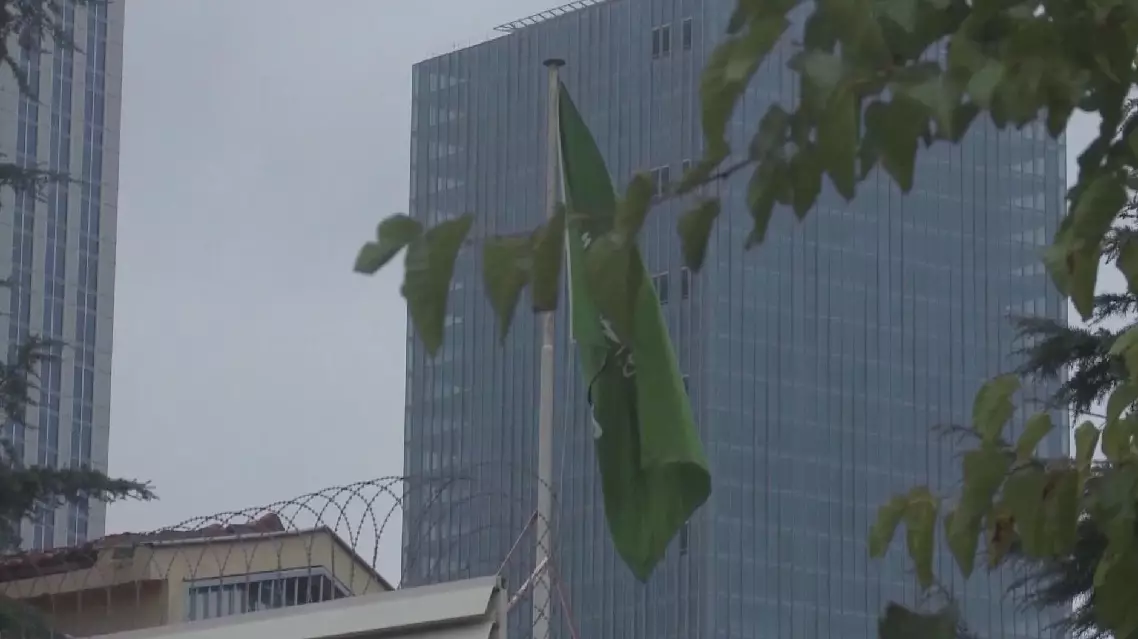
Saudi Arabia, Pakistan reject Trump's Abraham Accords demand