FORT LAUDERDALE, Fla. (AP) — It wasn’t Lionel Messi who got Inter Miami on the scoresheet for the club’s first conference final.
It was Tadeo Allende, the 26-year-old Argentine only at Inter Miami for one year, on a loan from Spanish club Celta de Vigo, who scored a hat trick in the 5-1 win over New York City FC to send Inter Miami to its first MLS Cup Final.
In 31 games during the regular season, Allende scored 11 goals. In the playoffs, he has scored eight. He scored both of Inter Miami’s goals in the opening part of the first half Saturday, then got the final goal for the emphatic victory.
Allende’s impact started in the first-round elimination game against Nashville, when he scored twice to get Inter Miami into the Eastern Conference semifinal. He had two more goals in the semifinal win over Cincinnati.
Messi, seems to be on track for another MVP season in what would be historic consecutive campaigns, is the only player with more goal contributions for Inter Miami during this run. Messi has provided Allende with three assists during these playoffs, while Jordi Alba has provided two to him.
AP MLS: https://apnews.com/hub/major-league-soccer

Inter Miami forward Tadeo Allende (21) drives down the field during the second half of MLS soccer's Eastern Conference semifinal against FC Cincinnati Sunday, Nov. 23, 2025, in Cincinnati. (AP Photo/Tanner Pearson)
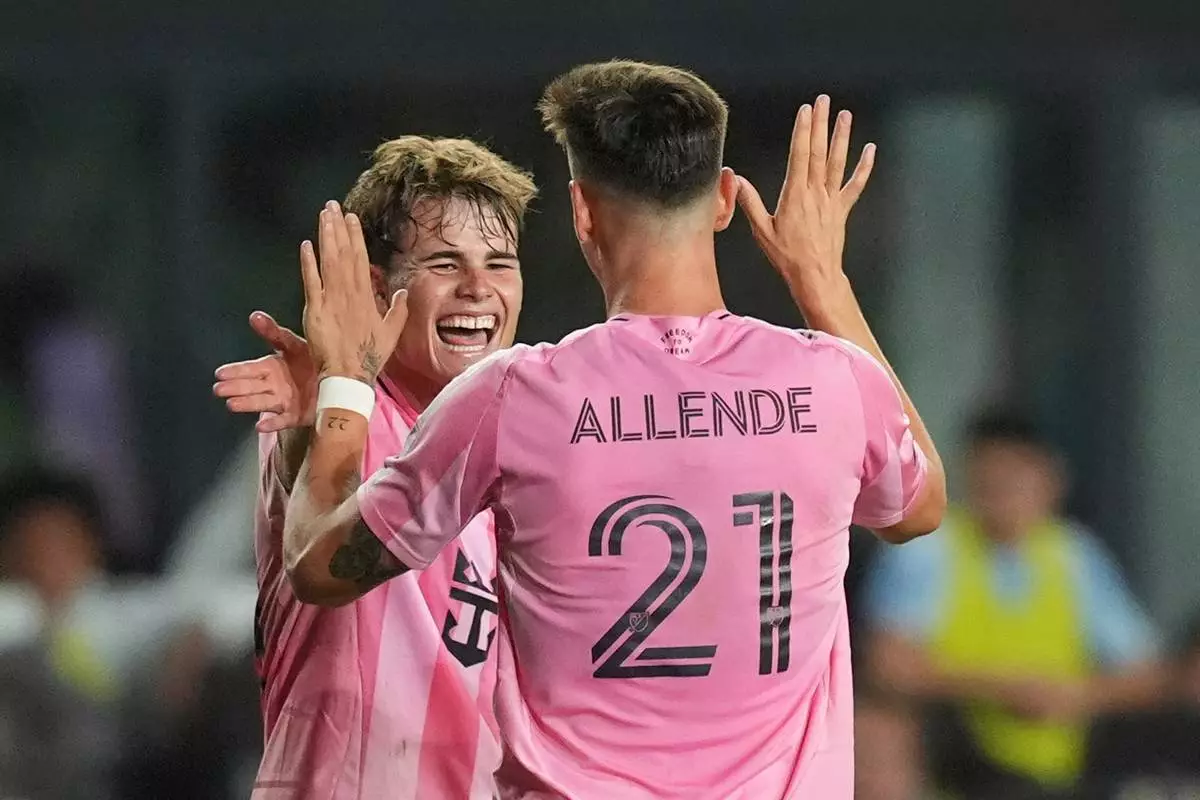
Inter Miami forward Mateo Silvetti celebrates with forward Tadeo Allende (21) after he scores his side's third goal, during the second half of an MLS Eastern Conference final soccer match, Saturday, Nov. 29, 2025, in Fort Lauderdale, Fla. (AP Photo/Rebecca Blackwell)

Inter Miami forward Tadeo Allende celebrates after scoring the second goal against New York City FC during the first half of an MLS Eastern Conference final soccer match, Saturday, Nov. 29, 2025, in Fort Lauderdale, Fla. (AP Photo/Rebecca Blackwell)
After nearly seven years away from the big screen, a new Star Wars movie drew healthy but not record-breaking crowds to global theaters this weekend. According to studio estimates on Sunday, “Star Wars: The Mandalorian and Grogu” made $82 million in ticket sales from 4,300 theaters in the U.S. and Canada. By the end of Monday’s Memorial Day holiday, it’s expected to have earned $102 million domestically and $165 million globally.
It exceeded opening weekend expectations for the movie, a continuation of Disney+ spinoff series “The Mandalorian,” but it’s also on the low end of Disney-era Star Wars releases, closer to “Solo: A Star Wars Story,” which made $103 million over the four-day Memorial Day frame in 2018. While “Solo” was considered a disaster, the metrics around “The Mandalorian and Grogu” are a little different.
The production budget for “Solo” was in the $300 million range, while “The Mandalorian and Grogu” was made for significantly less — a reported $165 million, not accounting for marketing and promotion costs. It makes the journey to profitability more likely, especially when factoring in positive audience scores. Although critics were mixed to negative on the movie (it currently carries a 63% on Rotten Tomatoes), ticket buyers overall gave it an A- CinemaScore. Boys under the age of 13 are especially high on the movie: They gave it an A CinemaScore and a perfect five on PostTrak. Parents also gave it a five out of five.
The Jon Favreau-directed movie stars Pedro Pascal as the titular bounty hunter and puts him and his tiny green companion on a mission to save Jabba’s son Rotta the Hutt, who is voiced by Jeremy Allen White.
“Star Wars: The Mandalorian and Grogu” could also be graded on a bit of a curve because of the streaming component, both that it started as a series, and that it will eventually end up as a value add on Disney+, which was only about a month old when the last Star Wars movie, “The Rise of Skywalker,” debuted in December 2019.
Star Wars as a brand is in a time of transition under its new leadership team of Dave Filoni and Lynwen Brennan; Earlier this year it was announced that Lucasfilm president Kathleen Kennedy, who produced “Star Wars: The Mandalorian and Grogu,” was stepping down after 13 years. The question for the industry is whether audience interest in Star Wars on the big screen might have cooled slightly, and if next year’s “Star Wars: Starfighter,” starring Ryan Gosling, will provide a definitive answer. Until then, the hope is that strong audience and exit scores will propel word-of-mouth generated enthusiasm in the coming weeks.
“The moviegoers rule," said Paul Dergarabedian, the head of marketplace trends for Comscore. "I think given the audience reaction and the scores that are coming from parents and kids, this is going to be in it for the long haul."
Word-of-mouth certainly helped Curry Barker’s relationship horror movie “Obsession” defy the standard box office trajectory and do better business in its second weekend. The Focus Features had an astonishing 30% uptick in ticket sales, earning $22.4 million from 2,655 theaters.
“That’s really unheard of,” Dergarabedian said. “And it is a testament to how this social media buzz from younger viewers is fueling the FOMO factor."
The studio, which acquired the microbudget movie for some $15 million, is projecting that it will have made $28.2 million by the end of Monday, bringing its running total to $58.5 million. It snagged the second-place spot, while “Michael” landed in third place with $20 million for the three-day weekend. The Michael Jackson biopic has now earned $782.4 million.
“Obsession” also did better than the new horror movie “Passenger,” a Paramount Pictures release with Melissa Leo, which grossed an estimated $8.7 million from 2,534 locations. It’s expected to earn $10.5 million over its first four days. The movie received poor reviews from both critics (44% on Rotten Tomatoes) and audiences (B- Cinema Score).
Boots Riley's colorful shoplifting caper meets surreal social satire “I Love Boosters” also opened this weekend to $3.7 million. The Neon release stars Keke Palmer and Demi Moore.
The mix of movies this year didn’t hold a candle to last year’s record Memorial Day weekend, which was led by Disney’s live-action “Lilo & Stitch” and “Mission: Impossible — The Final Reckoning.” The overall four-day frame this year will net out around $211 million, down about 36% from last year’s $330 million. It’s also far from the disastrous 2024 Memorial Day weekend box office, a 30-year low, when “Furiosa: A Mad Max Saga” opened.
With final domestic figures being released Tuesday, this list factors in estimated ticket sales for Friday through Sunday at U.S. and Canadian theaters, according to Comscore:
1. “Star Wars: The Mandalorian and Grogu,” $82 million.
2. “Obsession,” $22.4 million.
3. “Michael,” $20 million.
4. “The Devil Wears Prada 2,” $12.6 million.
5. “The Sheep Detectives,” $9 million.
6. “Passenger,” $8.7 million.
7. “Mortal Kombat II,” $6.2 million.
8. “I Love Boosters,” $3.7 million.
9. “The Super Mario Galaxy Movie,” $3.2 million.
10. “Project Hail Mary,” $2.7 million.
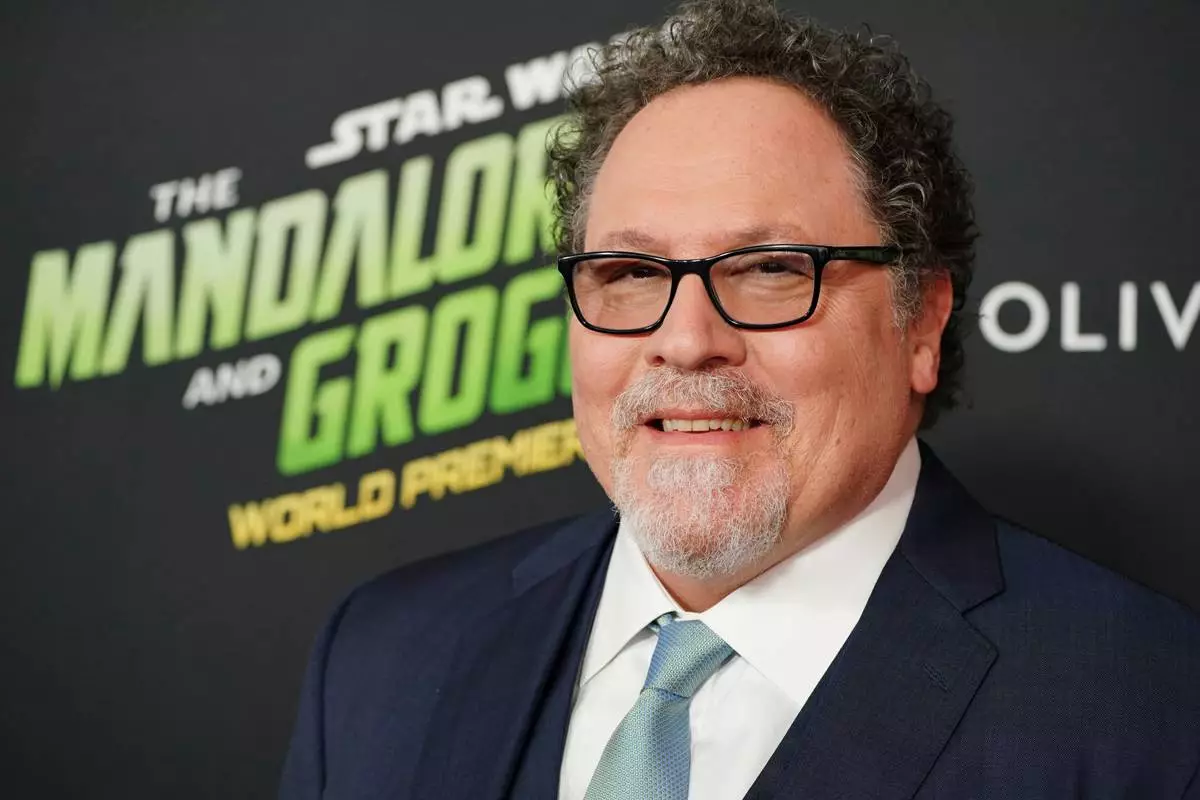
Jon Favreau arrives at the premiere of "Star Wars: The Mandalorian and Grogu" on Thursday, May 14, 2026, at TCL Chinese Theatre in Los Angeles. (Photo by Jordan Strauss/Invision/AP)
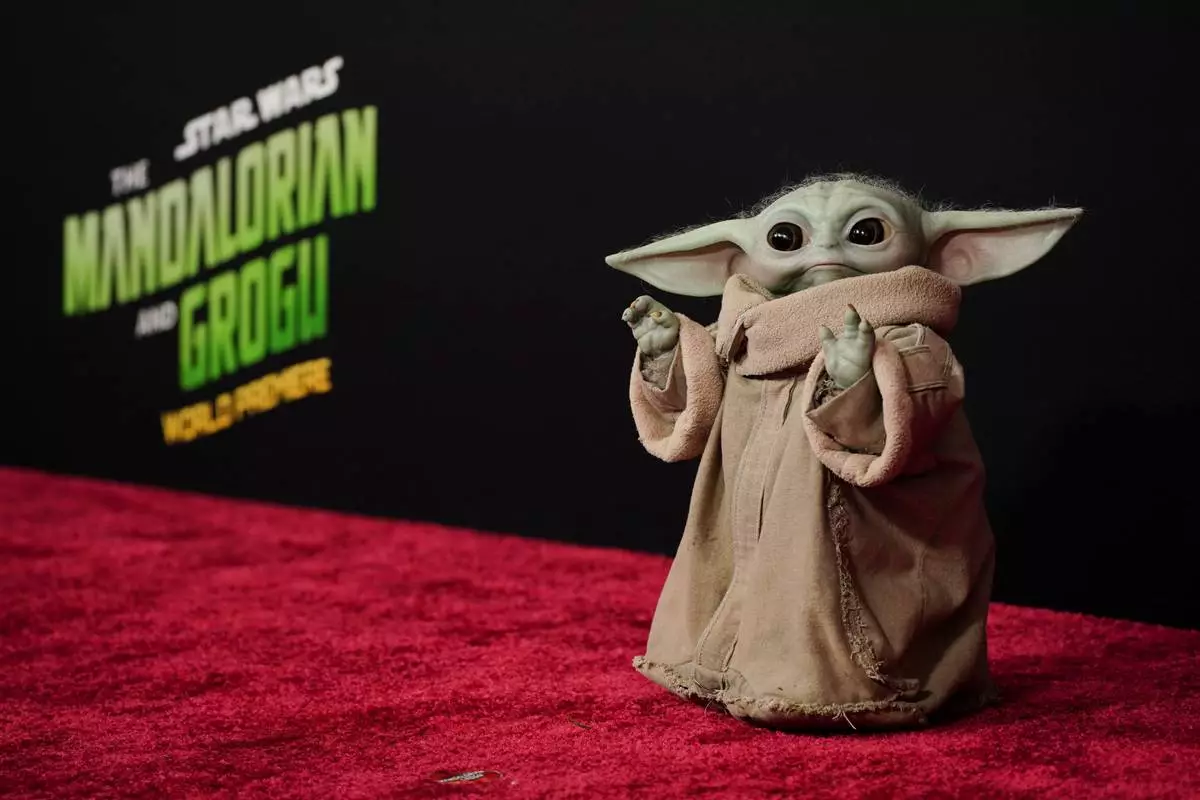
The character Grogu arrives at the premiere of "Star Wars: The Mandalorian and Grogu" on Thursday, May 14, 2026, at TCL Chinese Theatre in Los Angeles. (Photo by Jordan Strauss/Invision/AP)