When major disruptions happen in communities, often the first people to respond are the residents themselves and their neighbors. When the pandemic shut down daily life or after a disaster like a hurricane or wildfire, people get together to take care of each other.
Even outside of a crisis, some who struggle to meet their needs may turn to mutual aid, the practice of finding resources from within a community and exchanging them for free.
Now, in response to government funding cuts, high prices and political uncertainty, especially targeting immigrants, interest in mutual aid projects has picked up, organizers and participants say.
“The exciting part about mutual aid is that you can really get together and help people in a really meaningful way just by pooling resources and being willing to reach out,” said Mary Zerkel, who lives in the Rogers Park neighborhood in Chicago.
Mutual aid practices have a long history, especially among immigrant and Black communities in the U.S., like the Black Panther’s Survival Programs or informal pooled savings circles.
Examples include sharing food, exchanging household goods and clothes or organizing shared items like tools. In recent years, groups have helped people access reproductive healthcare, including abortions, and coordinated collective responses to immigration arrests under the umbrella of providing mutual aid.
In 2019, Zerkel helped start a shared artist and community space in her neighborhood along with a local chapter of Food Not Bombs, a longstanding mutual aid group that distributes food. When the pandemic hit, they cleared out the art supplies.
"All of a sudden, we had six fridges in there and we were feeding and delivering meals to 400 families,” Zerkel said.
Over time, the organizers adapted to changing needs. When they realized people needed items beyond food, they started a "free store," where people can donate things they don't need. They trained volunteers in de-escalation techniques to diminish the possibility of ever calling the police. Later, they sourced naloxone, which reverses opioid overdoses, and held trainings on how to use it.
“The main thing is that you’re not trying to be an institution," Zerkel said. "You’re trying to be a neighbor helping a neighbor, so you can do the best that you can and try to be responsible and loving to your neighbors and build something slowly.”
Many mutual aid networks are not incorporated as formal organizations or nonprofits. Giving to them won't offer a tax deduction, but organizers say that because they are all volunteers, any donations they receive go directly to meeting real community needs.
“People are less suspicious of our intention. We are getting food and giving it out. We don’t have any salaried employees,” said Nicholas Grosso, who has organized with Sunnyside and Woodside Mutual Aid in Queens, New York.
He also sees mutual aid filling in where formal systems break down. For example, they take food from companies that would otherwise throw it away and give it almost immediately to people who need it.
“Whether it’s red tape, whether it’s bureaucracy or whether it’s not cost efficient for companies to connect back to the community,” he said, the mutual aid group has become a bridge to the people who need things.
Mutual aid projects often specifically try to avoid hierarchies and make decisions collectively. Taylor Dudley, director of coalition building at the Center for Disaster Philanthropy, said, “There’s a lot of community accountability to mutual aid. Often times in nonprofits, rather than having the community accountability at the center, there’s accountability to donors,” or to administrative or legal considerations.
Mutual aid efforts are built on trust and the relationships between organizers and their communities.
Aaron Fernando, who works for Shareable, which publishes resources about mutual aid and cooperatives, said the small scale of many groups helps to hold people accountable. Over time, organizers know who is reliable and who has integrity. But there is a risk that opportunists take advantage of what is being offered.
Often, mutual aid groups collect money and distribute it to people who need it or use it to buy things. Groups should consider how to handle those funds as sometimes they can be flagged as income by a payment processor. The Sustainable Economies Law Center has a guide that lays out multiple scenarios that mutual aid groups might encounter. Mohini Mookim, an attorney with the center, said rules around giving money with no strings attached are generally promising for mutual aid groups.
“When people are acting motivated by love, the tax code calls it generosity or feelings of generosity, then oftentimes, there are less legal, especially tax law, implications of what you’re doing,” they said.
Another potential risk has to do with privacy or surveillance. For example, if a group is dropping food of at someone's home, they should think carefully about who has access to those addresses.
There are also examples of mutual aid groups facing charges or being asked to stop handing out food by police. Fernando, of Shareable, said that often has less to do with concerns about people getting sick from the food and more about businesses or residents nearby not wanting the food distribution to happen there.
Associated Press coverage of philanthropy and nonprofits receives support through the AP’s collaboration with The Conversation US, with funding from Lilly Endowment Inc. The AP is solely responsible for this content. For all of AP’s philanthropy coverage, visit https://apnews.com/hub/philanthropy.
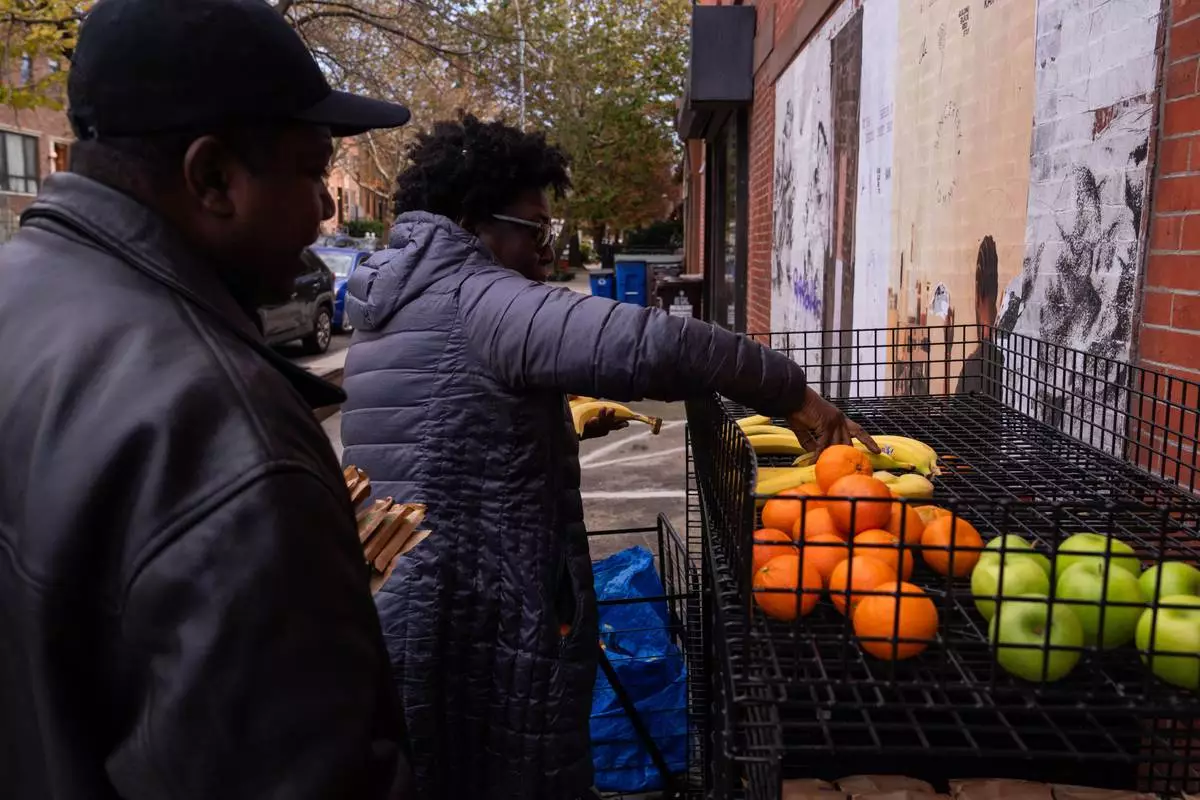
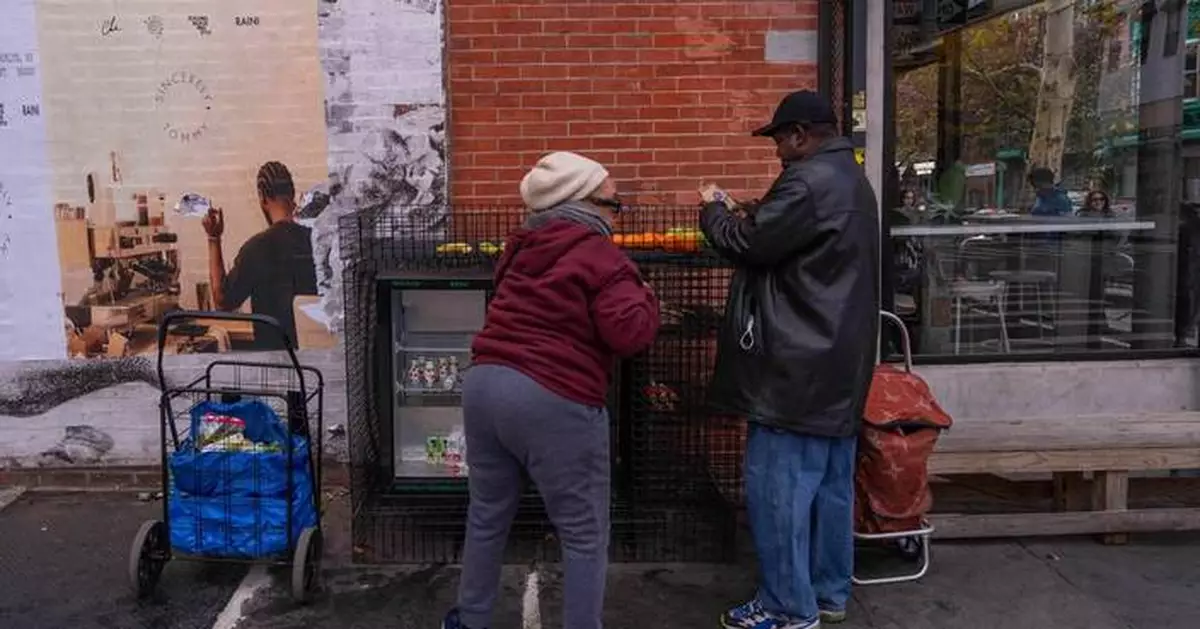
People take food from a One Love Community Fridge, Nov. 15, 2025, in Brooklyn, New York. (AP Photo/Adam Gray)
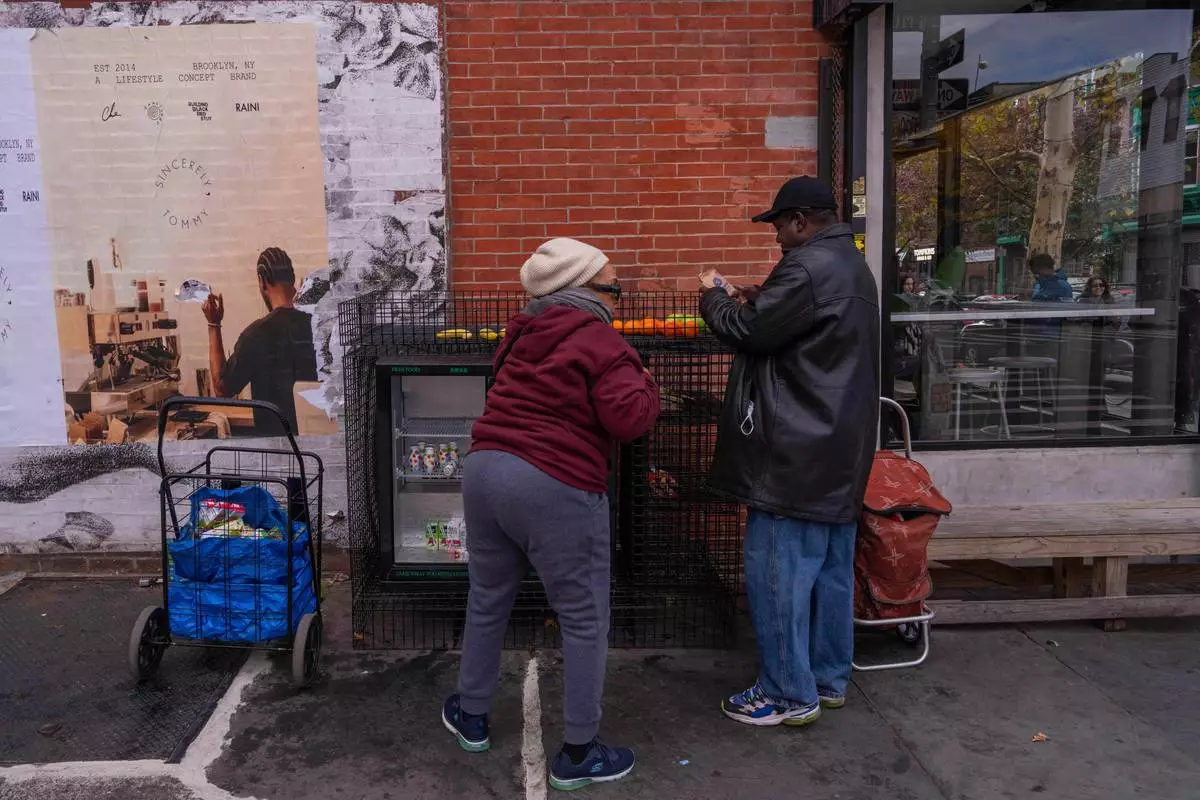
People take food from a One Love Community Fridge, Nov. 15, 2025, in Brooklyn, New York. (AP Photo/Adam Gray)