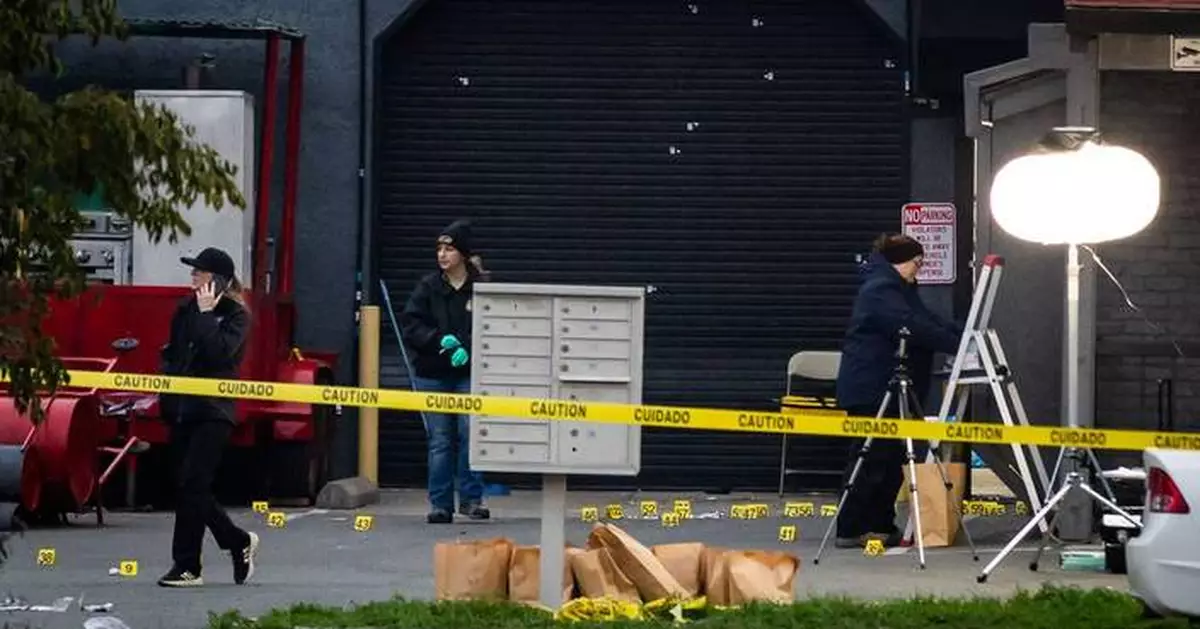
The latest mass killing in the United States occurred Saturday night when three children ages 8, 9 and 14, and a 21-year-old adult were killed in a shooting at a child’s birthday party in California. Eleven people were also wounded at a Stockton banquet hall.
This is the country’s 17th mass killing this year. The killings are tracked in a database maintained by The Associated Press and USA Today in partnership with Northeastern University.
It is the lowest number of mass killings recorded since 2006, according to the database. Experts warn it probably isn’t the start of a bigger trend, but more likely a return to average levels after spikes in 2018 and 2019.
At least 81 people have died this year in U.S. mass killings, which are defined as cases in which four or more people die within a 24-hour period, not including the killer — the same definition used by the FBI.
So far this year, 14 of 17 recorded mass killings (82%) have involved a firearm. Shooting victims make up 81% of the 3,234 victims of mass killings since 2006.
Last year ended with at least 165 deaths from at least 38 mass killings.
Here is a look at other U.S. mass killings this year:
SAINT HELENA ISLAND, SOUTH CAROLINA, Oct. 12
Four people were killed and 15 others were injured in a shooting during a high school reunion party at a St. Helena Island bar. One man charged in the shooting and another man, who was killed, had a disagreement and started firing at each other, authorities said. Investigators found evidence of a third shooter and have said they expect more arrests.
LELAND, MISSISSIPPI, Oct. 10
A shooting after a high school football game in a small Mississippi Delta town left seven people dead. Authorities have not disclosed a possible motive for the shooting in Leland, but the FBI says it may have been “sparked by a disagreement among several individuals.” At least nine people have been arrested, several of them charged with capital murder.
GRAND BLANC TOWNSHIP, MICHIGAN, Sept. 28
A man opened fire in a Michigan church and set it ablaze, leaving four people dead and the church burned to the ground. The FBI has said the gunman, who was killed by responding law enforcement, was motivated by “anti-religious beliefs” against The Church of Jesus Christ of Latter-day Saints.
MERLIN, OREGON, Aug. 11
Police said two adults and three children died in a murder-suicide in southern Oregon, KGW-TV reported. The children were ages 11, 9 and 7. Police found the bodies at a home near Grants Pass after one of the victims didn't show up for work.
ANACONDA, MONTANA, Aug. 1
Four people were fatally shot at a bar in a small town about 75 miles (120 kilometers) southeast of Missoula, authorities said. The man charged in the killings evaded capture for a week.
TIPTONVILLE, TENNESSEE, July 29
The parents, grandmother and uncle of an infant found abandoned in a front yard were shot in a wooded area about 40 miles (65 kilometers) away. The man charged in the killings was the boyfriend of the sister of the infant’s grandmother, authorities said.
NEW YORK CITY, July 28
A man carrying a rifle killed four people at a midtown Manhattan building that houses finance companies and the NFL headquarters. The victims included an off-duty New York City police officer. The gunman wounded a fifth person before taking his own life.
TALLADEGA, ALABAMA, July 5
Three men and a woman were fatally shot in an apartment, WBRC-TV reported. The bodies were discovered when police followed up on a call about a missing woman. A friend of one of the victims was arrested.
CHICAGO, July 2
Two men and two women were killed and 14 others were wounded in a drive-by shooting as people left an album release party. Police said the driver immediately fled, and no one was in custody.
CHICAGO, June 26
Police said a man upset with a friend and his ex-girlfriend set a building fire that killed four other people, WLS-TV reported. The fire was started with gasoline and a lighter.
MINNEAPOLIS, April 29
Four people were shot inside a vehicle and died in the Phillips neighborhood in south Minneapolis. A suspect was arrested and charged a few days later.
PERRY, GEORGIA, April 4
Three adults, ages 82, 51 and 37, and a 2-year-old child found dead in a mobile home in Perry, a rural city about 30 miles (48 kilometers) south of Macon. Authorities said three of the victims had been stabbed and one of them was suffocated. A man was arrested in May and charged in the killings, officials said
HALLANDALE BEACH, FLORIDA, March 26
A man fatally shot his estranged girlfriend and three of her children before turning the gun on himself at a south Florida residence, WTVJ-TV reported. The man, the father of two of the children, died later at a hospital. A fourth child was shot but survived.
LAKE STATION, INDIANA, Feb. 21
The deaths of a mother and her three daughters, ages 4, 6 and 7, found fatally shot at a home in Lake Station, about 34 miles (55 kilometers) southeast of Chicago, were ruled homicides, WBBM-TV reported. The woman’s husband was also found fatally shot, and his death was ruled a suicide.
BYRON, WYOMING, Feb. 10
A woman fatally shot her four daughters, ranging in age from 2 to 9, at their home in Big Horn County before shooting herself, according to the sheriff. The mother and one daughter were hospitalized, but later died.
NEW ORLEANS, Jan. 1
A driver plowed into a crowd of revelers in New Orleans’ French Quarter district at 3:15 a.m. on New Year’s Day, killing at least 14 people and injuring dozens, authorities said. The driver, a U.S. citizen from Texas, died in a shootout with police. The FBI called the attack an act of terrorism.
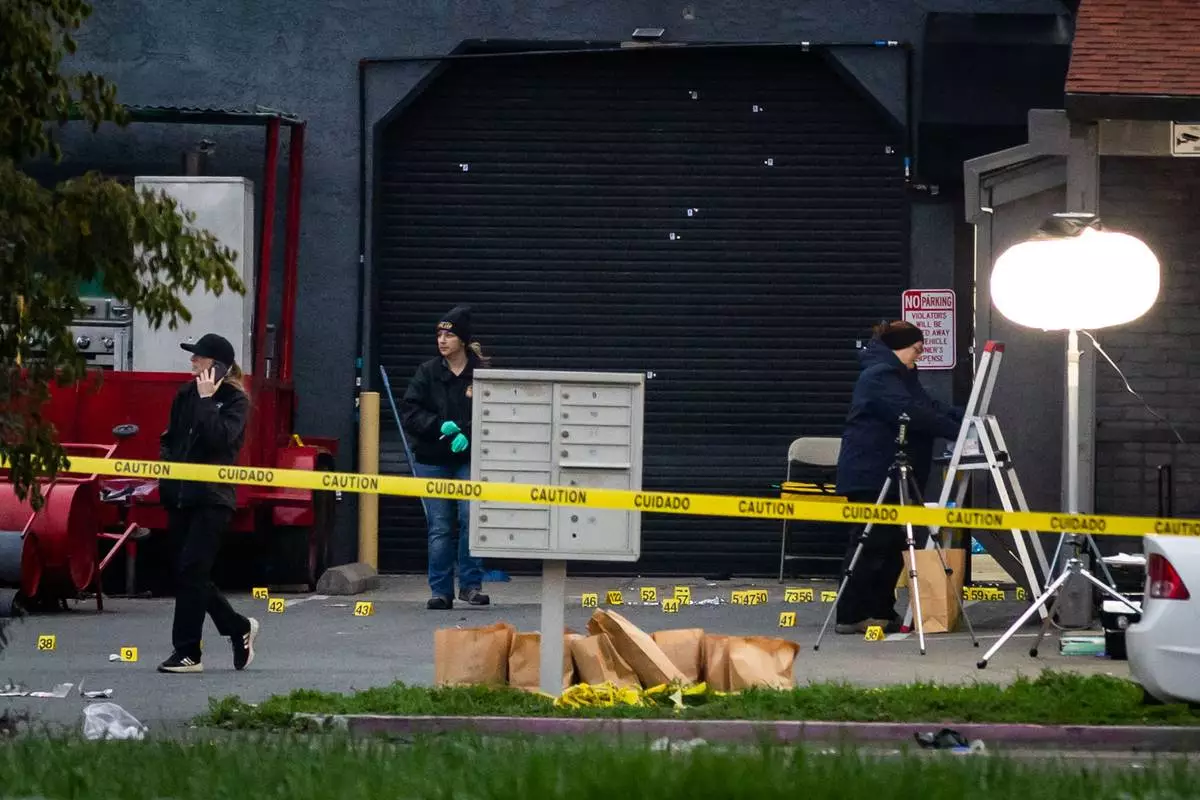
Investigators examine the scene of a mass shooting Sunday, Nov. 30, 2025, in Stockton, Calif. (AP Photo/Ethan Swope)
ACERRA, Italy (AP) — Pope Leo XIV on Saturday greeted one by one families who lost loved ones to illegal toxic dumping in an area near Naples, as many paused to share photographs and other mementos of children and young people who have died or are battling cancer — illnesses tied to a multi-billion criminal racket run by the mafia.
Leo's visit to the so-called Terra dei Fuochi, or Land of Fires, came on the eve of the 11th anniversary of Pope Francis’ big ecological encyclical Laudato Si (Praised Be), and indicates Leo’s commitment to carry on his predecessor’s environmental agenda.
“I have come first of all to gather the tears of those who have lost loved ones, killed by environmental pollution caused by unscrupulous people and organizations who for too long were able to act with impunity,” Leo said in remarks to family members and local clergy inside Acerra's cathedral.
The pontiff recalled that the area now dubbed the Land of Fires was once called “Campania felix,” Latin for blessed or fruitful countryside, "capable for enchanting for its fertility, its produce and its culture, like a hymn to life.
"And yet — here is death, of the land and of men,'' the pope said.
The European Court of Human Rights last year validated a generation of residents’ complaints that mafia dumping, burial and burning of toxic waste led to an increased rate of cancer and other ailments in the area of 90 municipalities around Caserta and Naples, encompassing a population of 2.9 million people.
The court found Italian authorities had known since 1988 about the toxic pollution, blamed on the Camorra crime syndicate that controls waste disposal, but failed to take necessary steps to protect the residents. The binding ruling gave Italy two years to set up a database about the toxic waste and verified health risks associated with living there.
Bishop Antonio Di Donna in opening remarks estimated 150 young people had died in the city of some 58,000 over the past three decades — emphasizing that the number didn't take into account adults and victims in other municipalities.
He urged the pope to admonish those who continue to pollute, noting that the dumping of tons of toxic waste was reported a day earlier near Castera. Di Donna said that Italian officials had identified dozens more human-caused contamination sites throughout the country, including the Venetian port of Marghera, and the leaching of PFAS forever chemicals into groundwater near Vicenza.
"We say to those brothers of ours ensnared in evil and seized by a mirage of fabulous earnings: Convert, change your ways, because what you are doing is not only a crime, it is a sin that cries out to God for vengeance,'' the bishop said.
The pope later greeted the mayors of the 90 communities impacted by the toxic dumping, and greeted thousands of people waving yellow flags and chanting “Papa Leone” along the route of his popemobile and in a central piazza.
The victims include Maria Venturato, who died of cancer in 2016 at the age of 25. Her father, Angelo, said he hopes to speak with the pope to explain their reality, “not for me … for the next generation.”
“I’d like to give these young people a future, so I’m asking for the pope’s help with this. That is, I’m making a strong appeal to him to go to those in power and say, ‘Look, let’s heal this land of fires,’" he said on the eve of the pope's visit.
Inside the cathedral, Filomena Carolla presented the pope with a book containing memories from the life of her daughter, Tina De Angelis, who died of cancer at the age of 24.
“I’m just angry at the people who poisoned the soil, because what did our children have to do with it? What did they have to do with it, so young,” Carolla told The Associated Press on Friday.
Francis' plans to visit the area in 2020 were canceled due to the pandemic.
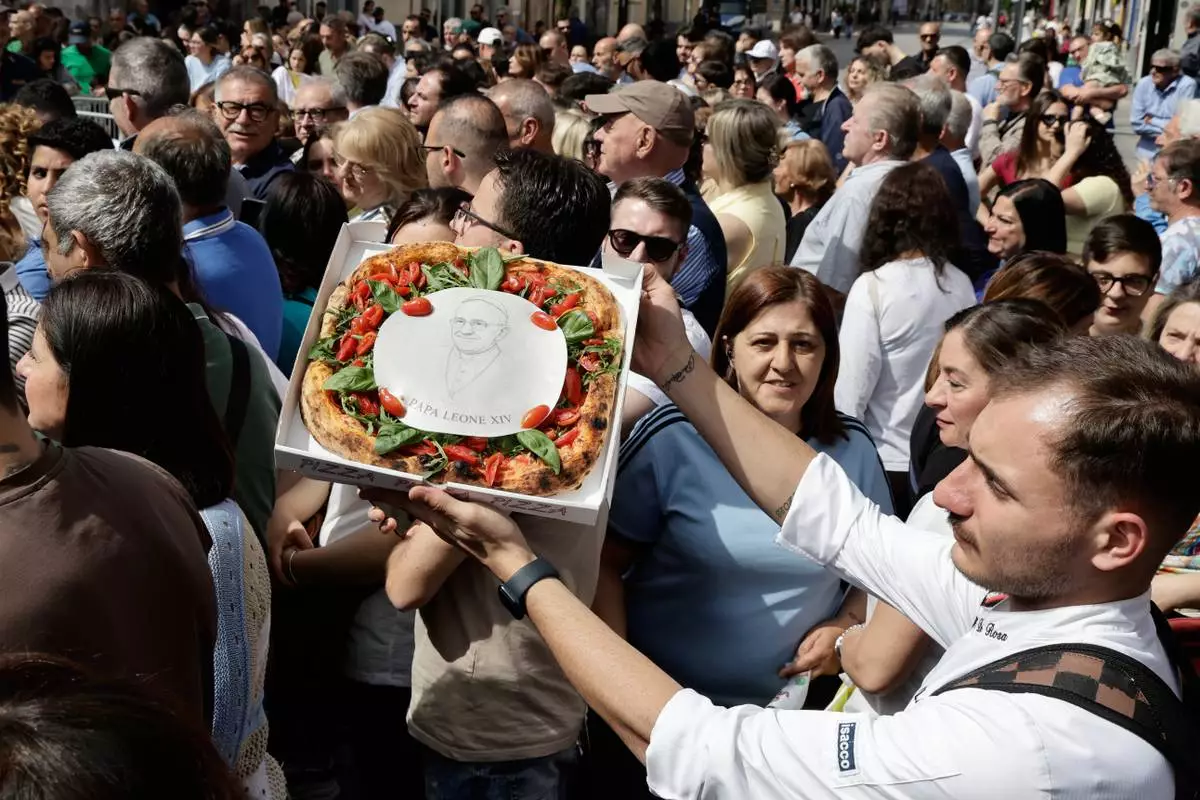
A man presents a pizza with the portrait of Pope Leo XIV during his a one-day pastoral visit in Acerra, Italy, Saturday, May 23, 2026. (AP Photo/Salvatore Laporta)
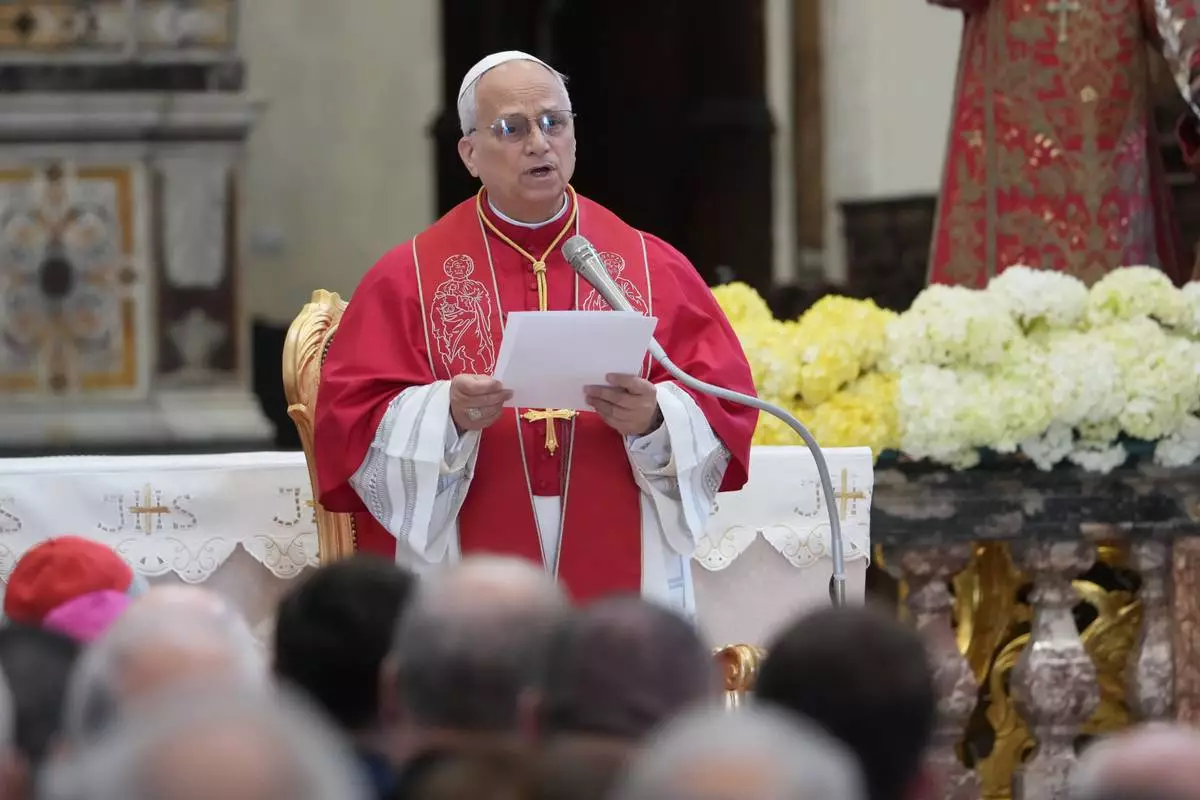
Pope Leo XIV delivers his speech during his meeting with clergy, religious and families of victims of environmental pollution in the Saint Mary of the Assumption Cathedral in Acerra, near Naples, Italy, Saturday, May 23, 2026. (AP Photo/Andrew Medichini)

Pope Leo XIV rides on his popemobile during his one-day pastoral visit in Acerra, Italy, Saturday, May 23, 2026. (AP Photo/Salvatore Laporta)
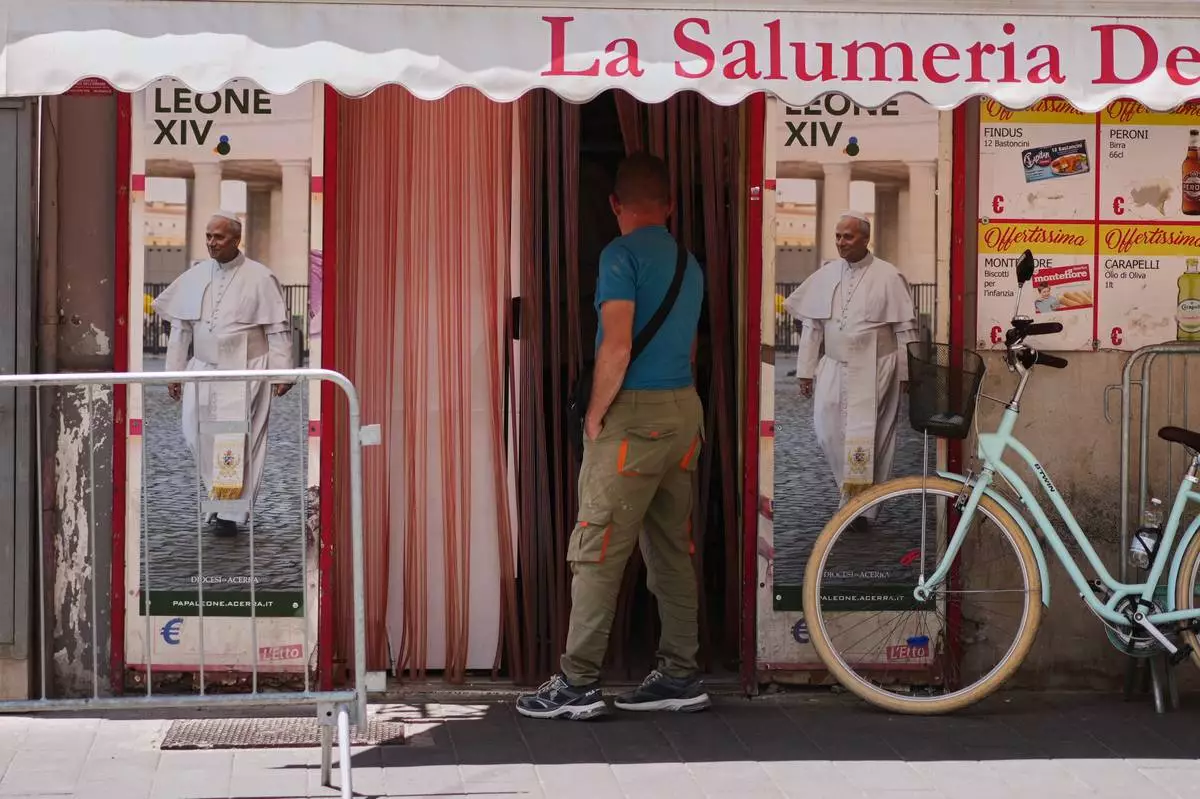
A man enters a grocery store with posters of Pope Leo XIV ahead of his visit to the southern Italian town of Acerra in the Terra dei Fuochi, or Land of Fires, Friday, May 22, 2026. (AP Photo/Andrew Medichini)
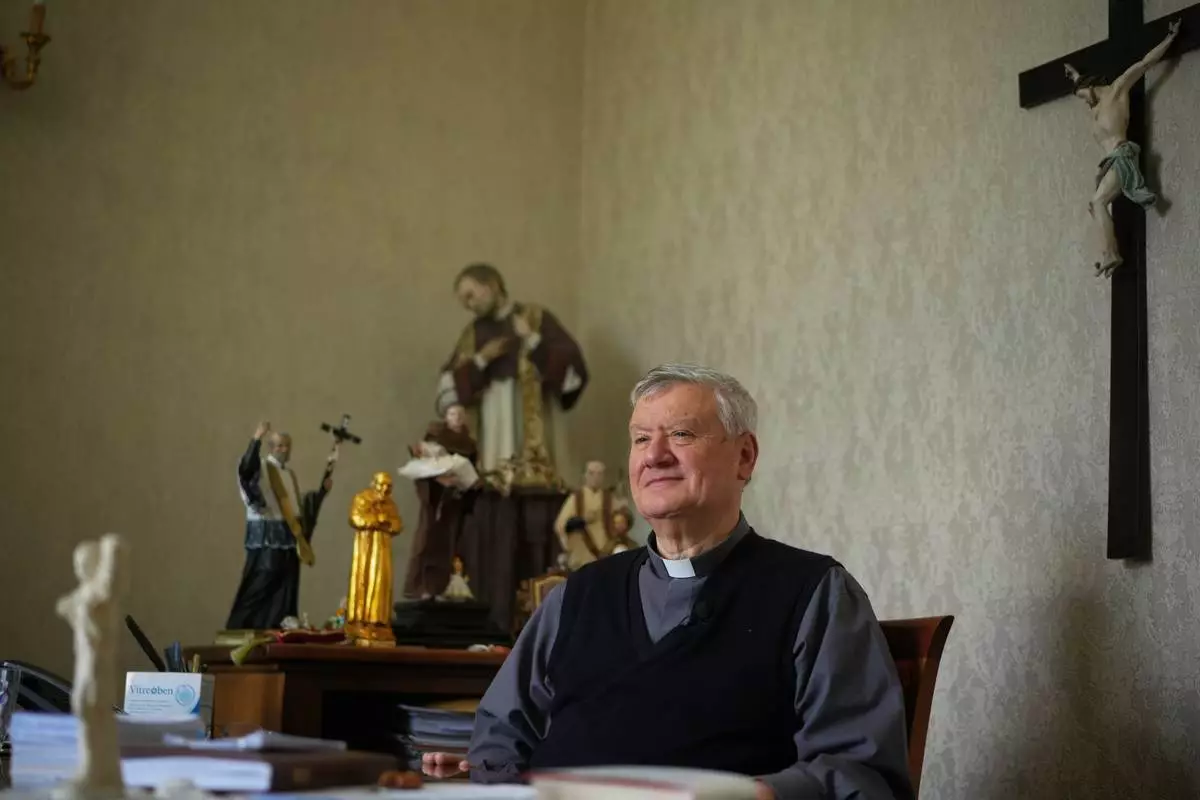
Acerra bishop Antonio Di Donna speaks during an interview with the Associated Press ahead of Pope Leo XIV's visit to the southern Italian town of Acerra in the Terra dei Fuochi, or Land of Fires, an area scarred by decades of pollution from illegal waste dumping and burning, much of it linked to organized criminal groups, Friday, May 22, 2026. (AP Photo/Andrew Medichini)
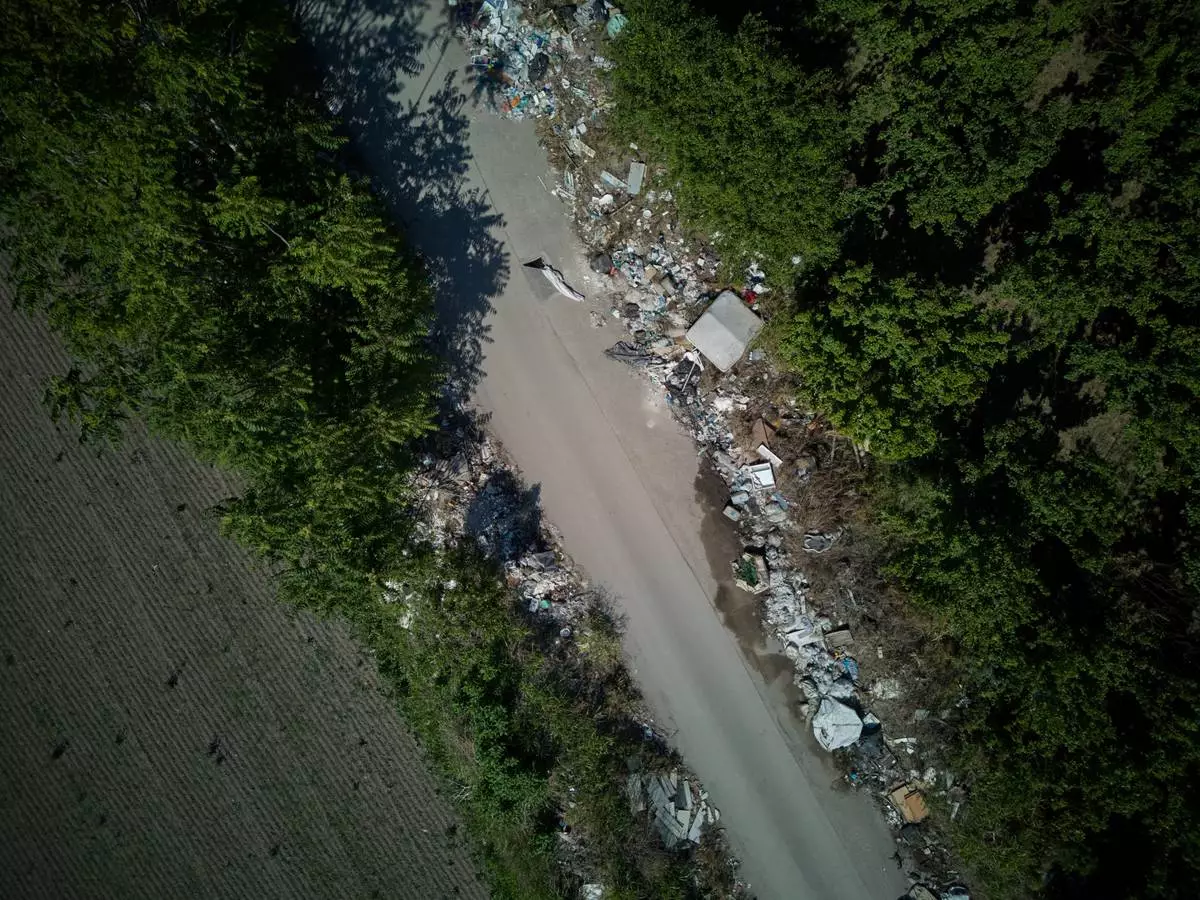
Illegal waste is seen on the side of a road in the outskirts of the southern Italian town of Acerra in the Terra dei Fuochi, or Land of Fires, an area scarred by decades of pollution from illegal waste dumping and burning, much of it linked to organized criminal groups, Friday, May 22, 2026, a day ahead of Pope Leo XIV's visit. (AP Photo/Andrew Medichini)
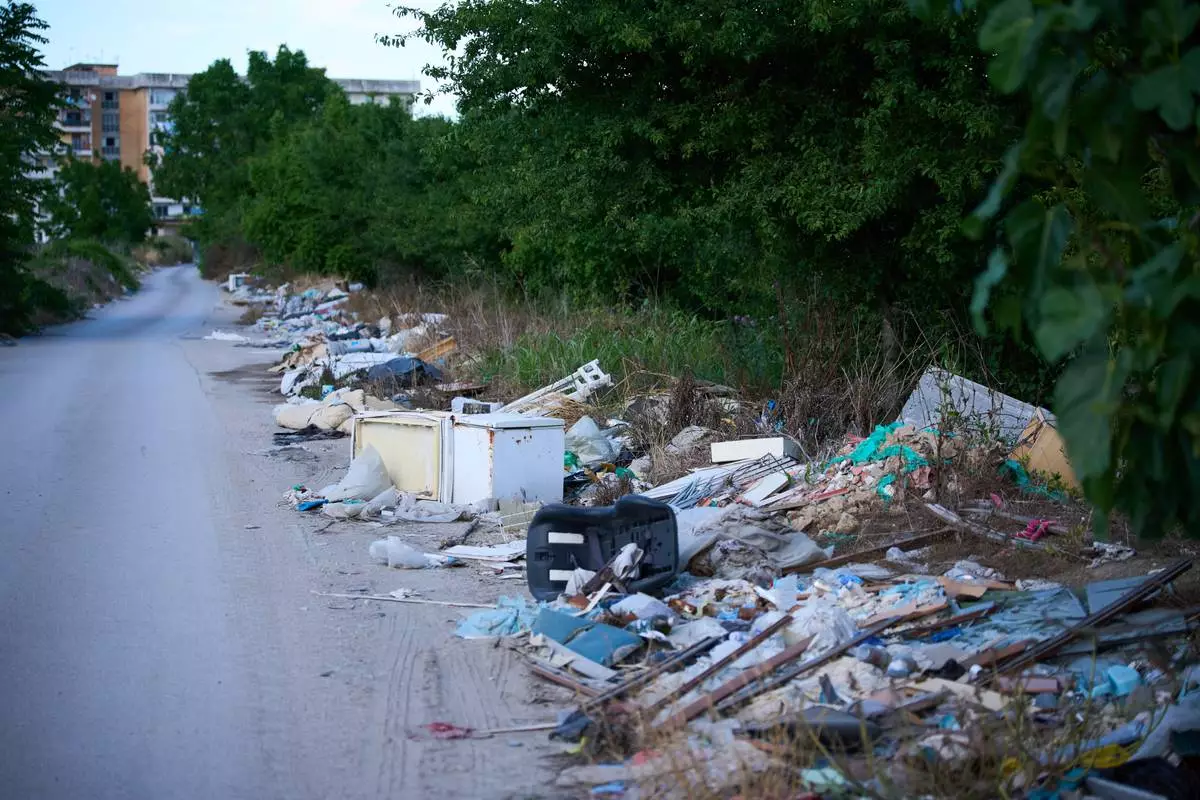
Illegal waste is seen on the side of a road in the outskirts of the southern Italian town of Acerra in the Terra dei Fuochi, or Land of Fires, an area scarred by decades of pollution from illegal waste dumping and burning, much of it linked to organized criminal groups, Friday, May 22, 2026, a day ahead of Pope Leo XIV's visit. (AP Photo/Andrew Medichini)
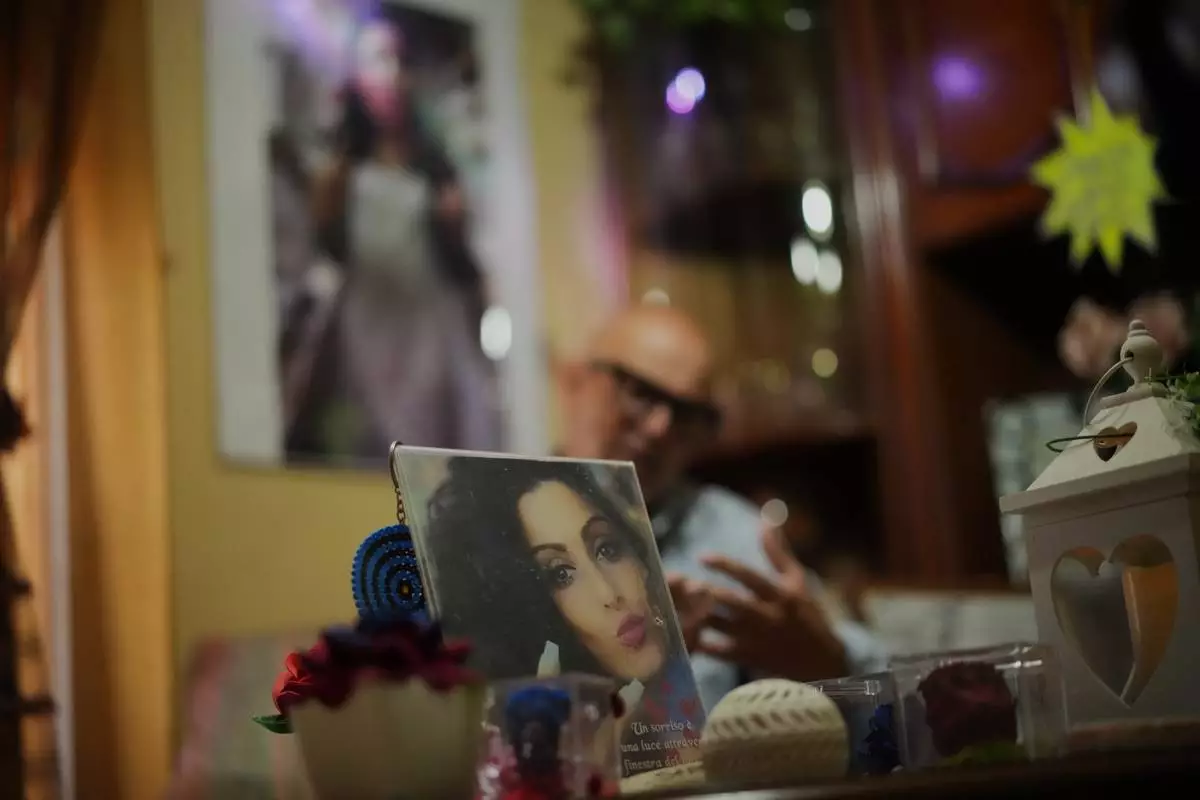
Angelo Venturato talks during an interview with the Associated Press next to photos of his daughter Maria who died at the age of 25 of a cancer he claims to be connected to decades of pollution from illegal waste dumping and burning, much of it linked to organized criminal groups, in the southern town of Acerra, Friday, May 22, 2026. (AP Photo/Andrew Medichini)