LONDON (AP) — Twelve police officers would have faced gross misconduct proceedings for their failings during and after the 1989 Hillsborough stadium soccer tragedy, a long-running investigation has found.
In the latest development following Britain’s worst sports disaster which saw 97 people killed during a crush of Liverpool fans, a report — published on Tuesday — also upheld or found cases to answer for misconduct in 92 complaints about police actions.
However, the law at the time means no officers will face disciplinary proceedings because they had all retired before the investigation began in 2012.
“No one should be beaten by the passage of time,” said Steve Kelly, whose brother Michael was one of those who died at Hillsborough.
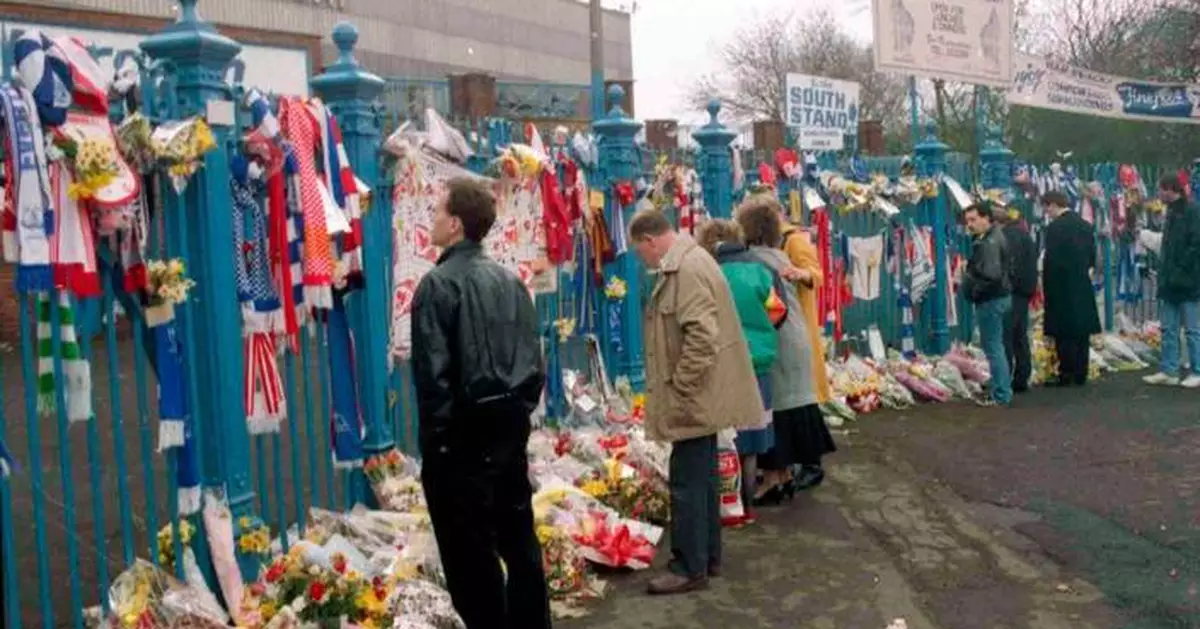
The disaster unfolded on April 15, 1989, when more than 2,000 Liverpool fans were allowed to pour into a standing-only section behind a goal at Hillsborough Stadium in Sheffield. The 54,000-capacity stadium was already nearly full for an FA Cup semifinal against Nottingham Forest. The victims were smashed against metal anti-riot fences or trampled underfoot, and many suffocated.
An original inquest in 1991 found the deaths were accidental, which the families of the victims refused to accept. Those findings were overturned in 2012 after a far-reaching inquiry into the disaster that examined previously secret documents and exposed wrongdoing and mistakes by police. In 2016, a jury found the victims were “unlawfully killed.”
The Independent Office for Police Conduct began an investigation into the tragedy in 2012. The conclusions published in the report released on Tuesday were described by some of the bereaved families as “another bitter injustice.”
“This outcome may vindicate the bereaved families and survivors who have fought for decades to expose the truth — but it delivers no justice,” said attorney Nicola Brook, who represents several families.
“Instead, it exposes a system that has allowed officers to simply walk away, retiring without scrutiny, sanction or consequence for failing to meet the standards the public has every right to expect."
New legislation in the Public Office (Accountability) Bill — also known as the “Hillsborough Law” — which is going through Parliament in Britain, would introduce a legal duty of candor for public officials including police.
“Yes, the law has now changed so this loophole cannot be used in future," Brook added. "But for those affected by this case, that is no consolation. They are left with yet another bitter injustice: The truth finally acknowledged but accountability denied.”
Sue Roberts, whose brother, Graham, was killed in the tragedy, said she doesn't believe campaigners “will ever get to the full truth of Hillsborough."
“But what we know now is bad enough, it's damning enough, and people have been named and shamed at last,” she said.
With hooliganism rife in English soccer in the 1980s, there were immediate attempts to assign blame on the Liverpool fans and defend the policing operation. A false narrative that blamed drunken, ticketless and rowdy Liverpool fans was created by police, and was turned around only by campaigning by the bereaved families.
Among those who would have had cases to answer for gross misconduct if they were still serving were Peter Wright, the then-chief constable of South Yorkshire Police who died in 2011, and David Duckenfield, who was the match commander.
Those working on the investigation said the victims, their families and survivors were repeatedly let down.
“First,” IOPC deputy director general Kathie Cashell said, “by the deep complacency of South Yorkshire Police in its preparation for the match, followed by its fundamental failure to grip the disaster as it unfolded, and then through the force’s concerted efforts to deflect the blame onto the Liverpool supporters, which caused enormous distress to bereaved families and survivors for nearly four decades.
“They were let down again by the inexplicably narrow investigation into the disaster conducted by West Midlands Police, which was a missed opportunity to bring these failings to light much sooner.”
Two West Midlands officers who led the investigation into the disaster — Mervyn Jones, who was assistant chief constable, and then-detective chief superintendent Michael Foster — were referred to prosecutors for their failings but the threshold for prosecution was not found to have been met, according to the report.
The IOPC said both former officers would have a case to answer for gross misconduct after failing to conduct a rigorous investigation because they were “biased towards the force and against the supporters.”
Duckenfield, who is now aged 81 and was chief superintendent on the day of the tragedy, was cleared of gross negligence manslaughter by a jury in 2019.
The IOPC report said he “froze in the crisis” and found he had a case to answer for gross misconduct in respect of 10 allegations, including for failing to respond and telling FA officials — in what he later acknowledged was a lie — that fans had forced their way in.
The only person to be convicted as a result of the post-tragedy investigations was former Sheffield Wednesday club secretary Graham Mackrell, who was fined 6,500 pounds (now $8,500) and ordered to pay 5,000 pounds (now $6,600) in costs after he was found guilty of failing to ensure the health and safety of fans arriving at the ground. Hillsborough is Wednesday's home ground.
AP soccer: https://apnews.com/hub/soccer
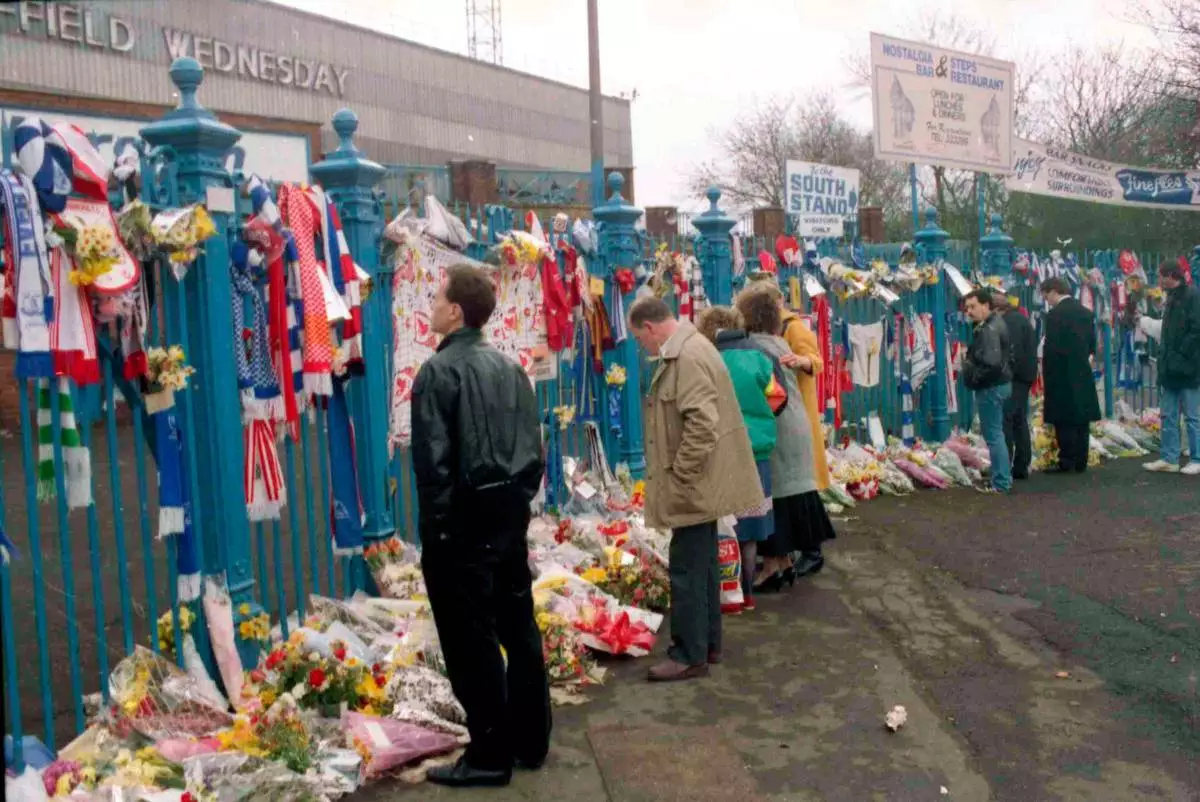
FILE- In this file photo dated April 17, 1989, soccer fans arrive to pay their respects and look at the flowers, scarves and banners, left on the gates at Hillsborough Football Stadium. (AP Photo/ Peter Kemp, File)