TEGUCIGALPA, Honduras (AP) — Former Honduras President Juan Orlando Hernández, sentenced last year to 45 years in prison for his role in a drug trafficking operation that moved hundreds of tons of cocaine to the United States, was released from prison following a pardon from President Donald Trump, officials confirmed Tuesday.
Hernández was released Monday from U.S. Penitentiary Hazelton in West Virginia, a spokesperson for the Federal Bureau of Prisons told The Associated Press. The bureau’s online inmate records also reflected his release.
The release of Hernández — a former U.S. ally whose conviction prosecutors said exposed the depth of cartel influence in Honduras — comes just days after the country’s presidential election. Trump defended the decision aboard Air Force One on Sunday, saying Hondurans believed Hernández had been “set up,” even as prosecutors argued he protected drug traffickers who moved hundreds of tons of cocaine through the country.
The pardon also unfolds against the backdrop of Trump’s aggressive counter-narcotics push that has triggered intense controversy across Latin America. In recent months, U.S. forces have repeatedly struck vessels they say were ferrying drugs north, a series of lethal maritime attacks that the administration argues are lawful acts of war against drug cartels — and that critics say test the limits of international law and amount to a pressure campaign on Venezuela’s President Nicolás Maduro.
The Trump administration has carried out 21 known strikes on vessels accused of carrying drugs, killing at least 83 people. The administration has justified the attacks as a necessary escalation to stem the flow of drugs into the United States and asserted the U.S. is engaged in an “armed conflict” with drug cartels, similar to the war against al-Qaida following the Sept. 11 attacks.
Ana García thanked Trump for pardoning her husband via the social platform X early Tuesday.
Speaking to reporters Tuesday outside her home in Tegucigalpa, she thanked Trump for pardoning her husband and drew a parallel between the two men.
“Today the whole world realizes that, like they did with President Donald Trump, the same Southern District, the same prosecutor created a political case,” García said.
She said Hernández called her Monday evening to say he was in the office of the prison head and had been told he will be released. García said Hernández is in an undisclosed location for his safety, but that he plans to address the Honduran people on Wednesday.
Hernández’s attorney Renato Stabile said in an emailed statement he also would not share the former president’s current location.
García said the process to seek a pardon began several months ago with a petition to the office of pardons. Then on Oct. 28, Hernández’s birthday, he wrote a letter to Trump. He announced he was pardoning Hernández last Friday.
“My husband is the president who has done the most for Honduras in the fight against organized crime,” Garcia said.
Trump was asked Sunday why he pardoned Hernández.
“I was asked by Honduras, many of the people of Honduras,” Trump told reporters traveling with him on Air Force One.
“The people of Honduras really thought he was set up, and it was a terrible thing,” he said.
“They basically said he was a drug dealer because he was the president of the country. And they said it was a Biden administration set-up," Trump said. "And I looked at the facts and I agreed with them.”
Stabile, the attorney, said Hernández is glad the “ordeal” is over.
“On behalf of President Hernández and his family I would like to thank President Trump for correcting this injustice,” Stabile said.
Democratic lawmakers expressed condemnation and disbelief that Trump issued the pardon.
“They prosecute him, find him guilty of selling narcotics through these cartels into the United States. Can you think of anyone more reprehensible than that? Selling drugs to this country, finding more victims by the day,” said Sen. Dick Durbin of Illinois in a speech on the Senate floor.
“This is not an action by a President trying to keep America safe from narcotics,” Durbin added.
The Trump administration has declared drug cartels to be unlawful combatants and has carried out strikes in the Caribbean against boats the White House says were carrying drugs.
Hernández was arrested at the request of the United States in February 2022, weeks after current President Xiomara Castro took office.
Two years later, Hernández was sentenced to 45 years in prison in a New York federal courtroom for taking bribes from drug traffickers so they could safely move some 400 tons (360 metric tons) of cocaine north through Honduras to the United States.
Hernández maintained throughout that he was innocent and the victim of revenge by drug traffickers he had helped extradite to the United States.
During his sentencing, federal Judge P. Kevin Castel said the punishment should serve as a warning to “well educated, well dressed” individuals who gain power and think their status insulates them from justice when they do wrong.
Hernández portrayed himself as a hero of the anti-drug trafficking movement who teamed up with American authorities under three U.S. presidential administrations to reduce drug imports.
But the judge said trial evidence proved the opposite and that Hernández employed “considerable acting skills” to make it seem that he strongly opposed drug trafficking while he deployed his nation’s police and military to protect the drug trade.
Hernández is not guaranteed a quick return to Honduras.
Immediately after Trump announced his intention to pardon Hernández, Honduras Attorney General Johel Zelaya said via X that his office was obligated to seek justice and put an end to impunity.
He did not specify what charges Hernández could face in Honduras. There were various corruption-related investigations of his administration across two terms in office that did not lead to charges against him. Castro, who oversaw Hernández's arrest and extradition to the U.S., will remain in office until January.
The pardon promised by Trump days before Honduras’ presidential election injected a new element into the contest that some said helped the candidate from his National Party Nasry Asfura as the vote count proceeded Tuesday.
Catalini reported from Trenton, New Jersey. Associated Press writer Alanna Durkin Richer in Washington, D.C., contributed.
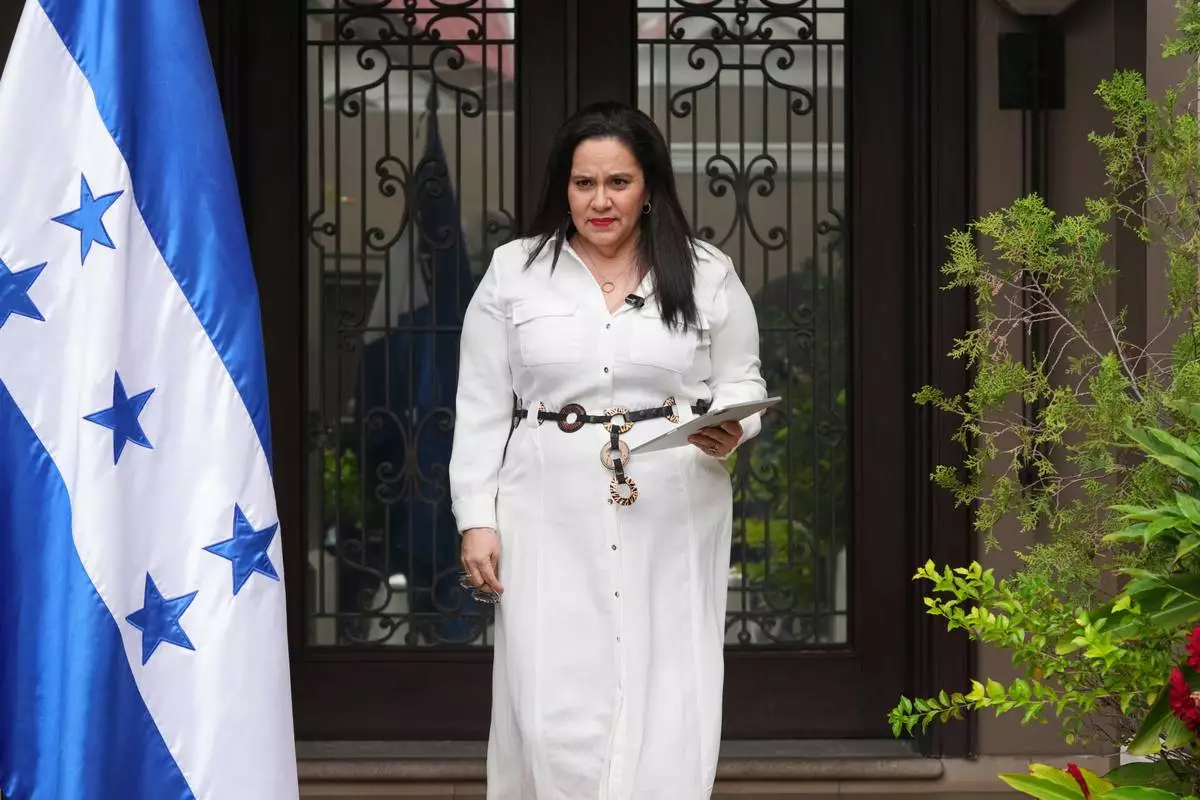
Ana Garcia, wife of former Honduras' President Juan Orlando Hernandez, arrives to speak to journalists in Tegucigalpa, Honduras, Tuesday, Dec. 2, 2025. (AP Photo/Moises Castillo)
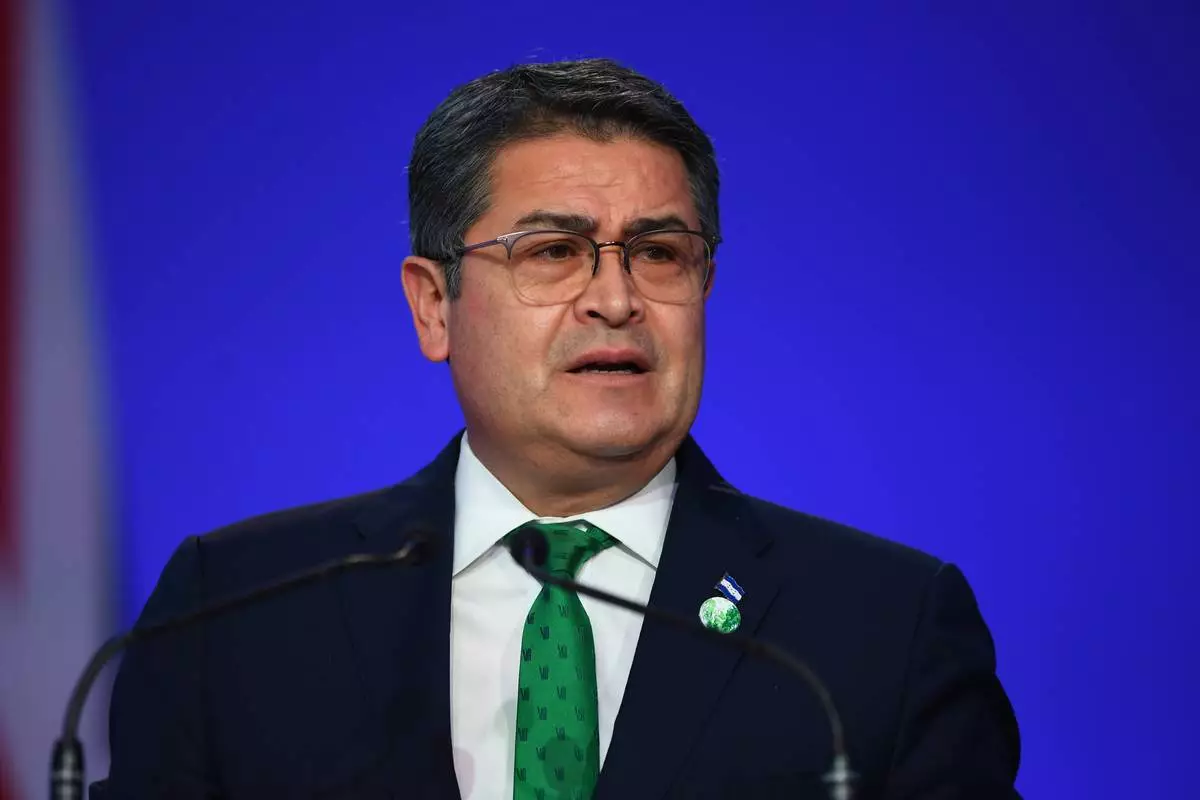
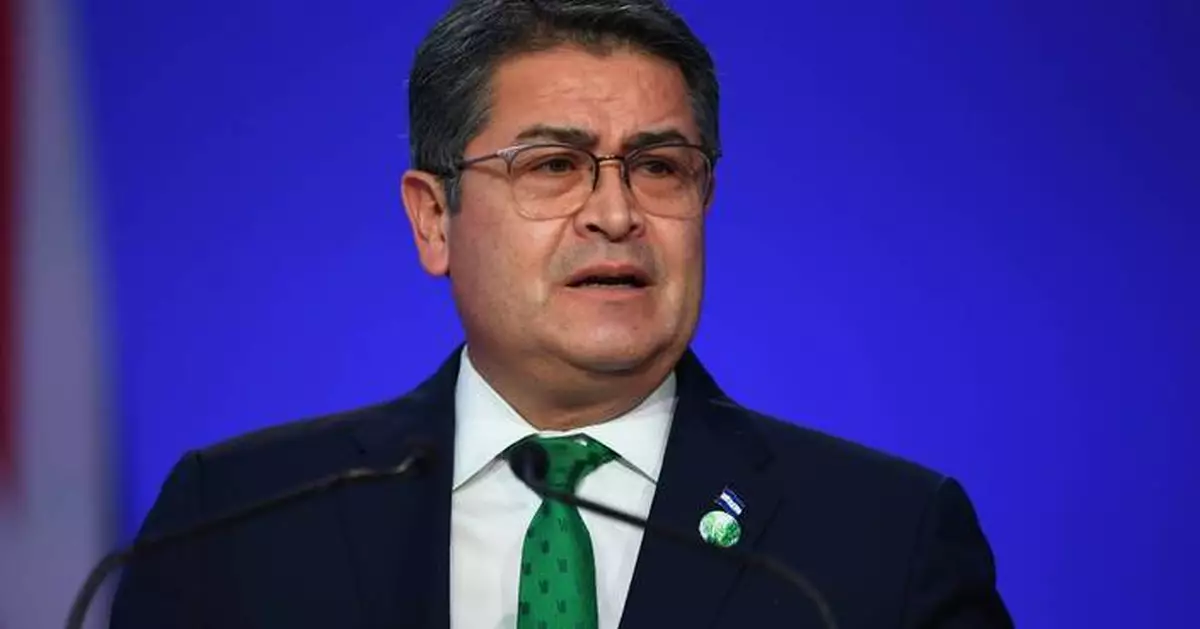
FILE - Honduras' President Juan Orlando Hernandez speaks during the opening ceremony of the UN Climate Change Conference COP26 in Glasgow, Scotland, Monday Nov. 1, 2021. Andy Buchanan/Pool via AP, File)
WASHINGTON (AP) — President Donald Trump was set to address the nation Wednesday night and offer an update on the war in Iran, his first prime-time speech since launching strikes alongside Israel more than a month ago.
The speech will offer Trump a wide audience to articulate clear objectives for the war that could attempt to reconcile weeks of changing goals and often contradictory messages about whether he’s winding down or ready to escalate military operations — even as Iran kept up its attacks on Israel and Persian Gulf neighbors and airstrikes pounded Tehran.
It comes amid rising oil prices, volatile financial markets and polling showing many Americans feel the U.S. military has gone too far in Iran — even as more American troops move into the region for a possible ground offensive. Trump opted not to deliver such an address closer to when the U.S. and Israel first launched attacks 4 1/2 weeks ago, and questions now remain about whether it is now too late for what he says to break through.
A White House official, who was not authorized to speak publicly ahead of the address and spoke on condition of anonymity, said the president will talk about the U.S. progress on achieving his goals in Iran and will reiterate his estimated timeline for concluding operations within two to three weeks.
In a social media post Wednesday morning, Trump maintained a belligerent tone, demanding that Iran stop blocking the Strait of Hormuz — the waterway vital to global oil supplies — or the U.S. would bomb the Islamic Republic “back to the Stone Ages.” The president has also said the U.S. “will not have anything to do with” ensuring the security of ships passing through Hormuz — an apparent backtrack from a previous threat to attack Iran’s power grid if it didn’t open the strait by April 6.
In another post, he claimed that “Iran’s New Regime President” wanted a ceasefire. It wasn’t clear to whom the U.S. president was referring since Iran still has the same president. Iran’s Foreign Ministry spokesman, Esmail Baghaei, called Trump’s claim “false and baseless,” according to a report on Iranian state television.
Speaking earlier to Al Jazeera, Iranian Foreign Minister Abbas Araghchi signaled Tehran’s willingness to keep fighting. “You cannot speak to the people of Iran in the language of threats and deadlines,” he said. “We do not set any deadline for defending ourselves.”
Hours before Trump’s address, Iranian President Masoud Pezeshkian posted a lengthy letter in English on his X account appealing to U.S. citizens and stressing that his country had pursued negotiations before the U.S. withdrew from that path. “Exactly which of the American people’s interests are truly being served by this war?” he wrote.
Since the war began on Feb. 28, Trump has offered shifting objectives and repeatedly has said it could be over soon while also threatening to widen the conflict. Thousands of additional U.S. troops are currently heading to the Middle East, and speculation abounds about why.
Trump has also threatened to attack Iran’s Kharg Island oil export hub. And the U.S. could decide to send in military forces to secure Iran’s uranium stockpile — a complex and risky operation, fraught with radiation and chemical dangers, experts and former government officials say.
Adding to the confusion is what role Israel — which has been bombing Iran alongside the U.S. — might play in any of these scenarios.
Trump has been under growing pressure to end the war that has been pushing up the cost of gasoline, food and other goods. The price of Brent crude, the international standard, is up more than 40% since the start of the war.
The U.S. has presented Iran with a 15-point plan aimed at bringing about a ceasefire, including a demand for the strait to be reopened and for its nuclear program to be rolled back.
Iran insists its nuclear program is peaceful. And in a report last week by Iranian state TV's English-language broadcaster, an anonymous official was quoted as saying Iran had its own demands to end the fighting, including retaining sovereignty over the strait.
In the interview with Al Jazeera, Araghchi acknowledged receiving direct messages from U.S. Mideast envoy Steve Witkoff. He insisted, however, that there were no direct negotiations and said Iran has no faith that talks with the U.S. could yield any results, saying “the trust level is at zero.”
He warned against any U.S. attempt to launch a ground offensive, saying “we are waiting for them.”
In a deal ostensibly to give diplomacy a chance, U.S. officials have given “clear assurances” that Araghchi and Iran's Parliamentary Speaker Mohammad Bagher Qalibaf won't be targeted, according to three officials who spoke on condition of anonymity because they're not authorized to speak publicly about the matter.
A cruise missile slammed into an oil tanker off Qatar’s coast Wednesday, the Defense Ministry said. The crew was evacuated and no casualties were reported. A Kuwaiti oil tanker came under attack off Dubai the day before, one of more than 20 ships attacked by Iran during the war.
In the United Arab Emirates, a person was killed when he was hit by debris from an intercepted drone in Fujairah, one of the country’s seven emirates.
In Kuwait, the state-run KUNA news agency said a drone hit a fuel tank at Kuwait International Airport, sparking a large fire.
Jordan’s military said it intercepted a ballistic missile and two drones fired from Iran in the last 24 hours. No casualties were reported. Two drones were also intercepted in Saudi Arabia.
Very early on Thursday, Israel’s military said Iran had launched missiles at the country, the first time of the day.
In Lebanon, at least five people were killed in an Israeli strike on a Beirut neighborhood.
Israel invaded southern Lebanon after the Iran-linked Hezbollah militant group began launching missiles into northern Israel days after the outbreak of the war.
More than 1,200 people have been killed in Lebanon and more than 1 million displaced, according to authorities. Ten Israeli soldiers have also died there.
In Iran, authorities say more than 1,900 people have been killed, while 19 have been reported dead in Israel. More than two dozen people have died in Gulf states and the occupied West Bank, while 13 U.S. service members have been killed.
Grambell reported from Dubai, United Arab Emirates. Rising reported from Bangkok. Associated Press writers Giovanna Dell’Orto in Miami, Farnoush Amiri in New York and Samy Magdy in Cairo contributed to this report.
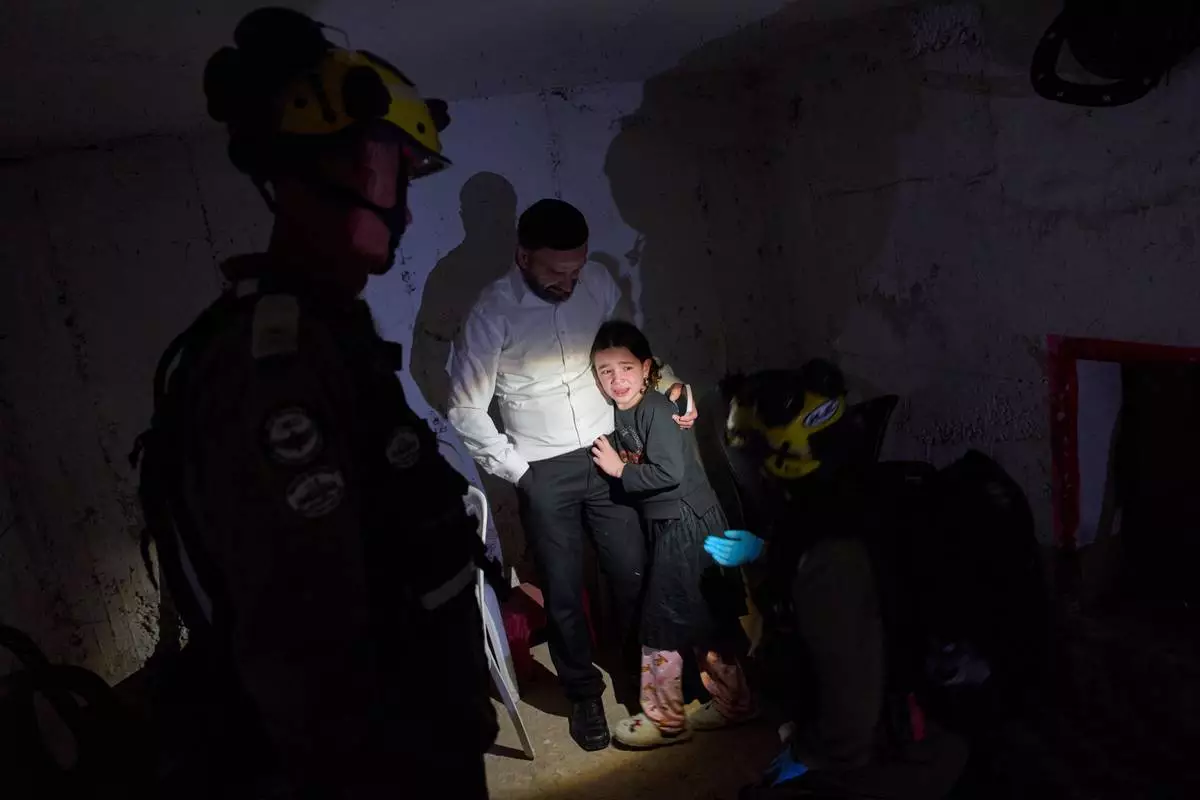
A young girl is comforted by her father and Israeli soldiers as they take cover in a bomb shelter during air raid sirens warning of incoming Iranian missile strikes in Bnei Brak, Israel, Wednesday, April 1, 2026. (AP Photo/Oded Balilty)
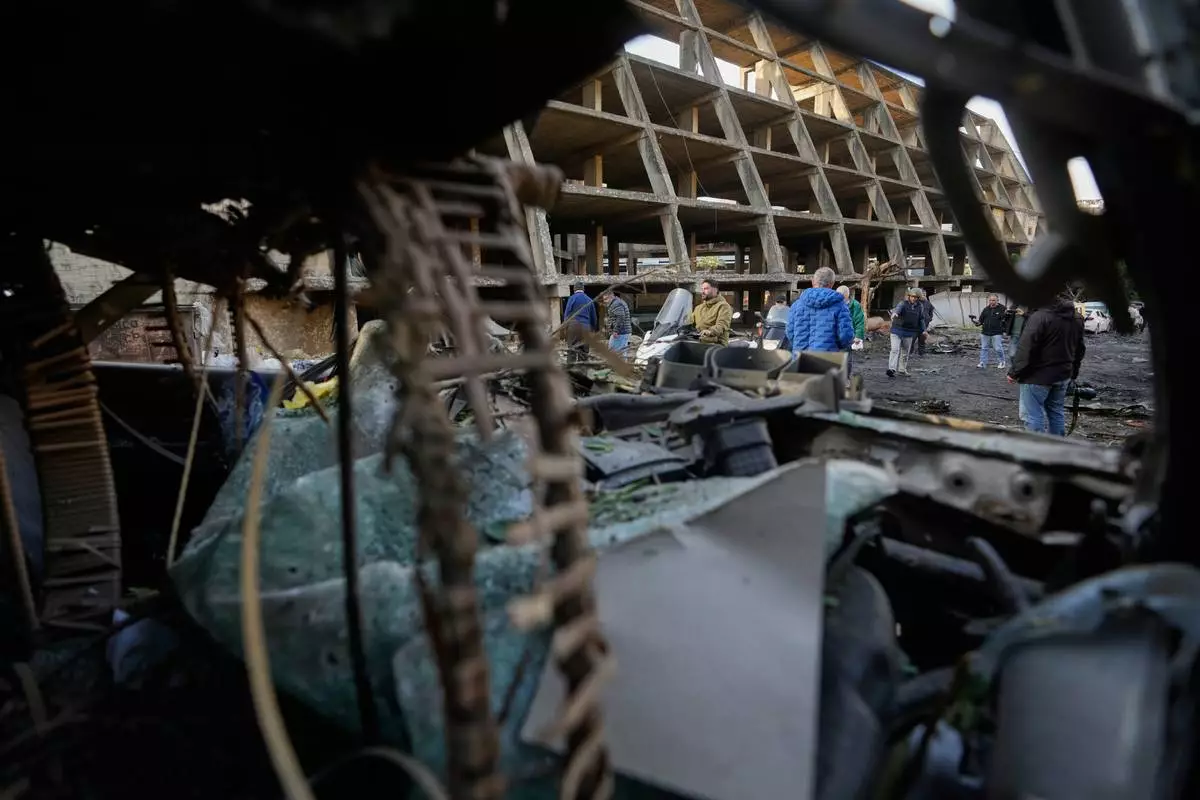
People inspect the site of an Israeli strike amid debris and damaged vehicles in Beirut, Lebanon, Wednesday, April 1, 2026. (AP Photo/Hassan Ammar)
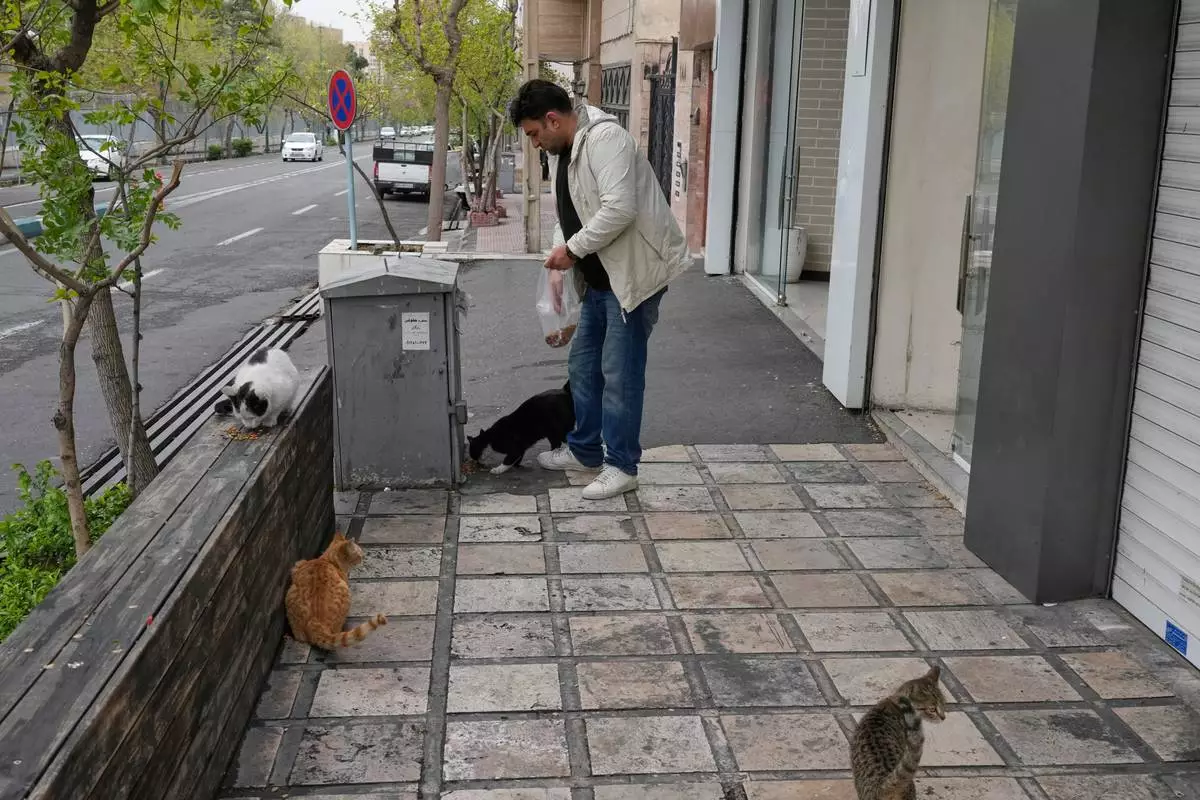
A man feeds stray cats in Tehran, Iran, Tuesday, March 31, 2026. (AP Photo/Vahid Salemi)
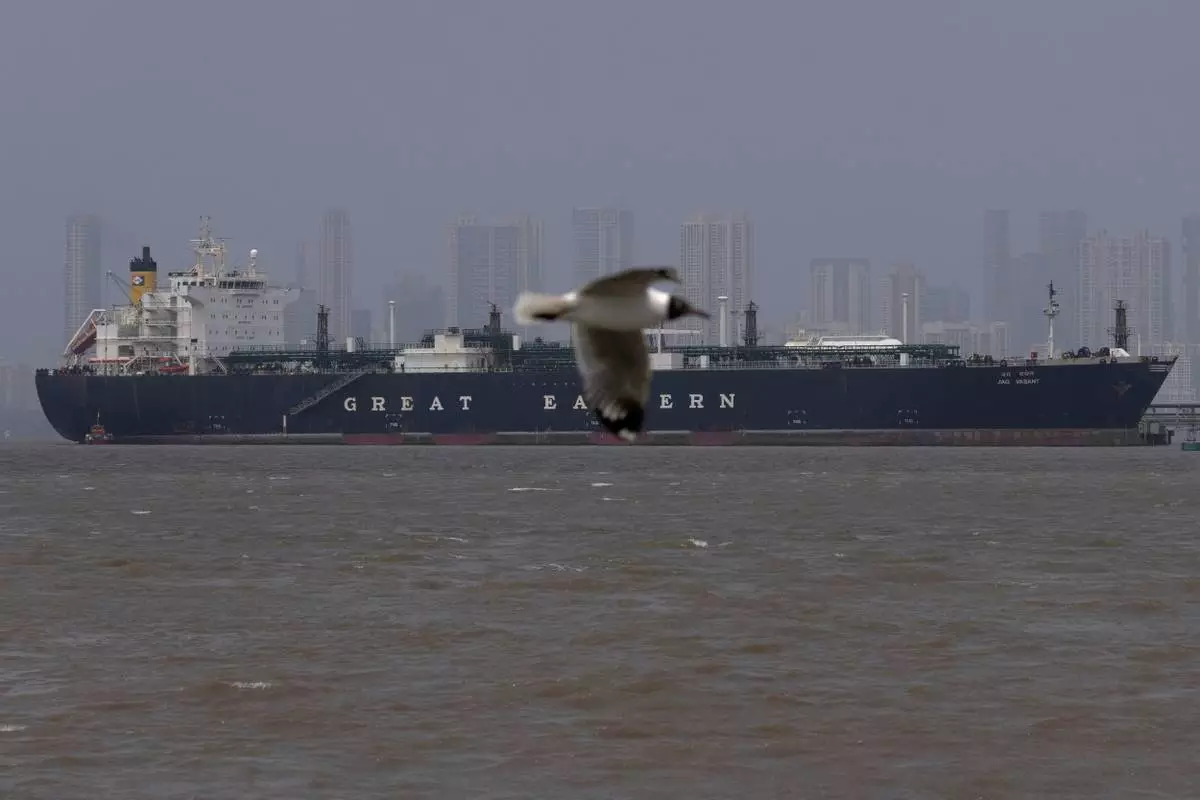
The Indian flagged LPG carrier Jag Vasant transporting liquefied petroleum gas, is seen at the Mumbai Port in Mumbai, India, after it arrived clearing the Strait of Hormuz, Wednesday, April 1, 2026. (AP Photo/Rafiq Maqbool)
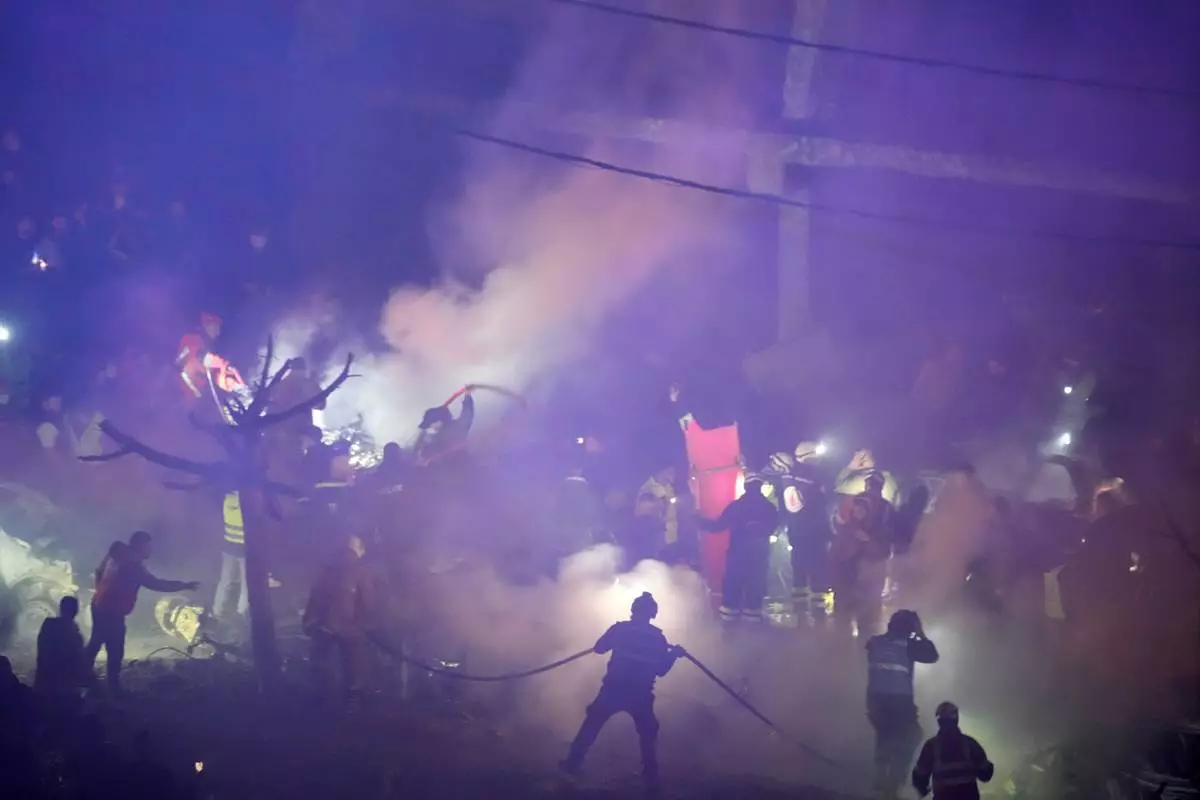
Firefighters and rescue workers work at the site of Israeli airstrikes, in Beirut, Lebanon, Wednesday, April 1, 2026. (AP Photo/Hussein Malla)
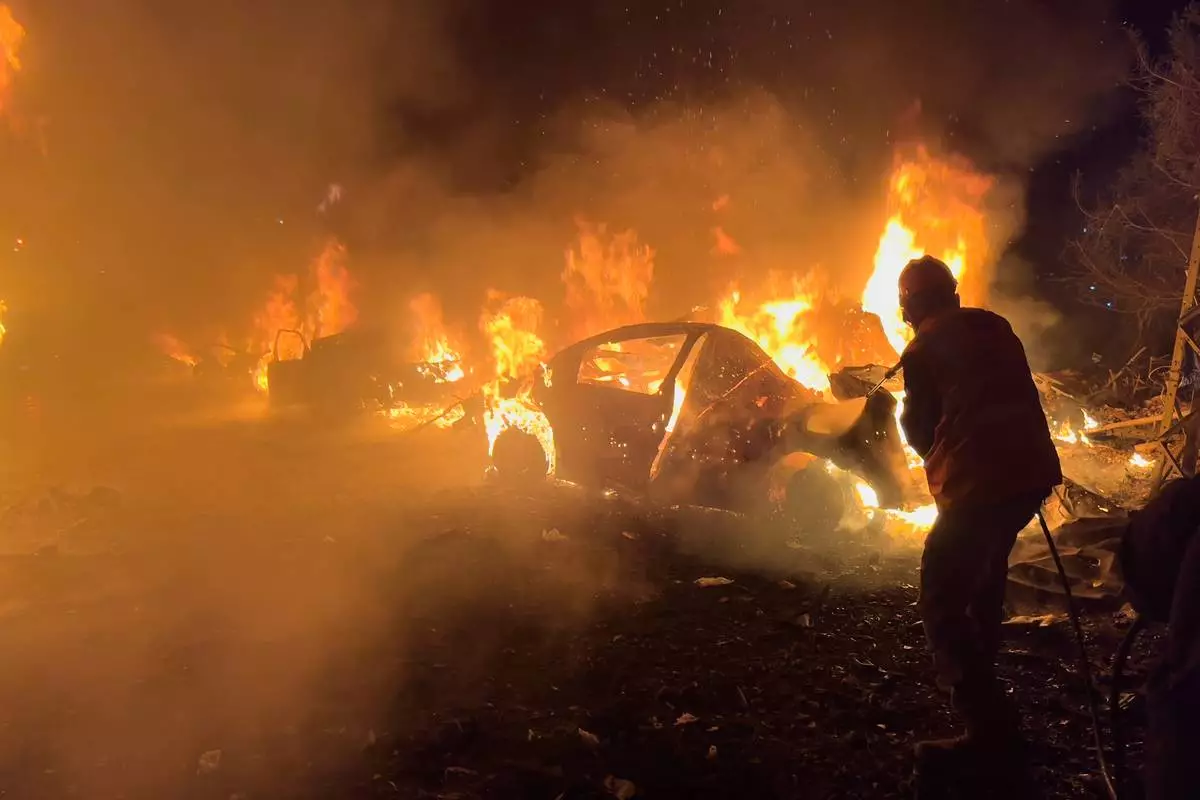
A firefighter extinguishes a car at the site of Israeli airstrikes, in Beirut, Lebanon, Wednesday, April 1, 2026. (AP Photo/Hussein Malla)
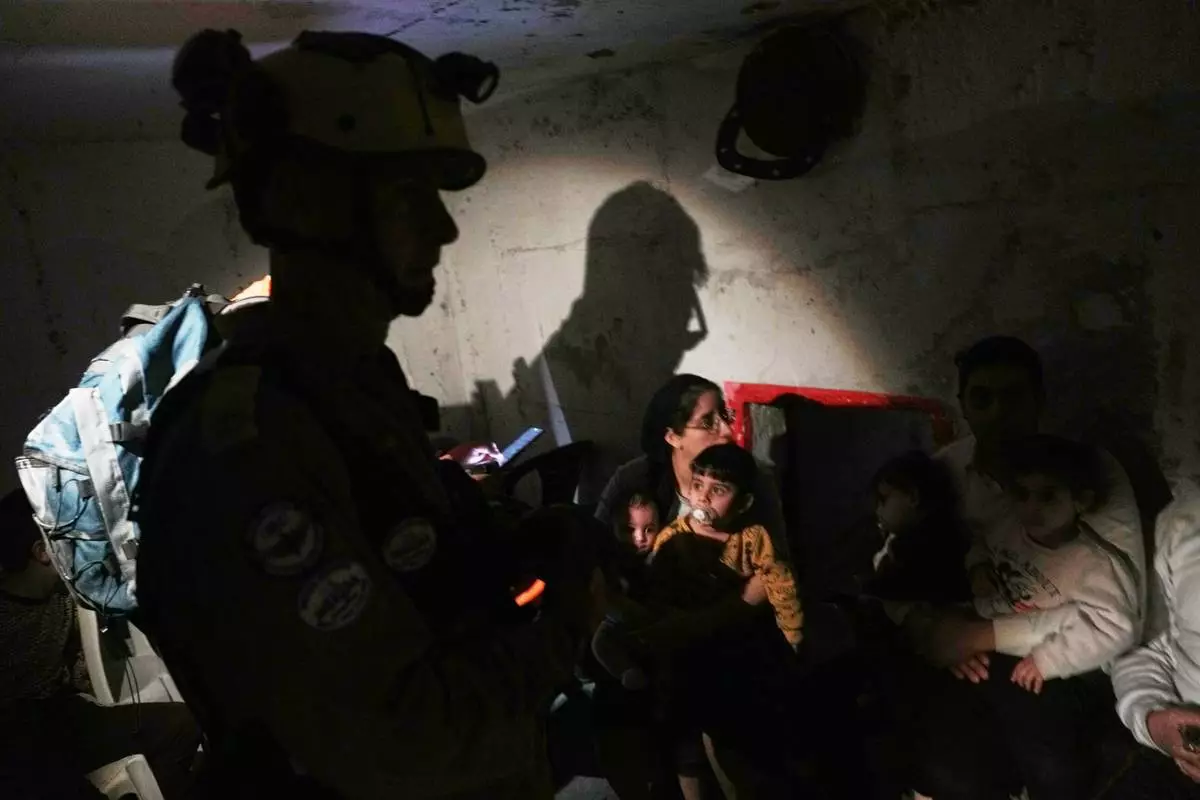
Israel's rescue teams and residents take shelter as sirens sounds next to a site struck by an Iranian missile in Bnei Brak, Wednesday, April 1, 2026. (AP Photo/Oded Balilty)
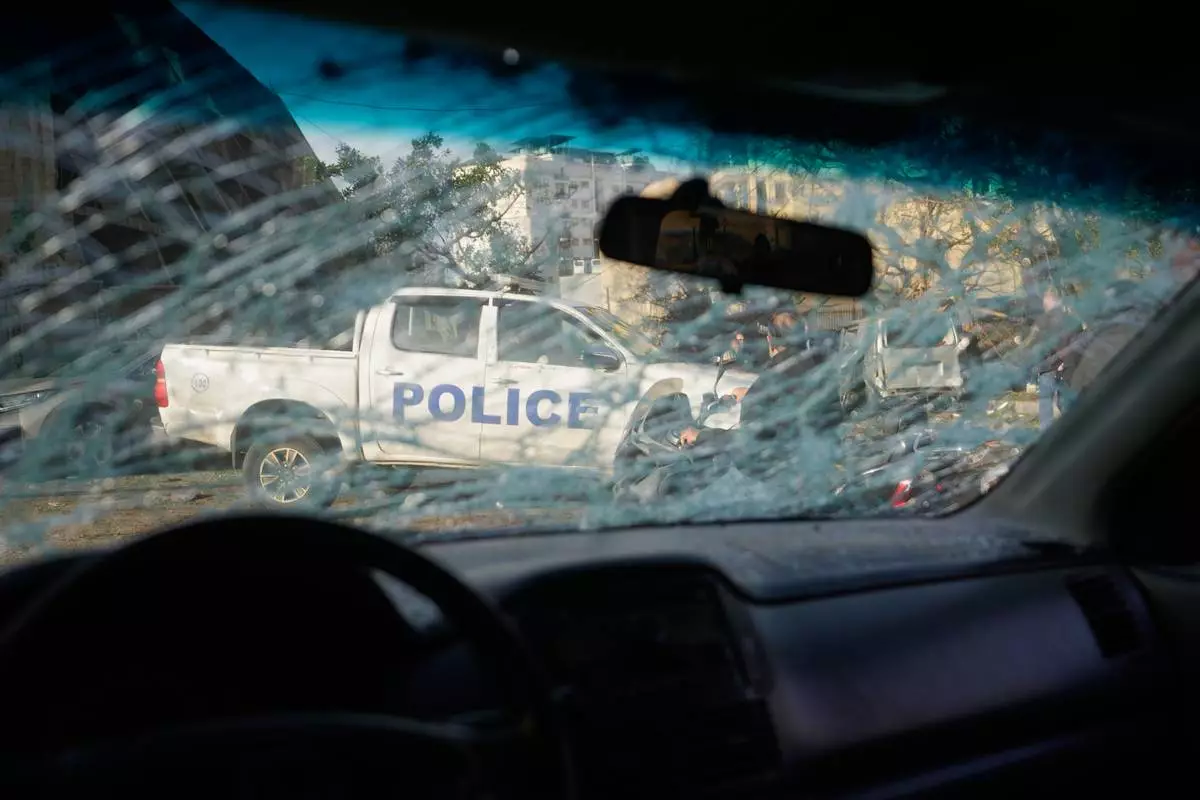
A police vehicle is seen through a shattered windshield at the site of an Israeli strike in Beirut, Lebanon, Wednesday, April 1, 2026. (AP Photo/Hassan Ammar)
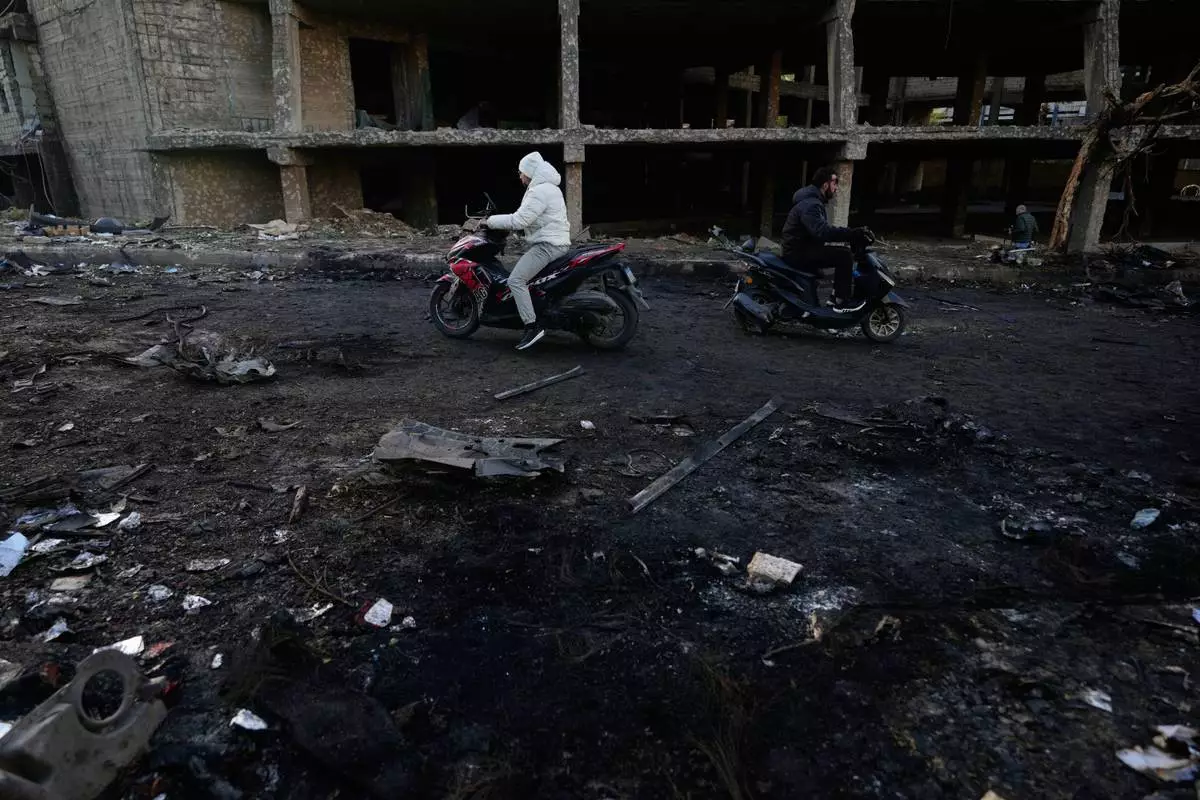
Two men ride scooters past charred debris at the site of an Israeli strike in Beirut, Lebanon, Wednesday, April 1, 2026. (AP Photo/Hassan Ammar)