Skip to Content Facebook Feature Image

Pope Leo XIV shares his thoughts on the conclave, reflects on spirituality and future travels

News

Pope Leo XIV shares his thoughts on the conclave, reflects on spirituality and future travels
News

News

Pope Leo XIV shares his thoughts on the conclave, reflects on spirituality and future travels

2025-12-03 00:35 Last Updated At:00:51

ABOARD THE PAPAL PLANE (AP) — Pope Leo XIV on Tuesday shared for the first time what he was thinking when the votes started going his way during the conclave that elected him, saying he resigned himself to the inevitable and put the rest in God’s hands.

“I took a deep breath. I said ‘Here we go Lord. You’re in charge and you lead the way,’” Leo told reporters during a wide-ranging airborne press conference coming home from his inaugural trip to Turkey and Lebanon.

More Images
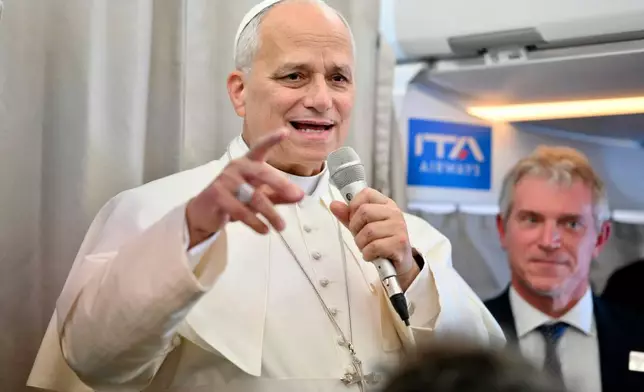
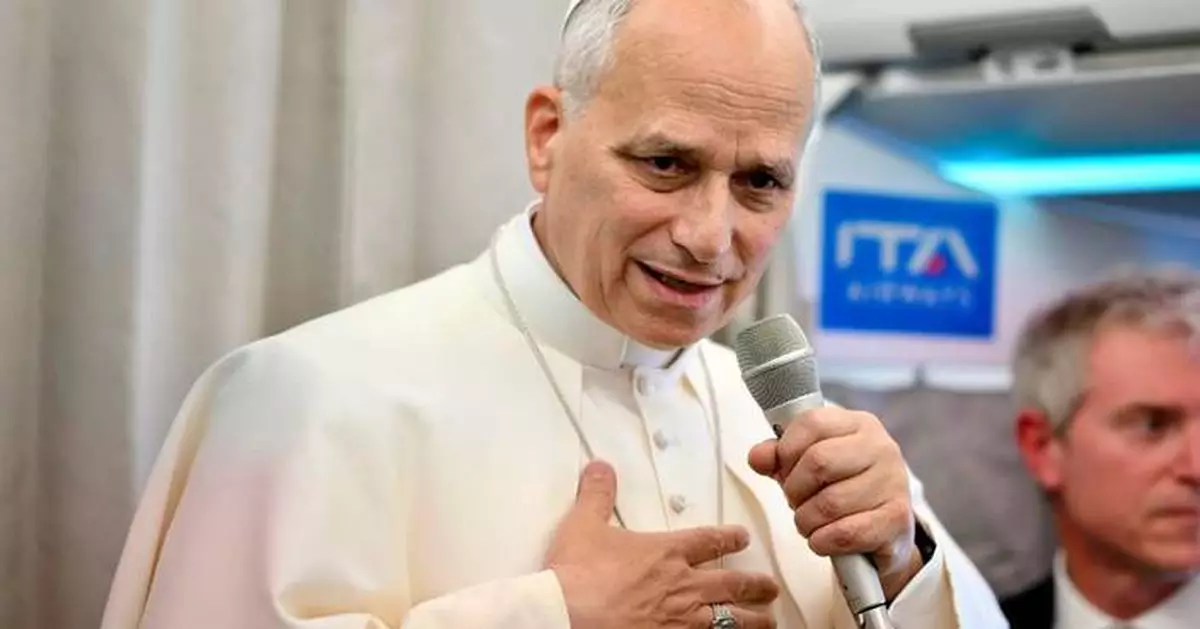
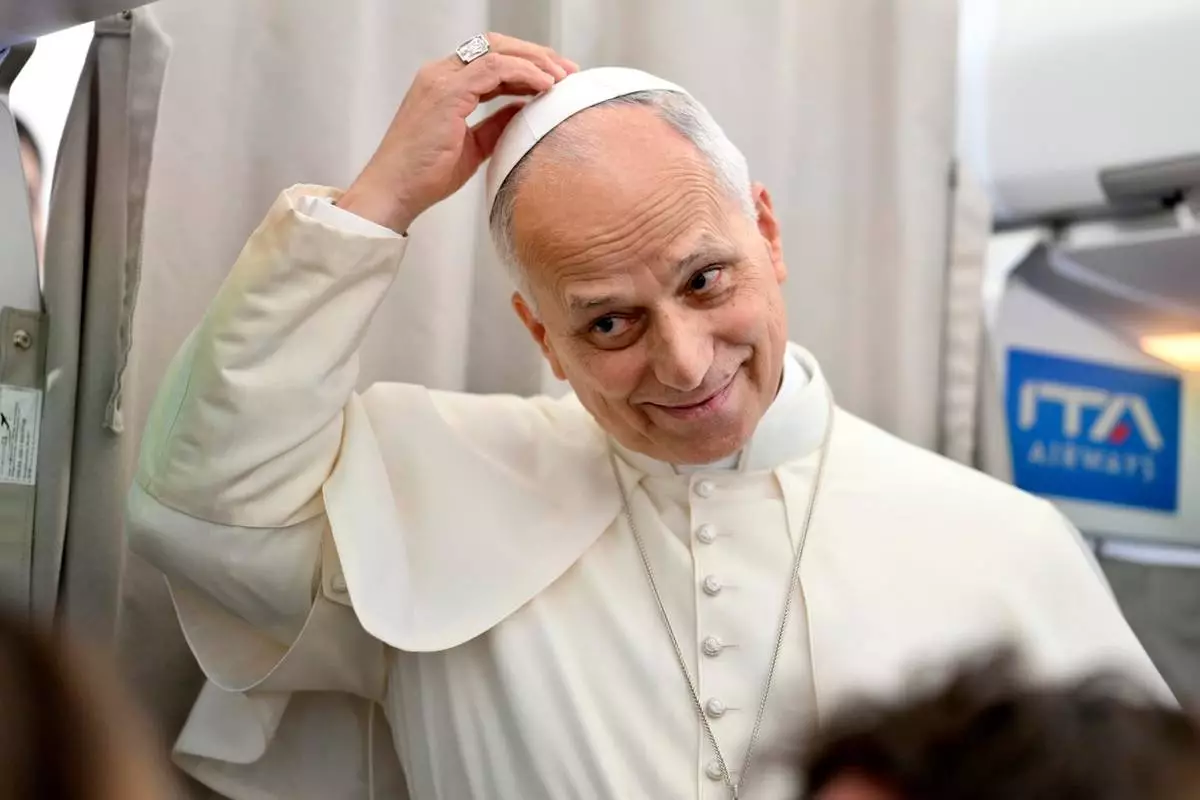
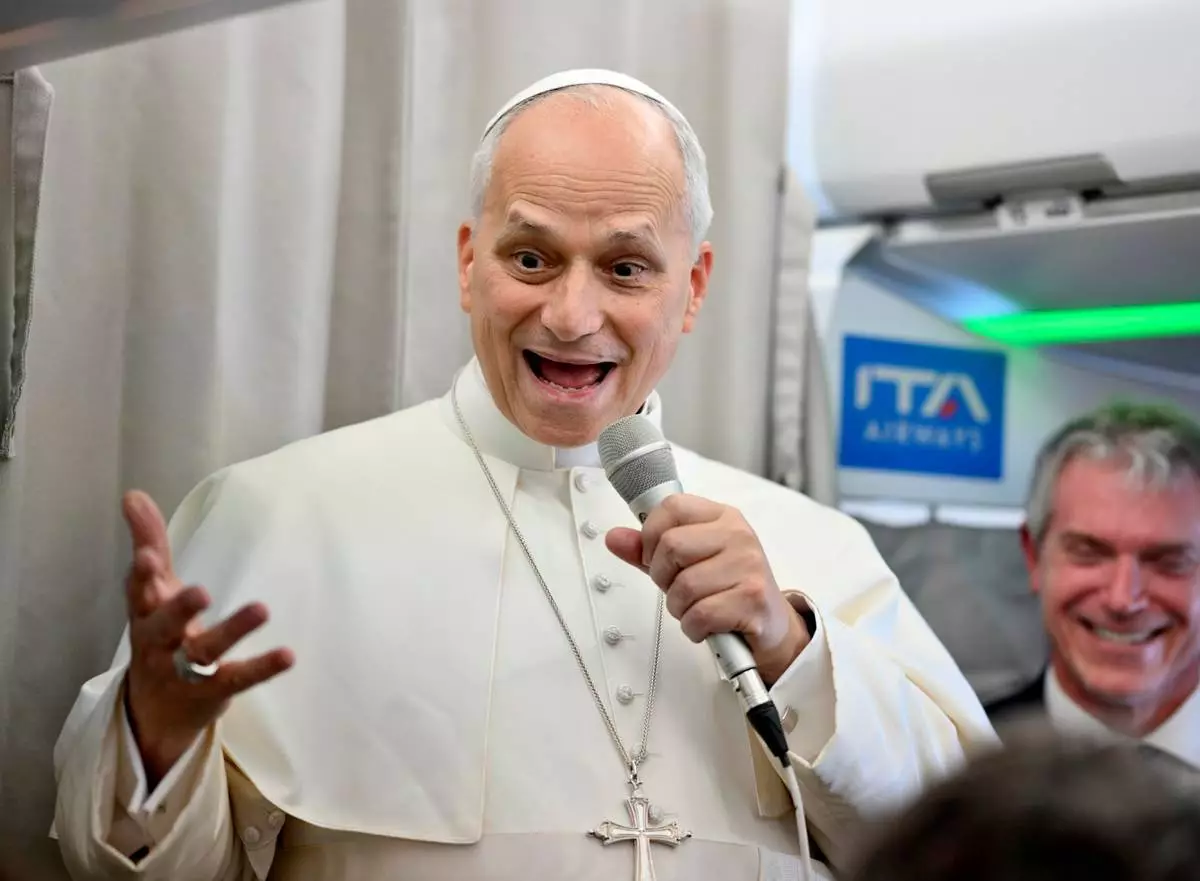
Pope Leo XIV talks to reporters aboard an airplane as he returns from a six-day visit to Turkey and Lebanon, Tuesday, Dec. 2, 2025. (Alessandro Di Meo/Pool Photo via AP)
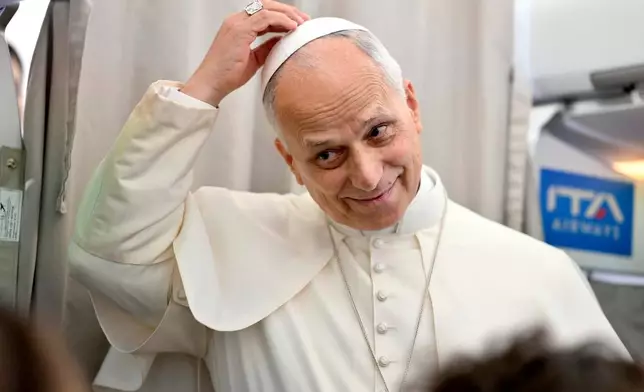
Pope Leo XIV talks to reporters aboard an airplane as he returns from a six-day visit to Turkey and Lebanon, Tuesday, Dec. 2, 2025. (Alessandro Di Meo/Pool Photo via AP)
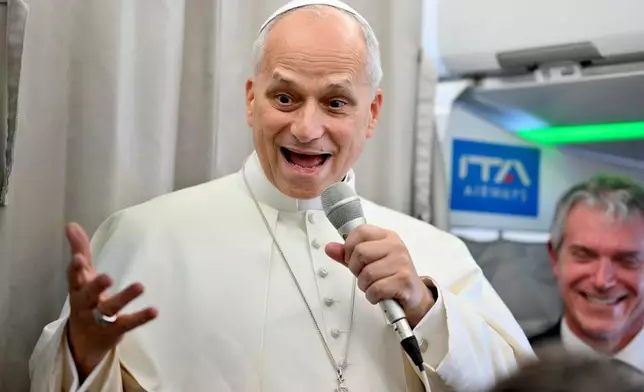
Pope Leo XIV talks to reporters aboard an airplane as he returns from a six-day visit to Turkey and Lebanon, Tuesday, Dec. 2, 2025. (Alessandro Di Meo/Pool Photo via AP)
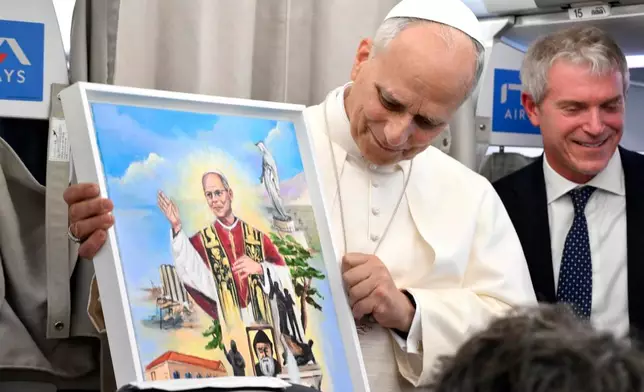
Pope Leo XIV talks to reporters aboard an airplane as he returns from a six-day visit to Turkey and Lebanon, Tuesday, Dec. 2, 2025. (Alessandro Di Meo/Pool Photo via AP)
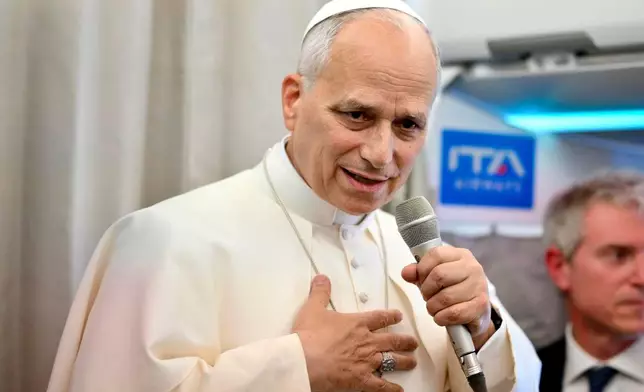
Pope Leo XIV talks to reporters aboard an airplane as he returns from a six-day visit to Turkey and Lebanon, Tuesday, Dec. 2, 2025. (Alessandro Di Meo/Pool Photo via AP)

Pope Leo XIV talks to reporters aboard an airplane as he returns from a six-day visit to Turkey and Lebanon, Tuesday, Dec. 2, 2025. (Alessandro Di Meo/Pool Photo via AP)

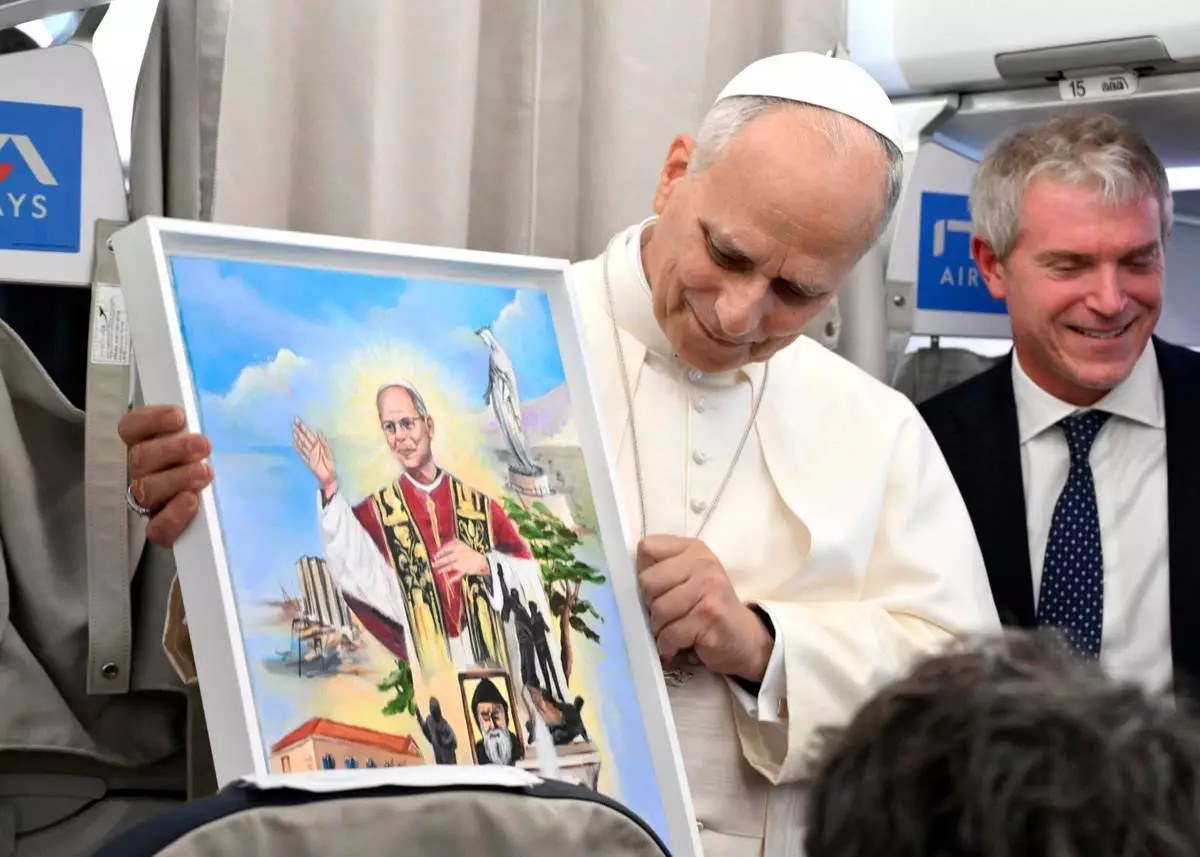
Pope Leo XIV shows a gift he received as he talks to reporters aboard an airplane as he returns from a six-day visit to Turkey and Lebanon, Tuesday, Dec. 2, 2025. (Alessandro Di Meo/Pool Photo via AP)

Pope Leo XIV shows a gift he received as he talks to reporters aboard an airplane as he returns from a six-day visit to Turkey and Lebanon, Tuesday, Dec. 2, 2025. (Alessandro Di Meo/Pool Photo via AP)

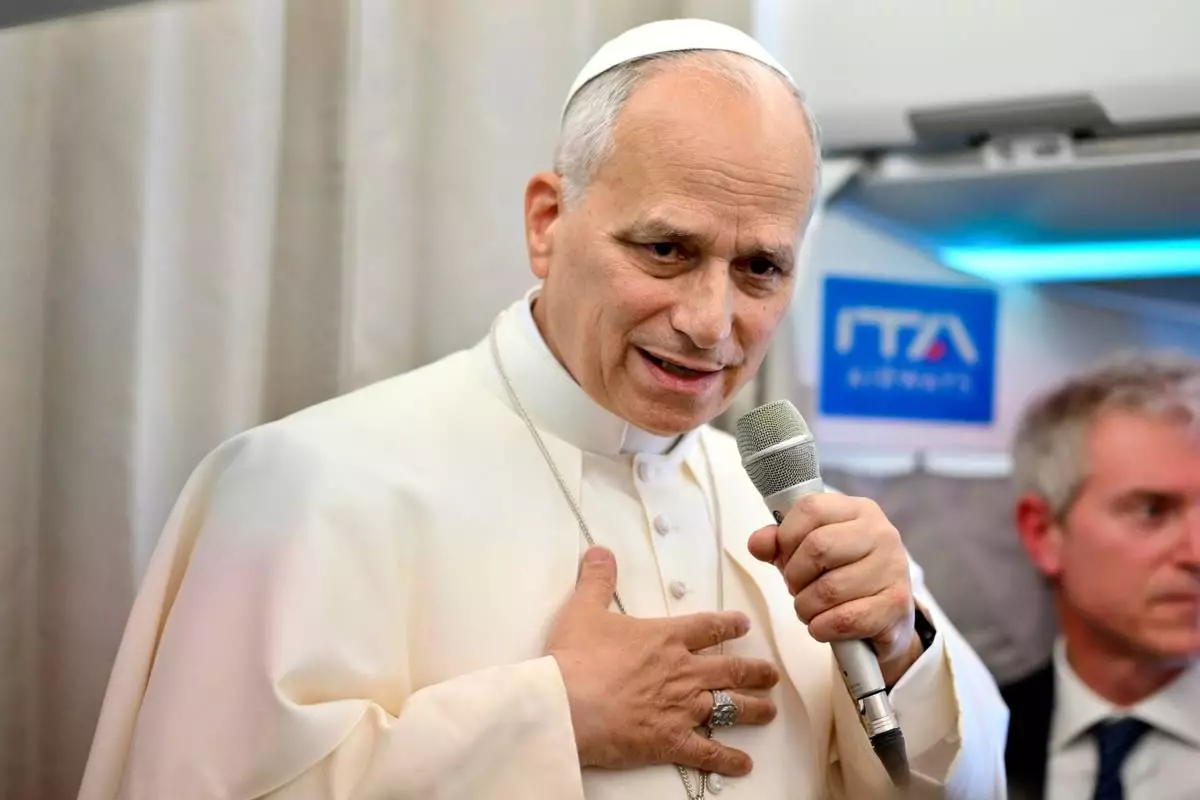
Pope Leo XIV talks to reporters aboard an airplane as he returns from a six-day visit to Turkey and Lebanon, Tuesday, Dec. 2, 2025. (Alessandro Di Meo/Pool Photo via AP)

Pope Leo XIV talks to reporters aboard an airplane as he returns from a six-day visit to Turkey and Lebanon, Tuesday, Dec. 2, 2025. (Alessandro Di Meo/Pool Photo via AP)

Leo fielded questions for a half-hour, responding easily in English, Spanish and Italian about a variety of church and international news. He hinted at behind-the-scenes discussions about Hezbollah and Israel in Lebanon, urged dialogue rather than U.S. military threats on Venezuela and discussed his hoped-for future travels in Africa and South America, among other topics.

But it was his remarks about the conclave and his papal learning curve that shed new light on Leo the man and what makes him tick. His responses, after seeming timid with the media early in his pontificate, showed he is much more comfortable now, is paying close attention to what is being reported about him, and that he has a good sense of humor about it.

Leo was asked what he was thinking when he saw a huge crowd of people at one of his events in Lebanon, where it seemed as if the size had taken him by surprise. Leo suggested that wasn’t necessarily the case.

“My face is very expressive but I’m oftentimes amused by how the journalists interpret my face,” he said. “It’s interesting. Sometimes I get really great ideas from all of you because you think you can read my mind or my face.”

“You’re not always correct,” he added, to laughs.

More instructive to understanding what he’s thinking, Leo said, would be to read up about his spirituality. Beyond St. Augustine, the fifth-century theologian who inspired his religious order and is Leo’s most-frequently cited church father, Leo recommended a book “The Practice of the Presence of God,” by a 17th-century Carmelite friar, Brother Lawrence.

“It describes, if you will, a type of prayer and spirituality where one simply gives his life to the Lord and allows the Lord to lead. If you want to know something about me, that’s been my spirituality for many years,” he said.

“In midst of great challenges -- living in Peru during years of terrorism, being called to service in places where I never thought I’d be called to serve -- I trust in God,” he said.

That held true in the May conclave, he said, when the former Cardinal Robert Prevost was elected in a remarkably fast four ballots on the second day of voting. According to cardinals who participated, it was clear already by the third ballot that morning that the votes were going his way and that Prevost would be elected history’s first American pope.

“I resigned myself to the fact when I saw how things were going and I said ‘This could be a reality,’” Leo said.

Speaking to a reporter who is about to retire, Leo said he had had different plans for his future.

“Just a year or two ago, I too thought about retiring some day,” he said. “You’ve received that gift apparently. Some of us will continue to work.”

In Lebanon, Leo had a taste of what it’s like to be a pope on the road, and he said the enthusiasm of young Catholics was “awe-inspiring.”

“I think to myself, ‘These people are here because they want to see the pope.’ But I say to myself, ‘They’re here because they want to see Jesus Christ and they want to see a messenger of peace,’” he said. “Just to listen to their enthusiasm and to hear their response to that message is something that I think is -- that enthusiasm -- is awe-inspiring.”

“I just hope I never get tired of appreciating everything that all these young people are showing,” he said.

— Leo urged the United States to pursue dialogue and even exert economic pressure on Venezuela’s leaders to achieve its goals, rather than threats of military action.

“The voices coming from the United States change, with a certain frequency at times,” he said. “I believe it’s better to look for ways of dialogue, perhaps pressure -- including economic pressure -- but looking for other ways to change, if that’s what the United States wants to do.”

— Leo said he hopes to make his second trip as pope to Africa next year, visiting several countries but especially Algeria because of its important role in Christian-Muslim relations and its significance to St. Augustine, who inspired his religious order.

— Leo also said he hoped to visit three countries in Latin America in either 2026 or 2027: Argentina, Uruguay and Peru, where he lived for two decades as a missionary. Argentina especially has been waiting for a papal visit after Pope Francis never went home after his 2013 election.

Associated Press religion coverage receives support through the AP’s collaboration with The Conversation US, with funding from Lilly Endowment Inc. The AP is solely responsible for this content.
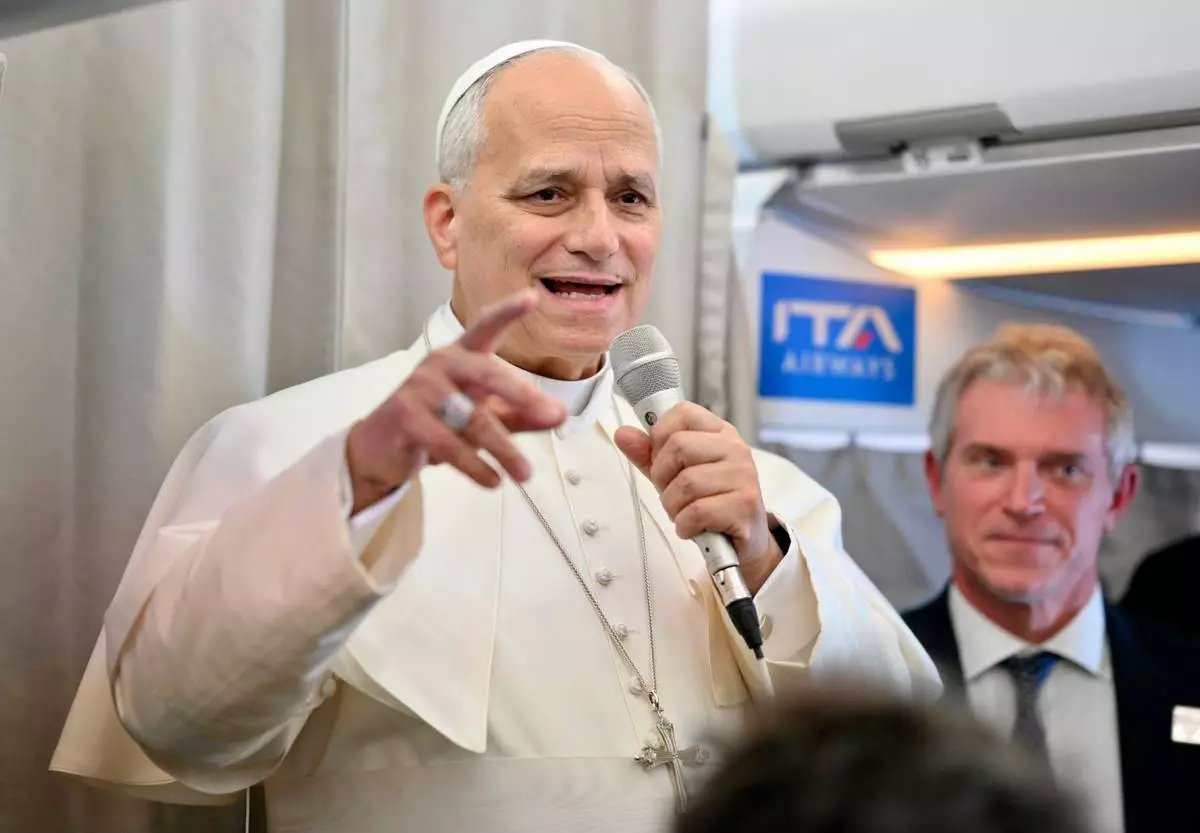
Pope Leo XIV talks to reporters aboard an airplane as he returns from a six-day visit to Turkey and Lebanon, Tuesday, Dec. 2, 2025. (Alessandro Di Meo/Pool Photo via AP)
Pope Leo XIV talks to reporters aboard an airplane as he returns from a six-day visit to Turkey and Lebanon, Tuesday, Dec. 2, 2025. (Alessandro Di Meo/Pool Photo via AP)
Pope Leo XIV talks to reporters aboard an airplane as he returns from a six-day visit to Turkey and Lebanon, Tuesday, Dec. 2, 2025. (Alessandro Di Meo/Pool Photo via AP)
Pope Leo XIV talks to reporters aboard an airplane as he returns from a six-day visit to Turkey and Lebanon, Tuesday, Dec. 2, 2025. (Alessandro Di Meo/Pool Photo via AP)
Pope Leo XIV talks to reporters aboard an airplane as he returns from a six-day visit to Turkey and Lebanon, Tuesday, Dec. 2, 2025. (Alessandro Di Meo/Pool Photo via AP)
Pope Leo XIV talks to reporters aboard an airplane as he returns from a six-day visit to Turkey and Lebanon, Tuesday, Dec. 2, 2025. (Alessandro Di Meo/Pool Photo via AP)
Pope Leo XIV shows a gift he received as he talks to reporters aboard an airplane as he returns from a six-day visit to Turkey and Lebanon, Tuesday, Dec. 2, 2025. (Alessandro Di Meo/Pool Photo via AP)

Pope Leo XIV shows a gift he received as he talks to reporters aboard an airplane as he returns from a six-day visit to Turkey and Lebanon, Tuesday, Dec. 2, 2025. (Alessandro Di Meo/Pool Photo via AP)
Pope Leo XIV talks to reporters aboard an airplane as he returns from a six-day visit to Turkey and Lebanon, Tuesday, Dec. 2, 2025. (Alessandro Di Meo/Pool Photo via AP)
Pope Leo XIV talks to reporters aboard an airplane as he returns from a six-day visit to Turkey and Lebanon, Tuesday, Dec. 2, 2025. (Alessandro Di Meo/Pool Photo via AP)
WASHINGTON (AP) — The Supreme Court is taking up one of the term’s most consequential cases, President Donald Trump’s executive order on birthright citizenship declaring that children born to parents who are in the United States illegally or temporarily are not American citizens, and he arrived at the court Wednesday to attend the arguments.

The justices will hear Trump’s appeal of a lower-court ruling from New Hampshire that struck down the citizenship restrictions, one of several courts that have blocked them. They have not taken effect anywhere in the country.

A definitive ruling is expected by early summer.

Trump will be the first sitting president to attend oral arguments at the nation’s highest court.

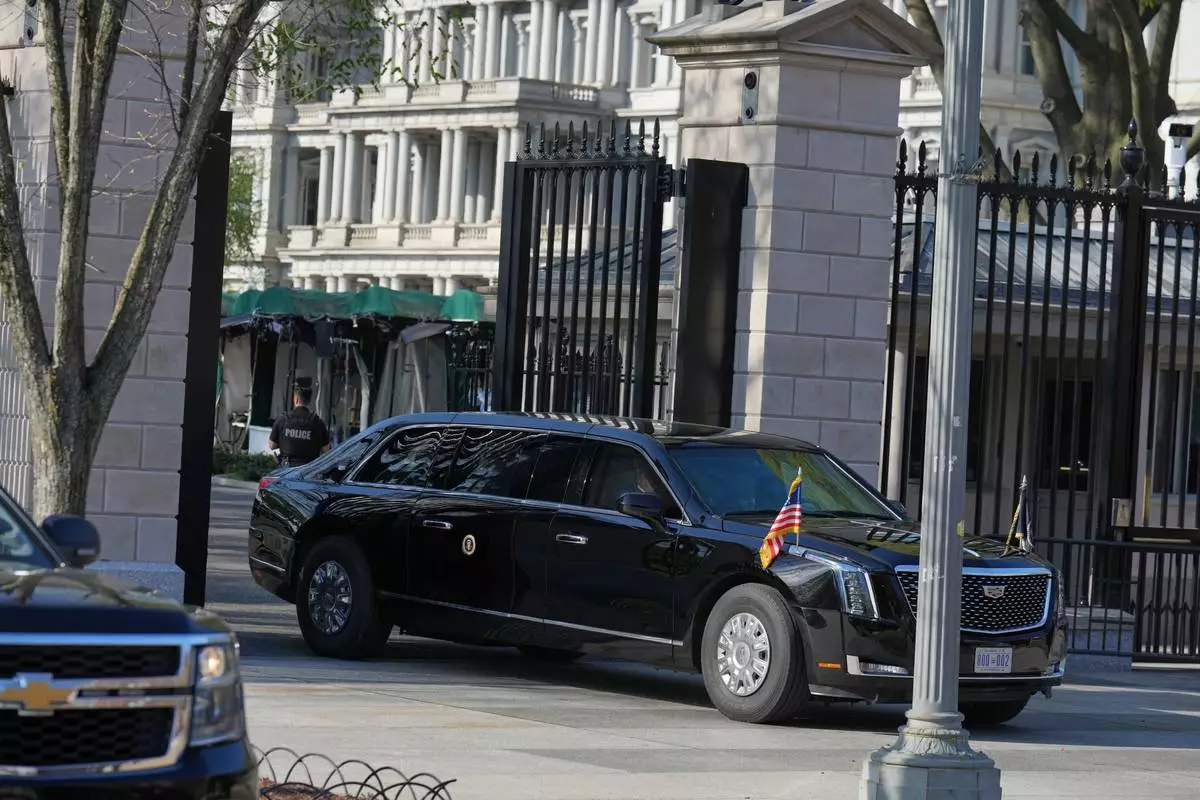
Crowds watched from the sidewalks as Trump’s motorcade drove along Constitution and Independence Avenues, passing the Washington Monument and the National Mall on the way to the court building.

The case frames another test of Trump's assertions of executive power that defy long-standing precedent for a court that has largely ruled in the president's favor — but with some notable exceptions that Trump has responded to with starkly personal criticisms of the justices.

The birthright citizenship order, which Trump signed the first day of his second term, is part of his Republican administration’s broad immigration crackdown.

Birthright citizenship is the first Trump immigration-related policy to reach the court for a final ruling. The justices previously struck down global tariffs Trump had imposed under an emergency powers law that had never been used that way.

Trump reacted furiously to the late February tariffs decision, saying he was ashamed of the justices who ruled against him and calling them unpatriotic.

He issued a preemptive broadside against the court on Sunday on his Truth Social platform. “Birthright Citizenship is not about rich people from China, and the rest of the World, who want their children, and hundreds of thousands more, FOR PAY, to ridiculously become citizens of the United States of America. It is about the BABIES OF SLAVES!,” the president wrote. “Dumb Judges and Justices will not a great Country make!”

Trump's order would upend the long-standing view that the Constitution’s 14th Amendment, ratified in 1868, and federal law since 1940 confer citizenship on everyone born on American soil, with narrow exceptions for the children of foreign diplomats and those born to a foreign occupying force.

The 14th Amendment was intended to ensure that Black people, including former slaves, had citizenship, though the Citizenship Clause is written more broadly. “All persons born or naturalized in the United States, and subject to the jurisdiction thereof, are citizens of the United States and of the State wherein they reside,” it reads.

In a series of decisions, lower courts have struck down the executive order as illegal, or likely so, under the Constitution and federal law. The decisions have invoked the high court's 1898 ruling in Wong Kim Ark, which held that the U.S.-born child of Chinese nationals was a citizen.

The Trump administration argues that the common view of citizenship is wrong, asserting that children of noncitizens are not “subject to the jurisdiction” of the United States and therefore are not entitled to citizenship.

The court should use the case to set straight “long-enduring misconceptions about the Constitution’s meaning,” Solicitor General D. John Sauer wrote.

No court has accepted that argument, and lawyers for pregnant women whose children would be affected by the order said the Supreme Court should not be the first to do so.

“We have the president of the United States trying to radically reinterpret the definition of American citizenship,” said Cecillia Wang, the American Civil Liberties Union legal director who is facing off against Sauer at the Supreme Court.

More than one-quarter of a million babies born in the U.S. each year would be affected by the executive order, according to research by the Migration Policy Institute and Pennsylvania State University’s Population Research Institute.

While Trump has largely focused on illegal immigration in his rhetoric and actions, the birthright restrictions also would apply to people who are legally in the United States, including students and applicants for green cards, or permanent resident status.

Follow the AP’s coverage of the U.S. Supreme Court at https://apnews.com/hub/us-supreme-court.

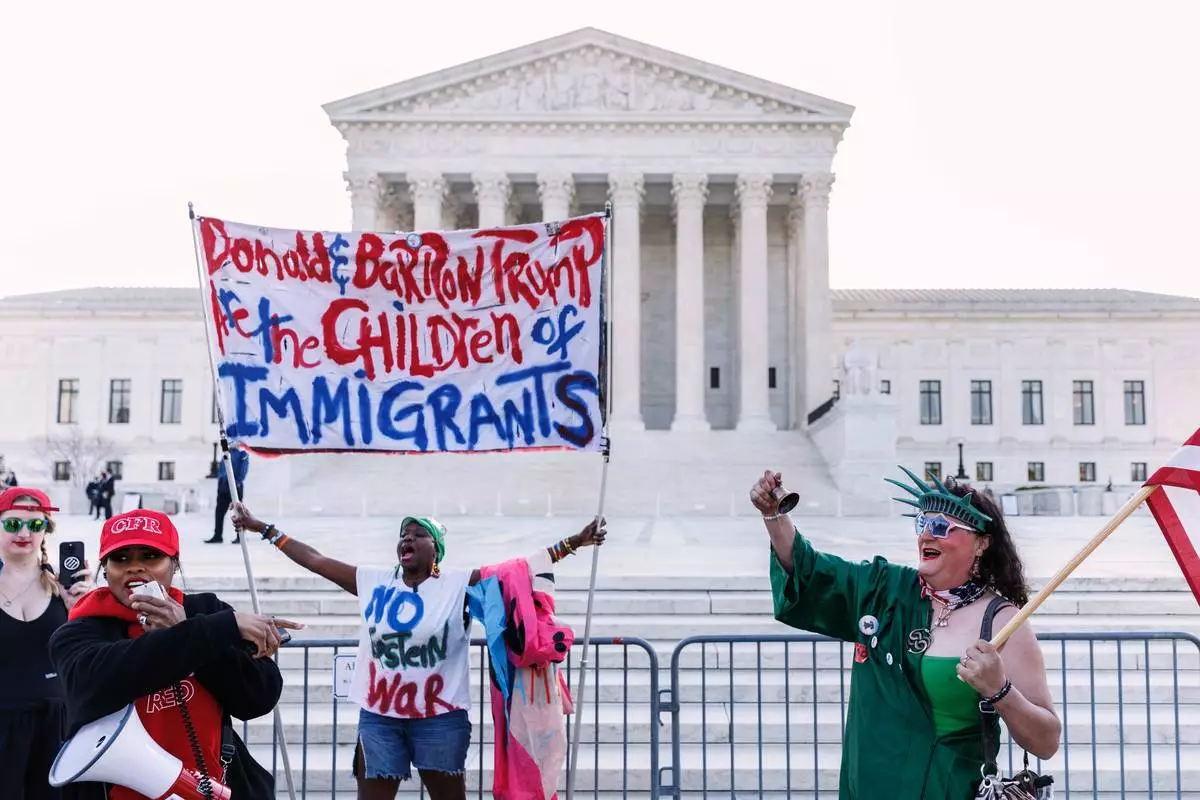
Demonstrators holding opposing views verbally engage ahead of President Donald Trump's arrival at the U.S. Supreme Court, Wednesday, April 1, 2026, in Washington. (AP Photo/Tom Brenner)

Demonstrators holding opposing views verbally engage ahead of President Donald Trump's arrival at the U.S. Supreme Court, Wednesday, April 1, 2026, in Washington. (AP Photo/Tom Brenner)

President Donald Trump's limo exits the White House en route to the Supreme Court, Wednesday, April 1, 2026, in Washington. (AP Photo/Mark Schiefelbein)

President Donald Trump's limo exits the White House en route to the Supreme Court, Wednesday, April 1, 2026, in Washington. (AP Photo/Mark Schiefelbein)

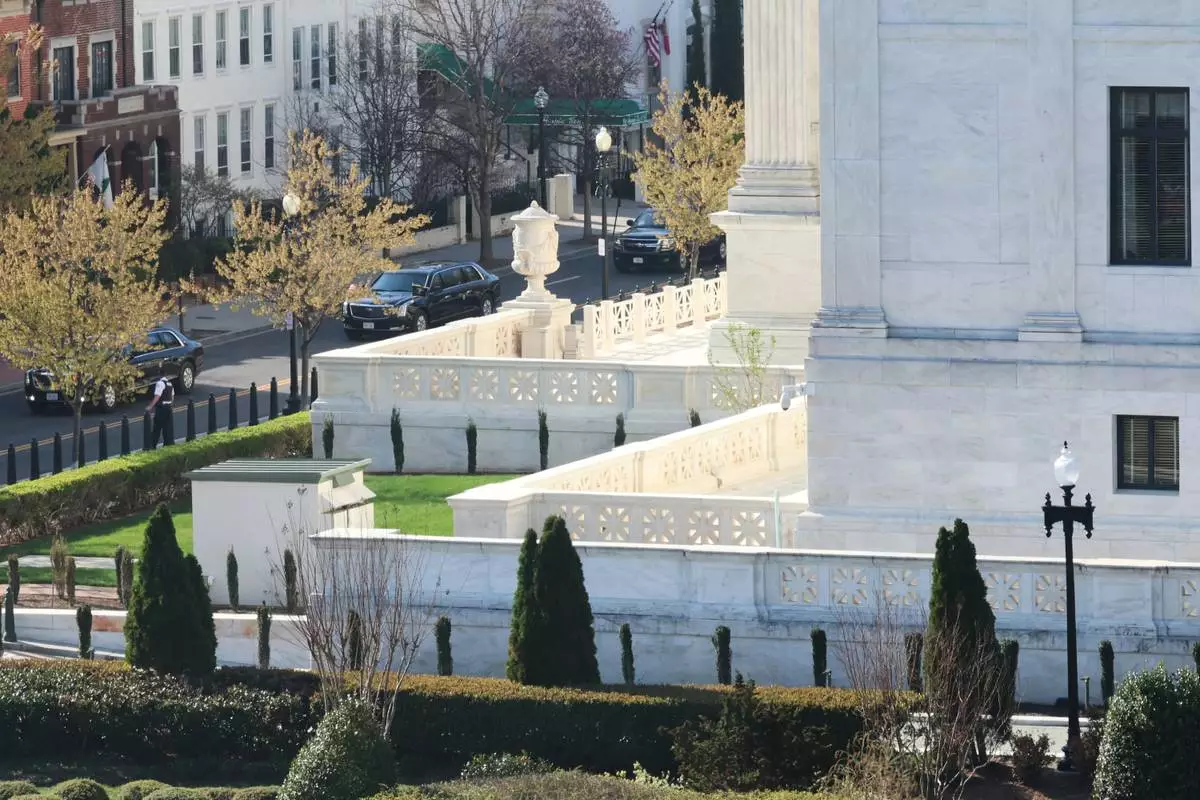
President Donald Trump's motorcade arrives at the U.S. Supreme Court, Wednesday, April 1, 2026, in Washington. (AP Photo/Tom Brenner)

President Donald Trump's motorcade arrives at the U.S. Supreme Court, Wednesday, April 1, 2026, in Washington. (AP Photo/Tom Brenner)

Pro and anti-Trump demonstrators rally outside the U.S. Supreme Court, before justices hear oral arguments on whether President Donald Trump can deny citizenship to children born to parents who are in the United States illegally or temporarily, on Capitol Hill, in Washington, Wednesday, April 1, 2026. (AP Photo/J. Scott Applewhite)

Pro and anti-Trump demonstrators rally outside the U.S. Supreme Court, before justices hear oral arguments on whether President Donald Trump can deny citizenship to children born to parents who are in the United States illegally or temporarily, on Capitol Hill, in Washington, Wednesday, April 1, 2026. (AP Photo/J. Scott Applewhite)

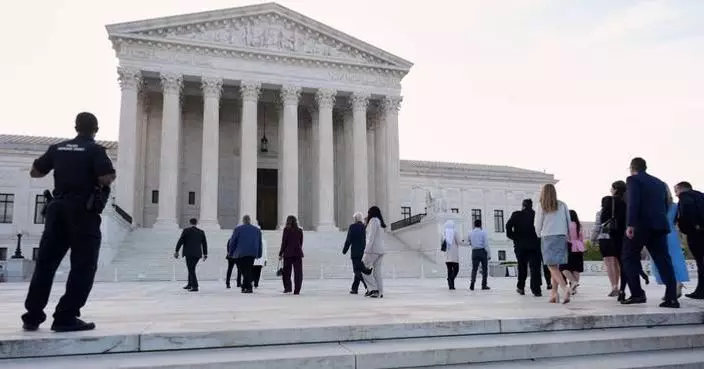
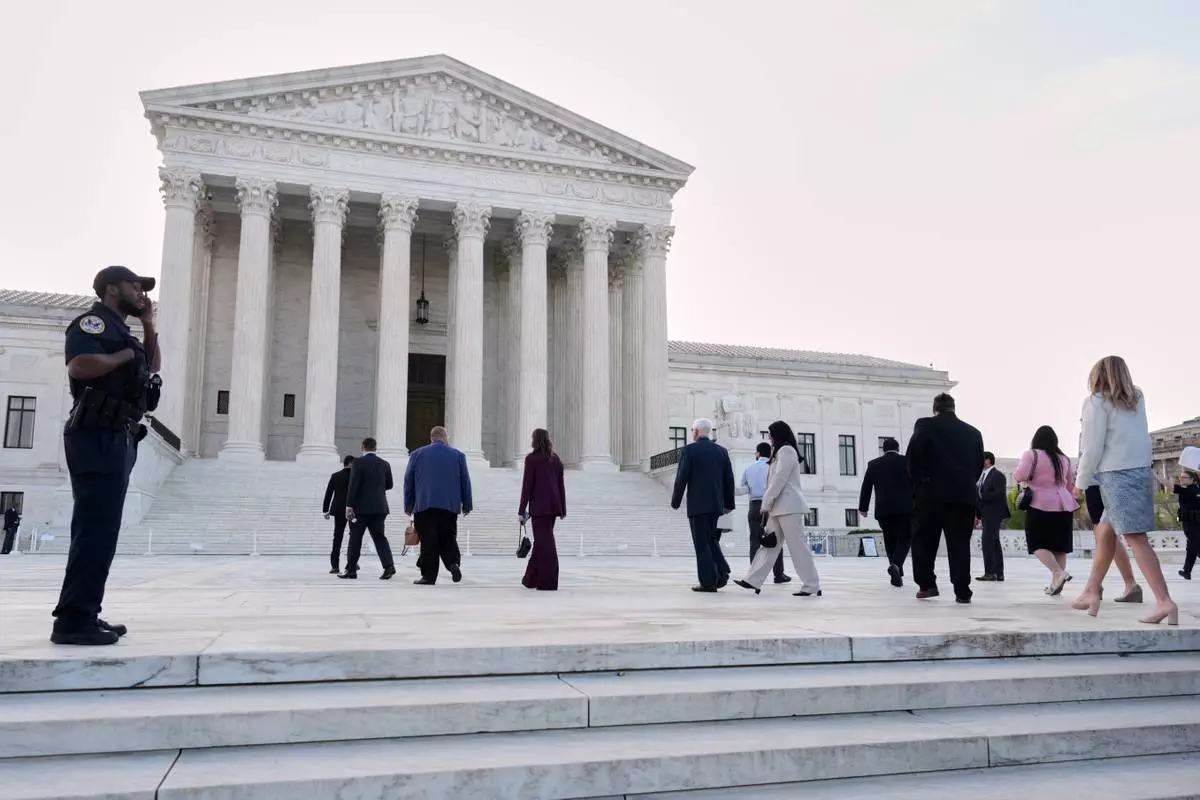
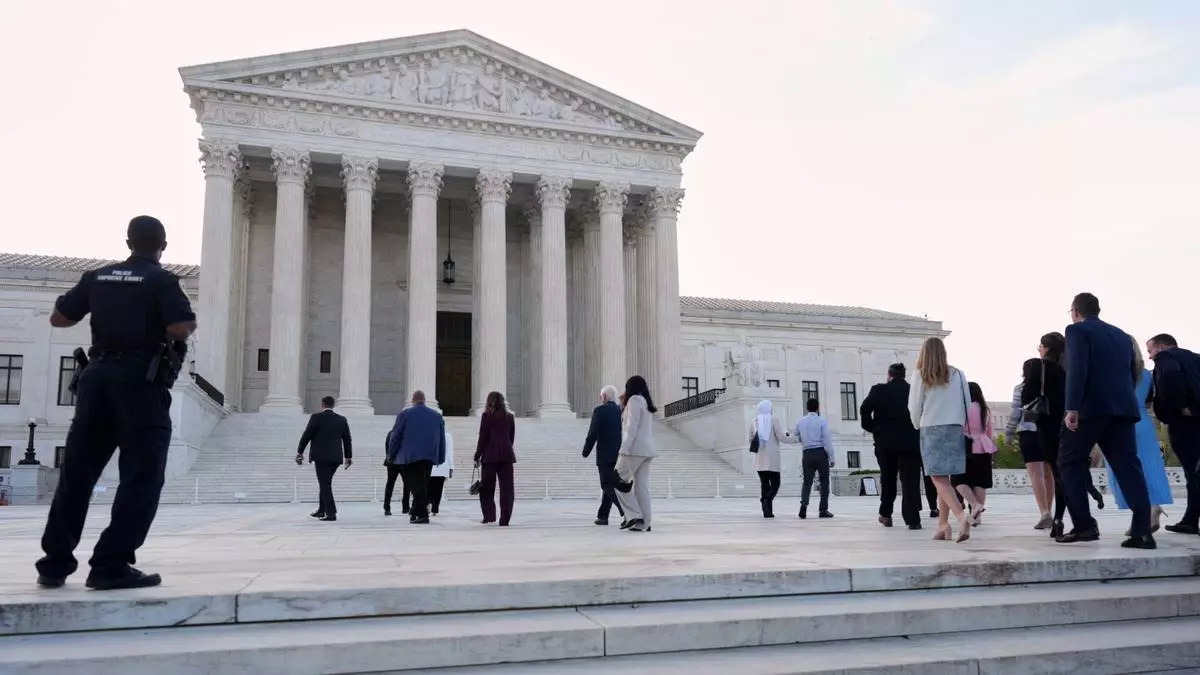
People arrive to walk inside the U.S. Supreme Court, on Capitol Hill in Washington, Wednesday, April 1, 2026. The Supreme Court justices will hear oral arguments today on whether President Donald Trump can deny citizenship to children born to parents who are in the United States illegally or temporarily. (AP Photo/J. Scott Applewhite)

People arrive to walk inside the U.S. Supreme Court, on Capitol Hill in Washington, Wednesday, April 1, 2026. The Supreme Court justices will hear oral arguments today on whether President Donald Trump can deny citizenship to children born to parents who are in the United States illegally or temporarily. (AP Photo/J. Scott Applewhite)

People arrive to walk inside the U.S. Supreme Court, on Capitol Hill in Washington, Wednesday, April 1, 2026. The Supreme Court justices will hear oral arguments today on whether President Donald Trump can deny citizenship to children born to parents who are in the United States illegally or temporarily. (AP Photo/J. Scott Applewhite)

People arrive to walk inside the U.S. Supreme Court, on Capitol Hill in Washington, Wednesday, April 1, 2026. The Supreme Court justices will hear oral arguments today on whether President Donald Trump can deny citizenship to children born to parents who are in the United States illegally or temporarily. (AP Photo/J. Scott Applewhite)

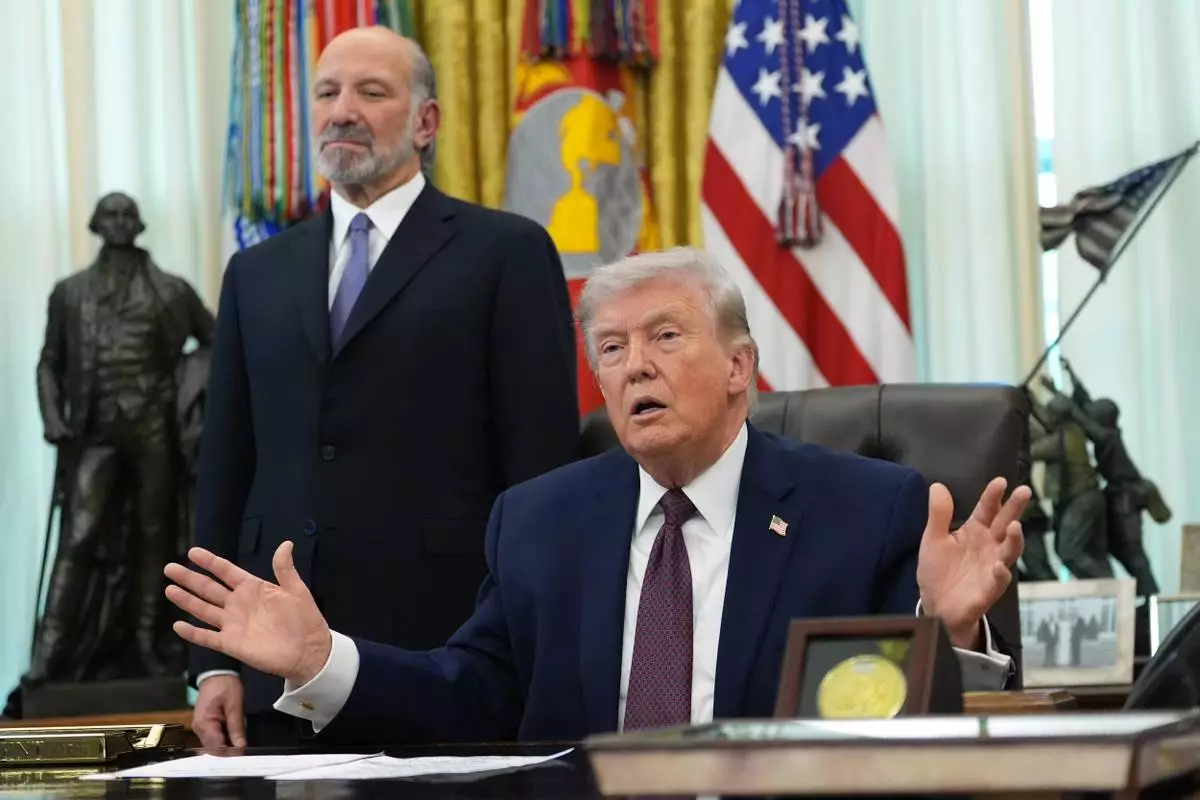
President Donald Trump answers questions from reporters after signing an executive order in the Oval Office of the White House Tuesday, March 31, 2026, in Washington, as Commerce Secretary Howard Lutnick listens. (AP Photo/Alex Brandon)

President Donald Trump answers questions from reporters after signing an executive order in the Oval Office of the White House Tuesday, March 31, 2026, in Washington, as Commerce Secretary Howard Lutnick listens. (AP Photo/Alex Brandon)

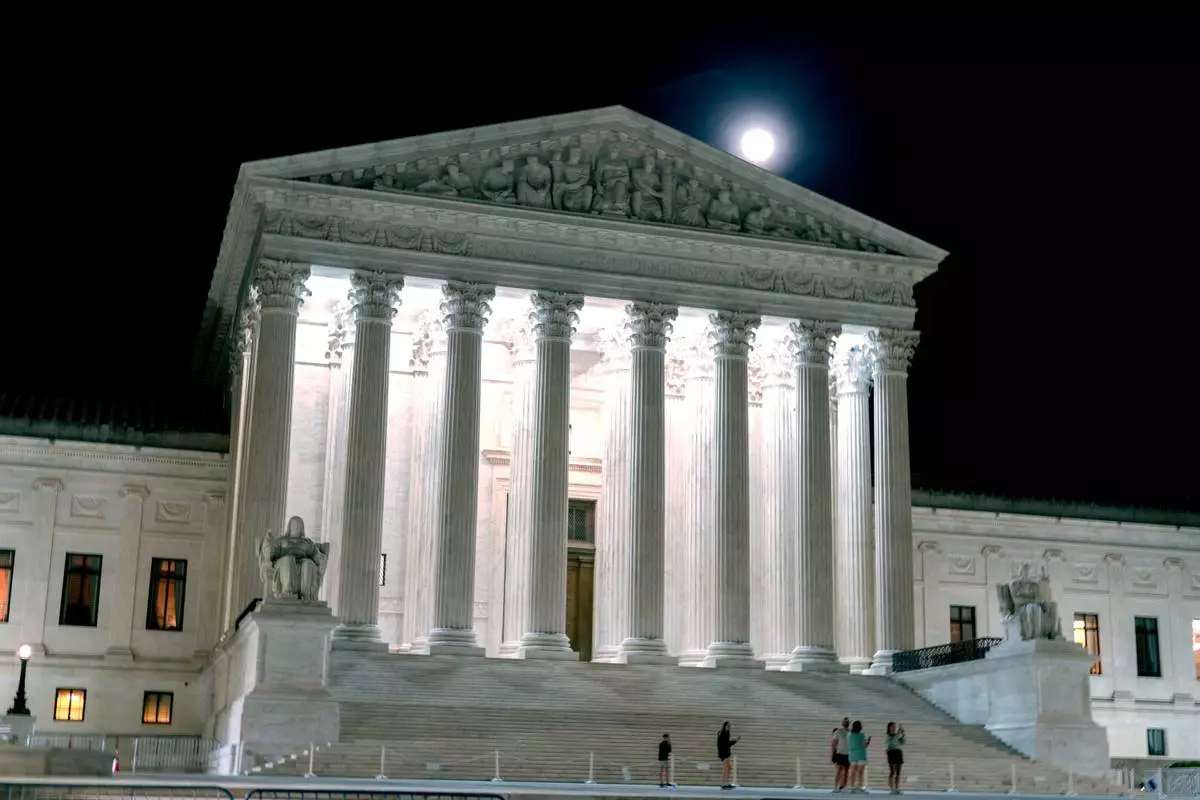
The U.S. Supreme Court is seen as the moon rises Tuesday, March 31, 2026, in Washington. (AP Photo/Jose Luis Magana)

The U.S. Supreme Court is seen as the moon rises Tuesday, March 31, 2026, in Washington. (AP Photo/Jose Luis Magana)

Recommended Articles