KUALA LUMPUR, Malaysia (AP) — More than a decade ago, Malaysia Airlines Flight 370 vanished without a trace, sparking one of aviation’s most baffling mysteries.
Despite years of multinational searches, investigators still do not know exactly what happened to the plane or its 239 passengers and crew.
On Wednesday, Malaysia’s government said American marine robotics company Ocean Infinity would resume a seabed hunt for the missing plane on Dec. 30, reigniting hopes that the plane might finally be found.
A massive search in the southern Indian Ocean, where the jet is believed to have gone down, turned up almost nothing. Apart from a few small fragments that washed ashore, no bodies or large wreckage have ever been recovered.
Here’s what we know about the deadly aviation tragedy.
The Boeing 777 disappeared from air-traffic radar 39 minutes after departing Kuala Lumpur for Beijing on March 8, 2014.
The pilot’s last radio call to Kuala Lumpur — “Good night, Malaysian Three Seven Zero”— was the final communication before the plane crossed into Vietnamese airspace and failed to check in with controllers there.
Minutes later, the plane’s transponder, which broadcasts its location, shut down. Military radar showed the jet turn back over the Andaman Sea, and satellite data suggested it continued flying for hours, possibly until fuel exhaustion, before crashing into a remote section of the southern Indian Ocean.
Theories about what happened range from hijacking to cabin depressurization or power failure. There was no distress call, ransom demand, evidence of technical failure or severe weather.
Malaysian investigators in 2018 cleared the passengers and crew but did not rule out “unlawful interference.” Authorities have said someone deliberately severed communications and diverted the plane.
MH370 carried 227 passengers, including five young children, and 12 crew members. Most passengers were Chinese, but there were also citizens from the United States, Indonesia, France, Russia and elsewhere.
Among those aboard were two young Iranians traveling on stolen passports, a group of Chinese calligraphy artists, 20 employees of U.S. tech firm Freescale Semiconductor, a stunt double for actor Jet Li and several families with young children. Many families lost multiple members.
Search operations began in the South China Sea between Malaysia and Vietnam, then expanded to the Andaman Sea and the southern Indian Ocean.
Australia, Malaysia and China coordinated the largest underwater search in history, covering roughly 120,000 square kilometers (46,000 square miles) of seabed off western Australia. Aircraft, vessels equipped with sonar and robotic submarines scoured the ocean for signs of the plane.
Signals thought to be from the plane’s black box turned out to be from other sources, and no wreckage was found. The first confirmed debris was a flaperon discovered on Réunion Island in July 2015, with additional fragments later found along the east coast of Africa. The search was suspended in January 2017.
In 2018, U.S. marine robotics company Ocean Infinity resumed the hunt under a “no find, no fee” agreement, focusing on areas identified through debris drift studies, but it ended without success.
One reason why such an extensive search failed to turn up clues is that no one knows exactly where to look. The Indian Ocean is the world’s third largest, and the search was conducted in a difficult area, where searchers encountered bad weather and average depths of around 4 kilometers (2.5 miles).
It’s not common for planes to disappear in the deep sea, but when they do remains can be very hard to locate. Over the past 50 years, dozens of planes have vanished, according to the Aviation Safety Network.
Malaysia’s government gave the green light in March for another “no-find, no-fee” contract with Ocean Infinity to resume the seabed search operation at a new 15,000-square-kilometer (5,800-square-mile) site in the ocean. Ocean Infinity will be paid $70 million only if wreckage is discovered.
However, the search was suspended in April due to bad weather. The government said Wednesday that Ocean Infinity will resume search intermittently from Dec. 30 for a total of 55 days, in targeted areas believed to have the highest likelihood of finding the missing aircraft.
It is unclear if the company has new evidence of the plane’s location. It has said it would utilize new technology and has worked with many experts to analyze data and narrow the search area to the most likely site.
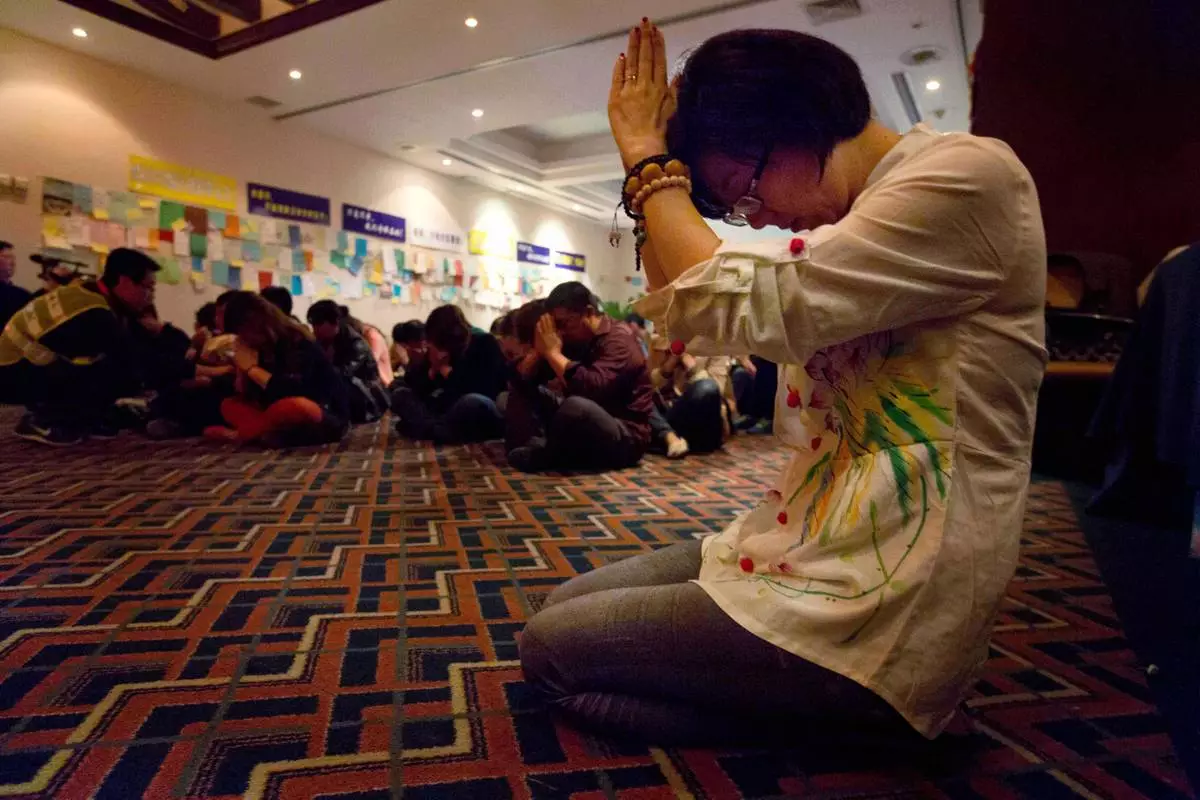
FILE -Relatives of Chinese passengers on board the Malaysia Airlines Flight MH370 pray at a prayer room in Beijing, China, April 4, 2014. (AP Photo/Ng Han Guan, File)
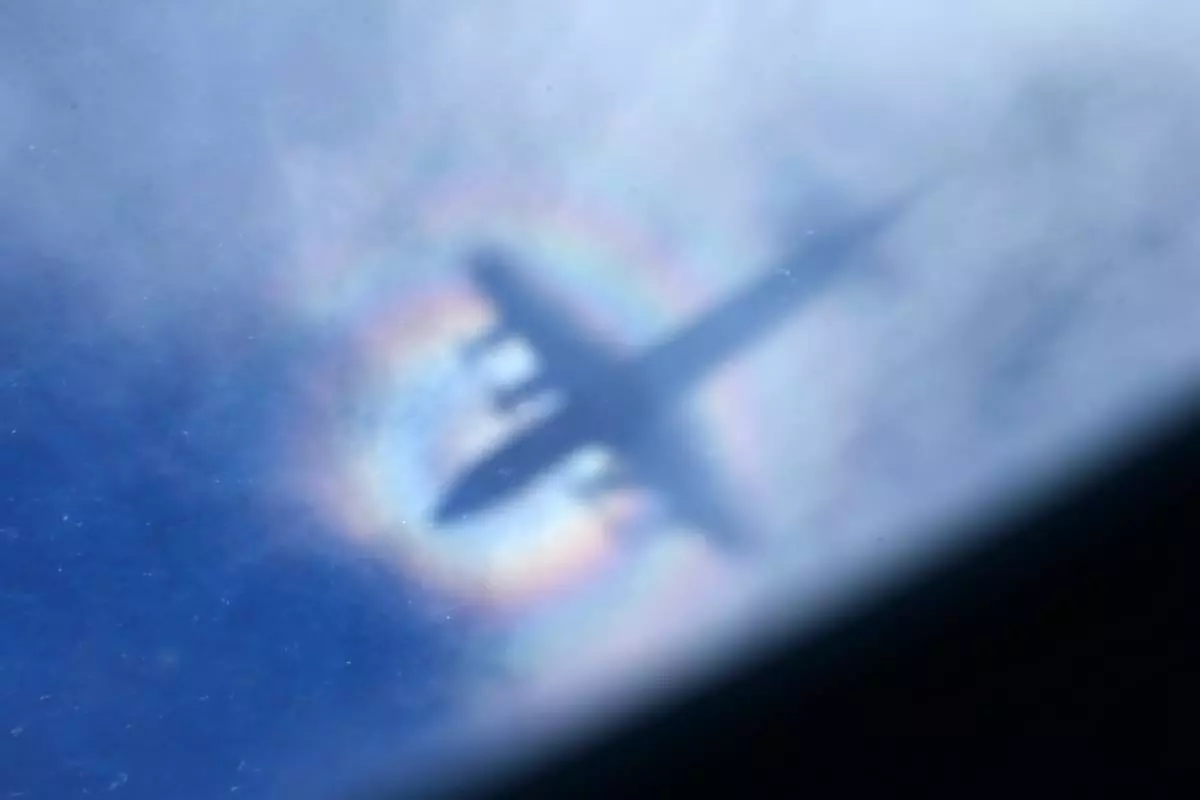
FILE -The shadow of a Royal New Zealand Air Force P3 Orion is seen on low level cloud while the aircraft searches for missing Malaysia Airlines Flight MH370 in the southern Indian Ocean, near the coast of Western Australia, March 31, 2014. (AP Photo/Rob Griffith, File)
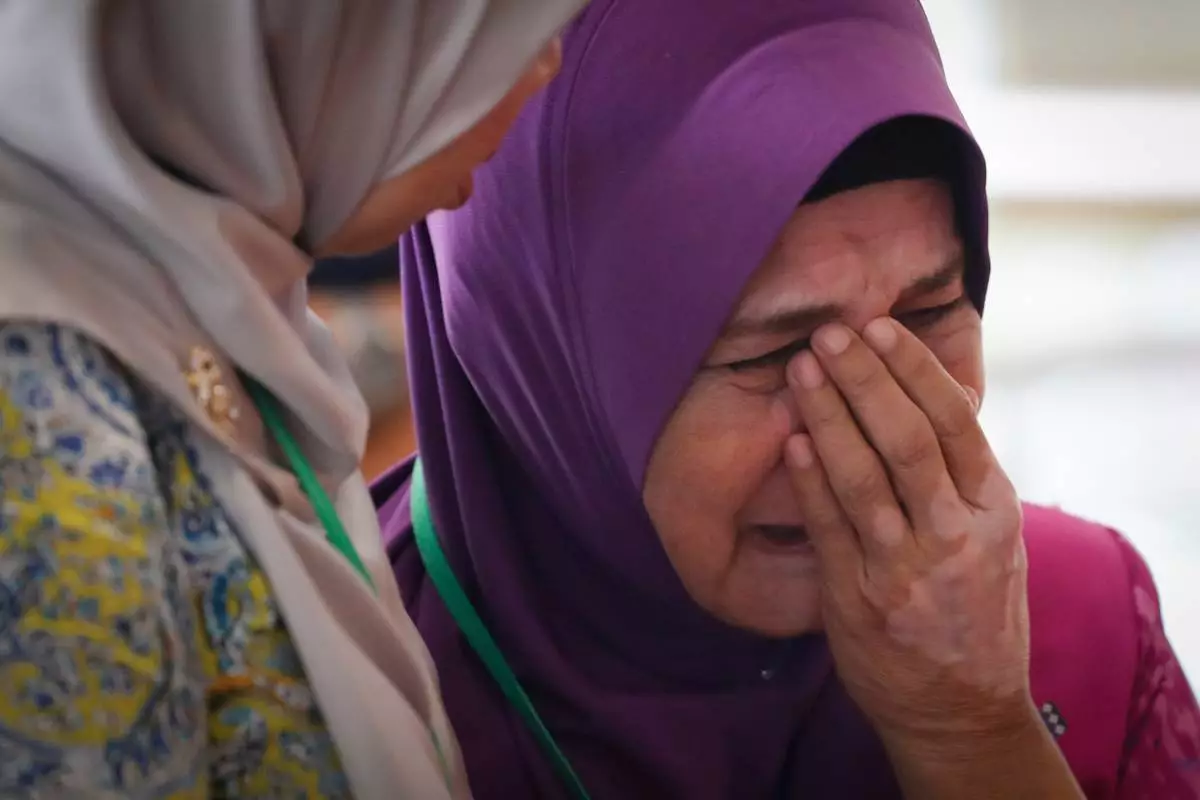
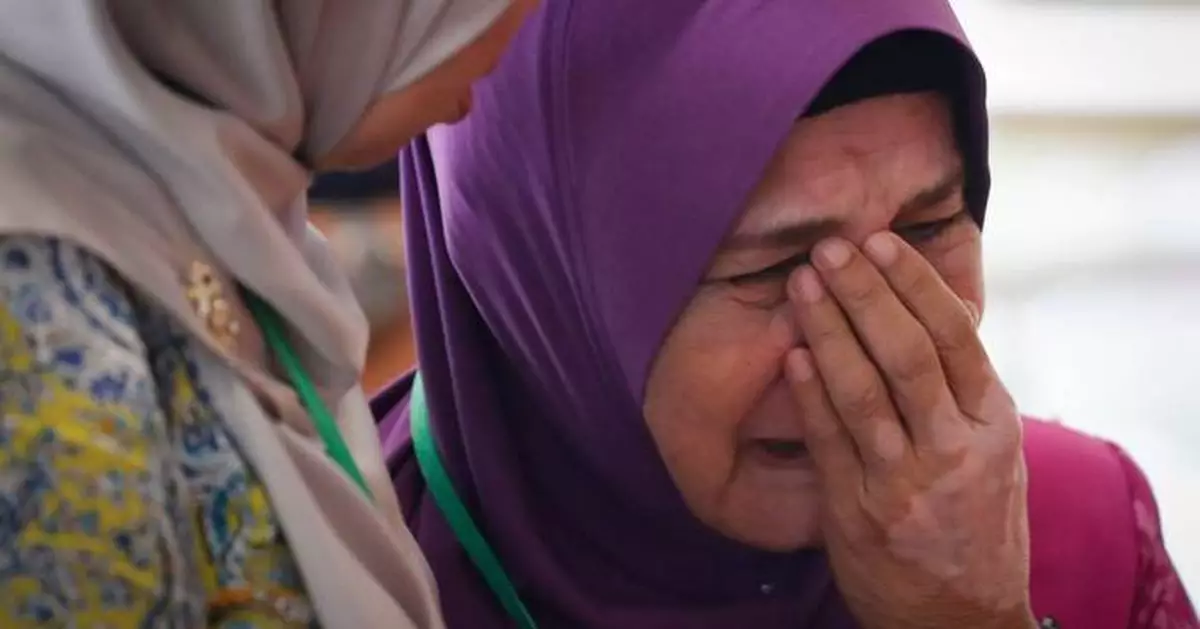
FILE -Sarah Nor, the mother of Norliakmar Hamid, a passenger on missing Malaysia Airlines flight MH370, cries after she attended a briefing on the final investigation report on missing flight MH370 in Putrajaya, July 30, 2018.(AP Photo/Vincent Thian, File)
LATAKIA, Syria (AP) — The woman, a member of Syria 's Alawite religious minority, was walking home on a sunny July day in her town on the Mediterranean coast when three gunmen stopped her and pulled her into their van. It was the start of a week of torment.
They drove her to a town in northern Syria three hours away, where they locked her in a room in an abandoned building. Over the coming days she was raped twice, she told The Associated Press.
“You Alawite women were born to be our sabaya,” she said one of the rapists told her, using an Arabic term common among Sunni Muslim extremists for women taken in war as sex slaves. The woman, in her mid-30s, gave her account on condition of anonymity for fear of reprisals.
Since the fall of former Syrian President Bashar Assad a year ago, dozens of women from the Alawite religious sect — to which Assad belonged — have been subjected to kidnappings and sexual assault, according to rights groups. In many cases, the attacks appear to be by Sunni extremists and jihadis motivated by sectarian hate.
That has raised suspicions some are allies or former allies of Hayat Tahrir al-Sham, the Islamist insurgent force that overthrew Assad and was led by Ahmed al-Sharaa, now Syria’s interim president. Foreign jihadi fighters and Syrian extremists fought alongside HTS during Syria’s yearslong civil war.
Rights groups say the attacks on Alawite women appear to be the acts of individuals, not systematic. But rights workers and victims say Syria's new authorities are not doing enough to stop the attacks. In response to public outcry, the government set up a committee to look into reported kidnappings but said it largely found the reports false.
Agnes Callamard, secretary-general of Amnesty International, said the kidnappings “cannot be denied.”
The problem, she said, “cannot be pushed away because it’s disturbing or because it’s undermining the message and the image of authorities."
Syria's Interior Ministry spokesman did not respond to repeated questions on the assaults.
The AP interviewed two rape victims and one kidnapping victim, in addition to family members of four others subjected to assaults that in three cases included rape. All spoke on condition they remain anonymous, fearing reprisals. One said she feared authorities would not protect her and later asked the AP not to cite her account.
All women and relatives interviewed by the AP said they informed security forces about what happened to them and authorities took their testimonies. It was not clear if the authorities followed up further or if any arrests were made.
Amnesty International said earlier this year it had received credible reports of at least 36 Alawite women and girls abducted between February and July. The kidnappings took place in the heartland of the Alawite population, in coastal Latakia and Tartous provinces and neighboring Homs and Hama.
Although on a much smaller scale, the attacks recall dark memories of the Islamic State group’s enslavement of thousands of Yazidi women for rape a decade ago in Iraq. Some Sunni extremists consider Alawites heretics and believe it is religiously permitted to take their women as sex slaves. Others have targeted Alawites in revenge for atrocities against Sunnis during the 54-year rule of the Assad family, when there were widespread reports of sexual violence against women in detention centers.
The attacks against women have intensified since March, when clashes between Assad supporters and security forces spiraled into sectarian atrocities in which hundreds of civilians were killed, mostly Alawites at the hands of pro-government fighters.
The Interior Ministry committee investigated 42 cases of alleged kidnappings, but only found one to be a real abduction, ministry spokesman Nour al-Din al-Baba said in mid-November. The committee found that the rest were false claims or instances where a woman ran off with a romantic partner or fled domestic abuse, or cases of blackmail or prostitution, he said, without providing evidence.
The ministry report "has nothing to do with reality,” says Rami Abdurrahman, who heads the Britain-based Syrian Observatory for Human Rights, a war monitor.
The woman snatched in the van said her three abductors were Syrians wearing black uniforms, though she couldn’t see distinctive insignia on them. During the drive, they passed several checkpoints but were waved through without being stopped or searched, she said.
Dozens of armed men were in the building where she was held, she said. "I felt like it’s done, I will be dead. I did not expect to return at all,” she said.
On the third day, a masked man raped her. Later, a man the gunmen called Abu Mohammed came and ordered them to release her, saying her kidnapping was getting too much attention on social media. The next day, she was raped again by a masked man, though she could not tell if it was the same man.
After a week in captivity, the gunmen dropped her off in a village in Hama province. A woman found her and took her into her home, where she called a relative.
After returning home, she went to a gynecologist and discovered she was pregnant. She managed to get an abortion, although abortion is illegal in Syria.
Her husband at first accepted what happened to her, but within days he suddenly changed his mind and decided to divorce her and married another woman. “He was not a man up to the responsibility,” she said.
Now living with her young son, she said she wanted to leave Syria.
“I live in constant fear,” she said.
Another woman said two of her female relatives, one of them a teenager, were taken by foreign fighters from a street in March. According to the relative’s account, the two were held in the basement of a house several hours away. There, the teenager was raped by the same man for 10 days until he left. The other woman was raped by another person for about two months, after which they were set free.
Another victim, who was 19, said she was taken in early July by three masked foreign fighters – an Iraqi and two non-Arabs.
“You Alawites are filthy infidels,” one of the men told her. When she tried to argue and begged for her life, he hit her head against the windshield until she bled.
She was locked in a basement of the Iraqi's home. He threatened to kill her if she didn't let him touch her. When she started screaming, he left, fearing neighbors would hear, she said.
She said she tried to kill herself by breaking a glass and cutting her vein, but the cut was not deep enough.
The next day, the Iraqi told her that his “emir,” a term used by jihadis to refer to their leader, had decided to set her free “on the condition that you learn about Islam.” The next morning, he put her in the car with his wife and children. On the way, he told her not to tell people she had been kidnapped but to say she’d left home of her own will to learn about Islam. They stopped and he bought her sweets from a store, then dropped her off at a taxi station in Idlib city, she said.
Not long after returning home, a state investigator came to her family home and questioned her about what happened. She identified the Iraqi through security footage from the sweets shop. But it is not known if he was arrested, and officials did not comment when asked.
Fearing reprisals, the family fled Syria.
Associated Press writer Sarah El Deeb in Beirut and Ghaith Alsayed in Damascus, Syria contributed to this report.
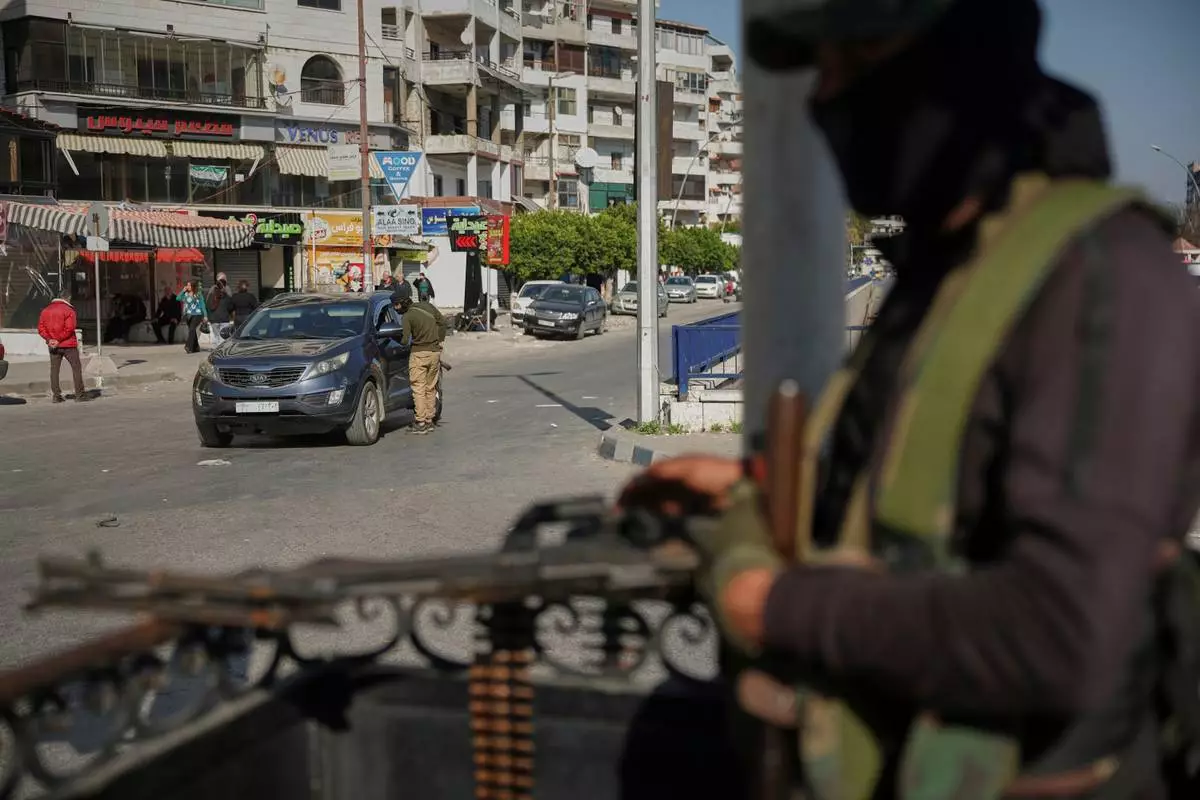
FILE- Syrian security forces inspect vehicles at a checkpoint, following a recent wave of violence between Syrian security forces and gunmen loyal to former President Bashar Assad, as well as subsequent sectarian attacks, in Latakia, in Syria's coastal region, March 11, 2025. (AP Photo/Ghaith Alsayed, File)
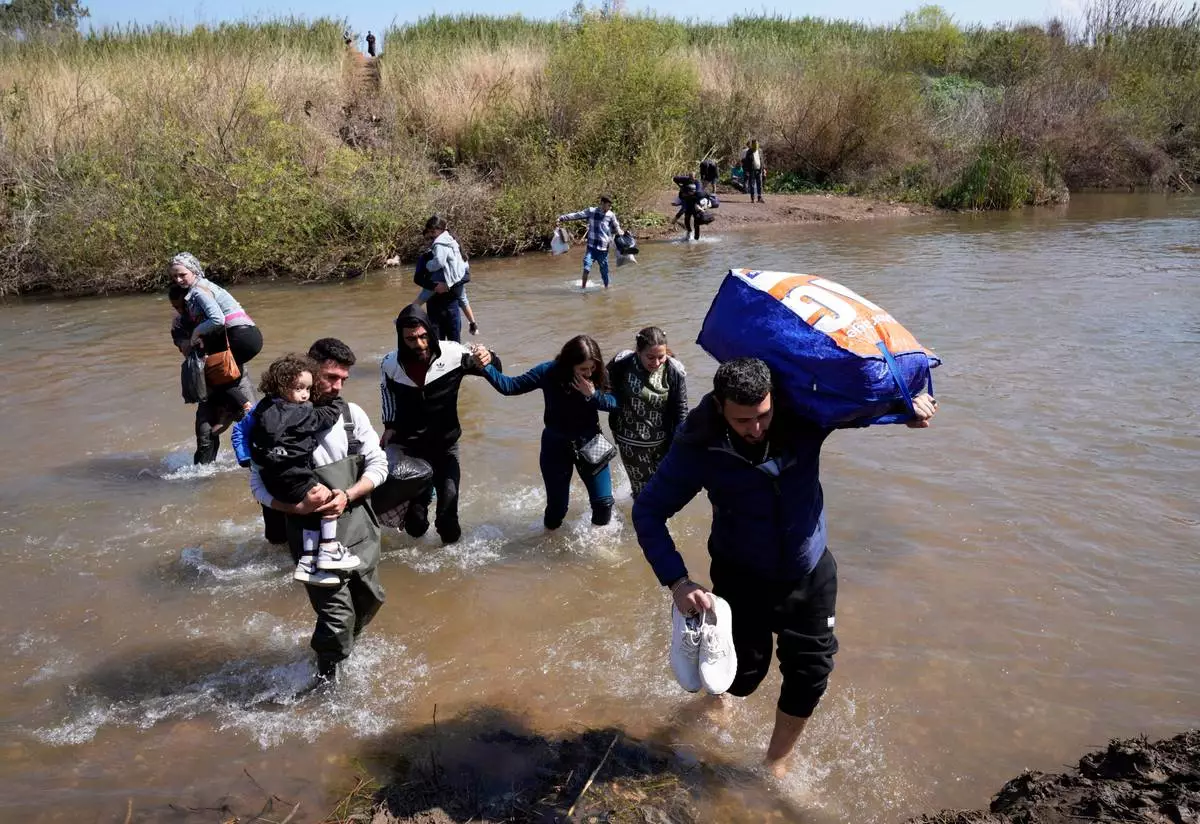
FILE - Syrian Alawite families who fled the clashes in Syria carry their luggage as they cross a river marking the border between Syria and northern Lebanon near the village of Heker al-Daher in Akkar province, Lebanon, March 11, 2025. (AP Photo/Hussein Malla, File)
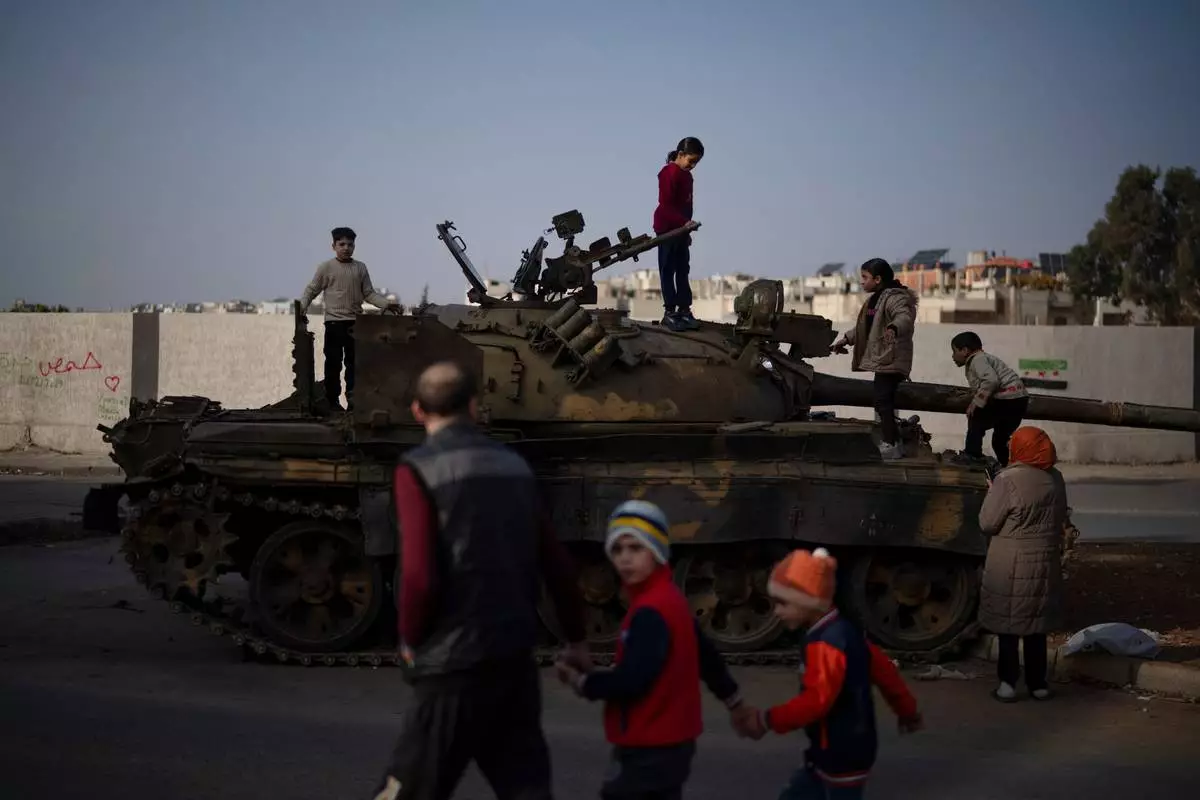
FILE - Children on the top of an ousted Syrian government forces tank that was left on a street in an Alawite neighbourhood, in Homs, Syria, Dec. 26, 2024. (AP Photo/Leo Correa, File)
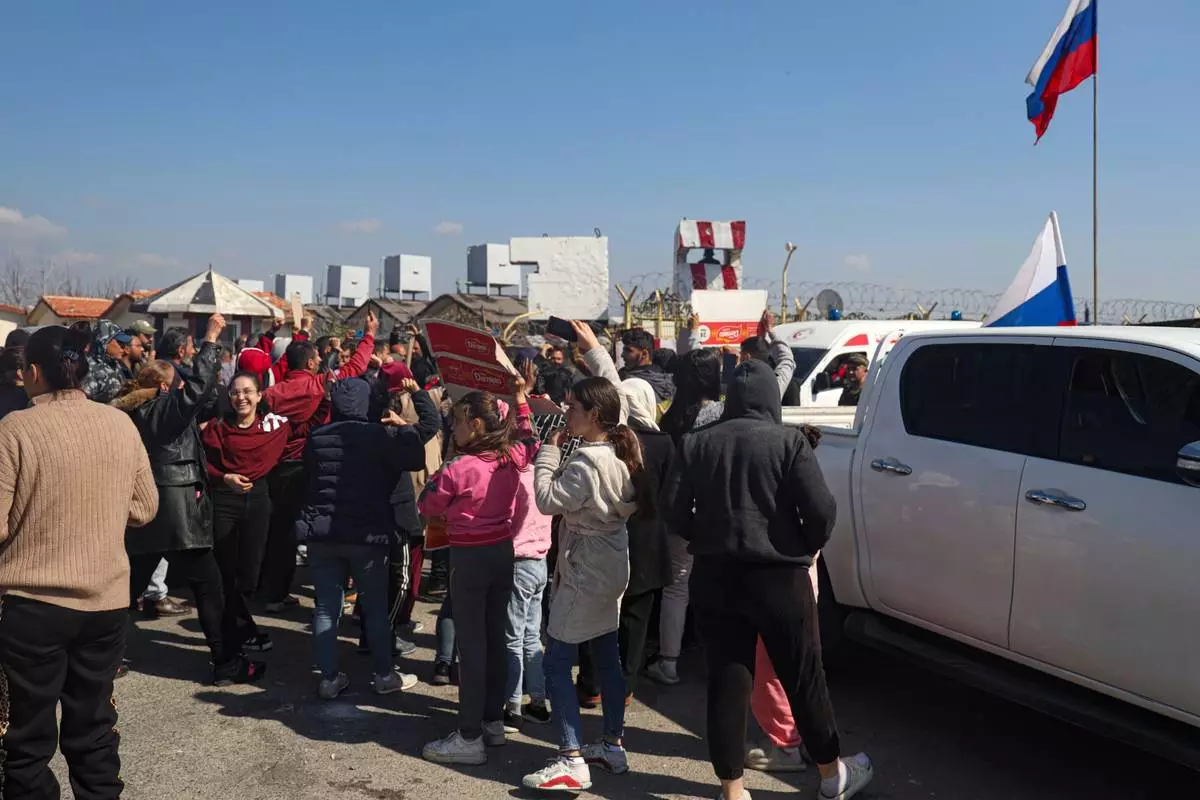
FILE - Members of the Alawite minority gather outside the Russian air base in Hmeimim, near Latakia in Syria's coastal region, March 11, 2025, as they seek refuge there after recent violence and retaliatory killings in the area. (AP Photo/Omar Albam, File)