Skip to Content Facebook Feature Image

The White House says the midterms are all about Trump. Democrats aren’t so sure

News

The White House says the midterms are all about Trump. Democrats aren’t so sure
News

News

The White House says the midterms are all about Trump. Democrats aren’t so sure

2025-12-11 01:43 Last Updated At:01:50

WASHINGTON (AP) — A Dallas congresswoman opened her Senate campaign by telling voters that she “has gone toe to toe with Donald Trump.” Her Democratic primary opponent insisted that Americans are tired of “politics as a blood sport.”

The divergent approach highlights how U.S. Rep. Jasmine Crockett and state Rep. James Talarico are navigating a race where Democrats hope to break a three-decade losing streak in Texas. It also reflects a broader divide within the party, with some candidates continuing to focus on Trump while others barely mention his name.

Figuring out the best approach will be critical for Democrats who are grasping for a path back to power in the 2026 midterm elections that will determine control of Congress and are already maneuvering for the 2028 presidential race.

Republicans, by contrast, have been crystal clear.

Susie Wiles, the White House chief of staff, said in a recent podcast interview that the Republican president will campaign aggressively next year and the party will “put him on the ballot.”

“He is the greatest vote energizer in the history of politics,” said Neil Newhouse, a veteran Republican pollster. “But the challenge is that he does it as much for Democrats as he does for Republicans.”

In her campaign launch video, Crockett was silent as audio of Trump’s insults played, including multiple times that he has called her a “very low-IQ person.” At the end of the video, she breaks out into a smile.

On Monday, she addressed the president more directly.

“Trump, I know you’re watching, so let me tell you directly,” Crockett said. “You’re not entitled to a damn thing in Texas. You better get to work because I’m coming for you.”

Trump responded the next day, telling reporters aboard Air Force One that her candidacy is “a gift to Republicans” and “I can’t even believe she’s a politician, actually.”

For nearly a decade, Democrats have used their criticism of Trump to draw attention and fuel fundraising. Governors who are considered potential 2028 presidential contenders, including California’s Gavin Newsom and Illinois’ JB Pritzker, saw their profiles rise as they positioned themselves as staunch Trump opponents.

U.S. Sen. Mark Kelly, D-Ariz., recently participated in a video telling service members that they should not follow “illegal orders.” Trump responded by accusing him of “seditious behavior” that's “punishable by death.”

Kelly started a national media tour and sent out a flurry of fundraising emails, both for himself and other Democrats. He said Trump has bullied everyone in his career, “but not now, because I won’t let it happen.”

When it comes to running for office, “Trump is the red meat that drives donors,” said John Anzalone, a longtime Democratic pollster.

“There are clearly some candidates that are playing towards the donor world that don’t actually make a great argument for winning races. But it’s great for clicks and making money. And money is the first primary that you need to win.”

Talarico has built a following with a less combative style. The former schoolteacher who is working toward a master's degree in divinity at Austin Presbyterian Theological Seminary gained attention by posting viral social media content challenging Republicans’ claims to Christian values. He has focused less on Trump or other politicians.

“The biggest divide in our country is not left versus right. It’s top versus bottom,” Talarico said in the video launching his campaign.

There are echoes of other Democratic successes this year, such as when candidates for governor won in New Jersey and Virginia by focusing on affordability concerns.

Voters in those states were much likelier to say they were voting to oppose Trump than to support him, according to the AP Voter Poll. For example, 71% of voters for Democrat Mikie Sherrill in New Jersey said their decision in the governor's race was motivated at least partially by opposition to Trump.

But Sherrill recently said that it is not enough for Democrats to rely solely on anti-Trump fervor.

“Trump makes a difference. He’s a forcing mechanism to coalesce the party,” Sherrill said. “But to really turn out the vote in a really strong manner, you have got to run a really sharp campaign.”

When Democrats talk about Trump, they have to connect his actions to voters’ everyday lives, she said.

“You can’t just say, oh, I’m so upset that Trump demolished the East Wing of the White House,” she said. “You have to say, look, there’s a tariff regime that is being run that is enriching the president to the tune of $3 billion, and you’re paying more for everything from your cup of coffee in the morning to the groceries that you’re buying to cook your family dinner at night.”

It is an approach that could have more staying power in the coming years.

“In the not-too-distant future, Trump will not be on the ballot and that will be a challenge for both parties,” said Austin Cook, a senior aide for Democrat Elissa Slotkin’s successful U.S. Senate campaign in Michigan last year. “He is a starting gun for Democratic enthusiasm. But soon we won't have him as a foil.”

Republicans have little choice but to enlist Trump’s help, considering his enduring support among voters who are less likely to turn out during the midterms.

“They need to energize Republican voters and the only real way to energize Republican voters and get them out to vote is by enlisting Trump in the campaign,” said Newhouse, who is advising some of the party's U.S. Senate candidates.

He warned that Trump’s popularity does not necessarily transfer to candidates he supports, “but there isn't an alternative.”

“What they are trying to do here is basically wrap themselves up in him, hope that his approval and the economic numbers improve and get their voters out to the polls to match the Democrats’ intensity,” Newhouse said.

The White House has said that Trump will be on the road more in the coming months. He hosted his first rally in a while in Pennsylvania on Tuesday evening, where he blamed Democrats for inflation.

“They gave you high prices,” he said, adding that “we’re bringing those prices down rapidly.”

Beaumont reported from Des Moines, Iowa. Associated Press writer Jonathan J. Cooper in Phoenix and AP Polling Editor Amelia Thomson-DeVeaux contributed to this report.

This story has been corrected to reflect that state Rep. James Talarico is working toward a master’s degree in divinity but is not now a pastor.
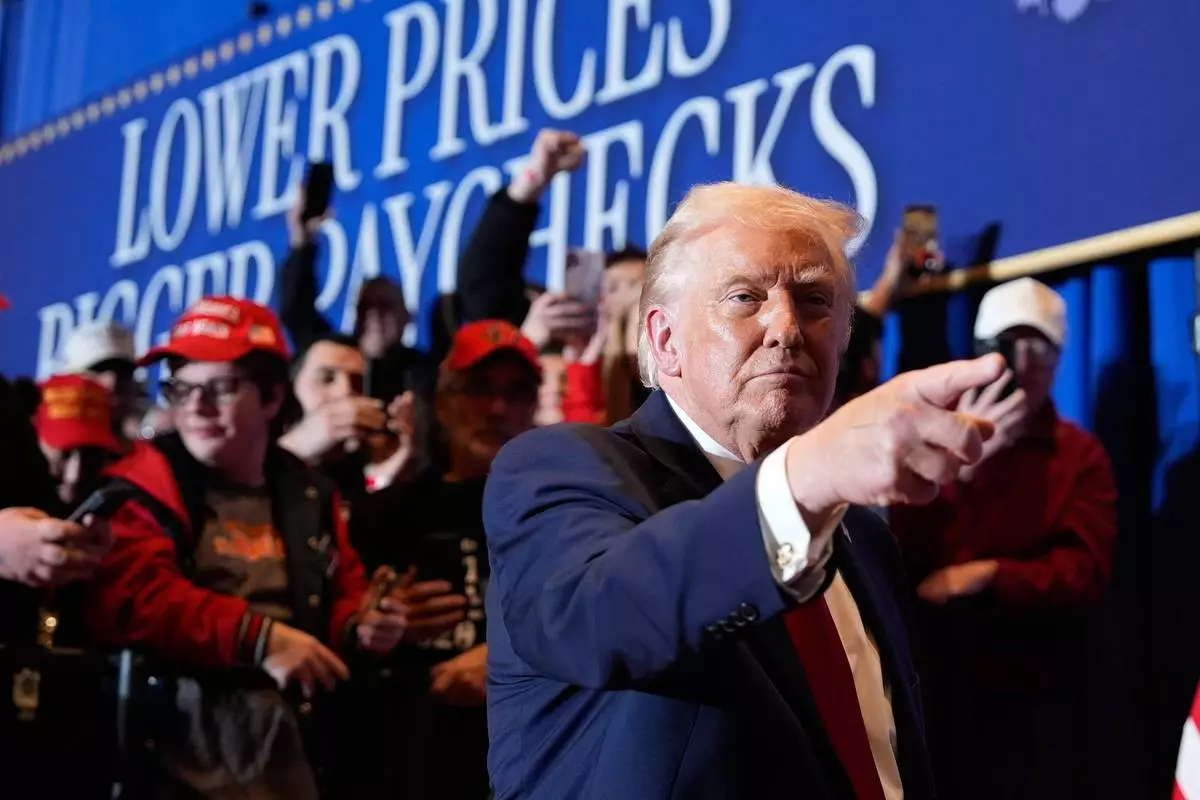
President Donald Trump gestures after speaking at Mount Airy Casino Resort, Tuesday, Dec. 9, 2025, in Mount Pocono, Pa. (AP Photo/Alex Brandon)

President Donald Trump gestures after speaking at Mount Airy Casino Resort, Tuesday, Dec. 9, 2025, in Mount Pocono, Pa. (AP Photo/Alex Brandon)

Rep. Jasmine Crockett, D-Texas, speaks to reporters after announcing her run in the Democratic primary for U.S. Senate, Monday, Dec. 8, 2025, in Dallas. (AP Photo/LM Otero)
Rep. Jasmine Crockett, D-Texas, speaks to reporters after announcing her run in the Democratic primary for U.S. Senate, Monday, Dec. 8, 2025, in Dallas. (AP Photo/LM Otero)
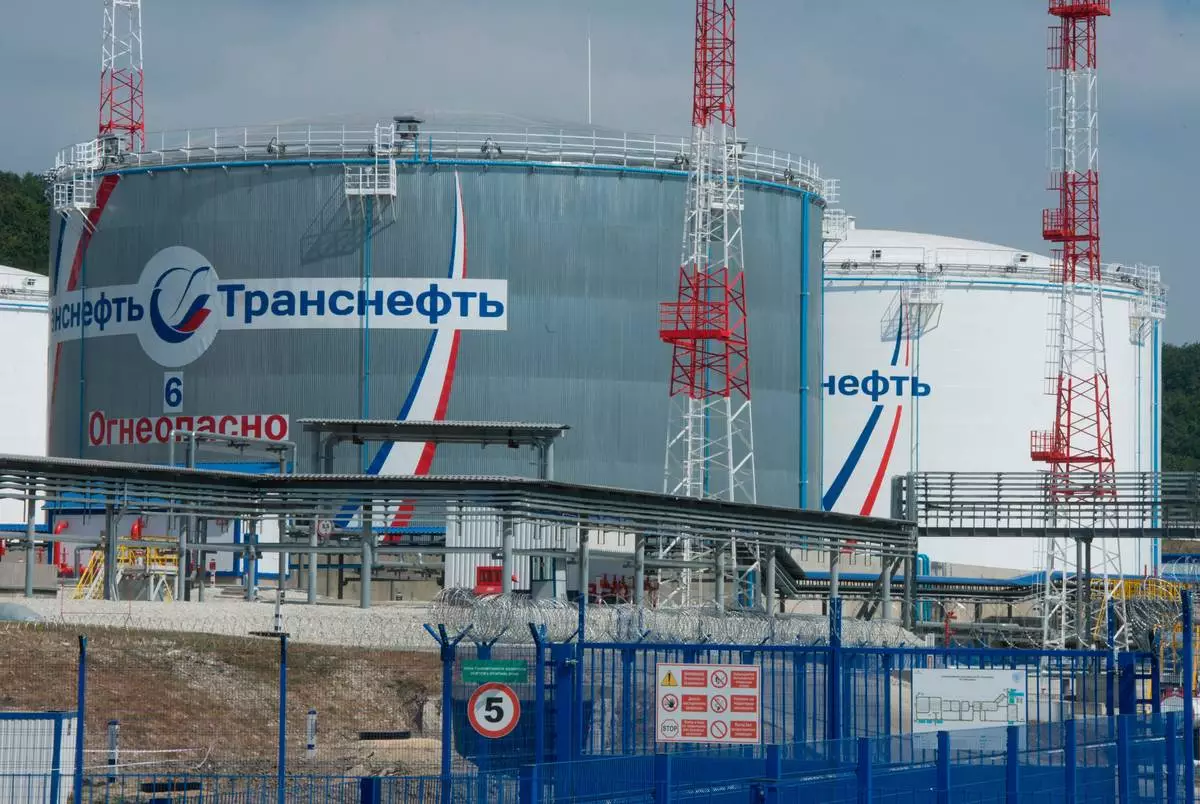
FRANKFURT, Germany (AP) — The Iran war's disruption of Middle East oil and gas supplies and soaring prices are strengthening Russia's ability to profit from its energy exports, a pillar of the Kremlin's budget and a key to paying for its own war in Ukraine.

Prices for Russia's oil exports have risen from under $40 per barrel as recently as December to about $62 per barrel — first on fears of war and then due to interruption of almost all tanker traffic through the Strait of Hormuz, the conduit for some 20% of the world's oil consumption.

Russian oil still trades at a considerable discount to international benchmark Brent crude, which has risen above $82 from the closing price of $72.87 on Friday, the eve of the attack on Iran by the U.S. and Israel. However, Russian crude is now above the benchmark of $59 per barrel that was assumed in the Russian Finance Ministry's budget plan for 2026. Oil and gas tax revenues account for up to 30% of the Russian federal budget.

Additionally, the halt in production of ship-borne liquefied natural gas, or LNG, by major supplier Qatar will sharply increase global competition for available cargoes -- including those from Russia.

Russia had seen state oil and gas revenue fall to a four-year low of 393 billion rubles ($5 billion) in January and the budget shortfall of 1.7 trillion rubles ($21.8 billion) for that month was the biggest on record, according to Finance Ministry figures.

The lower revenue was due to weaker global prices and to deep discounts fueled by U.S. and European Union hindrance of Russia's “shadow fleet” of tankers with obscure ownership used sell oil to its biggest customers, China and India, in defiance of a Western-imposed price cap and sanctions on Russia's two biggest oil companies, Lukoil and Rosneft.

Economic growth has stagnated as massive military spending has leveled off. President Vladimir Putin has resorted to tax increases and increased borrowing from compliant domestic banks to keep state finances on an even keel in the fifth year of the war.

“Russia is a big winner from the war-related energy turmoil,” said Simone Tagliapietra, energy expert at the Bruegel think tank in Brussels. “Higher oil prices mean higher revenues for the government and therefore stronger capability to finance the war in Ukraine.”

Amena Bakr, head of Middle East and OPEC+ insights at data and analytics firm Kpler, writes: “With Middle East barrels facing logistical disruption, both India and China face strong incentives to deepen reliance on Russian supply.”

Additionally, the price of future delivery of natural gas has skyrocketed in Europe, raising questions about EU plans to put an end to imports of Russian LNG by 2027 -- reviving bad memories of a 2022 energy crunch after Moscow cut off most supplies of pipeline gas due to the war.

Much depends on how long the Strait of Hormuz remains closed to most ship traffic, said Alexandra Prokopenko, an expert on the Russian economy at the Carnegie Russia Eurasia Center in Berlin.

A quick exit from the conflict would return Brent prices to roughly $65 per barrel and “a short-lived spike would not fundamentally change” Russia's budget picture, she said. A middle scenario in which some shipping resumes and oil stabilizes at around $80 per barrel would give Russia “some fiscal relief,” depending on how long the higher prices last.

A long-term closure with Iranian strikes damaging refineries and pipelines could send oil to $108 per barrel, accelerate inflation and push Europe to the edge of recession. “This scenario would bring the largest windfall to Russia,” she said.

Even several weeks of interruption in Gulf LNG could lead to calls in Europe to suspend plans to ban new Russian supply contracts after April 25, said Chris Weafer, CEO of Macro-Advisory Ltd consultancy.

“The EU is under even more pressure to work with the U.S. to find a solution to the Ukraine conflict and, very likely, to consider easing the plan for a total block for Russian oil and gas imports,” he said. “Countries such as Hungary and Slovakia and those who have been big buyers of Russian LNG, will press for that review.”

In any case “the Russian federal budget will have a much better result in March,” Weafer said, due to lower discounts on Russian oil and “because there are eager buyers of Russian oil and oil products.”

Putin said European governments were to blame for their energy predicament.

“What is happening today on the European markets, is, of course, above all the result of the mistaken policies of European governments in the energy sphere,” Putin said Wednesday on state TV.

He said that “maybe it would be more beneficial for us to halt (gas) supplies now to the European market, and leave for the markets that are opening and get established there,” adding that “it’s not a decision, but in this case what’s called ‘thinking out loud.’”

Putin said he would have the government to look into the issue.

Russia's Deputy Prime Minister Alexander Novak said Wednesday that Russian oil was “in demand” and that Russia was ready to increase supplies to China and India, the Tass news agency reported.

The head of Russia's sovereign wealth fund, Kirill Dmitriev, took a dig at European Commission President Ursula von der Leyen and EU foreign policy chief Kaja Kallas, writing on X that “surely the wise Ursula and Kaja have a backup LNG plan. Or maybe not.”

Belgium, France, the Netherlands and Spain have continued to import around 2 billion cubic meters of Russian LNG per month, and on top of that Hungary imports 2 billion cubic meters a month through the Turkstream pipeline across the Black Sea, Tagliapietra said. That would amount to 45 billion cubic meters in 2026, 15% of total gas demand for this year.

It's “not easy to replace this in case the LNG market gets tighter with continued shutdowns in Qatar,” he said.

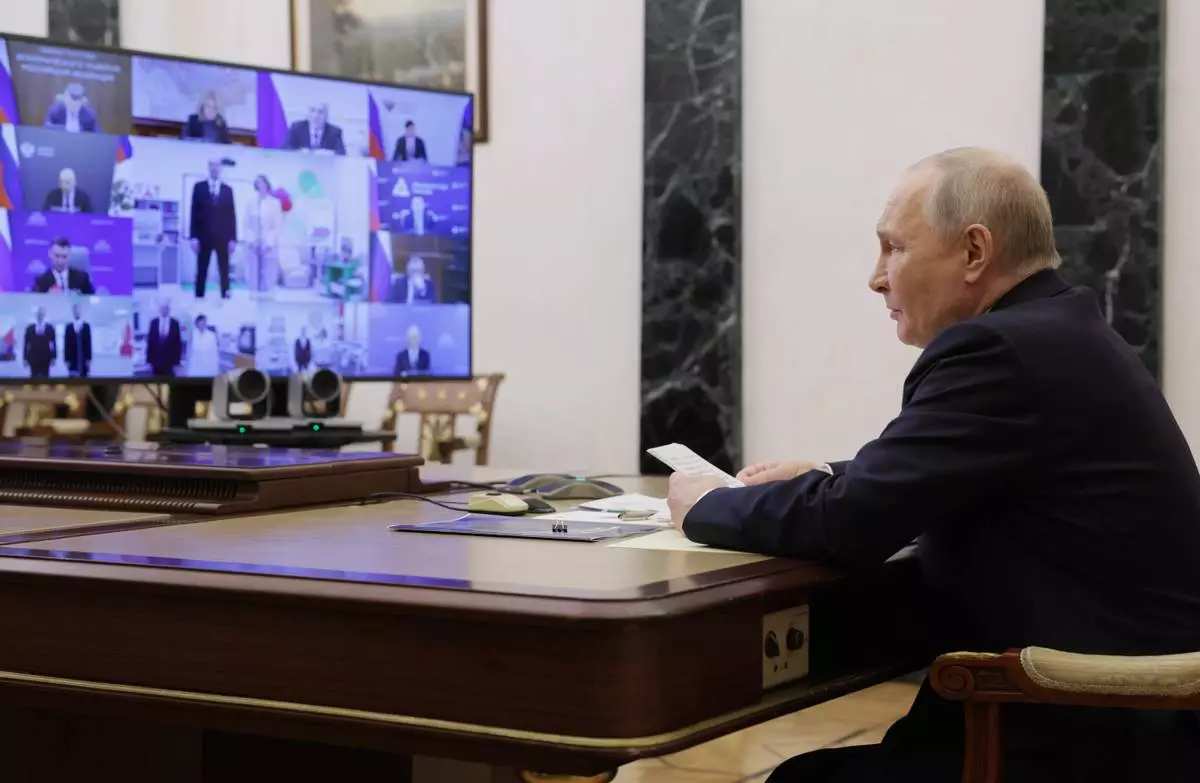
Russian President Vladimir Putin leads a cabinet meeting via videoconference at the Kremlin in Moscow, Wednesday, March 4, 2026. (Gavriil Grigorov/Sputnik, Kremlin Pool Photo via AP)

Russian President Vladimir Putin leads a cabinet meeting via videoconference at the Kremlin in Moscow, Wednesday, March 4, 2026. (Gavriil Grigorov/Sputnik, Kremlin Pool Photo via AP)

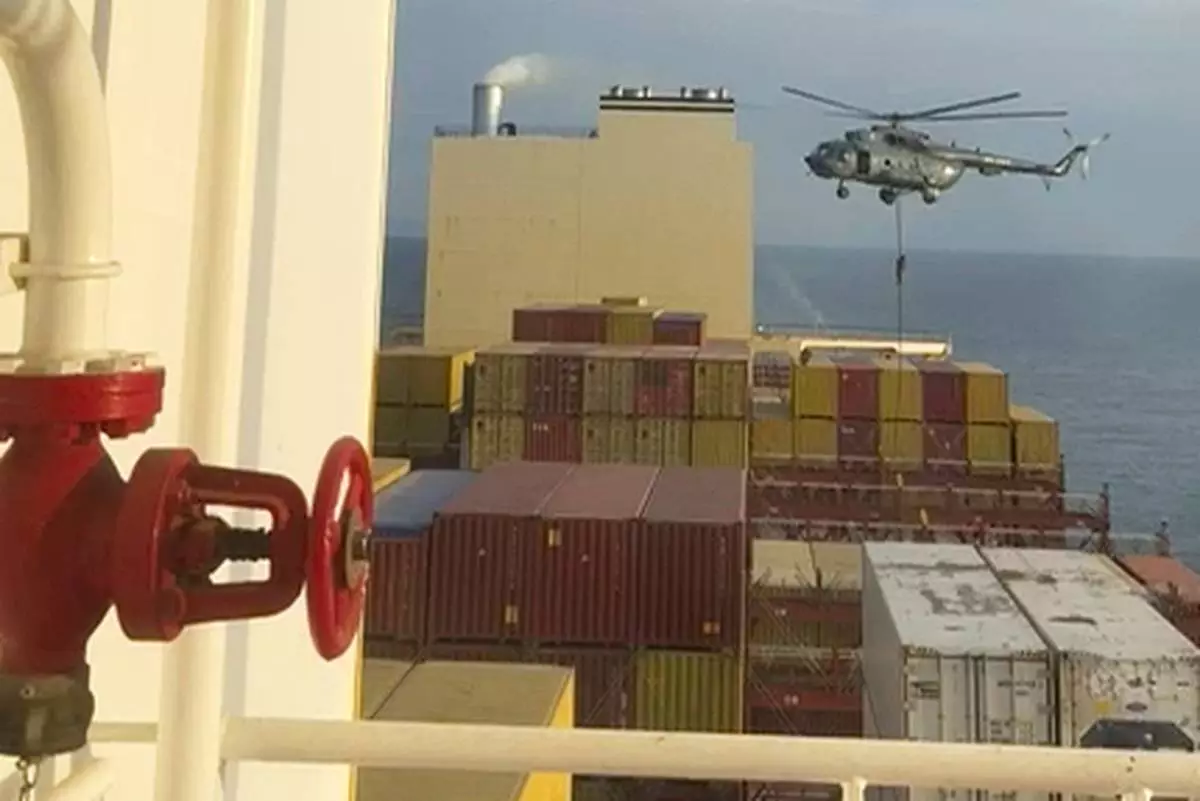
FILE - This image made from a video provided to The Associated Press by a Middle East defense official shows a helicopter raid targeting a vessel near the Strait of Hormuz on Saturday, April 13, 2024. (AP Photo, File)

FILE - This image made from a video provided to The Associated Press by a Middle East defense official shows a helicopter raid targeting a vessel near the Strait of Hormuz on Saturday, April 13, 2024. (AP Photo, File)

FILE - The Sheskharis oil terminal in Novorossiisk, in southern Russia, is seen on Thursday, Aug. 20, 2015. (Sergei Guneyev, Sputnik, Kremlin Pool Photo via AP, File)

FILE - The Sheskharis oil terminal in Novorossiisk, in southern Russia, is seen on Thursday, Aug. 20, 2015. (Sergei Guneyev, Sputnik, Kremlin Pool Photo via AP, File)

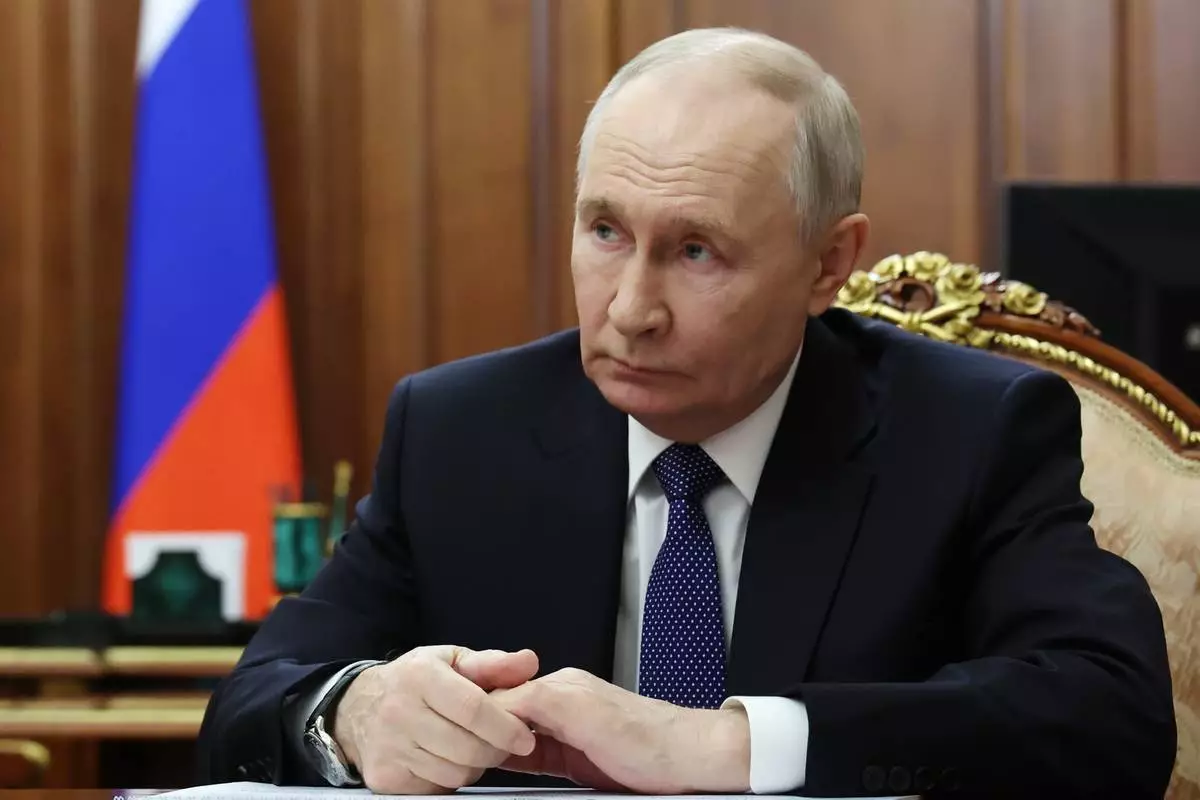
FILE - Russian President Vladimir Putin listens to Roman Artyukhin, the head of the treasury, at the Kremlin in Moscow, on Tuesday, March 3, 2026. (Gavriil Grigorov/Sputnik, Kremlin Pool Photo via AP, File)

FILE - Russian President Vladimir Putin listens to Roman Artyukhin, the head of the treasury, at the Kremlin in Moscow, on Tuesday, March 3, 2026. (Gavriil Grigorov/Sputnik, Kremlin Pool Photo via AP, File)

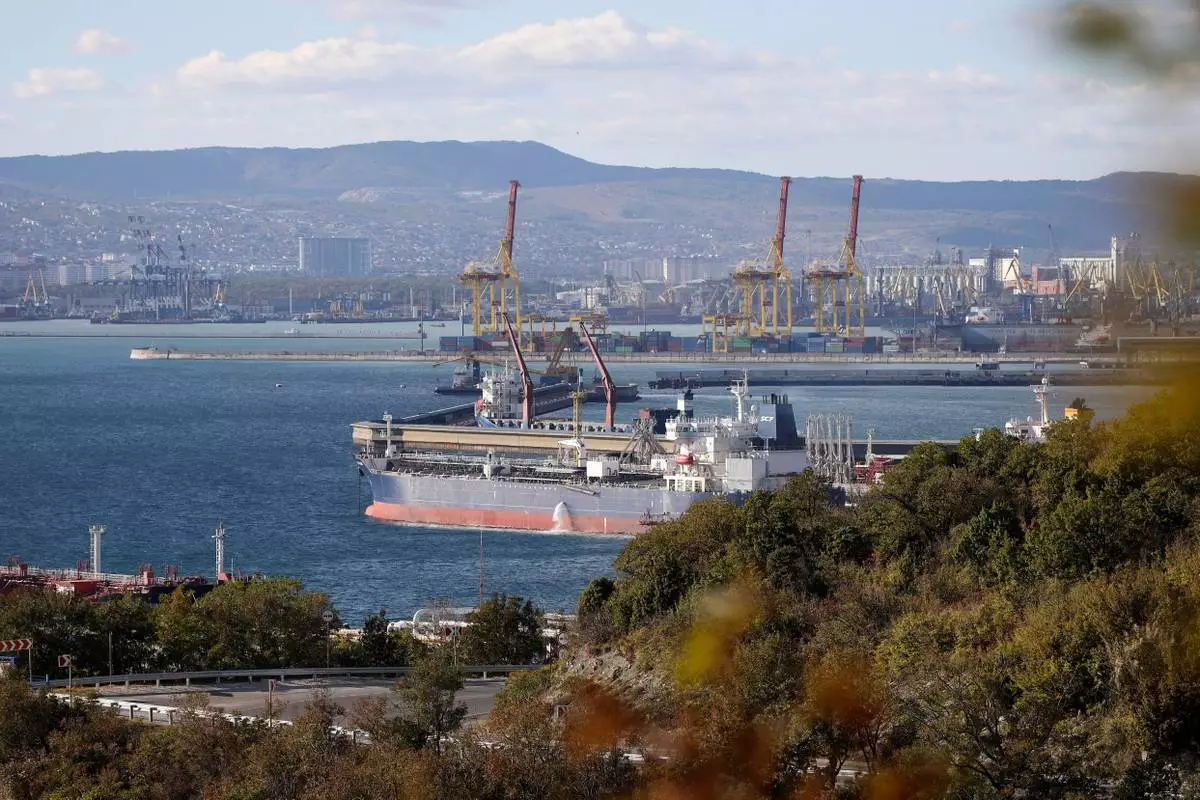
FILE - An oil tanker is moored at the Sheskharis complex in Novorossiysk, Russia, Tuesday, Oct. 11, 2022. (AP Photo, File)

FILE - An oil tanker is moored at the Sheskharis complex in Novorossiysk, Russia, Tuesday, Oct. 11, 2022. (AP Photo, File)

Recommended Articles