A federal vaccine advisory committee on Thursday voted to delay a decision on whether newborns should still get the hepatitis B vaccine on the day they're born.
The Advisory Committee on Immunization Practices, meeting in Atlanta, voted to delay the decision until Friday after committee members voiced confusion about voting language — and some voiced concern about taking such a step.
For decades, the government has advised that all babies be vaccinated against the liver infection right after birth. The shots are widely considered to be a public health success for preventing thousands of illnesses.
But U.S. Health Secretary Robert F. Kennedy Jr.’s committee is considering whether to recommend the birth dose only for babies whose mothers test positive, which would mark a return to a public health strategy that was abandoned more than three decades ago. For other babies, it will be up to the parents and their doctors to decide if a birth dose is appropriate.
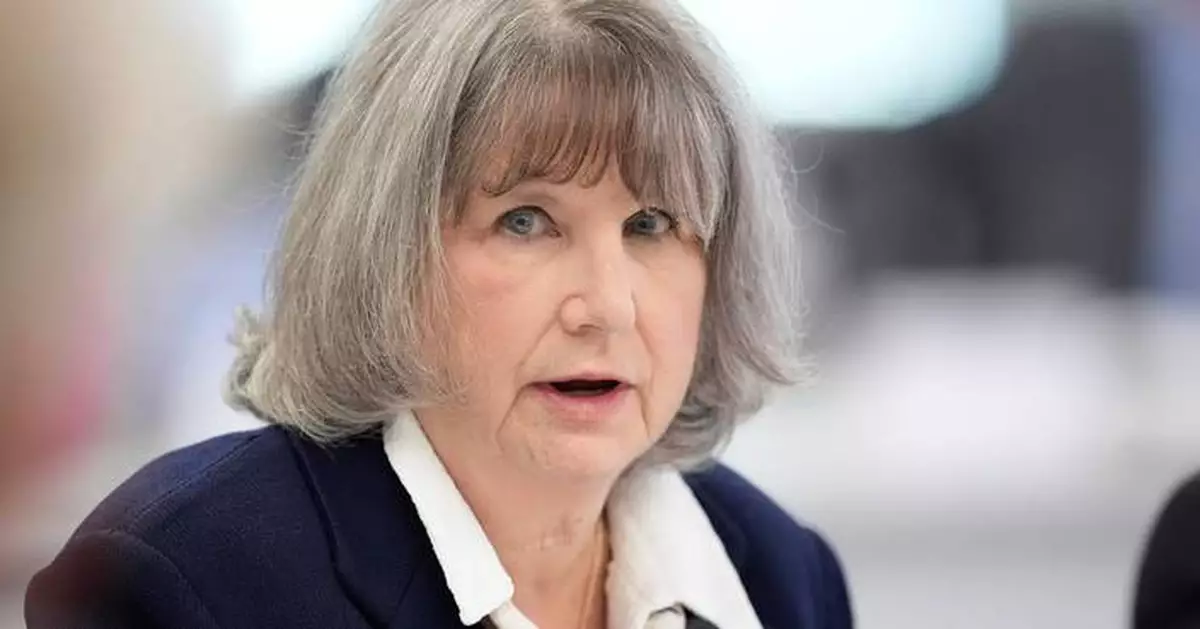
Committee member Vicky Pebsworth said a work group was tasked in September with evaluating whether a birth dose is necessary when mothers tested negative for hepatitis B.
“We need to address stakeholder and parent dissatisfaction" with the current recommendation, she said.
The committee makes recommendations to the director of the Centers for Disease Control and Prevention on how already approved vaccines should be used. CDC directors almost always adopted the committee’s recommendations, which were widely heeded by doctors and guide vaccination programs. But the agency currently has no director, leaving acting director Jim O'Neill to decide.
Kennedy, a leading anti-vaccine activist before he became the nation’s top health official, fired the entire 17-member panel earlier this year and replaced it with a group that includes several anti-vaccine voices.
The panel has made several decisions that angered major medical groups.
At a June meeting, it recommended that a preservative called thimerosal be removed from doses of flu vaccine even though some members acknowledged there was no proof it was causing harm.
In September, it recommended new restrictions on a combination shot that protects against chickenpox, measles, mumps and rubella. The panel also took the unprecedented step of not recommending COVID-19 vaccinations, even for high-risk populations such as seniors, and instead making it a matter of personal choice.
Several doctors groups said the changes were not based on good evidence, and advised doctors and patients to follow guidance that was previously in place.
They renewed some of that criticism. Dr. Jason M. Goldman, president of the American College of Physicians, commented during the meeting, calling it “political theater” and adding that “you are basing this on concerns of individuals who don't want the vaccine.”
Some committee members argued that safety studies in the past were limited and it’s possible that larger additional studies could uncover a problem with the birth dose. But two other committee members — Dr. Joseph Hibbeln and Dr. Cody Meissner — saw no documented evidence of harm from the birth doses and wondered whether the concern behind the discussion is just, as Hibbeln said, “speculation.”
Hepatitis B is a serious liver infection that, for most people, lasts less than six months. But for some, especially infants and children, it can become a long-lasting problem that can lead to liver failure, liver cancer and scarring called cirrhosis.
In adults, the virus is spread through sex or through sharing needles during injection drug use.
But it can also be passed from an infected mother to a baby. As many as 90% of infants who contract hepatitis B go on to have chronic infections, meaning their immune systems don’t completely clear the virus.
In 1991, the committee recommended an initial dose of hepatitis B vaccine at birth. Over about 30 years, cases among children fell from about 18,000 per year to about 2,200.
But members of Kennedy's committee have voiced discomfort with vaccinating all newborns.
Cynthia Nevison, an autism and environmental researcher, presented at the meeting. Nevison has written opinion pieces published by Children’s Health Defense, an anti-vaccine advocacy organization Kennedy previously led. She also co-authored a 2021 article in the Journal of Autism and Developmental Disorders that the publication retracted after concerns were raised about the paper’s methodology and about nondisclosed ties between the authors and anti-vaccine groups.
Another presenter was Mark Blaxill, a co-author of the retracted paper, who spoke about vaccine safety.
In the past, committee meetings have relied on presentations by the CDC scientists involved in tracking vaccine-preventable diseases and assessing vaccine safety. The agenda for this meeting listed no CDC scientists, but rather featured a prolonged public airing of anti-vaccine theories that most scientists have deemed as discredited.
Kennedy is a lawyer by training. Aaron Siri, a lawyer who worked with Kennedy on vaccine litigation, is listed as a presenter on Friday on the topic of the immunization schedule for U.S. children.
U.S. Sen. Bill Cassidy, a Louisiana Republican who is a doctor, on Thursday posted on social media; “The ACIP is totally discredited. They are not protecting children.”
The current guidance advises a dose within 24 hours of birth for all medically stable infants who weigh at least 4.4 pounds (2 kilograms), plus follow-up shots to be given at about 1 month and 6 months. The committee is expected to vote on language that says when a family decides not to get a birth dose, then the vaccination series should begin when the child is 2 months old.
The Associated Press Health and Science Department receives support from the Howard Hughes Medical Institute’s Department of Science Education and the Robert Wood Johnson Foundation. The AP is solely responsible for all content.
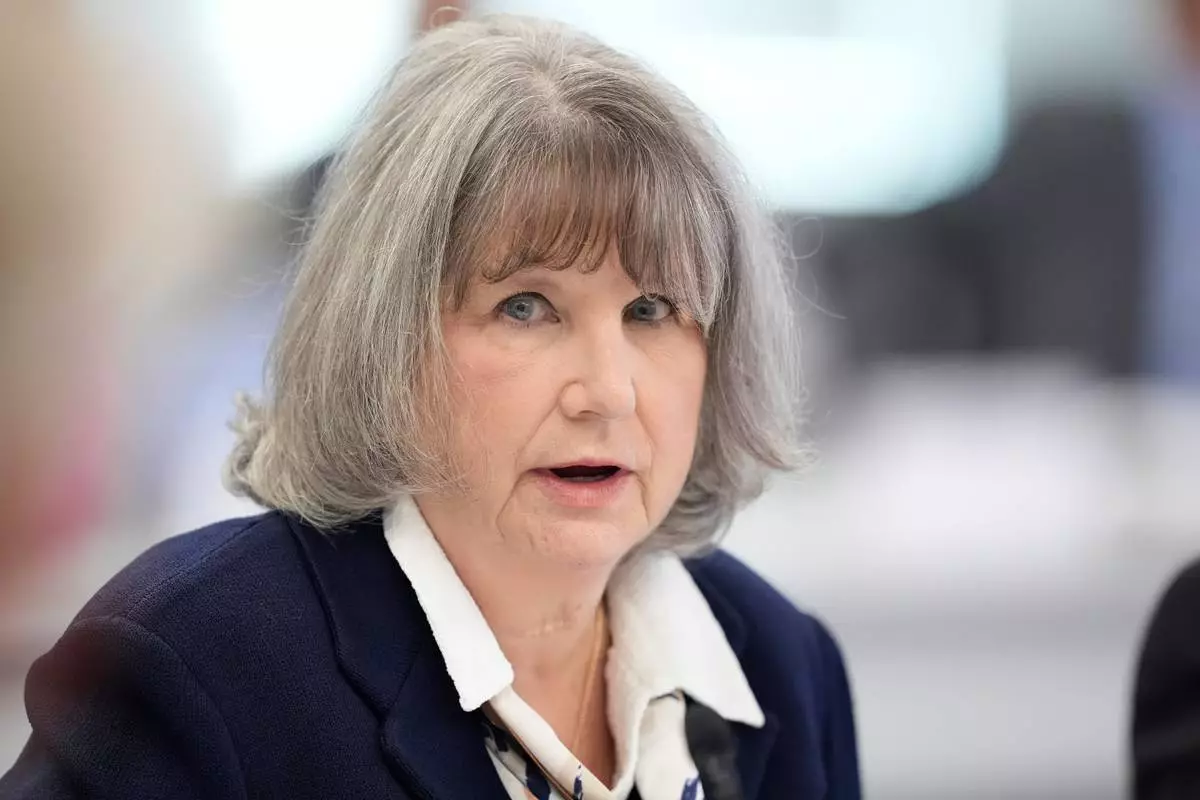
FILE - Committee member Vicky Pebsworth, speaks during a meeting of the Advisory Committee on Immunization Practices at the CDC, Sept. 18, 2025, in Chamblee, Ga. (AP Photo/Brynn Anderson, File)
LOS ANGELES (AP) — Frank Gehry, who designed some of the most imaginative buildings ever constructed and achieved a level of worldwide acclaim seldom afforded any architect, has died. He was 96.
Gehry died Friday in his home in Santa Monica after a brief respiratory illness, said Meaghan Lloyd, chief of staff at Gehry Partners LLP.
Gehry's fascination with modern pop art led to the creation of distinctive, striking buildings. Among his many masterpieces are the Guggenheim Museum in Bilbao, Spain; The Walt Disney Concert Hall in Los Angeles and Berlin’s DZ Bank Building.
He also designed an expansion of Facebook’s Northern California headquarters at the insistence of the company’s CEO, Mark Zuckerberg.
Gehry was awarded every major prize architecture has to offer, including the field’s top honor, the Pritzker Prize, for what has been described as “refreshingly original and totally American” work.
Other honors include the Royal Institute of British Architects gold medal, the Americans for the Arts lifetime achievement award, and his native country’s highest honor, the Companion of the Order of Canada.
After earning a degree in architecture from the University of Southern California in 1954 and serving in the Army, Gehry studied urban planning at Harvard University.
But his career got off to a slow start. He struggled for years to make ends meet, designing public housing projects, shopping centers and even driving a delivery truck for a time.
Eventually, he got the chance to design a modern shopping mall overlooking the Santa Monica Pier. He was determined to play it safe and came up with drawings for an enclosed shopping mall that looked similar to others in the United States in the 1980s.
To celebrate its completion, the mall’s developer dropped by Gehry’s house and was stunned by what he saw: The architect had transformed a modest 1920s-era bungalow into an inventive abode by remodeling it with chain-link fencing, exposed wood and corrugated metal.
Asked why he hadn’t proposed something similar for the mall, Gehry replied, “Because I have to make a living.”
If he really wanted to make a statement as an architect, he was told, he should drop that attitude and follow his creative vision.
Gehry would do just that for the rest of his life, working into his 90s to create buildings that doubled as stunning works of art.
As his acclaim grew, Gehry Partners LLP, the architectural firm he founded in 1962, grew with it, expanding to include more than 130 employees at one point. But as big as it got, Gehry insisted on personally overseeing every project it took on.
The headquarters of the InterActiveCorp, known as the IAC Building, took the shape of a shimmering beehive when it was completed in New York City’s Chelsea district in 2007. The 76-story New York By Gehry building, once one of the world’s tallest residential structures, was a stunning addition to the lower Manhattan skyline when it opened in 2011.
That same year, Gehry joined the faculty of his alma mater, the University of Southern California, as a professor of architecture. He also taught at Yale and Columbia University.
Not everyone was a fan of Gehry’s work. Some naysayers dismissed it as not much more than gigantic, lopsided reincarnations of the little scrap-wood cities he said he spent hours building when he was growing up in the mining town of Timmins, Ontario.
Princeton art critic Hal Foster dismissed many of his later efforts as “oppressive,” arguing they were designed primarily to be tourist attractions. Some denounced the Disney Hall as looking like a collection of cardboard boxes that had been left out in the rain.
Still other critics included Dwight D. Eisenhower’s family, who objected to Gehry’s bold proposal for a memorial to honor the nation’s 34th president. Although the family said it wanted a simple memorial and not the one Gehry had proposed, with its multiple statues and billowing metal tapestries depicting Eisenhower’s life, the architect declined to change his design significantly.
If the words of his critics annoyed Gehry, he rarely let on. Indeed, he even sometimes played along. He appeared as himself in a 2005 episode of “The Simpsons” cartoon show, in which he agreed to design a concert hall that was later converted into a prison.
He came up with the idea for the design, which looked a lot like the Disney Hall, after crumpling Marge Simpson’s letter to him and throwing it on the ground. After taking a look at it, he declared, “Frank Gehry, you’ve done it again!”
“Some people think I actually do that,” he would later tell the AP.
Ephraim Owen Goldberg was born in Toronto on Feb. 28, 1929, and moved to Los Angeles with his family in 1947, eventually becoming a U.S. citizen. As an adult, he changed his name at the suggestion of his first wife, who told him antisemitism might be holding back his career.
Although he had enjoyed drawing and building model cities as a child, Gehry said it wasn’t until he was 20 that he pondered the possibility of pursuing a career in architecture, after a college ceramics teacher recognized his talent.
“It was like the first thing in my life that I’d done well in,” he said.
Gehry steadfastly denied being an artist though.
“Yes, architects in the past have been both sculptors and architects,” he declared in a 2006 interview with The Associated Press. “But I still think I’m doing buildings, and it’s different from what they do.”
His words reflected both a lifelong shyness and an insecurity that stayed with Gehry long after he’d been declared the greatest architect of his time.
“I’m totally flabbergasted that I got to where I’ve gotten,” he told the AP in 2001. “Now it seems inevitable, but at the time it seemed very problematic.”
The Gehry-designed Guggenheim Museum in Abu Dhabi, first proposed in 2006, is expected to finally be completed in 2026 after a series of construction delays and sporadic work. The 30,000-square-foot (2,787-square-meter) structure will be the world's largest Guggenheim, leaving a lasting legacy in the capital city of the United Arab Emirates.
His survivors include his wife, Berta; daughter, Brina; sons Alejandro and Samuel; and the buildings he created.
Another daughter, Leslie Gehry Brenner, died of cancer in 2008.
—
Rogers, the principal writer of this obituary, retired from The Associated Press in 2021.
—
Reporter Jaimie Ding contributed from Los Angeles.
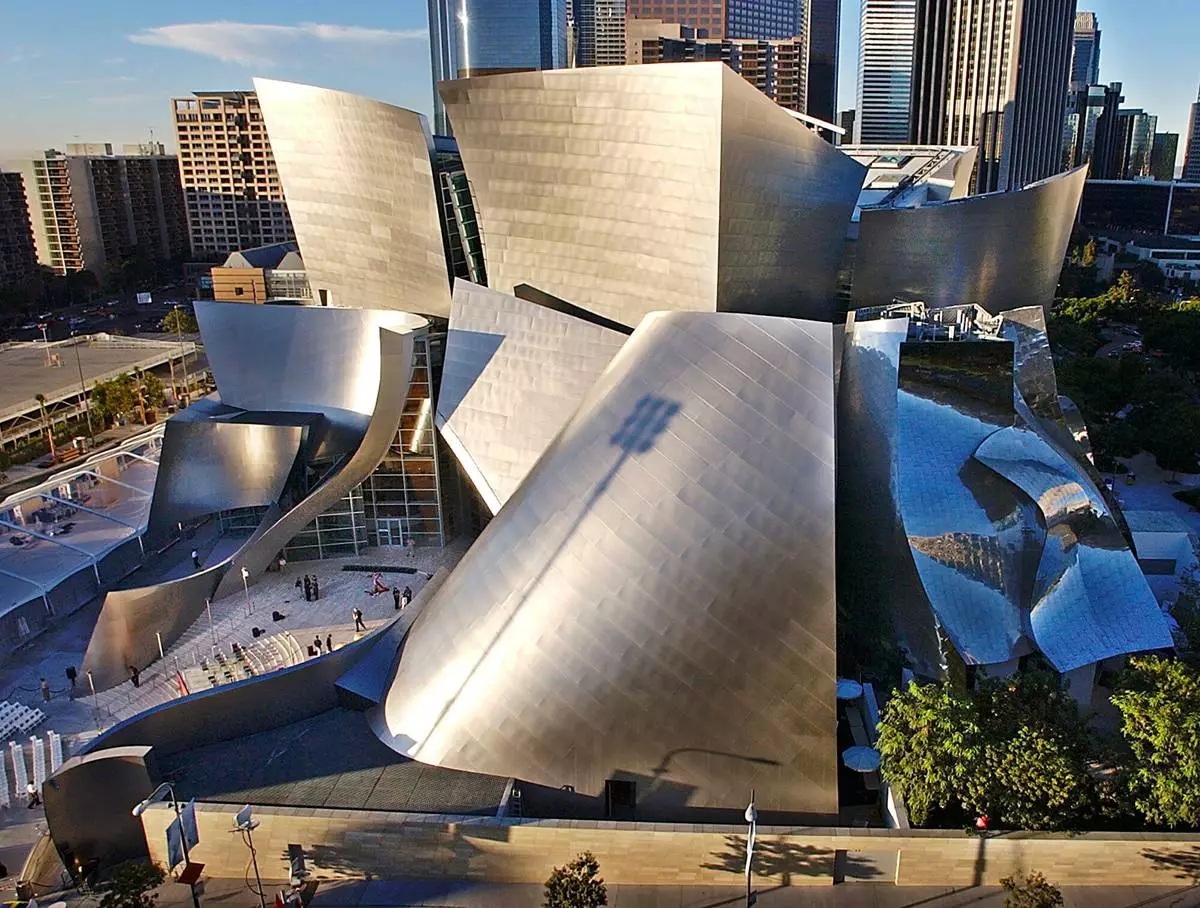
FILE - This Oct. 20, 2003 file photo shows early morning sun illuminating the new Walt Disney Concert Hall in downtown Los Angeles. (AP Photo/Nick Ut, file)
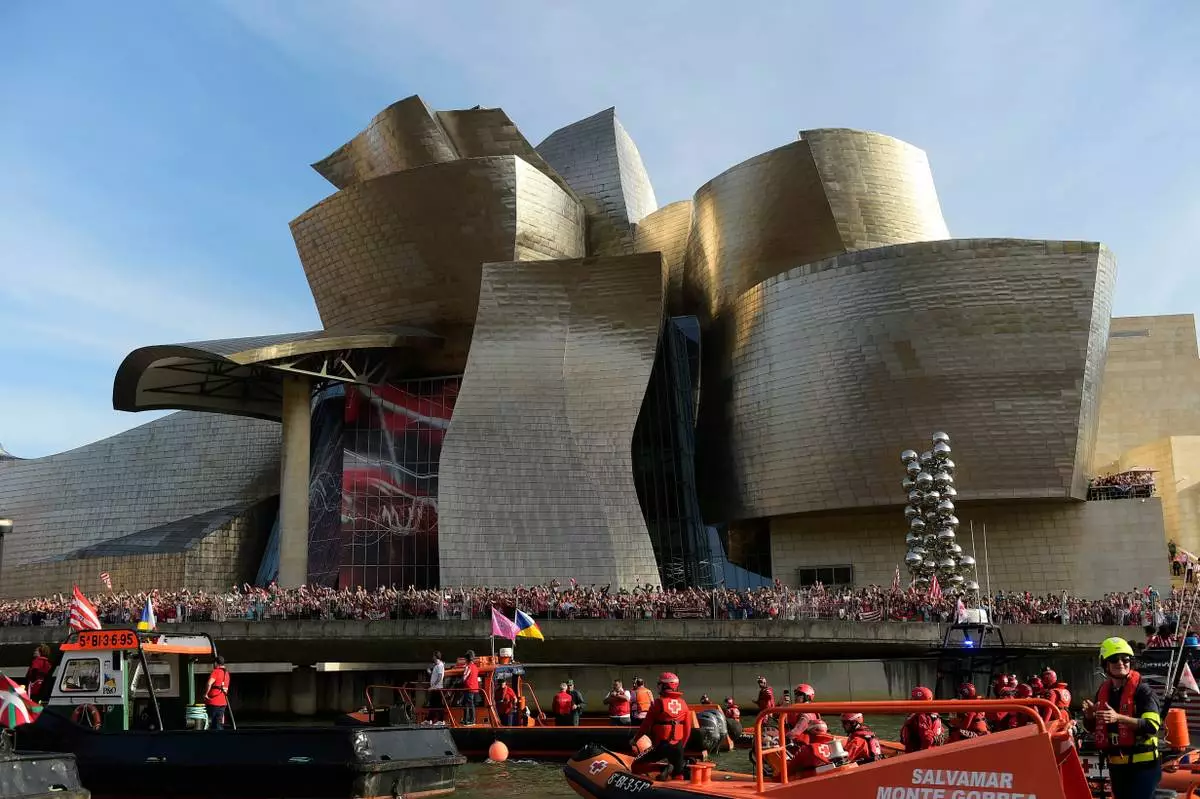
FILE - Athletic Bilbao fans wait in front of the Guggenheim museum as support boats pass before team celebrations on the Nervion Estuary in Bilbao, Spain, Thursday, April 11, 2024. (AP Photo/Alvaro Barrientos, File)
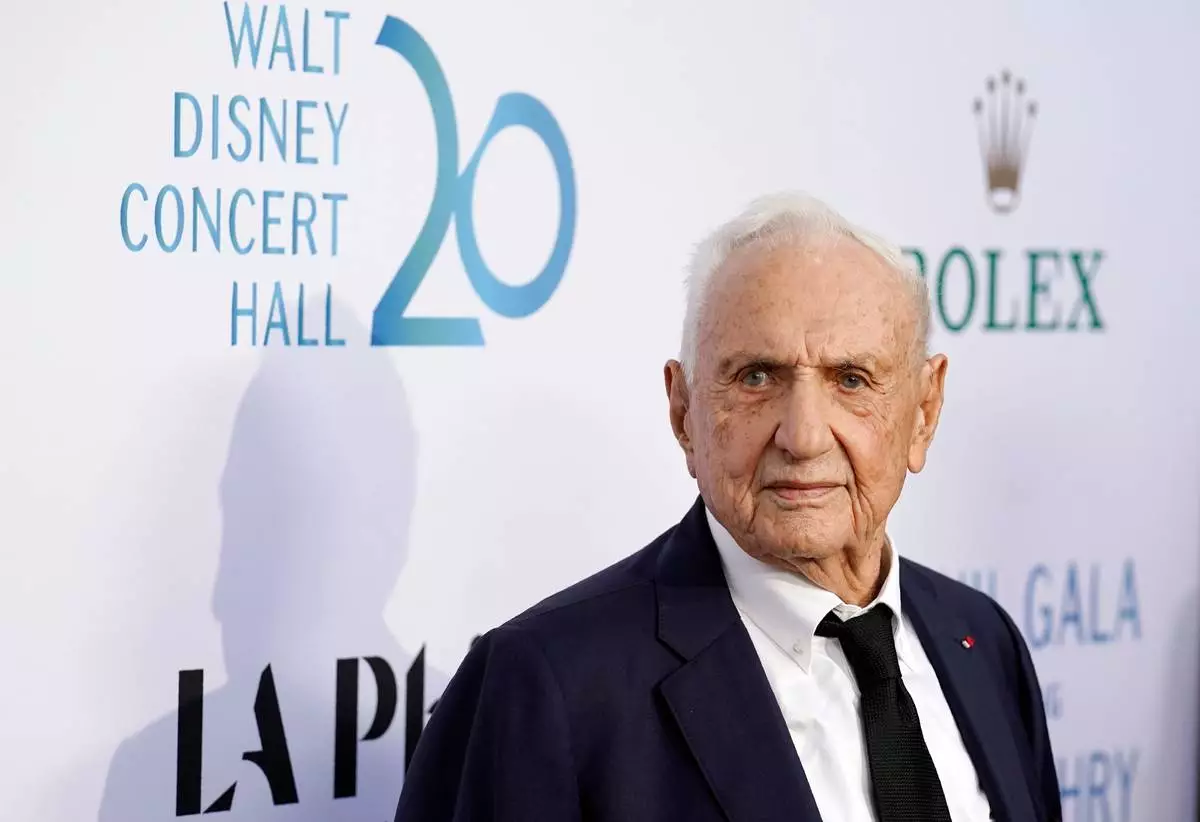
FILE - Honoree and Walt Disney Concert Hall architect Frank Gehry poses at the 2023 Los Angeles Philharmonic Gala, Thursday, Oct. 5, 2023, at Walt Disney Concert Hall in Los Angeles. (AP Photo/Chris Pizzello, File)
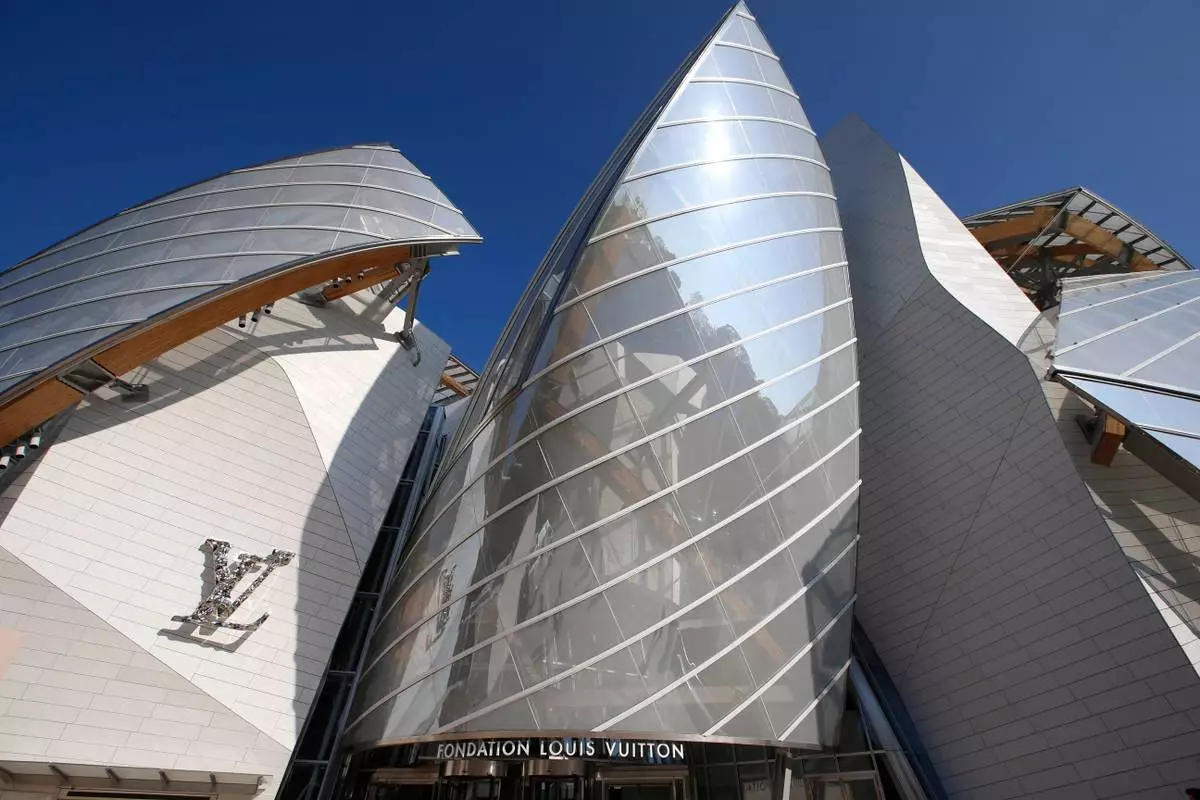
FILE - The Louis Vuitton Foundation building designed by American architect Frank Gehry is pictured before the presentation of Louis Vuitton's Spring/Summer 2015 ready-to-wear fashion collection in Paris, Wednesday, Oct. 1, 2014. (AP Photo/Francois Mori, File)
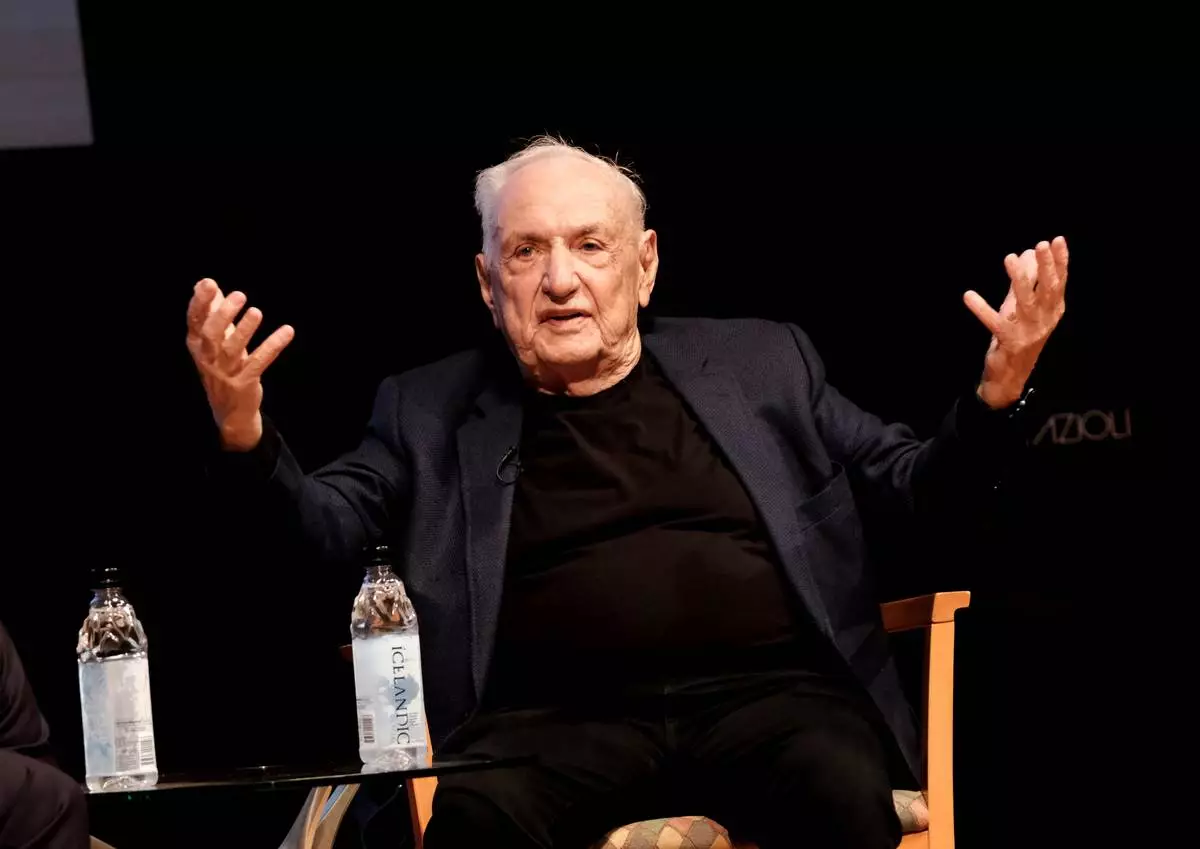
FILE - Architect Frank Gehry describes his concert hall design at the Colburn School during an unveiling in downtown Los Angeles on Wednesday, March 16, 2022. (AP Photo/Richard Vogel, File)