As temperatures fall in Beijing, the city's ski season is now in full swing, underscoring the rapid expansion and popularity of snow and ice sports in China since the staging of the 2022 Winter Olympics.
The Yanqing Olympic Zone, which served as the Alpine skiing venue for the Beijing Winter Games, is now gearing up for another busy season. The resort is currently producing snow for a 6,000-square-meter beginner area as it prepares to welcome visitors of all ages, with more and more newbies keen to try their hand at the sport. "Because winter sports are becoming more popular, we're seeing more visitors with children, teenagers and families. Although our park is mainly known for its advanced slopes, we've been continuously expanding and improving our facilities for beginners to meet the needs of customers in recent years," said Liu Xiyao, general manager of the Yanqing Olympic Zone.
The resort's snow may be man-made but meets Olympic standards, offering high-quality conditions for skiers of all levels, Liu said.
For more advanced skiers, she said a spectacular 14-km-long trail will open to the public this month. With a vertical drop of 925 meters, it ranks among the largest in Asia.
China will be home to 748 ski resorts by the end of this year, but Yanqing remains a top choice for Beijing residents thanks to its Olympic pedigree, scale, and proximity to the city.
"The ski runs are quite long. The snow quality is excellent. The beginner slope stretches 14 kilometers, which is perfect for newcomers," said one skier.
"Even though it's a weekday today, there are quite a lot of people here. There are many advanced skiers too, and the atmosphere is fantastic. The long single-run distance really helps improve your skills," said another.
For many, renting equipment at the resort is the easiest option, with all the gear you need conveniently being available right on site. But as more people take up the sport, a growing number are choosing to invest in their own gear, and specialty retailers in downtown Beijing are stepping in to meet that demand.
At one building dedicated to ski and snowboard equipment, enthusiasts can find everything from all-mountain skis and freestyle boards to technical outerwear.
"We're still quite young in China, but things are definitely moving in the right direction. We've gone from a brand which only the core like freestyle kids knew about. And now we're in almost every key resort and key retailers throughout the country and a strong presence online as well," said Alex Simpson, head of International Markets and direct-to-consumer marketing of Faction, a Swiss snow-sports brand.
Simpson said Faction has become a leading name in China's freestyle ski community while also drawing interest with its versatile all-mountain skis.
He pointed out that the brand's growth reflects the rising sophistication of China's ski consumers, driven by the post-Olympic momentum and the expansion of natural-terrain skiing in regions such as northwest China's Xinjiang Uygur Autonomous Region.
"So at the moment we're doing about 2,500 pairs in China. So growing around 20 percent each year. I think what's remarkable is that despite being relatively new in China and definitely, it being one of the newest countries that we operate in, it's already the fourth largest country for us globally. And on e-commerce, it's our second largest globally," Simpson said.
According to the China Ski Industry White Paper, the number of skiers nationwide grew by nearly 13 percent last season, reaching 26 million. Analysts say China is already the world's largest beginner market and is well on track to become the world's biggest ski market by 2035.
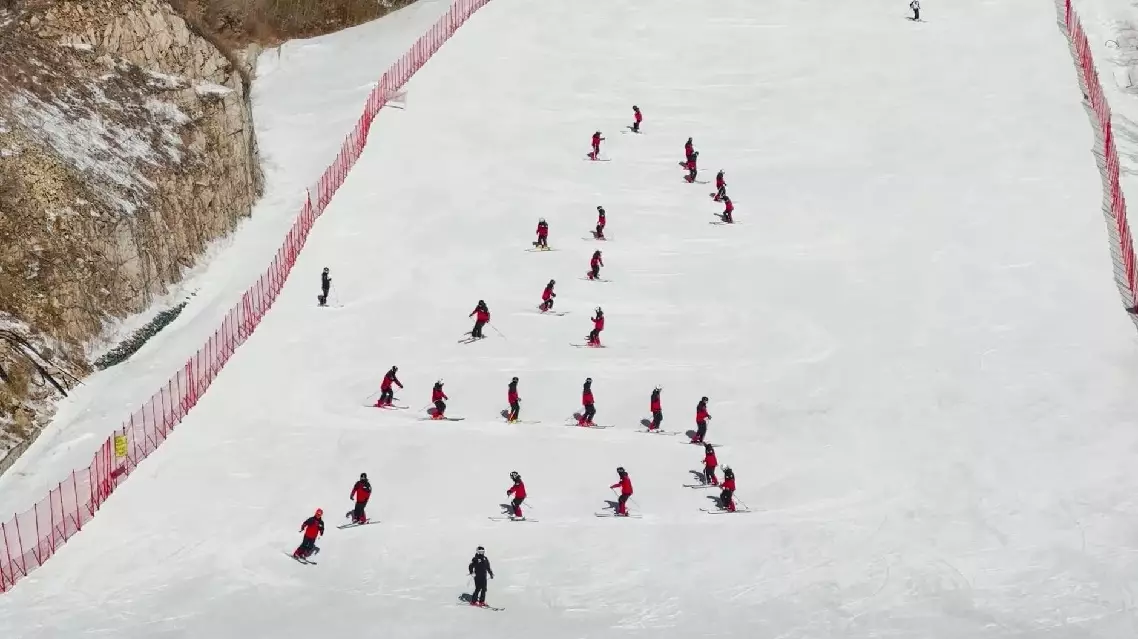
Beijing's ski season gets underway as popularity of winter sports snowballs in China