Skip to Content Facebook Feature Image

Hegseth put troops at risk by sharing sensitive plans on personal phone, Pentagon watchdog finds

News

Hegseth put troops at risk by sharing sensitive plans on personal phone, Pentagon watchdog finds
News

News

Hegseth put troops at risk by sharing sensitive plans on personal phone, Pentagon watchdog finds

2025-12-05 04:39 Last Updated At:04:50

WASHINGTON (AP) — Defense Secretary Pete Hegseth put U.S. troops at risk by sharing sensitive plans about an upcoming military strike in Yemen on his personal phone, according to a Pentagon inspector general's report made public Thursday that criticized the use of unapproved messaging apps and devices across the Defense Department.

Hegseth had the authority to declassify the material he shared with others in a Signal chat, the watchdog found. But it said the release of sensitive details about the strike on Houthi militants violated internal Pentagon rules about handling sensitive information that could put service members or their missions in danger.

The report noted that the information that Hegseth sent — the quantity and strike times of manned U.S. aircraft over hostile territory about two hours to four hours before those strikes — “created a risk to operational security that could have resulted in failed U.S. mission objectives and potential harm to U.S. pilots.”

“If this information had fallen into the hands of U.S. adversaries, Houthi forces might have been able to counter U.S. forces or reposition personnel and assets to avoid planned U.S. strikes,” the report said.

Hegseth’s use of the app came to light when a journalist, Jeffrey Goldberg of The Atlantic, was inadvertently added to a Signal text chain by then-national security adviser Mike Waltz. Hegseth also created another Signal chat with 13 people, including his wife and brother, where he shared similar details of the same strike.

The report's nuanced findings — that Hegseth's actions put troops at risk but that he had the right to declassify the material — are not likely to relieve the pressure on the former Fox News Channel host.

He also is facing scrutiny on Capitol Hill over a news report that a follow-up strike on an alleged drug-smuggling boat in the Caribbean Sea in September killed survivors after Hegseth had issued a verbal order to “kill everybody.” A Navy admiral who oversaw the operation disputed in a closed-door meeting with lawmakers Thursday that Hegseth gave such an order.

Hegseth wrote on social media about the inspector general’s report: “No classified information. Total exoneration. Case closed. Houthis bombed into submission.” It comes after Pentagon press secretary Kingsley Wilson this summer called the investigation “a witch hunt and a total sham and being conducted in bad faith."

Hegseth's Signal messages included particulars about the timing and location of the attack as well as the types of weapons and aircraft to be used. He later said the information he shared was “informal, unclassified."

The report noted that while Hegseth had the power to declassify the material in his position as defense secretary, Pentagon policy prohibits the use of personal devices or nonapproved commercial apps such as Signal to transmit “nonpublic or classified” material.

Signal uses end-to-end encryption to secure direct messages and group chats. This safeguard has made Signal an increasingly popular option for many people, not just national security officials.

Signal is considered more secure than other messaging, but it is not foolproof. Those using the service — and their devices — are vulnerable to phishing or other digital attacks based on impersonation. As Hegseth’s use of Signal shows, there are no controls on who can be added to group chats or what kind of sensitive material can be sent.

The defense secretary declined to be interviewed for the watchdog's review. In a one-page statement to the inspector general, Hegseth said he had the authority to declassify the information he was sharing on Signal and that there “was nothing classified in this text.”

“There were no locations or targets identified,” he wrote. “There were no details that would endanger our troops or the mission.”

Hegseth said he was only sharing “an unclassified summary” of operations and that the full details of what was happening were shared separately on a secure network used by the military.

The information he shared on Signal was limited to the “overt actions” of U.S. forces, which he said “would be readily apparent to any observer in the area.”

The revelations are drawing close scrutiny. Democratic lawmakers and a small number of Republicans said Hegseth's posting of the information to the Signal chats before the military jets had reached their targets potentially put those pilots’ lives at risk.

Lawmakers also noted that if lower-ranking members of the military had acted similarly, they would have been fired or severely disciplined for failing to maintain operational security.

The inspector general's office recommended better training on information security for Department of Defense employees. It also noted several earlier instances when personnel used personal devices or unapproved apps for government business, and said that was one reason its recommendations were not focused on Hegseth's actions alone.

"We are not making any recommendations in this report related to the Secretary’s use of Signal to send sensitive nonpublic information because it represented only one instance of an identified, DoD-wide issue," the investigators wrote.

In one example, investigators found that in the early days of the COVID-19 pandemic, some defense officials used personal phones or laptops or nonapproved video conferencing systems because the department did not have policies to support remote work.

The use of nonapproved devices and apps can also make it harder for officials to retain government records in compliance with the law, the report noted.

The Republican and Democratic leaders of the Senate Armed Services Committee, who had requested the investigation earlier this year, offered notably diverging takeaways from the report.

Republican Sen. Roger Wicker of Mississippi, the chairman, said in a statement that it’s “clear from the reports that the Secretary acted within his authority to communicate the information in question to other cabinet level officials.”

But Wicker said senior leaders also need more tools to share classified information “in real time and a variety of environments.”

“I think we have some work to do in providing those tools to our national security leaders,” Wicker said.

Sen. Jack Reed of Rhode Island, the committee’s top Democrat, said Hegseth violated military regulations and showed “reckless disregard for the safety American servicemembers.”

“These were precise strike timings and locations that, had they fallen into enemy hands, could have enabled the Houthis to target American pilots,” Reed said in a statement, adding that anyone else would have faced “severe consequences, including potential prosecution.”

AP Congressional Correspondent Lisa Mascaro contributed to this report.

Defense Secretary Pete Hegseth speaks during a Cabinet meeting at the White House, Tuesday, Dec. 2, 2025, in Washington. (AP Photo/Julia Demaree Nikhinson)
Defense Secretary Pete Hegseth speaks during a Cabinet meeting at the White House, Tuesday, Dec. 2, 2025, in Washington. (AP Photo/Julia Demaree Nikhinson)
COPENHAGEN, Denmark (AP) — More than 200 years after being sunk by Adm. Horatio Nelson and the British fleet, a Danish warship has been discovered on the seabed of Copenhagen Harbor by marine archaeologists.

Working in thick sediment and almost zero visibility 15 meters (49 feet) beneath the waves, divers are working against the clock to unearth the 19th-century wreck of the Dannebroge before it becomes a construction site in a new housing district being built off the Danish coast.

Denmark’s Viking Ship Museum, which is leading the monthslong underwater excavations, announced its findings on Thursday, 225 years to the day since the Battle of Copenhagen in 1801.

“It’s a big part of the Danish national feeling,” said Morten Johansen, the museum’s head of maritime archaeology.

A great deal has been written about the battle “by very enthusiastic spectators, but we actually don’t know how it was to be onboard a ship being shot to pieces by English warships and some of that story we can probably learn from seeing the wreck, Johansen said.

In the Battle of Copenhagen, Nelson and the British fleet attacked and defeated Denmark’s navy as it formed a protective blockade outside the harbor.

Thousands were killed and wounded during the brutal hourslong naval clash, considered one of Nelson’s “great battles.” The intention was to force Denmark out of an alliance of Northern European powers, including Russia, Prussia and Sweden.

At the center of the fighting was the Danish flagship, the Dannebroge, commanded by Commodore Olfert Fischer.

The 48-meter (157-foot) Dannebroge was Nelson’s main target. Cannon fire tore through its upper deck before incendiary shells sparked a fire aboard.

“(It was) a nightmare to be on board one of these ships,” Johansen said. “When a cannonball hits a ship, it’s not the cannonball that does the most damage to the crew, it’s wooden splinters flying everywhere, very much like grenade debris.”

The battle also is believed to have inspired the phrase “to turn a blind eye.” After deciding to ignore a superior’s signal, Nelson, who had lost sight in his right eye, reportedly remarked: “I have only one eye, I have a right to be blind sometimes.”

Nelson eventually offered a truce and a ceasefire was later agreed with Denmark’s Crown Prince Frederik.

The stricken Dannebroge slowly drifted northward and exploded. Records say the sound created a deafening roar across Copenhagen.

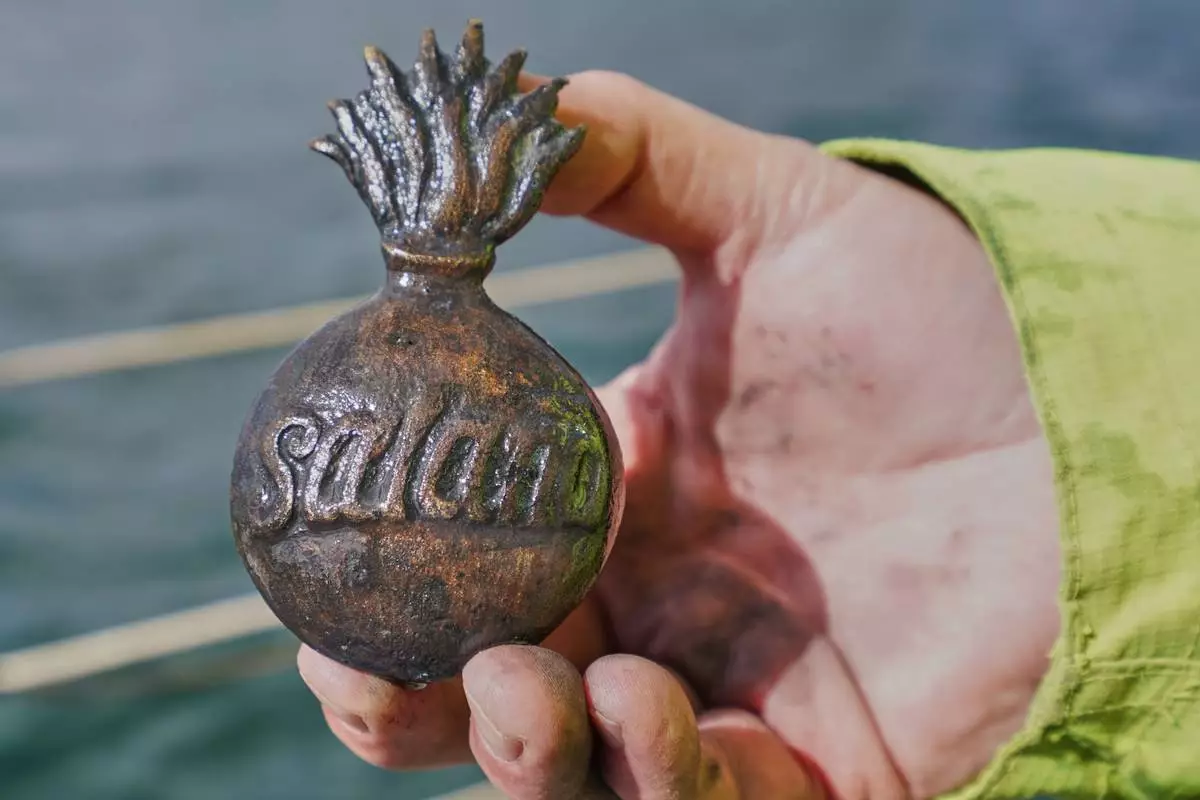
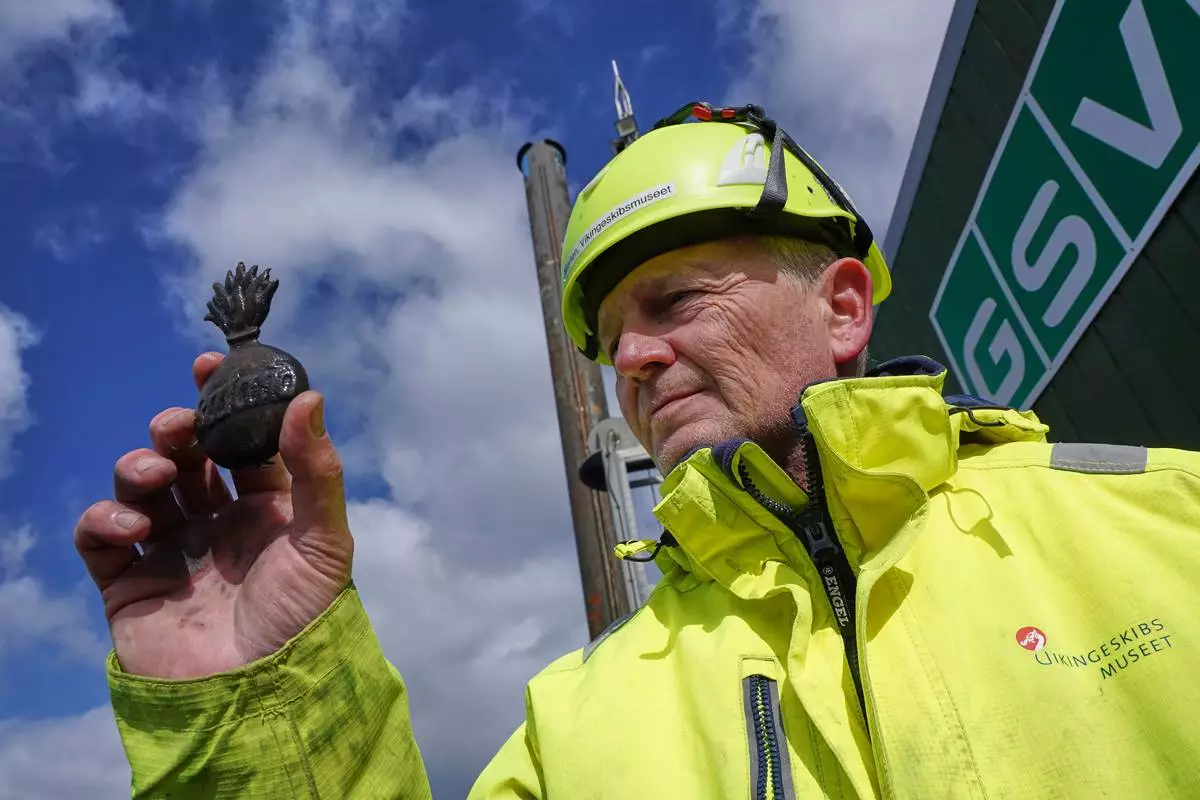
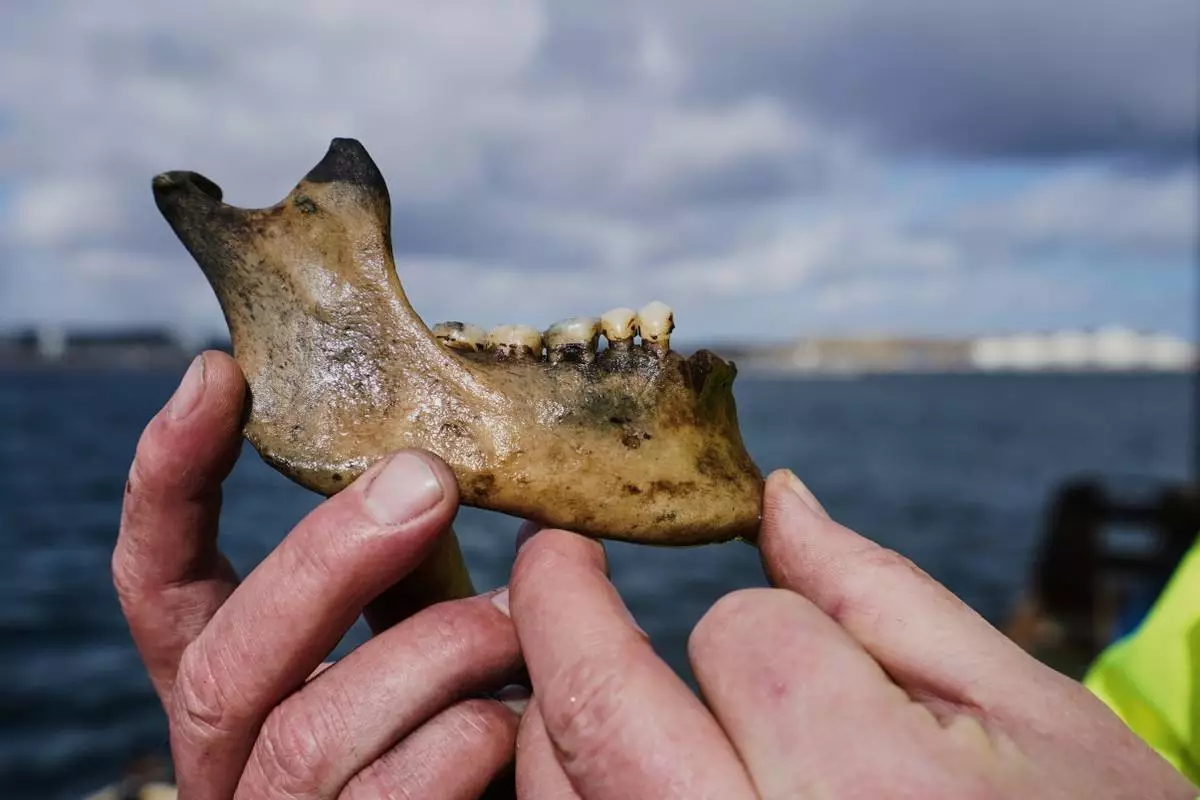
Marine archaeologists have discovered two cannons, uniforms, insignia, shoes, bottles and even part of a sailor’s lower jaw, perhaps one of the 19 unaccounted-for crew members who likely lost their lives that day.

The dig site will soon be enveloped by construction work for Lynetteholm, a megaproject to build a new housing district in the middle of Copenhagen Harbor that is expected to be completed by 2070.

Marine archaeologists began surveying the area late last year, targeting a spot thought to match the flagship’s final position.

Experts say the sizes of the wooden parts found match old drawings. Dendrochronological dating, the method of using tree rings to establish the age of wood, match the year the ship was built. They also say the darkened dig site is full of cannonballs, a hazard for divers navigating waters darkened by clouds of silt stirred up from the seabed.

“Sometimes you can’t see anything, and then you really have to just feel your way, look with your fingers instead of with your eyes,” diver and maritime archaeologist Marie Jonsson said.

Chronicled in books and painted on canvases, the 1801 battle is deeply embedded in Denmark’s national story.

Archaeologists hope their discoveries may help reexamine the event that shaped the Scandinavian country and perhaps uncover personal stories of those who went into battle on that day 225 years ago.

“There are bottles, there are ceramics, and even pieces of basketry,” Jonsson said. “You get closer to the people onboard.”

Morten Johansen, head of maritime archaeology at Denmark's Viking Ship Museum, shows part of a human lower jawbone recovered from the wreck of Danish flagship "Dannebroge" that sank during the Battle of Copenhagen in 1801, in Copenhagen, Denmark, Tuesday, March 31, 2026. (AP Photo/James Brooks)

Morten Johansen, head of maritime archaeology at Denmark's Viking Ship Museum, shows part of a human lower jawbone recovered from the wreck of Danish flagship "Dannebroge" that sank during the Battle of Copenhagen in 1801, in Copenhagen, Denmark, Tuesday, March 31, 2026. (AP Photo/James Brooks)

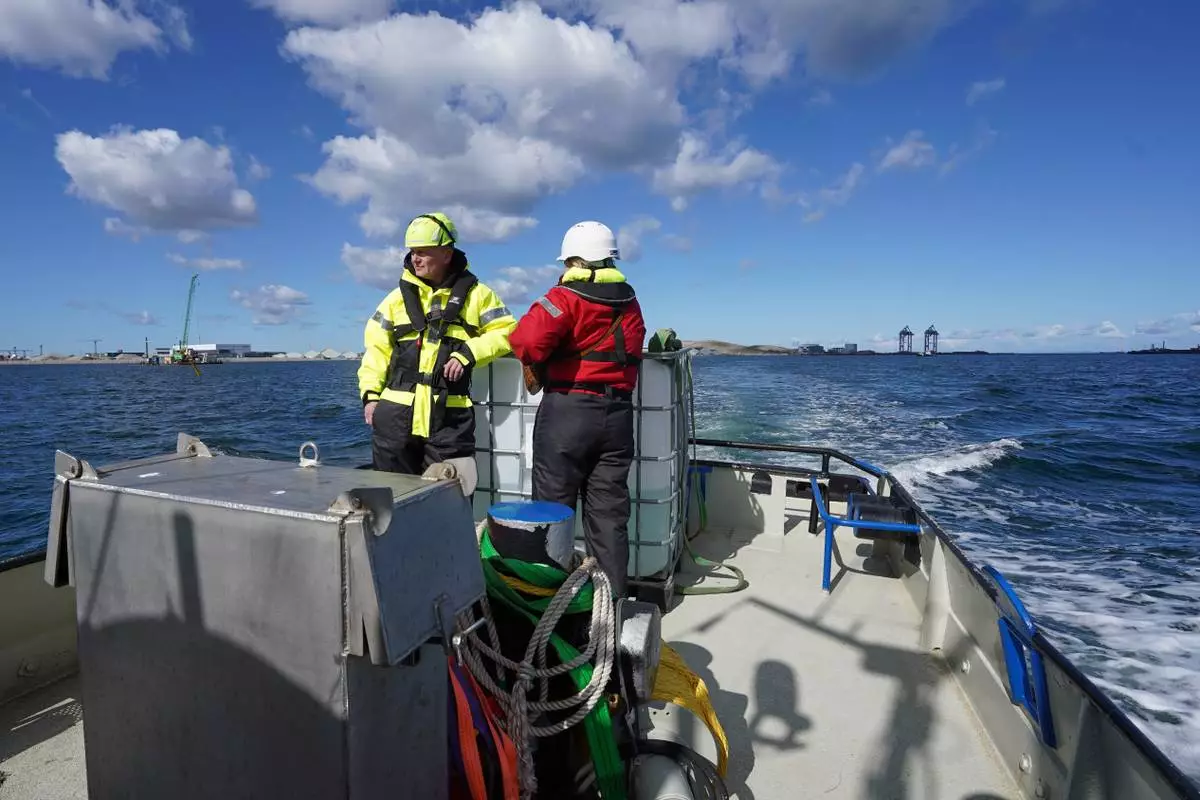
Archaeologists sail with boat through the harbor in Copenhagen, Denmark, Tuesday, March 31, 2026. (AP Photo/James Brooks)

Archaeologists sail with boat through the harbor in Copenhagen, Denmark, Tuesday, March 31, 2026. (AP Photo/James Brooks)

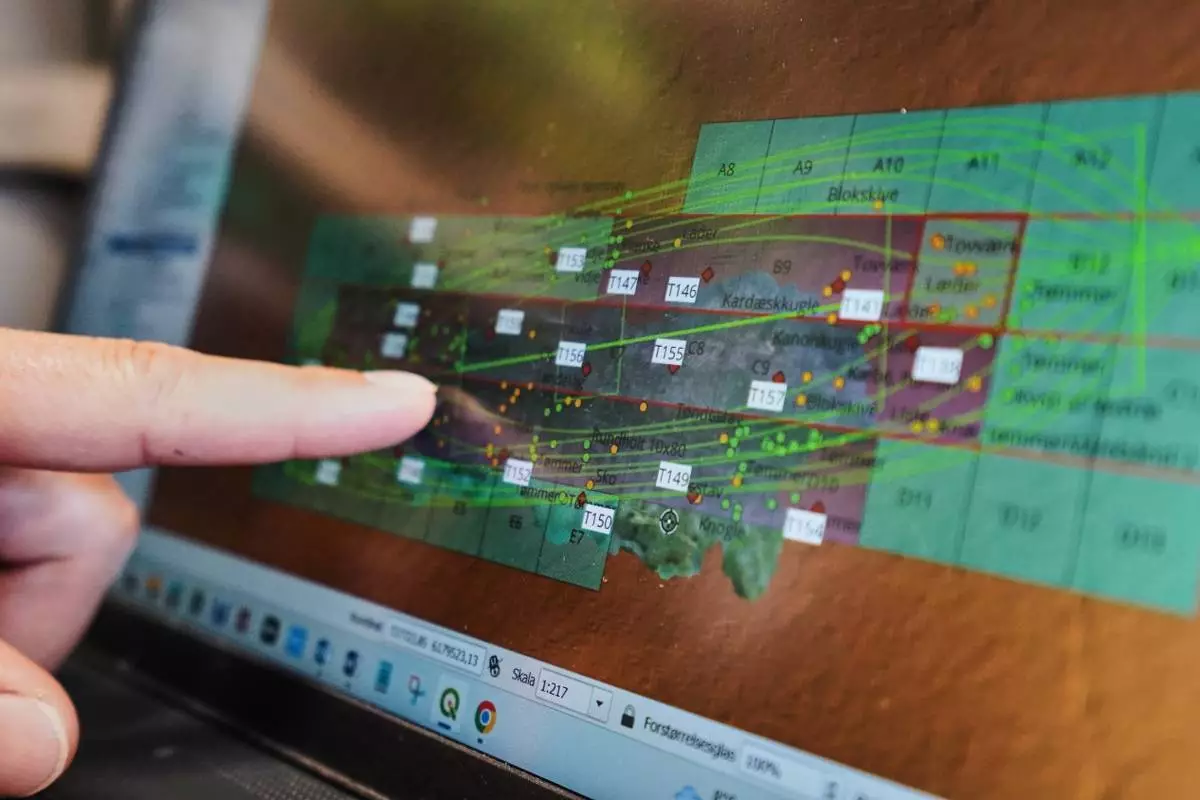
An archaeologist points to a computer screen, showing a map of the wreck of Danish flagship "Dannebroge" that sank during the Battle of Copenhagen in 1801. in Copenhagen, Denmark, Tuesday, March 31, 2026. (AP Photo/James Brooks)

An archaeologist points to a computer screen, showing a map of the wreck of Danish flagship "Dannebroge" that sank during the Battle of Copenhagen in 1801. in Copenhagen, Denmark, Tuesday, March 31, 2026. (AP Photo/James Brooks)

Morten Johansen, head of maritime archaeology at Denmark's Viking Ship Museum, shows a metal insignia recovered from the wreck of Danish flagship "Dannebroge" that sank during the Battle of Copenhagen in 1801, in Copenhagen, Denmark, Tuesday, March 31, 2026. (AP Photo/James Brooks)

Morten Johansen, head of maritime archaeology at Denmark's Viking Ship Museum, shows a metal insignia recovered from the wreck of Danish flagship "Dannebroge" that sank during the Battle of Copenhagen in 1801, in Copenhagen, Denmark, Tuesday, March 31, 2026. (AP Photo/James Brooks)

Morten Johansen, head of maritime archaeology at Denmark's Viking Ship Museum, shows a metal insignia recovered from the wreck of Danish flagship "Dannebroge" that sank during the Battle of Copenhagen in 1801, in Copenhagen, Denmark, Tuesday, March 31, 2026. (AP Photo/James Brooks)

Morten Johansen, head of maritime archaeology at Denmark's Viking Ship Museum, shows a metal insignia recovered from the wreck of Danish flagship "Dannebroge" that sank during the Battle of Copenhagen in 1801, in Copenhagen, Denmark, Tuesday, March 31, 2026. (AP Photo/James Brooks)

Recommended Articles