WASHINGTON (AP) — The Navy on Thursday released investigative reports into four mishaps that all involve the aircraft carrier USS Harry S. Truman while it was dispatched to counterattacks on shipping by Yemen’s Houthi rebels.
The four reports cover a friendly fire incident in December 2024 that saw the cruiser USS Gettysburg shoot at two fighter jets from the Truman, downing one, as well as the carrier’s collision with a merchant vessel and the loss of two more jets to mishaps earlier this year.
Taken together, the reports paint a picture of an aircraft carrier that was not only beset by regular missile attacks that stressed the crew but other operational demands that put pressure on top leaders.
Here’s a closer look at the findings for each of the mishaps:
The Truman conducted its first defensive strike against Houthi positions and aircraft on Dec. 22, 2024, and other ships in the strike group spent several hours defending themselves against Houthi-launched anti-ship cruise missiles and attack drones.
The USS Gettysburg, one of the ships in the strike group, mistook several F/A-18F fighter jets from the carrier for more Houthi missiles and fired at two of them. The heavily redacted report largely faulted the sailors in the Gettysburg’s combat information center for being poorly trained and overly relying on technology.
The troops from one jet ejected before the missile struck, while the ship stopped the second missile shortly before impact.
Months later, in February, sailors aboard the ship told investigators that they were feeling the strain of “a pressurized schedule and a culture of ‘just get it done.’”
As the ship prepared to head back to the Red Sea following a port visit, it had to sail through the highly trafficked waters just outside the Suez Canal. Running behind schedule, an officer who was navigating drove the massive aircraft carrier at a speed that it would have needed almost a mile and a half to come to a stop after halting the engines. Investigators later said the speed was unsafe.
As a merchant ship moved into a collision path with the carrier, the officer in charge did not take enough action to move out of danger, the report found, listing his actions as the top cause for the collision.
Investigators also faulted other more senior officers on the ship, including the commander and the ship’s navigator, for not fully realizing the risks of the maneuvers required of the transit.
Once the ship was back in the Red Sea, crew stress did not abate. Capt. Christopher Hill, told investigators that the crew had been conducting combat operations and “flying everyday with little exception” since March 15.
The report said the ship was experiencing “a myriad of drone and cruise missile attacks, numerous combat operations, additional mishaps, and deployment extensions,” which drove up stress and took time away from regular maintenance and upkeep of the ship and equipment.
Amid one attack in April, the ship’s bridge ordered a sharp turn to avoid an incoming Houthi missile, while sailors in the carrier’s hangers were moving aircraft around ahead of the next day’s operations.
Procedures called for the hangar doors to be shut, but a F/A-18F fighter jet was in the way.
As the sailors began moving the jet, officers began a set of sharp turns but failed to let sailors in the hangar know. As the Truman began to tilt under the turn, the jet began to slip.
The sailors moving the jet later told investigators that as the plane slipped off the deck and into the ocean, its landing wheels were freely rolling despite the sailor inside the plane “actively attempting to brake.”
Contributing was the fact that the deck was far dirtier and more slippery than normal partly, because “high operational tempo of combat flight operations impeded the regular 10-day scrubs” that were needed.
Ultimately, the investigation said that with the jet underwater, it was impossible to know for sure why its brakes didn’t engage but they recommend stripping the sailor responsible for applying the brakes of his qualifications because that service member “demonstrated deficiencies in required knowledge and system understanding.”
In the final mishap, another F/A-18F fighter jet went overboard while trying to land on the Truman in May 2025. The investigation found that a cable designed to bring the 50,000-pound jet to a halt in just a few hundred feet snapped mid-landing.
The subsequent investigation revealed that poor maintenance on the equipment meant that the system of cables that connected the wires on the flight deck to the braking hydraulics below deck was missing a part responsible for keeping a massive connecting pin in place and immobile.
With that missing, the investigators found that the connecting pin slowly moved out of place over at least 50 landings until it finally failed and sheared off.
After reading the investigation, the commander of Truman’s strike group at the time, Rear Adm. Sean Bailey, said that not only was “this mishap was entirely preventable” but that “the hard reality is that multiple individuals at all levels of leadership were complicit” in allowing the maintenance of the arresting gear “to degrade to the level of abject failure.”
Investigators, however, also noted that “maintenance support personnel struggled to balance maintenance requirements with operational requirements” and that “multiple personnel identified operational tempo as one of the most significant challenges” for sailors tasked with maintaining the equipment.
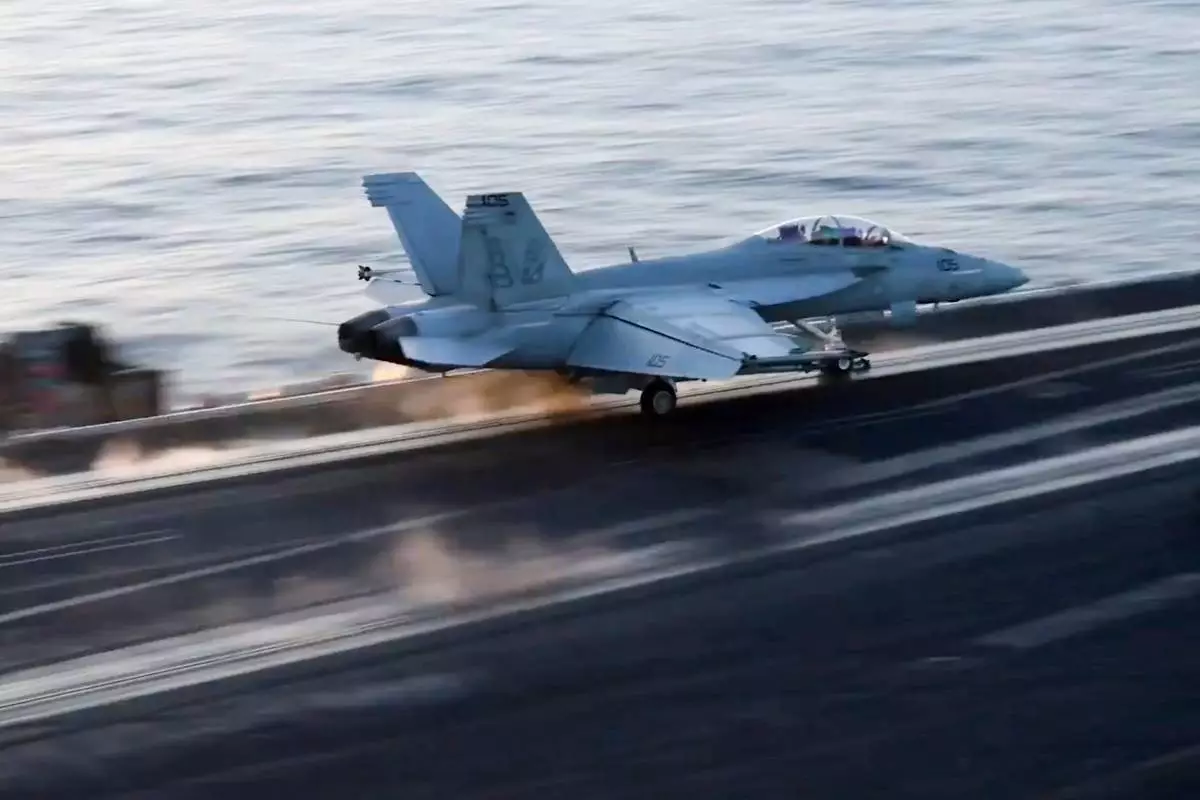
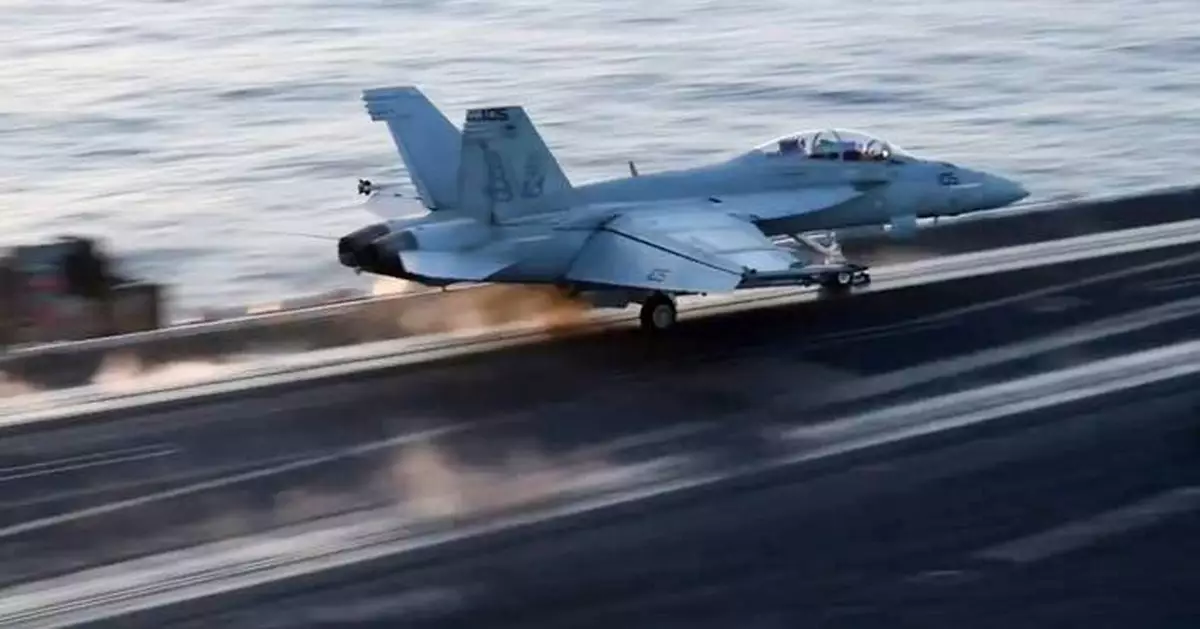
FILE - This image taken from video provided by the U.S. Navy shows an aircraft launching from the USS Harry S. Truman in the Red Sea before airstrikes in Sanaa, Yemen, March 15, 2025. (U.S. Navy via AP, File)
NEW ORLEANS (AP) — Trump administration officials overseeing the immigration crackdown launched this week in New Orleans are aiming to make 5,000 arrests, a target that some city leaders who oppose the operation say is unrealistic and would require detainining more than just violent offenders.
It's an ambitious goal that would surpass the number of arrests during a two-month enforcement blitz this fall around Chicago, a region with a much bigger immigrant population than New Orleans. Records tracking the first weeks of the Chicago operation also showed most arrestees didn’t have a violent criminal record.
In Los Angeles — the first major battleground in President Donald Trump's aggressive immigration plan — roughly 5,000 people were arrested over the summer in an area where about a third of LA County's roughly 10 million residents are foreign-born.
“There is no rational basis that a sweep of New Orleans, or the surrounding parishes, would ever yield anywhere near 5,000 criminals, let alone ones that are considered ‘violent’ by any definition,” New Orleans City Council President J.P. Morrell said Thursday.
Census Bureau figures show the New Orleans metro area had a foreign-born population of almost 100,000 residents last year, and that just under 60% were not U.S. citizens.
“The amount of violent crime attributed to illegal immigrants is negligible,” Morrell said, pointing out that crime in New Orleans is at historic lows.
Violent crimes, including murders, rapes and robberies, have fallen by 12% through October compared to a year ago, from a total of 2,167 violent crimes to 1,897 this year, according to New Orleans police statistics.
Federal agents in marked and unmarked vehicles began spreading out across New Orleans and its suburbs Wednesday, making arrests in home improvement store parking lots and patrolling neighborhoods with large immigrant populations.
Alejandra Vasquez, who runs a social media page in New Orleans that reports the whereabouts of federal agents, said she has received a flood of messages, photos and video since the operations began.
“My heart is so broken,” Vasquez said. “They came here to take criminals and they are taking our working people. They are not here doing what they are supposed to do. They are taking families.”
Several hundred agents from Customs and Border Protection and U.S. Immigration and Customs Enforcement are participating in the two-month operation dubbed “Catahoula Crunch.”
U.S. House Speaker Mike Johnson, who is from Louisiana, is among the state's Republicans supporting the crackdown. “Democrats’ sanctuary city policies have failed — making our American communities dangerous. The people of our GREAT city deserve better, and help is now on the ground,” Johnson posted on social media.
About two dozen protesters were removed from a New Orleans City Council meeting Thursday after chants of “Shame” broke out. Police officers ordered protesters to leave the building, with some pushed or physically carried out by officers.
Planning documents obtained last month by The Associated Press show the crackdown is intended to cover southeast Louisiana and into Mississippi.
Homeland Security Department spokesperson Tricia McLaughlin said agents are going after immigrants who were released after arrests for violent crimes.
"In just 24 hours on the ground, our law enforcement officers have arrested violent criminals with rap sheets that include homicide, kidnapping, child abuse, robbery, theft, and assault,” McLaughlin said Thursday in a statement. Border Patrol and immigration officials have not responded to requests for details, including how many have been arrested so far.
She told CNN on Wednesday that "we will continue whether that will be 5,000 arrests or beyond.”
To come close to reaching their target numbers in New Orleans, immigrant rights group fear federal agents will set their sights on a much broader group.
New Orleans City councilmember Lesli Harris said “there are nowhere near 5,000 violent offenders in our region” whom Border Patrol could arrest.
“What we’re seeing instead are mothers, teenagers, and workers being detained during routine check-ins, from their homes and places of work,” Harris said. “Immigration violations are civil matters, not criminal offenses, and sweeping up thousands of residents who pose no threat will destabilize families, harm our economy.”
During the “Operation Midway Blitz” crackdown in Chicago that began in September, federal immigration agents arrested more than 4,000 people across the city and its many suburbs, dipping into Indiana.
Homeland Security officials heralded efforts to nab violent criminals, posting dozens of pictures on social media of people appearing to have criminal histories and lacking legal permission to be in the U.S. But public records tracking the first weeks of the Chicago push show most arrestees didn’t have a violent criminal record.
Of roughly 1,900 people arrested in the Chicago area from early September through the middle of October — the latest data available — nearly 300 or about 15% had criminal convictions on their records, according to ICE arrest data from the University of California Berkeley Deportation Data Project analyzed by The Associated Press.
The vast majority of those convictions were for traffic offenses, misdemeanors or nonviolent felonies, the data showed.
New Orleans, whose international flavor comes from its long history of French, Spanish, African and Native American cultures, has seen a new wave of immigrants from places in Central and South America and Asia.
Across all of Louisiana, there were more than 145,000 foreign-born noncitizens, according to the Census Bureau. While those numbers don't break down how many residents of the state were in the country illegally, the Pew Research Center estimated the number at 110,000 people in 2023.
This story has been corrected to show that about a third of LA County’s 10 million residents are foreign-born, not 10 million total.
Seewer reported from Toledo, Ohio. Associated Press journalists Sara Cline in Baton Rouge, Louisiana; Sophia Tareen in Chicago; Aaron Kessler in Washington, D.C.; and Michael Schneider in Orlando, Florida, contributed.
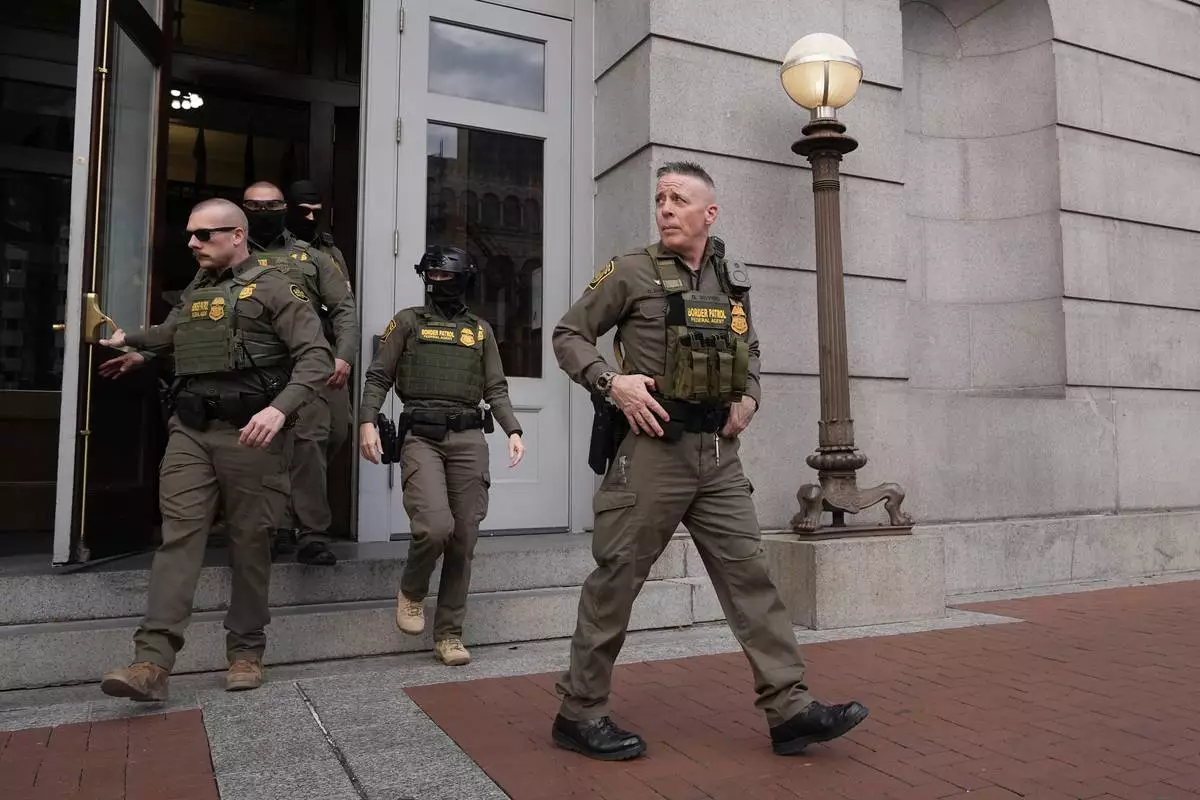
U.S. Border Patrol Commander at large Gregory Bovino, 1st right, walks on the street in New Orleans, La.,Wednesday, Dec. 3, 2025. (AP Photo/Gerald Herbert)
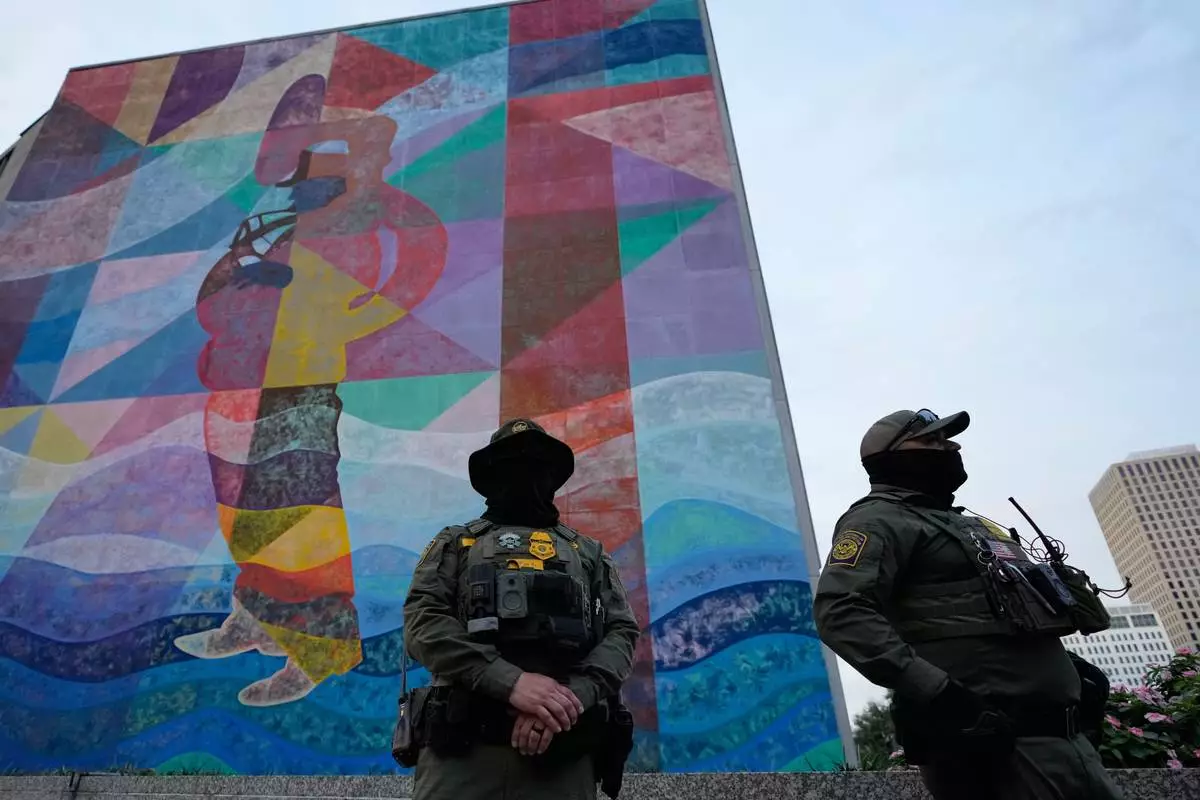
U.S. Border Patrol agents stand on the street in New Orleans, La.,Wednesday, Dec. 3, 2025. (AP Photo/Gerald Herbert)
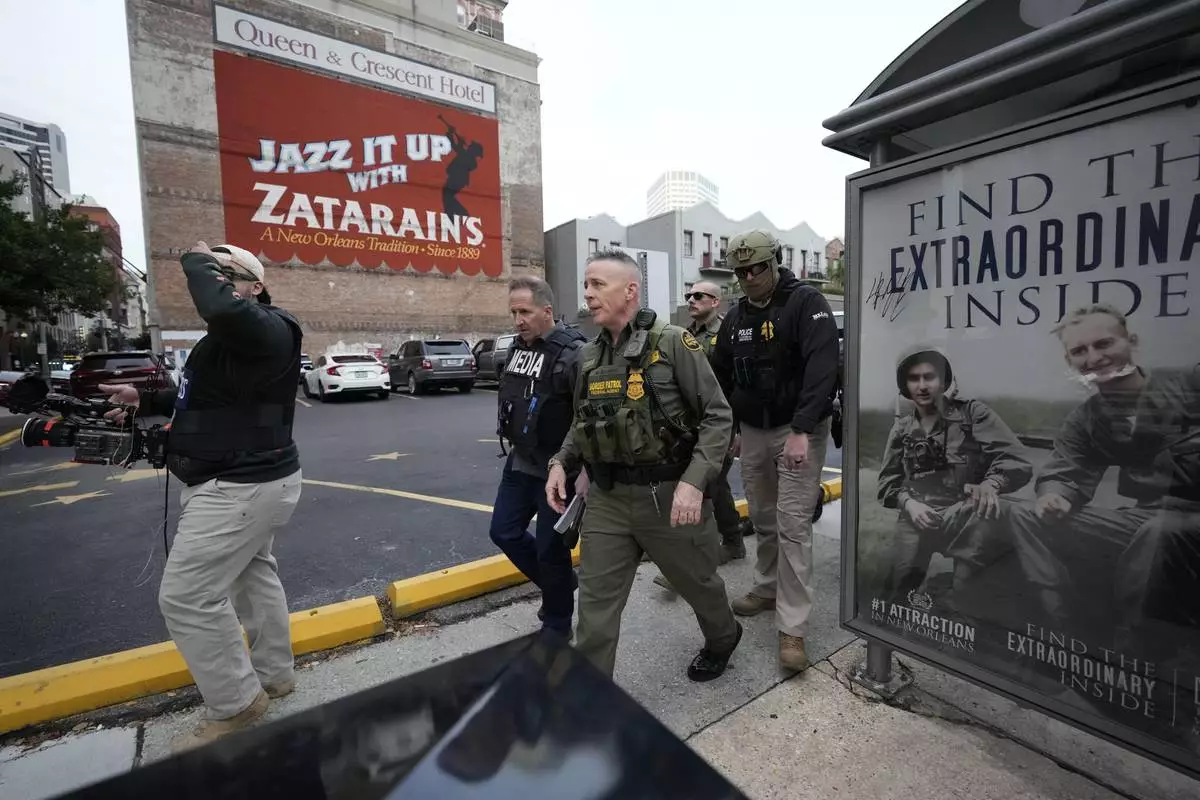
U.S. Border Patrol Commander at large Gregory Bovino, 3rd left, walks on the street in New Orleans, La.,Wednesday, Dec. 3, 2025. (AP Photo/Gerald Herbert)