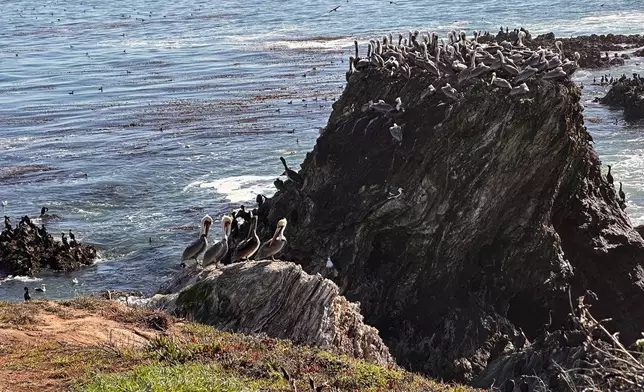
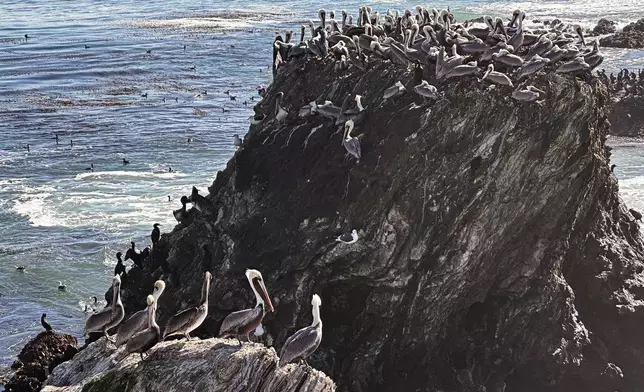
MORRO BAY, Calif. (AP) — On a jagged coastline in Central California, brown pelicans gather on rock promontories, packed in like edgy commuters as they take flight to feed on a vast school of fish just offshore. The water churns in whitecaps as the big-billed birds plunge beneath the surface in search of northern anchovies, Pacific sardines and mackerel.
If awkward and wobbly in appearance on land, they are graceful once airborne. The signature pouch dangling beneath the lower bill can scoop up to 3 gallons of water with every dip into the ocean — the largest pouch of any bird in the world.
Click to Gallery
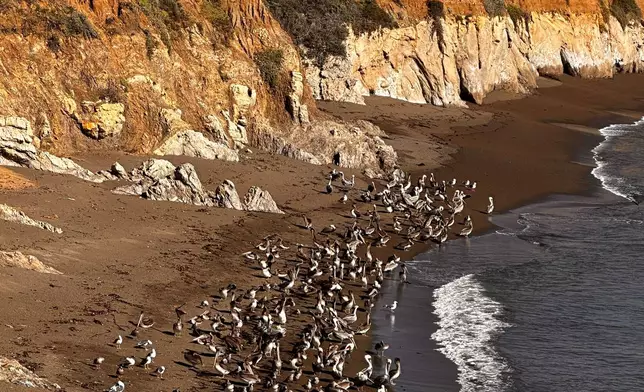
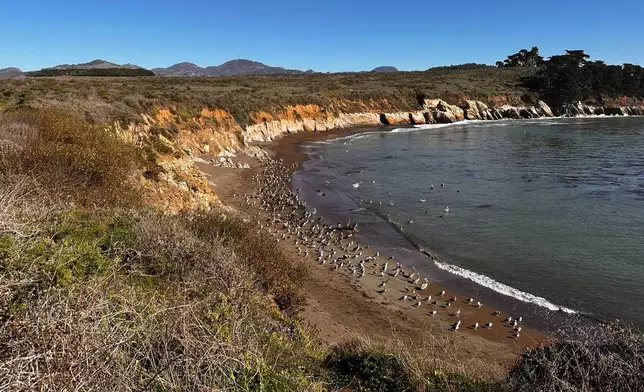
California brown pelicans and seagulls gather on a beach north of Morro Bay, Calif., Friday, Nov. 28, 2025. (AP Photo/Michael R. Blood)
California brown pelicans and seagulls gather on a beach north of Morro Bay, Calif., Friday, Nov. 28, 2025. (AP Photo/Michael R. Blood)
California brown pelicans crowd onto a rocky coastal bluff north of Morro Bay, Calif., Friday, Nov. 28, 2025. (AP Photo/Michael R. Blood)
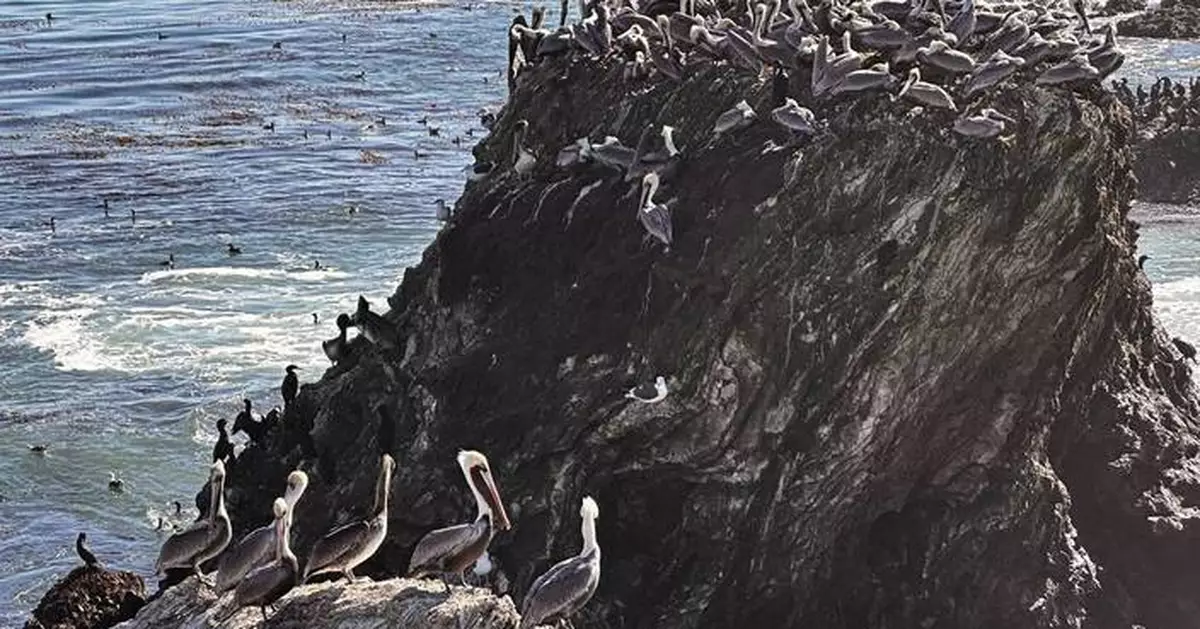
California brown pelicans and cormorants cling to a rocky outcropping along the Central California coast north of Morro Bay, Calif., Friday, Nov. 28, 2025. (AP Photo/Michael R. Blood)
It is what scientists call a “feeding frenzy.” And it is an encouraging sign for a bird that has struggled in recent years with a warming ocean, inconsistent breeding patterns and toxic algae blooms in Southern California.
“I would say the populations are somewhat stable, but some events are concerning,” says marine ornithologist Tammy Russell, a postdoctoral researcher at the University of California, San Diego, Scripps Institution of Oceanography.
The gorging seabirds are a “good sign for the marine environment,” Russell said.
On this warm, clear day, thousands of birds have populated the nearby beaches and cliffs, drawn by the abundant food. Cormorants and gulls mix with the pelicans. The incessant roar of the waves and the chorus of bird cries are all that can be heard on this jutting jawbone of coast.
The bird’s range along the Pacific coast extends from British Columbia, Canada, into Mexico. In their struggle for survival, Russell notes that the California brown pelican was once on the federal endangered species list, after a sharp population decline was attributed to the pesticide DDT, which causes eggshell thinning. The population recovered, and the bird was removed from the list in 2009, though it still faces multiple challenges.
They are large birds, with adults weighing about 8 pounds with a wingspan of nearly 7 feet. And because they are big, they need large volumes of fish each day, their favorite food.
"When they don’t get that, they can crash pretty quickly," Russell noted.
If the water warms, fish can move into deeper, colder water, making it more difficult for the birds to feed. Last year, scores of sick and starving pelicans were found in coastal California communities, and many others died. Wildlife authorities were baffled in 2022 when large numbers of California brown pelicans were found sick and dying.
Earlier this year, a toxic algae bloom poisoned pelicans and other marine animals along the coast.
Scientists are still learning how the birds react to changes in their environment, Russell said. They are now using electronic leg bands to follow the birds in their travels.
As the big birds gradually head south to islands off the California coast or Mexico to breed, “it's encouraging to see a group of pelicans feeding and doing well,” Russell said.
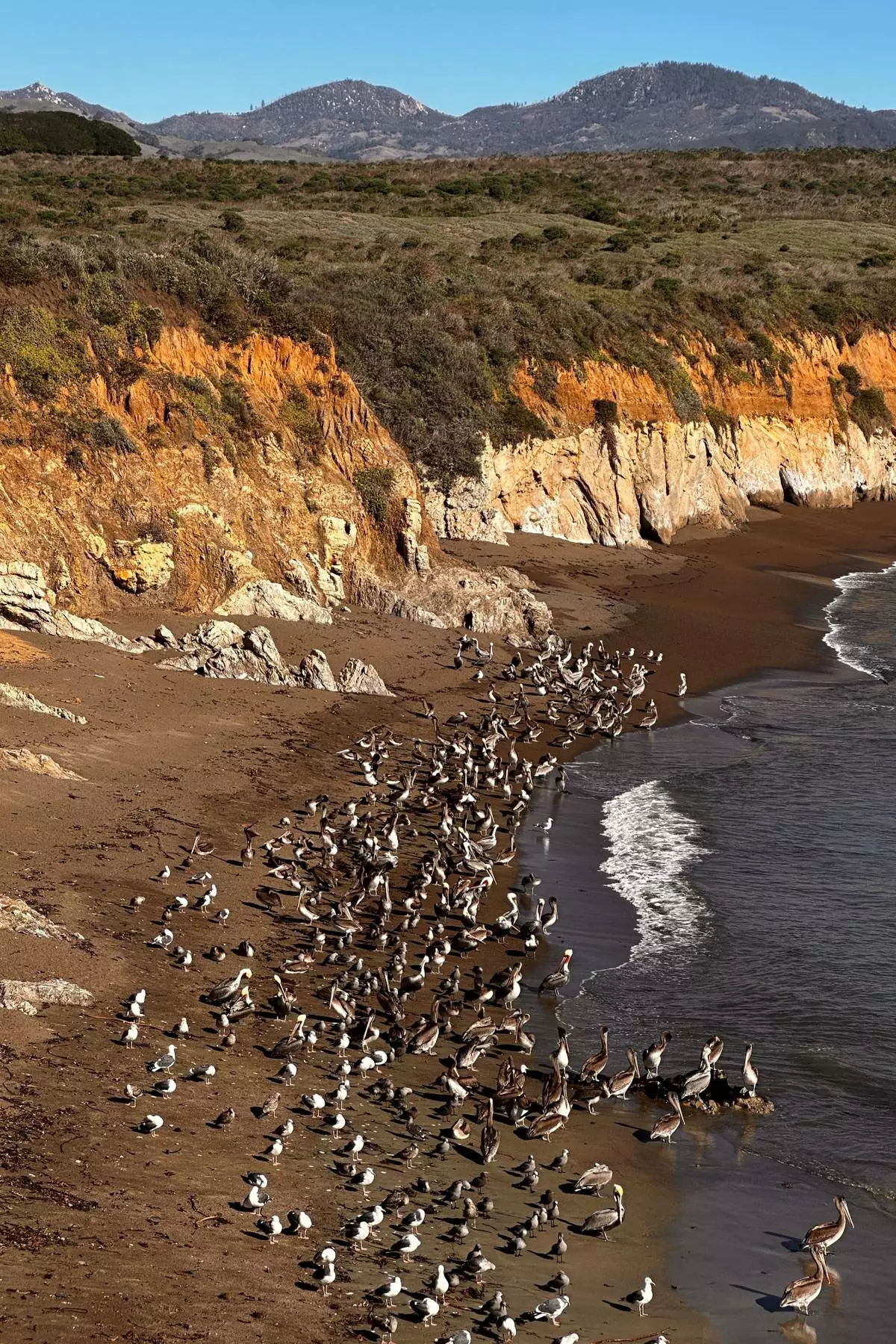
California brown pelicans and seagulls gather on a beach north of Morro Bay, Calif., Friday, Nov. 28, 2025. (AP Photo/Michael R. Blood)
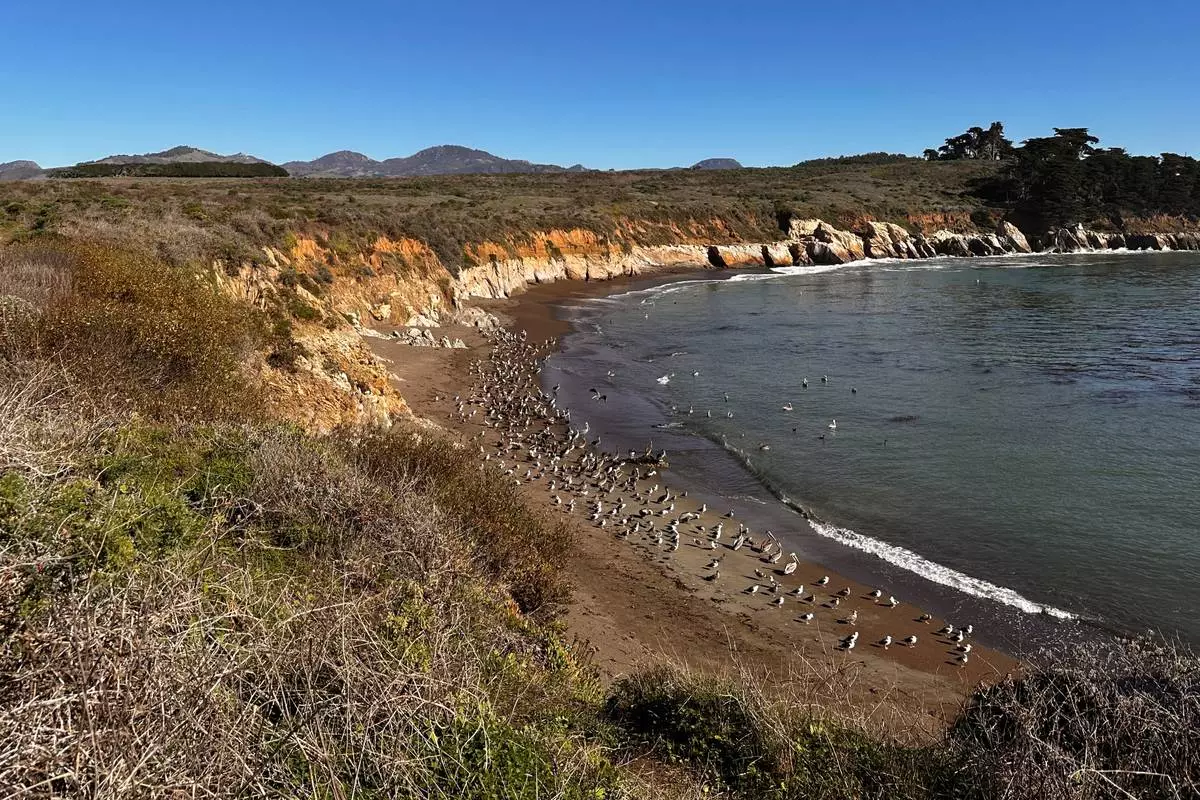
California brown pelicans and seagulls gather on a beach north of Morro Bay, Calif., Friday, Nov. 28, 2025. (AP Photo/Michael R. Blood)
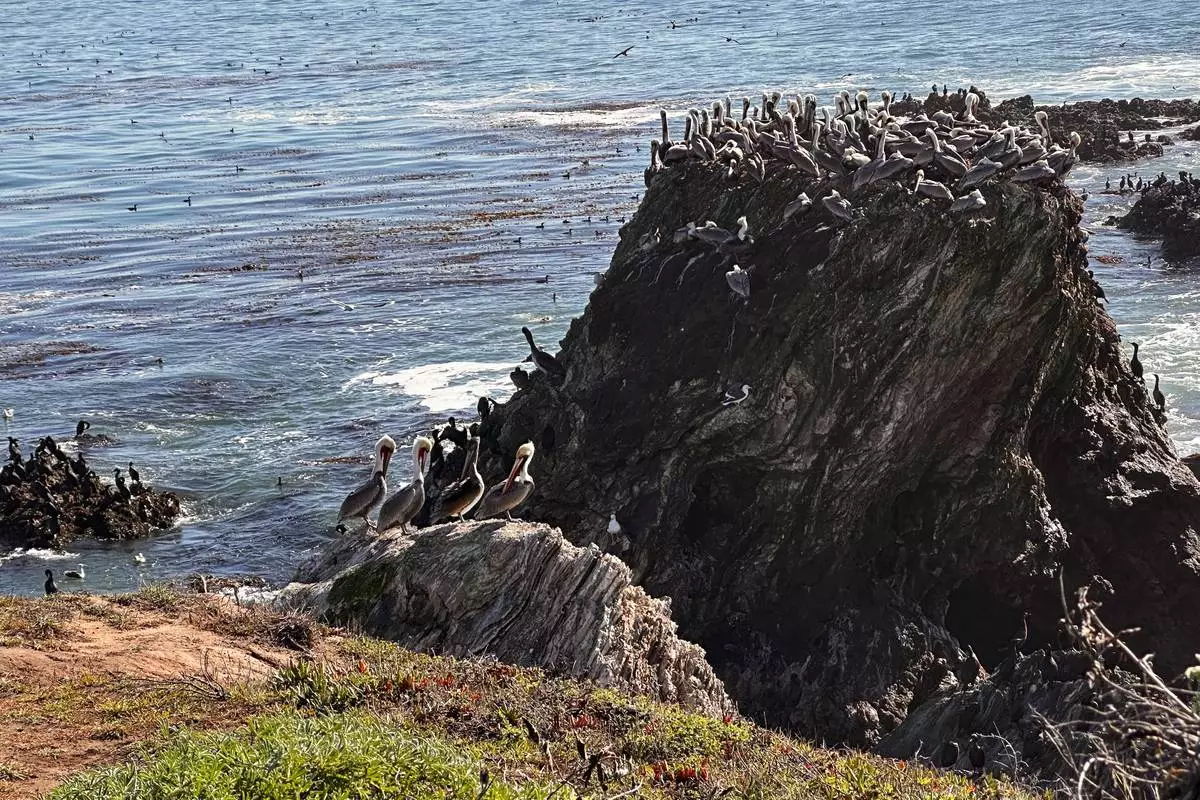
California brown pelicans crowd onto a rocky coastal bluff north of Morro Bay, Calif., Friday, Nov. 28, 2025. (AP Photo/Michael R. Blood)
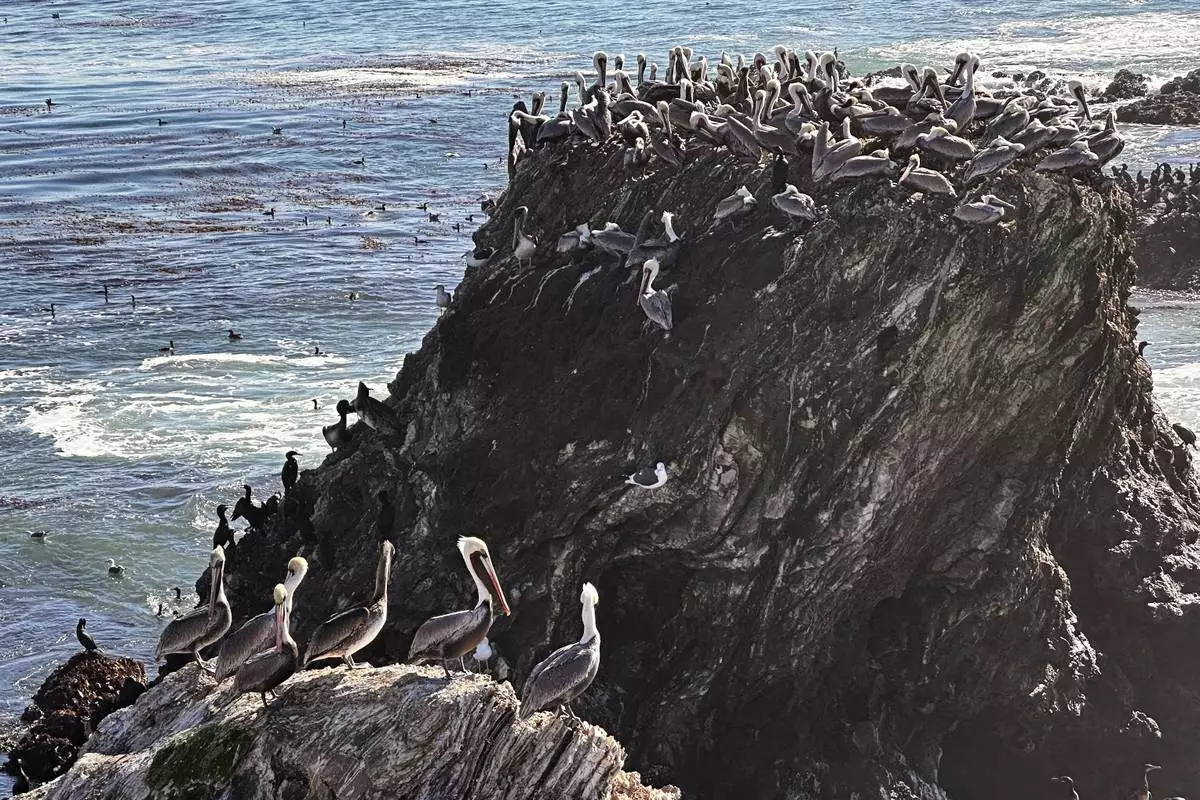
California brown pelicans and cormorants cling to a rocky outcropping along the Central California coast north of Morro Bay, Calif., Friday, Nov. 28, 2025. (AP Photo/Michael R. Blood)
NEW ORLEANS (AP) — Trump administration officials overseeing the immigration crackdown launched this week in New Orleans are aiming to make 5,000 arrests, a target that some city leaders who oppose the operation say is unrealistic and would require detainining more than just violent offenders.
It's an ambitious goal that would surpass the number of arrests during a two-month enforcement blitz this fall around Chicago, a region with a much bigger immigrant population than New Orleans. Records tracking the first weeks of the Chicago operation also showed most arrestees didn’t have a violent criminal record.
In Los Angeles — the first major battleground in President Donald Trump's aggressive immigration plan — roughly 5,000 people were arrested over the summer in an area where about a third of LA County's roughly 10 million residents are foreign-born.
“There is no rational basis that a sweep of New Orleans, or the surrounding parishes, would ever yield anywhere near 5,000 criminals, let alone ones that are considered ‘violent’ by any definition,” New Orleans City Council President J.P. Morrell said Thursday.
Census Bureau figures show the New Orleans metro area had a foreign-born population of almost 100,000 residents last year, and that just under 60% were not U.S. citizens.
“The amount of violent crime attributed to illegal immigrants is negligible,” Morrell said, pointing out that crime in New Orleans is at historic lows.
Violent crimes, including murders, rapes and robberies, have fallen by 12% through October compared to a year ago, from a total of 2,167 violent crimes to 1,897 this year, according to New Orleans police statistics.
Federal agents in marked and unmarked vehicles began spreading out across New Orleans and its suburbs Wednesday, making arrests in home improvement store parking lots and patrolling neighborhoods with large immigrant populations.
Alejandra Vasquez, who runs a social media page in New Orleans that reports the whereabouts of federal agents, said she has received a flood of messages, photos and video since the operations began.
“My heart is so broken,” Vasquez said. “They came here to take criminals and they are taking our working people. They are not here doing what they are supposed to do. They are taking families.”
Several hundred agents from Customs and Border Protection and U.S. Immigration and Customs Enforcement are participating in the two-month operation dubbed “Catahoula Crunch.”
U.S. House Speaker Mike Johnson, who is from Louisiana, is among the state's Republicans supporting the crackdown. “Democrats’ sanctuary city policies have failed — making our American communities dangerous. The people of our GREAT city deserve better, and help is now on the ground,” Johnson posted on social media.
About two dozen protesters were removed from a New Orleans City Council meeting Thursday after chants of “Shame” broke out. Police officers ordered protesters to leave the building, with some pushed or physically carried out by officers.
Planning documents obtained last month by The Associated Press show the crackdown is intended to cover southeast Louisiana and into Mississippi.
Homeland Security Department spokesperson Tricia McLaughlin said agents are going after immigrants who were released after arrests for violent crimes.
"In just 24 hours on the ground, our law enforcement officers have arrested violent criminals with rap sheets that include homicide, kidnapping, child abuse, robbery, theft, and assault,” McLaughlin said Thursday in a statement. Border Patrol and immigration officials have not responded to requests for details, including how many have been arrested so far.
She told CNN on Wednesday that "we will continue whether that will be 5,000 arrests or beyond.”
To come close to reaching their target numbers in New Orleans, immigrant rights group fear federal agents will set their sights on a much broader group.
New Orleans City councilmember Lesli Harris said “there are nowhere near 5,000 violent offenders in our region” whom Border Patrol could arrest.
“What we’re seeing instead are mothers, teenagers, and workers being detained during routine check-ins, from their homes and places of work,” Harris said. “Immigration violations are civil matters, not criminal offenses, and sweeping up thousands of residents who pose no threat will destabilize families, harm our economy.”
During the “Operation Midway Blitz” crackdown in Chicago that began in September, federal immigration agents arrested more than 4,000 people across the city and its many suburbs, dipping into Indiana.
Homeland Security officials heralded efforts to nab violent criminals, posting dozens of pictures on social media of people appearing to have criminal histories and lacking legal permission to be in the U.S. But public records tracking the first weeks of the Chicago push show most arrestees didn’t have a violent criminal record.
Of roughly 1,900 people arrested in the Chicago area from early September through the middle of October — the latest data available — nearly 300 or about 15% had criminal convictions on their records, according to ICE arrest data from the University of California Berkeley Deportation Data Project analyzed by The Associated Press.
The vast majority of those convictions were for traffic offenses, misdemeanors or nonviolent felonies, the data showed.
New Orleans, whose international flavor comes from its long history of French, Spanish, African and Native American cultures, has seen a new wave of immigrants from places in Central and South America and Asia.
Across all of Louisiana, there were more than 145,000 foreign-born noncitizens, according to the Census Bureau. While those numbers don't break down how many residents of the state were in the country illegally, the Pew Research Center estimated the number at 110,000 people in 2023.
This story has been corrected to show that about a third of LA County’s 10 million residents are foreign-born, not 10 million total.
Seewer reported from Toledo, Ohio. Associated Press journalists Sara Cline in Baton Rouge, Louisiana; Sophia Tareen in Chicago; Aaron Kessler in Washington, D.C.; and Michael Schneider in Orlando, Florida, contributed.

U.S. Border Patrol Commander at large Gregory Bovino, 1st right, walks on the street in New Orleans, La.,Wednesday, Dec. 3, 2025. (AP Photo/Gerald Herbert)
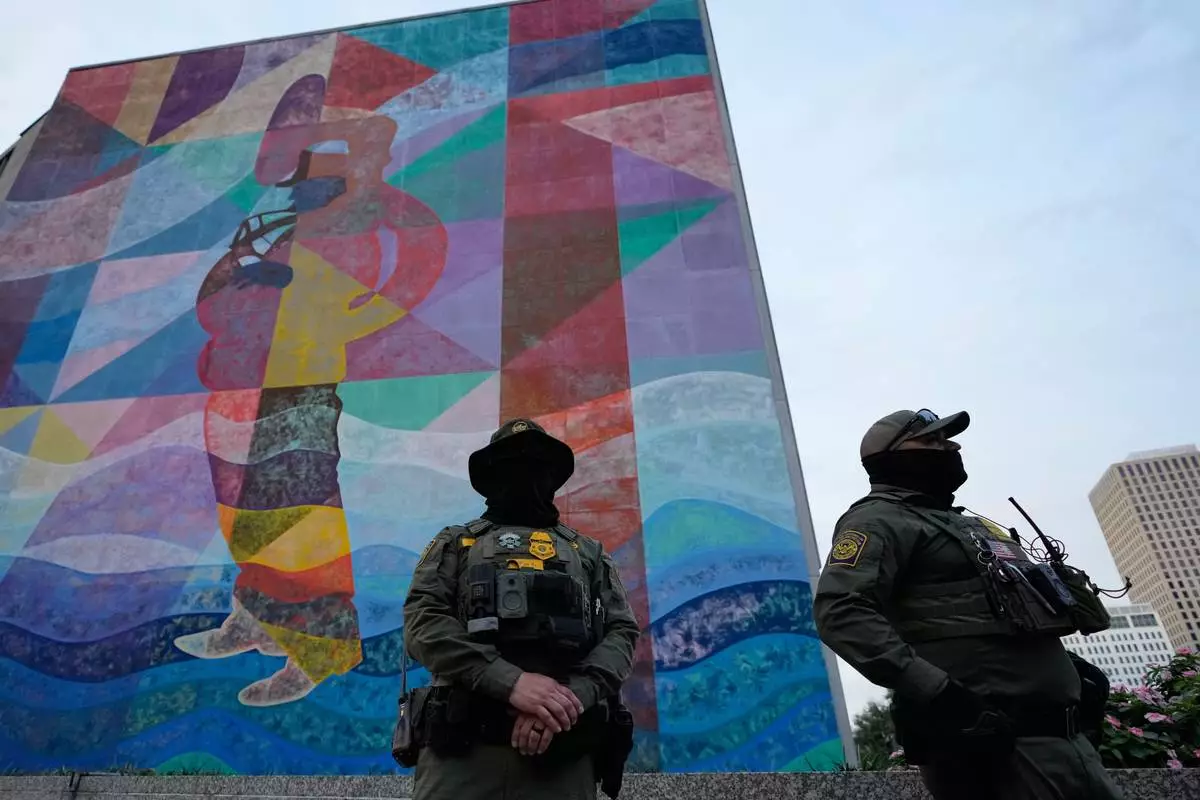
U.S. Border Patrol agents stand on the street in New Orleans, La.,Wednesday, Dec. 3, 2025. (AP Photo/Gerald Herbert)
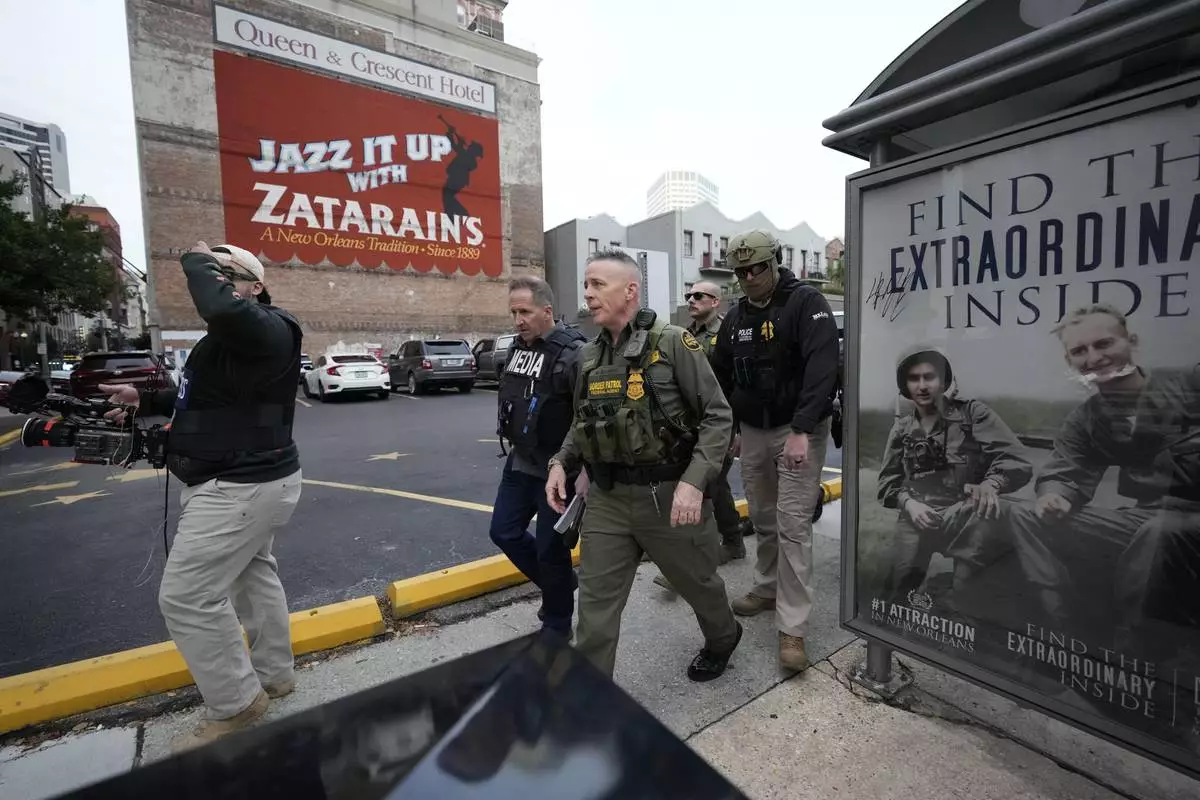
U.S. Border Patrol Commander at large Gregory Bovino, 3rd left, walks on the street in New Orleans, La.,Wednesday, Dec. 3, 2025. (AP Photo/Gerald Herbert)