The Color E-Ink Pocket Device Incorporates Built-in AI, Turning Reading Into an Intelligent, Two-Way Dialogue.
LOS ANGELES, Dec. 5, 2025 /PRNewswire/ -- Viwoods today announced the official launch of the AiPaper Reader C, a groundbreaking color E-Ink device that integrates artificial intelligence directly into the reading experience. The product was launched on December 4, 2025. It is available through Viwoods' official website, Amazon and authorized retailers.
The AiPaper Reader C introduces a revolutionary approach to digital reading with its color E-Ink display. Featuring a dedicated AI key, it enables users to interact with content (ask questions, translate, or summarize) without ever leaving the page. With its slim 6.7mm profile and lightweight 140g body, it is truly pocket-sized—perfect for reading and learning on the move. Together, these features deliver optimal clarity and a convenient and comfortable reading experience.
Why AI Matters in A Modern Reading Flow
Modern knowledge workers operate in short windows of attention—on commutes, in airports, between meetings and lectures. These minutes are easily lost to friction: switching apps to look up terms, translating paragraphs, and filing notes that are never revisited.
AI delivers the most value when it meets focused attention enabled by E-ink.
The experience can be described as a loop: Read Anywhere → Read with AI → From Reading to Learning.
- Read Anywhere: paper-like clarity in sunlight, comfortable at night, truly mobile at 140g.
- Read with AI: voice-to-AI, screenshot-to-answer and always-on connectivity so questions do not pile up.
- From Reading to Learning: one-tap saving that turns sessions into an accumulating personal knowledge archive.
Technical Specifications & Features:
Advanced Display & Design
Pocket-friendly design at 140g and 6.7mm thickness
6.13-inch E-Ink Kaleido 3 color display with 150 PPI resolution
One-Tap Voice AI Assistant
Dedicated AI key for instant voice queries (up to 60 seconds)
Real-time voice-to-text conversion with intelligent reasoning
Resolves learning and daily life questions through natural dialogue
Smart Screenshot Analysis
Capture any content while reading - text, code, or charts
AI recognizes context and provides summaries & key insights
Delivers instant analysis, translation, and explanations
Knowledge Base
Save reading insights or AI answers directly to your personal knowledge base
Browse saved entries by time or name, with full flexibility to reorganize
Quickly share a saved item or an entire knowledge folder with just a single tap
Pricing and Availability:
The Viwoods AiPaper Reader C is now available for order at USD 349, with sales commencing Dec. 4, 2025. Customers can purchase directly through the official Viwoods EU website, Amazon and authorized retailers. Regional availability and shipping timelines may vary.
About Viwoods:
Viwoods is a technology company committed to advancing the way people read, learn, and think. Through human-centered design and cutting-edge E-Ink innovation, the company develops devices that support deep focus in an increasingly distracted world. Viwoods products combine thoughtfully engineered hardware with intelligent software to deliver seamless and productive digital reading experiences. By reducing cognitive load through interactive AI, Viwoods empowers students, professionals, and lifelong learners to engage with content more effectively and build lasting knowledge.
AiPaper Reader C - Read Better, Be Better.
** The press release content is from PR Newswire. Bastille Post is not involved in its creation. **

Viwoods Debuts AiPaper Reader C With Color Display, Ushering in Artificial Intelligence for E-Ink Reading
|
Advance Global Compliance in FCM, PFAS, and IoT Cybersecurity
HONG KONG, Dec. 4, 2025 /PRNewswire/ -- On 28 November 2025, TÜV Rheinland Hong Kong successfully hosted its inaugural Coffee Machines & Appliances Summit: Brewing Up Food Contact & Chemical Safety, marking the first regional technical conference dedicated to addressing the converging challenges of food contact material safety, chemical regulatory change, and cybersecurity in connected appliances. The event brought together brands, suppliers, OEMs, and retailers from around the world.
This summit arrives at a crucial moment for the global appliance industry. Coffee machines and small household appliances are no longer simple mechanical devices; they now involve complex material interfaces, increasingly regulated chemical compositions, and rapidly expanding IoT connectivity. These shifts have created new compliance burdens for manufacturers while intensifying expectations from regulators and consumers alike.
Opening the summit, Jay Yang, Senior Vice President, Products, TÜV Rheinland Greater China, emphasized that manufacturers must now navigate multiple regulatory domains simultaneously. He remarked that the industry is undergoing "one of its most profound transformations," where the traditional boundaries between materials compliance, chemical safety, and digital trust are disappearing. He noted that TÜV Rheinland's role is to provide both technical guidance and strategic clarity as companies rethink their global compliance frameworks.
TÜV Rheinland GMP and Food Safety Services for Your Food Contact Materials
Global Food Contact Material Challenges and the Transition Toward Safer Materials
Food contact material (FCM) compliance is a topic that has become increasingly complex due to the growing variety of materials used in modern appliances and the growing influence of stricter global regulations.
Nick Cheng, Food Contact Material Safety Manager at TÜV Rheinland Asia, opened the technical program by examining global market requirements across the EU, US, China, Japan, and Mercosur. Rather than presenting isolated regulations, he highlighted how the tightening of migration testing requirements, the emphasis on documentation completeness, and the divergence of national standards have collectively increased the compliance burden for manufacturers seeking global market access. Cheng explained that inconsistent regulatory frameworks often lead to delays in product launches, increased testing costs, and supply-chain disruptions when suppliers lack the capability to meet global documentation demands.
Following this, Gary Lo, Product Manager and FCM Specialist from TÜV Rheinland LGA Products GmbH, explored the industry's shift toward BPA-free and alternative materials. Lo explained that while global regulatory pressure has accelerated the transition away from BPA-containing polymers, the industry's challenge now lies in implementing proper GMP (Good Manufacturing Practice) to ensure material consistency, traceability, and safety. He stressed that without disciplined GMP processes — including proper validation, chemical monitoring, and documentation practices — manufacturers face heightened risks of non-compliance that could result in product recalls, reputational damage, or restricted market entry.
To deepen the discussion, participants engaged in an interactive breakout session examining how global brands are building internal FCM governance systems. The session underscored that effective FCM compliance is not merely a testing issue, but a cross-functional supply-chain responsibility.
PFAS Regulatory Pressure and the Search for Viable Alternatives
Regulatory bodies in Europe and the United States have moved swiftly toward broad restrictions on PFAS, and these changes are reshaping material strategies for appliance manufacturers, particularly those relying on high-performance coatings, gaskets, and heat-resistant components.
Alice Yau, Senior Manager of Electrical and Material Testing at TÜV Rheinland Greater China, provided an overview of the PFAS legislative landscape. She explained that PFAS oversight has expanded from narrow chemical lists to broader "class-based" restrictions, meaning manufacturers must evaluate their entire product architecture — from coatings to lubricants to molded parts — for potential PFAS presence. This shift has created unprecedented urgency within R&D teams, as traditional materials may soon be non-compliant.
Complementing this regulatory perspective, Bernd Fritzsche, Global Head of the Technical Competence Center for Chemical Analysis at TÜV Rheinland Group, addressed the analytical challenges of PFAS detection. He noted that PFAS analysis requires specialized instrumentation, harmonized testing methodologies, and sophisticated laboratory validation to avoid inconsistent or inconclusive results. These factors make PFAS testing one of the most technically demanding areas within chemical compliance today, with significant implications for manufacturers attempting to declare their products PFAS-free.
From an industry standpoint, Eleonora Furlanetto, Food Safety Compliance Leader at De'Longhi Appliances S.r.l., provided a brand-level perspective on the practical challenges of replacing PTFE and other PFAS-containing materials. She explained that while regulatory drivers are clear, the transition to alternative materials is far from straightforward. Manufacturers must balance performance integrity, heat resistance, consumer expectations, and cost feasibility — all while ensuring that new materials meet stringent safety and regulatory requirements. Furlanetto also stressed the importance of transparent communication with consumers, especially when marketing PFAS-free claims, which must be backed by scientifically robust validation.
Participants then joined an in-depth breakout session focusing on the feasibility of PFAS alternatives. Many companies indicated that the biggest gap lies in reliable validation protocols and consistent global acceptance of testing methodologies.
Cybersecurity in the Age of Connected Coffee Machines
As appliances increasingly connect to mobile apps, cloud services, and AI-driven features, the summit broadened its scope in the closing session to address IoT cybersecurity — now a critical compliance requirement in multiple global markets.
Arnold Li, Business Development Executive for Electrical Products at TÜV Rheinland Greater China, explained how the integration of IoT and AI has transformed coffee machines and household appliances into sophisticated digital devices. This transformation has invited new cybersecurity risks, prompting regulators in Europe, the US, and Asia to introduce mandatory cybersecurity requirements. Li outlined the implications for manufacturers, including vulnerability assessment, secure-by-design development, data protection requirements, and the growing need for compliance frameworks that ensure ongoing device security throughout the product lifecycle.
In his closing remarks, Limao Tian, Managing Director of TÜV Rheinland Hong Kong, highlighted that safety in modern appliances is now multi-dimensional. He stressed that chemical safety, material integrity, and digital security can no longer be managed independently, and that TÜV Rheinland's integrated testing and certification capabilities are designed to support manufacturers across these converging domains as regulations continue to evolve globally.
Advance Global Compliance in FCM, PFAS, and IoT Cybersecurity
HONG KONG, Dec. 4, 2025 /PRNewswire/ -- On 28 November 2025, TÜV Rheinland Hong Kong successfully hosted its inaugural Coffee Machines & Appliances Summit: Brewing Up Food Contact & Chemical Safety, marking the first regional technical conference dedicated to addressing the converging challenges of food contact material safety, chemical regulatory change, and cybersecurity in connected appliances. The event brought together brands, suppliers, OEMs, and retailers from around the world.
This summit arrives at a crucial moment for the global appliance industry. Coffee machines and small household appliances are no longer simple mechanical devices; they now involve complex material interfaces, increasingly regulated chemical compositions, and rapidly expanding IoT connectivity. These shifts have created new compliance burdens for manufacturers while intensifying expectations from regulators and consumers alike.
Opening the summit, Jay Yang, Senior Vice President, Products, TÜV Rheinland Greater China, emphasized that manufacturers must now navigate multiple regulatory domains simultaneously. He remarked that the industry is undergoing "one of its most profound transformations," where the traditional boundaries between materials compliance, chemical safety, and digital trust are disappearing. He noted that TÜV Rheinland's role is to provide both technical guidance and strategic clarity as companies rethink their global compliance frameworks.
TÜV Rheinland GMP and Food Safety Services for Your Food Contact Materials
Global Food Contact Material Challenges and the Transition Toward Safer Materials
Food contact material (FCM) compliance is a topic that has become increasingly complex due to the growing variety of materials used in modern appliances and the growing influence of stricter global regulations.
Nick Cheng, Food Contact Material Safety Manager at TÜV Rheinland Asia, opened the technical program by examining global market requirements across the EU, US, China, Japan, and Mercosur. Rather than presenting isolated regulations, he highlighted how the tightening of migration testing requirements, the emphasis on documentation completeness, and the divergence of national standards have collectively increased the compliance burden for manufacturers seeking global market access. Cheng explained that inconsistent regulatory frameworks often lead to delays in product launches, increased testing costs, and supply-chain disruptions when suppliers lack the capability to meet global documentation demands.
Following this, Gary Lo, Product Manager and FCM Specialist from TÜV Rheinland LGA Products GmbH, explored the industry's shift toward BPA-free and alternative materials. Lo explained that while global regulatory pressure has accelerated the transition away from BPA-containing polymers, the industry's challenge now lies in implementing proper GMP (Good Manufacturing Practice) to ensure material consistency, traceability, and safety. He stressed that without disciplined GMP processes — including proper validation, chemical monitoring, and documentation practices — manufacturers face heightened risks of non-compliance that could result in product recalls, reputational damage, or restricted market entry.
To deepen the discussion, participants engaged in an interactive breakout session examining how global brands are building internal FCM governance systems. The session underscored that effective FCM compliance is not merely a testing issue, but a cross-functional supply-chain responsibility.
PFAS Regulatory Pressure and the Search for Viable Alternatives
Regulatory bodies in Europe and the United States have moved swiftly toward broad restrictions on PFAS, and these changes are reshaping material strategies for appliance manufacturers, particularly those relying on high-performance coatings, gaskets, and heat-resistant components.
Alice Yau, Senior Manager of Electrical and Material Testing at TÜV Rheinland Greater China, provided an overview of the PFAS legislative landscape. She explained that PFAS oversight has expanded from narrow chemical lists to broader "class-based" restrictions, meaning manufacturers must evaluate their entire product architecture — from coatings to lubricants to molded parts — for potential PFAS presence. This shift has created unprecedented urgency within R&D teams, as traditional materials may soon be non-compliant.
Complementing this regulatory perspective, Bernd Fritzsche, Global Head of the Technical Competence Center for Chemical Analysis at TÜV Rheinland Group, addressed the analytical challenges of PFAS detection. He noted that PFAS analysis requires specialized instrumentation, harmonized testing methodologies, and sophisticated laboratory validation to avoid inconsistent or inconclusive results. These factors make PFAS testing one of the most technically demanding areas within chemical compliance today, with significant implications for manufacturers attempting to declare their products PFAS-free.
From an industry standpoint, Eleonora Furlanetto, Food Safety Compliance Leader at De'Longhi Appliances S.r.l., provided a brand-level perspective on the practical challenges of replacing PTFE and other PFAS-containing materials. She explained that while regulatory drivers are clear, the transition to alternative materials is far from straightforward. Manufacturers must balance performance integrity, heat resistance, consumer expectations, and cost feasibility — all while ensuring that new materials meet stringent safety and regulatory requirements. Furlanetto also stressed the importance of transparent communication with consumers, especially when marketing PFAS-free claims, which must be backed by scientifically robust validation.
Participants then joined an in-depth breakout session focusing on the feasibility of PFAS alternatives. Many companies indicated that the biggest gap lies in reliable validation protocols and consistent global acceptance of testing methodologies.
Cybersecurity in the Age of Connected Coffee Machines
As appliances increasingly connect to mobile apps, cloud services, and AI-driven features, the summit broadened its scope in the closing session to address IoT cybersecurity — now a critical compliance requirement in multiple global markets.
Arnold Li, Business Development Executive for Electrical Products at TÜV Rheinland Greater China, explained how the integration of IoT and AI has transformed coffee machines and household appliances into sophisticated digital devices. This transformation has invited new cybersecurity risks, prompting regulators in Europe, the US, and Asia to introduce mandatory cybersecurity requirements. Li outlined the implications for manufacturers, including vulnerability assessment, secure-by-design development, data protection requirements, and the growing need for compliance frameworks that ensure ongoing device security throughout the product lifecycle.
In his closing remarks, Limao Tian, Managing Director of TÜV Rheinland Hong Kong, highlighted that safety in modern appliances is now multi-dimensional. He stressed that chemical safety, material integrity, and digital security can no longer be managed independently, and that TÜV Rheinland's integrated testing and certification capabilities are designed to support manufacturers across these converging domains as regulations continue to evolve globally.
** The press release content is from PR Newswire. Bastille Post is not involved in its creation. **
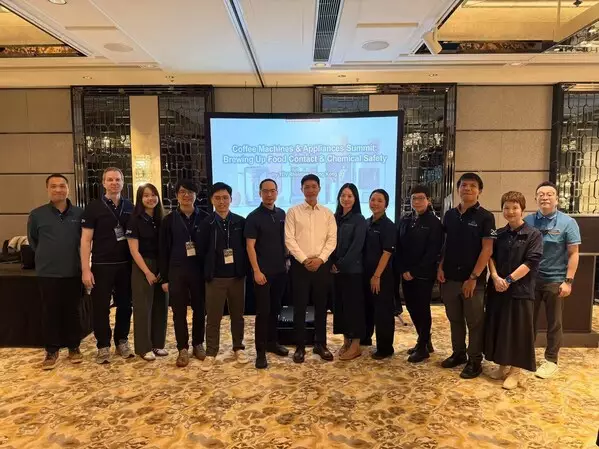
TÜV Rheinland Hong Kong Convenes First Comprehensive Coffee Machines & Appliances Summit