China's A-shares posted modest gains on Friday, as investors raised their confidence in AI and semiconductor stocks, while a Chinese technology firm which has drawn comparisons to Nvidia made a very strong debut, according to a market analyst.
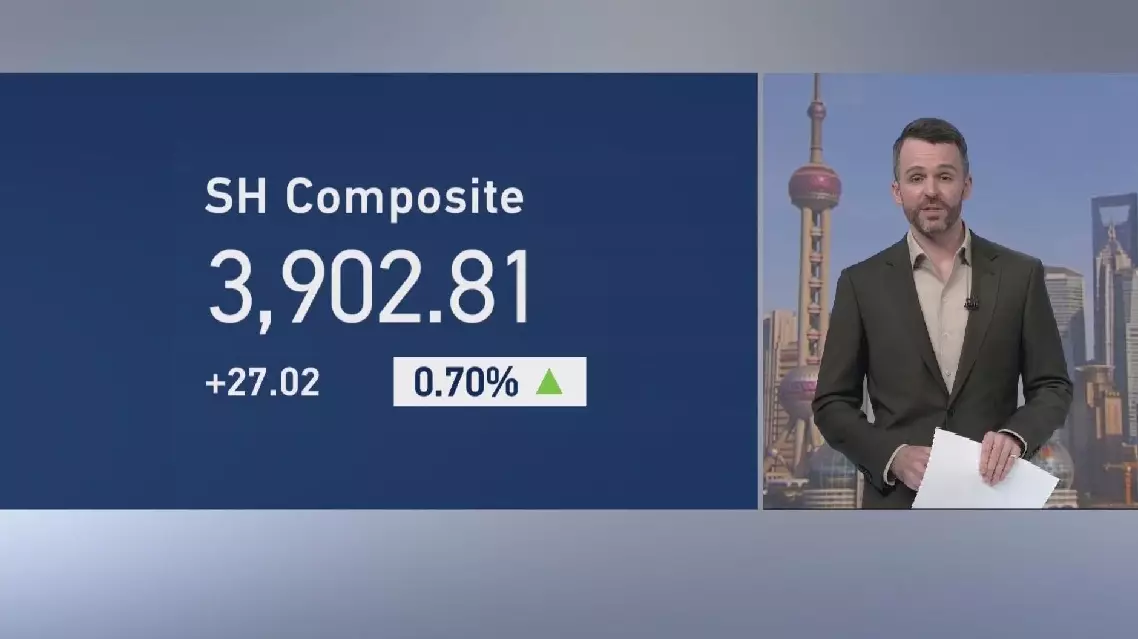
Chinese stocks closed higher on Friday, with the benchmark Shanghai Composite Index up 0.7 percent to 3,902.81 points.
The Shenzhen Component Index closed 1.08 percent higher at 13,147.68 points.
The combined turnover of these two indices stood at 1.73 trillion yuan (about 245 billion U.S. dollars), up from 1.55 trillion yuan on the previous trading day.
Timothy Pope, a market analyst for China Global Television Network (CGTN), said the gain was mostly down to AI and chip stocks.
"Lately when the markets make a significant shift, it's because of one of two things: AI or semiconductors. Arguably, they're very closely linked, but that was certainly the case today. It was chips leading the rebound as the Chinese mainland markets snapped a three-session losing streak. The Shanghai Composite Index closed 0.7 percent higher. We saw the Shenzhen Component Index up by more than 1 percent," he said.
Pope also detailed how much of the spotlight on the markets was on the Beijing-based tech firm, Moore Threads Technology, which specializes in making graphics processing units.
"This is one of the Chinese firms that gets compared to Nvidia. It makes those GPUs, graphics processing units, just like Nvidia does, and it debuted today on the Shanghai markets, rising an incredible 425 percent by the end of the session. Anyone who got a slice of this IPO will be very happy this afternoon. Issue prices on the Chinese mainland tend to be a little bit on the low end, guaranteeing that sort of first-day pop, but the issue price for Moore Threads was around 114 yuan, and shares opened today at 650 yuan each. They did come back a little bit off, that ending at around 600 each. And this for a company which, like many in this space, has still yet to turn a profit. But it did make almost eight billion yuan off the IPO. This will definitely be a stock to watch over the next few months, because the markets are already a little bit concerned about valuations in the tech sector, and among AI and chip firms in particular. Moore Threads, as a GPU maker, straddles both of those sectors and with more cheap IPO in the pipeline for the Chinese mainland markets. It will be interesting to see whether they can continue to have such stellar openings and whether these valuations can be sustained," he explained.
"Beyond tech stocks today, the mainland markets were broadly higher. Energy shares were dipping a little bit. These traditional energy stocks and bank shares as well seem to be on the opposite end of the market seesaw from the chip sector at the moment," Pope added.
Chinese GPU maker's market debut lifts China's A-shares: analyst

China is aiming to transition its ambitious space program from a strategic goal into a core economic driver, with the country vowing to integrate the advances of its aerospace technology into everyday life, from broader satellite internet coverage to even offering affordable commercial space travel.
China's recently unveiled 2026 government work report has officially designated aerospace as a "new pillar industry" for the first time, elevating it from a "strategic emerging industry" to a status akin to high-speed rail and 5G technology, highlighting how integral and well developed the sector has become.
The report was delivered by Chinese Premier Li Qiang last Thursday during the opening meeting of the fourth session of the 14th National People's Congress (NPC), the country's top legislature, part of China's annual "two sessions" political meetings, which also includes the National Committee of the Chinese People's Political Conference (CPPCC), China's top political advisory body.
The upgraded status of the aerospace sector outlined in the government work report signals the country's intent to turn its lunar dreams and orbital infrastructure into tangible economic benefits that can reshape people's daily lives.
China has already made remarkable progress in recent years through its space exploration endeavors, with the Tiangong space station becoming fully operational and occupied by a continuous rotation of astronaut crews in orbit, the Chang'e 6 mission retrieving mankind's first ever lunar samples from the far side of the moon, and a rover being successfully touching down on the surface of the Mars.
Now China's most eye-catching immediate goal is to land astronauts on the moon by 2030, with a long-term vision of building a lunar base. The mission aims to conduct scientific surveys and technology tests on the lunar surface, while also serving as a platform for enhanced crewed exploration capabilities. The broader goal sees the moon being envisioned as a future transit station for launching deeper space travel, making science-fiction dreams a reality.
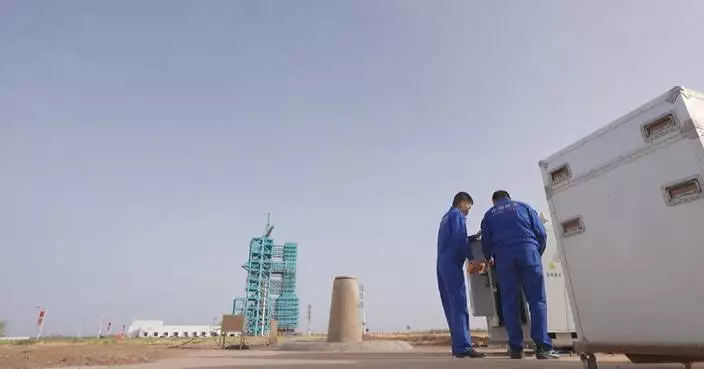
Currently, the development of key equipment for undertaking this mammoth mission such as the Long March-10 carrier rocket, the Mengzhou spacecraft, and the Lanyue lander, is progressing smoothly, with multiple large-scale tests already completed. The construction of related facilities at the Wenchang Space Launch Site on south China's island province of Hainan is also being vigorously advanced.
While China is setting its sights on the stars, it is also looking to bring the benefits of its outer space developments back to those on Earth. The country is accelerating the construction of a "satellite internet constellation" in low Earth orbit to achieve global coverage -- a key priority specifically highlighted in the government work report.
Currently, constellation projects represented by the Guowang, or national network, and the Qianfan, also known as the SpaceSail constellation, have entered an intensive deployment phase. These initiatives are driving collaborative innovation across the entire industrial chain, including in developing new materials, precision manufacturing, electronic information, and data applications, unleashing a powerful "chain-driven" effect.
Once the satellite internet system is complete, ordinary mobile phone users will be able to connect directly to satellites, even when in areas which now suffer from poor coverage, making the concept of "never losing signal" a potentially standard feature. Autonomous driving positioning will become more precise, and in the event of ground network disruptions caused by natural disasters, the satellite network could serve as a critical lifeline.
Meanwhile, the advances made in re-usable rocket technology could soon make the once far-fetched notion of regular space travel a viable commercial concept. Historically, rocket launches were prohibitively expensive "customized charter" flights, but breakthroughs in reusable rocket technology are drastically cutting costs, as some note the era of the "space shuttle bus" is now approaching.
The latest generation Long March-10 rocket recently completed a key low-altitude verification test flight, successfully executing a controlled splashdown at sea, representing substantial progress in work to implement reusable launch systems.
Domestic commercial space companies have already begun pre-selling tickets for suborbital flights and have signed contracts with several enthusiastic space tourists, showcasing that a "ticket to the stars" could one day become accessible to members of the public.
Several NPC deputies and political advisors have noted during the "two sessions" meetings in Beijing that China's space sector is moving from technological imitation to independent leadership, with some innovations having ventured into "uncharted territory."
As a newly-designated national pillar industry, China's aerospace sector is leading the way towards a future of seamless connectivity and may even offer the ultimate round-trip experience to space.
China's space ambitions to become core economic driver with seamless connectivity, commercial space travel