At the request of the Hong Kong Special Administrative Region government, the Hong Kong and Macao Affairs Office of the State Council coordinated the Ministry of Emergency Management to provide a new batch of supplies for the Tai Po fire relief effort, which has already been delivered on Wednesday.
Lui Kam-ho, director of operations of the Hong Kong Police Force, said Friday that Hong Kong has received over 30,000 pieces of relief items from the mainland, which provided critical support to the fire-fighting and search-and-rescue operations.
The supplies sent to Hong Kong included tents, protective goggles, specialized lighting equipment and exoskeleton devices, according to the senior police officer.
Lui said the exoskeletons have been the biggest help for frontline search personnel, drastically reducing the physical strain of climbing stairs with heavy loads.
"The officers told me that they save a huge amount of energy by using this gear when going up the stairs. I'm truly grateful for the support from the central government and relevant mainland departments. I deeply feel the spirit of 'help comes from all sides when one place is in trouble' that we Chinese share," Lui said.
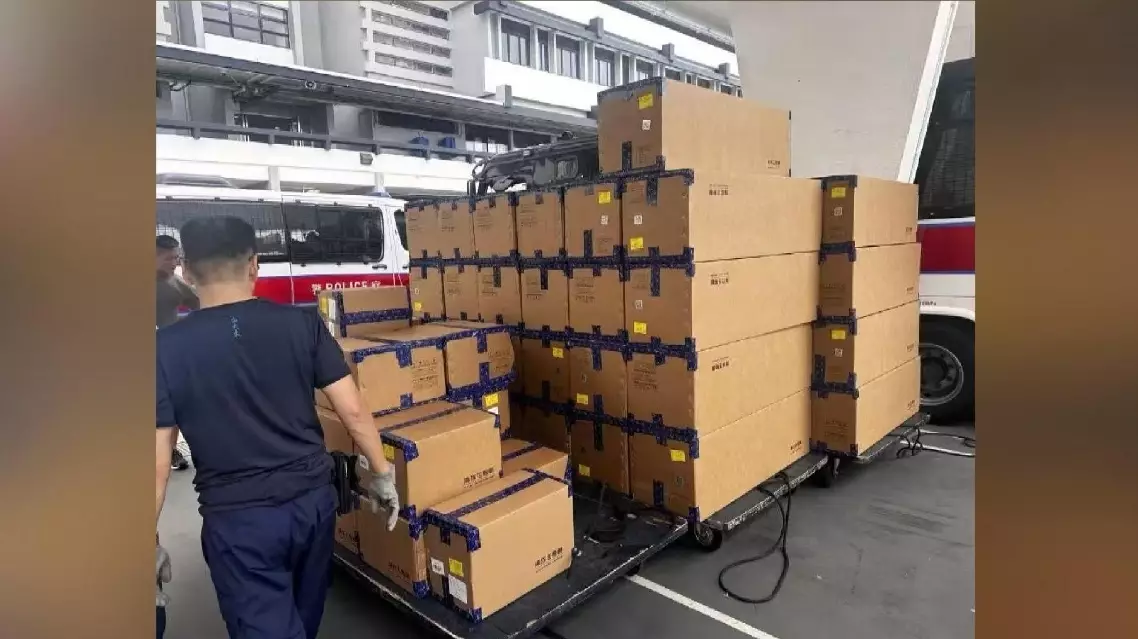
Hong Kong continues to receive disaster-relief supplies coordinated by central government
Influenza activity in China has declined for four consecutive weeks, with recent tests showing common pathogens and no evidence of new infectious diseases, the National Health Commission (NHC) said on Tuesday.
At its first press briefing of 2026, the commission reported that flu activity nationwide remains moderate at the moment.
According to Xin Li, a researcher at the Chinese Center for Disease Control and Prevention, respiratory samples collected from sentinel hospitals indicated that the influenza virus was the most common pathogen, accounting for 27.4 percent of cases, followed by respiratory syncytial virus at 8.8 percent and rhinovirus at 5.7 percent.
"Influenza activity in China has declined for four consecutive weeks and remains at a moderate level overall. Analysis of nationwide fever clinic consultations, influenza-like illness cases at sentinel hospitals, and multi-pathogen testing shows that all detected pathogens are known common ones, with no evidence of unknown pathogens or new infectious diseases," Xin told the press.
Data from sentinel hospitals indicated flu activity was falling across provincial-level regions, while reports of school outbreaks dropped for five consecutive weeks. Laboratory tests showed that 97.3 percent of positive influenza samples were H3N2 subtype viruses.
China flu activity declines for fourth week, no new pathogens detected: official