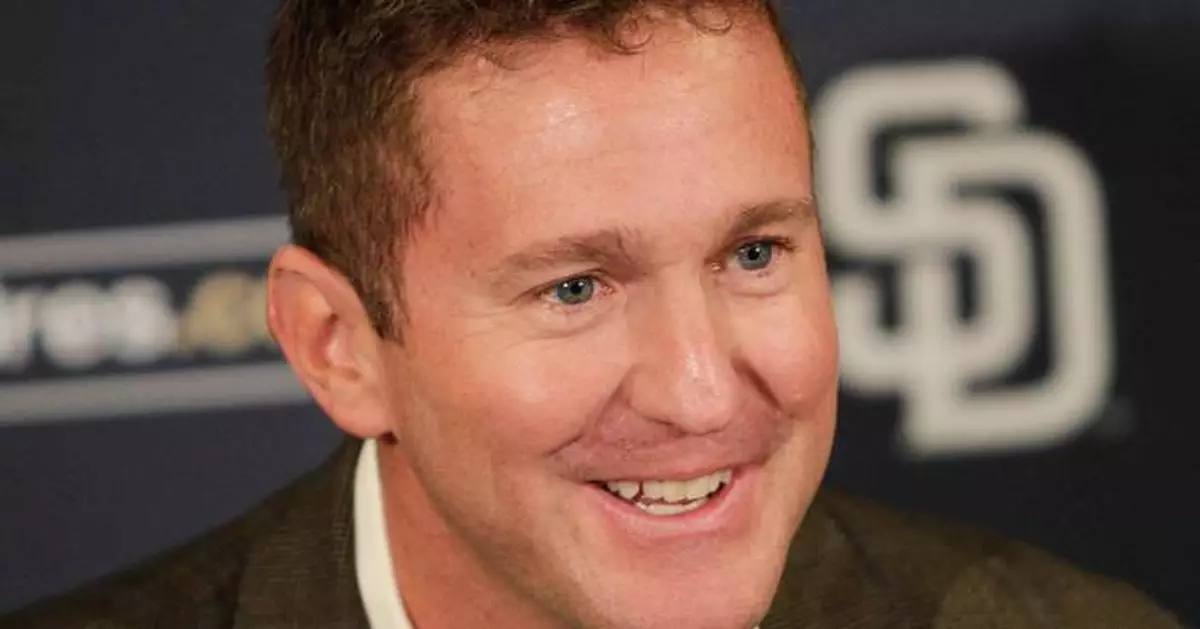
DENVER (AP) — Josh Byrnes has taken notice of all the winning going on in the Mile High City. The Colorado Avalanche and Denver Nuggets aren't too far removed from titles and the Denver Broncos have one of the best records in football.
He wants the Colorado Rockies to join in on that prosperity and fun.
The new general manager believes the Rockies can be a success story, too. It's why Byrnes took the risk of leaving the front office of the Los Angeles Dodgers, a team that just won a second straight World Series crown, for a franchise that lost 119 games last season. The Rockies haven't been to the postseason since 2018.
“Obviously, 119 losses, there’s no sugarcoating it. There’s a lot of work to do,” Byrnes said Friday in an introductory video call. “If you really talk to people around the game, there’s quite a bit of intrigue in trying to solve it here.”
Because Colorado's long been a puzzle: How to consistently win at elevation and in a park as expansive as Coors Field? But Byrnes has been here before — he was an assistant GM in Colorado from 1999-2002 — and knows the challenges. He's also tight with Paul DePodesta, who was hired Nov. 7 as the Rockies’ president of baseball operations. The two worked together in Cleveland in the 1990s.
DePodesta always wanted to work with Byrnes again. So he got him to leave the safety of the Dodgers, where he'd spent more than a decade as the senior vice president of baseball operations and won three World Series rings.
“I loved every day with the Dodgers and have a tremendous amount of respect for the people,” said Byrnes, who's also worked in the front offices of the Arizona Diamondbacks, San Diego Padres and Boston Red Sox. “But I’ve known Paul for 30 years, and he and I have always embraced challenges. I think he’s brilliant. I think there’s a lot we can both bring to this, and also not just tell stories about what we’ve done, but create a new future for this franchise.”
DePodesta said they've been given assurances they can make changes happen. The Rockies won't shy away from the trade front, either, in reshaping the roster. In years past, there's been some reluctance to deal players.
“Josh and I have both been in situations with immense resources, and we’ve also been in situations that have have had lesser resources, also by a significant amount," explained DePodesta, who said the team is close to rounding out the coaching staff for manager Warren Schaeffer. “We feel very comfortable with what’s available here. The mindset is that there’s a desire to invest pretty heavily on the baseball side.”
First, though, the front office must find an identity — the Rockies' way of doing things. Byrnes pointed out that what made the Dodgers elite was their mindset of constantly pushing to be better. He mentioned Shohei Ohtani stealing 50 bases, Mookie Betts sliding over to shortstop and Clayton Kershaw finding ways to win without his 95 mph fastball.
“It was a nonstop quest for improvement, and in their cases, greatness,” Byrnes said. “It has to come from the player, but we also have to support it and and and be right there with them.”
The Rockies have a solid nucleus that includes All-Star catcher Hunter Goodman and shortstop Ezequiel Tovar. The team also drafted an exciting player in Ethan Holliday with the No. 4 pick last summer.
“Paul and I have talked about it, just conceptually, raising the floor,” Byrnes said. “Having a deeper team with fewer sort of gaps — innings, plate appearances — that are that are going to players that aren’t quite what we need. So there’s a lot of ways to start attacking it, but there’s definitely some talent in place.”
He wants to get this team back to winning — like the other teams around town.
“Wouldn’t come in here without some optimism and confidence that we can get there,” Byrnes said. “The excitement around those teams in Denver for winning is something you can feel, I’m sure. We want to be part of that, without a doubt.”
AP MLB: https://apnews.com/hub/mlb

FILE - San Diego Padres executive vice president and general manager Josh Byrnes, left, and field coordinator Randy Johnson, center, watch as pitcher Joe Ross, right, throws in the bullpen during spring training baseball practice, Sunday, Feb. 16, 2014, in Peoria, Ariz. (AP Photo/Tony Gutierrez, File)
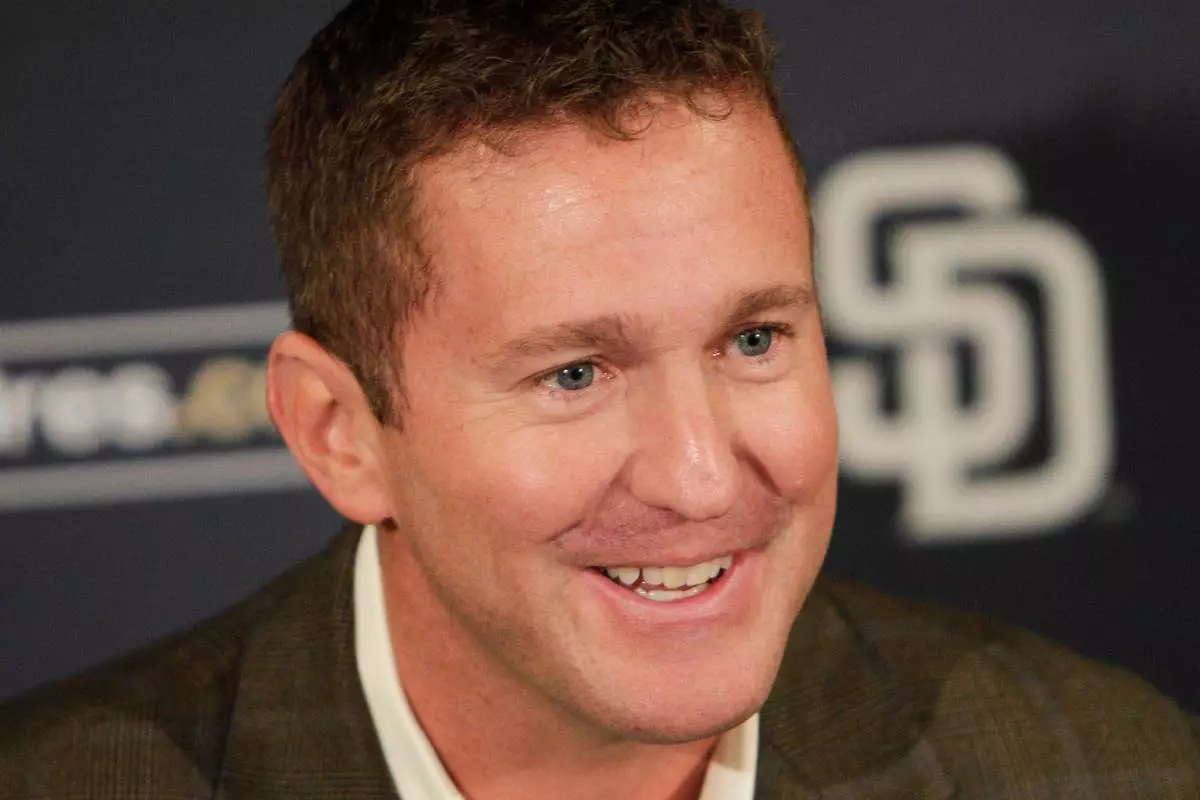
FILE - San Diego Padres general manager Josh Byrnes smiles during a baseball news conference Monday, Oct. 31, 2011 in San Diego. (AP Photo/Lenny Ignelzi)
The ongoing American-Israeli war with Iran, for all its complexity and global effects, boils down to a single question: Who can take the pain the longest? A surge in oil prices points to what may be Iran’s most effective weapon and the United States’ biggest vulnerability in continuing the campaign: Damaging the world economy.
Wednesday’s major developments include Iranian attacks against commercial ships around the Strait of Hormuz and Dubai International Airport, escalating a campaign of squeezing the oil-rich Gulf region as global energy concerns mount.
The U.S. campaign of airstrikes in Iran is now in its 12th day with no end in sight. A U.S. commander says artificial intelligence has helped the military hit more than 5,500 targets in the country. An Israeli intelligence assessment also indicates that Iran’s new supreme leader, Ayatollah Mojtaba Khamenei, was wounded at the start of the war.
Witnesses in Tehran said they heard loud airstrikes and heavy anti-aircraft fire Wednesday, and columns of smoke made the sky overcast as a layer of gray dust settled over the city. The air is filled with the distinctive smell of burnt powder and gasoline. They spoke on condition of anonymity to avoid reprisal.
The Israeli military is also striking Iran and its militant ally Hezbollah in Lebanon, where more than 800,000 people have been displaced by the fighting.
Here's the latest:
U.S. Secretary of Energy Chris Wright says the U.S. will release 172 million barrels from the Strategic Petroleum Reserve as part of the International Energy Agency’s efforts to combat steep oil prices amid the Iran war.
Wright said the release would begin next week and take about 120 days “to deliver based on planned discharge rates.” He also said the U.S. would replace about 200 million barrels within the next year.
The U.S. had more than 415 million barrels in the SPR as of the end of last month. President Trump previously downplayed the importance of using reserve oil, but confirmed earlier Wednesday that his administration would “reduce it a little bit” and then fill it back up.
The Pentagon provided the estimate to Congress in a briefing earlier this week, according to a person familiar with the situation who was granted anonymity to discuss the private meeting.
That comes after it reported spending $5 billion on munitions alone over the first weekend of the war.
The Trump administration had previously indicated it would be sending Congress a request for supplemental funding for the war, but that appears to have cooled, for now.
Sen. Roger Wicker, the GOP chairman of the Senate Armed Services Committee, said Wednesday that he was not expecting the supplemental request this month.
— By Lisa Mascaro
Defense Secretary Pete Hegseth argued that military attorneys need to be focused on advising commanders on operations and in deployed environments where “seconds and minutes count.”
Hegseth’s announcement comes as scrutiny over civilian casualties in the Iran war intensifies, including the bombing of a girl’s school that evidence suggests was likely caused by U.S. airstrikes.
“Commanders need agile, independent, dead-on legal advice that enables decisive action, not endless process or turf wars,” Hegseth said in a video posted to X.
Hegseth said military legal support needs a “hard reset” after becoming “bloated and duplicative.”
“Our warriors deserve legal teams as lethal and focused as they are,” Hegseth said.
Minutes after saying Iran had launched missiles into Israel very early on Thursday morning, Israel’s military said it had begun a “wide-scale wave of strikes” in Tehran.
The last such announcement was early Wednesday afternoon. Israel’s military also said it was targeting Hezbollah with strikes and raids in various parts of Lebanon. That includes the capital Beirut, where loud booms were heard in the central portion of the city early Thursday morning.
Alerts also blared in the north, where Hezbollah has fired drones and rockets into Israel.
Israel’s military said shortly after midnight that it was working to intercept missiles launched from Iran.
Ambassador Vassily Nebenzia was responding to a question about the possibility of negotiations following Russian President Vladimir Putin’s talks with U.S. President Donald Trump and Arab leaders.
Nebenzia said Iran was ready to continue negotiations when the U.S. and Israel launched “a premeditated, deliberate attack” on Feb. 28.
“There are no negotiations, although Iran expressed willingness for negotiations,” he told reporters after the Security Council rejected a Russian-drafted resolution on the war.
Nonetheless, Nebenzia said, “We are ready to help to get out of the dire situation the whole region and the United States got itself into.”
They were arrested for “filming and posting videos related to the aftermath of the Iranian aggression, expressing sympathy and glorifying its hostile acts,” the country’s Interior Ministry said.
The ministry said Bahrain’s anti-cybercrime directorate arrested the suspects and referred them to prosecutors after their videos circulated on social media, “potentially misleading public opinion, spreading fear among citizens and residents and harming security and public order.”
Bahraini authorities have arrested dozens of people accused of documenting Iranian strike sites or participating in pro-Iran demonstrations in the Shiite-majority, Sunni-ruled nation. Iran is majority Shiite.
Drone attacks were launched late Wednesday toward the cities of Irbil and Sulaymaniyah. One intercepted drone fell near the Divan Hotel in the Saad Abdullah Conference Hall complex in Irbil, a venue for high-level political meetings.
In southern Iraq, an oil vessel flying the Australian flag was struck near Khor Al-Zubair Port, according to two Iraqi navy officials who spoke on condition of anonymity because they were not authorized to comment publicly.
The attack occurred in a loading area within Iraqi territorial waters, the officials said, adding that 25 members of the crew were rescued. It was not immediately clear whether any others remained unaccounted for.
Videos circulating online showed a large vessel engulfed in flames, with massive plumes of fire and thick black smoke billowing into the sky.
No group immediately claimed responsibility for the attacks.
— By Stella Martany and Qassim Abdul-Zahra
“Trump is doing what I called for three days ago, after needlessly sowing additional chaos and uncertainty,” U.S. Senate Minority Leader Chuck Schumer said in a statement Wednesday. He added that Trump has “already created a lot more problems than this will solve – from the Strait of Hormuz blockade to his poorly planned and reckless war.″
Trump said Wednesday he’ll tap the oil reserve “and then we’ll fill it up.” He didn’t specify how many barrels of oil the U.S. would release.
Trump frequently criticized former President Joe Biden for tapping the oil reserve to try to lower gas prices.
Fire crews were working to contain a blaze Wednesday at the fuel storage tanks at Oman’s Port of Salalah, amid days of Iranian attacks, according to the Oman News Agency.
Kuwait’s foreign ministry condemned what it said was Iran’s targeting of the port and the fuel tanks, saying hitting such economic facilities was a “dangerous escalation” that threatened global trade. Videos showed thick plumes of black smoke and large flames rising from the fuel tanks.
The president said that after the strikes with Israel last summer on Iran’s nuclear program: “We obliterated it. They don’t have nuclear potential.”
But, Trump said, without offering specifics, that Iran “started again.”
“That’s why we got to finish it, right? We don’t want to go back every two years.”
Trump, along with others in his administration, have said as they justified the strikes on Iran that the country was weeks away from a nuclear weapon — despite claiming last summer’s strikes had destroyed the program.
Speaking at an event in Kentucky, the president said the U.S. has won the war in Iran but isn’t ready to end it.
“We don’t want to leave early, do we? We’ve got to finish the job,” the president said.
He said the U.S. knocked out 58 naval ships and eliminated Iran’s air force.
“You never like to say too early, ‘We won,’” he said. “We won.”
Iran’s U.N. Ambassador Amir Saeid Iravani said the resolution adopted by the Security Council on Wednesday, which does not mention that U.S. and Israeli strikes launched the war, “deliberately ignores the root causes of the current crisis.”
“The very purpose of this biased and politically motivated text, which was pushed by Israeli regime and the United States, is clear: to reverse the roles and positions of victim and aggressor,” Iravani told the 15-member council.
During an interview Wednesday with WKRC Local 12 in Cincinnati, Trump was asked about tapping the reserve and said, “Well, we’ll do that and then we’ll fill it up.”
He added, “Right now we’ll reduce it a little bit, and that brings the prices down.” He didn’t specify how many barrels of oil the U.S. would release.
Trump frequently criticized the administration of former President Joe Biden for tapping the reserve to try and bring down gas prices.
The Russian proposal failed to reach the nine votes needed to pass.
The one-page text makes no mention of Iran, Israel, the U.S. or the Gulf states — all countries involved in the conflict — but simply urges military activities to cease. It also condemns attacks on civilians and civilian infrastructure.
Russia, China, Pakistan and Somalia were the only countries that supported the draft resolution. Other nations called it hypocritical for Russia to call for end of hostilities despite its own war with Ukraine.
Vassily Nebenzia, Russia’s U.N. ambassador, had urged its adoption calling it “an impartial document” aimed at “de-escalating the situation.”
Even before the Iranian ambassador got to speak, Mike Waltz, the U.S. ambassador to the United Nations, said Tehran’s diplomat would present lies during the Security Council session on its actions in the region.
Waltz said Iran’s repeated claims that it is only targets U.S. military bases in the Gulf is a lie.
“These attacks were so brutal and so indiscriminate, as Iran shoots in all directions, that nations that previously had serious disagreements have now joined together,” he said. “They’ve now spoken as one voice.”
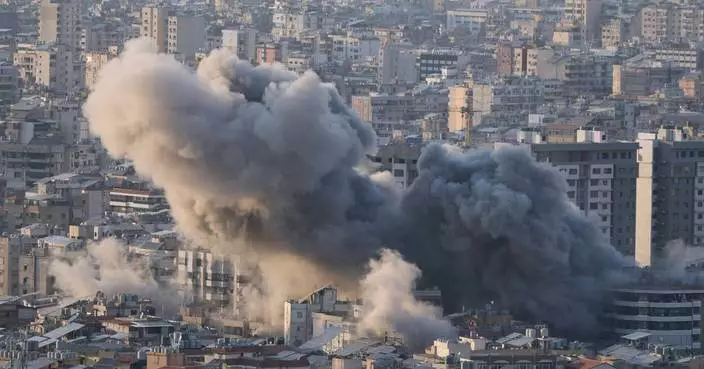
Simultaneous blasts rocked the Lebanese capital's densely populated southern suburbs — an area known as Dahiyeh — where large fires and plumes of smoke could be seen Wednesday evening.
The Israeli military said it would respond aggressively after Hezbollah fired dozens of rockets at the same time into northern Israel, in one of the largest attacks in the current conflict. Israel struck what it said was infrastructure belonging to the militant group.
The exchange marks an apparent escalation in the past week of fighting, which has killed more than 600 people in Lebanon and displaced about 800,000 others in the small country.
After abstaining from the U.N. Security Council resolution that demanded a halt to Iran’s attack on Gulf countries, the Chinese and Russian ambassadors defended their position, saying that the Bahrain proposal was “extremely unbalanced” in not mentioning the strikes against Tehran that began this war.
“It muddies up the cause and effect. And if someone who is not well-versed in international affairs reads this then this person will be left with the impression that Tehran, on its own volition, and out of malice, conducted an unprovoked attack on Arab states,” Russia’s U.N. Ambassador Vassily Nebenzia said during a Security Council session Wednesday.
Both Nebenzia and China’s U.N. envoy Fu Cong said they attempted to negotiate with Bahrain and the U.S. to include the initial strikes from Israel and the U.S. on Feb. 28 that launched the war, but the final resolution text ended up “unbalanced.”
“We’re basically talking about weeks, and not months, of supply,” said Bruce Bullock, director of the Maguire Energy Institute at Southern Methodist University.
Bullock said the 400 million barrels of crude oil are meant as a short-term bridge while markets wait to see how the war unfolds. If the conflict drags on or the Strait of Hormuz stays blocked, reserves may need to be released more slowly, he said.
But if the war ends soon, he added, the extra supply could trigger a sharp drop in oil prices.
Even as leaders in Iran say it’s “not possible” for the country to participate in this year’s World Cup, the U.S. president is indicating Iran’s team is still welcome in the United States.
Trump met privately with soccer chief Gianni Infantino on Tuesday at the White House, according to the FIFA president’s Instagram account.
During the meeting, Trump “reiterated that the Iranian team is, of course, welcome to compete in the tournament in the United States,” Infantino wrote in the Instagram post.
A White House official, speaking on condition of anonymity to discuss private conversations, confirmed Trump’s message to Infantino about Iran’s participation.
Since June, Iran has been subject to a travel ban into the U.S. as part of the Trump administration’s immigration crackdown. But athletes and coaches from the target nations are exempt, which means the Iranian team would be allowed in.
The U.S. is hosting the tournament with Canada and Mexico from June 11 to July 19.
▶ Read more
Shortly after ending their daily fast for Ramadan, displaced Palestinians sheltering west of Gaza City said they received phone calls from apparent Israeli military personnel ordering them to get out of the area within five minutes.
“They called us and told us to evacuate. We cannot breathe. And now they set our tents on fire. Where can we go?” said Ibtessal al-Shanbary, who escaped with a backpack and whatever small belongings she could hastily grab from her tent.
Anssar camp was struck three times Wednesday evening, witnesses said; the first two were warning strikes, and the last one was a major strike that sparked a huge fire and sent plumes of smoke into the sky.
The Israeli military did not immediately respond to a request for comment.
The 13-0 vote in the U.N.’s most powerful body reflects the isolated position Iran finds itself in, as it fires missiles and drones in retaliation for the ongoing U.S.-Israeli strikes.
China and Russia — two Iranian allies — abstained from the Wednesday’s vote, allowing it to be approved without using their powerful veto block it.
The draft resolution, supported by more than 130 member states, condemns Iran’s attacks on Bahrain, Jordan, Kuwait, Oman, Qatar, Saudi Arabia and the United Arab Emirates as a violation of international law and “a serious threat to international peace and security.”
“The message is clear,” said Bahrain’s U.N. Ambassador Jamal Alrowaiei. “The international community is resolute in rejecting these Iranian attacks against sovereign countries that are threatening the stability of the peoples, especially in a region of strategic importance to global economy, energy, security, and security of global trade.”
The U.S. president said to reporters while making a stop in Ohio that the U.S. “knocked out twice their leadership” in Iran, and added: “Now they have a new group coming up. Let’s see what happens to them.”
Hezbollah launched dozens of rockets at Israel on Wednesday night, the Israeli military said. One rocket hit a house near the town of Karmiel, lightly injuring two people, according to Israeli rescue services.
The Israeli military said it responded with a large wave of strikes targeting Hezbollah in the densely populated southern Beirut neighborhood of Dahiyeh.
The war with Iran has quickly tested America’s ability to combat the swarms of cheap drones that have become a staple of the modern battlefield after Ukraine and Russia demonstrated how effective they could be.
Experts and defense leaders stress that the U.S. military has been able to shoot down the majority of Iran’s drones and take out much of its drone capabilities. But critics said too often missiles that cost millions of dollars were used to down small drones that cost tens of thousands.
The U.S. is bringing an anti-drone system to the Middle East that has been tested in Ukraine, which had proposed a deal with the U.S. last year to offer its drone expertise. Such an agreement is yet to be made.
American forces are facing a steep learning curve as they scramble to deploy more cost-efficient defenses against Iran’s Shahed drones, which fly low and buzz like mopeds before smashing into their targets.
▶ Read more
Louisiana Sen. John Kennedy said that all indications point to the U.S. being responsible for a strike near a school in Iran that killed more than 165 people. He added that he has faith that the Trump administration “will take the appropriate steps.”
“This was a terrible thing that happened,” said Kennedy. “And it looks like it’s our missiles.”
Kennedy added that no matter the response from the U.S. if they are responsible for the strike, “the kids are still dead.”
“And I’m really sorry. But we will learn from it,” said Kennedy.
An eyewitness driving to Tehran described columns of smoke from bomb and missile explosions rising into the air across different parts of the capital, making the sky overcast, with a distinctive smell of burnt powder and gasoline.
Along the highway, people in civilian vehicles stopped cars for inspections. The witness spoke on condition of anonymity because of concern over repercussions.
A layer of gray dust has settled over the city and vehicle traffic was unusually light.
With Lebanon engulfed in another Israeli-Hezbollah conflict, the 29 nations condemned “in the strongest terms Hezbollah’s reckless decision to join the Iranian attacks against Israel.”
The statement also urged Israel “to abstain from attacks against civilian infrastructure and heavily populated areas and to respect the Lebanese sovereignty and its territorial integrity.” The countries called on all sides to uphold international law protecting civilians.
France’s U.N. Ambassador Jerome Bonnafont read the statement, surrounded by diplomats supporting it, mostly from European countries. The U.S., Russia and China did not sign.
Ambassador Ahmad Arafa told an emergency meeting of the U.N. Security Council that Israel “shows no respect for the laws of war and persists in its attacks on Lebanon” while Hezbollah also keeps attacking despite a government ban on its illegal military and security activities.
“We will not accept a return to the past,” he said. “The Lebanese people do not want war, and the Lebanese government is moving forward in implementing its decisions and will not backtrack.”
But Arafa said the priority today is stopping the war and protecting the Lebanese people, and he reiterated the government’s readiness to enter negotiations with Israel under international auspices for a truce, a halt to all its military operations and the withdrawal of its forces to internationally recognized borders.
Saying Lebanon is facing “an extremely dangerous moment and a humanitarian catastrophe,” Arafa urged international support and assistance “to help ease the burden of this crisis.”

A man, left, carries the body of his son, Kassem Younis, who was killed in an Israeli airstrike, during his funeral procession in the southern village of Chehabiyeh, Lebanon, Wednesday, March 11, 2026. (AP Photo/Mohammed Zaatari)
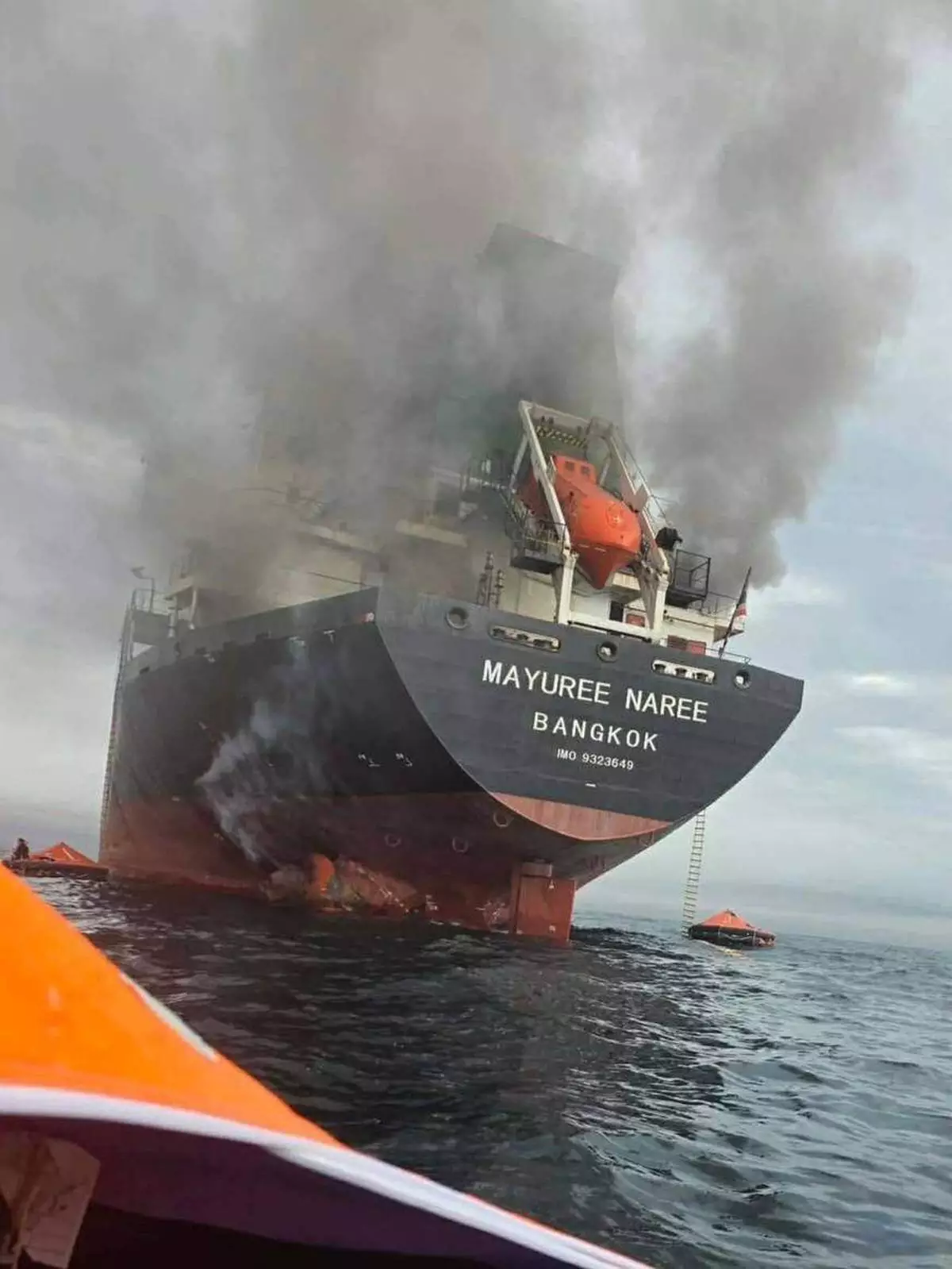
This image released by the Royal Thai Navy shows Thai cargo ship, Mayuree Naree, that was struck and set ablaze in the Strait of Hormuz Wednesday, March 11, 2026. (Royal Thai Navy via AP)

Mourners attend the funeral procession for senior Iranian military officials and some civilians killed during the U.S.-Israel campaign, in Tehran, Iran, Wednesday, March 11, 2026. (AP Photo/Vahid Salemi)

Flames rise from an Israeli airstrike in Dahiyeh, Beirut's southern suburbs, Wednesday, March 11, 2026. (AP Photo/Hassan Ammar)

People take cover in an underground bomb shelter as air raid sirens warn of incoming Iranian missile strike, in Ramat Gan, Israel, Wednesday, March 11, 2026. (AP Photo/Oded Balilty)
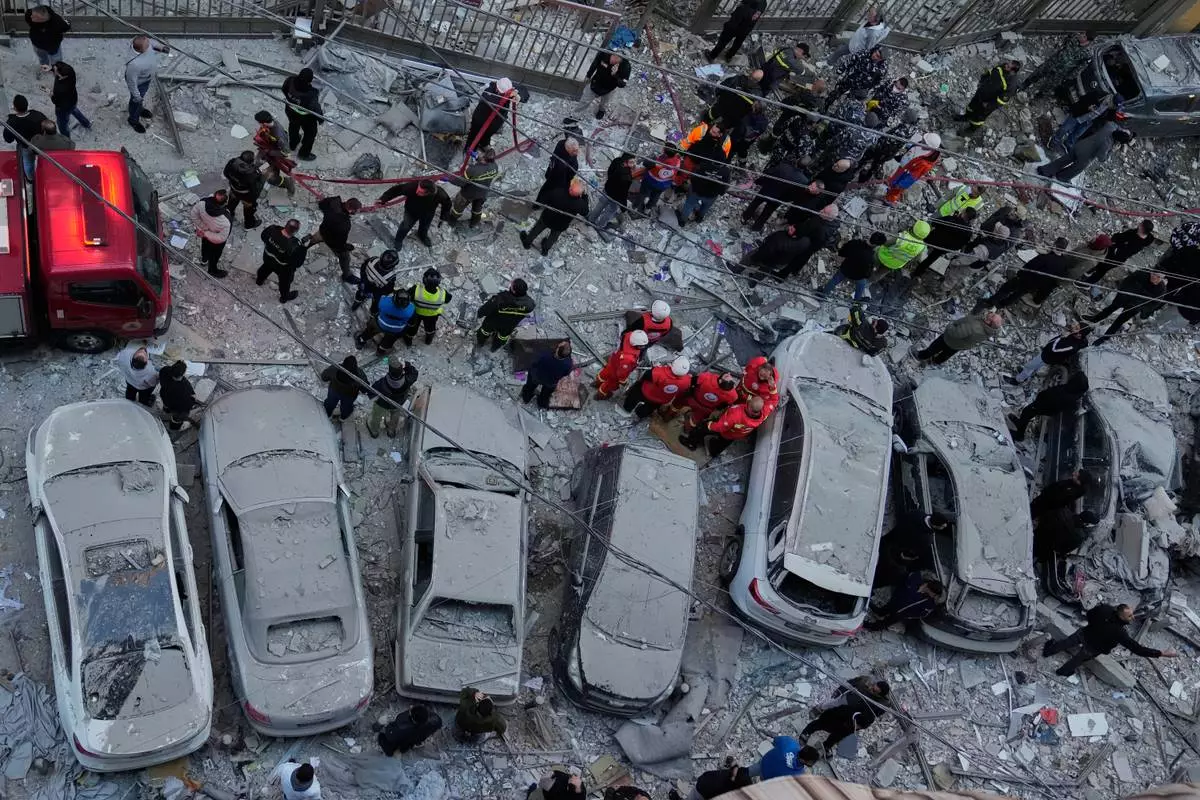
Rescue workers gather at the site where Israeli airstrikes hit apartments in Beirut, Lebanon, Wednesday, March 11, 2026. (AP Photo/Hussein Malla)

A man waves an Iranian flag as a crowd attends the funeral procession for senior Iranian military officials and civilians killed during the U.S.-Israel campaign in Tehran, Iran, Wednesday, March 11, 2026. (AP Photo/Vahid Salemi)
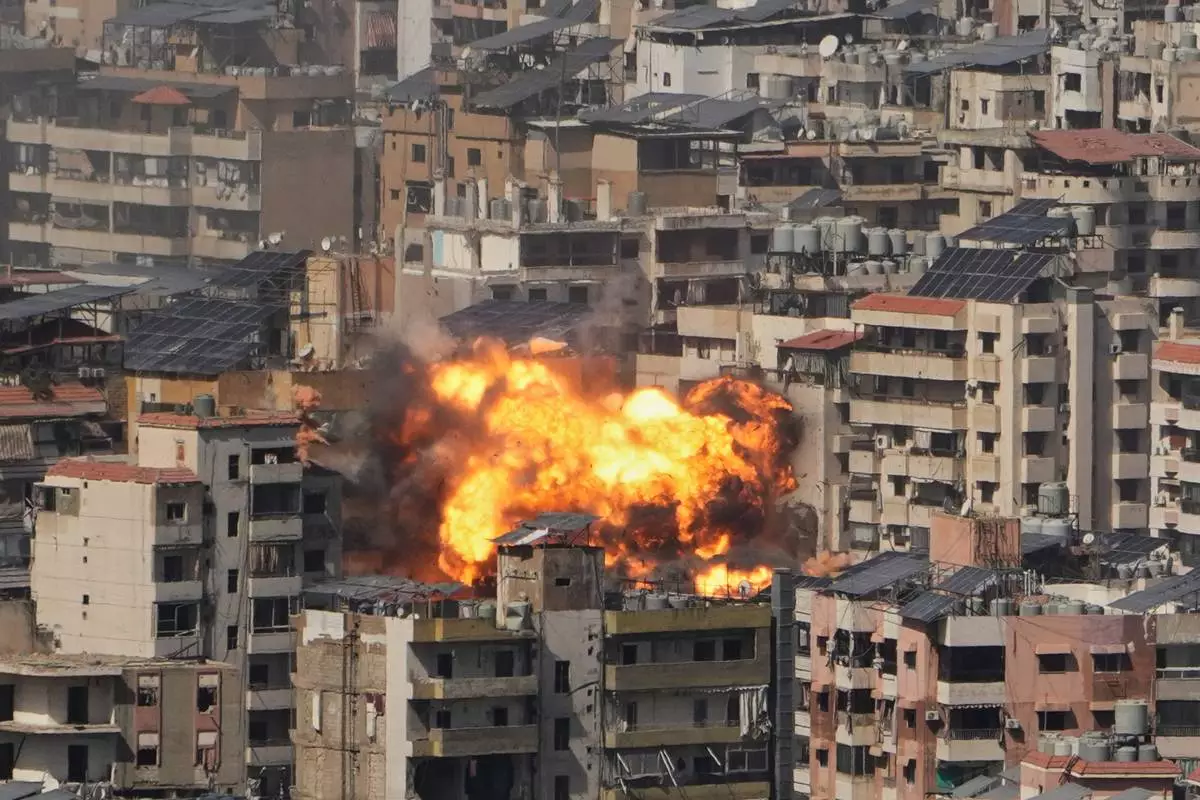
Flames rise from an Israeli airstrike in Dahiyeh, Beirut's southern suburbs, Wednesday, March 11, 2026. (AP Photo/Hassan Ammar)
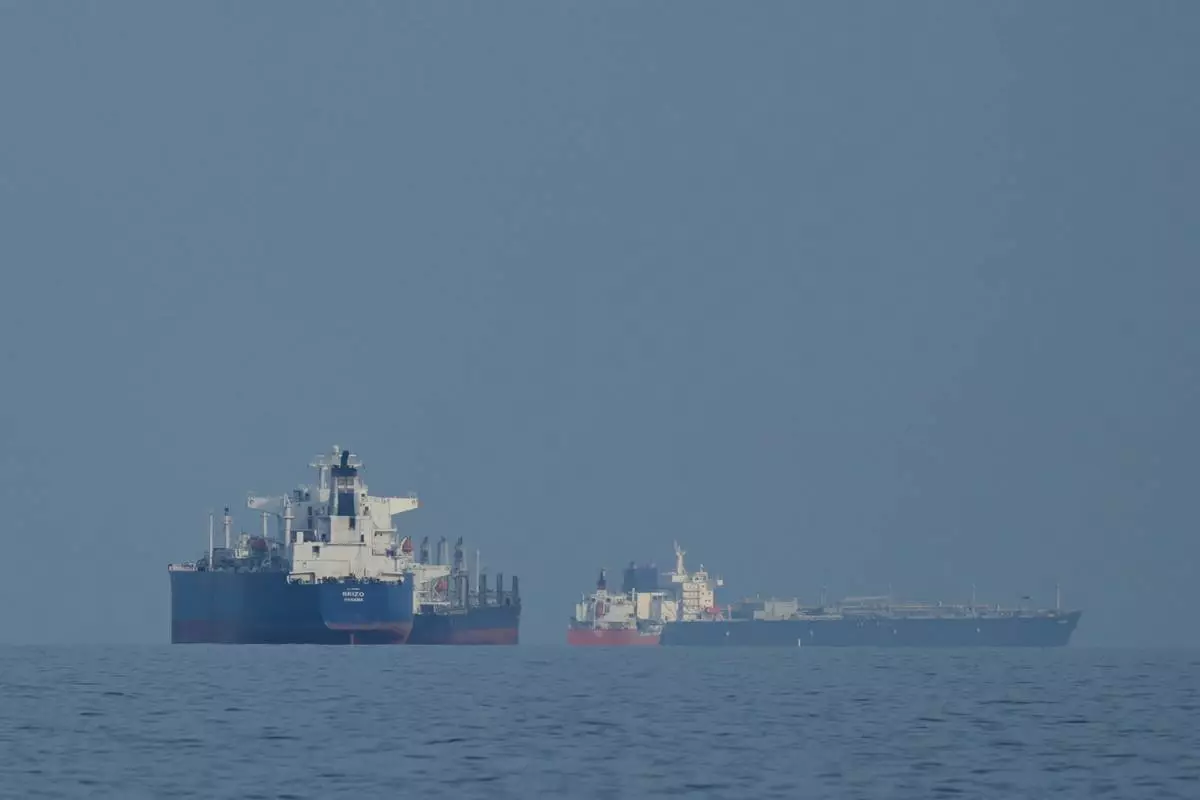
Oil tankers and cargo ships line up in the Strait of Hormuz as seen from Khor Fakkan, United Arab Emirates, Wednesday, March 11, 2026. (AP Photo/Altaf Qadri)
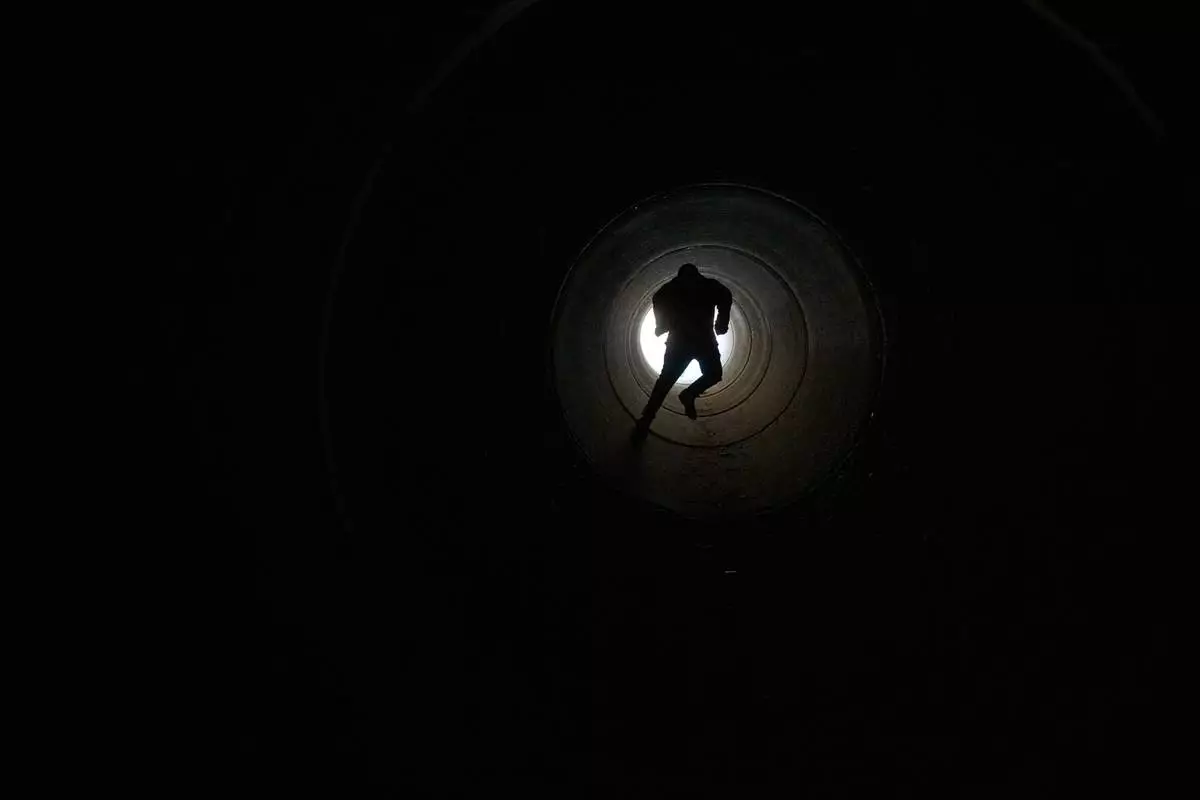
A boy runs inside cement pipe turned into a bomb shelter as air raid sirens warn of incoming Iranian missile strike in Michmoret, Israel, Tuesday, March 10, 2026. (AP Photo/Ariel Schalit)
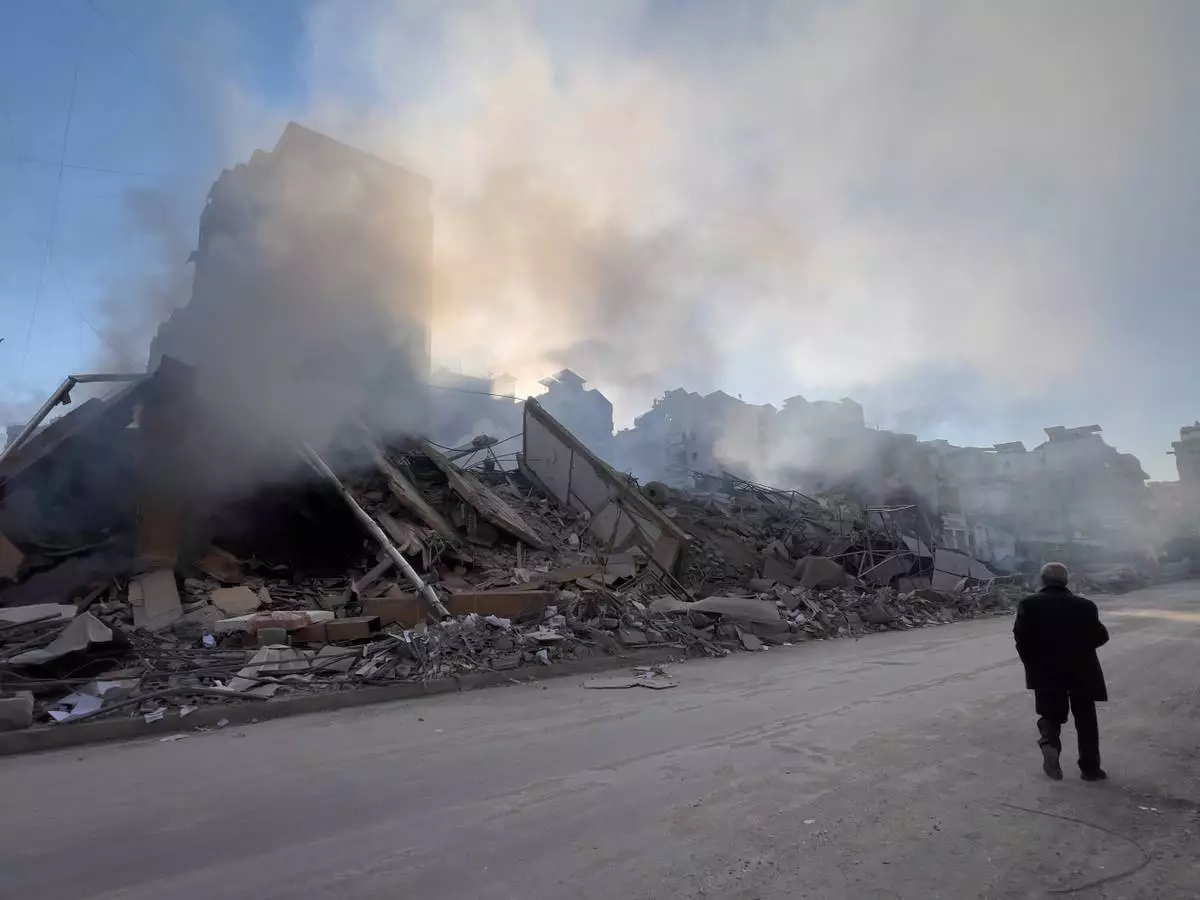
A man passes in front of a destroyed building that housed a branch of Al-Qard Al-Hassan, a non-bank financial institution run by Hezbollah, which was hit by an Israeli airstrike in Dahiyeh, Beirut's southern suburbs, Lebanon, Tuesday, March 10, 2026. (AP Photo/Hussein Malla)
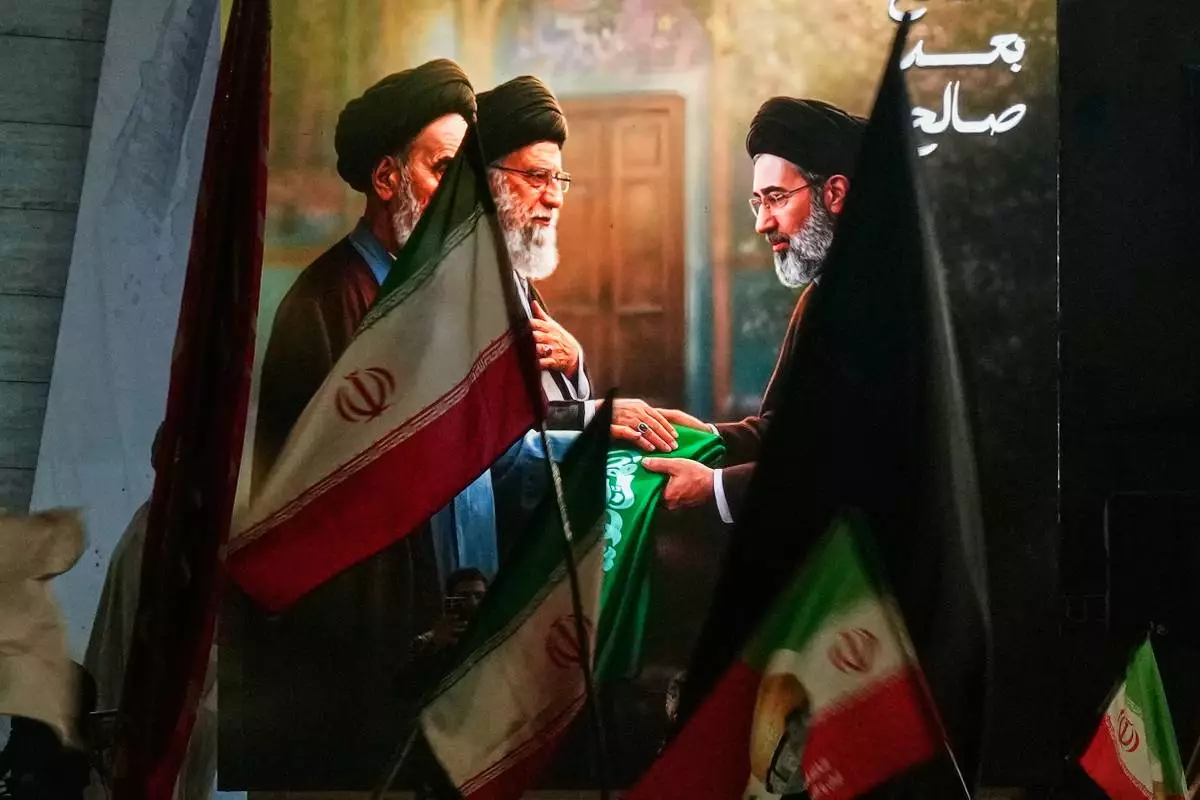
Protesters wave Iranian flags and hold a portrait of the late Iran's Supreme Leader Ayatollah Ali Khamenei and his son Ayatollah Mojtaba Khamenei to support his selection as the new Iran's Supreme Leader in Baghdad, Monday, March 9, 2026. (AP Photo/Hadi Mizban)
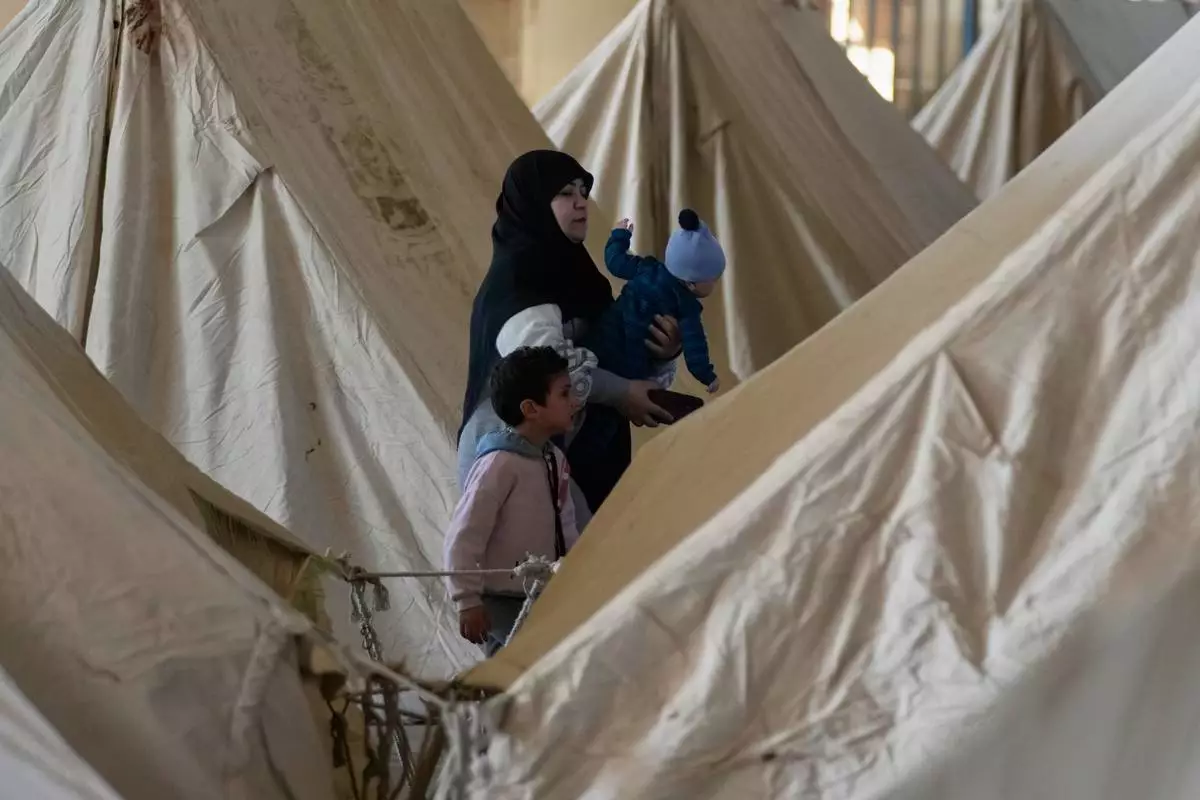
A displaced woman holds a child as another stands beside her between rows of tents at the Camille Chamoun Sports City Stadium, which has been turned into a shelter for people displaced by Israeli airstrikes in southern Lebanon and Dahiyeh, Beirut's southern suburbs, in Beirut, Lebanon, Tuesday, March 10, 2026. (AP Photo/Hassan Ammar)
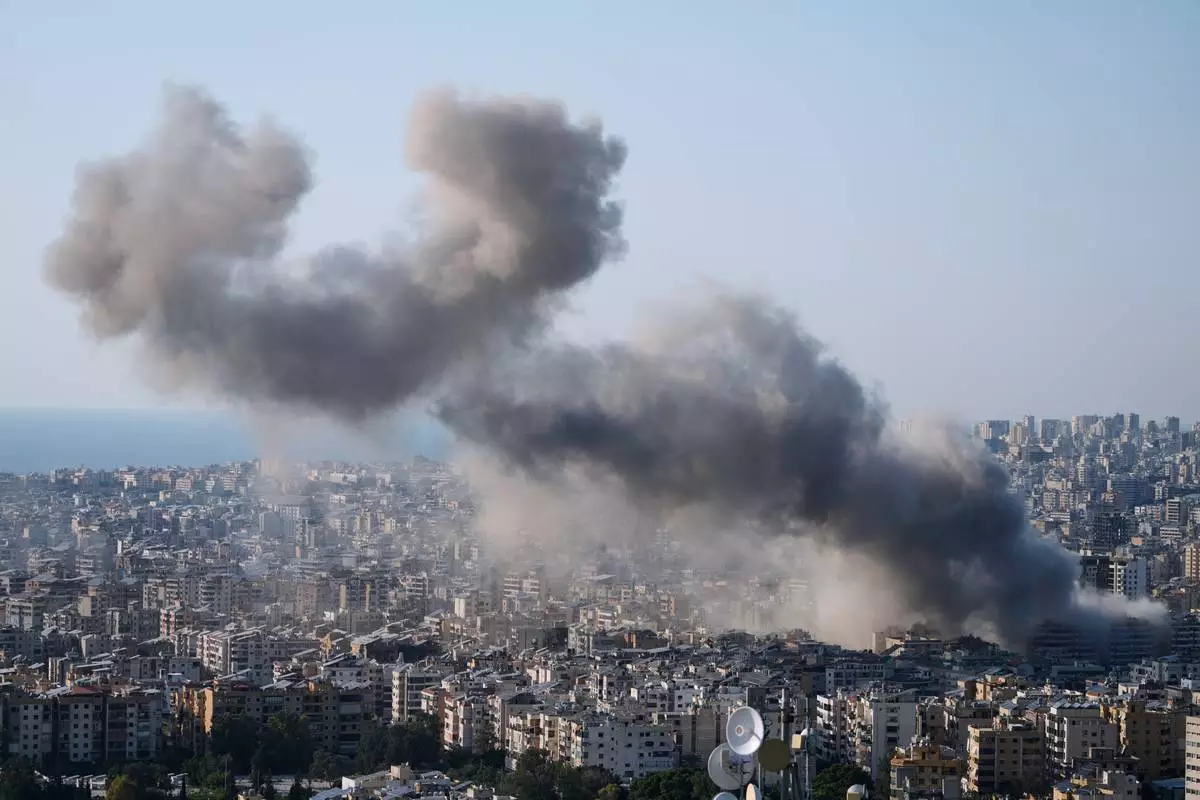
Smoke rise from an Israeli airstrike in Dahiyeh, Beirut's southern suburbs, Lebanon, Tuesday, March 10, 2026. (AP Photo/Bilal Hussein)