China launched a Long March-8A carrier rocket on Saturday in the southern island province of Hainan, sending a group of internet satellites into space.
The rocket lifted off at 15:53 from the Hainan commercial spacecraft launch site. It successfully placed the payloads, the 14th group of low-orbit internet satellites, into preset orbit.
Developed by the China Academy of Launch Vehicle Technology, the Long March-8A rocket is 50.5 meters long with a takeoff weight of 371 tonnes. It is capable of carrying up to 7 tonnes to a sun-synchronous orbit at an altitude of 700 km.
The rocket completed its maiden flight in February this year and has since entered a high-density launch mode.
This mission marks the first time the Long March-8 series rocket has switched its primary propellant from conventional petroleum-based rocket kerosene to coal-based rocket kerosene.
The new fuel is environmentally friendly, easy to store and transport, and more cost-effective. Its performance remains stable and reliable as petroleum-based rocket kerosene, which can establish a "green power" foundation for subsequent high-frequency launch missions.
Saturday's mission is also the fifth flight of the Long March-8A rocket and the 612th launch of the Long March series of rockets.
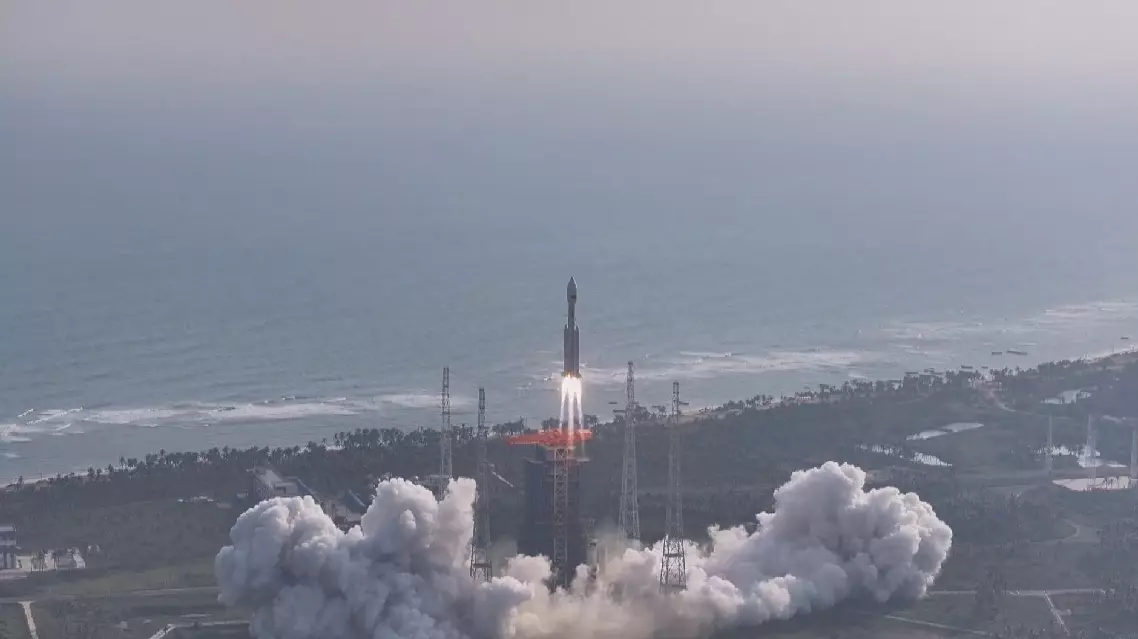
China's Long March-8A rocket launches new internet satellite group
The Polish government has recently rolled out a series of emergency measures to cushion the impact of energy costs on households in light of rising oil prices and increasing inflation risks.
Amid escalating tensions in the Middle East, international crude oil prices have jumped, pushing fuel prices in Poland up by more than 30 percent over the past month. Starting Tuesday, the Polish government began implementing a package of measures aimed at reducing fuel costs. These include lowering the value-added tax on fuel, cutting excise duties to the minimum level permitted under the European Union (EU) regulations, and cracking down on price gouging to maintain market stability.
Notably, gas stations in Poland have seen an increase in customers following the price cuts. Still, many residents believed the reduction is only temporary and that prices will likely rise again in the future.
"Even though the government has lowered prices, they are still high. I think the price cut might last for a while, but it's hard to say how long. I think this is just the beginning and the prices will rise in the future," said Arkadiusz, a local resident.
Polish economist Tomasz Bieliński said that it remains unclear how long the government can sustain these policies, and that rising energy prices are now transmitting pressure to core areas of the macroeconomy. In his view, if oil prices continue to climb, the European Central Bank and other central banks across the EU may be forced to adjust their monetary policies.
"Interest rates were actually reduced in most of the central banks in Europe. But, this reduction will probably stop, because we have rising prices of pretty much everything on the horizon," he said.
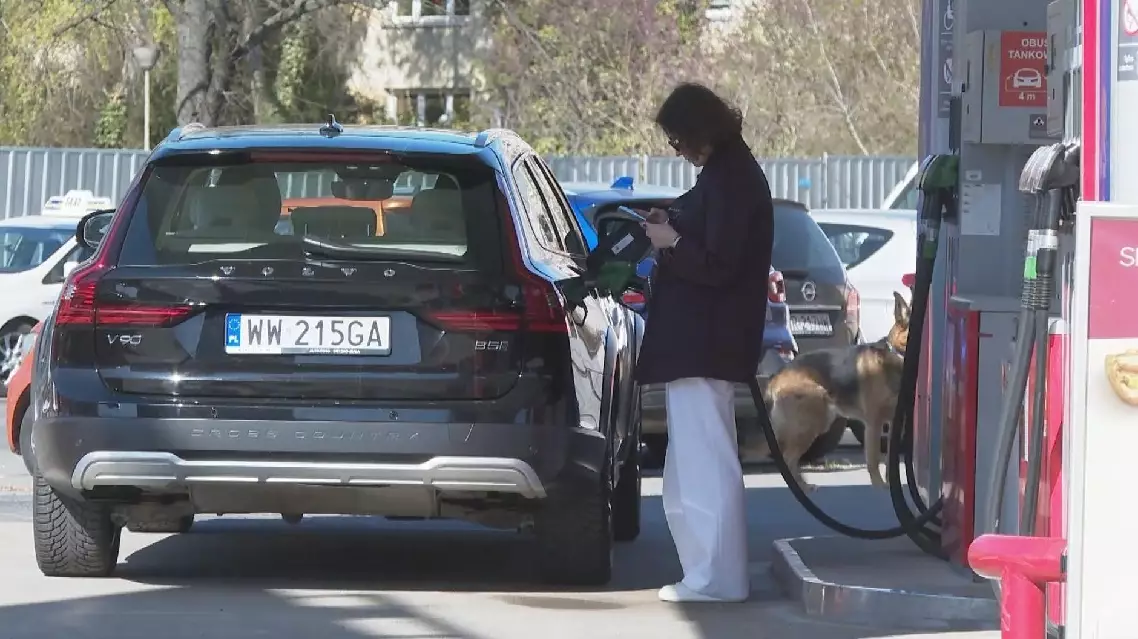
Poland unveils measures to ease pain of soaring oil prices