Skip to Content Facebook Feature Image

EVs less prominent at US auto show as gov't support dwindles: experts

HotTV

HotTV

HotTV

EVs less prominent at US auto show as gov't support dwindles: experts

2025-12-06 17:45 Last Updated At:12-07 00:00

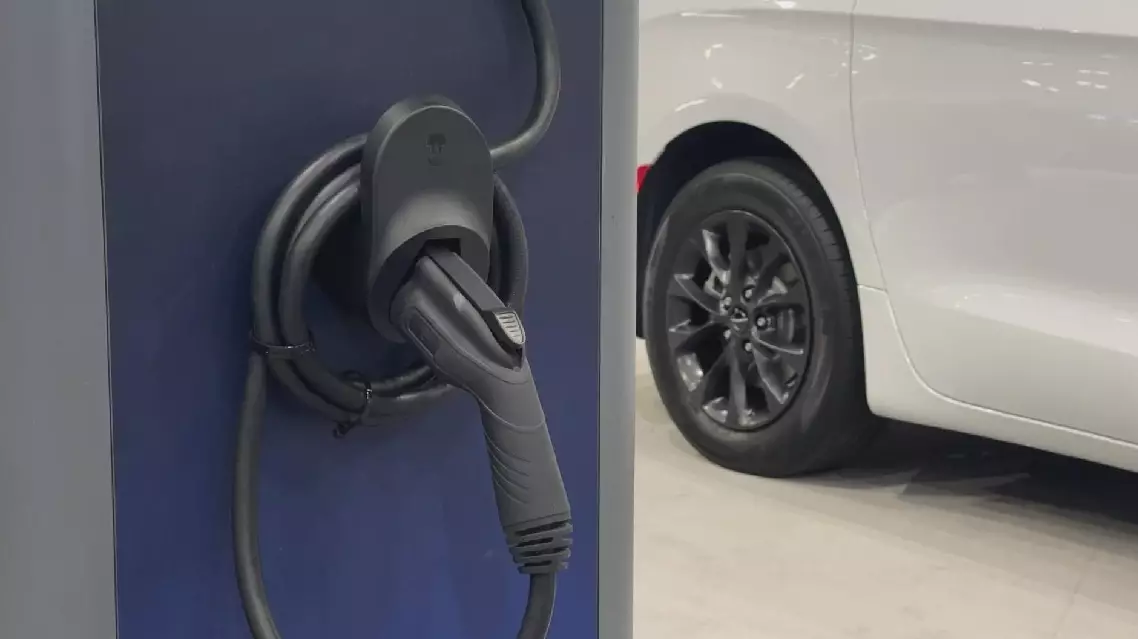
Electric vehicles (EVs) are becoming a less common sight at major automotive events such as the Los Angeles Auto Show due to lack of government support despite robust demand in the country, according to U.S. experts.

The LA auto show, which has a history of well over a century and is deemed one of the most influential in the country, this year took place from Nov. 21-30. Over the last two decades, the event has highlighted the electrification of the U.S. auto industry, with almost every major brand showcasing multiple new EV models in previous years. However, this year, it's a different story.

With the Trump administration appearing skeptical towards the new energy sector and even ordering an end to EV subsidies and incentives, analysts note that the presence of electric vehicles is dwindling at these showcase events.

"I usually like to go to the LA auto show, because in the U.S. market, this is the one where you see most of the electric vehicles, most of the advanced clean technologies in a regular year. Not so much this year. And if you would like to see the best EVs and the newest technologies now, you need to travel to Europe, to China, anywhere else but the U.S. right now," said professor Gil Tal, director of the EV Research Center at the University of California Davis.

More than 1.2 million electric vehicles were sold in the first three quarters of 2025, higher than any prior year, with the EV market share reaching nearly 12 percent. These numbers do represent a record high for the U.S., but still lag far behind the figures seen in many other industrialized nations.

Tal attributed this to inadequate government support which is hindering the sector's growth. Back in June, U.S. President Donald Trump moved to eliminate California's nation-leading vehicle emissions standards, upending the strict rules that had become a template for states across the nation to realize their greenhouse gas ambitions.

"The federal government dropped any support for electric transportation, for clean transportation, in general, and also [is] trying to block any state support for that in the U.S., making the life of both the traditional car manufacturers and the new ones much harder, making them second guess huge investment they did in the last couple of years, especially when they see such a big difference between the U.S. market and the rest of the world," he said.

The Trump administration's recent policy changes could impact the pace of EV adoption, as a result of reduced incentives, investments, and even the infrastructure.

Despite these setbacks, some experts argue that it may just be a temporary bump in the road, and believe the general trend towards EVs in the auto sector can't be put fully into reverse.

"There's still a lot of positivity there. And I think hopefully there's some smart people that are not just going to throw what progress we've made aside, and continue with the progress," said John Rooney, co-founder of EV careers, a recruiting firm firm focused on the EV sector.
EVs less prominent at US auto show as gov't support dwindles: experts
EVs less prominent at US auto show as gov't support dwindles: experts
Officials and business leaders from both China and the United States gathered in Berkeley, California on Friday to discuss the future of trade and investment between China and the San Francisco Bay Area, with many hoping to overcome the recent strain brought by the Trump administration's tariffs.

The China Council for the Promotion of International Trade hosted a business breakfast exchange meeting on Friday morning, with the council's chairman Ren Hongbin sending out a clear message of the vast economic potential which is there to be tapped into.

"The Chinese economy is very much innovation driven. And the strategic emerging industries, such as new energy, new materials, low carbon, aerospace, bio-pharmacy and the low-altitude economy, will generate a trillion-yuan level or even larger markets. So, I think that will provide enormous opportunities and room for China and U.S. companies to cooperate," said Ren.

He further stressed the China International Supply Chain Expo in Beijing as an example of an event where San Francisco Bay Area companies like NVIDIA and Apple were active participants and direct beneficiaries.

Meanwhile, Chinese Consul General in San Francisco Zhang Jianmin said that against the backdrop of a global economic slowdown, greater cooperation in the innovation sector is now more important than ever.

"The [San Francisco] Bay Area is home to many of the world's top tech companies and offers a sound innovation ecosystem. China has a super big market, rich application scenarios and a complete industrial supporting system. There exists tremendous potential for both sides to have more mutually beneficial cooperation by tapping into their complementary strengths," said Zhang.

Attendees did voice concerns over how the Trump administration's tariffs are impacting business.

With China accounting for nearly 30 percent of the Port of Oakland's total trade volume, the port's executive director Kristi McKenney stressed the need for greater stability and certainty.

"The tariffs in many cases were never actually implemented or were changed before they were implemented. So those linkages are a bit more challenging. I think the bigger issue will be certainty in the economy. And if there's lack of certainty, if we see economic difficulty, then you're going to see job losses," said McKenney.

Oakland's Mayor Barbara Lee said that it is very much business as usual, despite the recent difficulties.

"While we understand the challenges of tariffs, the exports and imports are still continuing, and our port is still a large containerized port doing business with China. And we're going to strengthen that relationship. We may have our differences on issues, on policies, but we here in Oakland understand that we're a global city and we believe the trade brings friendships, brings understanding, and also brings economic benefits to both countries," she said.

Chinese, US officials, business leaders meet in California to deepen mutual understanding

Chinese, US officials, business leaders meet in California to deepen mutual understanding

Recommended Articles