The Lanzhou Institute of Chemical Physics (LICP) under the Chinese Academy of Sciences (CAS) has developed China's first adaptive hydrogel bionic suction cup, offering a solution to core challenges in underwater grasping and precise operations, and providing crucial technical support for the upgrade of related industries.
Researchers at the institute designed a supramolecular hydrogel material that combines exceptional softness with high tear resistance to meet the demands of delicate grasping tasks. Leveraging 3D-printing precision manufacturing, they created a suction cup structure integrating curved membranes and micro-channels. Structural optimization has enabled the suction cup to adaptively conform to surfaces of varying materials and shapes, achieving gentle yet secure adhesion.
"We drew inspiration from the octopus. The biggest part of our innovation lies in the suction cup's structure we designed while mimicking the deformation of the octopus's tentacles. Tiny air channels were embedded so the cup can actively generate suction, allowing it to grip ultra-soft objects without causing damage," said Wang Xiaolong, a researcher at LICP.
The newly-developed hydrogel bionic suction cup is expected to be applied in deep-sea resource exploration, high-end industrial manufacturing, precision medical operations and other critical sectors, with the potential for solving the limitations of traditional grasping technologies in complex environments and driving technological innovation and industrial upgrade in relevant sectors.
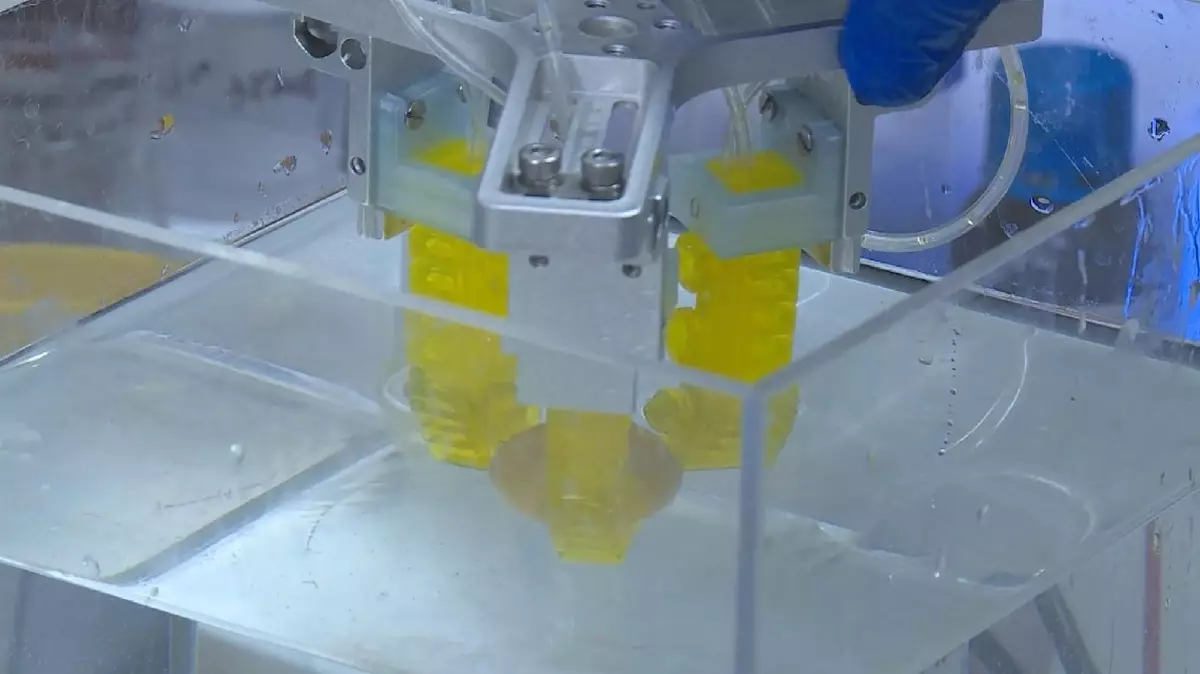
China successfully develops first adaptive hydrogel bionic suction cup
International relations experts from Japan and some other countries warned against the rise of right-wing militarism tendencies in the Japanese government reflected in Prime Minister Sanae Takaichi's recent Taiwan-related remarks.
Critics say such blatant disregard of history and basic principles of international relations could have very dangerous impacts, damaging mutual trust Asian countries have worked hard to build and threating peace and stability in the region.
"Sanae Takaichi say that a Taiwan emergency is a Japanese emergency. This statement is very dangerous. It breaks basic principles of international law and international relations. It also interferes in China's internal affairs and try to pull Japan into a regional conflict. This work shows that some Japanese politicians are moving forward right-wing ideas and risky military thinking," said Lim Wen Jye, a senior researcher at Malaysia's Institute of Strategic Analysis and Policy Research.
"To my view, Takaichi is simply a puppet for these forces that are being activated - the old military forces, the right-wing forces in Japan," said Stephen Brawer, an international relations expert and chairman of the Belt and Road Institute in Sweden.
In Japan, scholars have stressed the importance of stable bilateral relations with China and urged the prime minister to withdraw erroneous remarks.
"From a diplomatic perspective, existing agreements between Japan and China were overturned. When Sino-Japanese relations were normalized, China's approach to Japan was to make a distinction between Japanese militarists and ordinary citizens, and not to seek reparations. However, the Japanese government must bear its due responsibility for the past," said political economist Kazuhide Uekusa.
Scholars warn against right-wing politics reflected in Japanese PM's remarks