
Skip to Content Facebook Feature Image

Protesters gather in Berlin against U.S. intervention in Venezuela
HotTV

HotTV

HotTV

Protesters gather in Berlin against U.S. intervention in Venezuela

2025-12-08 12:29 Last Updated At:12-10 13:16

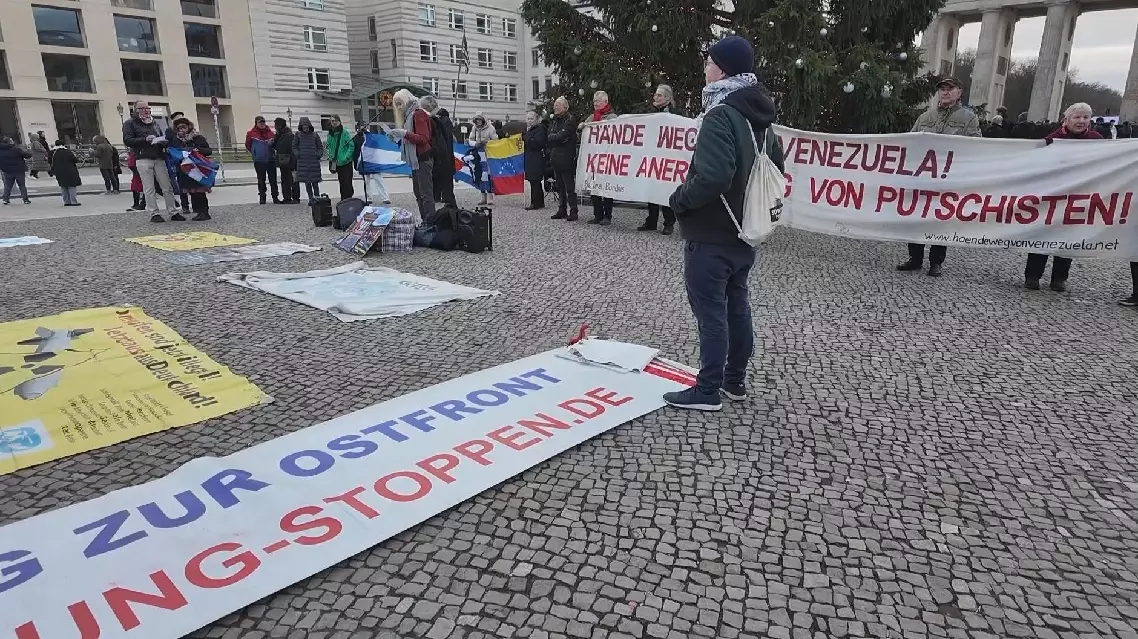
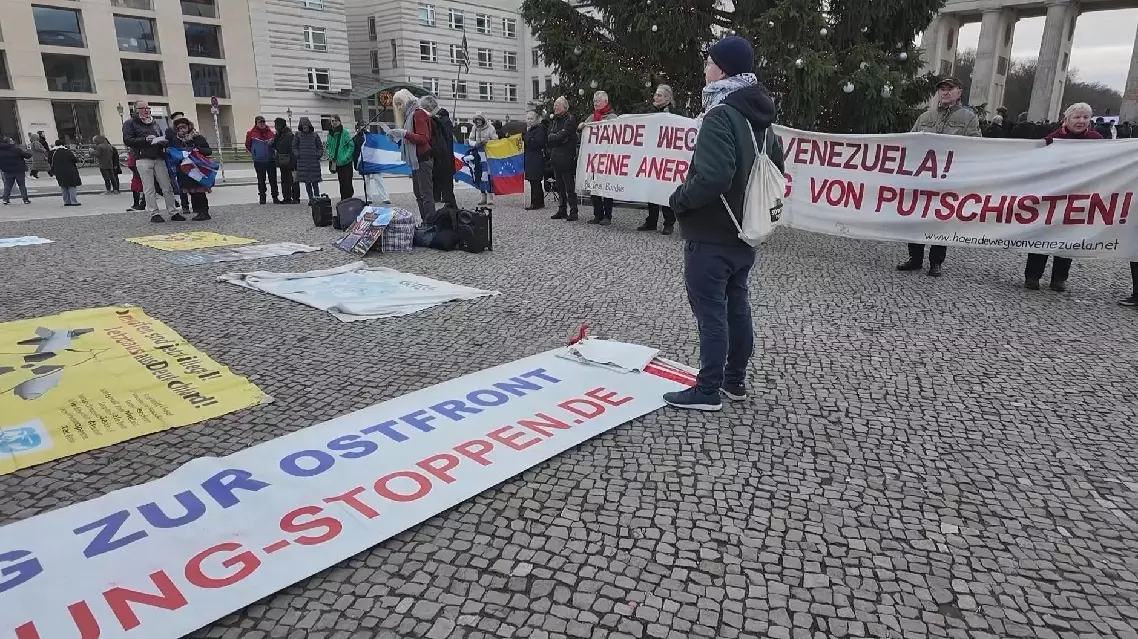
More than 1,000 people gathered in Berlin over the weekend to protest against U.S. threats of military intervention in Venezuela and voice support for the Venezuelan government.

The demonstrations, held on Saturday and Sunday in the German capital, drew participants who condemned the U.S. sanctions on Venezuela and the naval deployments in the Caribbean.

More Images
Protesters gather in Berlin against U.S. intervention in Venezuela

Protesters gather in Berlin against U.S. intervention in Venezuela
Protesters gather in Berlin against U.S. intervention in Venezuela

Protesters gather in Berlin against U.S. intervention in Venezuela

Protesters gather in Berlin against U.S. intervention in Venezuela
Protesters gather in Berlin against U.S. intervention in Venezuela
Protesters gather in Berlin against U.S. intervention in Venezuela

Protesters gather in Berlin against U.S. intervention in Venezuela

Protesters gather in Berlin against U.S. intervention in Venezuela

Protesters gather in Berlin against U.S. intervention in Venezuela
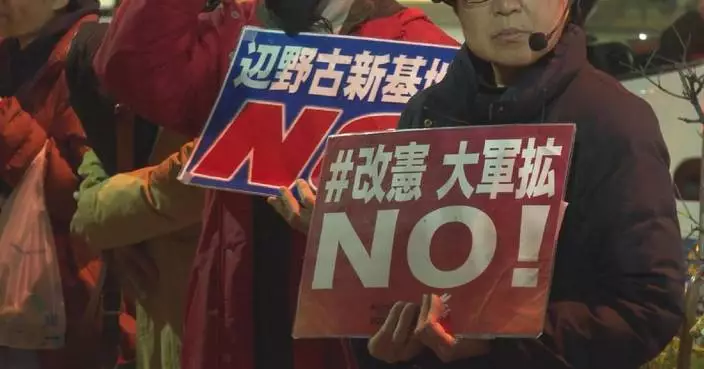
Protesters said that the United States, under the pretext of counter-narcotics, deployed several warships in the Caribbean near Venezuela, and such a military threat was aimed at interfering in Venezuela's internal affairs.

"The military threat brings a great danger. The United States and Western countries, including Europe, are targeting at Latin American countries that refuse to yield to U.S. pressure and stick to pursue independent policies. They are trying to interfere in Latin American politics and install governments that are obedient to them," said Diedrich Franck, organizer of the protest.

Some protesters said the United States' open threat of ground operations to topple the Maduro government was aimed at seizing Venezuela's oil resources.

"The United States has long been treating Latin America as its backyard to exploit its raw materials and also the Latin American people. Venezuela is the country with the largest oil reserves in the world. There are very obvious interests for the United States to seize its resources and at the same time control the entire Latin American continent. Therefore any leftist, anti-imperialist government in Latin America is seen as a problem by the United States," said Max, a German scholar of modern history.

Washington has deployed around a dozen warships and 15,000 troops to the Caribbean Sea, which shares a significant amount of coastline with Venezuela. U.S. forces have carried out at least 21 known strikes since Sept. 2 on boats suspected of carrying drugs in the Caribbean and East Pacific, killing at least 83 people.

Protesters gather in Berlin against U.S. intervention in Venezuela

Protesters gather in Berlin against U.S. intervention in Venezuela
Protesters gather in Berlin against U.S. intervention in Venezuela
Protesters gather in Berlin against U.S. intervention in Venezuela

Protesters gather in Berlin against U.S. intervention in Venezuela

Protesters gather in Berlin against U.S. intervention in Venezuela

Protesters gather in Berlin against U.S. intervention in Venezuela

Protesters gather in Berlin against U.S. intervention in Venezuela

Protesters gather in Berlin against U.S. intervention in Venezuela

Protesters gather in Berlin against U.S. intervention in Venezuela

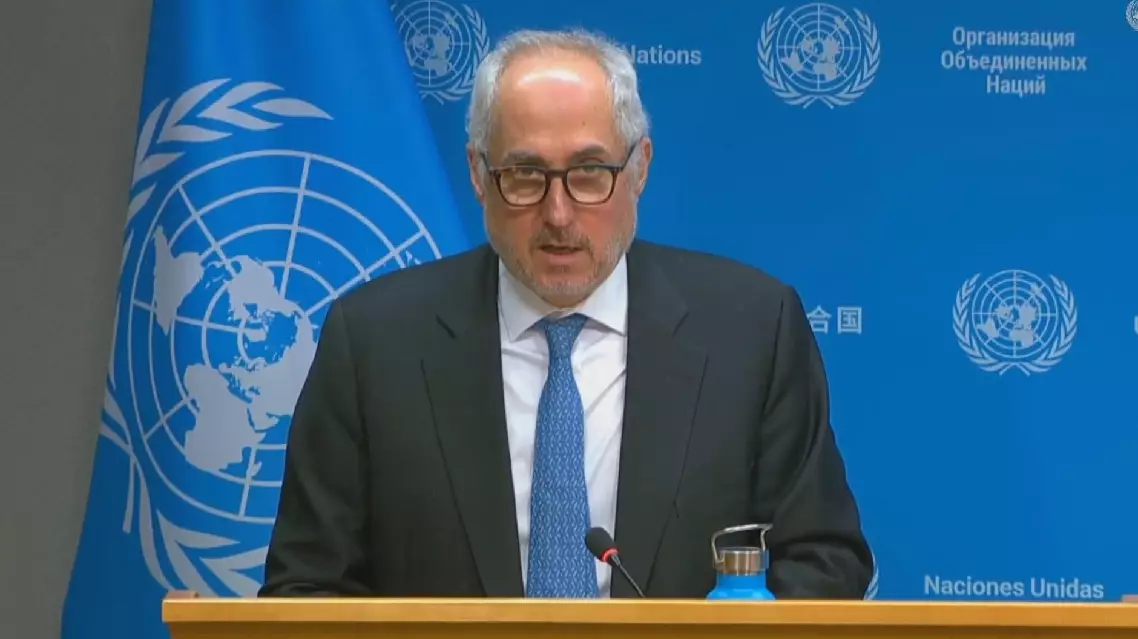
UN Secretary-General Antonio Guterres has reiterated his call for de-escalation, immediate cessation of hostilities and genuine dialogue and negotiations in the Middle East in line with the UN Charter, his spokesman Stephane Dujarric said Monday.

Speaking at a press conference at the UN headquarters, Dujarric said that over the past 48 hours or so, the secretary-general has been in touch with a number of regional leaders, including Qatar's Emir Sheikh Tamim bin Hamad Al Thani and Omani Foreign Minister Sayyid Badr bin Hamad bin Hamood Albusaidi.

He stressed that what is needed now in the region more than anything is a way out.

"Turning to the situation in the Middle East, over the past 48 hours or so, the secretary-general has been in touch with a number of regional leaders. What is needed now in the region more than anything is a way out. To that end, the secretary-general again calls for de-escalation, an immediate cessation of hostilities and genuine dialogue and negotiations, in line with the Charter of the United Nations," he said.

Dujarric also expressed deep concern regarding reports of an attack on a primary school in southern Iran, which, Iran said, has led to the deaths of 165 school girls.

He mentioned that the United Nations Children's Fund (UNICEF) has called for an immediate halt to hostilities and for the de-escalation of the situation.

The United States and Israel on Saturday launched "major combat operations" against Iran, claiming that the country's Supreme Leader Ayatollah Ali Khamenei had been killed.

Iran retaliated with a series of counterattacks against Israel and U.S. targets across the region, with explosions reported in Bahrain, Qatar, Kuwait, Jordan, the United Arab Emirates (UAE), and Saudi Arabia, among other countries.

UN chief renews call for de-escalation, immediate cessation of hostilities in Middle East

UN chief renews call for de-escalation, immediate cessation of hostilities in Middle East

Recommended Articles