Skip to Content Facebook Feature Image

Top manager leaves Warren Buffett's Berkshire as incoming CEO names team

News

Top manager leaves Warren Buffett's Berkshire as incoming CEO names team
News

News

Top manager leaves Warren Buffett's Berkshire as incoming CEO names team

2025-12-09 07:34 Last Updated At:07:40

OMAHA, Neb. (AP) — Incoming Berkshire Hathaway CEO Greg Abel is assembling his team to help him lead the conglomerate Warren Buffett built starting in January after a couple of key departures.

Berkshire said Monday that one of its two investment managers besides Buffett who has also served as CEO of Geico for several years, Todd Combs, and longtime Chief Financial Officer Mac Hamburg are both departing. Combs is taking a job helping JP Morgan decide how to invest $10 billion while serving as a special advisor to CEO Jamie Dimon while Hamburg is retiring after 40 years.

Combs' departure is the most significant news in the announcement that also included creating the jobs of general counsel and a new manager of the many retail and consumer businesses Berkshire owns, But now the question is whether insurance Vice Chairman Ajit Jain, investment manager Ted Weschler and all the CEOs of Berkshire's myriad businesses will remain.

“There’s still two elephants in the room: what’s Ajit Jain going to do and what is Ted Weschler gonna do?” CFRA Research analyst Cathy Seifert said.

Geico's Chief Operating Officer Nancy Pierce was promoted to CEO, but Berkshire didn't offer any details about how Abel will handle the company's stock portfolio that's worth more than $300 billion. Buffett said last year that Abel will ultimately be responsible for picking stocks as well as trying to find acquisitions and deciding where to reinvest in Berkshire's dozens of businesses while managing all of those companies. But Abel has never been a stock investor, so the plan was for Combs and Weschler to help manage the portfolio.

But Dimon's move to hire Combs away from Berkshire and off of JP Morgan's board where he had served for nine years prevented that from happening. “Todd Combs is one of the greatest investors and leaders I've known, having successfully managed investments alongside the most respected and successful long-term investor of our time, Warren Buffett,” Dimon said.

Keefe, Bruyette and Woods analyst Meyer Shields, who has followed Berkshire for more than a decade, said he expects more turnover in the months ahead as Buffett relinquishes the CEO job he has held for more than six decades. Buffett will remain chairman, but Shields said “we expect more turnover in coming months, since the cachet of working for Mr. Buffett’s successor is not (at least yet) the same as working for Mr. Buffett himself.”

Most of those coming departures may not generate headlines, but Shields said he expects a number of the CEOs of Berkshire subsidiaries who have been working long past a typical retirement age will depart now that they are no longer able to work for Buffett.

But CEOs who have been reporting to Abel for several years have said they have been impressed with the business acumen he has demonstrated while overseeing businesses as varied as Dairy Queen, Brooks running shoes, Iscar Metalworking, Marmon Holdings and Helzberg Diamonds. Buffett has said that Abel might be able to get more out of all Berkshire's businesses that he has because Abel is more hands on.

But in an acknowledgment of the fact that he will have less time available when he becomes CEO, Abel promoted NetJets CEO Adam Johnson to a new role overseeing all of Berkshire's consumer, service and retail businesses. Abel will continue to oversee all the manufacturing, utility and industrial businesses, including BNSF railroad and Berkshire Hathaway Energy.

Shields said he doesn't expect a huge change in direction or see Berkshire split up under Abel, but he's impressed that he's willing to depart from the way Buffett has always run things and implement a more typical corporate structure.
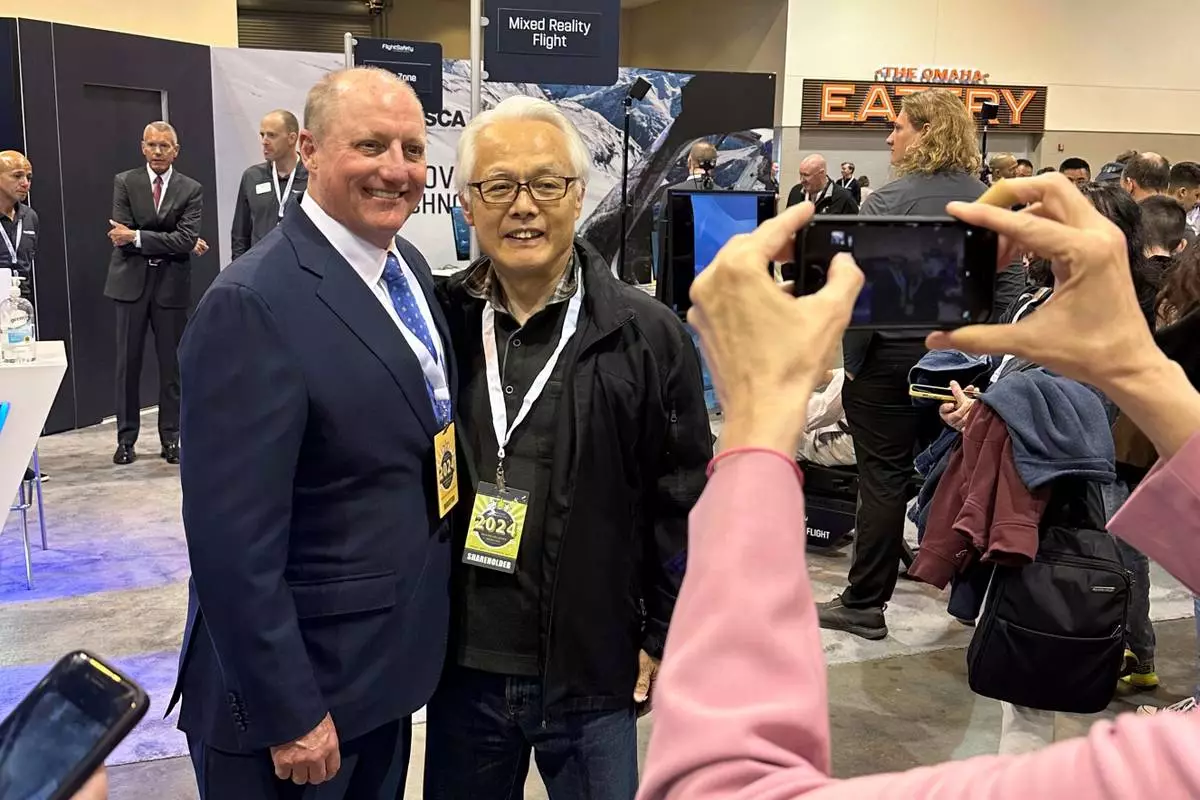
FILE - Berkshire Hathaway Vice Chairman Greg Abel poses for pictures with shareholders while touring the booths Berkshires companies set up, May 3, 2024, in Omaha, Neb. (AP Photo/Josh Funk, File)
FILE - Berkshire Hathaway Vice Chairman Greg Abel poses for pictures with shareholders while touring the booths Berkshires companies set up, May 3, 2024, in Omaha, Neb. (AP Photo/Josh Funk, File)

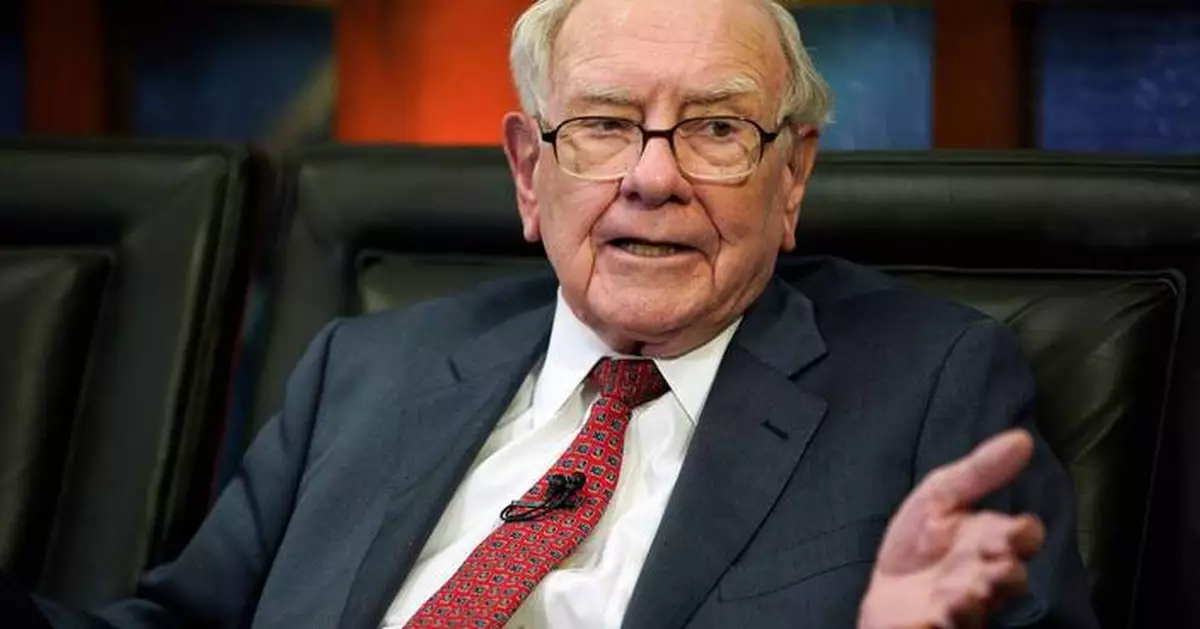
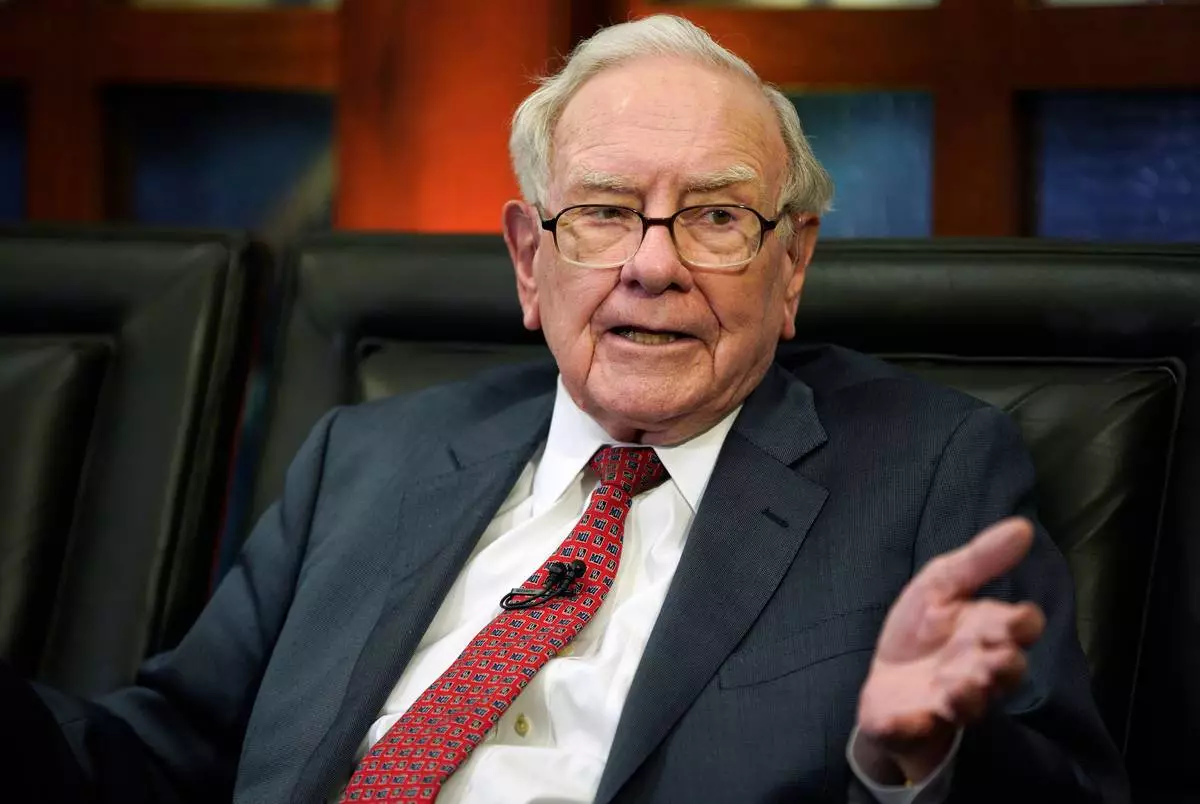
FILE - Berkshire Hathaway Chairman and CEO Warren Buffett speaks during an interview with Liz Claman on Fox Business Network's "Countdown to the Closing Bell," May 7, 2018, in Omaha, Neb. (AP Photo/Nati Harnik, File)


FILE - Berkshire Hathaway Chairman and CEO Warren Buffett speaks during an interview with Liz Claman on Fox Business Network's "Countdown to the Closing Bell," May 7, 2018, in Omaha, Neb. (AP Photo/Nati Harnik, File)

WASHINGTON (AP) — Since starting a war with Iran caused oil and gasoline prices to spike, President Donald Trump has pivoted from a focus on keeping energy prices low to painting high oil prices as a positive.

The about-face comes as Trump's team has struggled to offer a clear plan for opening up the critical Strait of Hormuz so that tankers full of oil and natural gas are no longer stranded.

“The United States is the largest Oil Producer in the World, by far, so when oil prices go up, we make a lot of money,” Trump said Thursday on his social media site.

It was only last month, in his State of the Union address, that Trump had bragged about gas prices at $2.30 a gallon, a figure that has since soared more than 50% to a national average of $3.60 a gallon, according to AAA.

The flip-flop shows Trump's political interests at home are suddenly at odds with his desire to flex America’s muscles on the global stage. It comes at a precarious time for Trump's party, ahead of November midterm elections. Trump has said that high gas prices helped him defeat his predecessor, Joe Biden. But he told reporters on Saturday that he had no worries about the rising costs that could influence voters this year, and create pressure for him to end the conflict prematurely.

The investment bank Goldman Sachs on Thursday said that based on its forecasts and historic experience, higher oil prices would cause inflation to be higher, growth to be slower and the unemployment rate to increase by the end of the year.

Benchmark oil prices have swung violently with Trump's shifting statements and as most tankers avoid traversing the Strait of Hormuz. On Thursday, the global crude oil benchmark price jumped to $100 a barrel.

“The swings in Brent crude oil prices over the past several days are eye-catching and odds are volatility will remain because of the absence of a timeline for when the conflict will deescalate and when the Strait of Hormuz, which is effectively closed, will see traffic begin to recover,” analysts at the consultancy Oxford Economics concluded on Wednesday.

The president has given a series of contradictory messages about his plans to address this issue. He said in a Monday news conference that the Strait of Hormuz “is going to remain safe” well after it was identified as a danger zone, claiming that the presence of the U.S. Navy and insurance for tankers would keep things secure.

By Tuesday, he said on Truth Social that Iran would face “Military consequences” that would be “at a level never seen before” if it placed mines in the Strait of Hormuz, later stressing that the U.S. military was blowing up Iran’s mine-laying ships.

On Wednesday, Trump's Energy Secretary Chris Wright briefly posted that the U.S. Navy had escorted a tanker through the strait — later deleting the false claim.

After initially downplaying the need to tap strategic reserves, Trump by Wednesday said the U.S. would join with other countries and release oil to lower prices, with the administration later saying it would draw down 172 million barrels. The coordinated release among countries is unlikely to bring down oil prices, so much as stabilize the market.

“Such a move will slow rather than stop rising oil prices and offer a temporary salve to the searing burn of rising gasoline prices,” said Joe Brusuelas, chief U.S. economist at the consultancy RSM.

The White House also said it may waive Jones Act requirements to use U.S.-flagged ships to move goods between U.S. ports, a temporary move that White House press secretary Karoline Leavitt said could “ensure vital energy products and agricultural necessities are flowing freely to U.S. ports.”

Wright, the energy secretary, took to television on Thursday to acknowledge the conflict was causing “a significant disruption” in short-term gas prices, but sought to emphasize the long-term benefits of an Iran that no longer poses a threat to the U.S. and Middle Eastern nations.

Trump on Wednesday had said “the straits are in great shape” and said he thought oil companies should use them. But on Thursday, Wright could not provide a timeline on when the U.S. Navy might escort tankers through the Strait of Hormuz, the bottleneck causing the price spike.

“It’ll happen relatively soon, but it can’t happen now,” Wright told CNBC. “We’re simply not ready. All of our military assets right now are focused on destroying Iran’s offensive capabilities."

Associated Press writer Collin Binkley contributed to this report.

President Donald Trump is seen in his limousine, known as "The Beast," for the motorcade to the White House after his arrival on Air Force One at Joint Base Andrews, Md., Wednesday, March 11, 2026. (AP Photo/Luis M. Alvarez)

President Donald Trump is seen in his limousine, known as "The Beast," for the motorcade to the White House after his arrival on Air Force One at Joint Base Andrews, Md., Wednesday, March 11, 2026. (AP Photo/Luis M. Alvarez)

Energy Secretary Chris Wright walks to the White House following an interview with CNN, Thursday, March 12, 2026, in Washington. (AP Photo/Allison Robbert)

Energy Secretary Chris Wright walks to the White House following an interview with CNN, Thursday, March 12, 2026, in Washington. (AP Photo/Allison Robbert)

Recommended Articles