Skip to Content Facebook Feature Image

Roberts says World Baseball Classic a 'very delicate' matter for Ohtani, Yamamoto and Sasaki

Sport

Roberts says World Baseball Classic a 'very delicate' matter for Ohtani, Yamamoto and Sasaki
Sport

Sport

Roberts says World Baseball Classic a 'very delicate' matter for Ohtani, Yamamoto and Sasaki

2025-12-09 08:04 Last Updated At:08:20

ORLANDO, Fla. (AP) — Admitting participation by Shohei Ohtani, Yoshinobu Yamamoto and Roki Sasaki in the World Baseball Classic is “very delicate” following a World Series that stretched into November, Los Angeles Dodgers manager Dave Roberts isn't sure whether any limits will be placed on his team's Japanese stars.

Ohtani had elbow surgery in September 2023 and returned to the mound in June. The two-way sensation helped the Dodgers become the first repeat World Series champion in a quarter century, starting the Game 7 win over Toronto.

“I would like to think that it’s going to be a dialogue as far as restrictions and limitations, in the sense of just trying to give them the opportunity,” Roberts said Monday at baseball's winter meetings. “They’ve come off some stuff, some long seasons, and certainly with Yamamoto and looking out for 2026. But right now there’s no more clarity than we had before.”

Ohtani won his fourth unanimous Most Valuable Player award, hitting .282 with 55 homers, 102 RBIs and 20 stolen bases while going 1-1 with a 2.87 ERA over 14 shortened starts that included 62 strikeouts in 47 innings. He had eight homers and 14 RBIs in 17 postseason games along with a 2-1 record and 4.43 ERA in four postseason starts.

Roberts said he wasn't sure whether Ohtani will pitch for defending champion Japan in the WBC, which starts March 5 and ends March 17 — nine days before the Dodgers' opener against Arizona.

“I’m hoping he doesn’t but I don’t know,” Roberts said. “Shohei’s — he’s very in tune with his body. But I would say probably the thought is he’s probably just going to hit.”

Ohtani was MVP of the 2023 WBC, when Japan beat the United States 3-2 in the final as Ohtani struck out then-Los Angeles Angels teammate Mike Trout for the final out. That tournament generally limited pitchers to 65 pitches in the first round, 80 in the quarterfinals and 95 in the championship, and also included mandatory off days after certain pitch counts.

Sasaki started the semifinal win over Mexico and Yamamoto followed in relief as Ohtani doubled to spark a ninth-inning rally.

“I don’t want to be dismissive of what it means to them representing their country,” Roberts said. “I know the organization doesn’t but I do think that the conversations need to be had, will be had, as far as what each individual is taking on and whatever role that they might be taking on and what potential costs there might be. ... But you can’t debate the emotion, what a player might feel of this potential opportunity.”

Limited to 90 innings by a triceps injury in his first season with the Dodgers after signing a $325 million, 12-year contract in December 2023, Yamamoto pitched 211 innings this year in the regular season and postseason combined.

Sasaki, in his rookie season, didn't pitch for the Dodgers between May 9 and Sept. 24 because of a right shoulder impingement and became their closer in the postseason.

Los Angeles plans to have Ohtani as a regular member of the starting rotation next season.

“But it’s not going to be a regular five-man rotation,” Roberts said. “I don’t want to go down the six-man rotation road, but I do feel that giving him six, seven, eight days off to kind of allow him to continue to stay rested and build up, I think that’s in our process. But again we have a long way to go but we’ve got some viable candidates.”

After leading the Dodgers to their third title in six seasons, Roberts has tried to detach and relax. He told Amazon Prime's “Good Sports” last week that he favors a salary cap, which some in management are advocating be proposed during collective bargaining next year. Baseball is the only U.S. professional major league without a cap.

“You know what? I’m all right with that,” Roberts said. “I think the NBA's done a nice job of kind of revenue sharing with the players and the owners, but if you’re going to kind of suppress spending at the top, I think that you got to raise the floor to make those bottom feeders spend money, too.”

“I’m entitled to an opinion, as we all are,” Roberts said Monday. “My opinion shouldn’t move the needle.”

Los Angeles projects to a major league-record $509.5 million in payroll and luxury tax this year. The New York Mets, who didn't make the playoffs, project second at $428.8 million.

“We have an organization that whatever rules or regulations, constructs are put in front of us, we’re going to dominate,” Roberts said. “And so just give us the rules, let us know the landscape and then I’ll bet on our organization.”

AP MLB: https://apnews.com/hub/mlb
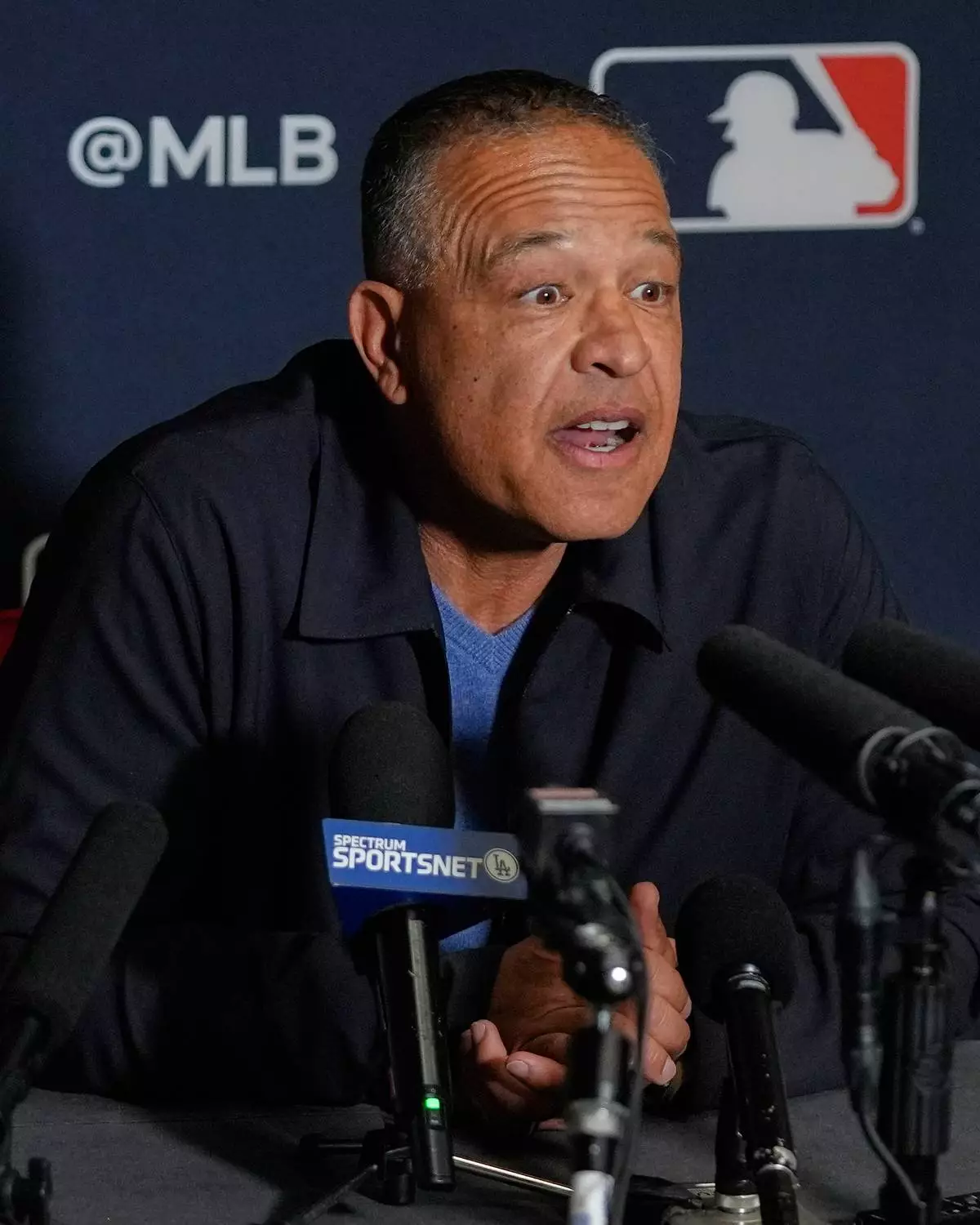
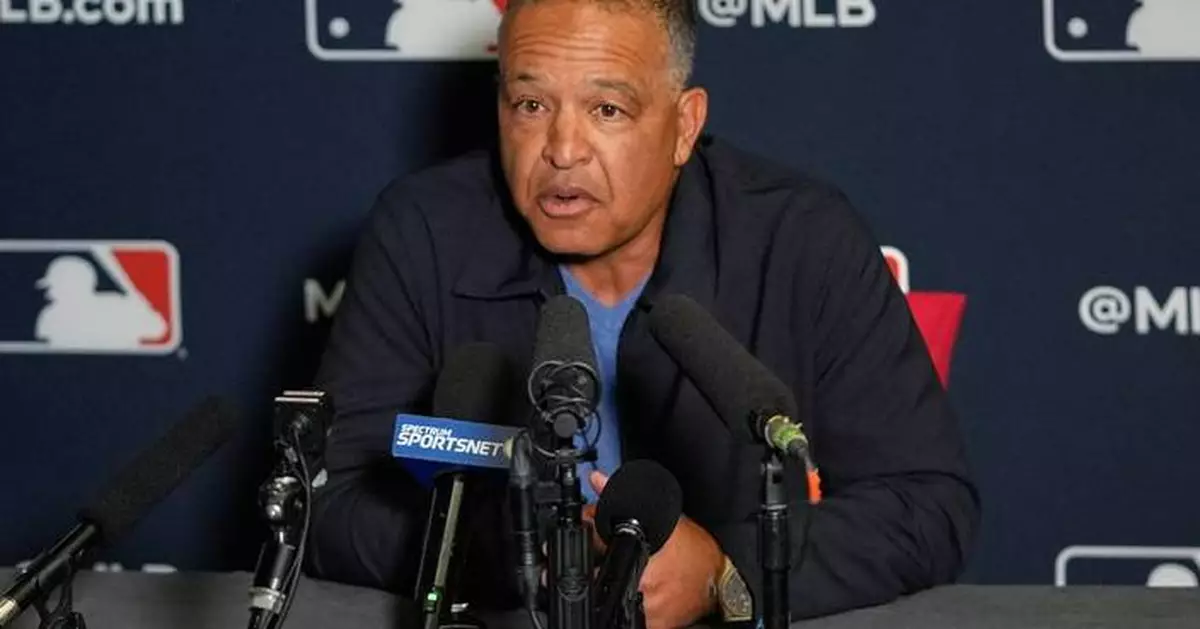
Dave Roberts, manager of the Los Angeles Dodgers, answers questions during a news conference at the MLB winter meetings, Monday, Dec. 8, 2025, in Orlando, Fla. (AP Photo/John Raoux)
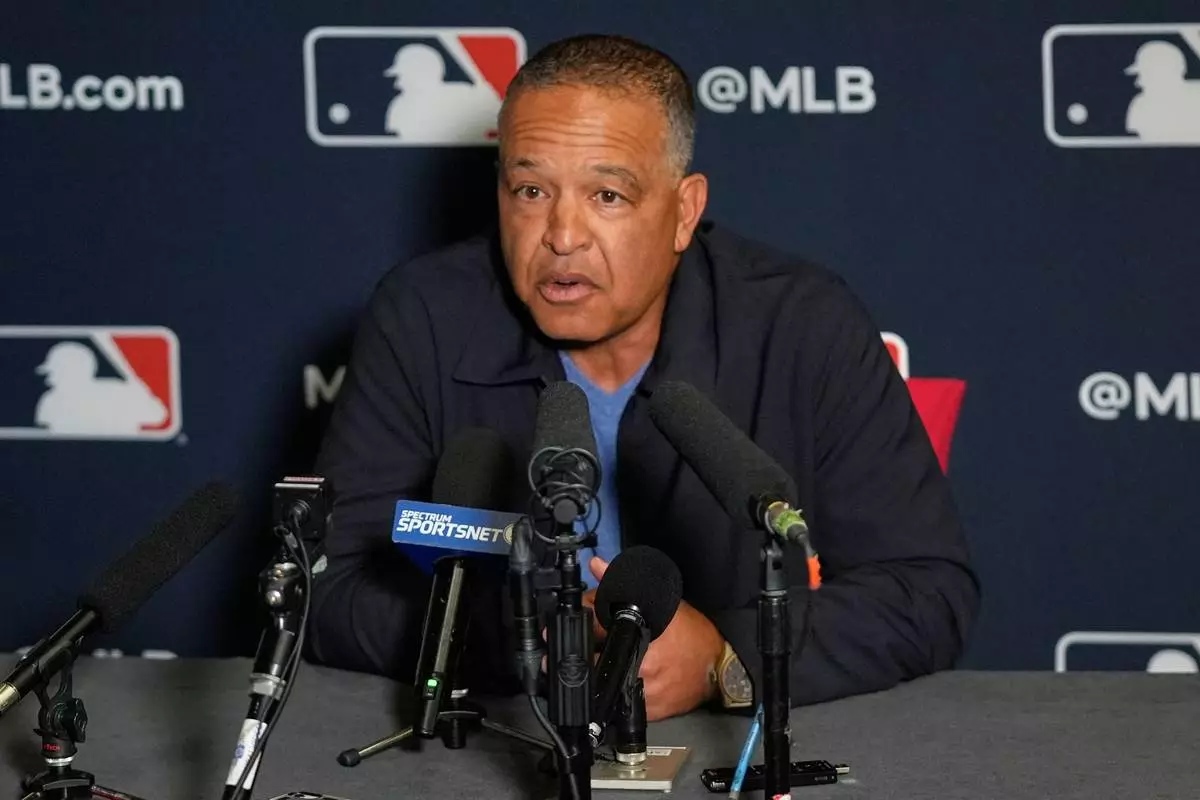
Dave Roberts, manager of the Los Angeles Dodgers, answers questions during a news conference at the MLB winter meetings, Monday, Dec. 8, 2025, in Orlando, Fla. (AP Photo/John Raoux)
Dave Roberts, manager of the Los Angeles Dodgers, answers questions during a news conference at the MLB winter meetings, Monday, Dec. 8, 2025, in Orlando, Fla. (AP Photo/John Raoux)

Dave Roberts, manager of the Los Angeles Dodgers, answers questions during a news conference at the MLB winter meetings, Monday, Dec. 8, 2025, in Orlando, Fla. (AP Photo/John Raoux)
The onset of $30 million football rosters funded mostly by companies providing third-party payments to players on behalf of their schools is within the rules but “has not sort of matched” the system some of its founders intended, the head of the College Sports Commission said Tuesday.

Bryan Seeley delivered an update on the CSC's progress over the last two months. While he was bullish about the new agency's ability to analyze deals quickly, he said the influx of third-party deals — contracts that help schools blow past the $20.5 million salary cap they're allowed to pay players directly — has led to increased review times.

The CSC's new numbers, updated through February, included a 65% increase over the preceding two months in the volume of the third-party deals, which are sometimes known as associated deals, among schools in the Power Four conferences.

Seeley said those figures led him to believe that most schools are trying to follow the rules by submitting their deals for review to the CSC, which is tasked with making sure they are not simple pay-for-play contracts but have a “valid business purpose” and are priced fairly.

He also said he had been told that "there was a belief that perhaps up to 90% of deals flowing through the system would do so automatically that would not need any kind of human review.

“It must have been based on an assumption that this would be a somewhat organic market with a lot of not associated deals," he said. "And that is turning out to be not the case.”

Those associated deals have brought the CSC under scrutiny for lag time in approving contracts. More importantly, they speak to wider concerns that the cost of populating competitive college rosters has spiraled out of control less than a year into the system that was activated by the House settlement — the endgame in a lawsuit that allows schools to share revenue directly with players, then augment that through third-party deals.

The discussion has reached as far as the White House, where last week President Donald Trump held a “summit” with sports leaders to discuss ways of reining in costs.

Trump has promised an executive order this week that will address issues in an industry where, he said, “the amount of money being spent and lost by otherwise very successful schools is astounding, just in a short period of time. And it’s only going to get worse."

Seeley, still focused on standing up an agency that will play a massive role in policing college sports, said he did not want to delve into whether the current system is sustainable.

“I read the same things you read. I see the same public comments in the media and I talk to schools,” Seeley said. “And I do get the sense that some schools had the belief that the settlement as implemented had not sort of matched what they expected. I think that's a fair thing to say.”

Seeley also acknowledged the problems his 8-month-old agency could face if a “participation agreement” that vests enforcement power in the CSC isn't signed by all 68 of the Power Four schools.

Shortly after the CSC distributed the document, a handful of states and schools said they wouldn't sign; some were concerned about language that forbid suing the commission.

In an impassioned plea at NCAA meetings in January, Seeley urged schools to sign the deal. Nearly two months later, he said he is still waiting. Parties have spent month making tweaks, some of which “weaken the document” to the point where it might not be worth the CSC signing it, Seeley said.

“If we don’t have a participant agreement, we’re going to still try to do what we need to do,” he said. “But I think those tools are really important.”

Get poll alerts and updates on the AP Top 25 throughout the season. Sign up here and here (AP mobile app). AP college basketball: https://apnews.com/hub/ap-top-25-college-basketball-poll and https://apnews.com/hub/college-basketball

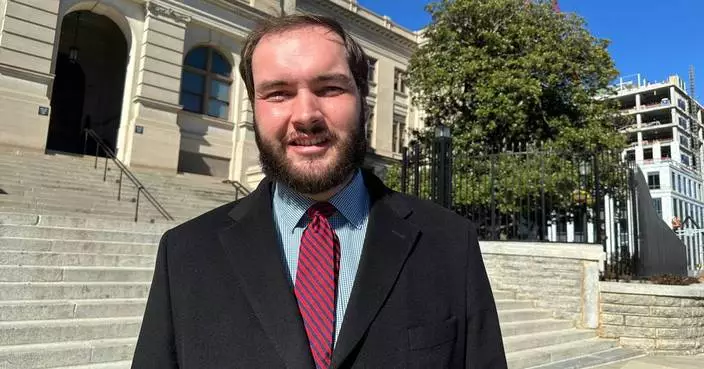
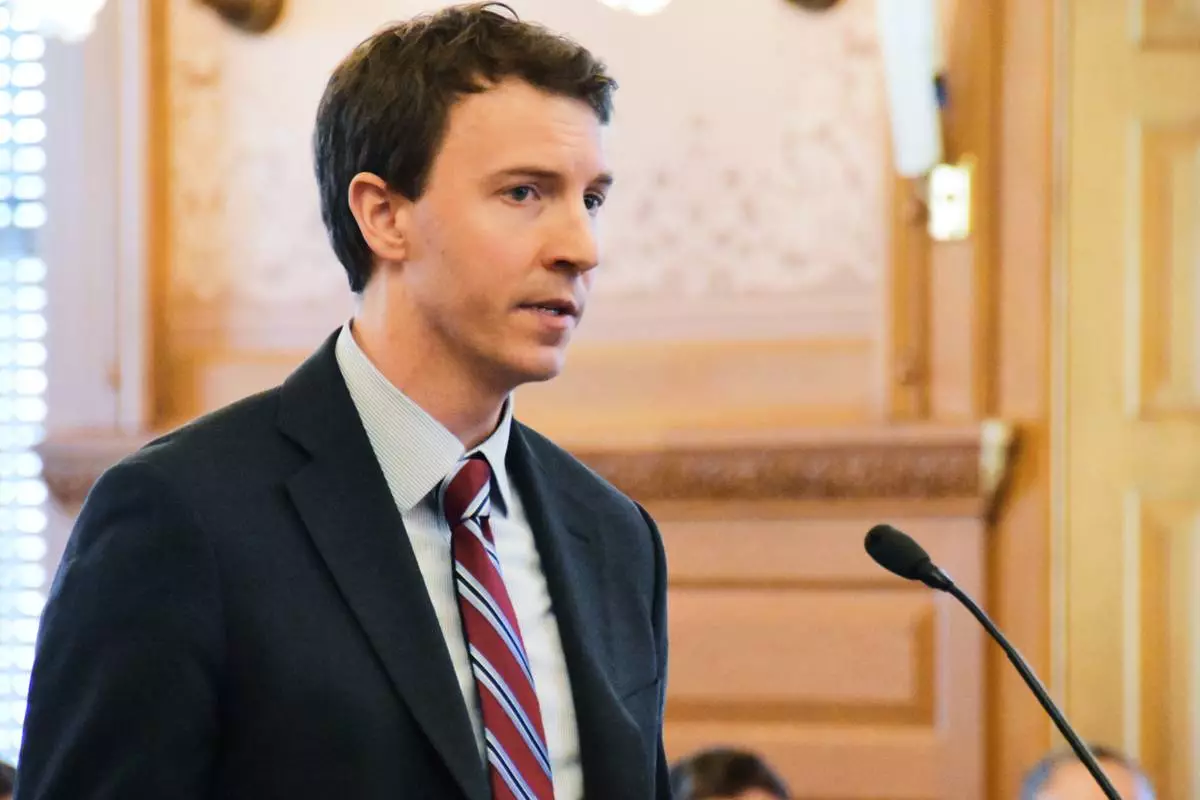
FILE - Bryan Seeley, a Major League Baseball senior vice president, testifies on a bill during a legislative committee hearing, March 13, 2018, at the Statehouse in Topeka, Kan. (AP Photo/Mitchell Willetts, File)

FILE - Bryan Seeley, a Major League Baseball senior vice president, testifies on a bill during a legislative committee hearing, March 13, 2018, at the Statehouse in Topeka, Kan. (AP Photo/Mitchell Willetts, File)

Recommended Articles